Posted
by Big Gav
in
carbon emissions,
coal,
uk
The Times (A Murdoch rag of all things) has an editorial celebrating the UK's plummeting carbon emissions - A Cleaner Future.
Without much fanfare and four years ahead of schedule, Britain has achieved an ambitious policy goal that should have significant public health benefits and serve as a case study for other large economies. The UK has cut its carbon dioxide emissions to a level last seen during the General Strike of 1926. Apart from that exceptional year, when most coal mines were closed, the last time emissions were this low was in 1894, when Karl Benz produced the world’s first car. Most of this reduction is the result of a 52 per cent cut in a single year in the use of coal, which, like diesel, fouls the air with sooty particulates when burned. This should have an immediate and positive impact on illness and …
Posted
by Big Gav
in
carnegie wave energy,
ceto,
ocean energy,
renewable energy,
uk,
wave power
Inhabitat reports that Perth based wave energy company is deploying a pilot plant at the UK "wave hub" in Cornwall - The UK’s first wave energy plant will produce enough energy for 6,000 homes.
Australia-based company Carnegie Wave Energy (CWE) will bring their wave power and desalination technology to Wave Hub in Cornwall, England. The European Regional Development Fund (ERDF) granted 9.6 million pounds (around $11.8 million) to CWE for the first phase of their Wave Hub project. Ultimately CWE aims to install enough of their wave power converter devices to generate 15 megawatts (MW) of clean energy at Wave Hub.
Posted
by Big Gav
in
coal,
uk
Inhabitat has an article on the UK's efforts to abandon coal entirely - Britain to officially shutter all coal power plants by 2025.
Last year the British government promised to replace coal with natural gas and alternative energy within a decade. But according to The Guardian, the country’s last coal power plant could close down by 2022 – and without government intervention.
Posted
by Big Gav
in
offshore wind power,
renewable energy,
uk,
wind power
The Guardian has a look at the world's largest offshore wind farm - How the London Array blows away the competition in green energy
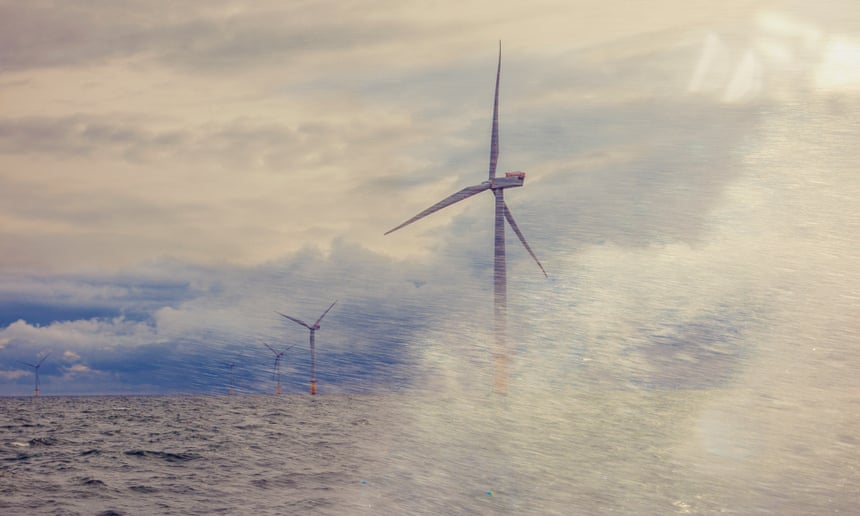
At the widest point of the Greater Thames estuary, 12 miles north of the Kent coast and 12 miles south of Essex, lies the London Array – the largest operational offshore wind farm in the world. Completed in 2013, after 10 years of planning and construction, it covers an area of 40 square miles – roughly the same size of Bristol – and comprises 175 individual turbines laid out in neat rows like an enormous nursery flower bed.
Posted
by Big Gav
in
coal,
uk
ReNew Economy has a post on Britain's slow walk away from coal fired power - Britain goes coal power free – for first time since 1882.
Posted
by Big Gav
in
brazil,
floating solar power,
japan,
renewable energy,
solar power,
solar pv,
uk
The BBC has a pair of reports on floating solar power plants being built on top of dams in the UK - a practical way of building large scale renewable energy plants close to urban areas - Floating solar farm installation starts in Greater Manchester and Europe's largest floating solar farm to open.
This idea also helps reduce evaporation from the dam - and where the dam is also used for hydro-electric power, has a ready made, intermittently used grid connection available too.
An example of this is being put into practice in Brazil - Cleantechnica has a report on one 10MW project (out of a total of
350MW of floating solar plants planned for the country) -
Brazil Pairs Hydro & Floating Solar.
Brazil isn't the only country in the Americas building floating solar plants - the concept has spread to the united States as well -
Partners Start Building 3.2 MW Floating Solar Project In N.J..
The country which has taken the greatest interest in floating solar plants is Japan (unsurprising given the huge build out of solar in the country since the Fukushima nuclear disaster and the lack of empty land for large scale solar power plants). The world's largest example is under construction by Kyocera in Chiba prefecture -
Japan begins work on 'world's largest' floating solar farm.
Posted
by Big Gav
in
caes,
energy storage,
uk
IEEE Spectrum has an article on a variant of compressd air energy storage being trialled in the UK - Liquefied Air to Store Energy on U.K. Grid.
U.K.-based Highview Power Storage last week said that it has been awarded an £8 million grant from the U.K. Department of Energy and Climate Change to build a commercial-scale facility that uses liquified air to store energy. Highview is already running a smaller pilot plant, but the full-scale version will be able to store enough energy to deliver five megawatts of power for three hours. That puts it on a scale that would entice utilities to use the technology, says company CEO Gareth Brett. ...
Liquid air energy storage is similar to compressed air energy storage in that air is compressed and released to store and then generate power. With Highview’s technology, though, ambient air is compressed, then cooled and liquified. That liquefied air, which is almost -200 °C, is stored in large tanks.
When power is needed, the liquid air is released and pumped to high pressure. That causes the liquid to evaporate, turning it into a high-pressure gas which is then run through a turbine to generate power. The planned demonstration plant will be located at a waste processing center. Heat from the waste plant’s gas turbines, which run on captured landfill methane, will be piped in to improve the efficiency of the evaporation process.
One of the advantages of liquid air storage is that it uses off-the-shelf equipment. The tanks for storing liquid air, for instance, are the same as those used in the industrial gas industry.

Posted
by Big Gav
in
uk,
wind power
The Energy Collective has a post on the growth of small scale wind power in the UK - Record Year Blows United Kingdom Small Wind Energy Installations Past 102MW.
2012 turned out to be a huge year for small wind in the United Kingdom, as the industry nearly doubled in size to pass £105 million in total value.
The record year of installations is creating economic tailwinds for the UK’s green economy and a more resilient energy system, according to the seventh annual “Small and Medium Wind UK Market Report” from RenewableUK.
While these sectors of the wind energy industry remain relatively small in comparison to utility-sized and offshore wind in the UK, they’re now responsible for 102.5 megawatts (MW) of installed distributed generation capacity across the UK – and are projected to continue growing through 2014.
Posted
by Big Gav
in
ocean energy,
tidal power,
uk
IEEE Spectrum has an article on a new wave power generator design - Two-Way Wave Power Generator Wins UK Dyson Award.
A new multi-axis wave power generator that can absorb forces no matter which way the water is churning has won the Dyson Award for the UK region, according to BBC News.
Renewable Wave Power is a semi-submersible, multi-axis wave energy converter that is specifically designed for the waters off of the Orkney Islands in Scotland. ... Sam Etherington, the project’s engineer, was inspired by the variability of the ocean while kite surfing and sailing off of Cumbria in Northwest England.
In wave tanks at Lancaster University, the chain of loosely coupled pistons was able to absorb forces from all directions. The conditions in the tank were modeled after the data taken from buoys off the Orkney Islands.
Posted
by Big Gav
in
atlantis,
ocean energy,
pelamis,
renewable energy,
scotland,
tidal power,
uk
Business Green has a report on tidal power developments in Scotland's Pentland Firth - Europe's largest tidal power array surges forward.
The UK’s fledgling tidal power sector is set to take a major step forward today, as the Scottish government awards planning consent to the Europe's largest tidal array, located in the Pentland Firth. Meygen, a group led by Morgan Stanley, International Power and tidal technology provider Atlantis, is planning to deploy up to 400 tidal turbines in the Inner Sound, which is known as the “crown jewel” of the Pentland Firth for its fast flowing waters.
Today, Scottish Energy Minister Fergus Ewing will confirm planning permission for the first 86MW phase of the project. Meygen is expected to install the tidal array in stages, starting with a 9MW demonstration project of up to six turbines.
The news will make Maygen the first tidal project in the Pentland Firth and the largest tidal power array in Europe to receive planning consent, marking a major boost for the industry. “This exciting development in the waters around Orkney is just the first phase for a site that could eventually yield up 398MW,” Ewing will say.

Posted
by Big Gav
in
natural gas,
uk
Reuters has a report on declining gas production in northern Europe - UK overseas gas imports to surge to $11 billion by 2015.
Britain's natural gas imports from outside the North Sea will surpass domestic production by 2015 and add more than $11 billion to import costs as domestic supplies dwindle and Norway increasingly struggles to fill the gap, Reuters research shows.
Estimates show that Britain's own gas supplies will fall from around 43 billion cubic metres (bcm) per year today to around 16 bcm in 2030 if they continue their average annual 5 percent decline since peaking in 2000, while demand is set to hold steady between 85 and 95 bcm.
Britain was a net exporter of gas until 2004, but a steady decline in output over the last few years has made it more reliant on imports, which have so far mostly come from Norway and, increasingly, Qatar.
Posted
by Big Gav
in
ocean energy,
severn estuary,
tidal power,
uk
The Independent reports that the on-again, off-again Severn tidal power project is under consideration again in the UK as the government searches for infrastructure projects to restart the economy - No 10 asks ministers: Can we now support £30bn Severn barrage?.
David Cameron has ordered ministers to consider backing a £30bn project to harness the tidal power of the Severn estuary, as the Government scrambles to find big infrastructure projects that could help kick-start growth. ...
With the potential to create 20,000 jobs, it is exactly the sort of big-ticket construction project that the coalition needs to find as George Osborne faces a growing clamour to change economic course.
Mr Davey is to consider the details of the Severn barrage plan. However, The Independent on Sunday has learnt that the Liberal Democrats, uneasy about the lack of growth, are to call on the Chancellor to authorise additional public borrowing to fund a wide range of green-energy schemes. Mr Davey's aide, Duncan Hames, has drawn up a policy to this effect.
The idea of a Severn barrage was rejected by the coalition in 2010, which argued there was "no strategic case at this time for public funding of a scheme to generate energy in the Severn estuary".
But Mr Cameron has been persuaded that the long-debated idea of a barrage is worth reconsidering, because the consortium Corlan Hafren says no state funding is required. Instead, investors from Kuwait, Qatar and a number of sovereign wealth funds have expressed support for the idea. ...
Securing government support is crucial, because time would need to be found for legislation to pass through Parliament. Peter Hain, the former Labour cabinet minister, quit his frontbench role earlier this year to champion the project. He has offered to pilot a bill through the Commons, which Mr Cameron has agreed to study.
"Tidal power is the only lunar energy source," Mr Hain said in a letter to Mr Cameron. "Tides can be forecast for years in advance, and therefore tidal power is highly predictable and consistent."
Stretching up to 18 kilometres from Brean on the north Somerset coast to Lavernock Point in South Wales, the scheme, Corlan Hafren claims, could provide 5 per cent of the UK's energy needs, saving one million tonnes of carbon every year. ...
The project is thought to include 1,000 turbines. The Severn estuary has a tidal range of 14 metres, which engineers have contemplated harnessing since the middle of the 19th century.

Posted
by Big Gav
in
geothermal energy,
geothermal power,
kenya,
uk
Business Green has a post on efforts to build geothermal heat and power plants in Britain - E.ON heats up plans for five deep-geothermal power plants. The FT also has a look at geothermal power - in their case looking at Kenya - Geothermal: Kenya pins its hopes on steam power.
The UK's nascent geothermal energy industry has today received a major boost after it emerged that one of the UK's largest energy companies is working on plans to develop five new deep geothermal heat and distribution systems.
Ireland-based geothermal technology specialist GT Energy today revealed that it has inked a memorandum of understanding with energy giant E.ON that will see the two companies jointly develop a range of urban geothermal heat power plants.
The UK currently boasts only a handful of deep geothermal power plants, including a pioneering district heat system in Southampton that has been in place since 1986. However, a number of projects are currently under construction, including plans for a new geothermal power plant in Cornwall and a geothermal heat facility in the centre of Newcastle.
E.ON and GT Energy maintain that scientific studies have shown the UK has access to up to 100GW of geothermal energy potential, particularly in the South-West, North-West, and North-East.
They have also argued that deep-geothermal technology is well suited to urban settings where the resulting heat can be easily distributed to a variety of buildings in the area.
Posted
by Big Gav
in
ocean energy,
thames,
tidal power,
uk
ReCharge News has an article on efforts to harness tidal power (and/or river current power) from the River Thames - CoRMaT moves a step closer to taking the plunge in the Thames.
Nautricity’s 3kW Contra Rotating Marine Turbine (CoRMaT) may be small but the company has big plans for the concept. In the grandest version of its vision, hundreds of differently sized models of the turbine — rated up to 500kW — would be sited in clusters along the river from Westminster, in Central London, to Margate, where the Thames Estuary meets the North Sea, as part of a 50MW development.
The project is being developed by the Glasgow-based company with financier Energy Invest under the Thames Tidal banner. The goal is to prove the viability of a “free-floating" turbine in the currents of the longest river in England, and a gigabyte of data has been collected in the first phase.
“This first stage of this project aims to glean an understanding of how a device of this nature — which is unique insofar as it does not have a rigid supporting system holding it to the seabed — would perform in the river environment," says Nautricity chief executive Cameron Johnstone.
The turbine, unlike the majority of its seabed-mounted brethren, is designed to be anchored in place by a single-point mooring line, steering nose-first into the current, guided by its two contra-rotating rotors.
“The Thames is an ideal testing ground because of the intense river use and the wakes and washes generated by vessels that use it, which create a range of cross-dynamics. Early indications from our data are that cross-waves have very little impact on the device’s performance," says Johnstone.
The CoRMaT evolved from a decision by its designer to buck the trend among first-generation tidal turbines to “marinise wind turbines", building broad-bladed machines mounted on heavyweight foundations.
“We wanted to start with a clean sheet in devising a hydrokinetic device purely for a tidal stream,’’ says Johnstone. ‘‘At the same time, we wanted to keep costs down and found that one of the biggest is accounted for by the structural support system, which can be 40% of the total."
Both objectives were met by the contra-rotating rotors concept. The rotors — one of which has three blades, the other four — turn in opposite directions, using the “natural physics" of the flow to balance the turbine in the tidal stream by having the reactive forces of the first rotor countered by the reactive forces in the second. The different numbers of blades on the two rotors prevents one from eclipsing the other in operation, ensuring there is never a “lull" during power delivery, and smoothing output.
Renewable Energy Focus has a look at efforts to quantify the tidal power potential of the UK -
ETI models the UK’s tidal energy resources.
The Energy Technologies Institute (ETI) will model the UK's tidal energy resources to improve understanding of the possible interactions between tidal energy extraction systems as they are deployed between now and 2050. ...
The tidal resource project aims to develop models of the whole UK continental shelf that will be used to investigate how energy extraction at one site may affect the energy available elsewhere.
A wide range of possible future tidal stream and tidal range sites, with differing technology possibilities will be represented in the models.
The project will identify how the interactions between different sites around the UK combine to form an overall effect, and what constraints these interactions could place on the design, development and location of future systems.
The models will be made available through a service provided by HR Wallingford to the wider marine industry to help inform future plans and strategies for tidal power.
The John O’Groats Journal has an update on interest in tidal power in northern Scotland -
Pentland Firth energy pledge hailed as 'good news’HOPES have been raised for the future development of marine energy in the Pentland Firth following a multi-million-pound Scottish Government pledge – but questions remain over how exactly it will work.
First Minister Alex Salmond announced on Monday an £18 million commitment to help develop the country’s first commercial wave and tidal power arrays in the firth, Orkney and other Scottish waters.
The money is to be used to take developers from single-test machines to the stage where they have multiple machines in the water.
Caithness and North Sutherland Regeneration Partnership programme manager Eann Sinclair welcomed the news but warned details are sketchy at best. “Any money that goes into the wave and tidal industry at the moment is good news and the fact that the overwhelming focus for the whole of Scotland – if not the whole of the UK – is the Pentland Firth means that we should all be welcoming it," he said.
Posted
by Big Gav
in
natural gas,
uk
The Guardian has an article on declining UK natural gas production - North Sea gas production falls 25%.
North Sea gas production has slumped by 25% in the second quarter of the year, an alarming increase in the rate of decline that will cut tax revenues and could put more pressure on government to agree controversial shale gas developments.
Figures from the Department of Energy and Climate Change (DECC) also show a 36% rise in coal imports, but a leap from 6.3% to 9.6% for the amount of electricity generated by wind and other renewables.
The department records that the output of oil and associated gas liquids fell by 16% in the three months to the end of June, compared with a year earlier – the biggest decline since records began 16 years ago.
This left Britain importing 3.6m tonnes of oil in the second quarter, compared with 2.8m tonnes in the same period of 2010, even though total oil demand fell by 1.7%.
Posted
by Big Gav
in
atlantis,
humber estuary,
ocean energy,
scotland,
tidal power,
uk
Forbes reports that tidal power company Atlantis has launched its first project in Scotland - Scotland Plugs Tidal Power into Electricity Grid.
Scotland plugged the first commercial scale tidal-power turbine into the central power grid earlier this week.
Atlantis Resources, a Singapore-based marine renewables developer, installed the 1-megawatt tidal-power turbine at the European Marine Energy Centre in Orkney, Scotland.
Equipped with a rotor measuring roughly 60 feet in diameter, the three-bladed horizontal-axis AR1000 aims to be among the world’s most powerful single-rotor tidal turbine, delivering 1 MW of power from tidal resources moving at speeds of about eight feet per second.
The system weighs 1,500 tons and stands about 75 feet tall on a seabed-mounted tripod foundation.
The BBC reports that tidal power is forging ahead in the north east of the UK as well -
Humber tidal project given Parliamentary approval.
Plans for a tidal power vessel in the Humber to generate electricity for a Hull aquarium have been approved.
The Neptune Proteus device will use the tides of the estuary to power The Deep.
The 150-tonne generator is expected to be deployed in the autumn. It is hoped five additional units will be installed in the future to generate energy for 5,000 homes.
Colin Brown, chief executive of The Deep, said the Humber had "massive" potential as a power source.
Mr Brown said: "Because of the nature of the aquarium, pumps are running 24/7 - we have a requirement for power all the time - and this one installation is anticipated to provide perhaps 30 or 40 percent of our entire electricity load."
Posted
by Big Gav
in
ocean energy,
tidal power,
uk,
wales
EarthTechling has a report on tidal power developments in Wales - Tidal Power Coming To Wales, Thanks To E.U..
Scotland might be the leader, but other parts of the United Kingdom are jumping on the tidal-energy bandwagon. The latest entry from this sceptered isle: Wales, a country of just 3 million people, but with some 750 miles of coastline on the Atlantic Ocean and Irish Sea. The government there said a demonstration tidal-energy system – Wales’ “first full-scale tidal stream energy generator” – was going forward thanks to £6.4 million in funding from the European Union.
In its announcment, Wales called the 1.2-megawatt (MW) capacity DeltaStream a “unique device,” invented by a local Pembrokeshire engineer, Richard Ayre. The government said the contraption “sits on the sea bed without foundations and uses tidal currents to generate clean electricity” and “has been designed to minimise impact on the environment.” The device will be sited in 2012 in Ramsay Sound, Pembrokeshire, after which it is expected to provide a sustainable source of power to the people of St David’s during a yearlong demonstration period.
Total cost of the project, to be carried out by the Tidal Energy, is pegged at £11 million, with £4.5 million in private funding coming from the Cardiff-based renewable energy company Eco2. According to David Williams, chief executive of Eco2, the DeltaStream device “combines innovative blade design with portability and high efficiency.”
While this is the first full-scale tidal power project coming to Wales, more should be on the way. As we reported earlier this year, Marine Current Turbines (MCT) and RWE npower renewables announced that they have filed an application for permission to install a 10-MW array of tidal stream turbines off the coast of Wales in 2015.
Posted
by Big Gav
in
geothermal energy,
geothermal power,
scotland,
uk
The BBC has a report on interest in geothermal power in Scotland - Cairngorms and Lothian hot rocks potential highlighted.
Hot rocks far below the surface of Scotland offer a means of generating limitless amounts of electricity, according to a new study.
Ed Stephens, a geologist at St Andrews University in Fife, said the Cairngorms and East Lothian have the potential for geothermal systems. He said more research would be needed on how to exploit the resource and overcome expensive drilling costs. Germany and Australia are already developing geothermal projects.
Mr Stephens' study used data gathered in the 1980s. He said geothermal's potential in Scotland was again topical because the Scottish government had added it to its list of renewable energy resources.
Radioactive decay
Hard granites in the eastern Cairngorms and running towards Aberdeen offered some of the best sources of hot rocks, Mr Stephens said. The origin of the heat is the radioactive decay of uranium, thorium and potassium contained within the rock.
Mr Stephens said this heat accumulated slowly over geological time and granites deep in the Earth's crust have become repositories of "effectively limitless supplies of thermal energy". Electricity could be generated by pumping water down bore holes to create steam to drive power plants.

Posted
by Big Gav
in
aws ocean energy,
ocean energy,
uk,
wave power
Technology Review has a look at developments in wave power in the UK - Investment Could Boost a New Form of Wave Power.
An unusual sea creature is emerging from Loch Ness in Scotland: a monster-sized floating doughnut.
Wave energy startup AWS Ocean Energy recently tested this novel wave power device on the surface of the famous lake. Now, thanks to a recent investment from Alstom, a large French power equipment manufacturer, a 60-meter-diameter version could soon produce megawatts of power as it bobs in the open ocean.
The device is divided into cells, each consisting of inflatable rubber diaphragm and a bidirectional air turbine. Each cell faces toward oncoming waves. The diaphragm of each cell contracts under pressure from passing waves, forcing air through the turbines to generate electricity. The air is then fed either into a central collection chamber, or into the diaphragm of another cell elsewhere on the ring. Each time air passes through a turbine, whether exiting or entering a cell, electricity is generated.
"There is an exchange of air between cells which are out-of-phase," says AWS chief executive Simon Grey. "This exchange is taking place via at least two turbines, exiting from one cell and entering another, and the ring main, at any given time."
Advertisement
On June 21, Alstom made a "multimillion" dollar investment in AWS that will allow the Inverness, Scotland-based company to create AWS-III, the next generation of this wave energy device.
"AWS-III will generate two kilowatts for every ton of steel," says Grey. "No other device comes within a factor of four of that."
Philippe Gilson, ocean energy director for Alstom, says the size and modular nature of the device made it an attractive investment. "You get economy of scale and redundancy," he says. "If one module fails, the others are still operating."
AWS completed tests with a prototype of the wave-power device in Loch Ness in July 2010. The recent investment will allow the company to test a full-size, single-cell device in ocean waters in 2012. Grey says the hope is to then deploy a 60-meter-diameter floating ring with 12 wave-cell absorbers by the end of 2014. The full-scale device should generate 2.5 megawatts of power, more than twice as much as other wave energy devices deployed to date.

Posted
by Big Gav
in
nuclear power,
uk
The Climate Spectator reports on another disruption of nuclear power supply by the natural world - Jellyfish Keep UK Nuclear Plant Shut.
An invasion of jellyfish into a cooling water pool at a Scottish nuclear power plant kept its nuclear reactors offline on Wednesday, a phenomenon which may grow more common in future, scientists said.
Two reactors at EDF Energy's Torness nuclear power plant on the Scottish east coast remained shut a day after they were manually stopped due to masses of jellyfish obstructing cooling water filters.
Nuclear power plants draw water from nearby seas or rivers to cool down their reactors, but if the filters which keep out marine animals and seaweed are clogged, the station shuts down to maintain temperature and safety standards.




 Posts
Posts