Showing posts with label peak oil. Show all posts

Twilight In The Desert ?  

Posted by Big Gav in , , , ,

Bloomberg reports that Matt Simmons may have been right after all - according to data released by Saudi Aramco the Ghawar field appears to have substantial production declines in recent years - The Biggest Saudi Oil Field Is Fading Faster Than Anyone Guessed.

When Saudi Aramco on Monday published its first ever profit figures since its nationalization nearly 40 years ago, it also lifted the veil of secrecy around its mega oil fields. The company’s bond prospectus revealed that Ghawar is able to pump a maximum of 3.8 million barrels a day -- well below the more than 5 million that had become conventional wisdom in the market.

The Energy Information Administration, a U.S. government body that provides statistical information and often is used as a benchmark by the oil market, listed Ghawar’s production capacity at 5.8 million barrels a day in 2017. Aramco, in a presentation in Washington in 2004 when it tried to debunk the “peak oil” supply theories of the late U.S. oil banker Matt Simmons, also said the field was pumping more than 5 million barrels a day, and had been doing so since at least the previous decade.

In his book “Twilight in the Desert,” Simmons argued that Saudi Arabia would struggle to boost production due to the imminent depletion of Ghawar, among other factors. “Field-by-field production reports disappeared behind a wall of secrecy over two decades ago,” he wrote in his book in reference to Aramco’s nationalization.

The new details about Ghawar prove one of Simmons’s points but he missed other changes in technology that allowed Saudi Arabia -- and, more importantly, U.S. shale producers -- to boost output significantly, with global oil production yet to peak.

The prospectus offered no information about why Ghawar can produce today a quarter less than 15 years ago -- a significant reduction for any oil field. The report also didn’t say whether capacity would continue to decline at a similar rate in the future.


Electric Buses Are Hurting the Oil Industry  

Posted by Big Gav in , , ,

Bloomberg has a report on the rapidly growing electric bus industry, with China leading the way (adding a London-sized electric bus fleet every five weeks) - Electric Buses Are Hurting the Oil Industry.

Electric buses were seen as a joke at an industry conference in Belgium seven years ago when the Chinese manufacturer BYD Co. showed an early model. “Everyone was laughing at BYD for making a toy,” recalled Isbrand Ho, the Shenzhen-based company’s managing director in Europe. “And look now. Everyone has one.”

Suddenly, buses with battery-powered motors are a serious matter with the potential to revolutionize city transport—and add to the forces reshaping the energy industry. With China leading the way, making the traditional smog-belching diesel behemoth run on electricity is starting to eat away at fossil fuel demand.

The numbers are staggering. China had about 99 percent of the 385,000 electric buses on the roads worldwide in 2017, accounting for 17 percent of the country’s entire fleet. Every five weeks, Chinese cities add 9,500 of the zero-emissions transporters—the equivalent of London’s entire working fleet, according Bloomberg New Energy Finance.

All this is starting to make an observable reduction in fuel demand. And because they consume 30 times more fuel than average sized cars, their impact on energy use so far has become much greater than the passenger sedans produced by companies from Tesla Inc. to Toyota Motor Corp.

Oil Majors Risk Wasting $2.3 Trillion If Peak Demand Looms  

Posted by Big Gav in

Bloomberg has an article on a recent report from Carbon Tracker claiming oil companies risk wasting $2.3 trillion of investments should demand peak in the next decade as the world works toward its goal of limiting global warming - Oil Majors Risk Wasting $2.3 Trillion If Peak Demand Looms.

“There are clear signs that oil demand could peak in the early 2020s -- so companies need to start taking project options that would come on stream then off the table, and be transparent about how they are aligning with a low carbon future,” James Leaton, Carbon Tracker’s research director, said in the report. “Sticking with the growth at all costs scenario just doesn’t add up for shareholder value when the policy and technology momentum is heading in the opposite direction.”

The companies are already facing some pressure from investors. Last month, Exxon shareholders, in a split with the company, urged the explorer to publish a detailed analysis on how carbon curbs could affect the value of its oil fields, refineries and pipelines. While Shell investors voted against a resolution asking the company to publish targets for reducing greenhouse gas emissions, it continues to face demands to raise investment in renewable energy and cut down on oil and gas.

‘Coal is dead’ and oil faces ‘peak demand,’ says world’s largest investment group  

Posted by Big Gav in , ,

ThinkProgress echoes an interview in the AFR, noting coal is no longer of interest to investors and the sun is setting on oil as well - ‘Coal is dead’ and oil faces ‘peak demand,’ says world’s largest investment group.

“Coal is dead,” Jim Barry, the global head of BlackRock’s infrastructure investment group, explained in a recent interview. BlackRock, the world’s largest investment group, with $5 trillion in assets — more than the world’s largest banks — has begun to bet on clean energy. Why? “The thing that has changed fundamentally the whole picture is that renewables have gotten so cheap,” said Barry. No, the world’s coal plants are not going to all down shut tomorrow, Barry noted to The Australian Financial Review (subscription required). “But anyone who’s looking to take beyond a 10-year view on coal is gambling very significantly.”

Peak Foiled ?  

Posted by Big Gav in

Grist notes that Spanish oil company Repsol just announced that it has made the largest onshore oil discovery in the United States in 30 years - a find of 1.2 billion barrels beneath Alaska’s North Slope - PEAK FOILED.

If there’s anyone still waiting for peak oil to save us from climate change, get over it. People just keep getting better at finding crude. If anything can get us out of this mess, it won’t be a scarcity of fossil fuels but an abundance of creativity. The same innovative capacity that allows humans to keep expanding the amount of oil that can be pumped out of the earth can also create laws to stop the flow and cleaner technologies to use instead.

Renewable Energy: The disruptive impact of technology  

Posted by Big Gav in , , , , ,

Nick Butler at the FT points to this paper from the Grantham Institute and Carbon Tracker on the disruption cheap renewable power and electric vehicles are starting to have on global energy markets, a process which is going to continue to accelerate - Expect the Unexpected: The Disruptive Power of Low-carbon Technology (pdf).

Butler notes of the report:

* Solar will take 23 per cent of the power generation market by 2040 and 29 per cent by 2050.
* Wind power could constitute another 12 per cent of the power market by 2050.
* Electric vehicles will account for around 35 per cent of the road transport market by 2035.
* Hydrocarbons will peak and the authors are bold enough to foresee peak oil and coal demand in 2020

Could 3-D printers hasten peak oil demand ?  

Posted by Big Gav in , ,

Platts has an article on another contributing factor to peak oil demand: 3d printing - Could 3-D printers hasten peak oil demand? – Fuel for Thought.

A global transition away from oil and gas is well underway as booming renewable energy sources and electric cars portend major changes for the industry.

Last week BP outlined the challenges ahead, but the company’s crystal ball has yet to focus on the disruptive potential from what may be the biggest paradigm shift in manufacturing since the advent of the factory.

Speaking at the launch of its annual long-term forecast, BP’s chief economist said the oil major is planning to grapple with the energy demand implications of the digital economy’s fast-growing upstart, 3-D printing. Also known as additive manufacturing, most technology watchers predict that the applications found for 3-D printing will only accelerate as networked automation, robotics, and Big Data become more pervasive.

“One of the things I think could really be transformative is additive manufacturing — artificial intelligence, 3-D printing and so on,” BP’s Dale Spencer said presenting BP’s energy outlook. “Suppose additive manufacturing really took off, so we do 3D printing of more and more things. The whole nature of trade, the whole nature of supply chain, changes fundamentally. I do not need to ship goods from one part of the world to another, I print it.”

We’re probably underestimating how quickly electric vehicles will disrupt the oil market  

Posted by Big Gav in ,

Dave Roberts has an excellent summary of the growth of the electric vehicle market up at Vox, noting EVs may start capturing the transportation market as quickly as solar power is capturing the power generation market - We’re probably underestimating how quickly electric vehicles will disrupt the oil market.

The article references the following studies and forecasts :

* Grantham Institute
* EIA
* BP Energy Outlook 2017
* BNEF
* GreenTech Media

If these forecasts play out, fossil fuels could lose 10 percent market share to PV and EVs within a decade. A 10 percent loss in market share was enough to send the US coal industry spiraling, enough to cause Europe’s utilities to hemorrhage money. It could seriously disrupt life for the oil majors. “Growth in EVs alone could lead to 2 million barrels of oil per day being displaced by 2025,” the study says, “the same volume that caused the oil price collapse in 2014-15.”

Yet, according to the study’s authors, virtually none of big fossil fuel companies are taking the possibility seriously, or planning for it.

So EV forecasts range from modest to revolutionary. What should we make of this?

It seems to me that we don’t come to these questions with a clean slate. The very kind of models this study critiques are the ones that have consistently underestimated the growth of solar and wind. They use baseline scenarios that assume no further cost and policy changes when, in reality, cost and policy changes are both rapid and inevitable.

Multiple drivers (pardon the pun) are lining up behind EVs — rapidly falling battery costs, rising range, synergy with other new energy technologies, widespread international policy support, growing consumer interest, and (my pet dark horse) wireless EV charging.

Experience shows that markets at the center of this kind of interest and activity do not continue to grow on a steady, linear path. They take off, lurching into exponential growth. That shift is impossible to predict in advance with any precision, but at this point, we ought to know that it’s coming.

By now, we need not be neutral toward this range of projections. History has taught us that for new, distributed, consumer-focused technologies, unexpected explosive growth is … to be expected. Big oil companies and investors would do well to prepare.

Brace for the oil, food and financial crash of 2018  

Posted by Big Gav in

Nafeez Ahmed has an article at Medium looking at the HSBC global oil supply report, declaring "80% of the world’s oil has peaked, and the resulting oil crunch will flatten the economy" - Brace for the oil, food and financial crash of 2018. He seems to be the one remaining actively writing peak oil doomer still out there - positioning himself for the next peak oil cycle...

But what if the HSBC supply forecast is correct?

Firstly, oil price spikes would have an immediate recessionary effect on the global economy, by amplifying inflation and leading to higher costs for social activity at all levels, driven by the higher underlying energy costs.

Secondly, even as spikes may temporarily return some oil companies to potential profitability, such higher oil prices will drive consumer incentives to transition to cheaper renewable energy technologies like solar and wind, which are already becoming cost-competitive with fossil fuels.

That means a global oil squeeze could end up having a dramatic impact on continued demand for oil, as twin crises of ‘peak oil’ and ‘peak demand’ end up intensifying and interacting in unfamiliar ways.

Ahmed has another article at Medium covering similar ground - Why the United States is at war with itself.

And perhaps the biggest symptom of the dire state of this crisis is the inability to agree on what the crisis is, or whether it even exists. Consider the fact that the President-elect of the United States plans to appoint Rex Tillerson, CEO of ExxonMobil, as his Secretary of State. ExxonMobil is the giant oil conglomerate which, despite its own scientific research confirming the reality of climate change in the 1970s, went on to fund climate denialism to the tune of tens of millions of dollars.

Trump wants to burn as much fossil fuels as he can to ‘make America great again.’

And this, at a time when scientists warn that even if the Paris Agreement is implemented in full, we may still be on track for a catastrophic rise of at least 4C by 2100, continually rising to 10C by 2300: an uninhabitable planet for hundreds of years.

This risk is well-known, but as might be expected in the Age of Confusion, its relationship to net energy decline — and how the latter will permanently transform the geopolitical order within our lifetimes — is not.

While fracking companies rejoice at the heyday of accelerating shale oil and gas production, they ignore the fact that these meteoric production levels have come at an increasing cost: the dirtier, polluting environmental impacts of unconventional fuels; the higher cost of the new technologies to extract and refine these fuels — costs which are permanently transforming the economics of energy.

Over the last few decades, the Energy Return on Investment — the amount of energy we can extract compared to the energy necessary to enable that extraction — has dramatically declined. In fact, between 1960 and 1980, while oil, gas and coal production was rising, the world average value EROI declined by more than half from 35 to 15.

It continues to decline. In the US, for instance, the EROI value of shale oil and gas is about 11. In other words, the total value of energy we are able to produce from the global fossil fuel resource base is decreasing. The more we produce, the faster we produce, the more we accelerate the problem.

HSBC Global Oil Supply Report (September 2016)  

Posted by Big Gav in

HSBC produced an interesting report on oil production decline rates and their implications for the long-term oil supply outlook - Global oil supply: Will mature field declines drive the next supply crunch?.

1. The oil market may be oversupplied at present, but we see it returning to balance in 2017e

2. By that stage, effective spare capacity could shrink to just 1% of global supply/demand of 96mbd, leaving the market far more susceptible to disruptions than has been the case in recent years

3. Oil demand is still growing by ~1mbd every year, and no central scenarios that we recently assessed see oil demand peaking before 2040

4. 81% of world liquids production is already in decline (excluding future redevelopments)

5. In our view a sensible range for average decline rate on post-peak production is 5-7%, equivalent to around 3-4.5mbd of lost production every year

6. By 2040, this means the world could need to replace over 4 times the current crude oil output of Saudi Arabia (>40mbd), just to keep output flat

7. Small oilfields typically decline twice as fast as large fields, and the global supply mix relies increasingly on small fields: the typical new oilfield size has fallen from 500-1,000mb 40 years ago to only 75mb this decade

8. New discoveries are limited: last year the exploration success rate hit a record low of 5%, and the average discovery size was 24mbbls

9. US tight oil has been a growth area and we expect to see a strong recovery, but at 4.6mbd currently it represents only 5% of global supply

10. Step-change improvements in production and drilling efficiency in response to the downturn have masked underlying decline rates at many companies, but the degree to which they can continue to do so is becoming much more limited

We Need to Accept That Oil Is a Dying Industry  

Posted by Big Gav in ,

Motherboard has an article from Nafeez Ahmed on the dim long term prospects for the oil industry - We Need to Accept That Oil Is a Dying Industry.

The future is not good for oil, no matter which way you look at it. A new OPEC deal designed to return the global oil industry to profitability will fail to prevent its ongoing march toward trillion dollar debt defaults, according to a new report published by a Washington group of senior global banking executives. But the report also warns that the rise of renewable energy and climate policy agreements will rapidly make oil obsolete, whatever OPEC does in efforts to prolong its market share. ...

As oil gets more expensive again, there is more incentive to use alternative, cheaper forms of energy—like solar photovoltaics, which can now generate more energy than oil for every unit of energy invested. ...

A report published in October by the Group of 30 (G30), a Washington DC-based financial advisory group run by executives of the world’s biggest banks, warns investors that the entire global oil industry has expanded on the basis of an unsustainable debt bubble. ...

The industry’s long-term debts now total over $2 trillion, the report concludes, half of which “will never be repaid because the issuing firms comprehend neither how dramatically their industry has changed nor how these changes threaten to soon engulf them.”

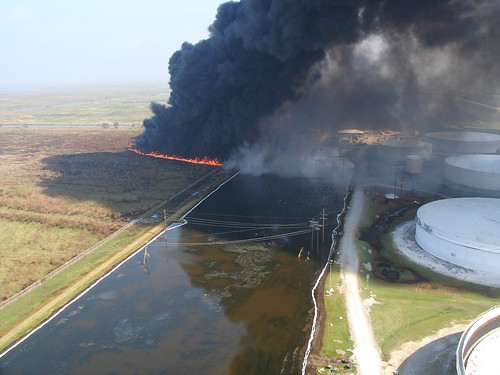
Oil being burned off of a Louisiana marsh after Hurricanes Katrina and Rita

Why the Peak Oil Movement Failed  

Posted by Big Gav in

John Michael Greer (aka The Archdruid) has a look back at why the peak oil "movement" (a term I've always loathed) faltered so quickly once oil prices dropped back off their late 2000s / early 2010s highs - Why the Peak Oil Movement Failed.

As I glance back across the trajectory of this blog over the last ten and a half years, one change stands out. When I began blogging in May of 2006, peak oil—the imminent peaking of global production of conventional petroleum, to unpack that gnomic phrase a little—was the central theme of a large, vocal, and tolerably well organized movement. It had its own visible advocacy organizations, it had national and international conferences, it had a small but noticeable presence in the political sphere, and it showed every sign of making its presence felt in the broader conversation of our time.

Today none of that is true. Of the three major peak oil organizations in the US, ASPO-USA—that’s the US branch of the Association for the Study of Peak Oil and Gas, for those who don’t happen to be fluent in acronym—is apparently moribund; Post Carbon Institute, while it still plays a helpful role from time to time as a platform for veteran peak oil researcher Richard Heinberg, has otherwise largely abandoned its former peak oil focus in favor of generic liberal environmentalism; and the US branch of the Transition organization, formerly the Transition Town movement, is spinning its wheels in a rut laid down years back. ...

Geological realities imposed, and continue to impose, upper limits on global petroleum production, but economic forces have determined how much less than those upper limits would actually be produced. What happened, as a result, is that when oil prices spiked in 2007 and 2008, and then again in 2014 and 2015, consumers cut back on their use of petroleum products, while producers hurried to bring marginal petroleum sources such as tar sands and oil shales into production to take advantage of the high prices. Both those steps drove prices back down. Low prices, in turn, encouraged consumers to use more petroleum products, and forced producers to shut down marginal sources that couldn’t turn a profit when oil was less than $80 a barrel; both these steps, in turn, sent prices back up.

That doesn’t mean that peak oil has gone away. As oilmen like to say, depletion never sleeps; each time the world passes through the cycle just described, the global economy takes another body blow, and the marginal petroleum sources cost much more to extract and process than the light sweet crude on which the oil industry used to rely. The result, though, is that instead of a sudden upward zoom in prices that couldn’t be ignored, we’ve gotten wild swings in commodity prices, political and social turmoil, and a global economy stuck in creeping dysfunction that stubbornly refuses to behave the way it did when petroleum was still cheap and abundant. The peak oil movement wasn’t prepared for that future.

IEA World Energy Outlook 2016  

Posted by Big Gav in , , ,

The IEA has released the 2016 version of their annual world energy outlook report - World Energy Outlook 2016.

The report has prompted a spate of articles about "peak oil demand" (with earlier reports from the Economist and WSJ being joined this week by Forbes, Bloomberg and The FT).

Other than speculation about when demand-driven peak oil production will occur, attention concentrated on:

1. Chinese coal use peaking in 2013 - China's coal use likely peaked in 2013 amid rapid shift to renewables, global energy report says (ABC).

2. Wind and solar will contribute will become the dominant source of energy in most major economies within two decades - IEA makes mockery of Turnbull’s renewable energy scare campaign (RNE).

3. Oil production from conventional non-OPEC fields and oil sands will drop by 6.1 million barrels a day by 2040 (although they still predict overall production will rise) - How Big Oil Loses Even Without Peak Demand (Bloomberg).

4. Fatih Birol says"We see clear winners for the next 25 years — natural gas but especially wind and solar — replacing the champion of the previous 25 years, coal" - Renewables & Natural Gas Win Out In World Energy Outlook, But Investors Must Not Misread Oil Demand (Cleantechnica).

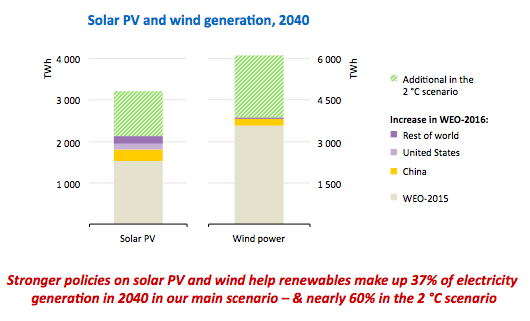
5. A combination of efficiency and deployment of renewables has decoupled economic growth from carbon emissions - Massive report details the energy economy that limits warming to 2°C (Ars Technica).

WSJ: Oil Industry Anticipates Peak Oil Day of Reckoning  

Posted by Big Gav in

The Wall Street Journal has an article on the looming prospect of peak oil demand - Oil Industry Anticipates Day of Reckoning.

Last month Shell finance chief Simon Henry caused a stir when he said the company sees oil demand peaking in five to 15 years. Shell’s latest published forecasts have consumption flattening toward the end of that period.

State-owned China National Petroleum Corp. quietly issued a report in the summer predicting that China’s oil consumption—a major driver of growth in recent decades—will begin to fall by 2030, if not sooner. Global demand is expected to follow suit.

The International Energy Agency, which advises industrialized countries on energy policy, says consumption will continue to rise for decades in its most likely scenario. But that picture shifts radically if governments take further action to limit global warming to less than 2 degrees Celsius with more stringent policies like carbon pricing, strict emissions limits and the removal of fossil-fuel subsidies. If that happens, oil demand could peak within the next 10 years, the IEA says.

“The question is more a question of when, rather than if,” Dominic Emery, BP’s vice president for long-term planning and policy, told the Economist Energy Summit in London this month. BP says oil demand could fall by the late 2020s if tougher emissions laws are enacted.

The Economist on The future of oil  

Posted by Big Gav in , ,

The Economist has a special report on energy, looking at how to break the oil habit - The future of oil.

For all its staying power, oil may be facing its Model T moment. The danger is not an imminent collapse in demand but the start of a shift in investment strategies away from finding new sources of oil to finding alternatives to it. The immediate catalyst is the global response to climate change. An agreement in Paris last year that offers a 50/50 chance of keeping global warming to less than 2ºC above pre-industrial levels, and perhaps limiting it to 1.5ºC, was seen by some as a declaration of war against fossil fuels.

The International Energy Agency (IEA), a global forecaster, says that to come close to a 2ºC target, oil demand would have to peak in 2020 at 93m barrels per day (b/d), just above current levels. Oil use in passenger transport and freight would plummet over the next 25 years, to be replaced by electricity, natural gas and biofuels. None of the signatories to the Paris accord has pledged such draconian action yet, but as the costs of renewable energy and batteries fall, such a transition appears ever more inevitable. “Whether or not you believe in climate change, an unstoppable shift away from coal and oil towards lower-carbon fuels is under way, which will ultimately bring about an end to the oil age,” says Bernstein, an investment-research firm.

Few doubt that the fossil fuel which will suffer most from this transition is coal. In 2014 it generated 46% of the world’s fuel-based carbon-dioxide emissions, compared with 34% for oil and 20% for natural gas. Natural gas is likely to be the last fossil fuel to remain standing, because of its relative cleanliness. Many see electricity powered by gas and renewables as the first step in an overhaul of the global energy system.

This special report will focus on oil because it is the biggest single component of the energy industry and the world’s most traded commodity, with about $1.5trn-worth exported each year. Half of the Global Fortune 500’s top ten listed companies produce oil, and unlisted Saudi Aramco dwarfs them all. Oil bankrolls countries that bring stability to global geopolitics as well as those in the grip of tyrants and terrorists. And its products fuel 93% of the world’s transport, so its price affects almost everyone.

Another article in the report looks out into the post oil future - When oil is no longer in demand.

As the world enters what could be the twilight of the oil age, some wonder whether Aberdeen’s travails could be a harbinger of things to come in oil-producing regions across the world. Mr Spence thinks so. He still runs the smartest hotel in Aberdeen and is about to install a charging station for electric vehicles. ...

Statoil, the Norwegian state oil company, has set an example of what oil companies might do in future. Earlier this year it acquired a lease to build the world’s largest floating wind farm 15 miles off the coast of Peterhead, north of Aberdeen. Each of its five 6MW turbines will be tethered to the seabed on a floating steel base, enabling it to operate in deeper water than a conventional turbine embedded into the sea floor. That will give it access to stronger winds farther offshore, making it cheaper to produce electricity.

OPEC Math Misses the Point  

Posted by Big Gav in ,

Julian Lee at Bloomberg has alook at Saudi oil production strategy in light of "peak oil demand" - OPEC Math Misses the Point.

The roots of this trace back to Nov. 2014, when the Kingdom refused to cut its output to support prices and subsidize high-cost rivals, rejecting the role of the world's swing producer.

This change of heart was inspired in part by the surge in U.S. shale oil production -- which was rising by 1 million barrels per day each year at the time -- in part by the growth in Iraqi output and in part by a re-evaluation of the long-term future of oil.

Saudi concerns over peak oil demand have changed its calculation of the long-term value of reserves in the ground. For most of the last 50 years they were seen as appreciating assets, whose value could only rise in the face of future scarcity. More recently a fear has surfaced that they could be wasting assets, falling in value as oil demand peaks and then wanes, while competing supplies vie for a dwindling market.

As I wrote in May, Saudi Arabia has finally heeded the warning issued in 2000 by former oil minister Sheikh Zaki Yamani, that the Stone Age did not end because of a lack of stones, and the oil age will not end for a lack of oil.

Big Trouble At ExxonMobil ?  

Posted by Big Gav in , ,

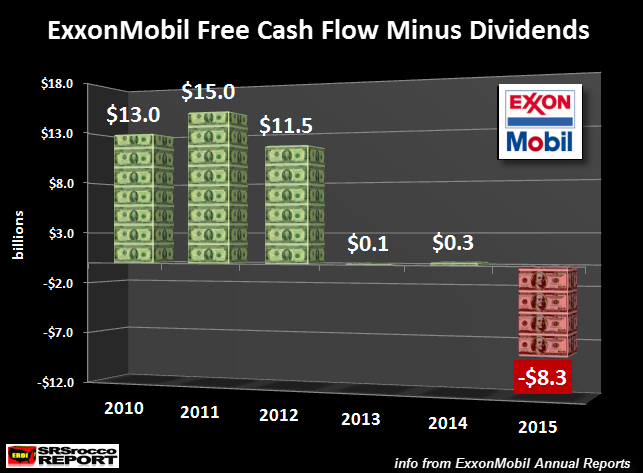
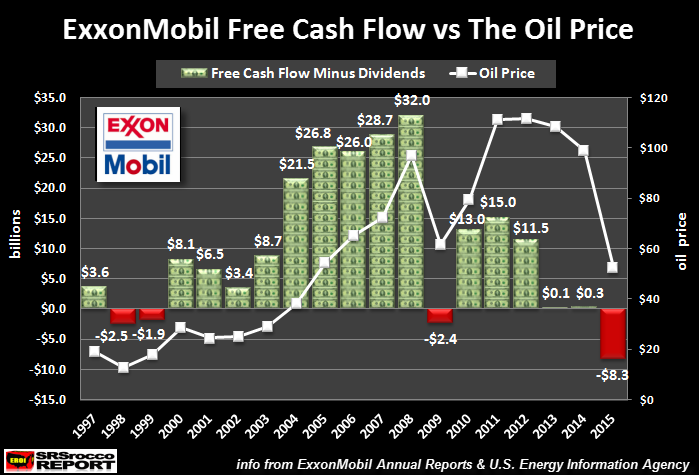
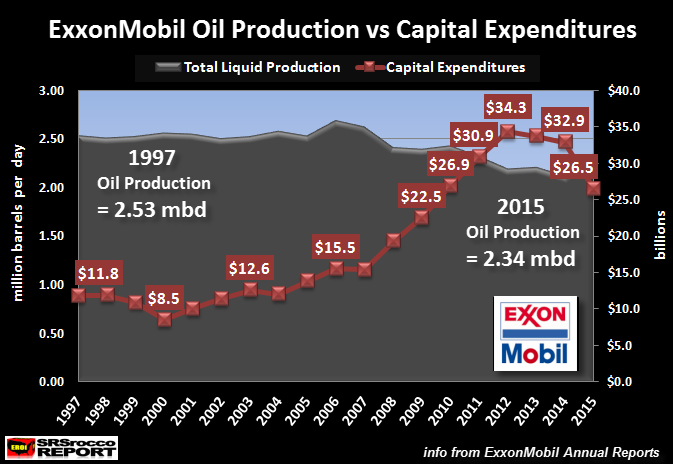
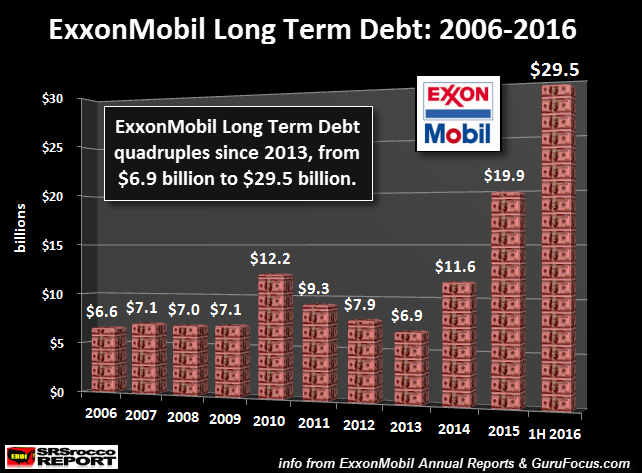
Zero Hedge has an article by SRSrocco on Exxon's inability to increase oil production as production costs rise - END OF THE U.S. MAJOR OIL INDUSTRY ERA: Big Trouble At ExxonMobil.

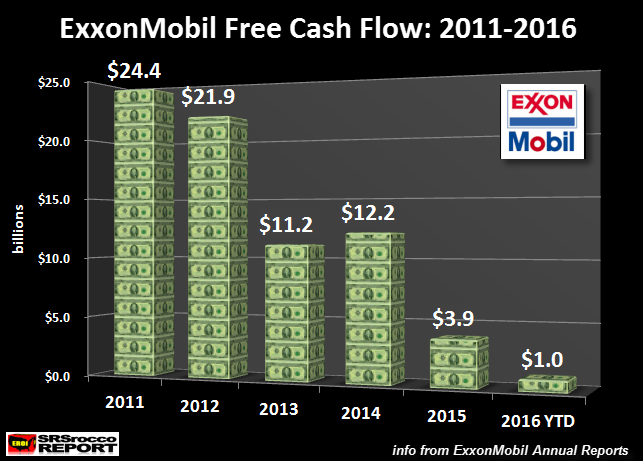
in 1997, Exxon spent $11.8 billion on capital expenditures while producing 2.5 million barrels per day (mbd) of oil. However, their capital expenditures nearly tripled to $34 billion in 2012 as total liquid production fell to 2.2 mbd. Basically, Exxon spent three times more money in 2012 to produce 300,000 barrels per day less than it did in 1997. ...

It seems as if Exxon realized early on that peak oil had finally arrived (privately, of course), so it decided to not waste too much money on future oil projects. Instead, the company spent a massive amount of money on stock repurchases over the past two decades... especially since 2005.

Shell CFO: Peak Oil Demand Could Be Reached In 2021  

Posted by Big Gav in ,

OilPrice.com has a post on some recent comments by Shell's CFO - Shell: Peak Oil Demand Could Be Reached In 2021.

A senior executive for Royal Dutch Shell claimed demand could reach its peak as early as 2021, which is much sooner than anticipated by other analysts. “We’ve long been of the opinion that demand will peak before supply,” said Shell Chief Financial Officer Simon Henry, in a Tuesday conference call. “And that peak may be somewhere between 5 and 15 years hence, and it will be driven by efficiency and substitution, more than offsetting the new demand for transport,” Henry added.

What OPEC’s Oil U-Turn Missed: Peak Demand Keeps Getting Closer  

Posted by Big Gav in

Bloomberg has an article on "peak oil demand", as OPEC members try to pump as fast as possible - What OPEC’s Oil U-Turn Missed: Peak Demand Keeps Getting Closer.

OPEC’s decision last month to reverse its policy of unfettered production and cut oil output to boost prices may be at odds with the industry’s most important long-term trend: demand for what they produce could start falling within 15 years.

If rapid improvements continue in renewable energy, electric vehicles and other disruptive technologies, petroleum consumption will peak in 2030 and decline thereafter, according to a report from the World Energy Council. As the globe’s largest producers gather in London this week for the Oil and Money conference, they might want to check their assumption that the market will grow for decades to come.

The plunging cost of renewable energy -- with solar-module costs falling 50 percent since 2009 -- is already upending the business model of utilities. Disruption could spread to the oil industry as electric vehicles become more economic than gasoline or diesel cars, potentially displacing millions of barrels of daily fuel use by the late 2020s. Projections for decades of demand growth that underpin investments in oil projects could be misplaced.

Drilling Down: Batteries upend Peak Oil debate  

Posted by Big Gav in ,

The AFR has a look at the dim future for oil producers in a world of electric vehicles and "peak oil demand" - Drilling Down: Batteries upend Peak Oil debate.

If "peak oil" conjures up thoughts of when oil output will reach its maximum then you're way behind the times. Now it's all about demand.

And rather than a debate about the geology, it's about technology, and when batteries will force consumption of oil – or at least oil used for transport fuels – into terminal decline.

In an assessment last week by Fitch Ratings of credit risks to various sectors from a breakthrough in battery technology, oil came at the top of the list, meriting a "serious threat" diagnosis. While the utilities and automotive sectors can scratch out some new opportunities from the rise of batteries, it's all downside for oil producers.

Statistics

Locations of visitors to this page

blogspot visitor
Stat Counter

Total Pageviews

Ads

Books

Followers

Blog Archive

Labels

australia (619) global warming (423) solar power (397) peak oil (355) renewable energy (302) electric vehicles (250) wind power (194) ocean energy (165) csp (159) solar thermal power (145) geothermal energy (144) energy storage (142) smart grids (140) oil (139) solar pv (138) tidal power (137) coal seam gas (131) nuclear power (129) china (120) lng (117) iraq (113) geothermal power (112) green buildings (110) natural gas (110) agriculture (91) oil price (80) biofuel (78) wave power (73) smart meters (72) coal (70) uk (69) electricity grid (67) energy efficiency (64) google (58) internet (50) surveillance (50) bicycle (49) big brother (49) shale gas (49) food prices (48) tesla (46) thin film solar (42) biomimicry (40) canada (40) scotland (38) ocean power (37) politics (37) shale oil (37) new zealand (35) air transport (34) algae (34) water (34) arctic ice (33) concentrating solar power (33) saudi arabia (33) queensland (32) california (31) credit crunch (31) bioplastic (30) offshore wind power (30) population (30) cogeneration (28) geoengineering (28) batteries (26) drought (26) resource wars (26) woodside (26) censorship (25) cleantech (25) bruce sterling (24) ctl (23) limits to growth (23) carbon tax (22) economics (22) exxon (22) lithium (22) buckminster fuller (21) distributed manufacturing (21) iraq oil law (21) coal to liquids (20) indonesia (20) origin energy (20) brightsource (19) rail transport (19) ultracapacitor (19) santos (18) ausra (17) collapse (17) electric bikes (17) michael klare (17) atlantis (16) cellulosic ethanol (16) iceland (16) lithium ion batteries (16) mapping (16) ucg (16) bees (15) concentrating solar thermal power (15) ethanol (15) geodynamics (15) psychology (15) al gore (14) brazil (14) bucky fuller (14) carbon emissions (14) fertiliser (14) matthew simmons (14) ambient energy (13) biodiesel (13) investment (13) kenya (13) public transport (13) big oil (12) biochar (12) chile (12) cities (12) desertec (12) internet of things (12) otec (12) texas (12) victoria (12) antarctica (11) cradle to cradle (11) energy policy (11) hybrid car (11) terra preta (11) tinfoil (11) toyota (11) amory lovins (10) fabber (10) gazprom (10) goldman sachs (10) gtl (10) severn estuary (10) volt (10) afghanistan (9) alaska (9) biomass (9) carbon trading (9) distributed generation (9) esolar (9) four day week (9) fuel cells (9) jeremy leggett (9) methane hydrates (9) pge (9) sweden (9) arrow energy (8) bolivia (8) eroei (8) fish (8) floating offshore wind power (8) guerilla gardening (8) linc energy (8) methane (8) nanosolar (8) natural gas pipelines (8) pentland firth (8) saul griffith (8) stirling engine (8) us elections (8) western australia (8) airborne wind turbines (7) bloom energy (7) boeing (7) chp (7) climategate (7) copenhagen (7) scenario planning (7) vinod khosla (7) apocaphilia (6) ceramic fuel cells (6) cigs (6) futurism (6) jatropha (6) nigeria (6) ocean acidification (6) relocalisation (6) somalia (6) t boone pickens (6) local currencies (5) space based solar power (5) varanus island (5) garbage (4) global energy grid (4) kevin kelly (4) low temperature geothermal power (4) oled (4) tim flannery (4) v2g (4) club of rome (3) norman borlaug (2) peak oil portfolio (1)