Showing posts with label big brother. Show all posts

Vault 7  

Posted by Big Gav in , ,

A few years ago I speculated that one day some unenthused young contract worker at an Intelligence agency would decide to do a Snowden and release details of the backdoors that have been built into our electronic devices - Gen Y's Revenge - Opening The Back Door ?.

After thinking about this for a while I eventually concluded that the next big scandal could be one that could have far more real world impact than the current round of revelations (which are going to have a lasting effect on American technology providers over the next decade as foreign and multinational entities start trying to attain some level of information privacy that they don't enjoy today).

My thinking goes like this - if all our technology platforms now have backdoors built into them, what happens if some whistleblower decides to make public the mechanisms for accessing these backdoors ? Is there some procedure on the shelf that will allow a (relatively) rapid rollout of fixes to close the backdoors (and the cynic in me assumes, install new ones) ? Or is this just a hacker's wet dream waiting to come true...

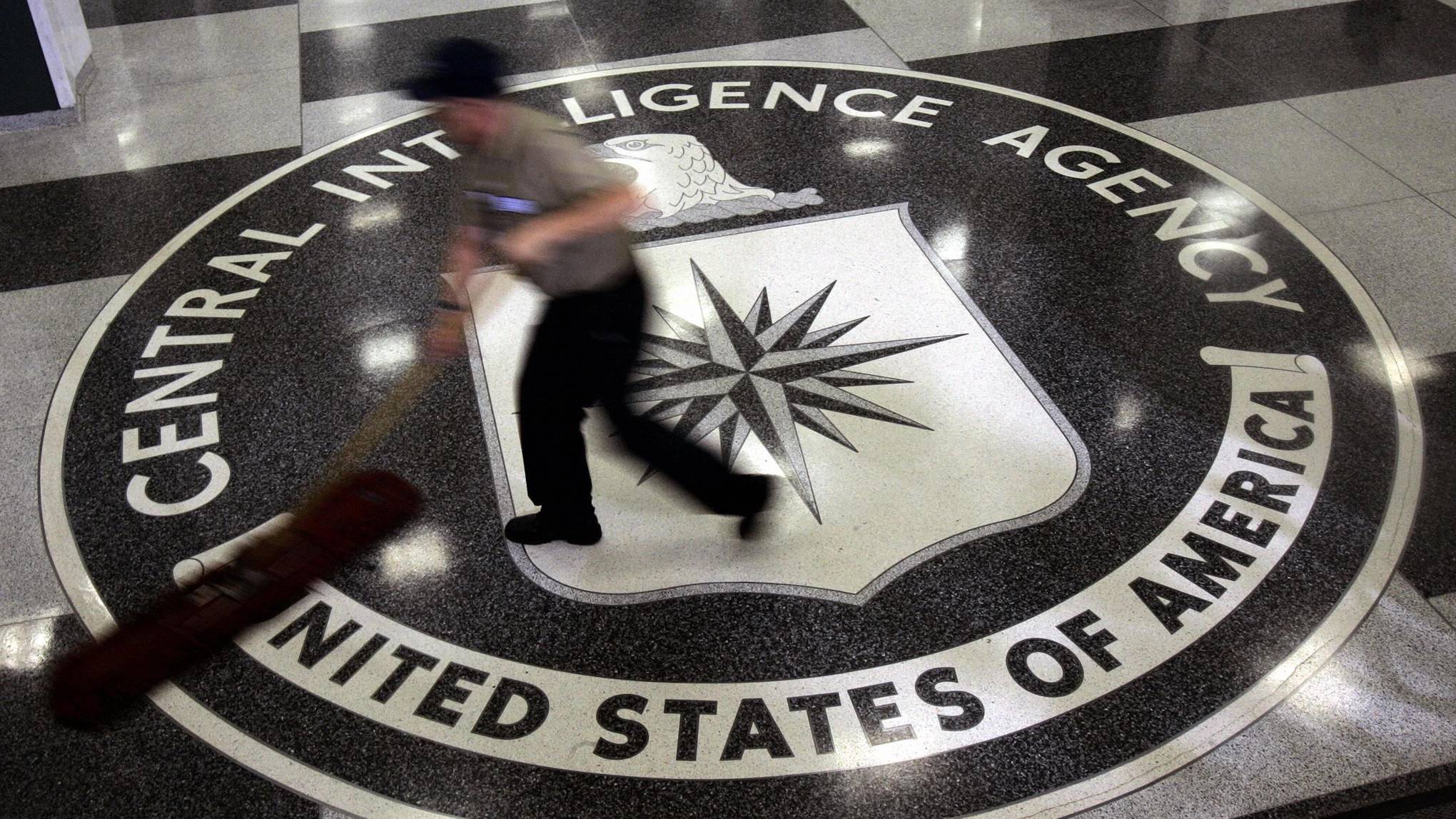
So I wasn't all that surprised by Wikileaks' latest release, the much hyped "Vault 7" - Vault 7: CIA Hacking Tools Revealed.

Like the Podesta emails, the timing for this one was dodgy at best, with Trump doing some paranoid tweeting about his phones being tapped by Obama a couple of days before the document dump. By and large I still like Assange, but the entire neocon and Democratic establishment seem to determined to paint him as yet another tool of Vladimir Putin - and some of Wikileaks' tweets and the way they seem to be co-ordinating with the Trumpists don't do much to contradict this.

Fingers crossed they start releasing some dirt on the Trump administration before too long to restore some balance to the force.

There are a few other conspiracy theories about this latest release floating around that don't come from the Washington establishment. One of these is that this is part of a turf war between the NSA and CIA, with the NSA perhaps deciding that the CIA are encroaching too much on their area of expertise (mirroring some theories around the time of the Snowden revelations that the CIA wanted to discredit the NSA).

Bruce Schneier has a good roundup of articles on the topic - WikiLeaks Releases CIA Hacking Tools.

Somewhat weirdly, while browsing Facebook outside yesterday (off my home network) I emailed the link to this Intercept story to myself with the subject line "Vault 7" yesterday. A minute or so later I had an aborted call from a number in The Seychelles then my phone popped up a dialog box asking me what wifi network I wanted to connect to (something I can't recall it ever spontaneously asking me to do before). It did make me wonder just how active / automated the surveillance systems are these days when it comes to grabbing all the information off your phone...

FORMER CIA DIRECTOR Michael Hayden told the BBC this week that he blames millennials for the government’s secrets being leaked to the public.

“In order to do this kind of stuff, we have to recruit from a certain demographic,” he said, referring to government surveillance. “And I don’t mean to judge them at all, but this group of millennials and related groups simply have different understandings of the words loyalty, secrecy, and transparency than certainly my generation did.”

Trump's War On Facts  

Posted by Big Gav in , ,

I figured The Borowitz Report may have been a little premature claiming that George W Bush was very relieved he would no longer be the worst US president in history once Donald Trump was inaugurated, however after 5 days in the job I think Trump is getting close to taking the honour (unlike Bush he hasn't invaded any other countries yet so it's still line ball, though apparently he is threatening to invade Chicago).

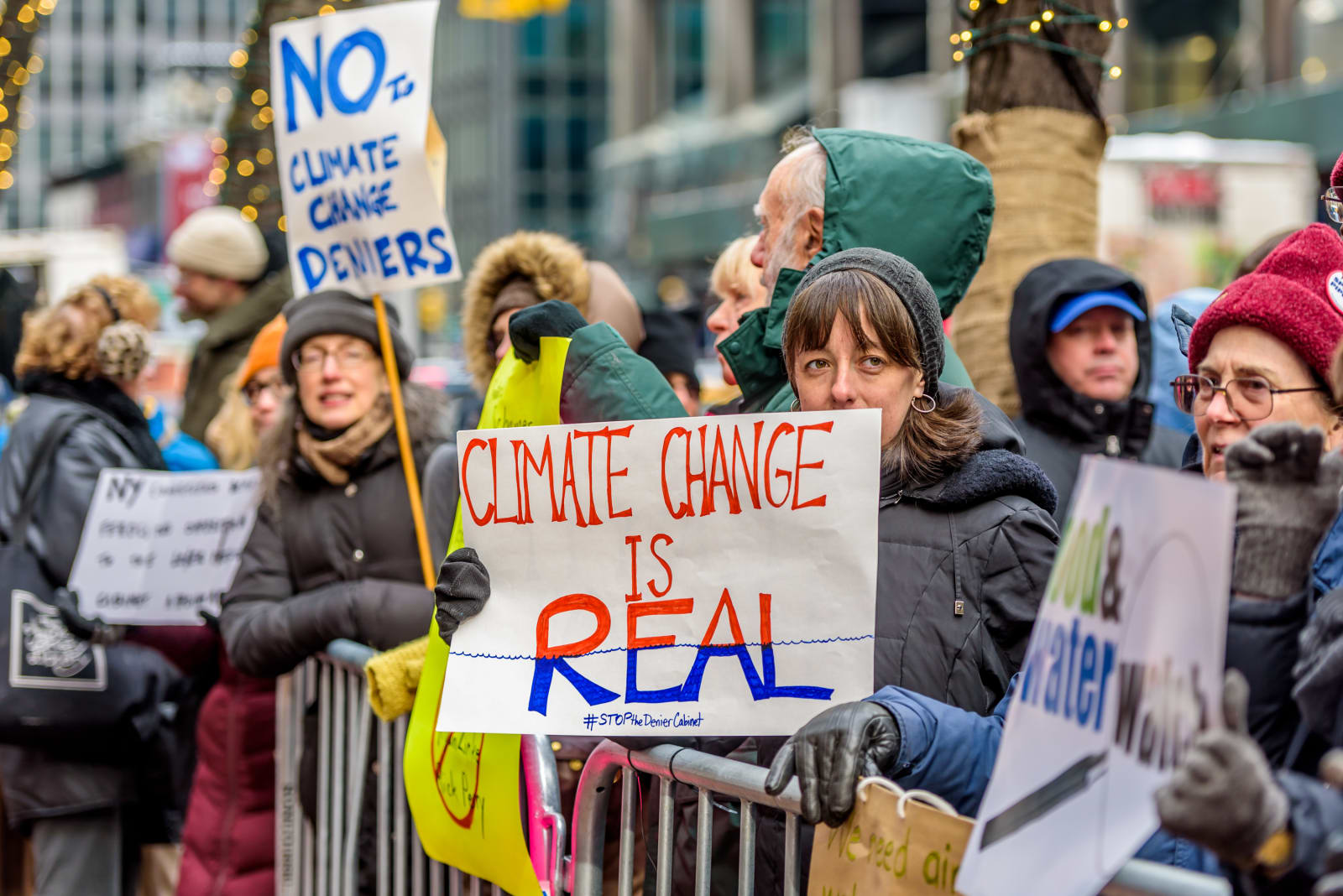
Listing all of Trump's violations of decency and common sense would be tedious but one unpleasant aspect of this American experiment with authoritarianism which stands out already is his continual war on the truth, starting with the bizarre attempts to deny that the attendance at his inauguration ceremony was far lower than that of previous presidents (not to mention the massive anti-Trump protests the following day) and the creation of the phrase "alternative facts" to describe Trump administration lies.

While it is common for dictators to lie about topics which reflect poorly upon them (they also like to declare weird national holidays like Trump's "National Day of Patriotic Devotion, which I initially thought was satire - apparently Trump is following Kim Jong Il's playbook as much as he is Vladimir Putin's) the speed at which the Trump administration is moving to push scientific facts down the memory hole (one of the many apropros concepts from George Orwell's 1984 which will come in handy during the Trump era) is staggering.

After starting with a purge of the White House web site (eliminating all mention of climate change and clean energy, along with other annoyances like civil rights and the Spanish language version of the site), the administration has quickly moved on to removing references to climate change from the EPA web site and telling government employees they cannot release information to the media or the public without having it vetted for political correctness first. The functions of the EPA seem to have been pretty much suspended as well, no doubt as the first step towards dismantling federal environmental protection programs completely (as they are an obstacle to keeping US consumers hooked on fossil fuels for as long as they last).

On the plus side, the fear of Trumpist censorship led to a carnival of climate data archiving over the past month, and the administration's heavy handed censorship of official Twitter accounts has sparked a boom in rogue government Tweeters that are now far more popular than the official accounts (with special mention going to the folks at the Badlands National Park).

The science community is now organising it's own protest marches against Trump, with a march on Washington planned in the coming weeks.

Whether or not Trump is still in office at that point can't be certain, with his recent performance in a TV interview prompting a lot of pundits to wonder if he'll be bounced out of office by his own cabinet under the 25th amendment section covering situations where the president is no longer fit for office. That's if the CIA (allegedly unimpressed with his cheer squad disrespecting their hallowed ground) don't assassinate him first of course...

1984 Wasn't Meant To Be An Instruction Manual  

Posted by Big Gav in , , , ,

It was interesting that Glenn Greenwald's revelations in The Guardian about the NSA's "PRISM" total surveillance program popped up around the same time that the trial of Bradley Manning began (with the firestorm of coverage in the mainstream media prompting Cryptogon to wonder why they've piped up all of a sudden - by some random coincidence the Bilderberg conference is on at the moment - even "Enemy of the State" - one of my favourite movies - was on TV here this weekend).

The Atlantic has a good summary of the news - Birth of the Surveillance State.

On December 20, 2002, a Senate Intelligence Committee that included Sen. Ron Wyden, D-Ore., today one of the most vociferous critics of the so-called "surveillance state," came to the following conclusion in its official report on the mistakes that led to 9/11: The National Security Agency had harmed U.S. counterterrorism efforts that might have prevented that terrible day because of the agency's "failure to address modern communications technology aggressively."

The report, a joint effort of the Senate committee and the House Permanent Select Committee on Intelligence, blamed "NSA's cautious approach to any collection of intelligence relating to activities in the United States, and insufficient collaboration between NSA and the FBI regarding the potential for terrorist attacks within the United States."

The Senate-House report said the NSA simply could not keep up with the explosion of information technology. "Only a tiny fraction" of the NSA's 650 million daily intercepts worldwide "are actually ever reviewed by humans, and much of what is collected gets lost in the deluge of data," the report said. In interviews at the time, then-NSA Director Michael Hayden explained why: The NSA, originally authorized to conduct monitoring only overseas, was effectively a Cold War dinosaur that was going "deaf" since its main mission of tracking "signals intelligence," known as Sigint, from the Soviet Union had ended.

"We have gone from chasing the telecommunications structure of a slow-moving, technologically inferior, resource-poor nation-state--and we could do that pretty well - to chasing a communications structure in which an al-Qaida member can go into a storefront in Istanbul and buy for $100 a communications device that is absolutely cutting edge, and for which he has had to make no investment in its development. That's what we've got to deal with," Hayden told me in an interview in mid-2002.

In congressional testimony leading up to that critical Senate-House report, Hayden explained the NSA had gone from tracking a relatively small number of Soviet communications pipelines -- microwave transmissions, for example, from Moscow to various ICBM bases -- to trying to keep up with billions of conversations on phones and emails in a world in which technological borders had been erased, and much of this traffic was now being routed through the United States. This huge new challenge was coming at a time when the super-secret agency had "downsized about a third of its manpower and about the same proportion of its budget in the '90s," the era of the so-called post-Cold War peace dividend, Hayden said in his testimony. "That's the same decade when mobile cell phones increased from 16 million to 741 million--an increase of 50 times. That's the same decade when Internet users went from about four to 361 million."

These perceived deficiencies, and the NSA's aggressive efforts to redress them since then, make up the real backdrop to the latest scandal that has engulfed Washington, this time over what appears to be a massive infringement of American civil liberties. And despite the outrage voiced by senators such as Wyden and other critics, the truth about what the NSA and intelligence and investigative community is doing is far more complex than the rhetoric might lead you to believe.

Most important of all, almost the entire U.S. government has been on board in promoting it.

After many struggles and failures in the last decade, the NSA did finally come up with new approaches to keeping up with the traffic. One such approach was the NSA's "PRISM" program, disclosed Thursday by The Washington Post and the Guardian newspaper. The newspapers revealed that the NSA and FBI have set up a program to tap directly into the central servers of nine leading U.S. Internet companies, "extracting audio and video chats, photographs, e-mails, documents, and connection logs that enable analysts to track one target or trace a whole network of associates," as the Post wrote. The program was reportedly set up in cooperation with the major companies, including Microsoft, Yahoo, Google, Facebook, PalTalk, AOL, Skype, YouTube and Apple.

Crikey's Guy Rundle is sounding even more like a marxist academic then usual lately - here's his take on the story - All hail Snowden, the hero who exposed a government.

Like many people around the world, I’ve spent the last 48 hours tracking, reading, watching, refreshing and barely sleeping, as a torrent of stories of total surveillance run by the National Security Agency have come to light through the US journalist Glenn Greenwald, published in The Guardian.

The leaks revealed total blanket phone call metadata (origin, length of calls, networks and connections) by the NSA, followed by the voluntary turning-over of mass amounts of data by private internet service providers and social media corporations — including Microsoft, Google, Skype and Twitter. Then came news that UK’s Government Communications Headquarters may have been illegal cribbing such data for its own ends. Finally, on the weekend, the leaker revealed himself, 29-year-old Edward Snowden, a systems operations operator for Booz Allen Hamilton and Dell, to whom the NSA subcontracted various tasks.

Snowden bobbed up three weeks after leaving Booz Allen Hamilton with 41 carefully chosen pages of dynamite memos. He holed up in Hong Kong, while releasing the memos to people he trusted. He initially approached The Washington Post, but they appear to have been furiously hedging their bets, as have all mainstream US media. He made the decision to reveal his own identity, in order that people could understand that a very ordinary — in the best sense of the word — person was behind it, and to make the intolerable nature of what was revealed to him clear.

The facts are clear enough: while accessing the content of phone calls on old tech lines is protected by limiting laws, no such limit holds on the ISP/social media giants, if they choose to comply with the government. Clients of these services — i.e. everyone — have already signed away their rights, in those huge documents you click “accept” to without reading. The NSA’s mega-data collection centre in Bluffdale Utah has come on stream, and it can collect and store all communicated data for decades. The files are multi-dimensionally searchable by programmes that learn as they go. The idea that the process will be drowned in cat videos is consoling and fanciful.

The PRISM programme represents the most far-reaching extension of power into the very texture and fabric of everyday life in history. Those on the hacker/cypherpunk side of things have realised for some years, many years, that this process was under way. Some of us have been aware of it for a couple of years. Now it has become general knowledge.

The policy and the practice is an extension and expansion by the Obama administration of a process begun in the Bush years, and with various antecedents, from the days when the internet began to vastly expand, carried by the web, in the early 90s. Snowden, who has worked in the NSA purview since 2009, has said that his actions, and the delay in them, arose in part from waiting to see if Barack Obama would take some action on the matter — and then a decisive disappointment when he didn’t.

What appears to have been a passivity on the part of Obama with regard to a practice in place changes the meaning and character of his presidency substantially. In writing about him over the years, I’ve noted that any belief that he would substantially alter the projection of US power was an illusion; any candidate was applying for a dual position of President and emperor; supporting the former did not preclude attacking the latter’s policies.

But of course that has always been, to some degree, a false dichotomy. The empire reaches back into the Republic. With PRISM, that process is totalising; the space of the Republic has been squeezed to near-zero. To the surprise of many, that does not seem to have overly disconcerted the US public, with support for the NSA’s policies polling at 56% to 41%. Not too much should be made of that — the US has become such a news desert in many areas that many people are at this stage, simply not aware of the breadth of PRISM and other programmes.

But the revelation of these programmes has thrown the US state into disarray, and had the same effect on its institutional politics. The state elite’s determination to push into every area of life is driven not merely by a desire to avoid terror attacks of the latter type, but in response to challenges from states such as China, which highlight their vestigial constitutional limits, and the general expansion and extension of technical power and possibility, from standard high-tech to biological engineering.

What this historical process should prompt is a renegotiation of state and social power on a global scale. What it is prompting instead is a paradoxical attempt by states to extend their power further into everyday life than they hitherto been, just as that process becomes one that is unwinnable, save by explicit and visible tyranny. In the meantime, it is stretching state power to the point where its legitimacy cracks in the middle. Since that middle runs through the heart of decent people, loyal to their society and humanity, it produces whistleblowers willing to take the ultimate risk.

The ramifications of this are manifold, to be explored in these pages by many writers in the weeks to come. But for the moment one crucial point needs to be made: this process is ramrodding one of the most serious recombinations of politics in recent decades, or perhaps longer. This is happening most substantially in the imperial centre of the US — now little more than a contradiction with a flag — but it will spread elsewhere.

On the Left it is happening in reasonably orderly fashion, along old faultlines — between a core, statist Left which cleaves ever closer to an unlimited national security state, and a dissident Left which has always resisted it. Such centre-left support for the national security state draws, distortedly, on the communalist core of Leftism — the idea that standing for the nation is standing for the collective, no matter how distorted. Thus California leftists like Senator Dianne Feinstein have no problem finding themselves aligned with John McCain, Bill Kristol and a whole bunch of others, in what is basically a centrist, totalising, national security party. The dissident Left can detach from its partial attachment to that Left, without too much confusion.

Meanwhile on the Right, they’re going f-cking nuts. I say that with no more than a dash of schadenfreude  — you take your pleasures where you find them — but more as an analysis of what’s likely to happen. That the Republican Party would split on this issue is unsurprising; that it would split down the middle of its Tea Party/libertarian Right is an extraordinary thing to behold.

Thus Rand Paul is now promoting a Supreme Court challenge to the NSA in such a way that would gain the support of the American Civil Liberties Union, the CounterPunch left, and hundreds of other groupings. The national security Right is now arguing that they will have to marshal a figure like Ted Cruz to challenge Rand Paul in the nominations.

Finally, Greens Senator Scott Ludlam came up with the best quote I've seen on the topic - "George Orwell's 1984 "wasn't intended to be an instruction manual"" - 'We're waiting for an Aussie to blow the whistle on PRISM'.

UK Immigration Officer Puts Wife on the No-Fly List  

Posted by Big Gav in

Bruce Schneier has another sorry tale about no-fly lists, a legacy of the phoney "war on terror" - UK Immigration Officer Puts Wife on the No-Fly List.

A UK immigration officer decided to get rid of his wife by putting her on the no-fly list, ensuring that she could not return to the UK from abroad. This worked for three years, until he put in for a promotion and -- during the routine background check -- someone investigated why his wife was on the no-fly list.

Okay, so he's an idiot. And a bastard. But the real piece of news here is how easy it is for a UK immigration officer to put someone on the no-fly list with absolutely no evidence that that person belongs there. And how little auditing is done on that list. Once someone is on, they're on for good.

That's simply no way to run a free country.

Proposed Law Would Put Video Cameras In Cars  

Posted by Big Gav in , ,

Cryptogon has a post on a law proposing videoing of drivers in cars - Proposed Law Would Put Video Cameras In Cars.

I’m sure the FBI wouldn’t access these cameras, like they access the microphones on the cell phones that people are carrying around. Oh no. Never.

Via: CBS:

Lawmakers are considering controversial new legislation this week that would allow vehicles to be equipped with dashboard cameras to record the moments leading up to accidents.

The proposed law, AB1942, would promote safer driving habits and reduce accidents by permitting video recorders to be installed on the windshield.

The bill currently allows devices to record video, audio, how fast and which direction the vehicle is traveling, a history of where your car has been, steering and brake performance and seat belt usage.

The devices would record in a continuous loop and would only save information if there is unusual vehicle motion or a crash. They could also be capable of transmitting the information to a central control center the moment of the accident.

Proponents say there are enough safety measures to avoid an invasion of privacy, but others call the proposal a huge overreach of government power.

The post mostly caught my eye because of this reference to an old CNet article on eavesdropping on mobile phone users, even when their phones are switched off -FBI taps cell phone mic as eavesdropping tool.
The FBI appears to have begun using a novel form of electronic surveillance in criminal investigations: remotely activating a mobile phone's microphone and using it to eavesdrop on nearby conversations.

The technique is called a "roving bug," and was approved by top U.S. Department of Justice officials for use against members of a New York organized crime family who were wary of conventional surveillance techniques such as tailing a suspect or wiretapping him.

Nextel cell phones owned by two alleged mobsters, John Ardito and his attorney Peter Peluso, were used by the FBI to listen in on nearby conversations. The FBI views Ardito as one of the most powerful men in the Genovese family, a major part of the national Mafia.

The surveillance technique came to light in an opinion published this week by U.S. District Judge Lewis Kaplan. He ruled that the "roving bug" was legal because federal wiretapping law is broad enough to permit eavesdropping even of conversations that take place near a suspect's cell phone.

Kaplan's opinion said that the eavesdropping technique "functioned whether the phone was powered on or off." Some handsets can't be fully powered down without removing the battery; for instance, some Nokia models will wake up when turned off if an alarm is set.

While the Genovese crime family prosecution appears to be the first time a remote-eavesdropping mechanism has been used in a criminal case, the technique has been discussed in security circles for years.

The U.S. Commerce Department's security office warns that "a cellular telephone can be turned into a microphone and transmitter for the purpose of listening to conversations in the vicinity of the phone." An article in the Financial Times last year said mobile providers can "remotely install a piece of software on to any handset, without the owner's knowledge, which will activate the microphone even when its owner is not making a call."

Cryptogon also has some thoughts about Matt Simmons' passing away - Matt Simmons Dead “Of An Apparent Heart Attack”.

Conroy backs down on Australian net filters  

Posted by Big Gav in , , , ,

The SMH reports that the Australian government is deferring internet censorship legislation to after the election - Conroy backs down on net filters. Remember to vote against Conroy in the upcoming election.

Communications Minister Stephen Conroy has capitulated to widespread concerns over his internet censorship policy and delayed any mandatory filters until at least next year.

Academics, ISP experts, political opponents, the US government and a broad cross-section of community groups have long argued that the plan to block a secret blacklist of "refused classification" web pages for all Australians was fraught with issues, for example, that blocked RC content could include innocuous material.

Having consistently ignored these concerns, Senator Conroy today announced that implementation of his policy would be delayed until a review of RC classification guidelines could be conducted by state and territory censorship ministers.

Dear Mr. President: Please abuse your powers  

Posted by Big Gav in

Dan Gillmor has an article at Salon pointing out that the Obama administration isn't that different to the Bush administration when it comes to disdain for civil liberties - Dear Mr. President: Please abuse your powers.

Yesterday, the Supreme Court upheld a law that can put you in jail for the "crime" of advocating lawful, nonviolent activity, if the government decides that your advocacy is somehow helping a group the government declares is engaging in terrorism. Authoritarian right wingers reading this may be pleased to hear that Jimmy Carter could be a criminal under this ruling. They should also be thrilled to know that the Obama administration fought hard for this ruling, and that Supreme Court nominee Elena Kagan, as solicitor general, argued for this gross encroachment on free speech and the First Amendment.

Again and again, this administration has endorsed and expanded on the Bush administration's consistent stance that the Bill of Rights, apart from the Second Amendment, must take a distant second place to the "war on terror" that by definition can never end. Politicians and pundits who once claimed to believe in civil liberties are in hiding. It speaks volumes about our media today that Jon Stewart is one of the few commentators to speak truth to power on these issues.

So the more I watch Obama channel and extend Bush administration claims of essentially unlimited presidential power, the more I conclude that we have essentially one hope at this point -- and it rests, in part, on an awakening among conservatives who are today so enamored of authoritarian rule.

True civil libertarians of all political persuasions should hope, perversely, that Obama will abuse the powers he's claimed -- and which, given Congress' craven acceptance, appear to be a bipartisan Washington consensus. Moreover, we have to hope that he'll abuse them broadly, against people who support him as well as those who don't, and not just against the Guantanamo prisoners who seem to have dropped off America's radar screen or in several somewhat random cases.

The bipartisan disdain for liberty breaks recent precedent. In the Clinton years, a significant number of Republicans hammered what they believed (accurately in some cases) was the White House's tendency to claim executive powers that they were certain would be abused. Indeed, for a time it was the GOP that defended civil liberties -- hypocritically in many cases, as it was mostly reflexive anti-Clinton paranoia, but useful nonetheless for those of us who were glad to see someone, anyone, pushing back.

During the Bush years, a few Democrats at least talked a good game, decrying the administration's wholesale claims of absolute power. But the Democrats were craven in the extreme when it came to applying actions to words; almost every opportunity they had to take a stand for liberty, they went the other way.

Having turned cowardice into an art form, the Democrats seem to figure it's OK to pander relentlessly to fear and expand presidential power because a good person is in charge at the moment -- and because lots of Democrats have deeply authoritarian impulses as well. The latter may actually be the more important motivation.

What of the Republicans and their allies on the political right? There's a huge amount of fury today about Obama's policies, including what many claim is a takeover of the economy and other dictatorial powers being assumed by the president. Yet while the Limbaughs and Becks and their political followers rant and rave about "the regime" and its excesses, they're applauding every time the administration insists on truly dictatorial authority in matters of national security, a term that has grown and grown in its scope.

This disconnect makes sense only if you assume, as I do, that the right wing has concluded that Obama actually won't abuse his police powers, at least in ways they or their major supporters will find objectionable. They're threading a needle. The right wing's sane leaders must surely fear the possibility that some supporters might actually use their weapons to "take back the country," because that would give Obama a reason to act against them using those police powers. Rather, they must want supporters to get organized at protests and political meetings and ultimately in voting booths. Their goal is for Obama to fail, in ways that have historically led to right-wing surges, so they can get back all three branches of government again. Actual violence by their supporters would make that much more difficult. But the political right is surely licking its chops, confident that when it returns to power there will be absolutely no constraints on their pro-authority agenda.

If that happens, Obama will have given them cover. He, as much as George W. Bush and Dick Cheney, will have laid the groundwork for a regime that goes all the way to the edge, if not over it.

Most depressing of all, the majority of the American people would probably welcome such a government. Our preference for the illusion of safety over the recognition and acceptance of risk has only grown. We are a society too afraid of our own shadows to confront reality, I fear. Someday, perhaps as soon as the next successful terrorist attack, we'll get what we seem to want.

Which is why I come back to my perverse hope that Obama will abuse his powers enough to pull enough scales from enough eyes, especially in Washington, to make people understand what history teaches again and again: Untrammeled executive authority only seems like the easier road -- until you're in the way of the bulldozer.

Internet 'kill switch' proposed  

Posted by Big Gav in ,

The SMH reports that crazed American Senator Joe Liebermann (always on the lookout for new ways to control people) is trying to legislate for a formal mechanism for the US to crash the internet - Internet 'kill switch' proposed.

US President Barack Obama would be granted powers to seize control of and even shut down the internet under a new bill that describes the global internet as a US "national asset".

Local lobby groups and academics have rounded on the plan, saying that, rather than combat terrorists, it would actually do them "the biggest favour ever" by terrorising the rest of the world, which is now heavily reliant on cyberspace.

The proposed legislation, introduced into the US Senate by independent senator Joe Lieberman, who is chairman of the US Homeland Security committee, seeks to grant the President broad emergency powers over the internet in times of national emergency.

Titled "Protecting Cyberspace as a National Asset Act", the bill stipulates any internet firms and providers must "immediately comply with any emergency measure or action developed" by a new section of the US Department of Homeland Security, dubbed the "National Centre for Cybersecurity and Communications".

Lobby group TechAmerica told ZDNet it worried that the bill would give the US "absolute power" over the internet and create "unintended consequences".

One of Australia's top communications experts, University of Sydney associate professor Bjorn Landfeldt, railed against the idea, saying shutting down the internet would "inflict an enormous damage on the entire world".

He said it would be like giving a single country "the right to poison the atmosphere, or poison the ocean".

"All our financial systems, all our security systems ... we're so reliant on the internet that if you shut it down there's a question of whether society will continue to operate normally anywhere in the Western world," Landfeldt said in a phone interview.

"By doing this they would do the terrorists the biggest favour ever because they would terrorise the rest of the world".

Landfeldt said the US would be the only country in the world with the ability to shut down the internet. He said such a move would be extremely difficult for the US to justify to other nations.

WikiLeaks founder has his passport confiscated  

Posted by Big Gav in , ,

Glenn Greenwald has a post on reports that Wikileaks founder Julian Assange has had his Australian passport confiscated - WikiLeaks founder has his passport confiscated.

This is a reminder that one can't run around exposing the secrets of the most powerful governments, militaries and corporations in the world without consequences (h/t):
The Australian founder of the whistleblower website Wikileaks had his passport confiscated by police when he arrived in Melbourne last week.

Julian Assange, who does not have an official home base and travels every six weeks, told the Australian current affairs program Dateline that immigration officials had said his passport was going to be cancelled because it was looking worn.

However he then received a letter from the Australian Communication Minister Steven Conroy’s office stating that the recent disclosure on Wikileaks of a blacklist of websites the Australian government is preparing to ban had been referred to the Australian Federal Police (AFP).

Last year Wikileaks published a confidential list of websites that the Australian government is preparing to ban under a proposed internet filter -- which in turn caused the whistleblower site to be placed on that list.

The Australian document was so damaging because the Australian government claimed that the to-be-banned websites were all associated with child pornography, but the list of the targeted sites including many which had nothing to do with pornography. That WikiLeaks was then added to the list underscores the intended abuse.

Forcing Assange to remain in Australia would likely be crippling to WikiLeaks. One of the ways which WikiLeaks protects the confidentiality of its leakers and evades detection is by having Assange constantly move around, managing WikiLeaks from his laptop, backpack, and numerous countries around the world. Preventing him from leaving Australia would ensure that authorities around the world know where he is and would impede his ability to maintain the secrecy on which WikiLeaks relies.

Secrecy is the crux of institutional power -- the principal weapon for maintaining it -- and there are very few entities left which can truly threaten that secrecy. As the worldwide controversy over the Iraqi Apache helicopter attack compellingly demonstrated, WikiLeaks is one of the very few entitles capable of doing so and fearlessly devoted to that mission. It's hardly surprising that those responsible would be harassed and intimidated by governmental agencies -- it'd be far more surprising if they weren't -- but it's a testament to how truly threatening they perceive outlets like WikiLeaks to be.

Facebook founder feels the heat  

Posted by Big Gav in , ,

The SMH has a report on the apparently cavalier attitude towards data privacy held by Facebook owner Mark Zuckerberg - Facebook founder feels the heat as privacy backlash rages.

A leaked instant messenger (IM) transcript from 2003 in which Facebook founder Mark Zuckerberg mocks users who joined his then fledgling social networking site is adding to the sense of outrage over the social networking site's cavalier attitude towards privacy.

The transcript, published by the sober Business Insider website, dates from the days when Zuckerberg was a 19-year-old operating what was then called The Facebook from his Harvard dorm room.

The IM conversation went like this, Business Insider says:

Zuck: Yeah so if you ever need info about anyone at Harvard

Zuck: Just ask.

Zuck: I have over 4,000 emails, pictures, addresses, SNS

[Redacted Friend's Name]: What? How'd you manage that one?

Zuck: People just submitted it.

Zuck: I don't know why.

Zuck: They "trust me"

Zuck: Dumb f--ks.

The authenticity of the transcript was not denied by Facebook, which later issued a statement saying: "The privacy and security of our users' information is of paramount importance to us. We're not going to debate claims from anonymous sources or dated allegations that attempt to characterise Mark's and Facebook's views towards privacy."

The leak and the reaction to it underscores Zuckerberg's current notoriety as internet's favourite whipping boy.

Facebook, which boasts a worldwide membership of more than 400 million, began altering its privacy policy in December. In January, Zuckerberg told an audience that privacy was no longer a "social norm".

The Nude Bomb  

Posted by Big Gav in , , ,

Chris Floyd has a look at the recent "underpants bomber" episode - Balance of Terror: From Detroit City to Ghazi Khan.

A lone man on an airliner makes a badly botched attempt to ignite what appears to be some kind of hastily cobbled-together device that might or might not have caused some kind of unspecified but apparently non-crippling damage to the plane. The plane lands safely; no one is killed.

Yet the reverberations from this half-baked enterprise quickly roiled the entire world. Within hours, a whole range of new, even more intrusive and draconian security procedures were imposed on travelers across the globe. Governments hastened to launch "security reviews," and promise "tough new measures" not only to thwart terrorists but to root out nests of agitators and "radicalizers" clinging to the soft underbelly of our all-too-tolerant, too-nice-for-its-own-good Western world.

Perhaps most significantly, the non-igniting of the homemade device has "rejuvenated [the] debate ... over the proper balance between security and privacy," the New York Times informs us -- while quoting several "experts" who let us know just which way this "balance" is now going to tilt. These "experts" include Bush retreads like ex-Homeland Security commissar Michael Chertoff, who now dabbles profitably in the "risk management and security consulting" industry -- yet another of our great and good for whom every act of terror (real or imagined, successful or unsuccessful) means boffo box office.

The sudden insertion of Chertoff into the story gives us another example of a grim, enduring truth: the construction of "conventional wisdom" among our media and political elites is always driven, in large part or in whole, by raw, brutal self-interest. The new CW now being assembled before our eyes is a "rejuvenation" of one of the ruling tropes of the 21st century: "Liberty bad, security good."

Lew Rockwell has a column pondering whether or not this is a scheme to make us all remove our underwear when we pass through airports - The Old 'False-Flag Trick'.
You know, Chief, this nude bomb might solve a lot of problems. For one thing, flashers.... And there'd be no more trouble with concealed weapons. I mean, if everyone were nude, there'd be no place to hide a gun or knife. Well, there is a place, but it could be painful.

Maxwell Smart, the redoubtable Agent 86, finding the upside to KAOS's terrorist threat to destroy the world's clothing with its dreaded Nude Bomb.*

In an utterly predictable response to an unsuccessful attempt by a would-be Jihadist to emasculate himself in mid-air by detonating a small explosive charge (a very small one, of course), the Regime is moving, slowly but inexorably, in the direction of requiring airline passengers to strip nude.

There is plentiful evidence to suggest that the same Regime acted as an accomplice – most likely a passive one – in that same failed bombing attempt. Call it a delayed-action nude bomb: One Nigerian nutcase conceals a firecracker in his wedding tackle, and before long everybody will have to strip nude in order to fly.

Granted, the nudity would be "virtual," temporary, and limited in its exposure. Passengers would be violated one at a time by the same thoughtful people who have made a career out of rifling through other people's dirty underwear.

Airport security screeners have "got to have some way of detecting things in parts of the body that aren't easy to get at," insists former Homeland Security Commissar Michael Chertoff. "It's either pat-downs or imaging."

A third alternative is to avoid commercial aviation outright whenever possible. I suspect an ever-larger number of Americans are going to join me in choosing what's behind door number three.

Government is the only human enterprise that profits from failure. Once that principle is understood, many otherwise inexplicable choices made by ruling elites and their servants can be made intelligible.

For instance, we can begin to understand the perverse persistence governments display in courting preventable catastrophes, and then capitalizing on such incidents to enhance their power to do exactly the same things that resulted in disaster. In this case, in addition to requiring the helotry to undergo unconscionable personal violations before flying, the Regime is exploiting the incident aboard Northwest Flight 253 to escalate the ongoing military assault on Yemen, thereby increasing the human misery that helps propel international terrorism.

And so it is that the Regime – which has squandered trillions of debased dollars in the name of "fighting terrorism" (hundreds of billions to build a domestic garrison state, and even greater sums to conduct wars of aggression overseas) – will continue to do exactly the same thing following an episode that demonstrates, beyond serious dispute, that the "war on terror" has done exactly nothing to make Americans safer.

While it's not clear that the flight was in mortal danger, it is clear that the plot failed because a detonator failed to ignite, and a group of passengers shed the shackles of government-imposed docility to subdue the terrorist suspect. The attempt to massacre the passengers of Flight 253 was stopped without the Regime's help – and in spite of what has to be considered, at very best, the Regime's criminal negligence.

Owing to what must have been an anguished report from his father, Umar Abdulmutallab was known to the CIA and the State Department as a potential terrorist. Umar Abdulutallab the elder, a banking official from Nigeria, met personally with CIA officials to express concerns that his son – who had gone to Yemen for the supposed purpose of studying Arabic – was falling into the company of suspected terrorists.

U.S. officials took this valuable intelligence and promptly buried Abdulmutallab's name in an official database. Yet it was not placed on the official "no-fly list"; apparently, that status is reserved for people who make themselves troublesome to the Executive Branch without actually posing a threat to innocent people.

Cash prizes for catching CCTV criminals In UK  

Posted by Big Gav in

The BBC has a report on a plan that sounds like a cross between Big Brother (1984 style) and Amazon's Mechanical Turk - Cash prizes for catching CCTV criminals.

There are 4.2 million CCTV cameras in Britain watching our every move. In London, there are more CCTV cameras than any other city in the world with one camera for every eight Londoners.

But as victims of crime have found to their cost, catching criminals on camera is dependent on the equipment being both monitored and maintained.

BBC Inside Out's investigation has found that all too often Big Brother either is not watching, had a broken camera, lost the footage or could not be bothered to go through the tapes.

Even within the Metropolitan Police itself, there are differences of opinion about the value of CCTV.

One senior Met officer, Mick Neville, described London's CCTV network as an "utter fiasco", claiming it takes 1,000 cameras to solve just one crime per year.

But another senior Met officer disagrees. Detective Chief Inspector Julian Worker said: "For me, it is the most useful tool amongst the armoury of investigative tools that the Metropolitan Police and other police services throughout the country use. We are probably market leaders in the way that we utilise CCTV."

One UK businessman thinks he has come up with a solution by recruiting volunteers to watch live CCTV footage streamed over the web in return for cash prizes.

Businessman Tony Morgan sees his company, Internet Eyes, as the future with an army of volunteer spies monitoring live CCTV footage online and alerting police to any criminal activity they witness.

Their only incentive is a monthly prize of £1,000 for the best crime spotter of the month yet more than 10,000 recruits have already signed up.

Leaked UK government plan to create "Pirate Finder General" with power to appoint militias, create laws  

Posted by Big Gav in

Boing Boing has a post on the bizarre lengths the British government is going to to try and eradicate file sharing - Leaked UK government plan to create "Pirate Finder General" with power to appoint militias, create laws.

A source close to the British Labour Government has just given me reliable information about the most radical copyright proposal I've ever seen.

Secretary of State Peter Mandelson is planning to introduce changes to the Digital Economy Bill now under debate in Parliament. These changes will give the Secretary of State (Mandelson -- or his successor in the next government) the power to make "secondary legislation" (legislation that is passed without debate) to amend the provisions of Copyright, Designs and Patents Act (1988).

What that means is that an unelected official would have the power to do anything without Parliamentary oversight or debate, provided it was done in the name of protecting copyright. Mandelson elaborates on this, giving three reasons for his proposal:

1. The Secretary of State would get the power to create new remedies for online infringements (for example, he could create jail terms for file-sharing, or create a "three-strikes" plan that costs entire families their internet access if any member stands accused of infringement)

2. The Secretary of State would get the power to create procedures to "confer rights" for the purposes of protecting rightsholders from online infringement. (for example, record labels and movie studios can be given investigative and enforcement powers that allow them to compel ISPs, libraries, companies and schools to turn over personal information about Internet users, and to order those companies to disconnect users, remove websites, block URLs, etc)

3. The Secretary of State would get the power to "impose such duties, powers or functions on any person as may be specified in connection with facilitating online infringement" (for example, ISPs could be forced to spy on their users, or to have copyright lawyers examine every piece of user-generated content before it goes live; also, copyright "militias" can be formed with the power to police copyright on the web)

Surveillance State, U.S.A.  

Posted by Big Gav in , ,

TomDispatch has an article on tactics used in the "war on terror" (cough) making their way back to the US (an idea that has been discusses for some years now)- Surveillance State, U.S.A..

For the past six years, confronting a bloody insurgency, the U.S. occupation of Iraq has served as a white-hot crucible of counterinsurgency, forging a new system of biometric surveillance and digital warfare with potentially disturbing domestic implications. This new biometric identification system first appeared in the smoking aftermath of "Operation Phantom Fury," a brutal, nine-day battle that U.S. Marines fought in late 2004 to recapture the insurgent-controlled city of Falluja. Bombing, artillery, and mortars destroyed at least half of that city's buildings and sent most of its 250,000 residents fleeing into the surrounding countryside. Marines then forced returning residents to wait endless hours under a desert sun at checkpoints for fingerprints and iris scans. Once inside the city's blast-wall maze, residents had to wear identification tags for compulsory checks to catch infiltrating insurgents.

The first hint that biometrics were helping to pacify Baghdad's far larger population of seven million came in April 2007 when the New York Times published an eerie image of American soldiers studiously photographing an Iraqi's eyeball. With only a terse caption to go by, we can still infer the technology behind this single record of a retinal scan in Baghdad: digital cameras for U.S. patrols, wireless data transfer to a mainframe computer, and a database to record as many adult Iraqi eyes as could be gathered. Indeed, eight months later, the Washington Post reported that the Pentagon had collected over a million Iraqi fingerprints and iris scans. By mid-2008, the U.S. Army had also confined Baghdad's population behind blast-wall cordons and was checking Iraqi identities by satellite link to a biometric database. ...

At the outset of the Global War on Terror in 2001, memories of early Cold War anti-communist witch-hunts blocked Bush administration plans to create a corps of civilian tipsters and potential vigilantes. However, far more sophisticated security methods, developed for counterinsurgency warfare overseas, are now coming home to far less public resistance. They promise, sooner or later, to further jeopardize the constitutional freedoms of Americans.

In these same years, under the pressure of War on Terror rhetoric, presidential power has grown relentlessly, opening the way to unchecked electronic surveillance, the endless detention of terror suspects, and a variety of inhumane forms of interrogation. Somewhat more slowly, innovative techniques of biometric identification, aerial surveillance, and civil control are now being repatriated as well.

In a future America, enhanced retinal recognition could be married to omnipresent security cameras as a part of the increasingly routine monitoring of public space. Military surveillance equipment, tempered to a technological cutting edge in counterinsurgency wars, might also one day be married to the swelling domestic databases of the NSA and FBI, sweeping the fiber-optic cables beneath our cities for any sign of subversion. And in the skies above, loitering aircraft and cruising drones could be checking our borders and peering down on American life.

If that day comes, our cities will be Argus-eyed with countless thousands of digital cameras scanning the faces of passengers at airports, pedestrians on city streets, drivers on highways, ATM customers, mall shoppers, and visitors to any federal facility. One day, hyper-speed software will be able to match those millions upon millions of facial or retinal scans to photos of suspect subversives inside a biometric database akin to England's current National Public Order Intelligence Unit, sending anti-subversion SWAT teams scrambling for an arrest or an armed assault.

By the time the Global War on Terror is declared over in 2020, if then, our American world may be unrecognizable -- or rather recognizable only as the stuff of dystopian science fiction. What we are proving today is that, however detached from the wars being fought in their name most Americans may seem, war itself never stays far from home for long. It's already returning in the form of new security technologies that could one day make a digital surveillance state a reality, changing fundamentally the character of American democracy.

Britain presses on with Big Brother telecoms database  

Posted by Big Gav in , ,

The Brisbane Times has an article on the latest expansion to the British surveillance state - Britain presses on with Big Brother telecoms database.

Every phone call, text message, email and website visit made by Britons is to be stored for a year and will be available for monitoring by government bodies.

All telecoms companies and internet service providers will be required by British law to keep a record of every customer's personal communications, showing who they have contacted, when and where, as well as the websites they have visited.

Despite public opposition, 653 public bodies will have access to the data, including police, local councils, the ambulance service, fire authorities and even prison governors.

They will not require the permission of a judge or a magistrate to obtain the information, but simply the authorisation of a senior police officer or the equivalent of a deputy head of department at a local authority.

Ministers had originally wanted to store the information on a single government-run database, but chose not to because of privacy concerns. But the Government announced this week that it was pressing ahead with privately held ''Big Brother'' databases that opposition leaders said amounted to state spying on the public.

It is doing so despite its own research showing that it has little public support.

Australian Vehicles to be forced to carry a tracking device ?  

Posted by Big Gav in ,

The SMH has an article on yet another crackpot scheme to force all motorists to carry tracking tags in order to make traffic flow more efficient, this one in Australia - Vehicles forced to carry a tracking device. Carbon taxes are a much better way to achieve most of the same goal (that said, I imagine most people in Sydney already have a tag in their car - however the important point is that use of it is optional).

AN INNOVATIVE way to unclog our roads or a Big Brother plan to keep watch over motorists?

That is the debate sparked by a paper recommending vehicles be forced to carry a tracking device so they could be charged extra for driving on main roads and during peak hour.

The proposal to introduce so-called telematic technology was one of the policy ideas to combat congestion, recommended by La Trobe University academics, Harry Clarke and David Prentice, in a paper commissioned by the Treasury review into taxation.

The devices - similar to those used in truck fleets - would feed information to a database that would then levy charges, which would vary according to vehicle type, the road being used and the time of day.

Dr Prentice said that by charging more for busier roads and during peak hours, motorists would change their travel habits and ease congestion, which is projected to cost $20.4 billion by 2020 unless action is taken.

''By having these user charges, we'll get a better idea about what roads are being used a lot, how much people value them, what kind of day do people value them, that sort of thing,'' he said.

Dr Prentice said the data gathered by the devices could be used to help in planning roads, which the paper finds is often motivated by politics and engineering factors rather than driver demand.

The Henry review is due to report at the end of the year.

But the National Party leader, Warren Truss, said: "The idea of every vehicle in Australia carrying a government-monitored tracking device to track when and where they are travelling causes very deep concern. Kevin Rudd as Big Brother is a frightening thought.''

The paper signals a possible 10-cent rise in petrol excise, which is now 38 cents a litre. Dr Prentice said it would be an alternative to the use charge.

Online Dissent Made Safer  

Posted by Big Gav in ,

Technology Review has an article on governments attempting to filter the internet (and other techniques for stifling criticism) and some of the ways people are trying to overcome these measures (one of my favourite topics) - "How anonymity technology could save free speech on the Internet" - Dissent Made Safer. The article focuses mostly on the Tor network, which is worth being a little wary of as it could still be compromised.

In a place like Zimbabwe, where saying the wrong thing can get you killed or thrown in prison on treason charges, you take precautions: you're careful about whom you talk to; you're discreet when you enter a clinic to take pictures. And when you get to the point of putting your information on the Internet, you need protection from the possibility that your computer's digital address will be traced back to you. Maybe, at that point, you use Tor.

Tor is an open-source Internet anonymity system--one of several systems that encrypt data or hide the accompanying Internet address, and route the data to its final destination through intermediate computers called proxies. This combination of routing and encryption can mask a computer's actual location and circumvent government filters; to prying eyes, the Internet traffic seems to be coming from the proxies. At a time when global Internet access and social-networking technologies are surging, such tools are increasingly important to bloggers and other Web users living under repressive regimes. Without them, people in these countries might be unable to speak or read freely online (see "Beating Surveillance and Censorship").

Unlike most anonymity and circumvention technologies, Tor uses multiple proxies and encryption steps, providing extra security that is especially prized in areas where the risks are greatest. Paradoxically, that means it's impossible to confirm whether it's being used by the Zimbabwean bloggers. "Anyone who really needs Tor to speak anonymously isn't going to tell you they use Tor to speak anonymously," says Ethan Zuckerman, cofounder of Global Voices, an online platform and advocacy organization for bloggers around the world. "You can't tell if it's happening, and anyone who is actively evading something isn't going to talk about it." That said, the ­Sokwanele journalists "are extremely sophisticated and use a variety of encryption techniques to protect their identity," he says.

Anonymity aside, Internet users in dozens of countries--whether or not they are activist bloggers--often need to evade censorship by governments that block individual sites and even pages containing keywords relating to forbidden subjects. In 2006, the OpenNet Initiative--a research project based at Harvard and the Universities of Toronto, Oxford, and Cambridge that examines Internet censorship and surveillance--discovered some form of filtering in 25 of 46 nations tested, including China, Saudi Arabia, Iran, and Vietnam.

In a new and still-evolving study, OpenNet found that more than 36 countries are filtering one or more kinds of speech to varying degrees: political content, religious sites, pornography, even (in some Islamic nations) gambling sites. "Definitely, there is a growing norm around Internet content filtering," says Ronald Deibert, a University of Toronto political scientist who cofounded OpenNet. "It is a practice growing in scope, scale, and sophistication worldwide."

Congress Seeks "Kill Switch" For Internet  

Posted by Big Gav in , ,

Following Jay Rockefeller's bizarre recent proclamation that the internet is the number one threat to the US homeland, Fast Company reports that Congress wants a way of completely shutting it down if necessary - Congress Seeks "Kill Switch" For Internet.

Congress is considering legislation that could give the President power to shut down large swaths of domestic Internet traffic, should he perceive a threat to national security.

The Cybersecurity Act of 2009 would give the government increased oversight in areas of "critical" Web infrastructure like banking, energy and telecommunications. The latter industry encompasses most private Internet service providers, meaning that officials could use the legislation as a kill switch over privately-owned networks. The bill is being introduced concomitantly with a second bill that would create a cabinet-level cybersecurity post in the White House.

Ironically, the nation's increasing need for cyber-vigilance is partially a result of new plans to make other infrastructures more advanced. Digital health records, smart electric grids and smarter traffic-management systems will all pose new security threats once brought online.

The Electronic Frontier Foundation has published an editorial condemning the legislation, saying that the biggest weaknesses in government cyber-security--lack of encryption, poor network management, and insufficient auditing--are far too "mundane" to warrant legislation of such wide scope.

UK launches massive program to archive every email  

Posted by Big Gav in ,

Yahoo reports on the latest expansion of mass surveillance in the UK, with ISPs now required to store all user emails, VOIP calls and web site visits - UK launches massive, one-year program to archive every email.

In a move that even the most nonchalant of privacy advocates is crying foul over, the UK has put into effect a European Union directive which mandates the archival of information regarding virtually all internet traffic for the next 12 months. The program formally went into effect Monday.

The data retention rules require the archival of all email traffic (the identities of the sender and receiver, but not the contents of the messages), records of VOIP telephone calls (traditional phone calls are already monitored), and information about every website visited by any computer user in the country. The rules are being pushed down "across the board to even the smallest company," as every ISP large or small will be required to collect and store the data. That data will then be accessible -- to fight "crime and terrorism," of course -- by "hundreds of public bodies" to investigate whatever crimes they see fit.

Technically the new directive applies to all countries of the EU, but individual nations appear to be complying with the rules to various degrees. Privacy-obsessed Sweden is reportedly ignoring the rule completely, for example.

The privacy implications of the rule are enormous, as everything UK citizens do online will now be under the watchful eye of EU's powerful Home Office. One privacy advocate, whose anger is clearly barely being held back, called it "the kind of technology that the Stasi would have dreamed of." Naturally, the government counters that this kind of information has already proven invaluable in tracking down criminals, including the killer of an 11-year-old boy a couple of years ago.

Big Brother is watching: surveillance box to track British drivers is planned  

Posted by Big Gav in ,

The Guardian reports that Britain continues to lead the way in implementing George Orwell's vision of universal surveillance with a proposal to track new vehicles (ostensibly o reduce congestion and pollution) that sounds similar to outrageous schemes proposed in Holland and Oregon in recent months - Big Brother is watching: surveillance box to track drivers is backed.

The government is backing a project to install a "communication box" in new cars to track the whereabouts of drivers anywhere in Europe, the Guardian can reveal.

Under the proposals, vehicles will emit a constant "heartbeat" revealing their location, speed and direction of travel. The EU officials behind the plan believe it will significantly reduce road accidents, congestion and carbon emissions. A consortium of manufacturers has indicated that the router device could be installed in all new cars as early as 2013.

However, privacy campaigners warned last night that a European-wide car tracking system would create a system of almost total road surveillance.
Follow that car: 'The British government are the main backers' Link to this audio

Details of the Cooperative Vehicle-Infrastructure Systems (CVIS) project, a £36m EU initiative backed by car manufacturers and the telecoms industry, will be unveiled this year.

But the Guardian has been given unpublished documents detailing the proposed uses for the system. They confirm that it could have profound implications for privacy, enabling cars to be tracked to within a metre - more accurate than current satellite navigation technologies.

Statistics

Locations of visitors to this page

blogspot visitor
Stat Counter

Total Pageviews

Ads

Books

Followers

Blog Archive

Labels

australia (619) global warming (423) solar power (397) peak oil (355) renewable energy (302) electric vehicles (250) wind power (194) ocean energy (165) csp (159) solar thermal power (145) geothermal energy (144) energy storage (142) smart grids (140) oil (139) solar pv (138) tidal power (137) coal seam gas (131) nuclear power (129) china (120) lng (117) iraq (113) geothermal power (112) green buildings (110) natural gas (110) agriculture (91) oil price (80) biofuel (78) wave power (73) smart meters (72) coal (70) uk (69) electricity grid (67) energy efficiency (64) google (58) internet (50) surveillance (50) bicycle (49) big brother (49) shale gas (49) food prices (48) tesla (46) thin film solar (42) biomimicry (40) canada (40) scotland (38) ocean power (37) politics (37) shale oil (37) new zealand (35) air transport (34) algae (34) water (34) arctic ice (33) concentrating solar power (33) saudi arabia (33) queensland (32) california (31) credit crunch (31) bioplastic (30) offshore wind power (30) population (30) cogeneration (28) geoengineering (28) batteries (26) drought (26) resource wars (26) woodside (26) censorship (25) cleantech (25) bruce sterling (24) ctl (23) limits to growth (23) carbon tax (22) economics (22) exxon (22) lithium (22) buckminster fuller (21) distributed manufacturing (21) iraq oil law (21) coal to liquids (20) indonesia (20) origin energy (20) brightsource (19) rail transport (19) ultracapacitor (19) santos (18) ausra (17) collapse (17) electric bikes (17) michael klare (17) atlantis (16) cellulosic ethanol (16) iceland (16) lithium ion batteries (16) mapping (16) ucg (16) bees (15) concentrating solar thermal power (15) ethanol (15) geodynamics (15) psychology (15) al gore (14) brazil (14) bucky fuller (14) carbon emissions (14) fertiliser (14) matthew simmons (14) ambient energy (13) biodiesel (13) investment (13) kenya (13) public transport (13) big oil (12) biochar (12) chile (12) cities (12) desertec (12) internet of things (12) otec (12) texas (12) victoria (12) antarctica (11) cradle to cradle (11) energy policy (11) hybrid car (11) terra preta (11) tinfoil (11) toyota (11) amory lovins (10) fabber (10) gazprom (10) goldman sachs (10) gtl (10) severn estuary (10) volt (10) afghanistan (9) alaska (9) biomass (9) carbon trading (9) distributed generation (9) esolar (9) four day week (9) fuel cells (9) jeremy leggett (9) methane hydrates (9) pge (9) sweden (9) arrow energy (8) bolivia (8) eroei (8) fish (8) floating offshore wind power (8) guerilla gardening (8) linc energy (8) methane (8) nanosolar (8) natural gas pipelines (8) pentland firth (8) saul griffith (8) stirling engine (8) us elections (8) western australia (8) airborne wind turbines (7) bloom energy (7) boeing (7) chp (7) climategate (7) copenhagen (7) scenario planning (7) vinod khosla (7) apocaphilia (6) ceramic fuel cells (6) cigs (6) futurism (6) jatropha (6) nigeria (6) ocean acidification (6) relocalisation (6) somalia (6) t boone pickens (6) local currencies (5) space based solar power (5) varanus island (5) garbage (4) global energy grid (4) kevin kelly (4) low temperature geothermal power (4) oled (4) tim flannery (4) v2g (4) club of rome (3) norman borlaug (2) peak oil portfolio (1)