I'm still slightly shocked that Donald Trump (would be seizer of Iraq's oil) has managed to clinch the Republican nomination for the presidential election.
One of the more interesting pieces of commentary on Trump in recent weeks was Andrew Sullivan's elitist article in NYMag, declaring "right now, America is a breeding ground for tyranny" - Democracies end when they are too democratic (criticised here and here and here).
Another observer of the Trump circus act has been Dilbert cartoonist Scott Adams, who has long been arguing that Trump is much smarter than he looks or acts, as he is focusing on persuading people rather than appealing to logic (however he admires Trump for it rather than despising him as Sullivan does).
One person who seems less alarmed about Trump than almost everyone else is Bruce Sterling (perhaps because he is far better at imagining dystopias than your average political journalist). Chairman Bruce thinks Trump will be America's Berlusconi rather than its Mussolini - a circus clown act to distract the masses while the pillaging continues apace.
It seems this is the year we need to endure the tedium of 2 elections, with Australian PM Malcolm Turnbull engineering a double dissolution election for the middle of the year as a predecessor to the awful spectacle unfolding in the United States.
I did have high hopes for Malcolm, as whenever he isn't in charge of the party he acts and talks like an intelligent, decent man. And I must admit I did greatly enjoy his revenge on his utterly incompetent predecessor Tony Abbott last year (Abbott having stabbed Turnbull in the back over the carbon tax several years earlier).
However Turnbull seems to have squandered all of his political capital trying to avoid any conflict with the far right of his own party, thereby dashing the hopes of the moderate centre of the country who provided him the poll support he needed to topple Abbott, and now trails in the polls after having a massive lead 6 months ago.
Climate is starting to figure in the election campaign, with Labor's support for a new emissions trading scheme and renewed funding for renewable energy institutions, provoking another hysterical campaign from the government (egged on by the morons at The Daily Terror).
ReNew Economy notes the government's policy on renewables is one step forwards, two steps back and quotes some interesting comments from Ray Kurzweil (good to see someone understands exponential growth - I've been baffled at how many "experts" still seem to think fossil fuels will be important in 20 years time).
Ray Kurzweil, the futurist who has made a host of noteworthy predictions, including the uptake of the internet, says he expects solar to become the dominant energy source within 12 years, pointing to the repeated doubling of solar’s share of energy production every two years.
“In 2012 solar panels were producing 0.5% of the world’s energy supply. Some people dismissed it, saying it’s a nice thing to do but at a half percent is a fringe player. That’s not going to solve the problem,’” Kurzweil said at a recent forum. “They were ignoring the exponential growth — just as they ignored the exponential growth of the internet and human genome project. Half a per cent is only 8 doublings away from 100%.
“Now, four years later solar has doubled twice again. Now solar panels produce 2 per cent of the world’s energy, right on schedule. People dismiss it saying ‘2 per cent is nice, but a fringe player. That ignores the exponential growth, which means it is only 6 doublings or 12 years from 100 per cent.”
Not everyone is ignoring it. Oil major Total last week announced it was creating a new division focusing on renewables and “electricity” rather than transport fuels, with a goal to be one of world’s top three solar producers.
As usual, this journal recommends voting for a Green or a feisty independent - neither of the big parties ever do anything meaningful about climate or renewable energy unless they are forced to.
Bernie Sanders is still beating Hillary Clinton in terms of fundraising though he is struggling to win many primaries lately, with a "disappointing" loss in Ohio recently.
There has been a lot of speculation lately that Bernie will prove to be a much more effective candidate against Donald Trump than Hillary, with some articles noting that once early voters are taken out of the equation Bernie has tended to win primaries once the voters know who he is.
There has also been some interesting speculation about vote fraud and suppression, following similar patterns in the 2004 presidential election.
This is why the entire political system basically is desperate to shut him up: https://t.co/JWjw7mEqVu
I quite enjoyed this BBC piece from late last year on the origins of Donald trump's campaign for the Republican nomination - Is Donald Trump a Democratic secret agent?.
"If Donald Trump were a Democratic mole placed in the Republican Party to disrupt things, how would his behaviour be any different?" asked conservative political commentator George Will in July. "I don't think it would be."
Just over a week later Republican Congressman Carlos Curbelo of Florida called Mr Trump "a phantom candidate recruited by the left to create this entire political circus." And he laid out what is the foundation of the Trump conspiracy theories. "Mr Trump has a close friendship with Bill and Hillary Clinton," he said. "They were at his last wedding. He has contributed to the Clintons' foundation. He has contributed to Mrs Clinton's Senate campaigns. All of this is very suspicious."
Of course Mr Trump has also contributed to plenty of Republicans. He likes to boast that he has "bought" politicians of all stripes. And Mr Trump's wedding was a coveted invitation for all of New York City's elite, of which the Clintons were definitely part.
Also suspicious - for those predisposed to suspicion, at least - is a "mystery" phone call between Mr Trump and Bill Clinton in May, less than a month before the real-estate tycoon tossed his hat into the presidential ring.
Kevin at Cryptogon seems to think Trump's purpose is to elect Hillary as well - what choice to voters have when they are faced with an establishment favourite and a populist conman from the 1% ? Bernie Sanders has an uphill battle to take the Democratic nomination but at least he offers an alternative to the status quo that seems to have so many Americans angry - At Secretive Meeting, Tech CEOs and Top Republicans Plot to Stop Trump.
I’m trying to understand this Trump situation and the hysterical freakout that’s ensuing in elite and media circles.
Trump could have been vote-frauded into oblivion by now.
Why hasn’t that happened?
My best guess is that the primary purpose of the Donald Trump candidacy—whether he knows it or not—is to escort Hillary to the White House by simply drawing attention away from the Clintons’ life of crime.
I've been watching the Trump spectacle with a degree of amusement, with "Donald Drumpf" (as John Oliver dubbed him, resurrecting his original German family name) doing a great job of showing where the Republican strategy of appealing to racist, sexist and militarist voters over the past 30 odd years leads - to a narcissistic fascist conman taking over the party and sidelining its traditional conservative rulers. It's like watching a 1930's history book turned into a tele-movie.
On the left Bernie Sanders is doing a reasonable job of trying to revive left wing populism (albeit of a very mild social democrat variety, he's no socialist even if he calls himself one). I'm hoping he can manage to take Hillary Clinton down to the wire, though I expect she's the slightly more viable presidential candidate given the entire US establishment will line up behind her to maintain business as usual should Trump grab the Republican nomination and no third-party candidate emerge from that process.
Like every right wing populist he will occasionally speak the truth (belatedlycriticising the Iraq war for example, something I can't remember any Republican candidate other than Ron Paul doing in the last decade) - unfortunately the average angry white voter doesn't seem to realise (or care) that even a broken clock tells the time correctly twice a day.
In an eerie evocation of fascist rallies the world might have thought had been consigned to history, leading Republican presidential contender Donald Trump demanded that thousands at a rowdy Saturday rally in Florida should swear they would vote for him – "no matter what."
"Let's do a pledge. Who likes me in this room," Trump demanded, between interruptions as protesters were manhandled out of the rally. He raised his hand as a court witness might.
Donald Trump asks supporters to pledge their allegiance to him during a rally in Florida.
But, recreating images that became hallmarks of Italian Fascist and German Nazi rallies and watched by the cameras of the world's media, the crowd then stretched their right arms much as followers of Hitler and Mussolini did.
Performing as in a grainy Movitone News clip, most in the crowd held their right arms outstretched at an angle while Trump demanded again, "I've never done this before. Can I have a pledge? A swearing? Raise your right hand."
A #NeverTrump campaign has been launched and there is a reported gusher of donations to fund an advertising campaign to tear down the real estate mogul.
Their difficulty is, that in leaving their run so late; they might be too late. Trump has harnessed, and now owns, the rank-and-file conservative voter anger that the GOP failed to address in any meaningful way and for which they were rebuked by a weekend editorial in The New York Times.
"It is an excellent thing that the Republican leaders have noticed the problem they have fostered, now embodied in the Trump candidacy. But until they see the need to alter the views and policies they have expressed for years, removing Mr Trump will not end the party's crisis."
It's asymmetric war – Trump appeals to the gut; the party leadership talks to the brain.
Sounding more like Mussolini, whose quotes he happily retweets, Trump says he wants to "open up the libel laws", by which he means he wants to rip down the First Amendment, so that he can go after his media critics; and he menaces contributors to the campaigns of his opponents that "they better be careful, they have a lot to hide".
He incites the ugly side of his audiences, ordering his security to "throw [protesters] out in the cold"; or weighing in himself with incendiary threats like, "I'd like to punch him in the face".
For Trump, torture is the go; international law is to be ignored and his fellow Republican and House speaker Paul Ryan might as well be road kill – "I'm sure I'm going to get along with him; and if I don't, he's going to pay a big price."
Ruth Marcus, writing in The Washington Post, warns Americans of what they might be getting: "Trump is [Richard] Nixon with all of the megalomaniacal willingness to abuse power and none of the crafty realpolitik. He's attracted to strongmen, past and present – unapologetically retweeting a quote from Mussolini and basking in praise from Vladimir Putin."
For the best part of the past 12 years the ALP ran Tasmania as if it were a sub-branch of Norm Gallagher's Builders' Labourers Federation, in which Jim Bacon, the first of Labor's last three premiers, had once served as Gallagher's loyal lieutenant
And, like the old BLF, its working-class rhetoric of being one with the many workers hid secret deals with a few big-business mates in forestry and gaming.
Cronyism, bullying, purging, threats, lies, blacklists and intimidation were the order of the day. The perception became commonplace that the government was rotten.
Tasmanians let this pass for a very long time because they were frightened, because any who came between the ALP and its exercise of power had their lives made miserable.
But the greatest cost was in the end to the ALP itself, which ceased to become a force for any progressive politics. It lied, it deceived, it sold Tasmania's soul for a mess of pottage, all so it could keep itself in privilege.
So far to the right did the Tasmanian ALP move that Robin Gray, the former Liberal premier and board member of the timber company Gunns, last year proposed a Liberal-Labor coalition on the ground that nothing now divided the two major parties and it would keep the Greens out of power.
''No policy issue,'' Mark Latham has said, ''or set of relationships better demonstrates the ethical decline and political corruption of the Australian Labor movement than Tasmanian forestry.''
But that is only half the story: the other half is that its desire to destroy the Greens led the Tasmanian ALP to so many of the poisonous accommodations it made with the forestry industry.
And last Saturday Tasmanians made it clear they had had enough.
Lindsay Tanner wrote on this page yesterday that the high Green vote represented the defection of the educated and the affluent from Labor's ranks.
But this is a myth. The collapse of the Labor vote was about the many people who are neither educated nor affluent having had enough of what they perceived to be the collusion of Tasmanian Labor with corporations against their interests.
One Tasmanian Green MP, Kim Booth, is a sawmiller, more a lager guzzler than a cafe hopper. Another Green MP, Tim Morris, was the highest votegetter in the electorate of Lyons, which combines rural and forestry areas with some of the poorest public housing estates in Australia.
The former Liberal leader Rene Hidding put Morris's unprecedented vote down to the fact people in that electorate - which Gunns has papered with its highly unpopular plantations - were frightened their drinking water was poisoned by the plantations.
It was, then, not the latte sippers voting Green but the poison swillers frightened of what they believed the unholy union of corporate power and the ALP may have done to them.
Tanner is right to argue the ALP treats the rise of the Greens in Tasmania seriously as a national portent. But, in suggesting the ALP sees the Greens as a new enemy, he is repeating the terrible mistake made by the Tasmanian ALP that left it politically gangrenous and led it to its drubbing in the election. ...
Come the federal election, pundits are predicting the Greens gaining the balance of power in the Senate. The ALP can choose to treat this as an opportunity, as helping them to prosecute a more progressive agenda. Or it can make the mistake it made for too long in Tasmania and treat the Greens as its greatest enemy.
Through the 20th century, Big Brother was the state. In the 21st, it may well be the corporation, be it Gunns or Halliburton or the coal industry. We need corporations as we need states but, as the global financial crisis has shown, as climate change demands, we need checks upon their excessive powers.
In that battle the progressive forces could do worse than come together, recognising their differences, accepting their conflicts, but avoiding the unforgivable crime of fratricide. And who knows? In the mash-up there just might arise a better future.
Topic du jour is the Australian government's sneaky pre-Christmas release of their plans to censor the internet, after some mock-trials "proving" the filter will be effective and won't have any adverse side effect - Crikey leads off with - Conroy’s internet filter: so what?.
“Our pilot, and the experience of ISPs in many Western democracies, shows that ISP-level filtering of a defined list of URLs can be delivered with 100% accuracy,” Senator Stephen Conroy said yesterday when announcing that mandatory internet censorship — sorry, “filtering” — is going ahead.
“It also demonstrated that it can be done with negligible impact on internet speed.”
Conroy is right on both counts, as it happens — provided you gloss over that reference to “many” unnamed democracies. I wouldn’t call a dozen countries with ISP-level filtering “many”, and in some of them filtering isn’t mandatory. And provided you restrict your aims precisely to those carefully worded factoids cherry-picked from Enex TestLab’s trial report.
And provided you never make a mistake.
Blocking a defined list of URLs [specific web addresses] such as the ACMA blacklist of Refused Classification material, even 100% of it, falls far short of “protecting” children from “inappropriate” material, to use the wording of Labor’s original cyber-safety policy.
Google’s index passed a trillion web pages a year and a half ago. ACMA’s manually compiled blacklist of a thousand-odd URLs reported by concerned citizens is a token drop in that ocean, a mere 0.0000001%.
ACMA told Senate Estimates that of the 1175 URLs on their blacklist on September 30, 54% were Refused Classification material, and only 33% of those related to child sexual abuse. The rest of the blacklist? 41% was X18+ material, and 5% was R18+ material without a “restricted access system” to prevent access by minors.
The same key problems with a filter-based approach, which Crikey has reported many times before, are confirmed by the Enex report.
If you go beyond the pre-defined ACMA blacklist to catch a wider range of content, the false positive rate — material blocked when it shouldn’t be — is still up to 3.4%. Enex’s examples include the incorrect blocking of “sperm whales” and “robin red breast”. In the industry, this is known as the Scunthorpe Problem.
Australia’s biggest telco, Telstra, wasn’t part of the official trial, but it conducted its own tests and discussed the results with Enex.
“Telstra found its filtering solution was not effective in the case of non-web based protocols such as instant messaging, peer-to-peer [file sharing like BitTorrent] or chat rooms. Enex confirms that this is also the case for all filters presented in the pilot.”
For all filters.
Telstra also reported that its filtering system could be overloaded if pages on heavy traffic sites like YouTube ended up on the blacklist. Every request for anything on YouTube would have to be routed to the secret filter box to see whether it was listed.
“This is also the case for all filters presented in the pilot,” reports Enex.
For all filters.
In any event, as the Enex report reminds us, “A technically competent user could, if they wished, circumvent the filtering technology.” In its own tests, Telstra didn’t even bother testing circumvention because they take it as given.
Bernard Keane thinks its just another bizarre example of Labor's urge to play wedge politics instead of governing responsibly - Net filtering won’t work, so what is Conroy up to? (I think he's underestimating their control freak impulses personally but he may have a point).
It’s been quite some time since I’ve seen as breathtakingly mendacious a policy announcement as yesterday’s declaration by Stephen Conroy that the government would introduce internet censorship.
It’s one thing to hold off on an announcement (which Conroy admitted he’d been sitting on since October) until the week before Christmas, when half the serious journalists in the country are on the other side of the world. That had its reward, with minimal, and decidedly thin, coverage of the announcement in the mainstream media today.
It’s quite another, even in these days of spin and media management, for a government minister to stand up and blatantly declare that black is white, and the government will be proceeding on the basis of that fact.
The internet “filtering” trial — perhaps we should drop the “filter” term, and call it what it is, censorship — was carefully structured by the government so that the filtering technology tested would meet low benchmarks and limited performance requirements. But it looks an awful lot like one of the reasons the government sat on the trial outcome for so long was because most of the trial results failed to meet even the minimal hurdles set up by the government.
On the basis of the trial report, even advocates of censorship could not support what Conroy has proposed, on the basis that it just doesn’t work.
That’s why Conroy, in charging ahead yesterday, had to tell a series of patent untruths. That filtering could be done with “100% accuracy”, when the trial saw up to 3.4% of web content (which means tens of million of web pages worldwide) wrongly blocked.
That the “wild claims” that censorship affects internet speed have been “put to bed” when the trial, despite trying to define the problem away by declaring “negligible” effect on usage speed as less than 10%, saw speed reductions of 30-40%.
Or the big lie, that filtering works, when several filters were bypassed more often than not (in one case, more than 90%), and the only filter that defeated nearly all efforts to circumvent it was the one with the 40%+ performance degradation. ...
The government’s real objective here is to shore up its family-friendly credentials. While the technologically literate may laugh at the trial outcome, and free speech advocates rail at censorship, Kevin Rudd and Stephen Conroy know they’re a tiny minority of voters. This is all about giving ill-informed and often lazy parents, most of whom think that you can “stumble upon” p-rnography on the internet, the illusion that their children are safe, even as their kids circumvent the mechanism and go looking for s-xual material, which is what kids have always done. That parents should be active monitors of what their kids consume in the media is apparently old-fashioned thinking.
It isn’t about changing votes, so much as solidifying the government’s branding in the minds of mainstream voters as morally middle-of-the-road and supportive of families.
The other target is the coalition. Hitherto, particularly under Nick Minchin, the coalition has been hostile to the filtering scheme. But in the end, the coalition — which in the face of Green opposition will be necessary for Conroy’s Bill to pass the Senate — may struggle to oppose it. Blocking the Bill will enable the government to portray the coalition as out-of-touch with families and “mainstream values”. The value of censorship as a wedge far exceeds any losses that will accrue from a few IT nerds.
And if the technically competent, as the report says, can bypass these filters easily, what’s the issue? Geeks can have an uncensored internet, while your average suburban mum and dad are happy their kids won’t be clicking onto child abuse while doing their homework.
This is where this political stunt has serious consequences, and where the issue stops being about the ineffectiveness of filtering technology and about freedom of speech. Conroy insists that the censorship will only be about RC-material. “So for people wanting to campaign on the basis that we’re going to maybe slip political content in — we will never support that. And if someone proposes that I will be on the floor of Parliament arguing against it.”
Good to hear, minister, and I actually believe you. But you’re in effect asking us to trust not just you but every politician in the future. We’ve all seen the confected moral panics that the tabloid media, and politicians, are happy to use. Maybe it’s an unsavoury incident on a reality TV show. Maybe it’s a particularly foul-mouthed chef. The results are the same — the demand for politicians to censor, to block, to ban and restrict.
And that’s before we get to the moralisers and the demonisers. Maybe it’s euthanasia, accepted and legal in other countries but banned from discussion in Australia. Maybe it’s junk-food advertising, or alcohol advertising, another alleged source of vexation to parents.
The government’s censorship proposal locks in a universal mechanism that can be extended at will by politicians. Those who want to circumvent it will be able to, yes, but the bulk of the population will be subject to it, barely aware that it’s there — like they are barely aware that politicians have already banned the online expression of certain ideas such as euthanasia.
Senator Conroy thinks he can sneak his plan to censor the internet in as Australia settles in for Christmas. As he considers the future of the scheme he needs to know that we'll be watching every step of the way.
At this crucial moment send Senator Conroy a quick message to let him know what you think of his plans to censor Australia's internet.
Crikey's Bernard Keane has an interesting essay on how to avoid getting a form letter response to your complaints to the government - and how to make them aware of the impact of clogged bandwidth - Bernard Keane’s guide to writing to Ministers.
If your first instinct upon hearing about the Rudd-Conroy plan to censor the internet is to email Stephen Conroy, your local member and Labor senators from your state to protest, wait up.
Or, in fact, do it anyway, then read this.
Let me explain some facts about writing to ministers, drawn from my sordid, blood-soaked and adventure-filled time as a public servant.
For a start, understand that few ministers if any read their correspondence. It’s not that they don’t care, it’s that it’s not humanly possible to read even a fraction of the amount of emails, faxes and letters they get. So the chances of you directly influencing a Minister with your particularly brilliant insight into the issue are zip. Deal with it. Things don’t work like that.
Their staff will read correspondence, but only when considering a reply prepared by their Department.
And that is only a small proportion of the actual volume of correspondence received. Some is answered directly by bureaucrats. But much of it is simply binned. Don’t waste your time sending off a letter pre-prepared by some enthusiastic online advocacy group, where you sign at the bottom, endorsing the nicely-phrased sentiments at the top. They’re called “campaign” ministerials and are binned without being read or replied to (but please don’t tell the Friends of the ABC, who rely heavily on that technique, and haven’t had a letter to Canberra read for two decades).
Most non-campaign letters and emails - some departments still won’t reply to emails but demand your snail mail address, perhaps out of residual loyalty to Australia Post - are answered using what’s called “standard words” - a reply that ostensibly covers the issue raised but which normally says as little as possible. They say as little as possible because the mindset of bureaucrats and ministerial advisers is to keep as many options open as possible, except when there is a particular message that the Government wants to hammer.
Standard words are worked up by bureaucrats and edited and signed off by the Minister’s staff when they’re happy the words are risk-free or convey the desired message. In most departments, they are then loaded into electronic ministerial correspondence systems. This means a bureaucrat doesn’t even need to cut-and-paste into a Word document, merely tell the system to use a particular set of standard words under the name, address, salutation and opening paragraph, which have all been electronically entered already.
So if you send off an angry email or letter about net filtering, all you’ll likely get is an automatically-generated reply giving you the standard words on the issue. There’ll be minimal human involvement in the writing of it until it is stuffed into an envelope and dispatched.
You may not think it’s very democratic or consultative, but it’s a damn sight more efficient than processing correspondence by hand.
But if you can’t have any impact on policy, you can have an impact on the level of resources used to answer your letter. And that resource is the time of bureaucrats - the same bureaucrats who advise Conroy on policy, and implement his decisions. In most Departments, ministerial replies have to be approved by SES Band 1 officers before being sent to the Minister’s office, which means many replies consume the precious time both of senior bureaucrats and ministerial advisers. Many Departments also have formal agreements with Ministers that a certain proportion of correspondence will be answered within a certain period of time. If they’re not, more people have to be put into answering correspondence.
So if you want to consume as much of the Department of Broadband’s time as possible, here’s what to do. There’s not much you can do to avoid receiving a standard reply. But you don’t have to confine your missive to net filtering. Throw in some other topics. That means someone will have to put together a reply using standard words from different areas, which is a lot more complicated and can’t be done automatically. Ask about the rollout of the National Broadband Network (NBN). That means someone in the NBN area has to provide some words. Ask about Telstra. That’s another area entirely that has to provide input. If there’s three or four topics in your letter, bureaucrats will start arguing to avoid having to be responsible for it. The NBN area will tell the net filtering area it’s their responsibility to collate the response. The net filtering area will try to off-load it to the Telstra area. A Band 1 in one area will make changes and the whole lot will have to be re-approved by a Band 1 in another area.
Throw in something on Australia Post. Ask about something obscure. They may not have standard words at all and someone will have to actually prepare a proper reply.
You see, once your letter stops being a standard rant about filtering and requires actual work, the amount of time taken to prepare a response can snowball dramatically.
You can also use the Government’s system for allocating correspondence. As a start, always write to your MP first, even if it’s a Coalition MP. They will send the letter to Conroy and ask for a response to provide to you. MPs - even Opposition MPs - must get a response no matter what, as part of the civilities of politics, and it normally has to come from the Minister himself. But write to other Ministers as well. Ask Kim Carr what the impact of filtering will be on Australia’s IT industry. Ask Jenny Macklin what impact she thinks it will have on families. Ask Robert McClelland what the penalties will be for breaches of the mandatory filtering requirements. And ask Kevin Rudd how a Government that understands the need to bring Australia’s online infrastructure into the 21st century wants to drag it back to the 19th when it comes to content regulation.
All of those letters will have to go from the recipient’s department to Conroy’s Department for a response, then back to the originating Department, where they might add some additional material of their own. If you come up with a particularly complicated issue, the bureaucrats might start disagreeing with each other. Innovation bureaucrats might think Broadband’s net filter standard words doesn’t quite answer your question and want something else.
And don’t ask the same questions in different letters, otherwise they’ll bin them and tell you they understand you’ve separately written to your MP/another Minister/Kevin Rudd and here’s your job lot reply. Ask different questions and raise different issues.
And be pleasant. Apart from anything else, if there’s too much abuse in a letter, it gets thrown out (quite rightly). But these are decent, hard-working bureaucrats and regardless of what you think of Stephen Conroy, they deserve civility and respect.
Most of all, get your friends, acquaintances, family members, work colleagues, passing strangers, all writing. The bureaucratic capacity to handle ministerial correspondence is a lot like the net filters trialled earlier this year. At low levels of traffic they work OK, but once the traffic picks up, things start to choke up. That’s when Stephen Conroy and his office might start to notice that things are slowing down.
As predicted, Liberal leader Malcolm Turnbull lost the party leadership today, to (surprisingly) Tony "The Mad Monk" Abbott rather than dithering "consensus candidate" Joe Hockey. Unfortunately Malcolm is saying that rumours he will set up his own liberal party are science fiction, but you never know - science fiction is a way of exploring future scenarios, some of which eventually come true.
What’s certain is that this vote was not about the ETS. It was about the heart and soul and core of what the Liberal Party stands for and where it’s headed. It was also about bruised egos, simmering resentments, personal hatreds, relevance and ambition. ...
Three national polls were published over the last few days. All showed a landslide to Labor. That landslide will continue. Whether the ETS is good or flawed public policy, what is certain is that the broad electorate are mightily concerned about the changing global climate. They see it every day in their own lives.
A party that goes to the people denying that certainty will be obliterated. And the political implications will be felt for a generation.
The ALP campaign will be a classic – and will feature Malcolm Turnbull, Ian MacFarlane and Joe Hockey. The ad featuring Turnbull's face will be simple, with words to the effect of: “What does it say about the character of the Liberal Party if, having entered into an agreement, we were to simply say we have changed our minds, we are going to renege on the deal? How could you trust us?” Indeed. ...
Until today the contest was between two mainstream political candidates – Rudd and Turnbull.
That’s changed, irrevocably. It is between the mainstream Labor Party under Rudd and a far right party under Abbott with heavy input from Nick Minchin. The line in the sand has never been clearer. Stand by for fireworks, an early double dissolution election next year, campaigning by shock jocks and News Limited on behalf of Abbott – and a massive Labor win.
The BS also thinks that Rudd and his predecessors have thrown away a huge opportunity to begin the transformation to a clean energy economy, to our long term detriment - Australia is losing the new-energy race.
Australia is at real risk of watching the clean energy transformation pass right by.
It is rapidly losing the opportunity of becoming a regional financial centre for carbon trading. International investment banks started giving up on that idea more than a year ago. They didn’t even bother attending the local carbon expo on the Gold Coast in October, preferring instead to mingle with the crowd at rival events in Singapore and South Korea.
Nor does Australia have a renewable energy industry to speak of. Despite being a centre of world renowned research and unlimited resources, the country has forsaken its intellectual capital to foreign shores such as the China, the US and Germany. While international governments spend billions supporting the roll-out of emerging renewable technologies, the sum total of Australia’s spending since the election of the Rudd government amounts probably to less than $20 million.
Not a single clean energy facility has been built as a result of the current federal government’s policies. A few wind farms have popped up because state governments have committed to having renewable offsets for installations such as desalination plants, but even Australia’s geothermal producers, who cannot easily pack their wares, are hedging their bets by pursuing opportunities in friendlier investment environments such as Europe, Asia and South America, and the solar industry exists on little more than hope.
The energy white paper which is due to be released shortly would hopefully discuss the opportunities presented by the transformational technologies such as solar, geothermal and ocean energy, along with energy efficiency and storage.
Instead, it is likely to focus on carbon capture and storage – coming to a power station near you in about 2034, at a carbon price of around $80 – and progressive fuel technologies such as oil shale.
And nor have Australian businesses – with the exception of a few – properly prepared themselves to embrace the challenge of energy efficiency, refusing to entertain the idea that energy prices will sometime soon rise significantly – ETS or not – and threaten one of the country’s more significant competitive advantages.
But hey, we are building the world's biggest houses to live in (and to heat, cool and fill with energy consuming gadgets), so its not like the leadership is doing anything different to most punters - Australians live in world's biggest houses
New data from the Australian Bureau of Statistics indicates that new homes across Australia are bigger in square metre terms than anywhere else in the world.
Commsec chief economist Craig James says the great Australian dream has expanded over the past few decades. "You go back 20 or 30 years ago and the average house was, you know, sort of two or three bedrooms, three bedrooms at most," he said. "Now it is at least four bedrooms, possibly even and five and it is a lounge, dining room, home entertainment room. Certainly we are putting more and more rooms in our ever-growing houses." ...
"We are bigger than the US for the first time. Our newly built homes are 7 per cent bigger than those in the US, double the size of those in Europe, and triple the size of those in the UK."
While the proposed Australian emissions trading scheme (aka the CPRS) looks like achieving nothing in terms of reducing carbon emissions, it has wreaked havoc on the opposition Liberal party, with relatively enlightened leader Malcolm Turnbull facing revolt from the troglodyte wing of the party Crikey has a good set of articles on the fracas.
As defectors, disloyalty and confusion swirled around him last night, Malcolm Turnbull fronted the media in Parliament House. The widespread expectation among the hacks was that he would announce his resignation as Liberal leader.
Instead, he did the opposite. Instead of quitting, Turnbull passionately and articulately argued the case for why a Liberal Party without a prescriptive climate change policy was a Liberal Party without a chance of being elected. What we saw last night was the same person who unsuccessfully campaigned to make Australia a republic in the late nineties. What we saw last night was a conviction politician.
While a swathe of middle-aged men (and Bronwyn Bishop) disrespectfully disagree with him, the fact is that when it comes to the seminal issues, Malcolm Turnbull is prepared to place conviction ahead of political pragmatism.
If -- or probably when -- he is unseated as leader, Malcolm Turnbull will fail in his ambitions but still retain his convictions. Which is more than can be said for almost any other contemporary political leader.
So what is Australia bringing to Copenhagen? Rudd will be there in person. His headline grabber is the offer of a 25% cut in emissions. Except that the "conditions" he sets the rest of the world for this are so stringent that he is unlikely to have to deliver.
For instance, as the government spokesperson said, it would only be "fair" for Australia to make cuts that deep if other "advanced" countries made cuts "in the middle of the range identified by the IPCC" – that is, between 25-40%.
That's an odd definition of fairness. It is based, according to the spokesperson, on the fact that "Australia faces higher economic costs to achieve equivalent emissions reductions… than most other advanced countries." Funny, but I don't remember Australia offering bigger cuts in Kyoto because it was cheap and easy to end deforestation. Quite the contrary.
Otherwise, Rudd offers a range of reductions from 5-15%. That doesn't sound too bad until you remember the deforestation discount that Australia won in Kyoto. Along with other land-use changes since then, even a 15% "cut" would still allow Australians to emit more from burning coal in power stations, running cars and industry than they did in 1990. About 1% more, according to the analysis by the Sustainability Council of New Zealand.
A new beginning in Copenhagen? Rudd's Copenhagen plan looks like a greenwashed version of the old Kyoto plan.
While I'd be tempted to say the CPRS is a useless waste of time and thus Malcolm is either fighting for nothing or playing "sensible" (in a very localised sense) politics by not being seen as opposing "progress" on climate change policy while supporting a scheme that does very little to penalise polluters, Ross Gittens is a little more charitable and think the CPRS may eventually evolve into something useful - The ills of Rudd's climate bills may be cured with time.
Malcolm Turnbull is right: there's no future for a Liberal Party that denies the reality of human-caused climate change and the need for early and decisive action to limit that change.
But a worry for many who accept the need for effective action is that Kevin Rudd's carbon pollution reduction scheme, especially as amended to (supposedly) win the Liberals' support, will do too little to change behaviour, reduce emissions and move us towards a low-carbon economy because it's so weak and so many options have been closed off.
Fortunately, the amended scheme - which I readily agree isn't a good one - will change behaviour despite all the hand-outs to big polluters (as I argued on Saturday) and does retain the potential to be improved over time, remembering that the scheme runs until 2020.
The first point to note is that some of the worst features of last week's deal are temporary. Much of the excessive compensation runs for only the first five years or so. There are various points where the legislation provides for reviews of the pace of progress and the urgency of the problem we're grappling with.
The next point is that though the pro-action critics of the scheme have focused on the unconditional target of reducing emissions by only 5 per cent, it now seems likely the global agreement to emerge from Copenhagen or a subsequent meeting will require us to lift that to the promised 15 per cent reduction.
The Government has avoided trumpeting this for fear of frightening off the Libs, but the seriousness of the actions being promised by the Indians, Brazilians and Chinese - mainly involving changes in land management, increases in energy efficiency and reductions in emissions per unit of gross domestic product - make some sort of deal between the developed and developing countries likely.
Admittedly, a target of reducing emissions in 2020 by 15 per cent of their level in 2000 represents only half the minimum reduction the scientists say we need to achieve by then.
But remember the compromise scheme is built to allow the target to be raised to 25 per cent should the multilateral agreement be sufficiently comprehensive as to limit global emissions to 450 parts per million. For such a deal to be achieved, the Americans and the Europeans would have to greatly increase their own targets.
One long-standing weakness in Rudd's scheme is the decision to neutralise the effect on petrol prices. But this exemption - made when the price of petrol was much higher than it is now - is only guaranteed for three years. It can and should be removed after that.
Bernard Keane reckons the writing has been on the wall for Malcolm's leadership for a while, but that this is a shame for Australian democracy given the alternatives on offer in the Liberal party - Reflections on Turnbull and his party.
It should never have been thus. Putting aside my professional role for a moment, I had high hopes for Turnbull. I knew the electoral timing was all wrong for him. But I thought he could build on the unappreciated work of Brendan Nelson in moving the Liberals back to the centre ground and set the Liberals up to be a viable force in 2013, a healthy union of conservatives and progressives, with perhaps a dash of libertarianism (my own personal creed) thrown in. And Turnbull fitted the bill perfectly – progressive, but with a strong belief in the core Liberal philosophy of personal freedom, immensely intelligent, a self-made man, charming, utterly ruthless. If anyone was going to break the rule that Oppositions don’t defeat first-term governments, it would be him.
It didn’t play out that way, mostly because Kevin Rudd expertly responded to the global financial crisis and recession, and Turnbull took the disastrous decision to oppose him on the stimulus early this year. At the time, I thought the Liberals were committing suicide, and the opinion polls ever since have confirmed that.
There are senior Liberals who also believe that was a mistake, but it’s all too late now.
And other, equally senior, Liberals have repeatedly pointed out Turnbull’s glaring failure as a leader: his inability to understand that he must bring his colleagues with him, not treat them like idiots.
The default Turnbull response to disagreement is to demolish whoever it is that’s unfortunate enough to disagree with him. He can dish it out with a ferocity probably not seen in political life since Paul Keating. He has no concept that someone treated that way may not forget about it, may be genuinely aggrieved by their treatment, may not be inclined to forgive the bloke who dished it out and get on with it. ...
Any option other than Turnbull at this point will be an electoral calamity for the Liberals. Forget the nonsense about a Sunrise election between Hockey and Rudd. The Rudd machine will devour Hockey, who in any event will stumble and bumble his way to polling day so badly there’s a risk his party will want to replace him even before then. Abbott will reduce the party to a reactionary rump struggling to accept the 20th, let alone the 21st, century.
A vote to dispose of Turnbull on Tuesday will be an act of lunacy from the Liberals. It will condemn Australia to a one-party government for much of the next decade. It will give the Rudd Government a virtual free hand, without effective scrutiny. And it won’t solve a damn thing.
Anyone who wants a semblance of an effective Opposition should fervently hope for a Turnbull win.
The Republican Party base increasingly takes ideological inspiration from Rush Limbaugh and Glen Beck and Sean Hannity and other culture war demagogues. As the tens of thousands attending the ‘Tea Party’ rallies show, such people can, far more than any traditional Republican, whip the party activists into a frenzy. Yet, because the majority of Americans regard the Limbaugh/Beck brand of conservatism as perfectly lunatic, when it comes to a poll, the populist candidates fail and fail again. ...
The Australian situation is not the same. There’s no-one marching to Canberra to teabag Kevin Rudd; we don’t have Fox News or Clear Channel radio network denouncing Labor as a communist-fascist death camp conspiracy.
Nonetheless, for some time now, there’s been considerable media support for a populist skepticism around global warming. It’s not just Andrew Bolt, either — The Australian has been for years devoting its opinion pages to overt climate denialists.
Furthermore, these days it’s perfectly possible, even from Australia, to tap directly into the main vein of climate wingnuttery. If you think Miranda Devine correct to call a climate change to be a fraud, well, why not log on to hard-core nutters like Michelle Malkin or Ann Coulter, who will assure you that the whole business is an overt conspiracy cooked up by America-hating leftists?
In the US, the populist tide means that only 34 per cent of Republicans want legislation on climate change compared to 84 per cent of democrats. Here, the polarization is not so overt but it’s trending in the same direction, with seventy per cent of those who vote Labor supporting action against global warming and only 44 per cent of Liberal voters.
And that’s voters, not party members. One would hazard a guess that the proportion of overt skeptics amongst conservative activists is much, much higher, since it’s hard to imagine anyone joining the Liberal Party because of Malcolm Turnbull’s climate pragmatism, whereas an understanding of global warming as a dastardly con job provides exactly the kind of urgency likely to inspire political action.
Hence the deluge of angry phone calls and emails Coalition MPs now claim to have been receiving. The populists have a genuine passion that the moderates entirely lack.
An organization dominated by activists taking direction from media figures who themselves never have to face election – media figures who are, in fact, entirely unaccountable – well, it’s a dilly of a pickle, isn’t it?
Remember, too, the populists view matters in a quite different way to traditional politicians.
In the wake of Doug Hoffman’s loss to the Democrats, the influential wingnut blog Red State declared that, actually, the result represented ‘a huge win’, since it demonstrated to the Republican hierarchy that the rank-and-file could not be taken for granted. One suspects that, here in Australia, the Liberals now have many such huge wins ahead of them.
I guess I can't call Malcolm a friend any more but I used to and I've known him all of his adult life and feel sorry for him now. He's a bigger man than all the fleas that are currently nibbling at him, but from a bunch that trusted and followed the mendacious midget Howard (twenty years as Deputy Leader, Leader and P.M.) it's what you might expect.
They resent the questions of latter-day adjustment and philosophical consistency and the oxygen he brings into the room, they hate (I guess) cradle Anglicans and the kind self-made rich man who takes risks, dares new horizons, sticks out his chest and pounds it and yodels, punches above his weight, chiacks her Majesty and mostly prevails.
He's a Liberal Democrat through and through and they are clenched-up Thatcherites, Royalist nostalgics and, to a great extent, fearful Catholics. ...
It's not quite as simple as this, of course. Other factors in play this week, this month, this year, include Rudd and Wong's unending and cruel gamesmanship, tormenting and humiliating an Opposition they should have been gently wooing, preferring lordly sadistic onrushing deadlines to democratic discourse, jeering at their foes' understandable divisions rather than crafting honest policy, preferring the monkey-tricks of municipal politics to wise inclusive consensus on the most important problem since the Ice Age.
Crikey points to another alternative - the Liberals could split into 2 - a conservative party and a genuine liberal party (re-enacting the long ago creation of the now defunct Australian Democrats) - No party lasts forever - Split Happens.
It is time for liberals, or moderates as the media terms them, to start thinking laterally. They owe it to those Australians who find Labor and the Liberal Party too conservative on a range of issues to contemplate the beginnings of a new political force along the lines of those that currently exist in the UK, Canada and Germany.
But who would vote for a genuine liberal party that stood for action on climate change, market-driven economic policies, and new thinking on issues such as drugs, gay marriage and indigenous self-empowerment and refugees? Turnbull’s own electorate of Wentworth in Sydney’s eastern suburbs is one that might find such a political force very attractive. It is a diverse, educated electorate as is, for example, Peter Costello’s former electorate of Higgins in Melbourne, or Chris Pyne’s electorate of Sturt in inner urban Adelaide. Sydney’s north shore, particularly the lower reaches, also represents a generally liberal profile.
That there is yawning gap in the political ideas marketplace in this country is made abundantly clear to a “liberal” voter when he or she looks down at the ballot paper come election time. Do they vote for a cautious Labor Party that is fearful of embracing issues such as a charter of rights or more humane treatment of refugees? Or do they plump for a Liberal Party, which has some decent progressives within it such as Turnbull but whose policy direction is steered by hard-line conservatives? Of the minor forces there is only the Greens, which, while socially progressive, is economically illiterate and prone to bouts of extremism.
So what sort of vote would a liberal force attract? The Free Democrats and the Liberal Democrats in the UK are the third force — they never outpoll the major parties but they influence policy through being coalition partners in the case of the Free Democrats or by potentially holding the balance of power as may occur with the Liberal Democrats after next year’s UK election. One could expect a similar scenario in Australia with a liberal party perhaps winning a handful of House of Representatives seats and some senate seats. This would make them a powerful player in the numbers game.
Consider what Fusion was. It was not simply an arrangement between two groups, not a coalition. It was a recognition that one entire political framework – empire versus free-trade, restraint on capital versus its expansion – had been superseded.
Protection was not simply a series of measures to protect local industry – it was an idea about what a society should be, in which social relations held economic relations in place, limited their purview. Free trade was the idea that economic relations should be allowed to reconstruct social relations (which for free traders chiefly meant that it would rive out rent, and rentiers).
The rise of socialism and Labour parties from the 1890s simply instituted a whole new political division, by energising real social forces – labour unions that had once been isolated unified and collectivised, parties giving them political expression, a doctrine of social transformation.
That division in turn died in the 1970s, with both the political defeat of socialist experiments, and the emergence of deep contradictions which made it unworkable. Labor simply took over what should have been the Liberals’ historical role – neoliberal reconstruction – and badged it as a form of modernisation, making it part of a distinctive progressive package, and leaving the Libs with nowhere to go but populism with a use-by date.
But now politics has re-divided. The hitherto small information/cultural producer class has become a force in its own right, cutting across old economic class divisions and old affiliations. You can see this in a whole lot of processes – the way in a seat like Higgins for example, one can anticipate a lot of people who would vote Liberal in a Liberal-Labor stoush, flowing to the Greens, even with an, erm, interesting candidate like Clive Hamilton.
Socialism in its 20th century form is over, and the question is no longer framed by private-public, worker-company divisions. Increasingly the divisions is between knowledge frameworks – people inside the new global economy, often working mainly with information, who see the world in terms of systems, networks, processes, global entities, as part of a single humanity on the one hand, and those tending to be in the old world of more local, parochial, and fixed ideas of morality, work and social order.
Farmers, sections of the old middle class, the ‘petty bourgeoisie’ etc – people increasingly excluded from the cultural and financial mainstream.
That division now runs smack down the middle of the Liberal Party, which is why the party is on the verge of ceasing to exist as anything other than a shell – and leading to the real possibility of real recombination of the non-Labor forces.
Minchin said, in response to Turnbull's Dr Strangelove act on the weekend, that he had been in the Liberal Party too long to want to destroy it.
Maybe, but he's also a stalwart Right-wing warrior, the Bill Hartley of his team. For the Liberals to win in their current constellation, or even for it to become the standard set-up, would be to cement in a politics that excludes the world-vision ably expressed by Minchin's remark that climate change politics was "communism by other means".
So the moderate Libs should jump or be ready to turn into a genuine liberal party – the only chance that moderate liberals would have to fight such a battle from a position of incumbency.
The great strength of such a party would be that they would get preference flows from both the other major parties – the existing Libs, who might well merge with the Nationals – and they would be in a position to negotiate with the Greens, who would then have someone they could first preference to ahead of Labor.
Quite aside from holding a fair brace of their own seats, they would be real competition for the ALP in a number of metro seats – especially if, freed of their country cousins, they could offer a more genuinely liberal social policy. That would scoop a bunch of prosperous social liberal voters who continue to vote ALP despite the party's increasingly socially conservative rhetoric and appetite for state censorship and repression.
Turnbull's "Dr Strangelove Act" of the weekend was his interview with Laurie Oakes where he basically declared war on the conservatives - great to see a politician being honest for a change.
MT: Look the Minchin-ites do not want to delay consideration of the legislation, they do not believe that climate change is real, they do not believe that humans are causing it and they do not want to do anything about it. Nick Minchin made that very clear in the Four Corners programme as did a number of his acolytes. What he is trying, what he is is a climate change denier. He stands for doing nothing on climate change. He said a majority of our party room do not believe that humans have any impact on climate change. Now that is a view contrary to the opinion of the vast majority of Australians, contrary to the opinion of every government in the world, and every major political party in the world. Now, if Nick Minchin wins, if he wins this battle, he condemns our party to irrelevance, because what he is saying on one of the greatest issues and challenges of our time, one that will affect the future of the planet and the future of our children and their children, Nick Minchin is staying "do nothing". He wants us to be the "do nothing on climate change" party and he has been, he's on the record about that, and when he talks about a delay or a deferral, what that means is denial.
LO: But if you …
MT: That is political death for us.
LO: If you agree to delay, you could probably save your leadership and live to fight another day. You must know in your heart that you are going to get done on Tuesday?
MT: Laurie, I will win on Tuesday and I am not interested in becoming a mouth piece or a Patsy or a tool for people whose views are completely wrong and are contrary to the best interests of our nation, our planet and indeed the Liberal Party. Just remember this, John Howard was a noted sceptic about climate change, he had doubts about the science. But John was enough of a leader to recognise that we had to act. And the emissions trading scheme that is currently in the Parliament this coming week and which must be passed this week is one which is very similar to the scheme that John Howard took to the last election, John Howard himself has said that. Nick Minchin and Tony Abbott and Kevin Andrews for that matter, were in that Cabinet. They didn't object, they went along with it and now they say "We didn't ever believe in it". What does that say about their integrity.
LO: But this is destroying the Liberal Party.
MT: Well they are destroying the Liberal Party, there is a recklessness and a wilfulness in these men which is going to destroy the Liberal Party. Remember this: we took an ETS to the last election. John Howard did. We then had a party room meeting back in October in which we overwhelmingly agreed to take a set of amendments, Rudd's ETS to the government. And the basis of that negotiation was if you agree with what we're asking, or enough of it, to satisfy us, then we will vote it through. Then we will give you what we want, we will pass the bill with our amendments. We achieved massive concessions, everyone was amazed how much the government gave us. We went back to the party room, and as you have note in your column the party room, by a majority, not a huge majority to be fair, but by a majority, agreed with the recommendation of the Shadow Cabinet. So we shook hands with the government, an agreement was done and we agreed to support those amendments.
LO: Then the Liberal Party fell apart, now...
MT: No, no, no, what …
LO: If you survive on Tuesday, the Liberal Party will remain bitterly divided, it will remain in meltdown won’t it?
MT: Laurie that’s not the… look, the only way the Liberal Party can get over this is to get this issue passed. If this issue is not resolved, the climate change war that Nick Minchin and his wreckers have started will continue to destroy the Liberal Party until such time as we are destroyed by Kevin Rudd in an election.
Guy Rundle at Crikey has an interesting series on the death of the political left (I imagine someone could do a similar series on the death of the right as well now) and some ruminations on how things may develop in the coming years - The slow death of the unified left.
That left split with the birth of the ‘New Left’ in the 60s, which explicitly rejected that form and those priorities — and drew instead on its own life experience, largely that of student and bohemian life, to suggest a diffused and individualistic model of organisation, and an idea of imminently utopian change (‘sous les paves, la plage’ — ‘beneath the paving stones, the beach’ – meaning, in Paris 68, that in pulling them up and chucking them at people, you were also digging down to the natural, playful world).
From that movement sprang one that would prove more durable — the green left, emphasising for the first time that the Left should not be about more, but about less: less consumption, less waste, less destruction. In the ensuing decades, the political form the Green Left has taken is parliamentary and social democratic — its program is overwhelmingly one of restraint and regulation of economic processes, rather than of a change in their character.
More importantly, the rise of the green left also put two ‘lefts’ fundamentally in opposition to each other. The old Marxist/social democratic left had been interested in increasing society’s productive base, and running it in a different way. The new green left took the old ‘new left’ critique of industrial civilisation as alienated etc and twinned it with the growing evidence of biosphere destruction by business-as-usual. However the more parliamentary the movement has become, the more it has departed from suggesting an alternative basis to life, one radically buying out of the dominance of industrial civilisation, to one regulating it.
The ‘promethean’ left and the green left clashed as early as the 1970s, in Australia with the tussle over the Green Bans movement in Sydney. The leadership of the NSW Builders Labourers Federation — Mundey, Owens and Pringle – had sparked a mass social movement which not only saved much of heritage Sydney, but extended the idea of what unions should do (as Pat Fiske’s great doco ‘Rocking the Foundations’ shows, one of the final strikes was against a Sydney Uni college, to force it to change its policy of expelling homosexuals.) The NSW BLF’s point was that workers making a qualitative assessment of what they did and didnt build was a massive political shift, and movement forward.
The NSW BLF campaign was knocked on the head by Norm Gallagher and the federal leadership, Maoist-oriented, who were partly concerned (reasonably enough it might be said) that the increasingly wild worker-student-anarchist campaign would expose the union to an attack it could not win – but also that the business of Marxists was not to be preserving the old, but creating the new, and eventually taking control of it.
Today, a lot of those Maoists and Prometheans — Chris Pearson, Keith Windschuttle, Piers Akerman — have turned up on the right rather than the left, from whence they reserve their greatest fury for the Greens. But it is effectively a restaging of an earlier intra-left dispute. (you can also see this in the substantial anti-Green campaigns by the UK Spiked group, the successors to the small-but-influential Revolutionary Communist Party.
Thus we have the strange spectacle today of a Labor ‘left’ which is really a centre-right regulatory outfit, a ‘green left’ which is really a social democratic-left regulatory outfit, and a ‘cultural left’ which has no real interest in the economic base at all. The genuine Marxist left is a small, ossified remnant, whose capacity for discipline and focused work can still generate impressive change (despite the high profile cultural leftists, 90% of the grunt for the anti-mandatory detention movement was Trots, in the end) is useful, but whose broader message sounds like something from the 3rd century church fathers.
There is, in that respect, no ‘Left’.
So why is this man smiling?
The answer is firstly that the contradictions of the global system (yes, yes, The Holy Grail) are now so obvious, apparent, and in motion that not merely the prospect but the necessity of real cultural-political change in the future is now evident – though it is harder to see from Australia than just about everywhere else.
The second is that those who look for old-style parties and lock-step organisations for signs of political life are looking in all the wrong places. Without rethinking it, they have taken up the old metaphor of the road, and the journey as the image of left political struggle, seen that we’re not very far along it, and concluded that things are dire. But society has changed so that that metaphor no longer applies, and causes you to miss what is immanent (though not imminent) in global society.
Take the contradictions first. The global financial economy is based on a model that has barely lasted a decade without shuddering in a near-collapse. It involves the western economies turning themselves over to consumption, service sales and rents (on IP mainly) as their core activities, supplied by China, India etc, who are turning themselves into giant factories to supply them.
This arrangement has allowed the global economy to cook the books on the main problem that capitalist development always faces – that of overproduction (keep wages low, and you deprive yourself of consumers. Raise wages and you lower profits). China’s enormous supply of labour has made it possible to operate as one giant factory, with the consumers elsewhere (ie in the West). How do you keep this going? You lend the West the money to consume beyond any possible return of its own withered productive base.
Whatever patches have been put on patches since September last year, one thing is obvious - the West is broke. It has been broke for five years, if not longer. Australia is an exception, due to resources, Sweden due to retaining a high-end industrial base. But the big guys — the US, the UK, continental Europe — are in deep trouble.
But so too are the developing nations, for a declining ability to sell to the West means the necessity of developing their own consumers — at which case the roaring growth rates begin to slow. This is primarily a political problem for at that point, China gets ‘stuck’. Its current social contract between city and country is that city people will get very rich, and offer country people the chance to make better money than back-breaking subsistence farming, with the prospect of intergenerational betterment. Once that slows, the
Ditto in India, which hasn’t really begun to modernise. The short expression of all this is that global capitalist development is not a replay of western capitalist development — for the simple reason that western capitalist development depended on imperialism and third world underdevelopment to keep firing. The idea that these billion+ societies are going to turn into western countries, with 1% directly involved in agriculture, is fantastical. The levels of industrial overproduction would be so monumental that we would have to find people on Jupiter to sell shit to.
Long before most people realise that things simply cannot happen that way, the gears will have crunched. What will animate the world in this century will be conflict between country and city (and country-within-the-city, ie the global slums) in a way that makes the Chinese Revolution of 1949 disclose its true character as mere curtain-raiser. Once it becomes clear to the global country that the flow of wealth has diminished to sub-trickle.
Of course this conflict intersects with another contradiction — that of biosphere impact. Quite aside from climate change, it is obvious that levels of consumption, and the management of production, is so chaotic that radical change — involving a shift in the idea of property — will become necessary. Two matters in particular cannot not have an effect — the collapse of global fish stocks, and a resultant collapse in the food chain, and global demands on ground water due to commercial agriculture, and resultant regional eco-catastrophes. Both of these conditions threaten within a generation, both are beyond our current ability, and possibly any conceivable ability, to create a techno-fix. They will become motive forces in history, because they will intersect with the above raw deal between the city and the country. It is not western Greens who will be driving this, but hundreds of millions of peasants, whose only two choices are struggle or death.
The third contradiction is in the West, and it is the deforming effects that the political-economic system has on our culture. Uniquely in history, the contemporary west has made the cultural system subject to the economy, made it its market, raw material and dumping ground. For a century or more this process was held in check by conservative institutions, and, when these collapsed, attacked by the counterculture, which provided an alternative. When that collapsed, the commodity and the commodified image moved to the centre of social life. Since the commodity is essentially nihilistic – a commodity is simply something whose value is expressed in terms of every other value – its effect, initially liberating from inherited authority (the church, etc) is ultimately nihilistic too.
Socially, the effects of this are to create increasingly atomised societies, in which it is increasingly impossible to imagine solidarity or close connection beyond the immediate family - and then to offer as a substitute either a cynical and masochistic celebration of atomisation (ie most reality TV shows) or literal-minded religiosity, essentially channelled from the middle ages, ie from the last pre-capitalist period.
Psychologically, the effects are to create increasingly ungrounded people. If the society you grow up in is atomised, then an identity never ‘sets’. The liberation that offers is the freedom to determine your own identity. What it removes is the capacity for any identity to be meaningful.
The effect is that a vague depressive sense of nothingness becomes the psychological common cold of hypermodernity. It is then addressed as a disease, and treated with medications (anti-depressants) which stimulate the brain chemicals (such as serotonin) which used to be replenished by meaningful social life. Push this sort of culture for another generation, build a world where ever larger numbers of people live in this world of shadows, and eventually that deep-seated and often unvocalised sense of deep futility will become a historical force in its own right.
Really, I think most people, reflecting on the world as it is, have some intimation of the triple crisis as I’ve sketched it out above. What does not appeal is the idea that socialism is any sort of answer – associated as it is with state-heavy systems, either torpid or lethal or both. Nor does any sort of party or organised political activity suggest itself as even comprehensible to people who live within an atomised world.
What does make radical change possible, sudden and likely however is that processes of self-management are immanent, there beneath the surface, within hypermodernity, in a way they haven’t been previously, to a sufficient degree. That’s a result of better education, intellectual labour – but also about the fact that we all spend so much time thinking about how systems work.
Imagine for example, that the next global capitalist crisis – 2010, 2017?, December? - caused the holding corporation that owned our power utilities to collapse, in a way that was beyond the government to refloat with a bailout (because the government itself was now all bailed out out). Would we simply persist in darkness? Or would, after some disruption and confusion, the engineers and managers who had been running the thing anyway, simply continue to run it. Would they and others be able to use the networks already existing to keep power supply intersected with other areas of the economy, using a mixture of money and free exchange, but without the notion that this was simply being done to return dividends to shareholders? Would they appoint an interim board of control, preserve managerial and scientific hierarchies etc.
Would it then become clear, from practice, not from theory, that a power station is a social institution, not a private one, and that a whole set of arrangements that are neither private ownership nor state control can be made in running our lives?
Tom Whipple's latest "peak oil passnotes" has an ominous undertone, talking about everyone getting poorer as a result of peak oil / financial crisis / global warming and taking the menial jobs currently performed by immigrants in the US - The peak oil crisis: pondering the near future. What happens to the immigrants isn't discussed.
In thinking about the years ahead, is there anything, other than speculation, that can be said about what human life will be like in the rest of this century?
A few points seem obvious.
First, most of us are likely to become much poorer in terms of our physical possessions and our consumption of services. This is already happening at an alarming scale, with real estate values, equities, and employment plummeting worldwide; only a few living in remote areas will be left untouched. For nearly a year now governments around the world have been thrashing around in efforts to stem the decline. Opinions on the success of these efforts vary widely.
Government officials by the very nature of their positions must exude optimism and constantly tell us that changes for the better are just ahead. Others, without these responsibilities, and perhaps with a better grasp of the problems ahead, are skeptical and can foresee no immediate end to the economic troubles that could extend for decades.
What we will be doing to earn a living in the years ahead will change for many. The economic system that allowed so many of us to live better lives, or at least consume more, with much time for recreation and leisure, is clearly coming to an end for a while - perhaps a very long while. The abundance of wealth that allow so many to earn livings while sitting around offices - reading, writing, talking, designing, teaching, coordinating, meeting and leading -- is going to gradually melt away. With real wealth evaporating so rapidly, there simply will be less left over to support such activities that are not directly productive on the scale we have come to know.
This transition is going to be brutal for many. With white collar, manufacturing, construction, retail and hospitality jobs slipping away, keeping millions gainfully employed is going to be a major challenge for all levels of government. Currently, extended unemployment insurance and government stimulus programs are seen as the answer. The problem will come when we realize that the stimulus, while doing some good, is not sufficient. Unemployment insurance will run out and it will become apparent that we can longer print enough money to finance annual stimulus packages.
At some point, it is likely that the "free market", bereft of capital and customers, is not going to provide new jobs quickly enough to keep ahead of mounting social tensions. For many, friends and relatives will be the first resort after benefits and savings are used up. As distasteful as it may be to many, direct hire government job programs as were created in the 1930's may be the only way to avoid political unrest and damaging social problems.
The millions of essential, but hard, dirty, and far less desirable jobs - farm labor, construction, food processing, cleaning services, care of the elderly - that have come to be occupied by millions of legal and illegal immigrants will be an interesting case. As more desirable jobs slip away, the willingness and ability of people to move into much lower paying and less skilled jobs in order to survive will be a key test of civilization's resiliency.
Over the next decade or so the question of education and retraining a major portion of our workforce will come to the fore as it is highly doubtful that the job mix pattern which has grown up over the last few decades will last much longer. There obviously will be massive amounts of work to be done, at all skill levels, retooling our civilization to survive and prosper in the midst of climate change with sharply reduced liquid fuels and much less fossil fuel derived energy in general.
What appears to be lacking in the current economic debate is a coherent plan of where the U.S. and indeed the world's civilizations need to go. Unfortunately the only stated, and politically feasible, goal at the minute seems to be a return to "economic growth," an objective which is clearly unrealizable in the midst of the current but as yet unrecognized transition to non-fossil fuel energy.
Gradually, the realization will set in that returning to "economic growth", with cheap credit, McMansions in the suburbs, traffic jams and large cars simply is not going to happen. Somewhere in the next 12 months to 12 years the realization will come that returning to the abundance of the oil age is not going to happen for a long while and we can settle down to serious work.
Glenn Greenwald notes the US bailout packages are looking like going the way of IMF structural adjustment programs in the developing world, keeping the elite in place and devastating services provided to the middle class and poor - Comparing the U.S. to Russia and Argentina. Its interesting (from a tinfoil viewpoint, if nothing else) how well Tom Whipple's prediction for the future dovetails with this analysis, albeit coming from a completely different direction.
Desmond Lachman -- the former chief strategist for emerging markets at Salomon Smith Barney and a long-time official with the IMF (no raving socialist he) -- argues today that the most apt comparison for the U.S. now is not Japan's "lost decade," but rather, "that the United States is coming to resemble Argentina, Russia and other so-called emerging markets, both in what led us to the crisis, and in how we're trying to fix it." He begins by recounting an IMF trip to Yeltsin-era Russia:
I still recall the shock I felt at a meeting in Russia's dingy Ministry of Finance, where I finally realized how a handful of young oligarchs were bringing Russia's economy to ruin in the pursuit of their own selfish interests, despite the supposed brilliance of Anatoly Chubais, Russia's economic czar at the time.
He then describes the numerous similarities between the U.S. today and those corrupt, collapsing nations he studied in the past:
The parallels between U.S. policymaking and what we see in emerging markets are clearest in how we've mishandled the banking crisis. We delude ourselves that our banks face liquidity problems, rather than deeper solvency problems, and we try to fix it all on the cheap just like any run-of-the-mill emerging market economy would try to do. And after years of lecturing Asian and Latin American leaders about the importance of consistency and transparency in sorting out financial crises, we fail on both counts: . . . .
In visits to Asian capitals during the region's financial crisis in the late 1990s, I often heard Asian reformers such as Singapore's Lee Kuan Yew or Japan's Eisuke Sakakibara complain about how the incestuous relationship between governments and large Asian corporate conglomerates stymied real economic change. How fortunate, I thought then, that the United States was not similarly plagued by crony capitalism! However, watching Goldman Sachs's seeming lock on high-level U.S. Treasury jobs as well as the way that Republicans and Democrats alike tiptoed around reforming Freddie Mac and Fannie Mae -- among the largest campaign contributors to Congress -- made me wonder if the differences between the United States and the Asian economies were only a matter of degree. . . .
In the twilight of my career, when I am hopefully wiser than before, I have come to regret how the IMF and the U.S. Treasury all too often lectured leaders in emerging markets on how to "get their house in order" -- without the slightest thought that the United States might fare no better when facing a major economic crisis. . . . If we insist on improvising and not facing our real problems, we might soon lose our status as a country to be emulated and join the ranks of those nations we have patronized for so long.
Does anyone really doubt any more that the predominant characteristic of our political culture is "the incestuous relationship between governments and large [] corporate conglomerates"? Yet another former Goldman Sachs official and long-time derivatives advocate who played a major role in the repeal of key banking regulations, Gary Gesner, is now poised to become Obama's chief of the Commodities Futures Trading Commission, the body charged with regulating commodities and financial futures. The sleazy, central role Goldman Sachs has played in the events of the last six months -- from their current CEO's still-unexplained presence with Paulson (its former Chairman) and Geithner (protegé of its other former Chairman, Robert Rubin) as the AIG bailout was designed to the massive government windfalls that firm has received (including from that very AIG bailout) -- is merely illustrative of how our Government has long functioned and continues to.
Yves Smith last night noted the rather extraordinary (though unsurprising) development that the very institutions that played such a critical role in the crisis -- Citibank and Bank of America -- are now using TARP funds they received not to extend more loans (the ostensible purpose of the bailout), but rather, to buy up more and more of the very distressed assets that Geithner insists they need to be relieved of, because they now know that, under Geithner's plan, they will be able to sell them at a substantial profit courtesy of public funds (i.e, the Government will buy those crippled assets at well above their current market price). As Smith puts it: "So not only are they seeking to extract far more than was intended even with the already generous subsidies embodied in this program, but this activity is also speculating with taxpayer money. . . .Welcome to yet more looting."
Despite the limitless gorging on public funds by the very oligarchs (government owners) who caused the financial crisis in the first place, the predominant sentiment from our establishment media now is that Obama needs to force ordinary Americans to "sacrifice more." Back in 2006, Jonathan Schwarz wrote this very prescient post predicting that the U.S. would soon adopt the type of so-called "structural adjustments" which, through the IMF, we repeatedly forced upon other heavily indebted, defaulting nations: whereby we would demand that they pursue solutions that further enriched their economic elites while massively cutting the social spending that provided the barest of safety nets to their ordinary citizens. As Schwarz put it yesterday in citing highly revealing comments by Tim Geithner at a CFR conference this week:
There's been a common phenomenon in the third world over the past three decades or so. A country's financial sector, in collaboration with the larger financial world, would create some type of gigantic economic fuck up. The IMF would then (in collaboration with the local financial elites) step in and provide loans in return for what was called "structural adjustment." Structural adjustment involved getting rid of any kind of social spending that made life bearable for everyone else.
In other words, the country's financial elites would use the catastrophes they'd created themselves in order to do what they'd always wanted to but couldn't get away with in normal times. They took the profit, and then imposed all the costs on everyone else.
Isn't that exactly what is now happening here? When I first heard Chuck Todd questioning Obama at Tuesday's Press Conference about why Obama wasn't demanding "sacrifice" from ordinary Americans -- as though the massive loss of jobs, homes, retirement security and financial opportunities isn't sufficient "sacrifice" -- I mistakenly attributed Todd's question to the standard vapid ignorance and insularity of our media stars. I assumed that Todd was just mimicking a question he heard about 9/11 and decided to repeat it seven years later without realizing what a complete nonsequitur it is when applied to the financial crisis.
But there was actually a more pernicious aspect to his question. He was basically demanding of Obama: shouldn't you be telling those dirty masses that they can't have health care and education improvements and that they're also going to have to give up their Medicare, Medicaid and Social Security benefits (while Citibank and BoA use taxpayer money to buy up distressed assets that they will then sell at a huge profit, also to the taxpayer under the Geithner plan)? Among our coddled elites, anger at the oligarchs who pillaged and who continue to pillage is misplaced, irresponsible and dangerous populist rage that must be stigmatized and suppressed. Instead, what is needed -- as Digby and DougJ noted weeks ago would be the prevailing message from our media class -- is a further reduction in the standard of living for average Americans in the name of "fiscal responsibility" to ensure that the subsidies to our oligarchical class -- the ones who enriched themselves for the last decade (and who own our media outlets) -- can continue (and that is, more or less, what Lachman advocates today as the necessary solution).
The key dynamic underlying all of this -- the linchpin that allows it all to happen and, historically, the primary hallmark of a deeply broken nation -- is the total elimination of the rule of law for the ruling class, with a simultaneous intensification of the law as a weapon against the citizenry. Does anyone expect there to be any widespread prosecutions for those most responsible for the looting, systematic fraud and grand-scale theft of the last decade? Identically, as more and more evidence emerges of the vast war crimes of the prior administration, the failure to enforce the law and our legal obligations against our nation's most powerful becomes even more transparent. As law professor Jonathan Turley put it on Rachel Maddow's show Monday night:
The president refuses to allow the investigation of war crimes. And we just found out the international Red Cross, also the definitive body on torture, found that this was a real torture program. And yet, the president is having a debate with the guy [Cheney] over whether it was good policy. . . .
It is just as bad to prevent the investigation and prosecution of a war crime as its commission because you become part of it. There‘s no question about a war crime here. . . .
You know, some people say, what do you need, a film? We actually had films of us torturing people. So this would be the shortest investigation in history. You have Bush officials who have said that we tortured people. We have interrogators who have said we tortured people. The Red Cross has said it. A host of international organizations have said it. . . .
He should be appointing a special prosecutor. There is no question about that. This is the most well-defined and publicly known crime I have seen in my lifetime. There is no debate about it. There is no ambiguity. It is well known.
Contrast these desperate efforts to avoid any criminal accountability at all for the country's most powerful lawbreakers with the merciless application of criminal law to ordinary Americans. As Brown University Glenn Loury recently wrote:
Simply put, we have become a nation of jailers and, arguably, racist jailers at that. The past four decades have witnessed a truly historic expansion, and transformation, of penal institutions in the United States — at every level of government, and in all regions of the country. We have, by any measure, become a vastly more punitive society. Measured in constant dollars and taking account of all levels of government, spending on corrections and law enforcement in the United States has more than quadrupled over the last quarter century. As a result, the American prison system has grown into a leviathan unmatched in human history.
Here, as in other areas of social policy, the United States is a stark international outlier, sitting at the most rightward end of the political spectrum: We imprison at a far higher rate than the other industrial democracies — higher, indeed, than either Russia or China, and vastly higher than any of the countries of Western Europe. . . . With approximately one twentieth of the world’s population, America had nearly one fourth of the world’s inmates.
The treatment in our justice system of ordinary citizens ("a nation of jailers") and our elites (immunity from lawbreaking) could not be more disparate. We have (and are continuing to solidify) exactly the state of affairs that political science literature and the American government itself have long self-righteously warned other countries is the prime enabler for tyrannical rot: a two-tiered system of justice which exempts the country's elites from accountability. ...
Related to Johnson's observation that "needing to squeeze someone, most emerging-market governments look first to ordinary working folk," here is The Washington Post's Paul Kane today explaining what the U.S. must do to solve its deficit and debt problems:
Even if you were to curb a bunch of Obama's most ambitious programs, you're still looking at trillions and trillions of dollars in debt.
The real fiscal answer is entitlement reform -- that's code word, everyone, for slashing Medicare benefits and raising the retirement age/payout time for Social Security recipients.
So our political class cheers on treasury-draining wars, allows financial elites to rob and pillage, witnesses huge transfers of wealth to the richest, and then when the whole thing explodes, the "real fiscal answer" is for ordinary Americans to have their Medicare benefits "slashed" and Social Security benefits reduced.
Cryptogon points to a Fortune article on the firm that seems best able to work the system (with the possible exception of JP Morgan) for its own benefit - Goldman Sachs and the Manipulation of Oil Prices.
How Goldman Sachs was at the center of the oil trading fiasco that bankrupted pipeline giant Semgroup.
When oil prices spiked last summer to $147 a barrel, the biggest corporate casualty was oil pipeline giant Semgroup Holdings, a $14 billion (sales) private firm in Tulsa, Okla. It had racked up $2.4 billion in trading losses betting that oil prices would go down, including $290 million in accounts personally managed by then chief executive Thomas Kivisto. Its short positions amounted to the equivalent of 20% of the nation’s crude oil inventories. With the credit crunch eliminating any hope of meeting a $500 million margin call, Semgroup filed for bankruptcy on July 22.
But now some of the people involved in cleaning up the financial mess are suggesting that Semgroup’s collapse was more than just bad judgment and worse timing. There is evidence of a malevolent hand at work: oil price manipulation by traders orchestrating a short squeeze to push up the price of West Texas Intermediate crude to the point that it would generate fatal losses in Semgroup’s accounts.
“What transpired at Semgroup was no less than a $500 billion fraud on the people of the world,” says John Catsimatidis, the billionaire grocer turned oil refiner who is attempting to reorganize Semgroup in bankruptcy court. The $500 billion is how much the world would have overpaid for crude had a successful scam pushed up oil prices by $50 a barrel for 100 days.
What’s the evidence of this? Much is circumstantial. Proving oil-trading manipulation is difficult. But numerous people familiar with the events insist that Citibank, Merrill Lynch and especially Goldman Sachs had knowledge about Semgroup’s trading positions from their vetting of an ill-fated $1.5 billion private placement deal last spring. “Nothing’s been proven, but if somebody has your book and knows every trade, it would not be difficult to bet against that book and put the company into a tremendous liquidity squeeze,” says John Tucker, who is representing Kivisto.
What’s known for sure is that Goldman Sachs, through J. Aron & Co., its commodities trading arm, was in prime position to use such data–and profited handsomely from Semgroup’s fall. J. Aron was Semgroup’s biggest counterparty, trading both physical oil flowing through pipelines and paper oil, in the form of options and futures.
When crude oil peaked in July, Semgroup ran out of cash to meet margin requirements on options contracts it had with Aron, contracts on which it had paper losses of $350 million. Desperate to survive, Semgroup asked Aron to pony up $430 million it owed on physical oil. Aron said no, declared Semgroup in default on its contracts and demanded immediate payment of losses.
This special report is the third by the Economist Intelligence Unit since the credit crisis erupted in August 2007. In the first report, we looked at the implications of a financial meltdown on the global economy. In the second, we considered the wider economic effects, including the risk of a 1990s, Japan-style collapse in the US. This time we focus on the political fallout from the crisis. To sharpen that analysis, we have created a new social unrest index that identifies where the risks are greatest. We have paired that with a new set of scenarios that chart possible paths for the global economy.
The political risks from the economic crisis are increasingly dire.


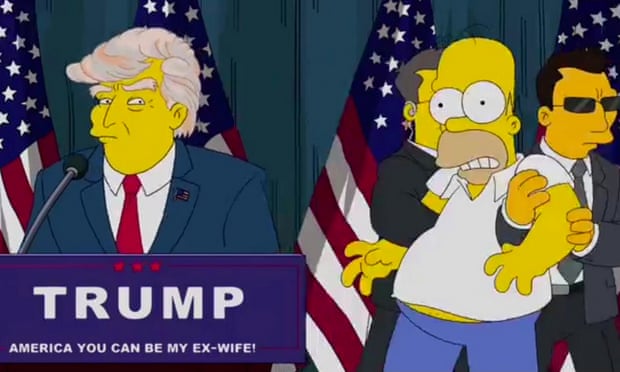


 Posts
Posts