Posted
by Big Gav
in
forests
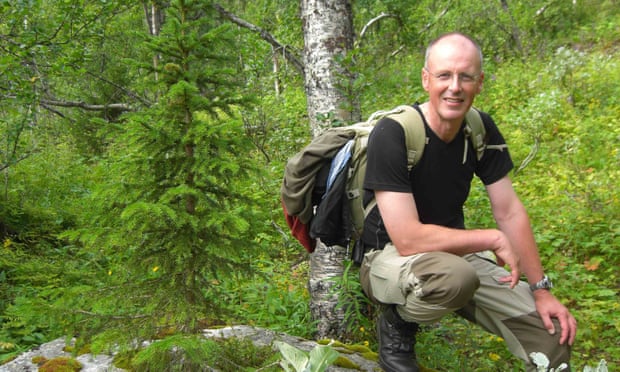
The Guardian has a review of a book called "The Hidden Life of Trees" by German forester Peter Wohlleben - The man who thinks trees talk to each other. Maybe they use "nature's internet" to communicate with each other ?
Trees have friends, feel loneliness, scream with pain and communicate underground via the “woodwide web”. Some act as parents and good neighbours. Others do more than just throw shade – they’re brutal bullies to rival species. The young ones take risks with their drinking and leaf-dropping then remember the hard lessons from their mistakes. It’s a hard-knock life.
Posted
by Big Gav
in
forests,
global warming
Yale E360 has an article on the impact of global warming on the world's forests - What’s Killing the Great Forests of the American West?.
For many years, Diana Six, an entomologist at the University of Montana, planned her field season for the same two to three weeks in July. That’s when her quarry — tiny, black, mountain pine beetles — hatched from the tree they had just killed and swarmed to a new one to start their life cycle again.
Now, says Six, the field rules have changed. Instead of just two weeks, the beetles fly continually from May until October, attacking trees, burrowing in, and laying their eggs for half the year. And that’s not all. The beetles rarely attacked immature trees; now they do so all the time. What’s more, colder temperatures once kept the beetles away from high altitudes, yet now they swarm and kill trees on mountaintops. And in some high places where the beetles had a two-year life cycle because of cold temperatures, it’s decreased to one year.
Such shifts make it an exciting — and unsettling — time to be an entomologist. The growing swath of dead lodgepole and ponderosa pine forest is a grim omen, leaving Six — and many other scientists and residents in the West — concerned that as the climate continues to warm, these destructive changes will intensify.
“A couple of degrees warmer could create multiple generations a year,” she said, as she chopped off a piece of bark on a dead lodgepole pine to show the galleries of burrowing larvae. “If that happens, I expect it would be a disaster for all of our pine populations.”
Across western North America, from Mexico to Alaska, forest die-off is occurring on an extraordinary scale, unprecedented in at least the last century-and-a-half — and perhaps much longer. All told, the Rocky Mountains in Canada and the United States have seen nearly 70,000 square miles of forest — an area the size of Washington state — die since 2000. For the most part, this massive die-off is being caused by outbreaks of tree-killing insects, from the ips beetle in the Southwest that has killed pinyon pine, to the spruce beetle, fir beetle, and the major pest — the mountain pine beetle — that has hammered forests in the north.
These large-scale forest deaths from beetle infestations are likely a symptom of a bigger problem, according to scientists: warming temperatures and increased stress, due to a changing climate. Although western North America has been hardest hit by insect infestations, sizeable areas of forest in Australia, Russia, France, and other countries have experienced die-offs, most of which appears to have been caused by drought, high temperatures, or both.
Posted
by Big Gav
in
ecology,
forests,
monitoring,
science
Science Daily has an interesting article on the way plants produce aspirin like chemicals to combat stress - often in response to forewarnings from other plants - Plants In Forest Emit Aspirin Chemical To Deal With Stress; Discovery May Help Agriculture.
Plants in a forest respond to stress by producing significant amounts of a chemical form of aspirin, scientists have discovered. The finding, by scientists at the National Center for Atmospheric Research (NCAR), opens up new avenues of research into the behavior of plants and their impacts on air quality, and it also has the potential to give farmers an early warning signal about crops that are failing.
"Unlike humans, who are advised to take aspirin as a fever suppressant, plants have the ability to produce their own mix of aspirin-like chemicals, triggering the formation of proteins that boost their biochemical defenses and reduce injury," says NCAR scientist Thomas Karl, who led the study. "Our measurements show that significant amounts of the chemical can be detected in the atmosphere as plants respond to drought, unseasonable temperatures, or other stresses."
For years, scientists have known that plants in a laboratory may produce methyl salicylate, which is a chemical form of acetylsalicylic acid, or aspirin. But researchers had never before detected methyl salicylate in an ecosystem or verified that plants emit the chemical in significant quantities into the atmosphere. ...
Researchers had not previously thought to look for methyl salicylate in a forest, and the NCAR team found the chemical by accident. They set up specialized instruments last year in a walnut grove near Davis, California, to monitor plant emissions of certain volatile organic compounds (VOCs). These hydrocarbon compounds are important because they can combine with industrial emissions to affect pollution, and they can also influence local climate.
When the NCAR scientists reviewed their measurements, they found to their surprise that the emissions of VOCs included methyl salicylate. The levels of methyl salicylate emissions increased dramatically when the plants, which were already stressed by a local drought, experienced unseasonably cool nighttime temperatures followed by large daytime temperature increases. ...
Karl and his colleagues speculate that the methyl salicylate has two functions. One of these is to stimulate plants to begin a process known as systemic acquired resistance, which is analogous to an immune response in an animal. This helps a plant to both resist and recover from disease.
The methyl salicylate also may be a mechanism whereby a stressed plant communicates to neighboring plants, warning them of the threat. Researchers in laboratories have demonstrated that a plant may build up its defenses if it is linked in some way to another plant that is emitting the chemical. Now that the NCAR team has demonstrated that methyl salicylate can build up in the atmosphere above a stressed forest, scientists are speculating that plants may use the chemical to activate an ecosystem-wide immune response.
"These findings show tangible proof that plant-to-plant communication occurs on the ecosystem level," says NCAR scientist Alex Guenther, a co-author of the study. "It appears that plants have the ability to communicate through the atmosphere."

Posted
by Big Gav
in
china,
forests,
weather
This news is a few weeks old, but its still staggering - Beijing says snow storms destroy one tenth of China's forests.
China has lost about one tenth of its forest resources to recent snow storms regarded as the most severe in half a century, state media reported Sunday.
A total of 17.3 million hectares (43 million acres) of forest have been damaged across China as the result of three weeks of savage winter weather, the China Daily website said, citing the State Forestry Administration.
More than half the country's provinces have been affected, and in the worst-hit regions, nearly 90 percent of forests have been destroyed, according to the paper.
As of the end of last month, disastrous winter weather had levied a toll of 16.2 billion yuan (2.2 billion dollars) on China's forestry sector, the report said, citing the most recent data available.
More misery could be in store, as the State Forest Administration has warned trees killed by winter frost could boost the amount of inflammable materials, raising the risk of forest fires.
In response to the dire situation, the government has urged areas unaffected by the snow storms to expand seedling supply to secure spring reforestation efforts, expected to begin in early April, according to the report.
The destruction of large swathes of forest comes as China is spending large sums on reforestation. In January, state media said China planned to plant 2.5 billion trees this year.
Deforestation is linked to the extinction of plants and animals, social conflict, climate change and natural disasters such as flooding and landslides.


 Posts
Posts