Charlie Stross did an interesting talk to the Chaos Computer Club about the first generation of AIs that is wrecking the plane - Dude, you broke the future!.
History gives us the perspective to see what went wrong in the past, and to look for patterns, and check whether those patterns apply to the present and near future. And looking in particular at the history of the past 200-400 years—the age of increasingly rapid change—one glaringly obvious deviation from the norm of the preceding three thousand centuries—is the development of Artificial Intelligence, which happened no earlier than 1553 and no later than 1844.
I'm talking about the very old, very slow AIs we call corporations, of course. What lessons from the history of the company can we draw that tell us about the likely behaviour of the type of artificial intelligence we are all interested in today? ...
What do our current, actually-existing AI overlords want?
Elon Musk—who I believe you have all heard of—has an obsessive fear of one particular hazard of artificial intelligence—which he conceives of as being a piece of software that functions like a brain-in-a-box)—namely, the paperclip maximizer. A paperclip maximizer is a term of art for a goal-seeking AI that has a single priority, for example maximizing the number of paperclips in the universe. The paperclip maximizer is able to improve itself in pursuit of that goal but has no ability to vary its goal, so it will ultimately attempt to convert all the metallic elements in the solar system into paperclips, even if this is obviously detrimental to the wellbeing of the humans who designed it.
Unfortunately, Musk isn't paying enough attention. Consider his own companies. Tesla is a battery maximizer—an electric car is a battery with wheels and seats. SpaceX is an orbital payload maximizer, driving down the cost of space launches in order to encourage more sales for the service it provides. Solar City is a photovoltaic panel maximizer. And so on. All three of Musk's very own slow AIs are based on an architecture that is designed to maximize return on shareholder investment, even if by doing so they cook the planet the shareholders have to live on. ...
The problem with corporations is that despite their overt goals—whether they make electric vehicles or beer or sell life insurance policies—they are all subject to instrumental convergence insofar as they all have a common implicit paperclip-maximizer goal: to generate revenue. If they don't make money, they are eaten by a bigger predator or they go bust. Making money is an instrumental goal—it's as vital to them as breathing is for us mammals, and without pursuing it they will fail to achieve their final goal, whatever it may be. Corporations generally pursue their instrumental goals—notably maximizing revenue—as a side-effect of the pursuit of their overt goal. But sometimes they try instead to manipulate the regulatory environment they operate in, to ensure that money flows towards them regardless.
Human tool-making culture has become increasingly complicated over time. New technologies always come with an implicit political agenda that seeks to extend its use, governments react by legislating to control the technologies, and sometimes we end up with industries indulging in legal duels.
For example, consider the automobile. You can't have mass automobile transport without gas stations and fuel distribution pipelines. These in turn require access to whoever owns the land the oil is extracted from—and before you know it, you end up with a permanent occupation force in Iraq and a client dictatorship in Saudi Arabia. Closer to home, automobiles imply jaywalking laws and drink-driving laws. They affect town planning regulations and encourage suburban sprawl, the construction of human infrastructure on the scale required by automobiles, not pedestrians. This in turn is bad for competing transport technologies like buses or trams (which work best in cities with a high population density).
To get these laws in place, providing an environment conducive to doing business, corporations spend money on political lobbyists—and, when they can get away with it, on bribes. Bribery need not be blatant, of course. For example, the reforms of the British railway network in the 1960s dismembered many branch services and coincided with a surge in road building and automobile sales. These reforms were orchestrated by Transport Minister Ernest Marples, who was purely a politician. However, Marples accumulated a considerable personal fortune during this time by owning shares in a motorway construction corporation. (So, no conflict of interest there!)
The automobile industry in isolation isn't a pure paperclip maximizer. But if you look at it in conjunction with the fossil fuel industries, the road-construction industry, the accident insurance industry, and so on, you begin to see the outline of a paperclip maximizing ecosystem that invades far-flung lands and grinds up and kills around one and a quarter million people per year—that's the global death toll from automobile accidents according to the world health organization: it rivals the first world war on an ongoing basis—as side-effects of its drive to sell you a new car.
An array of lithium ion batteries will be connected to the Hornsdale wind farm, which is currently under construction in SA. It will look like a field of boxes, each housing Tesla commercial-scale Powerpack batteries. The array will be capable of an output of 100 megawatts (MW) of power at a time and the huge battery will be able to store 129 megawatt hours (MWh) of energy so, if used at full capacity, it would be able to provide its maximum output for more than an hour.
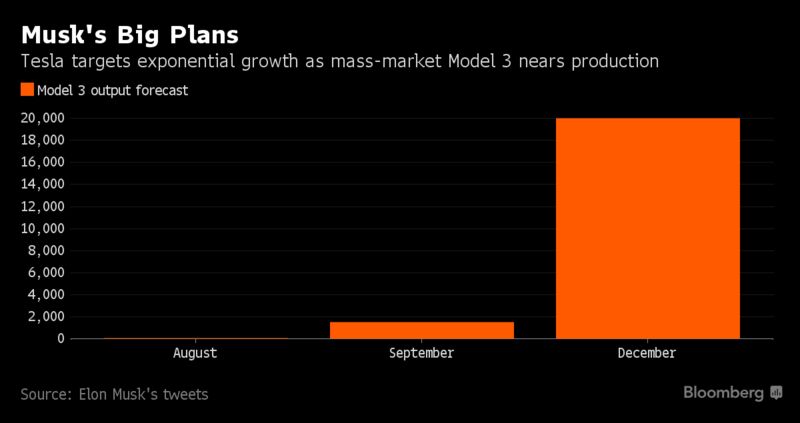
The company now makes two all-electric models: the Model S sedan and Model X sport utility vehicle. The Model 3, which is slated to start at $35,000 before options or incentives, is the culmination of Tesla’s 15-year-quest to reach mainstream consumers with a smaller, more affordable electric car. The Model 3 price tag is in line with the industry’s average new-car transaction price of $34,442 in June, according to Kelley Blue Book. ... The company delivered 25,051 vehicles in the first quarter and aims to make 500,000 in 2018 and 1 million in 2020. Tesla is expected to release second-quarter sales figures Monday.
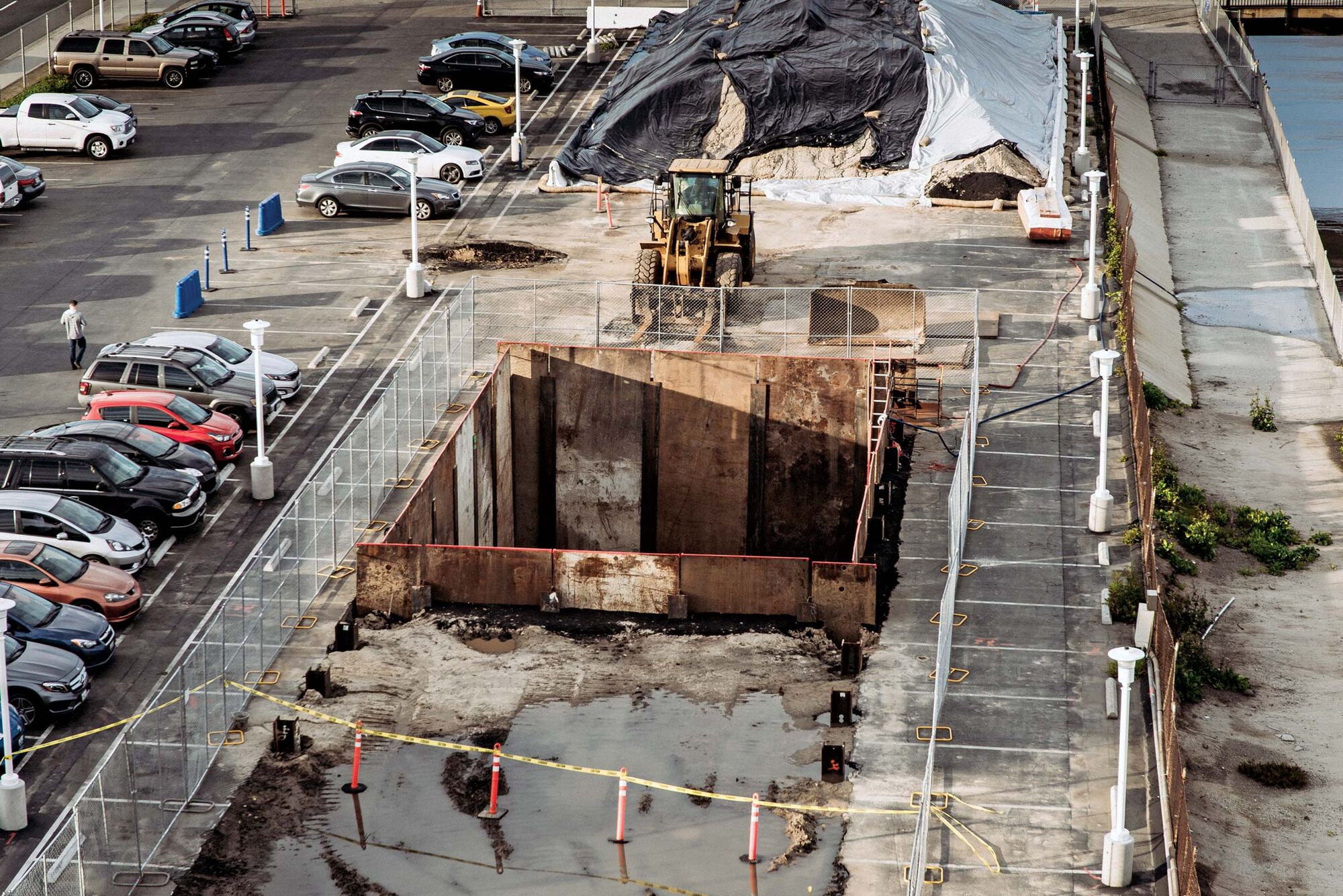
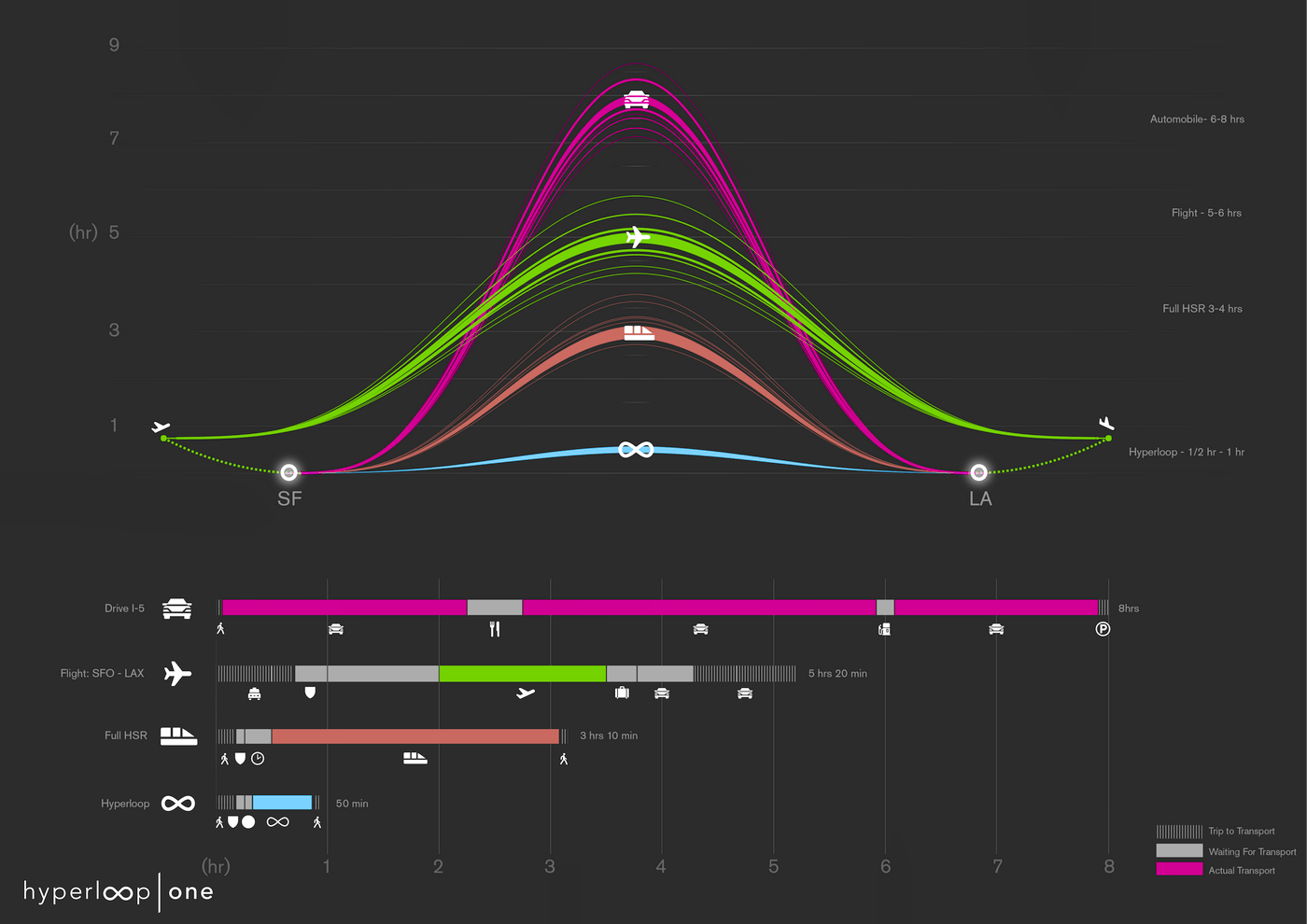
We now have an idea of just what Elon Musk's Boring Company is going to be for. Yes, it's to solve traffic, but it looks like it isn't meant just to be your usual tunnel for cars. In a new update today, the company asserts that it's actually building a tunnel that can also run the Hyperloop.
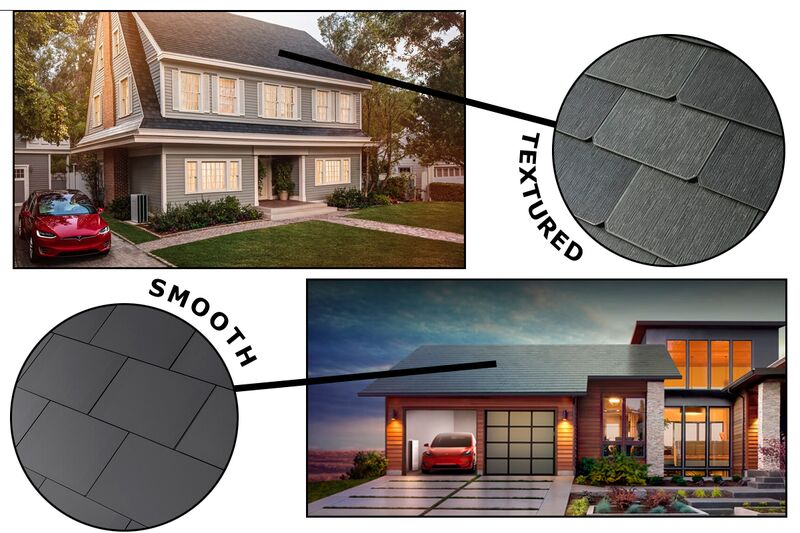
Showing a concept photo of a house with a Tesla in the driveway, Powerwalls on the side of the house and a solar glass roof, Musk talks about his vision for the home of the future. Most houses in the US, he says, have enough roof area for solar panels to power all the needs of the house. “Eventually almost all houses will have a solar roof,” he says. “Fast forward 15 years from now, it’ll be unusual to have a roof that doesn’t have solar.”
And to store all that electricity needed to power our homes and cars, Musk has made a huge bet on lithium-ion batteries. Moving on to a discussion of the Gigafactory, a massive diamond-shaped lithium-ion battery factory near Sparks, Nevada, Musk talks about how power will be stored in the future.
“When it’s running full speed, you can’t see the cells without a strobe light,” Musk says as a video of the factory pumping out Li-ion batteries plays behind him. Musk thinks we’ll need about 100 such factories to power the world in a future where we don’t feel guilty about using and producing energy, and Tesla plans to announce locations for another four Gigafactories late this year. “We need to address a global market,” Musk says, hinting that the new factories will be spread out across the world. ...
Sustainable energy will happen no matter what, out of necessity, Musk says. “If you don’t have sustainable energy, you have unsustainable energy … The fundamental value of a company like Tesla is the degree to which it accelerates the advent of sustainable energy faster than it would otherwise occur,” he says.
But becoming a multi-planet species isn’t inevitable. “If you look at the progress in space, in 1969 we were able to send somebody to the moon. Then we had the space shuttle, which could only take people to low-Earth orbit. Now we take no one to orbit. That’s the trend — it’s down to nothing. We’re mistaken when we think technology automatically improves. It only improves if a lot of people work very hard to make it better.”
Production of the tiles will begin at Tesla’s Fremont solar plant in California and then shift this summer to its new factory in Buffalo, New York, with additional investments from Tesla’s partner, Panasonic. Musk said initial sales will be limited by manufacturing capacity. As production ramps up into 2018, sales will begin in the UK, Australia, and other locations, along with the introduction of sculpted terracotta and slate versions of the solar roof.
The tempered glass in Tesla’s tiles is designed to conform to the toughest durability standards for both roofs and solar products, according to Tesla. The roof itself is guaranteed to outlast your home, while the power production of the solar cells is covered under a 30 year warranty, according to the company’s website. Glass, as Musk likes to point out, has a “quasi-infinite” lifetime, though the underlying solar cell will degrade over time.
Tesla’s basic premise is to make solar ownership more attractive and affordable by eliminating the need to install both a roof and solar panels. Tesla will manage the entire process of solar roof installation, including removal of existing roofs, design, permits, installation, and maintenance. The company estimates that each installation will take about a week.
Tunnel technology is older than rockets, and boring speeds are pretty much what they were 50 years ago. As with space launches, tunnels are often funded through cost-plus government contracts, in which the contractor assumes no risk for cost overruns, which tend to be enormous as a result. Famously, Boston’s Big Dig, which moved a section of Interstate 93 underground, was delayed by roughly eight years and cost $12 billion more than originally planned, but all tunnels tend to be wildly expensive. In L.A., plans to extend the subway’s Purple Line by 2.6 miles will cost more than $2.4 billion and take almost 10 years. “It’s basically a billion dollars a mile,” Musk says. “That’s crazy.”
Musk wouldn’t comment on Trump, but a person close to him says that while the Boring Company would be open to building tunnels as part of Trump’s infrastructure plan, it intends to move forward regardless of what happens in Washington. Musk says he hopes to build a much faster tunneling machine and use it to dig thousands of miles, eventually creating a vast underground network that includes as many as 30 levels of tunnels for cars and high-speed trains such as the Hyperloop.
Objections spring to mind. Such as: Wouldn’t having hundreds of feet of hollow tunnels destabilize the ground? Nope, Musk says, the mining industry does it all the time. “The earth is big, and we are small,” he says. “We are so f---ing small you cannot believe it.” Not only are these megatunnels possible, he argues, they’re the only way we can rid ourselves of the scourge of traffic.
“We have skyscrapers with all these levels, and we have a flat, two-dimensional road system,” he says. “When everyone decides to go into these structures and then exits them at the same time, you’re going to get jammed.” Tunnels, on the other hand, would represent a 3D transportation network.
Elon Musk is in something of a tough spot at the moment, serving on 2 of Trump's advisory committees while having a customer base that is predominantly liberal in outlook. As a result, he is starting to cop some heavy criticism from the likes of AlexSteffen
My view he is probably taking the correct course of action at this point - his businesses are helping to create the long term solutions we need and if he isn't openly criticising Trump they may continue to grow during this new era of protectionism (with all of them manufacturing in the US and employing US workers). With some luck he may even find himself in a position of influence over time (and in the meantime he isn't being completelysilent about contentious issues).
Yesterday Elon Musk stunned us (and just about everyone else) by tweeting in support of Rex Tillerson, former CEO of ExxonMobil and likely Secretary of State under the Trump administration. Musk’s public image is that of a tycoon using his influence to innovate towards a techno-utopian future powered by clean energy and complete with human cities on Mars. What could he possibly have in common with a mogul who made his fortune sucking the Earth’s resources dry? We asked him. And today he answered.
In June 2015, SpaceX announced an open competition for university students and engineering teams to design and actually build a Hyperloop pod that will travel through a vacuum tube. In 2013, Musk released a 57-page white paper detailing his plan for the Hyperloop, a futuristic transit system that could propel people in pods at speeds topping 700 mph. Musk isn't planning to pursue the Hyperloop commercially, but he is encouraging others to take up the challenge through the SpaceX competition.
The competition itself has actually been running for quite some time. After SpaceX announced the competition in June 2015, more than 1,200 teams applied for entry. However, SpaceX engineers, who are serving as judges for the contest, narrowed down the number of participating teams to 30 by February 2016.
After Tesla, SpaceX, and now SolarCity being under his leadership at Tesla, it’s one more venture for the entrepreneur to spend his limited time on.
Or maybe it will save him some time?
It sounds like he plans for the first project of “the Boring Company” to affect him directly. He said that the first tunnel would link SpaceX and the 105 Freeway:
It could certainly reduce traffic in the area and save him time when he works from SpaceX’s headquarters or Tesla’s Design Studio, which are located on the same block in Hawthorne.
The NYT has an article pointing out that if Donald Trump wants to bring jobs back to the US, he should look at the job creation that Elon Musk is doing at Tesla, SolarCity and SpaceX - Want to Bring Back Jobs, Mr. President-Elect? Call Elon Musk.
President-elect Trump has spent a lot of time talking about how he plans to reinvigorate the manufacturing sector, repeatedly telling the public on the campaign trail, “We are going to bring back jobs that have been stolen from you.” And yet the group of business luminaries he named on Friday to advise him on “job creation” — which included Jamie Dimon of JPMorgan Chase, Robert Iger of Disney and Mary Barra of General Motors — was missing a key name: Mr. Musk, the real-life Tony Stark behind Tesla, the electric car company; SolarCity, the solar power provider; and SpaceX, the rocket company.
Mr. Musk, 45, is arguably the one person in the nation more responsible than anyone else for generating a vision for the re-emergence of manufacturing in the United States en masse. And he is revered among most of his peers here in Silicon Valley and elsewhere. In the last decade, Mr. Musk has created nearly 35,000 jobs among his various enterprises — and most of those jobs are classic manufacturing ones. His Tesla Gigafactory, a 5.5-million-square-foot battery factory under construction outside Reno, Nev., is expected to employ 6,500 people in manufacturing jobs by 2020.
After the factory is complete, 95 percent of the parts contained in Tesla vehicles will be made in the United States. His company’s leading-edge advances have pushed the entire auto industry to innovate, with rivals seeking to copy many of Tesla’s best features.
Elon Musk has a great blog post up outlining Tesla's updated plan for the future - Master Plan, Part Deux.
From the point of view of this blog, Musk is the most important person on the planet as he's been the most successful at accelerating development of 3 of the 4 pillars of the clean energy economy - electric vehicles, energy storage and (to a lesser extent) solar power.
The first master plan that I wrote 10 years ago is now in the final stages of completion. It wasn't all that complicated and basically consisted of:
Create a low volume car, which would necessarily be expensive
Use that money to develop a medium volume car at a lower price
Use that money to create an affordable, high volume car
And...
Provide solar power. No kidding, this has literally been on our website for 10 years.
The reason we had to start off with step 1 was that it was all I could afford to do with what I made from PayPal. I thought our chances of success were so low that I didn't want to risk anyone's funds in the beginning but my own. The list of successful car company startups is short. As of 2016, the number of American car companies that haven't gone bankrupt is a grand total of two: Ford and Tesla. Starting a car company is idiotic and an electric car company is idiocy squared.
Also, a low volume car means a much smaller, simpler factory, albeit with most things done by hand. Without economies of scale, anything we built would be expensive, whether it was an economy sedan or a sports car. While at least some people would be prepared to pay a high price for a sports car, no one was going to pay $100k for an electric Honda Civic, no matter how cool it looked.
Part of the reason I wrote the first master plan was to defend against the inevitable attacks Tesla would face accusing us of just caring about making cars for rich people, implying that we felt there was a shortage of sports car companies or some other bizarre rationale. Unfortunately, the blog didn't stop countless attack articles on exactly these grounds, so it pretty much completely failed that objective.
However, the main reason was to explain how our actions fit into a larger picture, so that they would seem less random. The point of all this was, and remains, accelerating the advent of sustainable energy, so that we can imagine far into the future and life is still good. That's what "sustainable" means. It's not some silly, hippy thing -- it matters for everyone.
By definition, we must at some point achieve a sustainable energy economy or we will run out of fossil fuels to burn and civilization will collapse. Given that we must get off fossil fuels anyway and that virtually all scientists agree that dramatically increasing atmospheric and oceanic carbon levels is insane, the faster we achieve sustainability, the better.
Here is what we plan to do to make that day come sooner:
Integrate Energy Generation and Storage ...
Expand to Cover the Major Forms of Terrestrial Transport ...
Autonomy ...
Sharing ...
So, in short, Master Plan, Part Deux is:
Create stunning solar roofs with seamlessly integrated battery storage
Expand the electric vehicle product line to address all major segments
Develop a self-driving capability that is 10X safer than manual via massive fleet learning
Enable your car to make money for you when you aren't using it
Startup Hyperloop Technologies has started shooting magnetically levitated capsules along a track in Las Vegas to demonstrate their idea for the future of freight and mass transit.
Regardless of the limited excitement engendered by the first demo, interest in the idea is still growing with both Russia and Scandinavia exploring the idea.
Tesla Motors launched their Tesla Model 3 today, with Elon Musk highlighting the need to shift to sustainable forms of transport.
Musk said the car will have a range of at least 215 miles and will cost around US$35,000. Deliveries are expected to begin in late 2017. The vehicle will do 0-60MPH in less than 6 seconds, and all cars will include support from Tesla's charging network. Around 115,000 orders have already been received for the car.
Tesla is launching the home battery business partly because it’s already making vehicle batteries—and as a result it can benefit from the economies of scale that come from making both. Another reason is that the market for storage is expected to grow in concert with the use of solar power. Tesla needs both electric vehicles and solar power to boom if it hopes to fulfill the projected output from a vast $5 billion battery “gigafactory” it’s building in Nevada.
The primary use case for home storage is daily cycling, also known as peak shaving, which can be applied a few different ways. The primary reason for the product existing is to store up solar energy made from customer panels during the day, which can then be used at night. In markets with net metering, there is no financial incentive for doing this. In markets with no net metering regulation, Powerwalls — and residential battery storage in general — could be game changers.
Ben Kallo at equity analyst firm RW Baird believes that Tesla's current battery costs are ~$150 to ~$200 per kilowatt-hour, well below the industry average pack costs of ~$350 per kilowatt-hour. ... Kallo suggests that the Chevy Bolt's battery costs "are significantly higher" than those of Tesla. Kallo suggests that Tesla "could reach its <$100 per kilowatt-hour target in the intermediate term as Gigafactory production ramps." ... GM sees its battery cell cost hitting $100 per kilowatt-hour in 2022. (GM is quoting cell cost, while Kallo is talking about battery packs. A complete battery pack "typically adds 20 percent above the cost of cells," according to David Snydacker, a battery expert at Dosima Research.)
Elon Musk recently appeared on the Colbert report - it was amusing watching him gently refuse to dumb his answers down - Elon Musk on The Colbert Report. The rocket landing again after take-off is pretty cool too.
Tesla Motors has broken ground in Reno, Nev. for its $5 billion Gigafactory, according to their earnings report. But, Tesla Motors says it is a 'potential' location for the lithium-ion battery factory and the automaker is still looking at other possible sites.
Tesla Motors built 8,763 Model S electric cars and delivered 7,579 of them to customers during the second quarter, according to just-released second-quarter results. It expects to build about 9,000 cars this quarter, and deliver 7,800, largely due to a two-week production shutdown for retooling at its factory in Fremont, California--which cost it about 2,000 cars, it said. ...
Tesla still expects to be delivering at a rate of more than 100,000 cars by the end of 2015, when capacity expansion has been completed and its Model X crossover has joined the Model S in full production.
The good news, said the shareholder letter, is that demand for the Model S continues to grow. "Average global delivery wait times increased because our production growth was unable to keep pace with increased demand."
Tesla Motors Inc. (TSLA) will probably report record electric Model S deliveries in the second quarter after it accelerated output and began shipping its flagship sedan to China and the U.K. ...
“Initial deliveries into China appear to have been successful,” said Andrea James, a Minneapolis-based analyst for Dougherty & Co. who rates Tesla a buy. While the company is contending with a trademark dispute there, that “may be the cost of doing business in China, which is a key market for Tesla,” she said.
Tesla is racing to boost international shipments of the Model S, priced from $71,000 in the U.S., until it can begin delivering the already-delayed Model X sport-utility vehicle in early 2015. The next challenge for Chief Executive Officer Elon Musk, who is set to appear in an episode of “The Simpsons,” is deciding where to build the world’s largest lithium-ion battery plant to start making cheaper cells needed for the less costly Model 3 sedan due by 2017
Billionaire, Tesla founder, and private space entrepreneur Elon Musk announced yesterday that Solar City, the solar installation company where he is chairman, plans to acquire a startup called Silevo for $200 million (plus up to $150 million more if the company meets certain goals). And with typical bravado, he also said that the company plans to build a huge factory to produce Silevo’s high-efficiency solar panels, a strategy he claims will make solar power “way cheaper” than power from fossil fuels.
Solar City is one of the country’s largest and fastest-growing solar installers, largely as a result of an innovative business model that allows homeowners and businesses to avoid any up-front cost. If its plans pan out, it will also become a major manufacturer of solar panels, with by far the largest factory in the U.S.
The acquisition makes sense given that Silevo’s technology has the potential to reduce the cost of installing solar panels, Solar City’s main business. But the decision to build a huge factory in the U.S. seems daring—especially given the recent failures of other U.S.-based solar manufacturers in the face of competition from Asia. Ultimately, however, Solar City may have little choice—it needs to find ways to reduce costs to keep growing.
Silevo produces solar panels that are roughly 15 to 20 percent more efficient than conventional ones. They incorporate thin films of silicon, which increase efficiency by helping electrons flow more freely out of the material, and they use copper rather than silver electrodes to save costs. Higher efficiency can yield big savings on installation costs, which often exceed the cost of the panels themselves, because fewer panels are needed to generate a given amount of power.
Silevo isn’t the only company to produce high-efficiency solar cells. A version made by Panasonic is just as efficient, and SunPower makes ones that are significantly more so (see “Record-Breaking Solar Cell Points the Way the Cheaper Solar Power”). But Silevo claims it could make its panels as cheaply as conventional ones if it can scale up from its current production capacity of 32 megawatts to the factory Musk has planned, which is expected to produce 1,000 megawatts or more.
The first inklings of the idea came to Elon Musk and a cousin in an R.V. heading to the Burning Man festival in 2004.
Solar energy, they agreed, could be big.
But not even Mr. Musk, the billionaire behind the Tesla electric car, could have foreseen the solar power craze that is sweeping Wall Street. He and his cousins Peter and Lyndon Rive are riding a wave of exuberance over the industry and their young business, SolarCity.
The company — the nation’s largest provider of rooftop solar systems, with more than 80,000 customers — has not made a dime. And, frankly, no one quite seems to know when, or if, it will.
But SolarCity has captured investors’ imaginations and become a potent symbol of a stock market ascent that makes the vertigo-inducing heights of Twitter seem tame. SolarCity’s share price, which closed at $59.27 on Friday, has soared more than sevenfold since it went public, and the company, which did not exist eight years ago, is valued at roughly $4.9 billion.
Depending on whom you talk to, the rise of SolarCity and similar companies is either a sure sign that solar power is finally having its day or that yet another mania has gripped the markets. Two other companies, SunPower and SunEdison, have also exploded in value. In all, an estimated $13 billion was invested in solar projects in 2013, a tenfold increase since 2007, according to GTM Research, which tracks the industry.
The Tesla Model S has defied even the wildest expectations, shooting Tesla Motors stock into the stratosphere and increasing the profile of Elon Musk exponentially. So now is the perfect time for Musk to embark on a great American road trip. Musk claims that during six-day road trip from Los Angeles to New York City, the Tesla Model S will spend just 9 hours charging. ...
The 3,200 mile journey will require a minimum of 11 refills, even if Musk manages to wrangle 300 miles per-charge. Musk claims that they will spend just 1.5 hours a day recharging, the same amount of time they would spend at rest stops or tourist attractions.
Fair enough, but Tesla’s own Supercharge map shows wide swaths of the country remain uncovered. Am I missing something here? Probably. I know enough not to doubt Elon Musk when he says he is going to do something.






 Posts
Posts