Showing posts with label artificial meat. Show all posts

Beyond Meat ?  

Posted by Big Gav in

Peak meat may have occurred in the US already, however even the steadily increasing population of vegans and vegetarians that walk amongst us occasionally have a craving for something that looks and tastes like meat.

As a result interest in artificial meat remains high. MIT TEchnology Review has a look at the current state of the market, looking at a startup called "Beyond Meat" - The Problem with Fake Meat.

The key problems to solve at this point are making the texture of the "beast patty" acceptable to the tongue and developing substitutes to soy (now mostly GMO) for the raw substrate.

Meet the New Meat  

Posted by Big Gav in ,

Artificial meat was in the news this week as the results of one of Sergey Brin's alternative investments was unveiled. The Economist has a look at the environmental benefits of artificial meat (quoting a 45% energy saving for meat produced in this way) as well as an interesting quote from long ago - Appetising prospects.

“THE war is won,” declared Winston Churchill in 1931. The victory in question was not military, but technological. Developments in tissue engineering prompted the future British prime minister to enthuse that soon “we shall escape the absurdity of growing a whole chicken in order to eat the breast or wing”. The optimism proved premature. But now, eight decades later, scientists have finally come close to realising his dream. On August 5th they cooked the world’s first hamburger made of meat grown from scratch in a laboratory.

The historic patty was not exactly a Porterhouse steak—and a bit bland, according to two volunteer tasters. At the same time it cost a juicy €250,000 ($330,000), so India and Brazil, the world’s biggest exporters of beef, need not tremble in their cowboy boots anytime soon. But it is nonetheless a welcome addition to the world’s menu.

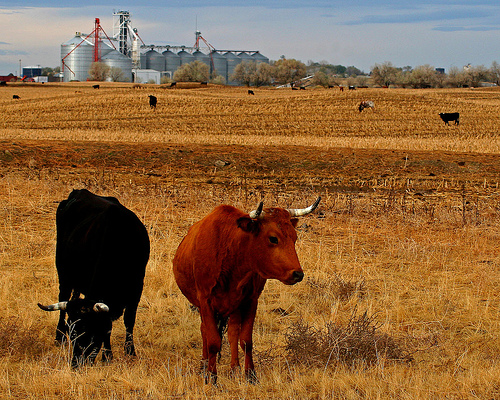
People have, pace vegetarians, evolved to love meat, which contains many necessary nutrients, and especially protein, in higher concentrations than plants do. The rub is that livestock, the main purpose of which is to pack goodies found in flora into a more condensed form, does not do the job very efficiently. Only about 15% of plant nutrients find their way into muscle. That makes animal husbandry extremely resource-intensive. It already takes up 30% of the world’s ice-free land—and a whopping 70% of its arable land. It also produces 18% of global greenhouse-gas emissions, more than transport (cattle are notorious sources of methane, a greenhouse-gas 20 times more potent than carbon dioxide).

Meanwhile, as poor countries grow richer, so does their appetite for flesh. The United Nations’ Food and Agriculture Organisation forecasts global demand for meat to increase by three-quarters over the next 40 years. This is unsustainable. In contrast, growing meat in factories—or, one day, in your home—is estimated to use up to 45% less energy, 99% less land and 96% less water than farming, as well as to spew out 78-96% fewer greenhouse gases.

The NYT's Dot Earth blog has a post on the "Frankenburger" which included an interesting graph of the benefits that may await.

TED has a talk by the creator of the meat, Mark Post - Meet the new meat: Mark Post at TEDxHaarlem.

The Independent's article on the topic had a look at some of Brin's other investments - 'Close to meat': Foodies underwhelmed by first synthetic beef burger to be eaten in public.

With a personal wealth of $20bn, Sergey Brin isn’t afraid to take a punt on outlandish business ventures. As well as the first lab-grown burger, the Google co-founder has backed asteroid mining and driverless cars.

In 2008, Brin invested $4.5m in Space Adventures, a Virginia-based space tourism company, which is selling trips to the Moon for $100m (£65m). Last year, Brin joined the film director James Cameron by investing in Planetary Resources, a new company set up to exploit the precious metals contained in asteroids, seen as a potential alternative to the Earth’s depleted supply of natural resources.

Brin is an evangelist for driverless “robot cars”. He invested in Tesla Motors, developer of the Roadster, an electric vehicle with a range of 244 miles. Google has put its prototype self-driving cars through 300,000 miles of testing. Brin believes robot cars will be available to the public by 2017.

Philanthropic ventures play an important role in the Brin portfolio. He created Passerelle Investment Company, which buys property in Los Altos, a Silicon Valley town, and rents them at below-market rates. Brin also has an interest in a genetic testing start-up 23andMe, co-founded by his wife, Anne Wojcicki, which gives people data about their ancestry.

Another billionaire who is making some interesting investments (albeit not in the same league as Sergey or Elon Musk) is Amazon's Jeff Bezos, who was in the press this week for his purchase of The Washington Post - Crikey has a look at some of his other investments in the future - What’s a dot-com genius going to do with The Washington Post?.

Big clock

This isn’t as much of an investment as it is a pet project, but a couple of years ago Bezos spent $US42 million of his own cash on a 10,000-year clock in the middle of the Texas desert.

3D printing

This new craze has taken tech-heads by storm, and Bezos is right at the forefront of the revolution — he has a modest investment in Makerbot, a manufacturer of 3D printing machines.

Rocket wreckage

This is a strange one. Bezos founded a wreckage recovery business, which is all about finding discarded parts of rockets and spaceships that have fallen into the ocean as part of the Apollo program, way back in the 1970s. Last month he even wrote a blog post from a ship on a mission to find lost parts.

Quantum computing

At least this is related to technology. Last year, Bezos joined the CIA in pumping cash into quantum computing firm In-Q-Tel.

Lab-Grown Meats Face Long Road to Supermarket  

Posted by Big Gav in

Wired has a look at this recent Reuters report on in-vitro meat" (a topic I've covered previously - Lab-Grown Meats Face Long Road to Supermarket.

On Friday, Reuters ran a story about a Dutch scientist who is attempting to make the first synthetic animal meat, starting with nothing more than stem cells. In it, the reporter focused on some of the grim numbers that make our current trajectory of livestock-based agriculture unsustainable, and suggested that the economics of meat from a tissue culture dish would eventually cause it to win out. But that eventually might be a long way away, as the first burger-sized samples of artificial meat are estimated to cost about a quarter of a million euros.

Can artificial meat’s price eventually come down? Absolutely. But there are a lot of technical hurdles that will need to be cleared out of the way first, and some of them might not be all that easy to clear.
Reuters’ story doesn’t spend much time on the current costs, but goes on at length about a somewhat related issue: the taste. Right now, the artificial meat consists of little more than muscle tissue grown from stem cells. An actual piece of meat is substantially more complex, as the muscle fibers have integrated into a coherent tissue and built up through use. Associated tissues, like blood and fat, also contribute to taste, appearance, and texture.

It might be possible to overcome these hurdles. Stem cells for blood and fat have been identified, and culturing them and getting them to differentiate into mature tissues is probably not much more complex than getting muscle fibers to grow in a dish. But this comes back to cost: getting any cells to grow into mature tissues is ferociously expensive, and adding additional cell types will increase the complexity and cost.

Show me the money

Our bodies expend lots of energy creating an environment in which a variety of cell types can flourish. Tissues are bathed in appropriate combinations of fuel, salts, minerals, hormones, and signaling molecules. They’re in contact with neighbors and various beds of proteins that the neighboring cells create. Without all of this extensive support, most cells get very sick very quickly.

Recreating this sort of environment is really difficult. Some things, like reasonable concentrations of salts, are easy. Others, like the right mix of growth factors, is phenomenally challenging — so challenging, in fact, that the first work with stem cells didn’t even bother. The first stem cells were cultivated on a layer of feeder cells that provided them the right kind of surface to grow on. Instead of trying to get the right mixture of proteins in the growth medium, researchers turned to a natural source: the serum of blood obtained during the slaughter of livestock.

Let that sink in: initial efforts at creating artificial meat would have had to rely on the agricultural system it was intended to replace.

Even then, the serum wasn’t enough for stem cells, and the medium had to be spiked with a cocktail of growth factors purified from other sources. Many of those growth factors are purified form vertebrate cells, probably ones grown in medium that uses (you guessed it) serum.

Over time, experience and experimentation has gotten rid of a lot of these requirements. Feeder cells are a thing of the past and we’ve got a much clearer sense of which growth factors help keep which cell types growing happily. However, the need for serum has been a difficult one to shake. A paper from last year managed to get one type of cell growing without serum, but called the result “unique.” Just this year, however, we’ve managed the same trick with adipose stem cells, which are a bit closer to what we’d need to incorporate into meat.

That doesn’t mean things are cheap, however. The serum-free medium that helps these stem cells grow costs about $250 for a half-liter; the company that sells it estimates you’ll need nine liters to expand out a stem cell population to the point where it’s possible to do something with it. And that still doesn’t get into the cost of the various growth factors that are necessary for most cell types to grow in culture.

Can we overcome more of these hurdles and bring the cost down so that it’s competitive with current agriculture? Maybe, but it’s not a sure thing.

Lab-grown meat would 'cut emissions and save energy'  

Posted by Big Gav in

Physorg has a article on the reduced environmental impact of artifical meat - Lab-grown meat would 'cut emissions and save energy'.

The analysis, carried out by scientists from Oxford University and the University of Amsterdam, also estimates that cultured meat would require 7-45% less energy to produce than the same volume of pork, sheep or beef. It would require more energy to produce than poultry but only a fraction of the land area and water needed to rear chickens.

A report of the team’s research is published in the journal Environmental Science & Technology.

‘What our study found was that the environmental impacts of cultured meat could be substantially lower than those of meat produced in the conventional way,’ said Hanna Tuomisto of Oxford University’s Wildlife Conservation Research Unit, who led the research. ‘Cultured meat could potentially be produced with up to 96% lower greenhouse gas emissions, 45% less energy, 99% lower land use, and 96% lower water use than conventional meat.’

The researchers based their calculations on a process, using Cyanobacteria hydrolysate as a nutrient and energy source for growing muscle cells, that is being developed by co-author Dr Joost Teixeira de Mattos at the University of Amsterdam. At the moment this sort of tissue engineering technology is confined to the laboratory, but the researchers estimated what the various costs would be for producing 1000kg of cultured meat using a scaled-up version of the technology compared to the costs associated with livestock reared conventionally.

In comparison to conventionally-produced European meat, the team estimate cultured meat would involve approximately 7-45% lower energy use, 78-96% lower greenhouse gas emissions, 99% lower land use, and 82-96% lower water use depending on the type of meat.

‘We are not saying that we could, or would necessarily want to, replace conventional meat with its cultured counterpart right now,’ said Ms Tuomisto, ‘however, our research shows that cultured meat could be part of the solution to feeding the world’s growing population and at the same time cutting emissions and saving both energy and water. Simply put, cultured meat is, potentially, a much more efficient and environmentally-friendly way of putting meat on the table.’

Artificial meat? Food for thought by 2050  

Posted by Big Gav in ,

The Guardian has a look at the need to produce artificial meat as the world's population heads over 9 billion people - Artificial meat? Food for thought by 2050.

Artificial meat grown in vats may be needed if the 9 billion people expected to be alive in 2050 are to be adequately fed without destroying the earth, some of the world's leading scientists report today.

But a major academic assessment of future global food supplies, led by John Beddington, the UK government chief scientist, suggests that even with new technologies such as genetic modification and nanotechnology, hundreds of millions of people may still go hungry owing to a combination of climate change, water shortages and increasing food consumption.

In a set of 21 papers published by the Royal Society, the scientists from many disciplines and countries say that little more land is available for food production, but add that the challenge of increasing global food supplies by as much as 70% in the next 40 years is not insurmountable.

Although more than one in seven people do not have enough protein and energy in their diet today, many of the papers are optimistic.

A team of scientists at Rothamsted, the UK's largest agricultural research centre, suggests that extra carbon dioxide in the air from global warming, along with better fertilisers and chemicals to protect arable crops, could hugely increase yields and reduce water consumption.

"Plant breeders will probably be able to increase yields considerably in the CO2 enriched environments of the future … There is a large gap between achievable yields and those delivered ... but if this is closed then there is good prospect that crop production will increase by about 50% or more by 2050 without extra land", says the paper by Dr Keith Jaggard et al.

Several studies suggest farmers will be up against environmental limits by 2050, as industry and consumers compete for water. One group of US scientists suggests that feeding the 3 billion extra people could require twice as much water by then. This, says Professor Kenneth Strzepek of the University of Colorado, could mean an 18% reduction in worldwide water availability for food growing by 2050.

"The combined effect of these increasing demands can be dramatic in key hotspots [like] northern Africa, India, China and parts of Europe and the western US," he says.

Many low-tech ways are considered to effectively increase yields, such as reducing the 30-40% food waste that occurs both in rich and poor countries. If developing countries had better storage facilities and supermarkets and consumers in rich countries bought only what they needed, there would be far more food available.

But novel ways to increase food production will also be needed, say the scientists. Conventional animal breeding should be able to meet much of the anticipated doubling of demand for dairy and meat products in Asia and sub-Saharan Africa, but this may not be enough.

Instead, says Dr Philip Thornton, a scientist with the International Livestock Research Institute in Nairobi, two "wild cards" could transform global meat and milk production. "One is artificial meat, which is made in a giant vat, and the other is nanotechnology, which is expected to become more important as a vehicle for delivering medication to livestock."

‘Cornucopia,’ the MIT food fab  

Posted by Big Gav in ,

Bruce Sterling has a post on a food fabrication device project at MIT - ‘Cornucopia,’ the MIT food fab.

* If you wanna “print out breakfast” some day, I’d suggest keeping an eye on these guys.

http://fluid.media.mit.edu/projects.php?action=details&id=79

“Cornucopia is a concept design for a personal food factory that brings the versatility of the digital world to the realm of cooking. In essence, it is a three dimensional printer for food, which works by storing, precisely mixing, depositing and cooking layers of ingredients.

“Cornucopia’s cooking process starts with an array of food canisters, which refrigerate and store a user’s favorite ingredients. These are piped into a mixer and extruder head that can accurately deposit elaborate combinations of food. While the deposition takes place, the food is heated or cooled by Cornucopia’s chamber or the heating and cooling tubes located on the printing head. This fabrication process not only allows for the creation of flavors and textures that would be completely unimaginable through other cooking techniques, but it also allows the user to have ultimate control over the origin, quality, nutritional value and taste of every meal.

“This project is currently starting.”

A protein possibility for the post peak period: the meat beast  

Posted by Big Gav in

Animal rights group PETA recently announced a $1 million reward for the first person to make in-vitro meat (leading Bruce Sterling to dub them "People for the Ethical Treatment of Alien Lumps of Flesh).

While PETA's aim here seems to be to be to publicise their opposition to the consumption of animals (as shown in the quote below), there is another angle to this story which is perhaps more interesting for those interested in energy issues - which comes back to "the oil we eat".

"Why is PETA supporting this new technology? More than 40 billion chickens, fish, pigs, and cows are killed every year for food in the United States in horrific ways. Chickens are drugged to grow so large they often become crippled, mother pigs are confined to metal cages so small they can't move, and fish are hacked apart while still conscious — all to feed America's meat addiction. In vitro meat would spare animals from this suffering. In addition, in vitro meat would dramatically reduce the devastating effects the meat industry has on the environment.

"Of course, humans don't need to eat meat at all—vegetarians are less likely to get heart disease, diabetes, or various types of cancer or become obese than meat-eaters are—and a terrific array of vegetarian mock meats already exist. But as many people continue to refuse to kick their meat addictions, PETA is willing to help them gain access to flesh that doesn't cause suffering and death...."

The Oil We Eat

The link between oil and gas production and agriculture is one that should be well understood by now - and has been covered by a diverse range of writers including Dale Allen Pfeiffer (Eating Fossil Fuels), Richard Manning (The Oil We Eat), Stuart Staniford (Food To 2050), Sharyn Astyk (Is Relocalization Doomed ?) as well as my review of Herman Kahn's book "The Next 200 Years" (The Fat Man, The Population Bomb And The Green Revolution).

While I don't want to restart the debate about "reversalists", I think its worth looking at where a large amount of the grain we produce goes - meat production.


Feeding grain to livestock
Corn, wheat and rice prices have all soared in recent years - this has been attributed to a number of factors, including:

- rising input prices for fertiliser, pesticides and diesel fuel
- the use of grain to produce biofuels
- adverse weather events like the Australian drought significantly reducing production
- commodity funds and other speculators on the markets
- "hoarding" and export restrictions being put in place (particularly for rice)
- productive land being built over by expanding cities
- increasing demand for grain courtesy of an increasing population
- increasingly affluent consumers in Asia increasing their meat consumption

While there is a lot of debate about which factors are the dominant ones in the price rises that have occurred so far, it seems clear that reducing demand would go some way to keeping prices down, and that finding alternative sources of protein would be one way of achieving this.

The Food and Agriculture Organisation of the UN publishes a World Food Outlook in May and November each year. The November 2007 edition shows that about a third of the grain produced (750Mt) is used as animal feed - compared to around 350 Mt that was used for biofuels (hat tip to Kiashu for providing the data).

  2005/06 2006/07 2007/08 Change: 2007/08

over
    estim. f'cast 2006/07
  million tonnes %
WORLD BALANCE        
Production 2 051.4 2 009.4 2 108.9
5.0
Trade 246.6 255.4 251.5
-1.5
Total utilization 2 037.6 2 062.42 105.0
2.1
Food 982.5 997.5 1 008.7
1.1
Feed 748.7 735.9 739.6
0.5
Other uses 306.4 329.0 356.6
8.4
Ending stocks 471.4 428.0 427.0
-0.2
   
SUPPLY AND DEMAND INDICATORS  
Per caput food consumption:        
World    (kg/year) 152.2 152.7 152.6
-0.1
LIFDC    (kg/year) 156.9 157.2 157.0
-0.1
World stock-to-use ratio  % 22.9 20.3 20.2  
Major exporters' stock-to-disappearance ratio % 19.2 15.0 13.5  


Another 101 Mt of oilseeds (out of 404 Mt total) is turned into "oil meals and cakes", which is primarily eaten by livestock.

It is worth noting that not all of the animals fed end up on our dinner plates (or in hamburger wrappers) - dairy cattle are also included here and their milk production is another output from the use of these agricultural commodities.


Artifical Meat and science fiction

Artificial meat is a topic usually left to science fiction writers (see Kornbluth & Pohl, H Beam Piper, Samuel R Delany, Frank Herbert, Rudy Rucker or John Brunner for some examples), with a "meat beast" (or some other form of artificial protein produced in a vat) gracing the bowels of many spaceship kitchens and basements of remote arcologies, where raising livestock isn't an option.

Soylent Green is probably the example that comes most readily to mind, but this isn't really appropriate, as that meat wasn't artificially grown of course.


Where's the beef ? Is anyone seriously trying to make this stuff ?

Science fiction isn't usually meant to be predictive, so its surprising to see this sort of idea being (somewhat) seriously considered here on Earth in the present.

While PETA may or may not just be performing a publicity stunt, there does appear to be some research underway in this area, which is known as "In vitro meat".

There are basically two approaches for producing in vitro meat; loose muscle cells and structured muscle, with the creation of structured muscle being far more challenging than the former.

According to Wikipedia:
Muscles consist of muscle fibers, long cells with multiple nuclei. They don't proliferate by themselves, but arise when precursor cells fuse. Precursor cells can be embryonic stem cells or satellite cells, specialized stem cells in muscle tissue. Theoretically, they can be relatively simple to culture in a bioreactor and then later made to fuse. For the growth of real muscle however, the cells should grow "on the spot", which requires a perfusion system akin to a blood supply to deliver nutrients and oxygen close to the growing cells, as well as remove the waste products. In addition other cell types need to be grown like adipocytes, and chemical messengers should provide clues to the growing tissue about the structure. Lastly, muscle tissue needs to be trained to properly develop.

A number of teams are actively pursuing the cultivation of in vitro meat.

In 2001, dermatologist Wiete Westerhof from the University of Amsterdam and businessmen Willem van Eelen and Willem van Kooten announced that they had filed for a worldwide patent on a process to produce in vitro meat. A matrix of collagen is seeded with muscle cells, which are then bathed in a nutritious solution and induced to divide. They have now set up the InVitroMeat Foundation to promote the idea.

Jon Vein of the United States has secured a patent for the production of tissue engineered meat for human consumption, where muscle and fat cells would be grown in an integrated fashion to create food products such as beef, poultry and fish.

A group at the University of Maryland has participated in some experiments for NASA looking to grow meat during space flight, and is also looking to develop processes for terrestrial application. This group of researchers started the non-profit organization New Harvest, with the goal of promoting development of in-vitro meat. They claim cultured meat in a processed form, like sausage, hamburger, or chicken nuggets may become commercially available within several years.

In April 2005, a research project into cultured meat started in The Netherlands. It is carried out under the lead of Henk Haagsman at the University of Amsterdam, the Eindhoven University of Technology and Utrecht University, in cooperation with sausage manufacturer Stegeman. The Dutch government granted a two million euro subsidy for the project. In Amsterdam the culture medium is studied, while the University of Utrecht studies the proliferation of muscle cells and the Eindhoven university will research bioreactors.

A tissue engineer at the Medical University of South Carolina has proposed a countertop device similar to a bread maker that would produce meat overnight in your kitchen.

In recent weeks we have even had the world's first international conference on manufacturing meat.

Advocates for in vitro meat claim it is safer, healthier, more humane and less polluting to produce - as well as being one way of adapting to rising demand for food and constraints on the supply of inputs to traditional industrial agriculture. But one question remains, should a commercial meat production process ever be put into action - can we get past the "yuck" factor ?

Statistics

Locations of visitors to this page

blogspot visitor
Stat Counter

Total Pageviews

Ads

Books

Followers

Blog Archive

Labels

australia (619) global warming (423) solar power (397) peak oil (355) renewable energy (302) electric vehicles (250) wind power (194) ocean energy (165) csp (159) solar thermal power (145) geothermal energy (144) energy storage (142) smart grids (140) oil (139) solar pv (138) tidal power (137) coal seam gas (131) nuclear power (129) china (120) lng (117) iraq (113) geothermal power (112) green buildings (110) natural gas (110) agriculture (91) oil price (80) biofuel (78) wave power (73) smart meters (72) coal (70) uk (69) electricity grid (67) energy efficiency (64) google (58) internet (50) surveillance (50) bicycle (49) big brother (49) shale gas (49) food prices (48) tesla (46) thin film solar (42) biomimicry (40) canada (40) scotland (38) ocean power (37) politics (37) shale oil (37) new zealand (35) air transport (34) algae (34) water (34) arctic ice (33) concentrating solar power (33) saudi arabia (33) queensland (32) california (31) credit crunch (31) bioplastic (30) offshore wind power (30) population (30) cogeneration (28) geoengineering (28) batteries (26) drought (26) resource wars (26) woodside (26) censorship (25) cleantech (25) bruce sterling (24) ctl (23) limits to growth (23) carbon tax (22) economics (22) exxon (22) lithium (22) buckminster fuller (21) distributed manufacturing (21) iraq oil law (21) coal to liquids (20) indonesia (20) origin energy (20) brightsource (19) rail transport (19) ultracapacitor (19) santos (18) ausra (17) collapse (17) electric bikes (17) michael klare (17) atlantis (16) cellulosic ethanol (16) iceland (16) lithium ion batteries (16) mapping (16) ucg (16) bees (15) concentrating solar thermal power (15) ethanol (15) geodynamics (15) psychology (15) al gore (14) brazil (14) bucky fuller (14) carbon emissions (14) fertiliser (14) matthew simmons (14) ambient energy (13) biodiesel (13) investment (13) kenya (13) public transport (13) big oil (12) biochar (12) chile (12) cities (12) desertec (12) internet of things (12) otec (12) texas (12) victoria (12) antarctica (11) cradle to cradle (11) energy policy (11) hybrid car (11) terra preta (11) tinfoil (11) toyota (11) amory lovins (10) fabber (10) gazprom (10) goldman sachs (10) gtl (10) severn estuary (10) volt (10) afghanistan (9) alaska (9) biomass (9) carbon trading (9) distributed generation (9) esolar (9) four day week (9) fuel cells (9) jeremy leggett (9) methane hydrates (9) pge (9) sweden (9) arrow energy (8) bolivia (8) eroei (8) fish (8) floating offshore wind power (8) guerilla gardening (8) linc energy (8) methane (8) nanosolar (8) natural gas pipelines (8) pentland firth (8) saul griffith (8) stirling engine (8) us elections (8) western australia (8) airborne wind turbines (7) bloom energy (7) boeing (7) chp (7) climategate (7) copenhagen (7) scenario planning (7) vinod khosla (7) apocaphilia (6) ceramic fuel cells (6) cigs (6) futurism (6) jatropha (6) nigeria (6) ocean acidification (6) relocalisation (6) somalia (6) t boone pickens (6) local currencies (5) space based solar power (5) varanus island (5) garbage (4) global energy grid (4) kevin kelly (4) low temperature geothermal power (4) oled (4) tim flannery (4) v2g (4) club of rome (3) norman borlaug (2) peak oil portfolio (1)