Showing posts with label rail transport. Show all posts

Natural Gas Rolls Into World of Freight Rail  

Posted by Big Gav in , ,

US News and World Report has an article on speculation about the conversion of the US rail system to use LNG - Natural Gas Rolls Into World of Freight Rail

Diesel locomotives may soon go the way of the steam engine.

Liquefied natural gas, or LNG, may soon replace diesel in most of the country’s freight locomotives, the U.S. Energy Information Administration said Monday. “It’s still relatively much cheaper than the diesel-gallon equivalent,” EIA economist Nicholas Chase says. In fact, if LNG prices remain as low as they are, some rail companies believe the conversion could happen as quickly as “the dieselization revolution of the 1940s and ‘50s,” when huge numbers of trains were converted from steam to diesel, Chase says.

GE vs Caterpillar in race to build LNG Trains  

Posted by Big Gav in , ,

As the gas age gathers pace we are starting to see gas become a replacement option for liquid fuels in heavy transport - Bloomberg has a report on efforts in the US consume shale gas faster - GE Races Caterpillar on LNG Trains to Curb Buffett Cost

General Electric Co. (GE) and Caterpillar Inc. (CAT), the world’s largest locomotive makers, are rushing to develop natural gas-powered models in a potential shift from diesel’s six decades as the fuel of choice for railroads.

Three of the biggest U.S. rail carriers -- Berkshire Hathaway Inc. (BRK/A)’s Burlington Northern Santa Fe LLC, Union Pacific Corp. (UNP) and Norfolk Southern (NSC) Corp. -- are working with manufacturers on using gas as an alternative power source for freight trains. CSX Corp. is studying the technology.

Tapping the nation’s glut of gas as a transportation power source opens a new front in the global competition between GE and Caterpillar. Liquefied natural gas holds the promise of cutting railroads’ costs, curbing greenhouse-gas emissions and ushering in the industry’s biggest change in fuel technology since diesel displaced steam in the 1950s. “We are entering a new era where natural gas will be a major fuel,” Lorenzo Simonelli, chief executive officer of GE’s transportation unit, said in an interview. “If you believe the price advantage over diesel is going to stay here for the next 10 to 15 years, then LNG is a revolutionary fuel.” ...

“In the last 12 months, there’s been a tremendous increase in activity around LNG within North America,” Simonelli said. “In the not-too-distant future, you’ll see some announcements being made about how we can apply LNG into a locomotive.”

Fuel trails only employee compensation among American railroads’ expenses, spurring a search for cheaper alternatives. Union Pacific, the largest U.S. railroad by revenue, burned 1.09 billion gallons of fuel last year at an average price of $3.22 a gallon, according to SEC filings.

That’s significantly costlier than liquefied natural gas. It costs truckers $2.99 to buy LNG with the same energy content as a gallon of diesel at Clean Energy Fuels Corp. (CLNE)’s Port of Long Beach facility, the world’s largest LNG fueling station, said Gary Foster, the company’s spokesman. That’s before volume discounts that can reduce the price by as much as 30 percent, he said, meaning some customers pay as little as $2.10. Railroads are turning to locomotive makers, including Fairfield, Connecticut-based GE and Peoria, Illinois-based Caterpillar, for engines that can help them take advantage of those savings.

Russia Green Lights $65 Billion Siberia-Alaska Rail and Tunnel to Bridge the Bering Strait  

Posted by Big Gav in , , , , ,

Inhabitat reports (quoting World Architecture News and The Times - the LaRouchies also seem to have an interest in the topic) that Russia has "approved" the long talked about Bering Strait rail tunnel / energy corridor - a critical component in Bucky Fuller's vision of a global energy grid - Russia Green Lights $65 Billion Siberia-Alaska Rail and Tunnel to Bridge the Bering Strait!.

The Register notes "this time its chances of actually being built are strengthened by a 500-mile link from the existing Trans-Siberian line to the Eastern Siberian city of Yakutsk, scheduled for completion in 2013" - however I don't think anyone is holding their breath waiting for tunnel construction to start.

The high speed railway and tunnel will be a private public partnership whose economic impact could be startling. 100 million tons of freight could be moved per year using the most efficient known way of transport. Proposed tidal energy plants could provide 10 gigawatts of energy and a string of wind power fields could churn a constant supply of clean energy, serving as a vital link to a worldwide energy grid. The tunnel alone would take fifteen years to complete — and an energy and railway network would take many more — but the project would significantly change the shipping and energy industry.

In a time of austere measures by governments throughout the world we hear less and less of large-scale projects, but the economic and environmental benefits of developing critical infrastructure links is a key element to 21st century environmentally sound economic growth.

Germany Explores Using Train Lines as a Power Grid  

Posted by Big Gav in , ,

Der Spiegel has an article on interest by the German government in using Deutsche Bahn's power distribution network to make wind power from the north of the country available in the south - Germany Explores Using Train Lines as a Power Grid.

One of the biggest question marks surrounding Germany's now-accelerated plans to dramatically increase its reliance on renewable energies has been the need to modernize its energy grid. Plans call for much of the country's wind power is to come from offshore wind parks in the north in the future, but sufficient high-voltage power lines necessary to deliver that power to the south do not yet exist.

The German Energy Agency anticipates that fully 3,600 kilometers (2,237 miles) of such lines will be required by 2020. So far, a mere 100 kilometers have been installed.

Now, though, an attractive alternative appears to be in the making. According to German Transport Minister Peter Ramsauer, the government in Berlin is looking into the possibility of using the already existing network belonging to Germany's federal railways. Deutsche Bahn's grid of high-voltage power lines, at 7,800 kilometers, is the second largest in the country behind that belonging to energy giant RWE. The network, the government hopes, could be modified to transport energy to the south and plug other holes in the grid.

"A close cooperation with Deutsche Bahn relating to the expansion of the power grid is something that I find attractive," said German Economics Minister Rainer Brüderle.

European Commissioner for Energy Günther Oettinger likewise said that such a "pilot project" in Germany would be "very useful."

While Chancellor Angela Merkel announced an "energy revolution" last autumn, the nuclear disaster in Fukushima Japan has resulted in a concerted push to accelerate the switch to renewable energies. Merkel's administration immediately shut down seven nuclear reactors just days after the massive earthquake and resulting tsunami fatally crippled the Fukushima plant. Those reactors may ultimately be taken permanently off the grid and Merkel's government is working on an accelerated phase out of nuclear energy in Germany.

Berlin has also recently announced the investment of billions in renewable energies and in the expansion of the country's energy grid. But plans for high-voltage lines have run up against resistance in many parts of the country as locals have protested the creation of what are being dubbed energy autobahns here through their backyards. Environmental concerns centering on animal habitat, ironically, have also emerged as a high hurdle.

Australian High Speed Rail Study Underway  

Posted by Big Gav in , ,

The SMH reports that Australia's high speed rail feasibility study is underway - Fast-train study consultant favours link.

THE federal government will spend $20 million on a detailed study into high-speed rail on Australia's east coast. It has commissioned a consultant that has already indicated a fast train should be possible.

The Minister for Transport, Anthony Albanese, said yesterday AECOM Australia would complete a study by the middle of the year into potential routes for a fast train between Sydney and Newcastle, extending either side to south-east Queensland and Melbourne. The study would look at where stations should sit, and determine rough journey times and transit costs.

For AECOM, a global consultant, the work builds on a report it has released in conjunction with the lobby group for private infrastructure firms, Infrastructure Partnerships Australia.

That report, A realistic pathway to very fast trains, argued there was a very good chance that a high-speed rail link along the eastern seaboard would soon be necessary. Released in September, it called on the government to start examining where rail lines should be built and to start buying land to preserve corridors.

The executive director of Infrastructure Partnerships Australia, Brendan Lyon, said the work AECOM would conduct for the federal government was likely to reflect this conclusion.

''I would be very surprised if any report doesn't support long-term planning so that this remains an option into the future,'' Mr Lyon said.

Crikey has more - High Speed rail study slowly leaves the station.
Now that China has a rail link of similar length to Sydney-Melbourne operating in under three hours between Guangzhou and Wuhan, it definitely deserves to be front-of-mind.

This earlier story on that link includes videos and other details, and in June, the Beijing-Shanghai high speed link is opening, providing many China air travellers with a superior point to point or total trip experience compared to air, whether measured by trip time, amenity, fare or continuous broadband connectivity.

The Australian study is not however primarily about tackling key air routes. It is about identifying and preparing for high speed rail corridors that could create immense economic activity and elevated land values in areas that have been ignored by or spared from urbanisation depending on your personal perspectives. ...

This is the detailed timetable.
The study will focus on identifying possible routes, corridor preservation and station options, including city-centre, city-periphery and airport stations. This will provide a basis for route development, indicative transit times and high-level construction costs.

As part of the core network element at the centre of the east coast corridor, the Newcastle–Sydney ‘spine’ will be a central aspect of this work. Options for links northwards to Brisbane and southwards to Canberra and Melbourne will also be considered.

Specifically the study will:

• Identify undeveloped land corridors and/or existing corridors that could be considered for a high speed railway, and preservation strategies;
• Identify the main design decisions and requirements to build and operate a viable high speed rail network on the east coast of Australia;
• Present route and station options, including indicative construction costs and interaction with other transport modes;
• Provide costs estimates of undertaking the next stages of work, such as detailed route alignment identification and corridor resumptions;
• Identify potential financing and business operating models for the construction and operation of a high speed railway;
• Provide advice and options on relevant construction, engineering, financial and environmental considerations.

The study will be managed by the Department of Infrastructure and Transport. It will draw on expertise from the public and private sectors, as well as international experience, growth forecasts and other contemporary data. Stakeholders will be consulted and contribute views through a formal reference group, which will include representatives from relevant Commonwealth, state and territory agencies and other key stakeholder groups.

The high speed rail implementation study will by July 2011:

• Identify the requirements for implementation of a viable HSR network on the east coast;
• Identify strategic route and station options, including high-level costing.

This initial phase will provide a basis for consultation and inform the specific direction of a second phase, including consideration of the specific corridors, routes and associated issues to be targeted for more detailed examination.

Further work from July 2011 will include:

• Detailed corridor alignment identification;
• Identification of preliminary geotechnical issues;
• Development of comprehensive robust cost estimates for preferred options;
• Further investigation of investment and (public and private) financing options;
• Detailed patronage and revenue forecasts;
• Consideration of preferred options in relation to other modes (for example, airport capacity implications resulting from diversion of air traffic to train).

This final work and report will take approximately 12 months to complete and inform the Australian Government and state and territory governments’ consideration of next steps for high speed rail in Australia.

Swiss complete world's longest tunnel  

Posted by Big Gav in ,

The BBC reports drilling of the world's longest tunnel, under the Alps, has been completed - Swiss complete world's longest tunnel.

The 57km (35 mile) Gotthard rail tunnel has taken 14 years to build and is not likely to open before the end of 2016.

But it is expected to revolutionise transport across Europe, providing a high-speed link between the north and south of the continent.

Eventually, trains will travel through it at speeds of up to 250km/h (155mph).

Journey times between Zurich and Milan are likely to be slashed by as much as one-and-a-half hours. ...

Europe's freight, rumbling through on the backs of 40-tonne lorries, has been clogging the alpine valleys for years: an estimated 3000 heavy goods vehicles pass through the Swiss Alps every day.

Switzerland wants that freight underground, on the railways, and the new tunnel should achieve just that - a completely flat, straight, high-speed link.

It will be another six years before the line is open, but today's breakthrough is, the Swiss say, a crucial step to improving Europe's transport network, and protecting the alpine environment.

The 9.8bn Swiss franc (£6.4bn; $10.3bn) project will take up to 300 trains each day underneath the Alps.

The length of the Gotthard tunnel exceeds the 53.8km Seikan rail tunnel linking the Japanese islands of Honshu and Hokkaido and the 50km Channel Tunnel linking England and France.

Transport Policy at Its Worst  

Posted by Big Gav in ,

The New York Times has a column on the inability of the United States to build new transport infrastructure - Policy at Its Worst.

We can go to war in Iraq and Afghanistan, and threaten to blow Iran off the face of the planet. We can conduct a nonstop campaign of drone and helicopter attacks in Pakistan and run a network of secret prisons around the world. We are the mightiest nation mankind has ever seen.

But we can’t seem to build a railroad tunnel to carry commuters between New Jersey and New York.

The United States is not just losing its capacity to do great things. It’s losing its soul. It’s speeding down an increasingly rubble-strewn path to a region where being second rate is good enough.

The railroad tunnel was the kind of infrastructure project that used to get done in the United States almost as a matter of routine. It was a big and expensive project, but the payoff would have been huge. It would have reduced congestion and pollution in the New York-New Jersey corridor. It would have generated economic activity and put thousands of people to work. It would have enabled twice as many passengers to ride the trains on that heavily traveled route between the two states.

The project had been in the works for 20 years, and ground had already been broken when the governor of New Jersey, Chris Christie, rejected the project on Thursday, saying that his state could not afford its share of the costs. Extreme pressure is being exerted from federal officials and others to get Mr. Christie to change his mind, but, as of now, the project is a no-go.

This is a railroad tunnel we’re talking about. We’re not trying to go to the Moon. This is not the Manhattan Project. It’s a railroad tunnel that’s needed to take people back and forth to work and to ease the pressure on the existing tunnel, a wilting two-track facility that’s about 100 years old. What is the matter with us?

The Chinese could build it. The Turks could build it. We can’t build it.

High Speed Rail In Australia - Possible or Just A Mirage ?  

Posted by Big Gav in , , , ,

The issue of a high speed rail line down the east coast of Australia has recently been raised by each of the 4 major political parties as a potential solution to Australia's need to reduce greenhouse gas emissions, reduce road congestion, promote regional development and cater for a population that is expected to increase to 36 million people by 2050. As a step towards an electrified transport system it would also help as a peak oil mitigation measure, though this aspect only tends to get mentioned by the Greens.

Infrastructure Partnerships Australia and AECOM recently released a report (pdf) urging the federal government to identity new rail routes and then buy land or put in place planning protections to ensure future land price rises don't make a high-speed rail network a prohibitive option in future (the study indicates the likely land corridor is valued at $13.7 billion at today's prices but will expand to $57 billion by 2030).

The report won praise in editorials in the Fairfax press, with The Age opining "Whenever the inaugural service glides along its 180-minute path from Melbourne to Sydney and on to Brisbane, it will be worth the time and investment. For too long, rail has been treated as a second-class method of passenger transport, with scant attention paid to its energy efficiency and seamless ability to link city centres. It is time to make it a reality.".

The report took eight months to produce and outlines an indicative corridor where the stations could be located (but suggests that engineering studies would be required to determine the exact location of new routes). It recommends the corridor be built incrementally and shared with different types of infrastructure such as water, electricity and the NBN (national broadband network) to make it financially viable.
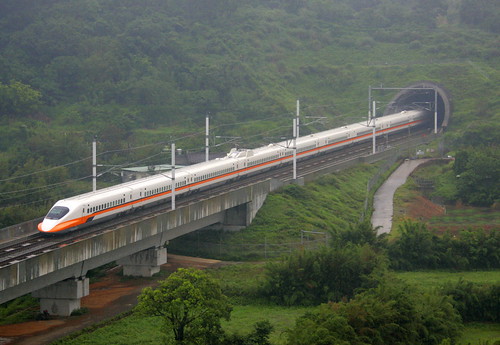


The study notes a high-speed rail network allowing a 10-minute trip between Sydney and Campbelltown and a 50 minute trip from Sydney to Canberra would avoid the $15 billion cost of developing a second Sydney airport if construction begins within 5 years, helping the overall economics of the project, as traffic on the Sydney-Melbourne and Sydney-Brisbane routes could be offloaded. The report says "Travelling between Sydney and Melbourne - currently the third busiest air corridor in the world - could be reduced to less than three hours, showing the exciting capability of fast rail to relieve the pressure on this route".

High Speed Rail As An Election Issue

The recent federal election saw the campaign launch for The Greens party included a promise to use their likely balance of power in the Senate to urge the government to reconsider a high-speed rail link along Australia's east coast, pointing to a new poll showing 74 per cent of people favour the idea.

The Greens are demanding a new $10 million study into the feasibility of a high-speed rail link connecting Melbourne to Brisbane.

The Labor party followed up shortly afterwards with their own announcement of a feasibility study, promising $20 million for a study that primarily focuses on an initial link between Sydney and Newcastle.


There was some cynicism expressed about the Labor announcement, with commenters noting the endless link of announced but never built rail projects for NSW, and the fact that the Rudd government announced in 2008 that a Very Fast Train for the Sydney-Melbourne corridor, estimated to cost AUD$25 billion, was the government's highest infrastructure priority (only to fall silent on the subject for the rest of their term in office, up until this announcement).

Not to be outdone on the nation building front, the coalition decided to announce their own backflip on the issue, calling for a report into high speed rail in response to those of the Greens and Labor, with Nationals leader Warren Truss announcing in waishy-washy fashion "In government the coalition will build upon this study to consider the viability of possible passenger routes along Australia's east coast between Melbourne, Canberra, Sydney and Brisbane".

Benefits

The Greens are claiming the following benefits for high speed rail, noting it reduces both oil dependence and greenhouse gas emissions :
1. Provides accessible fast, reliable, ecologically sustainable transport for the 75% of Australia’s population that live on or near the east coast

Travel between Melbourne or Brisbane and Sydney would take about four hours (with comfortable seats, phone and internet access).

2. Helps to reduce transport emissions and dependence on oil

HSR can and should be electric. This means much lower greenhouse gas emissions and unlike air travel, the cost of train travel would be immune from inevitable and inexorable increases in oil prices. It also means that as renewable electricity displaces coal and gas derived electricity, greenhouse gas emissions from transport can be further drastically reduced. To hasten this process the Greens support increasing the Renewable Energy Target by an amount equivalent to the HSR’s electricity demand.

3. Removes congestion and improves transport safety

The Melbourne-Sydney flight route is the fourth busiest in the world and business as usual projections anticipate high growth until at least 2020. The Pacific Highway between Brisbane and Sydney and the Hume and Princes Highways between Melbourne and Sydney have long standing reputations for being hazardous and accident prone, with heavy traffic congestion, which increases the risk of accidents.

4. Basis for future regional development

By reducing transport times relative to road-based transport, an HSR could open up new development opportunities along the route.

5. Opportunities for freight

In most instances traditional slower trains are likely to be the most cost-effective option for rail freight, however, there may be opportunities to use High Speed Rail for some urgent high value freight, such as mail.

6. Job creation

A High Speed Rail network would create a significant number of jobs during the construction phase as well as a smaller number of ongoing positions. During its peak construction period, the Adelaide to Darwin railway employed 1500 people. A larger number of people would likely be required for the construction of a HSR because there would be two tracks built to a much higher engineering standard.

Costs

The Greens are claiming the following costs for the proposal:
• For track work – a range of around $40 billion (inflated to 2008 figures) for a full double track the entire length. Savings could be made by partial use of single track – with variations in the range of -10% to +30%.The report noted that these estimates are in the lower half of international costs on a per kilometre basis.

• For rolling stock – estimate cost of a 400 seat train set around $50 to $120 million (2008 figures). These costs are for passenger stock, and not freight cars, which we could expect to be lower in costs.

• Operating costs assessed on average of about 7-9 cents (2008 figures) per passenger per kilometre.

The Department of Infrastructure and Transport notes that 2 previous studies (other than the recent AECOM/IPA report) have been conducted into high speed rail links for the east coast, however the earlier studies couldn't show the projects proposed to be "commercially viable" at the time (and continue to be used for ammunition by critics of high speed rail schemes).
The East Coast Very High Speed Train Scoping Study

A scoping study was commissioned by the Government in December 2000 to conduct a comprehensive examination of options for an East Coast very high speed train network connecting Brisbane, Sydney, Canberra and Melbourne with major regional centers along the way. The Study's Final Report was released in 2002 [PDFPDF: 41942 KB ].

Further information about this study can be found in the Executive Summary for the East Coast Very High Speed Train Scoping Study.

High Speed Rail: Strategic Information for an Australian Context

In 2009, the Cooperative Research Centre (CRC) for Rail Innovation commissioned a study to synthesis the current knowledge of High Speed Rail in the Australian context and to provide directions for further investigation. This report was released on 13 January 2010, and can be accessed on the CRC for Rail Innovation's website.

Subway Trains to Generate Power for the Grid  

Posted by Big Gav in ,

Technology Review has an article on capturing power from braking trains - Subway Trains to Generate Power for the Grid.

The Southeastern Pennsylvania Transportation Authority (SEPTA), which runs the transit system in Philadelphia, is piloting a smart electrical grid technology that could cut its electricity bills by up to 40 percent and generate millions of dollars a year.

A massive battery installed at one of the authority's substations will store electricity generated by the braking systems on trains (as the trains slow down the wheels drive generators). The battery will help trains accelerate, cutting power consumption, and will also provide extra power that can be sold back to the regional power grid. The pilot project, which involves one of 38 substations in the transit system, is expected to bring in $500,000 a year. This figure would multiply if the batteries are installed at other substations.

The project shows how cash-strapped public transit agencies that operate major subways and electric rail systems could find a new source of income by tapping into the smart grid. It also highlights one way that the smart grid could save energy, avoid blackouts, and incorporate more renewable power.

Several energy utilities are already experimenting with using large batteries to help smooth out fluctuations in electricity supply, keeping the grid operating at the correct frequency and preventing blackouts. In the new pilot project, this kind of battery technology will be paired with software from a Philadelphia-based smart grid company called Viridity Energy.

The software will decide how to allocate the power stored in the battery, using it to drive trains and smooth out spikes in SEPTA's power distribution network. SEPTA could also sell the excess power to various electricity markets, depending on a number of factors, including what's most profitable.

The pilot project, which Viridity expects to complete by next summer, will make use of the regenerative braking capabilities of Philadelphia's subway trains. These systems convert kinetic energy into electricity as the train slows down.

China Unveils World's Fastest High-Speed Train  

Posted by Big Gav in , ,

Ecogeek has a post on China's continued progress in building a high speed rail system - China Unveils World's Fastest High-Speed Train.

It's becoming clear that China is on its way to total high-speed rail domination. The country is building the world's largest network of high-speed rail and along with that ambitious plan, China has just debuted the world's fastest train.

The new 380A train, also called He Xie, can reach speeds up to 236 mph. The train will start running in 2011 on a new Beijing to Shanghai track that is currently under construction. When that line is completed, the 380A train will be able to make the trip in less than four hours.

China has agreed to purchase 100 of these super-fast trains from maker Changchun Railway Vehicles Co., meaning a good amount of their growing rail network (an impressive 16,000 miles of track will be added by 2020) will run the 380A.

South Africa to Unveil Plans for High Speed Rail Network  

Posted by Big Gav in , ,

High Speed Rail seems to be a hot topic lately - Inhabitat reports that the South Africans are looking to jump on the bandwagon - South Africa to Unveil Plans for High Speed Rail Network.

From the US to the UK to China, countries around the world getting in on the high speed rail bandwagon. The latest country to announce plans for a network is South Africa, which is now looking into a high speed rail line that connects Johannesburg, Durban and Cape Town. Right now a journey from Durban to Johannesburg can take up to 12 hours, but with a high speed rail line the trip would only take 3 hours. This vast improvement is what South African officials feel is necessary to improve economic development and modernize the country.

South Africa has nearly finished construction on a small high speed rail line, which is set to open in May — just in time for the 2010 World Cup. The Gautrain (a combo of Gauteng province and train) will link Johannesburg to Pretoria and the international airport and have a top speed of 100 miles per hour. Testing for the rail line is ongoing and officials have high hopes for the train’s usefulness during the games this summer.

China To Connect Its High Speed Rail All The Way To Europe  

Posted by Big Gav in , ,

Inhabitat has a post on an extremely ambitious Chinese plan to build high speed rail links to Europe - China To Connect Its High Speed Rail All The Way To Europe. Remember the time when the US used to have enough ambition (beyond invading foreign oil fields of course) to attempt large scale engineering projects ?

China already has the most advanced and extensive high speed rail line in the world, and soon that network will be connected all the way to Europe and the UK! With initial negotiations and surveys already complete, China is now making plans to connect its high speed rail line through 17 other countries in Asia and Eastern Europe in order to connect to the existing infrastructure in the EU. Additional rail lines will also be built into South East Asia as well as Russia, in what will likely become the largest infrastructure project in history.

China hopes to complete this massive infrastructure project within 10 years, which will include three major rail lines running at speeds of 320 km/hour. The first will go from King’s Cross Station in London all the way to Beijing (8,100 km as the crow flies) and will take approximately two days. This line will also then extend down to Singapore. A second HSR line will connect into Vietnam, Thailand, Burma and Malaysia. The last line to be built will connect Germany to Russia, cross Siberia and then back into China. The exact routes have yet to be determined.

Financing and planning for this monstrous project is actually being provided by China, who is already in serious negotiations with 17 countries to develop the project. China states that other countries, like India, came to them first to get the project rolling, because of their experience in designing and building their own HSR network. Financing for the infrastructure will be provided by China and in return the partnering nation will provide natural resources to China. For instance, Burma, which is about to build its link, will exchange lithium (used in batteries), in order for China to build the line.

China benefits because it will be able to transport materials cheaply into manufacturing centers inside its borders and the Eastern Hemisphere benefits by getting a fast, efficient, low carbon transportation system. Considering China has already become the global leader in HSR, their leadership in this new venture could reasonably shift the balance of power in their direction. Also, get ready for a huge influx of HSR station designs in the coming years.

A plan that will get Sydney moving  

Posted by Big Gav in , , ,

The SMH has an article on the recommendations from an independent public inquiry into Sydney's public transport system (with the inquiry including ASPO Australia's Garry Glazebrook, amongst others) - Finally, a plan that will get Sydney moving . Related articles include - European transport model to cost $71b, Linking the network to where the jobs are, This is too important to be left to the politicians, And never the trains shall meet and MyZone has sting in the tail for people living in the west.

THE Keneally government should delay building an expensive underground metro network for at least 10 years and focus on new heavy and light rail projects across Sydney, an independent inquiry recommends.

Not only would taxpayers save billions by postponing the metros, but reallocating money to a new heavy rail line through the central business district and across the harbour would provide at least 25 per cent more passenger capacity on the CityRail system for decades.

The inquiry, headed by the state's former rail and roads boss Ron Christie, and backed by the Herald, proposes huge benefits for the transport-starved north-west and south-west suburbs, by building rail links to connect commuters to the job-rich arc between North Ryde and Mascot.

Mr Christie says the government should start work immediately on lines between Epping and Rouse Hill, in the north-west, and Glenfield and Leppington, in the south-west. At a total cost of $5 billion, these lines are cheaper than the seven kilometre CBD Metro, and should be completed by 2015.

Based on market research that measured people's willingness to pay for better public transport, and using financial analysis by Allen Consulting, the 450-page report proposes $36 billion worth of new transport infrastructure be built over 30 years, and another $35 billion in operating and financing costs.

Mr Christie, who oversaw the successful transport operation during the 2000 Olympics, urges the government not to sign contracts for the $5.3 billion CBD Metro and $8 billion West Metro until it consults voters.

Mr Christie supports the proposed West Metro but only between Westmead and Barangaroo, not to Pyrmont or Rozelle and, critically, not using a corridor under Pitt Street, which should be reserved for CityRail. But he also says its construction should be deferred until 2020.

In the most searing critique yet of the metro proposals by a respected expert, Mr Christie warns: ''The proposed routes would jeopardise, perhaps fatally, future heavy rail capacity expansion and congestion-relief options within the CBD and across the harbour.''

While the government argues that the CBD Metro is the ''core'' of a future Sydney-wide metro system, Mr Christie has found no overall network plan or system of fares has been made public.

The report reveals that the government has quietly abandoned its five-year-old metropolitan strategy, which was to create a European-style ''City of Cities'' by encouraging jobs and medium-density housing in centres such as Parramatta and Liverpool.

The need for speed: Europe's trains beat planes  

Posted by Big Gav in

The Age has an article on the battle between trains and planes in Europe - The need for speed: Europe's trains beat planes. Will we ever see a high speed train between Sydney and Melbourne via Canberra ?

With the advent of high-speed trains, rail travel in Europe has become so popular that some intercity flight routes are being cancelled. Why would you fly from London to Paris, for example, and tackle Heathrow and Charles de Gaulle airport check ins plus security when you can catch a high-speed train that lands you right in the centre of town?

Now about 90 per cent of people travel by Eurostar between these two cities. And there's no longer any flights on the Paris-Brussels route. Many now also go by train between London and Brussels. High-speed trains are continually being introduced to new routes.

"If you are travelling less than 1500km, taking the train wins," says Rail Europe CEO Pierre-Stephane Austi. "It gives the sensation that Europe is really becoming smaller. ...Rail has completely changed because of the high-speed system."

He predicts that in two years most of the shorter airline routes will be "finished" in Europe.

Sydney looks West For Rail IdeaL  

Posted by Big Gav in , ,

With the possibility of federal funding making an expanded Sydney rail system more likely, plans to increase the housing density along the western corridor are being floated and the Perth rail system is being looked at as a good example to follow - Perthlings, please take us to your railway system.

Most Australian cities now have serious rail projects; for me, it is an exciting time. Sydney has two metro rail lines on Infrastructure Australia's interim priority list for Commonwealth funding: the West Metro, a line which largely follows Parramatta Road, and the CBD Metro line to Rozelle.

The final list will go to federal cabinet in March, but much work is needed before then, as most projects submitted were poorly defined with weak economic analysis, did not look at alternatives and rarely considered land use. Sydney's new plan for land use around stations is thus welcome.

I say most cities have serious rail projects, because Perth does not. It has spent the last 20 years modernising and extending its railway, largely because of the political backlash to a conservative state government's attempt to close the railway down - in the middle of the first major oil crisis. It mobilised everyone and showed how important a modern electric railway was to the future resilience of the city.

Perth's new Southern Railway already is something of a model for other cities as they prepare their plans. It goes deep into the outer suburbs, places badly hit by last year's oil crisis (a foretaste of many more). Now, 50,000 people a day are carried along a corridor that before could only manage 14,000 on buses.

It cost $30 million a kilometre, including a one kilometre tunnel under the city and two river crossings. Sydney's recent Epping-Chatswood rail project cost $200 million a kilometre due to the extensive tunnelling.

The Southern Railway is a model in other respects, too. Most significantly for Sydney, some stations have transit oriented developments, or TODs. These are high density, mixed-use areas with homes, shops and offices, designed to integrate closely into the station and which can provide a local area with many city services.

In the US such developments can allow residents to reduce their car usage by 50 per cent and increase their household income by 20 per cent. They are popular therefore with those who can afford to live there (affordable housing can be built; Vancouver for instance, requires 15 per cent of each such development to be devoted to affordable housing).

China's Rail Construction Boom  

Posted by Big Gav in ,

The China Daily has an article on massive railway construction in China - Blueprint of railways development (via POD). The investment amounts to $60 billion in new rail projects announced in Sept/Oct, $77 billion spent on rail in the last 5 years, $515 billion to be invested in the next three years, and 150 rail projects under construction worth $235 billion.

China has long had plans for laying 120,000 km worth of railways by 2020, but as the global economic slowdown begins to bite, it looks as though the money will be spent faster than planned to help speed flagging economic growth in China.

In September and October, the Ministry of Railways announced eight new railway projects in various parts of the country. Their investment has added up to 405 billion yuan, equaling 78 percent of the total investment that China poured into railway construction from 2003 to 2007.

In the past five years, the total investment for the railway infrastructure was 522 billion yuan, Minister Liu Zhijun told a working conference in January.

The start-up of the eight railway projects in a short period of time is the beginning of a railway construction boom.

The ministry's planning department chief Yang Zhongmin says about 3.5 trillion yuan will be invested on railway projects in next three years.

At present, 150 railway projects are under construction, involving an investment of 1.6 trillion yuan, he says.

Bullet Trains For California  

Posted by Big Gav in ,

AP reports that Californian voters passed a measure to build a high speed rail network in the state - Calif. voters approve $10B bond for bullet trains. Hopefully they can find the money for it

California voters are green-lighting the nation's most ambitious high-speed rail system, approving a nearly $10 billion bond to put speeding bullet trains capable of topping 200 mph between the state's major metropolitan areas.

The measure, which passed with 52 percent support Tuesday, will fund the first phase of what is projected to be a $45 billion, 800-mile project built with state, federal, local and private money.

Backers sold the proposal as an innovative alternative to soaring airfares and gas prices. In the closing weeks of the campaign, they touted estimates that it would create nearly 160,000 construction-related jobs and 450,000 permanent jobs.

"In our state, transportation is always a big issue," said Mark Baldassare, president of the nonpartisan, nonprofit Public Policy Institute of California. "A lot of people have a sense that maybe that (bullet train) is something I can use at some point. It's something they can relate to."

The first phase of the rail line would link Anaheim, Los Angeles, Fresno and San Francisco. Planners eventually want to include Sacramento, San Diego and Oakland.

The $9.9 billion proposition includes $9 billion for bullet trains and $950 million for conventional commuter and intercity rail, including trains to connect travelers with the high-speed system.

"Californians decided to reduce our oil dependence, to build alternatives to traffic and long airport lines, and to help solve global warming. Californians were also voting to boost the economy," said Emily Rusch of the California Public Interest Research Group.

Fast Green Trains  

Posted by Big Gav in , ,

Cleantechnica has a post on a fast train service in Sweden with a range of energy efficiency features - Sweden Rolling Out 183 MPH High-Speed Green Train.

The Green Train, or Gröna Tåget, will cut energy use on rail lines by 30 percent through lowered operational costs and journey times. Top speeds reached 183 MPH on a test run.

Best of all, the Green Train can operate on the current rail infrastructure. That means there’s no need to lay down new tracks.

Energy saving measures on the train include a permanent magnet motor to increase propulsion chain efficiency and a system that saves up to 15 percent of traction energy by assisting drivers with speed and traction force information.

By Foot Or By Rail  

Posted by Big Gav in , , ,

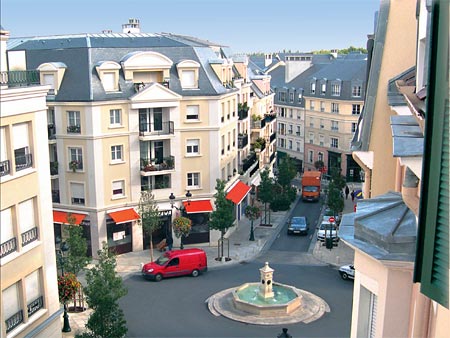
Laurence at PedShed has a post on a European prize for "best urban neighborhood built in Europe in the last 25 years" - Three Prix Rotthier Winners.

The winners of the Prix Rotthier pour la Reconstruction de La Ville 2008 have been announced, and they are gems. The Prix Rotthier prizes are given once each three years, and the theme of this year’s competition was “the best urban neighborhood built in Europe in the last 25 years.”

Not only are the winners beautiful and functional, they were judged to have been conceived and designed according to many of the principles of sustainable development and the EU Green Paper for the Urban Environment. These include revitalization of existing cities and suburbs with compact, mixed use development; integrating land use and transportation for more walking, biking, public transit and fewer motor vehicles; harmonious small and medium industry; energy efficiency and green building; waste reduction and recycling; parkland and integrated soil and water management; and not least, to “defend the architectural heritage against the uniform banality of the international style, respecting rather than imitating the old.”

The competition has done a service by providing tearsheets with site plans, photos and statistics on each of the ten winners. However, descriptive material is lacking (until the catalog is published in late 2008), so this post will give capsule descriptions of three neighborhood-scale projects, along with links to more information.


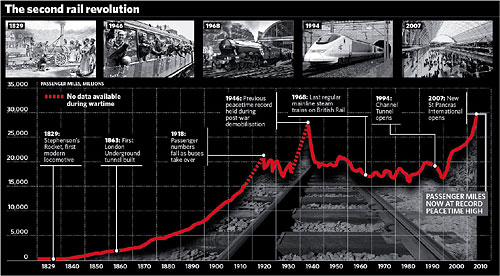
Pedshed also has a (slightly older) post noting British Train Ridership Hits Peacetime Record.
A story about record train ridership in the UK includes this impressive graphic. The chart is based on the Association of Train Operating Companies (Atoc) booklet The Billion Passenger Railway. The booklet features several articles — including one that forecasts that the competitiveness of 21st century cities will depend on their high speed rail links.

Andrew Curry reports from September 2083:
With the internet long hamstrung by crime and fraud, and air travel the preserve of the hyper-rich, the cities which keep their place at the table are those which have solved four problems, according to Vienna Mayor, Kristal Stangl, the host of this year’s event.

“We must make sure that our cities have enough energy to function, to be sure, and that resources like water are secure. There must be enough food. They need to be good places to live. A lot of cities can make these things happen, even in our present conditions of scarcity. But the economic part is about getting the best brains to work on the complex problems which need to be solved to build new knowledge and value. That needs good transport links, and the cities which invested in high speed rail in the first part of the century are the best placed to compete.”

Some cities have slipped off the map as the European periphery has grown and the core shrunk. Most of the ‘Euro-30′ come from the ‘Golden Diamond’ between London, Hamburg, Krakow, and Marseilles. Some long-standing rivalries have been settled; Madrid is no longer a member, while Barcelona holds on to its Convention status. Rome plays second fiddle to Milan. Manchester’s high speed link to the tunnel has helped it stay in the club, while Glasgow’s failure to gain one has exiled it to the fringes.


The Guardian reports that Europe's rail renaissance is on track as well.
The rail renaissance in Europe is racing ahead like a 320kph TGV yet Guillaume Pepy, head of SNCF, sees risks as well as opportunities as he celebrates the centenary of the reborn Mont Blanc Express aboard one of its six new electric traction trains.

Last weekend saw the start of the French summer holiday season and 1.3 million people thronged Paris's stations as they headed for the mountains and sea. The elongated twin-set TGVs pulling out of the Gare de Lyon virtually every five minutes are packed with up to 1,000 passengers. The concourse and platforms are so crammed with anxious families and international backpackers it's surprising they all get on board on time.

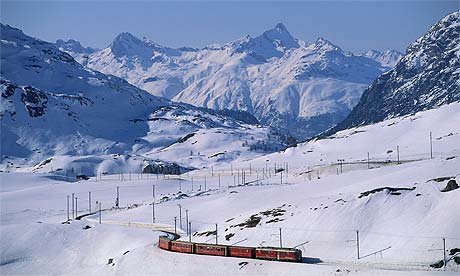
Even in the driving rain sweeping through the French Alps, accompanied by thunder and lightning, drenched walkers and climbers rush to join the "express" linking St Gervais with Vallorcine on the Franco-Swiss border and offering stunning views of the Mer de Glace.

Pepy, SNCF chairman and chief executive (PDG) since February, says that, unlike his predecessors who had to manage a railway recession, he is presiding over an accelerating boom. The state-owned SNCF delivered a net €1.1bn (£875m) profit last year and first-half figures, due next week, are said to be sparkling. Pepy envisages up to 80m extra passenger trips this year or an increase of around 8%.

"This change will speed up because we are facing a twin energy and environment crisis," he says, pointing to surging fuel costs and growing personal worries about carbon footprints. "People want sustainable mobility and, in France, more trains and more SNCF."

Carlos Ghosn, head of Renault-Nissan, he adds, has spoken of the demise of the petrol-driven car and drivers are shifting to trains which are four times more energy-efficient than cars – and six times more than planes. "People are looking for new answers," Pepy says. "They are waiting for SNCF solutions."


The Times notes that air traffic's loss is rail's gain - High-speed trains seize short-haul market as fuel cost cripples the airlines.
The airline industry has been crushed by the price of kerosene and deserted by passengers fed up with delays. After decades of disappointment, false dawns and virtually bankrupt Channel Tunnels, we have finally arrived at the age of the train and the evidence is in the crowd at St Pancras.

Only eight months after opening its doors in November, the new station is choc-a-bloc at peak hours, an exciting but slightly nerve-wracking development for Eurostar and its biggest shareholder, SNCF, the French state railway.

Traffic growth on Eurostar is accelerating like an Alstom locomotive, increasing by 21 per cent in the first quarter, compared with the same period in 2007, and revenues are up by a quarter. Those figures were no flash in the pan, a boost from all the hooplah at last year's opening of St Pancras. Traffic in the second quarter has grown at similar rates, insiders say.

It would not be unfair to say that squeezing the London-Paris journey time by just 20 minutes has boosted Eurostar's income by 25 per cent.

While Eurostar thunders through Kent, the competing service to Paris and Brussels is lost on a never-ending building site west of London. The Terminal 5 fiasco has not helped British Airways's short-haul European business, but by next year (assuming no new operational disaster) it should have ironed out the wrinkles.

Then, BA is left with the awful question of whether short-haul air traffic has any future in Europe. The answer has to be a resounding “no”.

When did you last hear of a service business where the fuel bill represented more than a third of the operating cost, substantially higher than the cost of the staff?

Statistics

Locations of visitors to this page

blogspot visitor
Stat Counter

Total Pageviews

Ads

Books

Followers

Blog Archive

Labels

australia (619) global warming (423) solar power (397) peak oil (355) renewable energy (302) electric vehicles (250) wind power (194) ocean energy (165) csp (159) solar thermal power (145) geothermal energy (144) energy storage (142) smart grids (140) oil (139) solar pv (138) tidal power (137) coal seam gas (131) nuclear power (129) china (120) lng (117) iraq (113) geothermal power (112) green buildings (110) natural gas (110) agriculture (91) oil price (80) biofuel (78) wave power (73) smart meters (72) coal (70) uk (69) electricity grid (67) energy efficiency (64) google (58) internet (50) surveillance (50) bicycle (49) big brother (49) shale gas (49) food prices (48) tesla (46) thin film solar (42) biomimicry (40) canada (40) scotland (38) ocean power (37) politics (37) shale oil (37) new zealand (35) air transport (34) algae (34) water (34) arctic ice (33) concentrating solar power (33) saudi arabia (33) queensland (32) california (31) credit crunch (31) bioplastic (30) offshore wind power (30) population (30) cogeneration (28) geoengineering (28) batteries (26) drought (26) resource wars (26) woodside (26) censorship (25) cleantech (25) bruce sterling (24) ctl (23) limits to growth (23) carbon tax (22) economics (22) exxon (22) lithium (22) buckminster fuller (21) distributed manufacturing (21) iraq oil law (21) coal to liquids (20) indonesia (20) origin energy (20) brightsource (19) rail transport (19) ultracapacitor (19) santos (18) ausra (17) collapse (17) electric bikes (17) michael klare (17) atlantis (16) cellulosic ethanol (16) iceland (16) lithium ion batteries (16) mapping (16) ucg (16) bees (15) concentrating solar thermal power (15) ethanol (15) geodynamics (15) psychology (15) al gore (14) brazil (14) bucky fuller (14) carbon emissions (14) fertiliser (14) matthew simmons (14) ambient energy (13) biodiesel (13) investment (13) kenya (13) public transport (13) big oil (12) biochar (12) chile (12) cities (12) desertec (12) internet of things (12) otec (12) texas (12) victoria (12) antarctica (11) cradle to cradle (11) energy policy (11) hybrid car (11) terra preta (11) tinfoil (11) toyota (11) amory lovins (10) fabber (10) gazprom (10) goldman sachs (10) gtl (10) severn estuary (10) volt (10) afghanistan (9) alaska (9) biomass (9) carbon trading (9) distributed generation (9) esolar (9) four day week (9) fuel cells (9) jeremy leggett (9) methane hydrates (9) pge (9) sweden (9) arrow energy (8) bolivia (8) eroei (8) fish (8) floating offshore wind power (8) guerilla gardening (8) linc energy (8) methane (8) nanosolar (8) natural gas pipelines (8) pentland firth (8) saul griffith (8) stirling engine (8) us elections (8) western australia (8) airborne wind turbines (7) bloom energy (7) boeing (7) chp (7) climategate (7) copenhagen (7) scenario planning (7) vinod khosla (7) apocaphilia (6) ceramic fuel cells (6) cigs (6) futurism (6) jatropha (6) nigeria (6) ocean acidification (6) relocalisation (6) somalia (6) t boone pickens (6) local currencies (5) space based solar power (5) varanus island (5) garbage (4) global energy grid (4) kevin kelly (4) low temperature geothermal power (4) oled (4) tim flannery (4) v2g (4) club of rome (3) norman borlaug (2) peak oil portfolio (1)