Showing posts with label high speed rail. Show all posts

A Sydney to Melbourne Hyperloop ?  

Posted by Big Gav in , ,

The Age reports that Australian government MP John Alexander is pushing for a high speed rail or hyperloop link between Sydney and Melbourne as a solution to unaffordable house prices - High-speed rail and a Hyperloop: John Alexander's radical housing affordability plan.

High-speed rail between Sydney and Melbourne would be used to decentralise Australia's urban population and open up cheaper housing under a radical plan now endorsed by a parliamentary committee. ... The report also urges the government to monitor and, in future, assess the feasibility of Hyperloop, a supersonic tube conceived by Tesla founder Elon Musk that would potentially see passengers traverse Sydney to Melbourne in less than one hour.

Linking regional centres by rail would enable people to live in Goulburn, for example, and work in Sydney, and ease pressure on crowded city markets. It would "provide an abundant supply of affordable housing for many generations to come", Mr Alexander said.

China 'considering' building high-speed rail line from Beijing to the United States  

Posted by Big Gav in

The South China Morning Post has an article on a proposed Chinese high speed rail link across the Bering Strait to North America - China 'considering' building high-speed rail line from Beijing to the United States. I like high speed rail but I can't see this 2 day trip appealing to many travellers given the presumably exorbitant cost of such a project.

China is considering plans to build a high-speed railway line to the US, the country’s official media has reported.

The proposed line would begin in north-east China and run up through Siberia, pass through a tunnel underneath the Pacific Ocean then cut through Alaska and Canada to reach the continental US, according to a report in the state-run Beijing Times newspaper.

Crossing the Bering Strait in between Russia and Alaska would require about 200km (125 miles) of undersea tunnel, the paper said, citing Wang Mengshu, a railway expert at the Chinese Academy of Engineering. “Right now we’re already in discussions. Russia has already been thinking about this for many years,” Wang said.

The project - nicknamed the “China-Russia-Canada-America line” - would run for 13,000km, about 3,000km further than the Trans-Siberian Railway. The entire trip would take two days, with the train travelling at an average of 350kmh (220mph).

Beyond Zero Emissions finds Australian high-speed rail service sensible and feasible  

Posted by Big Gav in , ,

The Brisbane Courier Mail has a look at proposals for high speed rail in Australia - Beyond Zero Emissions finds high-speed rail service sensible and feasible.

IMAGINE boarding a train at Brisbane’s Roma Street at 9am and getting off at Sydney’s Central Station at noon.

Imagine living near the beach on the Gold Coast and commuting to work in Brisbane’s CBD within 20 minutes.

Both could be a reality in little more than a decade, according to a new report which says high speed rail is not only achievable and affordable, but essential to Australia’s future.

Detailed research by Melbourne University’s Energy Institute, think-tank Beyond Zero Emissions and the German Aerospace Center, concludes that a 1799km network linking Brisbane and the Gold Coast to Sydney and Melbourne could be operating by 2025. “This is a faster, better, cleaner cheaper and more convenient form of travel. It is vital to Australia’s future,” Beyond Zero Emissions CEO Stephen Bygrave said.

The report, which took two years to compile, says the total bill including infrastructure construction and rolling stock would be $84 billion – $30 billion less than the cost suggested by an advisory group set up by the Rudd Labor Government – due to plotting a route with fewer tunnels and bridges.

It predicts that 68 million passengers a year would be using the system within five years of the launch, generating $7 billion in revenue in 2030 and an annual operating profit of $4.6 billion.

300 MPH Maglev Train Could Carry Passengers From Washington D.C. To New York in 60 Minutes  

Posted by Big Gav in

Inhabitat has a post on a proposed high speed rail link for the US - 300 MPH Maglev Train Could Carry Passengers From Washington D.C. To New York in 60 Minutes.

Northeast Maglev (TNEM) just unveiled updated plans for a superconducting maglev train that could rocket passengers from Washington D.C. to New York City in 60 minutes flat. The 300 MPH bullet train would be levitated and propelled by powerful electromagnets, which would reduce friction and allow the train to achieve very high speeds with rapid acceleration. The project was recently revamped in light of increased interest in high-speed public transport technologies such as the Hyperloop.

The Chinese have being trying to sell their high speed train technology to Australia, but the new government has decided to axe high speed rail investigations as well as clean energy programs - Axed advisory body will seek crowdfunding.

The High Speed Rail Advisory Group, which looked at the possibility of high speed rail from Melbourne to Brisbane via Sydney, was also ditched, leading the Rail, Tram and Bus Union to warn it would leave Australia one of the world’s rail “backwaters”.

But former deputy prime minister Tim Fischer, who sat on the panel of the advisory group, told Guardian Australia he was unperturbed by the decision. “We completed our major task of a report on the feasibility,” he said. “High speed rail should be an essential part of a 21st century plan of inter-modal transport, alongside road. No ifs, no buts. “It’s safe to say we are 50 years behind on this, but the group’s work on this was done. I don’t have any particular inside knowledge on what the government will do on high speed rail, that’s a matter for them.”

High Speed Rail Cheaper Than Albanese Thinks  

Posted by Big Gav in

Beyond Zero Emissions has an article on how to reduce the cost of the proposed east coast high speed rail link - High Speed Rail Cheaper Than Albanese Thinks.

Transport minister Anthony Albanese is trying to derail the promising High Speed Rail option before it even leaves the platform, according to climate solutions think-tank Beyond Zero Emissions.

“Mr Albanese appears to have decided to write off this nation building project before even releasing the report which he has been sitting on for four months,” said BZE's Zero Carbon Australia Transport researcher Gerard Drew. “It is time to allow the public to consider the proposal. It’s unacceptable for the government to dismiss this publicly financed research before the costs and benefits have been shown.”

BZE, in partnership with the German Aerospace Centre (DLR), has analysed high-speed rail route options for Melbourne to Brisbane to arrive at a significantly lower cost figure than the Phase 1 AECOM study for the government, released in 2011.

“Based on the first study, we think that a price tag at the lower end of AECOM's costing range is what we should expect from the high speed rail network”, said Mr Drew. “Mr Albanese has declared that the alignment 'has got to be in a straight line' which is certainly false. This assumption can inflate the project cost by a huge degree by unnecessarily forcing it through adverse terrain. For example, a kilometre of tunnel can cost more than 10 times as much as track on flat ground.

The joint BZE-DLR study suggests that less than $70 billion is very reasonable for the highest-demand route from Melbourne to Brisbane, based on a more careful track alignment to avoid costly terrain.

AECOM’s routes appear to take the most direct route possible between stops. The BZE/DLR analysis indicates that allowing more flexibility to avoid difficult terrain could reduce the civil works cost of the rural sections by around 40% with negligible increases in journey time.

Image: Mapping the path of least resistance (dark blue) and precise route with optimised horizontal curvature (light blue), including bridges (purple) and tunnels (dark red)

Map Shows What US-Wide High Speed Rail Might Look Like  

Posted by Big Gav in

TreeHugger has a post on a high speed rail plan for North America - Map Shows What US-Wide High Speed Rail Might Look Like.

Alfred Twu, a high-speed rail activist and mapmaker, has created the map above, showing what a cross-country high-speed rail network might look like in the United States

Australian High Speed Rail Study Underway  

Posted by Big Gav in , ,

The SMH reports that Australia's high speed rail feasibility study is underway - Fast-train study consultant favours link.

THE federal government will spend $20 million on a detailed study into high-speed rail on Australia's east coast. It has commissioned a consultant that has already indicated a fast train should be possible.

The Minister for Transport, Anthony Albanese, said yesterday AECOM Australia would complete a study by the middle of the year into potential routes for a fast train between Sydney and Newcastle, extending either side to south-east Queensland and Melbourne. The study would look at where stations should sit, and determine rough journey times and transit costs.

For AECOM, a global consultant, the work builds on a report it has released in conjunction with the lobby group for private infrastructure firms, Infrastructure Partnerships Australia.

That report, A realistic pathway to very fast trains, argued there was a very good chance that a high-speed rail link along the eastern seaboard would soon be necessary. Released in September, it called on the government to start examining where rail lines should be built and to start buying land to preserve corridors.

The executive director of Infrastructure Partnerships Australia, Brendan Lyon, said the work AECOM would conduct for the federal government was likely to reflect this conclusion.

''I would be very surprised if any report doesn't support long-term planning so that this remains an option into the future,'' Mr Lyon said.

Crikey has more - High Speed rail study slowly leaves the station.
Now that China has a rail link of similar length to Sydney-Melbourne operating in under three hours between Guangzhou and Wuhan, it definitely deserves to be front-of-mind.

This earlier story on that link includes videos and other details, and in June, the Beijing-Shanghai high speed link is opening, providing many China air travellers with a superior point to point or total trip experience compared to air, whether measured by trip time, amenity, fare or continuous broadband connectivity.

The Australian study is not however primarily about tackling key air routes. It is about identifying and preparing for high speed rail corridors that could create immense economic activity and elevated land values in areas that have been ignored by or spared from urbanisation depending on your personal perspectives. ...

This is the detailed timetable.
The study will focus on identifying possible routes, corridor preservation and station options, including city-centre, city-periphery and airport stations. This will provide a basis for route development, indicative transit times and high-level construction costs.

As part of the core network element at the centre of the east coast corridor, the Newcastle–Sydney ‘spine’ will be a central aspect of this work. Options for links northwards to Brisbane and southwards to Canberra and Melbourne will also be considered.

Specifically the study will:

• Identify undeveloped land corridors and/or existing corridors that could be considered for a high speed railway, and preservation strategies;
• Identify the main design decisions and requirements to build and operate a viable high speed rail network on the east coast of Australia;
• Present route and station options, including indicative construction costs and interaction with other transport modes;
• Provide costs estimates of undertaking the next stages of work, such as detailed route alignment identification and corridor resumptions;
• Identify potential financing and business operating models for the construction and operation of a high speed railway;
• Provide advice and options on relevant construction, engineering, financial and environmental considerations.

The study will be managed by the Department of Infrastructure and Transport. It will draw on expertise from the public and private sectors, as well as international experience, growth forecasts and other contemporary data. Stakeholders will be consulted and contribute views through a formal reference group, which will include representatives from relevant Commonwealth, state and territory agencies and other key stakeholder groups.

The high speed rail implementation study will by July 2011:

• Identify the requirements for implementation of a viable HSR network on the east coast;
• Identify strategic route and station options, including high-level costing.

This initial phase will provide a basis for consultation and inform the specific direction of a second phase, including consideration of the specific corridors, routes and associated issues to be targeted for more detailed examination.

Further work from July 2011 will include:

• Detailed corridor alignment identification;
• Identification of preliminary geotechnical issues;
• Development of comprehensive robust cost estimates for preferred options;
• Further investigation of investment and (public and private) financing options;
• Detailed patronage and revenue forecasts;
• Consideration of preferred options in relation to other modes (for example, airport capacity implications resulting from diversion of air traffic to train).

This final work and report will take approximately 12 months to complete and inform the Australian Government and state and territory governments’ consideration of next steps for high speed rail in Australia.

High Speed Rail - Europe and the American Election  

Posted by Big Gav in

Bit Tooth Energy has a look at developments in high speed rail in Europe and the US - High Speed Rail - Europe and the American Election.

It was President Obama who famously said, after the 2008 vote that “Elections have Consequences.” Well two years later that dictum still applies (as it will two years from now). I bring it up since (h/t to Luis) the European Commission has just released a report on High Speed Rail which gives some of the progress that has been achieved on that continent since the first high speed line was inaugurated between Florence and Rome in 1977, though it was not until the service between Paris and Lyon in 1981 that the boom began. And now Europe has 3,861 miles of high-speed lines where trains can travel at faster than 150 mph (the fastest is over 220 mph in commercial service, 350 mph in trials). The inter-continental service is continuing to grow, though to facilitate progress the EU is seeking to develop common technical standards across the network. Unfortunately, after Tuesday, the prognosis is not that favorable to the change in the United States.


It will be a considerable boon in Europe, as expansion continues. Spain, for example, is planning on expanding the network so that 90% of the inhabitants are within 30 miles of a station. The results can be seen with the reduction in travel times between major cities. (And remember that the stations generally lie in the heart of the city, not an hour or so away as many airports now are).

It becomes faster, and more efficient, as well as (speaking personally) less physically tiring, to travel increasingly great distances in Europe by train, in contrast both with air and car. As a result, the report notes:
The advantages of HSLs, in terms of frequent connections (which can easily be modified depending on demand) and flexibility for passengers, have allowed the railways to compete more effectively against other modes of transport. Since 1997, over 6 million passengers a year have been using the Brussels–Paris HSL. As a result, flights have been cut back on this route.

Overall the growth in traffic has been a six-fold increase in usage.
Since high-speed lines were introduced, the number of passengers opting for this mode of transport has constantly increased. The number of passengers on all German, Belgian, Spanish, French, Italian and British lines increased from 15.2 billion passenger-kilometres (bpkm) in 1990 to 92.33 billion in 2008.

In looking at door-to-door travel times, the report chart shows that air becomes faster than conventional rail at a travel distance (in Europe) of around 240 miles, while air does not become faster than high speed lines until a distance of about 500 miles. I start to think about flying instead of driving at a distance of around 300 miles.

At the present time those dealing with the anticipated growth of the network over the next ten years have not, I suspect, taken into consideration the changing fuel availabilities of the next decade. If, as is a reasonable possibility, crude oil pops over $100 in the next year, thereby drawing increasing attention to the coming of Peak Oil, then it is likely that demand for improved rail traffic will likely rise significantly beyond the 25% increase in growth that has been projected. As I have noted before, trains in Europe are becoming increasingly full, at current rates of demand, even in off-peak hours. In the shorter term, as the report notes, train transport may also be helped by the increasing saturation of existing airports with flights. But it also leads to the problems of using rail to transport goods as well as people. These services have different imperatives, and so the report concludes that two separate systems will evolve. ...
Although the environmental impact of HSLs can also be reduced by improving the energy efficiency of trains and working on other elements of the vehicle, the carbon foot- print of rail travel is still much smaller than that of air or road travel. In the case of a journey from Paris to Marseilles, CO2 emissions in grams per passenger-kilometre (g/pkm) are just 2.7 g/pkm by HS train, compared with 153.0 g/pkm by air and 115.7 g/pkm by car. From the point of view of energy efficiency, HSTs also perform better, using 12.1 grams of petrol per passenger-kilometre, compared with 17.6 for conventional trains, 18.3 for a coach, 29.9 for a car and 51.5 for an aircraft.

So how does this tie into the first paragraph? Well in the United States, and a part of the Stimulus from the Federal Government, high speed lines had been proposed, with funding from Washington. However, with the election of Republican governors in several states due to receive that money, the plans may have to change. The new governor of Wisconsin, for example, has vowed to kill the high-speed line between Madison and Milwaukee. This was meant to be part of a network that would run from Chicago to Minneapolis, and stopping the project will likely cost the state money and jobs – but as a top campaign issue it is likely something the Governor-elect may have to follow up on.

Similarly in Ohio, the incoming Governor, John Kasich has said that “Passenger rail is dead in Ohio.” In this case he was discussing the $400 million plan to restart passenger service between Cincinnati, Columbus and Cleveland.

Work on the high-speed Florida link has already started, this is expected to carry up to two million folk a year from Tampa to Orlando or back, by 2015. It was not favored by Rick Scott who was just elected Governor of the State, though some of his opposition may come from the investment needed to extend the link from Orlando down to Miami. However the incoming Chair of the House Transportation Committee has already spoken out against it.

On the other hand the fate of the investment in a high-speed link in California has not been changed by the election. The backbone of that system, the 500 miles from LA to San Francisco is planned for completion by 2020.

Study will examine cost of fast rail in Australia  

Posted by Big Gav in ,

The SMH has an update on investigations into high speed rail in Australia - Study will examine cost of fast rail.

THE impact of a high-speed rail line on Sydney Airport's capacity will be considered soon by a government feasibility study.

The study's terms of reference, released yesterday, will see the federal transport department put a cost on a Sydney-to-Newcastle line, but also consider options for high-speed rail links north to Brisbane, and south to Canberra and Melbourne.

The Transport Minister, Anthony Albanese, said fast rail could potentially offer a significant cut to commuting times for people travelling between Sydney, Newcastle and Gosford.

The $20 million study aims to answer the question of whether a fast train is economically viable, given Australia's large distances and small population compared with European and Asian countries which are increasingly embracing high-speed rail.

A route, station options and high-level costing will be identified by next July.

More detailed studies of public and private financing options, patronage forecasts, and the implications for airline traffic will be considered in a second phase, and a report to the government will be completed by mid-2012.

A formal reference group will include representatives from state governments.

Earlier advice to the department had suggested high-speed rail was not viable in Australia. A spokesman for Mr Albanese said yesterday previous studies had not put a real cost on building a network.

If high-speed rail was found to be uneconomical now, the study would look at when it might become financially viable, he said.

Ex-Liberal government minister Helen Coonan is also calling for high speed rail (with some added partisan spin about other government programs which can be ignored) - Give us high-speed trains.
The Japanese did it first with the bullet train in 1964. Saudi Arabia is spending $15 billion expanding its high-speed rail network, and close behind are Qatar and Kuwait, which are spending $10 billion each. Europeans have an enviable high-speed connection; it was Spain's network that captured the attention of the US president.

When told more people used fast trains between Seville and Madrid than those driving and flying put together, Barack Obama announced high-speed rail would be a key part of his $US8 billion fiscal Recovery Act.

"Building a new system of high-speed rail in America will be faster, cheaper and easier than building more freeways or adding to an already overburdened aviation system - and everybody stands to benefit," he said.

Perhaps most impressive of all are the Chinese. In the previous five years they spent more on rail, roads and other fixed assets than they spent in the past 50. Next China plans to link 20,000 kilometres with high-speed rail networks before 2015.

Australian commuters, meanwhile, are left behind, frustrated on overcrowded city platforms or choking to death in peak-hour meltdown because we still don't have high-speed rail as a transport alternative.

Of course we should. It's madness that on a car journey from Wollongong to Newcastle, drivers grind to a halt because of traffic in Wahroonga. This otherwise beautiful suburb has become an inescapable quagmire. No one contemplates taking the trip by train simply because without fast rail it isn't viable.

Transport Minister Anthony Albanese has finally announced a study will begin into high-speed rail, but let's not get excited. If his pre-election announcement was anything to go by, we will not see the report's findings until just days before the 2013 election.

High Speed Rail In Australia - Possible or Just A Mirage ?  

Posted by Big Gav in , , , ,

The issue of a high speed rail line down the east coast of Australia has recently been raised by each of the 4 major political parties as a potential solution to Australia's need to reduce greenhouse gas emissions, reduce road congestion, promote regional development and cater for a population that is expected to increase to 36 million people by 2050. As a step towards an electrified transport system it would also help as a peak oil mitigation measure, though this aspect only tends to get mentioned by the Greens.

Infrastructure Partnerships Australia and AECOM recently released a report (pdf) urging the federal government to identity new rail routes and then buy land or put in place planning protections to ensure future land price rises don't make a high-speed rail network a prohibitive option in future (the study indicates the likely land corridor is valued at $13.7 billion at today's prices but will expand to $57 billion by 2030).

The report won praise in editorials in the Fairfax press, with The Age opining "Whenever the inaugural service glides along its 180-minute path from Melbourne to Sydney and on to Brisbane, it will be worth the time and investment. For too long, rail has been treated as a second-class method of passenger transport, with scant attention paid to its energy efficiency and seamless ability to link city centres. It is time to make it a reality.".

The report took eight months to produce and outlines an indicative corridor where the stations could be located (but suggests that engineering studies would be required to determine the exact location of new routes). It recommends the corridor be built incrementally and shared with different types of infrastructure such as water, electricity and the NBN (national broadband network) to make it financially viable.
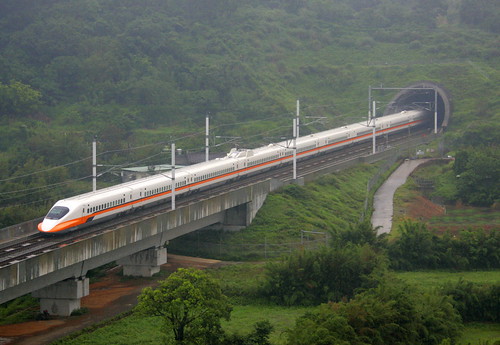


The study notes a high-speed rail network allowing a 10-minute trip between Sydney and Campbelltown and a 50 minute trip from Sydney to Canberra would avoid the $15 billion cost of developing a second Sydney airport if construction begins within 5 years, helping the overall economics of the project, as traffic on the Sydney-Melbourne and Sydney-Brisbane routes could be offloaded. The report says "Travelling between Sydney and Melbourne - currently the third busiest air corridor in the world - could be reduced to less than three hours, showing the exciting capability of fast rail to relieve the pressure on this route".

High Speed Rail As An Election Issue

The recent federal election saw the campaign launch for The Greens party included a promise to use their likely balance of power in the Senate to urge the government to reconsider a high-speed rail link along Australia's east coast, pointing to a new poll showing 74 per cent of people favour the idea.

The Greens are demanding a new $10 million study into the feasibility of a high-speed rail link connecting Melbourne to Brisbane.

The Labor party followed up shortly afterwards with their own announcement of a feasibility study, promising $20 million for a study that primarily focuses on an initial link between Sydney and Newcastle.


There was some cynicism expressed about the Labor announcement, with commenters noting the endless link of announced but never built rail projects for NSW, and the fact that the Rudd government announced in 2008 that a Very Fast Train for the Sydney-Melbourne corridor, estimated to cost AUD$25 billion, was the government's highest infrastructure priority (only to fall silent on the subject for the rest of their term in office, up until this announcement).

Not to be outdone on the nation building front, the coalition decided to announce their own backflip on the issue, calling for a report into high speed rail in response to those of the Greens and Labor, with Nationals leader Warren Truss announcing in waishy-washy fashion "In government the coalition will build upon this study to consider the viability of possible passenger routes along Australia's east coast between Melbourne, Canberra, Sydney and Brisbane".

Benefits

The Greens are claiming the following benefits for high speed rail, noting it reduces both oil dependence and greenhouse gas emissions :
1. Provides accessible fast, reliable, ecologically sustainable transport for the 75% of Australia’s population that live on or near the east coast

Travel between Melbourne or Brisbane and Sydney would take about four hours (with comfortable seats, phone and internet access).

2. Helps to reduce transport emissions and dependence on oil

HSR can and should be electric. This means much lower greenhouse gas emissions and unlike air travel, the cost of train travel would be immune from inevitable and inexorable increases in oil prices. It also means that as renewable electricity displaces coal and gas derived electricity, greenhouse gas emissions from transport can be further drastically reduced. To hasten this process the Greens support increasing the Renewable Energy Target by an amount equivalent to the HSR’s electricity demand.

3. Removes congestion and improves transport safety

The Melbourne-Sydney flight route is the fourth busiest in the world and business as usual projections anticipate high growth until at least 2020. The Pacific Highway between Brisbane and Sydney and the Hume and Princes Highways between Melbourne and Sydney have long standing reputations for being hazardous and accident prone, with heavy traffic congestion, which increases the risk of accidents.

4. Basis for future regional development

By reducing transport times relative to road-based transport, an HSR could open up new development opportunities along the route.

5. Opportunities for freight

In most instances traditional slower trains are likely to be the most cost-effective option for rail freight, however, there may be opportunities to use High Speed Rail for some urgent high value freight, such as mail.

6. Job creation

A High Speed Rail network would create a significant number of jobs during the construction phase as well as a smaller number of ongoing positions. During its peak construction period, the Adelaide to Darwin railway employed 1500 people. A larger number of people would likely be required for the construction of a HSR because there would be two tracks built to a much higher engineering standard.

Costs

The Greens are claiming the following costs for the proposal:
• For track work – a range of around $40 billion (inflated to 2008 figures) for a full double track the entire length. Savings could be made by partial use of single track – with variations in the range of -10% to +30%.The report noted that these estimates are in the lower half of international costs on a per kilometre basis.

• For rolling stock – estimate cost of a 400 seat train set around $50 to $120 million (2008 figures). These costs are for passenger stock, and not freight cars, which we could expect to be lower in costs.

• Operating costs assessed on average of about 7-9 cents (2008 figures) per passenger per kilometre.

The Department of Infrastructure and Transport notes that 2 previous studies (other than the recent AECOM/IPA report) have been conducted into high speed rail links for the east coast, however the earlier studies couldn't show the projects proposed to be "commercially viable" at the time (and continue to be used for ammunition by critics of high speed rail schemes).
The East Coast Very High Speed Train Scoping Study

A scoping study was commissioned by the Government in December 2000 to conduct a comprehensive examination of options for an East Coast very high speed train network connecting Brisbane, Sydney, Canberra and Melbourne with major regional centers along the way. The Study's Final Report was released in 2002 [PDFPDF: 41942 KB ].

Further information about this study can be found in the Executive Summary for the East Coast Very High Speed Train Scoping Study.

High Speed Rail: Strategic Information for an Australian Context

In 2009, the Cooperative Research Centre (CRC) for Rail Innovation commissioned a study to synthesis the current knowledge of High Speed Rail in the Australian context and to provide directions for further investigation. This report was released on 13 January 2010, and can be accessed on the CRC for Rail Innovation's website.

Australia Left standing by China's bullet trains  

Posted by Big Gav in , ,

The SMH has an article on China's high speed rail revolution and the country's role in building trains for Sydney's aging local rail network - Left standing by China's bullet trains.

Three years ago China had planned to lay 13,000 kilometres of high-speed railway by 2020, which would be more than the rest of the world combined.

Then the global financial crisis intruded and Beijing brought that 2020 deadline forward by eight years, while redefining ''high speed'' to mostly mean faster than 350 km/h, rather than 250.

China's bullet train project is as ambitious and potentially nation-changing as the 19th century railways that opened up the US. Already it has created millions of jobs, pushing up wages for the country's long-struggling workers, and sucked in tens of millions of tonnes of Australian iron ore to produce the high-tensile steel for tunnels, bridges and track.

One of the 42 new lines, on which construction began in 2008, will begin zipping passengers over 1300 kilometres and across 244 highly-engineered bridges between Beijing and Shanghai in just four hours from next year. Another is already taking passengers 114kilometres from Beijing to Tianjin in less than 30 minutes.

The World Bank describes China's leap as "the biggest single planned program of passenger rail investment there has ever been in one country". And, unlike in many countries, it says fast rail in China has been well-planned and makes economic sense. Last month the country's long distance trains carried 160 million passengers, 18 million more than the previous July.

China's provincial backwater cities are being dragged into the world economy. Rail space is opening up for freight, taking the burden off the roads and, with any luck, reducing the regularity of events like the four-week old, 100kilometre traffic jam of coal trucks that is now stuck north-west of Beijing.

Lu Xiwei, the general manager of China Railway Vehicles Co, is working around the clock to put rolling stock on all that new track.

"I never have even one day's rest a year," says Mr Lu at his sprawling factory headquarters in Changchun, yet another booming city of 5 million people in the country's far north. "In 365 days I can guarantee I work 364."

Greens out of the blocks but off the rails in wintry Canberra  

Posted by Big Gav in , ,

As The Greens are the only party contesting the Australian election with a half-way meaningful set of policies on climate change and energy, I'll throw in this report from Bernard Keane at Crikey on their election launch - Greens out of the blocks but off the rails in wintry Canberra.

It was a bleak, wet winter's day for the launch of the Greens' national campaign yesterday at what Canberra is proud to call its 'National Convention Centre'.

The centre boasts a 'Royal Theatre', a 'ballroom' and an 'exhibition hall', but the Greens had instead booked the rather smaller 'Menzies Theatrette', into which a couple of hundred Greens supporters tried to squeeze, unsuccessfully. MC was ACT Greens candidate Lyn Hatfield Dodds; after the requisite Welcome to Country and a song by NT Senate candidate Warren H. Williams (a balladic Great Southern Land, the highlight of the event), Bob Brown -- the Menzies of the Greens, I guess -- was enthusiastically introduced to the mostly over-50 audience.

While key Reps candidates like Adam Bandt were there, it's clear the Greens are focussing on the Senate. Both of its TV ads are aimed at encouraging voters to consider giving their upper house votes to the Greens. Brown is cannily playing up an idea, dismissed by most psephologists, the Coalition could regain control of the Senate. To strengthen his case, he can point to his own warnings before the 2004 elections about the same threat that were ignored by the media. Much of Brown's speech was about the Greens' role in the Senate, including a strong emphasis on their role in passage of the second stimulus package, which also features strongly in their ads.

The actual policies listed by Brown were limited. A universal dental scheme; scrapping ATM fees; flexible working hours for carers; taxing junk food ads; the Greens' sublimely silly interest in high-speed rail. They want to spend $10 million on a year-long high speed rail study. Such a study could actually cost around $20,ooo -- enough to pay for one public servant to go and pull files from the Australian Archives at Mitchell here in Canberra and summarise the last round of studies done in the 1990s on high-speed rail. These would include the famous consultants' report instigated by Kate Carnell in which no matter how heroic the assumptions plugged into the modelling were, they couldn't make a business case for it.

In the intervening decade and a bit, Australia's population hasn't quintupled, nor has our landmass mysteriously shrunk 75%, the sort of conditions that might start to make an inordinately expensive project like a VFT viable. And that's before you get into the debate about whether it should be 'outdated wheel-on-rail technology' or '21st century maglev technology'.

Still, the Greens are the only party committed to a market mechanism to deal with climate change and Australia's long-term need to kick its carbon addiction. The standard of economic rationalism has been dropped by the major political parties. It hasn't exactly been picked up and carried by the Greens, but they're at least waving it around on one of Australia's most important long-term economic problems.

Watching Brown before the adoring crowd of Greens faithful -- he is no great public speaker, but they lap it up -- it's hard to avoid the impression the Greens could be a lot more than they are, but that they're caught between being a grassroots minor party and a legitimate third force in Australian politics. During the afternoon, the Senate group tickets are released, making it clear that, like 2007, the Greens are unlikely to manage a quota in NSW. Nonetheless, the balance of power still beckons, with challenges as well as opportunities. Many of the faithful in the Menzies Theatrette will be deeply unhappy if the Greens strike deals with an Abbott government in the Senate.

Questions also loom about the next generation of party leadership. Brown afterwards took a media question about whether he'd resign if the Greens vote didn't increase, and lamented his critics were always trying to see him out of parliament. He's right, but the question of 'where to from here' will be more important than ever for the Greens if they do as well as they hope on August 21.

China Unveils World's Fastest High-Speed Train  

Posted by Big Gav in , ,

Ecogeek has a post on China's continued progress in building a high speed rail system - China Unveils World's Fastest High-Speed Train.

It's becoming clear that China is on its way to total high-speed rail domination. The country is building the world's largest network of high-speed rail and along with that ambitious plan, China has just debuted the world's fastest train.

The new 380A train, also called He Xie, can reach speeds up to 236 mph. The train will start running in 2011 on a new Beijing to Shanghai track that is currently under construction. When that line is completed, the 380A train will be able to make the trip in less than four hours.

China has agreed to purchase 100 of these super-fast trains from maker Changchun Railway Vehicles Co., meaning a good amount of their growing rail network (an impressive 16,000 miles of track will be added by 2020) will run the 380A.

South Africa to Unveil Plans for High Speed Rail Network  

Posted by Big Gav in , ,

High Speed Rail seems to be a hot topic lately - Inhabitat reports that the South Africans are looking to jump on the bandwagon - South Africa to Unveil Plans for High Speed Rail Network.

From the US to the UK to China, countries around the world getting in on the high speed rail bandwagon. The latest country to announce plans for a network is South Africa, which is now looking into a high speed rail line that connects Johannesburg, Durban and Cape Town. Right now a journey from Durban to Johannesburg can take up to 12 hours, but with a high speed rail line the trip would only take 3 hours. This vast improvement is what South African officials feel is necessary to improve economic development and modernize the country.

South Africa has nearly finished construction on a small high speed rail line, which is set to open in May — just in time for the 2010 World Cup. The Gautrain (a combo of Gauteng province and train) will link Johannesburg to Pretoria and the international airport and have a top speed of 100 miles per hour. Testing for the rail line is ongoing and officials have high hopes for the train’s usefulness during the games this summer.

China To Connect Its High Speed Rail All The Way To Europe  

Posted by Big Gav in , ,

Inhabitat has a post on an extremely ambitious Chinese plan to build high speed rail links to Europe - China To Connect Its High Speed Rail All The Way To Europe. Remember the time when the US used to have enough ambition (beyond invading foreign oil fields of course) to attempt large scale engineering projects ?

China already has the most advanced and extensive high speed rail line in the world, and soon that network will be connected all the way to Europe and the UK! With initial negotiations and surveys already complete, China is now making plans to connect its high speed rail line through 17 other countries in Asia and Eastern Europe in order to connect to the existing infrastructure in the EU. Additional rail lines will also be built into South East Asia as well as Russia, in what will likely become the largest infrastructure project in history.

China hopes to complete this massive infrastructure project within 10 years, which will include three major rail lines running at speeds of 320 km/hour. The first will go from King’s Cross Station in London all the way to Beijing (8,100 km as the crow flies) and will take approximately two days. This line will also then extend down to Singapore. A second HSR line will connect into Vietnam, Thailand, Burma and Malaysia. The last line to be built will connect Germany to Russia, cross Siberia and then back into China. The exact routes have yet to be determined.

Financing and planning for this monstrous project is actually being provided by China, who is already in serious negotiations with 17 countries to develop the project. China states that other countries, like India, came to them first to get the project rolling, because of their experience in designing and building their own HSR network. Financing for the infrastructure will be provided by China and in return the partnering nation will provide natural resources to China. For instance, Burma, which is about to build its link, will exchange lithium (used in batteries), in order for China to build the line.

China benefits because it will be able to transport materials cheaply into manufacturing centers inside its borders and the Eastern Hemisphere benefits by getting a fast, efficient, low carbon transportation system. Considering China has already become the global leader in HSR, their leadership in this new venture could reasonably shift the balance of power in their direction. Also, get ready for a huge influx of HSR station designs in the coming years.

Statistics

Locations of visitors to this page

blogspot visitor
Stat Counter

Total Pageviews

Ads

Books

Followers

Blog Archive

Labels

australia (619) global warming (423) solar power (397) peak oil (355) renewable energy (302) electric vehicles (250) wind power (194) ocean energy (165) csp (159) solar thermal power (145) geothermal energy (144) energy storage (142) smart grids (140) oil (139) solar pv (138) tidal power (137) coal seam gas (131) nuclear power (129) china (120) lng (117) iraq (113) geothermal power (112) green buildings (110) natural gas (110) agriculture (91) oil price (80) biofuel (78) wave power (73) smart meters (72) coal (70) uk (69) electricity grid (67) energy efficiency (64) google (58) internet (50) surveillance (50) bicycle (49) big brother (49) shale gas (49) food prices (48) tesla (46) thin film solar (42) biomimicry (40) canada (40) scotland (38) ocean power (37) politics (37) shale oil (37) new zealand (35) air transport (34) algae (34) water (34) arctic ice (33) concentrating solar power (33) saudi arabia (33) queensland (32) california (31) credit crunch (31) bioplastic (30) offshore wind power (30) population (30) cogeneration (28) geoengineering (28) batteries (26) drought (26) resource wars (26) woodside (26) censorship (25) cleantech (25) bruce sterling (24) ctl (23) limits to growth (23) carbon tax (22) economics (22) exxon (22) lithium (22) buckminster fuller (21) distributed manufacturing (21) iraq oil law (21) coal to liquids (20) indonesia (20) origin energy (20) brightsource (19) rail transport (19) ultracapacitor (19) santos (18) ausra (17) collapse (17) electric bikes (17) michael klare (17) atlantis (16) cellulosic ethanol (16) iceland (16) lithium ion batteries (16) mapping (16) ucg (16) bees (15) concentrating solar thermal power (15) ethanol (15) geodynamics (15) psychology (15) al gore (14) brazil (14) bucky fuller (14) carbon emissions (14) fertiliser (14) matthew simmons (14) ambient energy (13) biodiesel (13) investment (13) kenya (13) public transport (13) big oil (12) biochar (12) chile (12) cities (12) desertec (12) internet of things (12) otec (12) texas (12) victoria (12) antarctica (11) cradle to cradle (11) energy policy (11) hybrid car (11) terra preta (11) tinfoil (11) toyota (11) amory lovins (10) fabber (10) gazprom (10) goldman sachs (10) gtl (10) severn estuary (10) volt (10) afghanistan (9) alaska (9) biomass (9) carbon trading (9) distributed generation (9) esolar (9) four day week (9) fuel cells (9) jeremy leggett (9) methane hydrates (9) pge (9) sweden (9) arrow energy (8) bolivia (8) eroei (8) fish (8) floating offshore wind power (8) guerilla gardening (8) linc energy (8) methane (8) nanosolar (8) natural gas pipelines (8) pentland firth (8) saul griffith (8) stirling engine (8) us elections (8) western australia (8) airborne wind turbines (7) bloom energy (7) boeing (7) chp (7) climategate (7) copenhagen (7) scenario planning (7) vinod khosla (7) apocaphilia (6) ceramic fuel cells (6) cigs (6) futurism (6) jatropha (6) nigeria (6) ocean acidification (6) relocalisation (6) somalia (6) t boone pickens (6) local currencies (5) space based solar power (5) varanus island (5) garbage (4) global energy grid (4) kevin kelly (4) low temperature geothermal power (4) oled (4) tim flannery (4) v2g (4) club of rome (3) norman borlaug (2) peak oil portfolio (1)