Showing posts with label chile. Show all posts

Lithium: An increasingly precious metal  

Posted by Big Gav in , , , , , ,

While the Australian mining boom is now receding in the rear view mirror, one mining sector that is still attracting enthusiastic investment is the lithium mining industry.

Western Australia currently produces about 30% of the world's lithium supplies, and 20 new companies are scrambling about the state trying to take advantage of the boom in "white oil". WA Business News has an article on the evolving market for the metal, looking at producers in Australia and South America - A Window opens for lithium hopefuls.

The investment frenzy may have already reached a peak locally however, with some investment columnists warning there aren't any bargains left in the sector - Ten years on, lithium may as well be uranium and This 'new gasoline' could burn eager investors.

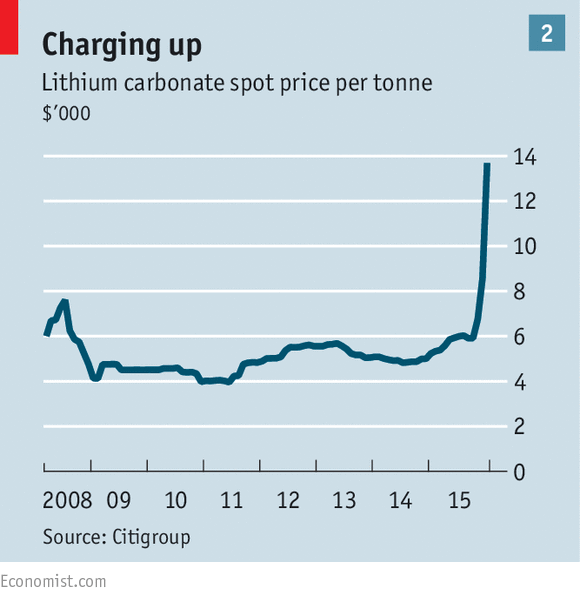
The Economist also has a look at the soaring demand for lithium, with some interesting tales from Chile as the jostling begins to supply the expanding battery market for electric vehicles and home energy storage - An increasingly precious metal.

SQM, Chile’s biggest lithium producer, is the kind of company you might find in an industrial-espionage thriller. Its headquarters in the military district of Santiago bears no name. The man who for years ran the business, Julio Ponce, is the former son-in-law of the late dictator, Augusto Pinochet. He quit as chairman in 2015, during an investigation into SQM for alleged tax evasion. (The company is co-operating with the inquiry.) Last month it emerged that CITIC, a Chinese state-controlled firm, may bid for part of Mr Ponce’s controlling stake in SQM, as part of China’s bid to secure supplies of a vital raw material.

The focus of CITIC’s interest appears to lie on a lunar-like landscape of encrusted salt in Chile’s Atacama desert. It is a brine deposit washed off the Andes millions of years ago, containing about a fifth of the world’s known lithium resources. (Even more are in adjacent Bolivia but they are mostly untapped). Just weeks before, CITIC had bought a stake in a Hong Kong electric-vehicle maker that uses lithium-ion batteries, indicating its growing interest in clean-energy technologies.

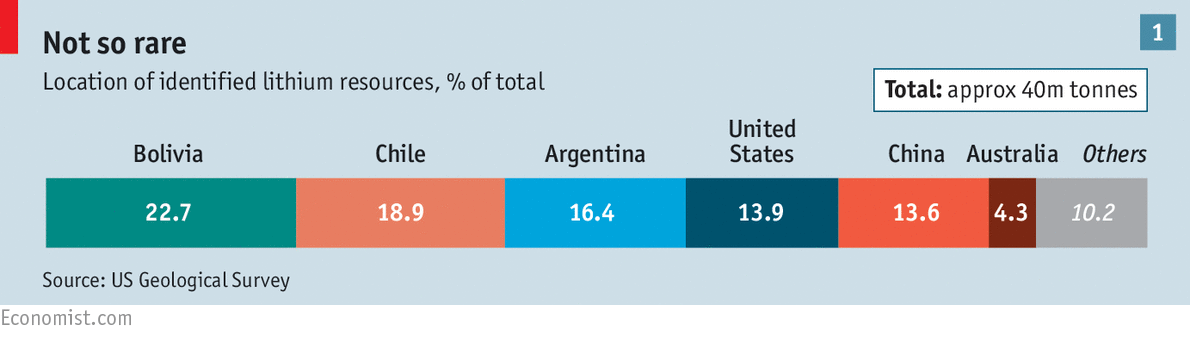
The sleeping giant of lithium production is Bolivia, which by most estimates possesses the largest reserves of the metal. Evo Morales has announced a $1 billion investment push to kick start production, expanding links with Chinese companies to both extract the material and produce lithium ion batteries in the country - Bolivia’s lithium boom: dream or nightmare?.

Lithium production will clearly need to expand given the pre-sales for the Tesla 3 are now approaching 4000,000 vehicles and projected sales would consume all of world's lithium production at current levels - Rising Lithium Prices Threaten to Short-Circuit EV Market. The Chevrolet Bolt is also due out on the market this year, putting further pressure on supplies.

One way to boost production is to improve the efficiency of extraction processes. CleanTechnica has an article on improvements on extracting lithium from brine - New Method Of Extracting Lithium From Natural Brine Yields 99.9% Purity.

SunEdison To Set Up 70 MW Solar Power Project For Chilean Copper Mine  

Posted by Big Gav in , , ,

Cleantechnica has a post on the steady increase in renewable energy usage in Chile, particularly in the mining sector (replacing expensive diesel generation) - SunEdison To Set Up 70 MW Solar Power Project For Chilean Copper Mine

SunEdison has announced that it has signed an agreement with Antofagasta Minerals S.A. to set up 69.5 MW solar photovoltaic power project at one of the latter copper mine in Chile. Antofagasta plans to use solar power to meet a part of the electricity demand at its Los Pelambres mine.

This would not be the first clean energy initiative to be implemented by Antofagasta for the Los Pelambres mine. The mine operators, from the very beginning, had a clear plan to implement sustainable energy solutions. Currently, wind energy is being used to partly power the mine operations. Los Pelambres mine currently has an electricity supply contract from one of Chile’s wind energy projects. The mine will start sourcing hydro power from a 110 MW project from 2020. The company is planning to invest in a geothermal power project as well.

El Tesoro, another mine owned by the company in Chile, gets some of the electricity from a solar thermal power plant. The project, installed at an investment of $15 million, can generate 25 GWh electricity every. The project has helped reduce diesel consumption by 55% and mine’s emissions by 4%.

Abengoa to build a 110 MW solar thermal plant in Chile  

Posted by Big Gav in , , , ,

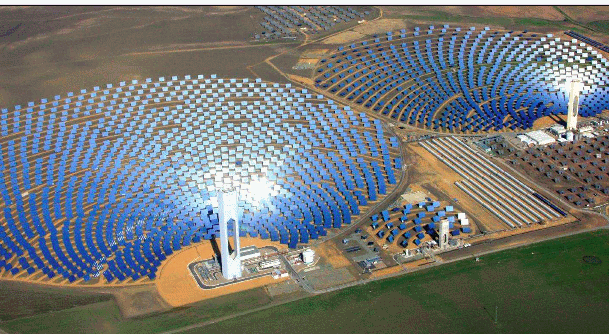
CSP Today reports that Spanish developer Abengoa will build a 110 MW solar thermal power plant in Chile with 17.5 hours of storage - Abengoa wins first CSP tender in Chile, will build a 110 MW tower plant to generate around the clock.

The plant will be a 110 MW tower type with molten salts as working fluid and energy storage medium, this will be the first commercial project for Abengoa with the molten salt technology for tower plants. With the design provided by the Spanish company, the plant will be able to generate electricity for up to 17.5 hours without solar radiation, only with the heat stored in the molten salt tanks.

The project will be located in the Atacama Desert, the region with the highest solar radiation concentrations in the world. It will be the first solar-thermal plant for direct electricity production in South America.

Solar-thermal tower technology uses a series of mirrors (heliostats) that track the sun on two axes, concentrating the solar radiation on a receiver on the upper part of the tower where the heat is transferred to the molten salts. The salts then transfer their heat in a heat exchanger to a water current to generate superheated and reheated steam, which feeds a turbine capable of generating around 110 MW of power.

Argentina: energy boom or energy cliff ?  

Posted by Big Gav in , , , ,

Resilience has an article on oil and gas production in Argentina (which indirectly explains why the Chileans are so interested in large scale solar power now), including a look at the reputedly large potential for shale oil production in Patagonia - Argentina: energy boom or energy cliff?.

At the end of the 20th century, Argentina started exporting gas to Chile, a mirage of the gas possibilities in this country. Both Argentina and Chile believed that the supply was going to be increasing forever. I visited Chile invited by Compañía de Petróleos de Chile (COPEC) in 2011. I also had the opportunity to meet with top officials of the energy sector and academic experts in energy. They all believed that Argentienan supplies would last for decades. I could not understand why very professional people had such a belief, when data on reserves and possible flows of their neighbour country was probably available to them.

In fact, they embarked in an ambitious plan to develop pipelines across the Andes to supply Chile from the Argentinean network and ordered a number of gas fired power plants, trying to avoid or minimize, for instance, the heavy smog of Santiago, and for other economic reasons. However, and without previous warning, Argentina reduced shipments to less than half. The obvious reason, as seen in the figures above, was the depletion pattern of the Argentinean gas and the need to prioritize their own domestic consumption. This left overnight the Chileans with big recently erected infrastructures idle and difficult problems to attend their growing internal energy demand, especially in electricity production for the extractive industries that they had expected to satisfy with the gas fired power plants.

They had to move fast to build a regasification plant in Quintero and now another in Mejillones. They did it in a record time, but certainly at a cost they had not imagined. This coincided with the sharp increase of fuel consumption that had started at the end of the past century. They needed to sign urgent contracts with LNG tankers and suppliers (i.e. Qatar), something that created for them what they called the perfect storm. Chile was in 2011 paying one of the most expensive electricity tariffs in the continent, partly due to this important bad planning.

Abengoa develops first solar thermal power plant in Chile  

Posted by Big Gav in , , ,

HelioCSP has a post on a solar thermal power plant project in Chile - Abengoa develops its first concentrating solar power (CSP) plant in Chile.

Abengoa will be responsible for the engineering, design and start-up of the new solar-thermal plant in the Atacama Desert, which will comprise a solar field of 1,280 parabolic trough collectors.

Abengoa, the international company that develops innovative technology solutions for sustainable development in the energy and environment sectors, will undertake its first concentrating solar power (CSP) project using parabolic trough technology in the Atacama Desert in Chile.

The Desert is considered to have one of the highest levels of solar radiation on the planet. The plant, which will require an investment of $12 million, will be capable of supplying heat in an efficient and sustainable way to the production processes of Minera El Tesoro, a subsidiary of Anafagasta Minerals based in northern Chile.

Abengoa will be responsible for the engineering, design and start-up of the new solar-thermal plant in the Atacama Desert, which will comprise a solar field of 1,280 parabolic trough collectors. In energy terms, the plant will enable Minera El Tesoro to further reduce its current use of fossil fuels by more than 50%.

Origin's hot Chile play  

Posted by Big Gav in , , ,

The Climate Spectator reports that Origin are expanding their geothermal interets further throughout the southern hemisphere - Origin Energy Chasing Geothermal Power In Chile.

Origin Energy has further expanded its overseas geothermal portfolio and followed the path of smaller Australian companies by taking a significant interest in the South American geothermal industry. Origin said on Monday it had bought a 40 per cent take in Energía Andina (EASE), which it described as Chile's leading geothermal exploration company, and is 60 per cent owned Antofagasta Minerals.

Origin's head of finance and strategy, Karen Moses, said preliminary assessments indicated that geothermal could provide 16,000MW of power in Chile. "It is our view that geothermal can provide large-scale renewable baseload energy and Chile has significant potential from a resource and growing local demand perspective," she said in a statement. EASA, which was founded in 2008, has a portfolio of eight geothermal exploration projects in the Northern and Central regions of Chile. The stake was bought from Empresa Nacional del Petróleo following a competitive bidding process.

Origin has exposure to 290MW of geothermal generation through its majority stake in New Zealand’s Contact Energy, and is also involved in a consortium with India’s Tata Power PT Supraco Indonesia for a potential 300MW project on the island of Sumatra. It has an interest in the Geodynamics’ Innaminckka Deeps projects, and also recently began drilling as operator of the Innamincka Shallows project that is seeking to target more conventional geothermal resources in the Cooper Basin of South Australia.

N.Z.’s Mighty River Plans to Open First Chilean Plant by 2013  

Posted by Big Gav in , , ,

Business Week reports that NZ geothermal power company Might River is expanding across the Pacific to Chile - N.Z.’s Mighty River Plans to Open First Chilean Plant by 2013

Mighty River Power Ltd., operator of the world’s largest single-turbine geothermal generator, expects its Chilean venture to start operating by 2013.

Drilling next summer will help refine the concept for a 70- megawatt, $220 million project at Tolhuaca, southeast of Concepcion, Mighty River Chief Executive Officer Doug Heffernan said in an interview in Wellington today. Construction may take three years, assuming some time is lost to winter snow, he said.

“Three years from the end of this year you could have a plant operating,” Heffernan said. “A minimum of two years and likely three years.”

Chile is encouraging development of new power sources after suffering shortages as Argentina reduced natural gas supplies. Mighty River, working through Denver, Colorado-based associate GeoGlobal Energy LLC, has gained access to five potential steamfields in competition with rival developers including Italy’s Enel SpA, state-owned refiner Empresa Nacional de Petroleo and London-based miner Antofagasta Plc.

Next Generation Tidal power  

Posted by Big Gav in , , ,

Bob Morris has a post on a new development in tidal power technology - Pulse Tidal. Next-gen tidal power.

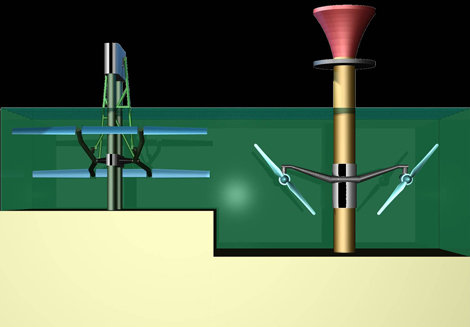
A flat, foil type device can be used to generate power in much shallower water.
Traditional designs use a rotating blade to extract energy from the moving water. The diameter of this blade is limited by the water-depth and this reduces the amount of power that can be generated in shallow water.

Pulse Tidal’s technology overcomes this limitation by using a wide, flat machine where the blade length is not limited by water depth.

At a typical site where depth is limiting a Pulse generator will extract more than 4 times as much energy as a single traditional turbine.

Being able to site in shallow water means the power generation can be much closer to shore and in calmer waters. The company says this technology can deliver low-cost, utterly reliable renewable energy, and may be able to do it for less cost than offshore wind.

Ocean Power Magazine has more. They are a great resource for everything on ocean power R&D and deployment.


UPI also has a report on interest in tidal power in Chile - Chile sees tidal power filling energy gap.
Chile is actively considering several tidal energy installations as a way of filling a major gap in its future energy needs and reducing dependence on coal-fired power generation.
A feasibility study on the potential for exploiting the renewable energy resource in Chile found the country had a "unique" wealth of natural sites that, if harnessed only up to 10 percent of available tidal power, could exceed the installed capacity of Chile's central grid.

The study was conducted for the Inter-American Development Bank by Garrard Hassan energy consultancy, based in Bristol, England.

According to the report, published by Chile's National Energy Commission and reported in Energy & Oil, Latin America, Chilean tidal power sites could include the ports of San Antonio, Puerto Montt and San Vicente, the Corcovado Gulf and the Magellan Straits.

Economic prosperity has raised projections for electricity consumption in Chile, which currently averages 56 billion kilowatt hours against 802 billion kilowatt hours for all of Latin America.

Electricity generation from tidal waves is a proven technology, more predictable than solar or wind power, and already used on a commercial scale by France since 1966.

The French tidal barrage at Rance, operated by Electricite de France, produces 240 megawatts at peak time.

Uses of tidal power in mills date back to Roman times.

Tidal power generation units of varying capacity are in different stages of completion or operation in the United States, Canada, China, Russia, South Korea, Australia and New Zealand and India.

Britain is planning a tidal power barrage on the River Severn between England and Wales, but the project is currently mired in controversy. Environmentalists see its huge scale as detrimental to the local ecology. ...

Much of Chilean electricity is generated in coal-fired plants, raising fears that Chile's greenhouse gas emissions could rise with the growth in demand for electricity.

Estimates cited by the Santiago Times said that without changes to its energy matrix, Chile's coal-burning would jump to a majority stake in the country's electricity production by 2030.

Geothermal Power In Chile  

Posted by Big Gav in , ,

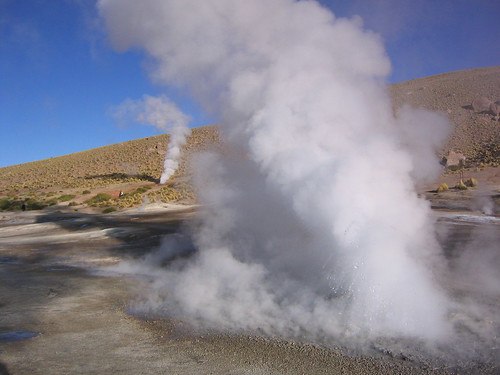
Reuters reports copper miners in Chile are looking to avoid energy shortages by exploiting geothermal energy - Chile miners look to tap desert geyser energy.

Miners in northern Chile, the source of a third of the world's copper, may be sitting on the answer to energy shortages that make electricity in the zone among the world's most expensive.

The proposed source is the same geothermal energy that feeds geysers sitting on plains some 13,000 feet (4,000 meters) above sea level.

Miners producing more than 35 percent of the world's copper devour nearly every Megawatt of energy produced in the north, and many are eager to tap into the nearby geysers.

Some groups object to tapping that power, saying it could harm water supplies and also compromise the drawing power of the geysers as one of Chile's biggest tourist attractions.

Chile is in the so-called Pacific Ring of Fire, where intense volcanic activity has produced some 115 thermal sites that can generate geothermal energy, according to reports from the National Mining and Geology Service.

Soaring Andes mountains along Chile's eastern border and the Pacific Ocean to the west enfold the world's driest desert in the north and lush woodlands to the south.

"Positive results in the exploration phase would be good news for Chile," said Oscar Valenzuela, chief executive at GDN, a joint venture between Chilean and Italian investors that is developing a geothermal exploration project in Quebrada del Zoquete, 4 kilometers (miles) from geysers in the heart of Chile's mining country.

"It would open a new opportunity for our country's geothermal potential, bringing clean energy to the power grid."

GDN says its plant could generate 40 MW to feed into the northern power grid, or SING, which is strained to the limit as it supplies miners and other sources of power are cut off.

Green Walls In Chile  

Posted by Big Gav in , , ,

Green building of the week from Inhabitat is this Chilean apartment block encased in green walls - Chilean High Rise Wrapped in a Living Green Wall.

Lately we’ve seen some incredible projects that make great use of the insulating and air-purifying benefits of green walls. The latest to strike our eye is this clean-lined office surrounded by the rolling Bío Bío hills in the center of Concepción, Chile. Conceived by Enrique Browne Arquitectos, the building makes extensive use of locally-sourced materials and is enveloped in a leafy green facade overflowing with bougainvillea, jasmine, and plumbago.


Also at Inhabitat, this island eco-resort planned for Azerbaijan - Azerbaijan’s Carbon Neutral Zira Island.
Zira Island is a 1,000,000 sq meter island In the Caspian Sea that will soon be developed into an incredible eco-community and sustainably built resort. Master-planned by Denmark-based BIG Architects, the carbon-neutral eco-island is based on the seven peaks of Azerbaijan and its mountainous ecosystems. Located in the bay of the capital city Baku, Zira Island is a ferry ride away from a growing metropolis and will stand as an example to a region so dependent on oil, that it is possible to live off the wind and sun.

BIG Architects‘ Zira Island will feature seven major structures modeled after the peaks of Azerbaijan that are connected by trails, greenbelts and the coastline. The Seven Peaks will each house a residential development and public space, and there will also be 300 private villas near a golf course in the central valley. Zira’s new skyline of organic buildings will resemble a mountain range that merges with the natural topography of the island.

Many carbon neutral communities are currently being developed around the world, like Masdar, Rioja, and Dongtan. All promise a new way of life completely independent of carbon-based fuels. Zira Island is less of a city and more or a resort, but it still holds the same promises of sustainability and will use the sun, wind and water to heat and power the island.

Big, Bad Hydro ?  

Posted by Big Gav in ,

Forbes has a somewhat jaundiced look at the resurgence of big hydropower projects and looks at some better modern alternatives.

Chilean Patagonia is renowned for its rugged beauty: windswept Andean peaks, roaring rivers, pristine coastal rainforests. Years ago, those natural wonders inspired architect Peter Hartmann to abandon his native Santiago for Coyhaique, a small regional capital tucked away in a picturesque mountain valley.

"My family used to live near the biggest underground copper mine in the world, on the outskirts of Santiago, so I knew about environmental destruction firsthand," he says. "I came here for the forests, the lakes and the rivers--all untouched."

But the industrial world has caught up to Hartmann, and to Patagonia. To feed Santiago's growing demand for electricity, the Spanish-based energy giant Endesa (nyse: ELE - news - people ) wants to build a series of dams on two major Patagonian rivers. Endesa and the Chilean government say the $4 billion project will provide 2,430 megawatts of much-needed power to the nation's industrial north.

Hartmann and many of his neighbors are fighting the dams, claiming they would damage the southern region's ranching and tourism economies. For Hartmann, the irony is bitter: Endesa would send the power 1,500 miles north to the very mines that he came to Coyhaique to escape--and the whole thing's being done in the name of green power.

These are tough times for Hartmann and other opponents of big hydro. As the world scrambles to embrace green energy, the hydroelectric industry is enjoying a massive resurgence. American hydro is ramping up--projects totaling nearly 9,000 megawatts of capacity, much of it in next-generation wave- and tidal-power projects that convert ocean motion into electricity, are now in the permit pipeline at the Federal Energy Regulatory Commission.

The real action, though, is still in conventional dams, and it is happening abroad, mainly in Asia and Latin America. The high price of oil and surging demand for non-carbon fuels have energy executives dusting off old plans for major dams. "The last four years have been unprecedented in terms of orders for hydropower services and equipment," says Richard Taylor, executive director of the International Hydropower Association. "Our indicators are through the roof."

Here's the rub. As a green energy source, hydro is still far from perfect. In fact, it might not even be green. ...

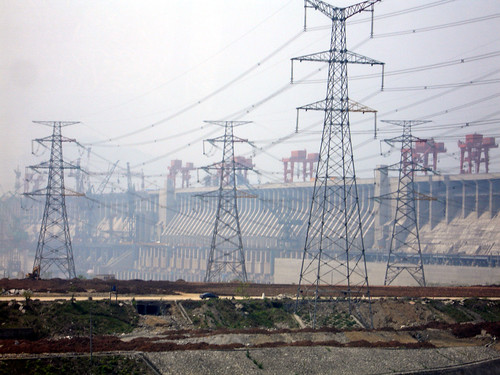
China's Three Gorges Dam project is probably a carbon-footprint winner, because it's in a temperate climate and displaces the power of 20 coal-fired plants. Brazil's Balbina dam, completed in the late 1980s, is more questionable: Fearnside calculated that in its first three years, it emitted 23 million tons of carbon dioxide and 140,000 tons of methane, four times the greenhouse gas output of a coal-fired plant producing the same amount of power. (The dam's CO2 and methane eventually dissipated, however, decreasing its relative footprint.)

Meanwhile, hydro comes with plenty of other problems. Because of their enormous construction costs, big dams tend to be magnets for corruption. With contracts worth billions of dollars, there's a tendency for money to leak into "well-connected" pockets--a million here, a million there. Argentina's Yacyreta Dam, budgeted in 1983 at $2.5 billion, bloated to $15 billion by the time it was done in 1994, which led then-president Carlos Menem (who knew a thing or two about graft) to declare it "a monument to corruption."

In fact, the Patagonia project exists only because Chile's notorious Gen. Augusto Pinochet, in one of the dictator's last acts of office, gave away Patagonia's water rights to a privatized energy company that was later bought by Endesa. Some anti-dam activists believe Endesa is pushing the project hard now partly out of fear that the Chilean government could wise up, and, like Bolivia, re-nationalize resources like water.

Environmental mitigation, one of the industry's proud new buzz words, is too often a Lothario promise. Companies gain approval and funding by pledging to carry out substantial eco-improvements and mitigation. But once the dam goes up--as is happening right now in Laos, Turkey and Belize--the costly eco-plans are conveniently forgotten.

While the science of methane release gets sorted out, environmental activists in places like Patagonia are left with this unambiguous conclusion: Their beloved landscapes are slated to be drowned and torn asunder in the name of saving spectacular landscapes like those which will be drowned and torn asunder. They want renewable energy, just not this kind.

"We've got incredible potential for clean green energy up and down Chile," says Juan Pablo Orrego, director of the Chilean environmental group Eco-Sistemas. "We could have solar thermal in the Atacama Desert, wind power in Patagonia and tidal energy all along the coast."

That's right: They're ready to embrace hydro in Patagonia--the next generation, that is.

Chile's energy crisis powers copper's rise  

Posted by Big Gav in , ,

The Australian has a report on Chile's supply difficulties with energy and the impact these are having on global copper prices.

THE copper price is predicted to continue rising after breaking through the $US4/lb mark for the first time as the Chile power crisis deepens. Chile's domestic users are bracing for possible cuts to their supply because a drought has caused dams feeding hydro-electric generators to run critically low and Argentina continues to deny the country gas supplies. Chile produces about 40 per cent of the world's copper and the power crisis is threatening production of the base metal at a time of insatiable demand, from China in particular.

Statistics

Locations of visitors to this page

blogspot visitor
Stat Counter

Total Pageviews

Ads

Books

Followers

Blog Archive

Labels

australia (619) global warming (423) solar power (397) peak oil (355) renewable energy (302) electric vehicles (250) wind power (194) ocean energy (165) csp (159) solar thermal power (145) geothermal energy (144) energy storage (142) smart grids (140) oil (139) solar pv (138) tidal power (137) coal seam gas (131) nuclear power (129) china (120) lng (117) iraq (113) geothermal power (112) green buildings (110) natural gas (110) agriculture (91) oil price (80) biofuel (78) wave power (73) smart meters (72) coal (70) uk (69) electricity grid (67) energy efficiency (64) google (58) internet (50) surveillance (50) bicycle (49) big brother (49) shale gas (49) food prices (48) tesla (46) thin film solar (42) biomimicry (40) canada (40) scotland (38) ocean power (37) politics (37) shale oil (37) new zealand (35) air transport (34) algae (34) water (34) arctic ice (33) concentrating solar power (33) saudi arabia (33) queensland (32) california (31) credit crunch (31) bioplastic (30) offshore wind power (30) population (30) cogeneration (28) geoengineering (28) batteries (26) drought (26) resource wars (26) woodside (26) censorship (25) cleantech (25) bruce sterling (24) ctl (23) limits to growth (23) carbon tax (22) economics (22) exxon (22) lithium (22) buckminster fuller (21) distributed manufacturing (21) iraq oil law (21) coal to liquids (20) indonesia (20) origin energy (20) brightsource (19) rail transport (19) ultracapacitor (19) santos (18) ausra (17) collapse (17) electric bikes (17) michael klare (17) atlantis (16) cellulosic ethanol (16) iceland (16) lithium ion batteries (16) mapping (16) ucg (16) bees (15) concentrating solar thermal power (15) ethanol (15) geodynamics (15) psychology (15) al gore (14) brazil (14) bucky fuller (14) carbon emissions (14) fertiliser (14) matthew simmons (14) ambient energy (13) biodiesel (13) investment (13) kenya (13) public transport (13) big oil (12) biochar (12) chile (12) cities (12) desertec (12) internet of things (12) otec (12) texas (12) victoria (12) antarctica (11) cradle to cradle (11) energy policy (11) hybrid car (11) terra preta (11) tinfoil (11) toyota (11) amory lovins (10) fabber (10) gazprom (10) goldman sachs (10) gtl (10) severn estuary (10) volt (10) afghanistan (9) alaska (9) biomass (9) carbon trading (9) distributed generation (9) esolar (9) four day week (9) fuel cells (9) jeremy leggett (9) methane hydrates (9) pge (9) sweden (9) arrow energy (8) bolivia (8) eroei (8) fish (8) floating offshore wind power (8) guerilla gardening (8) linc energy (8) methane (8) nanosolar (8) natural gas pipelines (8) pentland firth (8) saul griffith (8) stirling engine (8) us elections (8) western australia (8) airborne wind turbines (7) bloom energy (7) boeing (7) chp (7) climategate (7) copenhagen (7) scenario planning (7) vinod khosla (7) apocaphilia (6) ceramic fuel cells (6) cigs (6) futurism (6) jatropha (6) nigeria (6) ocean acidification (6) relocalisation (6) somalia (6) t boone pickens (6) local currencies (5) space based solar power (5) varanus island (5) garbage (4) global energy grid (4) kevin kelly (4) low temperature geothermal power (4) oled (4) tim flannery (4) v2g (4) club of rome (3) norman borlaug (2) peak oil portfolio (1)