Showing posts with label iceland. Show all posts

Iceland digs deep for geothermal energy  

Posted by Big Gav in , ,

Vox has an article on Icelandic efforts to develop deep geothermal energy reserves - Iceland is digging a seriously deep hole to tap a new source of clean energy.

Most geothermal projects harvest energy from hot rocks relatively near the surface, at temperatures of around 200 degrees Celsius. But the Iceland Deep Drilling Project (IDDP) is going much deeper, in search of hot magma reservoirs that generate temperatures between 400 degrees Celsius and 1,000 degrees Celsius. If that energy could be tapped, a single well could generate 10 times as much electricity as a conventional geothermal well.

There’s some precedent for this idea. In 2009, the IDDP was drilling a conventional geothermal well and accidentally struck upon a magma reservoir 1.2 miles below the surface. When they poured water into it, they were able to draw out superheated steam at temperatures higher than 400 degrees Celsius — an extremely potent source of energy. So now they’re trying to see if they can replicate the concept.

In Iceland, Magma Used To Create Geothermal Power For First Time  

Posted by Big Gav in , , ,

Climate Progrss has a post on a new technique for creating geothermal power in Iceland - In Iceland, Magma Used To Create Geothermal Power For First Time.

After accidentally drilling into a chamber of molten lava more than a mile underground in 2009, researchers in Iceland have now found a way to use the magma to create geothermal energy.

This new method of producing geothermal energy could be especially valuable in Iceland, where geothermal power already makes up about two-thirds of the energy use and around 90 percent of homes are heated using geothermal.

Researchers from the Iceland Deep Drilling Project (IDDP) used the magma to generate high-pressure steam at temperatures over 450 degrees Celsius, beating the world record for hottest geothermal heat. According to the measured output, the magma generated about 36 megawatts of electricity.

Normal geothermal energy is generated by pumping water into heated ground, boiling it and then using the steam to generate electricity. This experiment in Iceland is the first time molten magma instead of solid rock has been used to create the steam.

“This could lead to a revolution in the energy efficiency of high-temperature geothermal projects in the future,” Wilfred Elders, professor emeritus of geology at the University of California, Riverside, who’s written about the Icelandic innovation, told The Conversation.

90 MW Addition to Iceland's Hellisheidi Geothermal Power Plant  

Posted by Big Gav in , ,

Renewable Energy World has an article on an expansion to a geothermal power plant in Iceland - 90 MW Addition to Iceland's Hellisheidi Geothermal Power Plant.

With the fifth phase of development complete, Iceland's Hellisheidi geothermal power plant is now one of the largest in the world.

On October 1st 2011, Reykjavik’s utility company, Orkuveita Reykjavikur, celebrated the start-up of the 5th phase of the Hellisheidi geothermal combined heat and power plant (CHP), located just outside Reykjavik, Iceland. This fifth phase added an additional 90 MW of power. The plant, which was designed by a group of consulting firms led by Mannvit, is now one of the world’s largest geothermal energy plants, producing 303 MW of power and 133 MW of thermal energy for space heating and hot water.

Mannvit, as the mechanical and overall plant designer, is proud to report on the successful commissioning of the plant’s 5th phase, which added 2 x 45 MWe Mitsubishi turbines. The total cost of the 90 MW, 5th phase was approximately $197 million, or 23.5 billion ISK (Icelandic krona).

Iceland Channels Volcanoes to Win Europe's Energy-Supply Race  

Posted by Big Gav in , , , , ,

Bloomberg has an article on exporting geothermal and hydro power from Iceland to Europe via a new undersea transmission cable - Iceland Channels Volcanoes to Win Europe's Energy-Supply Race.

Europeans left stranded at airports last year as an Icelandic volcano spewed ash across the continent may soon benefit from the power that seethes beneath the remote north Atlantic island.

Iceland is doing a feasibility study into building a 1,170- kilometer (727-mile) power cable to Scotland to send some of its untapped potential of 18 terawatt-hours of geothermal and hydropower -- that’s enough for 5 million European homes. The project has the backing of the government, Industry Minister Katrin Juliusdottir said in an interview.

“Icelanders live with earthquakes and volcanic activity but the benefits are that now we can monetize these powers,” said Valdimar Armann, an economist at Reykjavik-based asset manager GAMMA, who estimates annual clean-energy exports could reach about a tenth of the island’s $12 billion economy.

The island is trying to emerge from Europe’s biggest banking meltdown this century to restyle itself as one of the European Union’s main sources of renewable energy. The power cable, which would be the longest of its kind ever built, would come as the EU strives to reach its target of 20 percent clean energy by 2020. In about 20 years, Iceland’s energy revenue per capita may rival that of Norway, where oil income has made its $540 billion sovereign wealth fund the world’s second-biggest, Armann said.

The U.K. day-ahead spot price values 18 terawatt hours at 828 million pounds ($1.33 billion), according to data available on Bloomberg. Landsvirkjun, a state-owned utility that produces 75 percent of Iceland’s electricity, is driving the feasibility study for the $2.1 billion power-cable project, which would send as much as 5 terawatt-hours a year

iceland, geothermal

Iceland: The Next Electric Car Capital ?  

Posted by Big Gav in ,

Forbes has an article on Iceland's potential to switch to electric vehicles - Iceland: The Next Electric Car Capital.

What country will be the first to make electric cars the default national transportation? It would probably be the tiny green country of Iceland.

Some 75% of Iceland's population lives within 37 miles of Reykjavik, Iceland's capital, and the rural areas (connected by an 840-mile ring road) could probably be wired with just 15 fast-charging stations. That, coupled with the fact that 80% of Iceland's energy is cheaply produced renewable (from geothermal and hydro) should give you a good idea why this is the ideal test bed for electric vehicles. ...

Only 3% of Iceland's energy comes from coal, which should silence electric vehicle critics who say that U.S. cars operating on electricity from dirty coal plants are just moving the pollution around. Iceland has the actual potential to get close to zero emissions. ...

Iceland has a 2008 memorandum of understanding with Mitsubishi, which is already a partner in the country's aluminum smelting operations, to deliver i-MiEV electric cars. The plan was to have several dozen i-MiEVs (imported tax-free) on the road in 2009, and greatly expanded availability this year, but only a few of the battery vehicles are on the island now.

An Icelandic entrepreneur named Gisli Gislayson is also planning to import electric vehicles into Iceland, starting with Indian-made Revas. It would be useful if the world's electrification gurus had Iceland on their radar screens, because no other country could plug in so quickly.

Planes Or Volcano ?  

Posted by Big Gav in ,

Information Is Beautiful has a great picture showing how much the Icelandic volcano has reduced European CO2 emissions - Planes Or Volcano ?.

Volcanic Ash May Impact Iceland's Data Center Plans ?  

Posted by Big Gav in , ,

ChannelWeb has some speculation about icelandic volcano eruptions making people think twice about hosting data centres there to take advantage of abundant clean energy sources - Volcanic Ash May Impact Iceland's Data Center Plans.

Iceland says its cool climate and abundant supply of geothermal and hydroelectric energy makes it a prime spot for IT data centers. But in the wake of a major volcanic eruption earlier this week, companies may be thinking twice about hosting core IT assets in a place where Mother Nature is known for being a bit unstable.

Iceland's Eyjafjallajokull volcano erupted for the first time in nearly 200 years on Monday, sending ash nearly 40,000 feet into the air and shutting down heavily traveled air routes in northern Europe and Scandinavia. The eruption triggered flooding and sporadic ash fall of up to three millimeters thick around the eruption site, according to a Thursday report from the Icelandic Government Information Center.

It's unclear if the ash fall is affecting Iceland's IT infrastructure, as Channelweb.com's attempts Thursday to contact Icelandic solution providers were unsuccessful. But according to one local news report, the ash fall is the largest Iceland has seen since an eruption in 1918, and scientists aren't ruling out the possibility that the volcano could keep erupting.

Data centers are constructed to withstand environmental extremes and natural disasters, but volcanic ash is known for its ability to wreak havoc on desktops, servers, and basically any type of IT infrastructure that has moving parts.

Volcanic ash also contains silica sand, an abrasive, conductive material that's capable of destroying circuit boards. With the weight and consistency of talcum powder, ash can easily slip through air conditioning systems, even with filters installed.

The volcanic eruption comes at a time when Iceland's data center building push is beginning to gain momentum. In January, Verne Global, a data center developer based in Keflavik, Iceland, and Washington, D.C ., inked a deal with Wellcome Trust, a global biomedical research firm, to build a 44 acre data center facility on the site of a former NATO Command Centre in Keflavik, Iceland.

Iceland Debates the Limits of Geothermal  

Posted by Big Gav in ,

The New York Times has a post on the deabte in Iceland about over-exploiting geothermal power, risking turning a renewable energy source into a non-renewable one (at least intermittently) - Iceland Debates the Limits of Geothermal.

The tiny nation of Iceland is often cited as a model for the world in its use of renewable energy. Virtually all of its electricity comes from dams or geothermal power plants. Drive around the countryside, as I did last month, and you will see billows of steam coming from some hillsides, a sure sign of a geothermal operation with the occasional hot springs attached.

Some Icelanders are questioning just how long the renewable power can last. At the core of the debate are the country’s efforts to build up a power-intensive aluminum industry — itself an effort to diversify the economy away from fishing. Already some 80 percent of Iceland’s electricity goes to heavy industry, mainly the country’s three big aluminum plants, according to Iceland’s new environment minister, Svandís Svavarsdóttir.

Work has begun on a new aluminum plant near the airport, though it appears to be proceeding only slowly. Arni Finnsson, the head of Iceland’s Nature Conservation Association, argues that the plant would be such an energy hog that it would “virtually wipe out all geothermal electricity in southwest Iceland.”

Environmentalists appear to have a strong ally in the government: Ms. Svavarsdóttir said in an e-mail message that she and her party were “very skeptical about the further expansion of the aluminum industry, to say the least.” She also vowed to “press for a more rational and balanced decision-making in this regard.”

Why is there a limit to geothermal energy? According to Mr. Finnsson, if Iceland’s resources are tapped too quickly, the underground hot water necessary to produce the power (and heat buildings in Iceland) could run out in 70 years or so. Geothermal energy, he said, is “not renewable if you use it to an extreme.”

Ms. Svavarsdóttir agreed that overuse of the resource could lead to a “temporary depletion of a geothermal field,” and also noted the hydrogen sulfide pollution concerns related to geothermal production.

Passive Solar In Iceland  

Posted by Big Gav in ,

Coll green building of the week from Inhabitat is this passive solar house in Iceland - Iceland’s Gorgeous Passive Solar Hof House.

Deep in the northern chill of Iceland, just outside the arctic circle, the Hof House sits snugly within its landscape. Built on an existing estate, Studio Granada Architects salvaged whatever materials possible from the site to be incorporated into the new residence, converting telegraph poles into a sun screen and basalt pillars into stepping stones. Even the grass on the green roof came from local site leftovers after clearing way for its foundation. Designed for the extreme weather conditions of the Skagafjörður Fjord, the Hof House relies on passive solar design, geothermal heating, and some pretty hefty concrete walls.

The Hof House’s exterior cedar walls hug the massive concrete structural walls and will age gracefully with the passing seasons. The hexagonal shape formed by slices of the salvaged basalt pillars are repeated inside, bringing a continuity of design from the outside in. Geothermal heating comes up from the ground, warming the stone floors and providing heat and electricity throughout the house. The remaining energy needs are sufficed by hydroelectric power. The windows are oriented to not only capture the Southern sun, but also to create a frame for the magnificent surroundings of the cliff islands of Drangey and Málmey and the hills of Þórðarhöfði.

Indonesian Geothermal projects need investors  

Posted by Big Gav in , , , ,

The Jakarta Post has a report on efforts to expand geothermal power production in Indonesia - Geothermal projects need investors.

The government is to auction off geothermal resources in Ngebel, Ponorogo, and Ijen, Banyuwangi, to help defuse the power crisis in Java and Bali, an official says. The total capacity of the two sites is more than 400 Megawatts (MW). ...

Head of the provincial energy and mineral resources agency, Tutut Herawati, said the government was preparing a joint team from the central government, provincial and regency administrations to open a tender for the two geothermal projects.

The geothermal resource in the Blawan-Ijen area, recently declared a mining site, is located on the border of Banyuwangi and Bondowoso and has a capacity of 185 MW. The resource in the Ngebel-Wilis area, on the border of Ponorogo and Madiun, has a capacity of 120 MW and is under regulation in a bylaw issued by the provincial government last month. ...

Tutut said the province had a further nine geothermal deposits that would be offered to investors in the future. The nine, located in Madiun, Mojokerto, Probolinggo, Pacitan, Malang and Sumenep, have a combined potential capacity of 580 MW.

Separately, the director general for coal and geothermal minerals at the Energy and Mineral Resources Ministry, Bambang Setiawan, said the government would continue mining the renewable and environmentally friendly geothermal energy to help defuse the decade-long national power shortage. "The government will not impose taxes on the imports of any materials for geothermal exploration as incentives for investors to produce the energy," he said.

He said Indonesia had 40 percent of the world's geothermal potentials, which could produce a total of 27,510 MW, equivalent to 219 billion barrels of crude oil.

Reuters reports that Ormat has expanded a geothermal power plant in Kenya - Ormat Tech completes geothermal plant in Kenya.
Ormat Industries said on Thursday its subsidiary Ormat Technologies had completed phase two of construction of a geothermal plant in Kenya.

The Olkaria III plant will add 35 MW of base load capacity to the existing 13 MW plant which has been in operation since 2001, Ormat Industries said in a statement to the Tel Aviv Stock Exchange.

Ormat said the expanded power plant will save 120,000 tons of imported oil, mitigate carbon dioxide emissions and reduce the average production cost of electricity in Kenya while reducing its dependence on imports.

The Geelong Star report that local company GreenEarth Energy is coming up with some big claims about the potential for local geothermal power production - Geothermal energy bid city sitting on powerful stuff.
Hot water flowing under the Geelong region had potential to supply 150 times Victoria’s energy requirements, a company announced yesterday. Greenearth Energy said the city was set to become “Victoria’s first renewable energy hub” after new tests confirmed the region as a potential target for geothermal power.

Greenearth Energy wants to drill near Moriac and the new Armstrong Creek growth area for “wet hot rocks” to generate renewable, green energy.

Managing director Mark Miller said early tests had found “significant potential” to produce 150 times Victoria’s energy requirements and more than Australia uses in a year.

“We’ve identified the potential for hot sedimentary aquifers that contain water at depth (which is) super-heated and can be drilled into,” Mr Miller said. “The water is extracted through a binary geothermal power plant that produces geothermal energy. The water is then returned to the aquifer so it’s not depleted. “The potential of the system could literally deliver hundreds of megawatts of power. “This is significant. It has potential for not only Geelong’s and the new Armstrong Creek area’s requirements but the entire state’s.”

Lastly, Time Magazine has a look at the renewal of the importance of geothermal power to Iceland's economy - Energy: Boiling Point.
On a chilly morning outside the hamlet of Reykjahlid in northern Iceland, Hallgrimur Jonasson lifts the edge of a soggy plank of wood lying in the clay to expose a small hole in the ground. "This is the rye-bread bakery," he says, yanking his hand back from a waft of scalding, sulfurous steam. A chef in a nearby hotel, Jonasson estimates his kitchen staff bake roughly three tons of the sweet, dense rye bread in the hole every summer to meet the growing demand, mostly from tourists, for the exotic carb. The bread's price tag — up nearly 20% from last year — has led to some clucking from villagers that the young entrepreneur is cashing in on a local tradition. Jonasson is more pragmatic. "Who are we kidding?" he asks. "This is our living here."

Steam has long powered Icelandic dreams. Pockets of underground water heated by the earth's core may not be particularly glamorous, but tiny Iceland has spent decades figuring out useful ways to harness its heat and power, employing it for everything from baking bread to turning turbines. Geothermal power now provides cheap, clean heat to more than 90% of Icelandic homes, and generates 30% of the nation's electricity, a slice worth roughly $120 million. In recent years, as Icelanders became smitten with the idea that their ambitious banks could create a global financial center in the far north Atlantic, geothermal power got pushed out of the spotlight. But now, with the krona down 44% against the dollar compared to a year ago and most of Iceland's banks close to bankruptcy, this nation of 313,000 is taking another look at the incredible resource boiling away underfoot.

It helps that global investment in renewable energy was up 60% last year. The number of projects using geothermal power has lagged behind wind, solar and biofuels for many years. However, since 2004, projects in the U.S. have doubled, and countries such as Indonesia have set ambitious goals for geothermal generation. The financial crisis has hit the renewables sector, to be sure, but analysts say that thanks to U.S. President-elect Barack Obama's green-energy agenda, and recent G-8 goals to cut carbon emissions by 50% by 2050, the industry will come back strong. "I have people calling me asking, 'Where should I put my money? Who do I invest in?' " says Mark Taylor, a geothermal analyst with renewable-energy-research firm New Energy Finance. "I'm still pretty optimistic about everything."

So is Iceland. Though they expect credit-crunch delays, the nation's domestic power firms are sticking with plans to nearly treble the geothermal power Iceland produces in a bid to woo companies like aluminum giant Alcoa and tech heavyweight Google. Internationally, a new crop of Icelandic investment firms have started pumping money into projects, offering partners from Djibouti to the Philippines capital, skills and — perhaps most importantly — a sense that this also-ran of renewable energy is really viable. "I think [geothermal power] is the paramount moral obligation of Iceland in the modern world," President Olafur Grimsson told TIME. "There are over 100 countries that could do the same thing we have with their resources. This is the area in which we can really contribute."

Ten minutes up the road from Jonasson's bread ovens, over some low hills, a series of dense white steam plumes rise into the cloudy sky. In a flannel shirt and hard hat, Birkir Fanndal maneuvers his truck over one of the dirt roads that crisscross Iceland's first major geothermal power station, Krafla. Soon after the inaugural borehole was drilled here 34 years ago, the first in a series of volcanic eruptions rocked the area. The eruptions, nine in all, went on for nearly a decade, sending engineers scrambling to keep up with the shifting earth. Fanndal, the plant's manager, stops his truck in front of a crater where, without warning, one early drill hole imploded into a cauldron of boiling water that took half a year to settle down. "There were a lot of people who said we should leave this place," Fanndal recalls.

They didn't, and their tenacity is paying off. Krafla recently became the site of a pilot project to drill extremely deep boreholes (classified as three miles or more), a frontier technology that could yield five to 10 times more energy per borehole than any similar project in the world. Landsvirkjun, the state utility that owns Krafla, has also been in talks to supply power to an aluminum smelter that Alcoa plans to build nearby. The financial downturn has put that project on hold for now, but Alcoa, which already has one smelter in Iceland, still sees the country as a site for cheap, power-intensive smelters. By going geothermal, which has less impact on the environment, Alcoa believes it can mitigate the hundreds of thousands of tons of carbon dioxide a smelter emits every year. "If you compare the offset, it's six to eight times cleaner to produce here" than in a location where a smelter would get electricity from a coal- or oil-based source, says Tomas Mar Sigurdsson, general manager of Alcoa Iceland.

Iceland knows a bit about kicking the fossil-fuel habit. At the turn of the last century, life on the isolated island was bleak. It had been among the poorest nations in Europe for centuries, and a smoky haze choked Reykjavik, thanks to the coal inhabitants burned during the interminable winters. In the 1930s, Icelandic engineers successfully diverted underground water to heat an elementary school, and the rest of the capital slowly followed suit. When the global oil crisis hit in the 1970s, efforts to turn this local resource into electricity — by drilling holes into underground heat pockets and reservoirs to release pressurized steam that then runs turbines — moved into high gear. Today, if it's not raining or snowing (or both), views from Reykjavik's harbor are relatively clear. Icelanders hope steam can pull them through tough times again. "The Icelandic power industry will be one of the pillars to carry us out of this crisis," says Asgeir Margeirsson, CEO of Geysir Green Energy. As Thorunn Sveinbjarnardottir, Iceland's Environment Minister, puts it: "Icelanders think about this resource in almost biblical terms."

Saving Iceland With Geothermal Power  

Posted by Big Gav in ,

Iceland has become a byword for credit crunch induced economic collapse, but REW reports the country remains rich in clean energy sources like geothermal - Geothermal Energy Leaves the Window Open for Iceland's Economy.

Drive around Iceland's capital city of Reykjavik on any cold night and look at the houses and apartment buildings lining the streets. The first thing you may notice is how many windows are wide open, allowing the frigid outdoor air to mix with the warm indoor heat. In most places, the scene may seem a bit strange. But in a city that hosts the world's largest geothermal district heating system, it's a normal occurrence.

“Energy is cheap and it's abundant. We don't have any shortages so we do tend to leave our lights on and our windows open. It's not something we think about as much,” says Hannes Pálsson, a resident of Reykjavik.

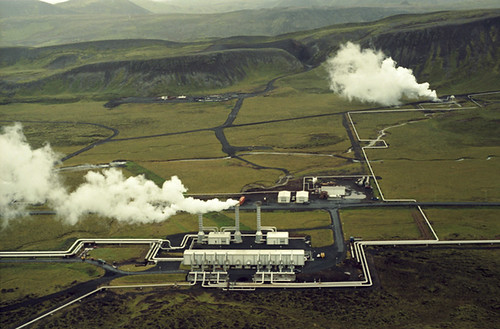
One generation ago, Icelanders didn't have the luxury of passively thinking about their energy use. The isolated island country imported all of its coal and oil for heat and electricity, putting it in a very vulnerable position. But now the country gets 99 percent of its electricity and 78 percent of its primary energy from hydro and geothermal resources. While many Icelanders have watched this dramatic evolution of the country's energy landscape, there are just as many young citizens who have grown up not understanding Iceland's formerly delicate position. (Image, left: The Hellisheidi Power Plant sends plumes of steam into the sky on a rare calm morning in Iceland.)

“I'm not from the generation that grew up with anything else but [geothermal and hydro],” says the 31-year old Palsson. “It's ubiquitous, it's everywhere and we know about it. But I think we also take it for granted. Still, we are proud of what we have done.”

Now Iceland has the opportunity to share that pride with other countries. And leaders in the industry are more than happy to share their knowledge.

“We have much to offer in know-how and technological support,” says Iceland's President Ólafur Ragnar Grímsson, speaking on the Inside Renewable Energy podcast. “It is important for us to continue to establish relationships with countries that are serious about geothermal. As a leader, Iceland can help in many areas.”

This spirit of cooperation is part of the Icelandic culture, says Albert Albertsson, Deputy CEO of Hitaveita Sudurnesja, the owner and operator of two large geothermal plants in the country. If world leaders are going to get serious about combating climate change — a problem that is already visibly altering the weather and glacial landscape of the country — Icelanders believe it's important to export the lessons they have learned over the last 70 years.

Does thinking globally require unpleasant action locally ?  

Posted by Big Gav in , ,

The Economist has an interesting article on the tradeoffs between local and global action on the environment, using renewable energy powered aluminium smelters in Iceland as an example - Testing metal. Whether or not we could do without making more aluminium is a question left unexamined (though I'd suggest if we recycled all of it, at some point we wouldn't need to make any more).

There are currently three aluminium smelters in Iceland, with a fourth under construction and others planned. Iceland is one of the world’s top ten producers, despite having no bauxite (the main ingredient) and a population of barely 300,000. Aluminium has a huge share in the economy, accounting for 37% of exports in the early part of this year, compared with just 10% in 1995.

This investment boom is driven by one thing alone: cheap, clean power. Aluminium smelting is a very power-hungry business. Indeed, electricity accounts for such a high proportion of costs that it is worthwhile shipping the raw materials to a spot with cheap power, such as Iceland, and shipping the finished aluminium on again to consumers elsewhere.

Iceland has lots of rivers, and sits atop a volcanic ridge. Its electricity comes almost entirely from hydropower and geothermal plants. There are plenty of rivers left to dam, and lots of subterranean steam to tap. Local power companies have even started building power plants solely to cater to new smelters. Electricity consumption has more than doubled in recent years; Iceland now uses more power per person than any other country in the world. And consumption will only grow as more smelters are built.

But some Icelanders are beginning to have doubts. A planned expansion of the oldest smelter, near Reykjavik, was defeated in a local referendum last year. Saving Iceland wants to call a halt to all such projects. But the prime minister, Geir Haarde, argues that the protesters do not reflect the views of most Icelanders, especially in the smaller and more remote communities in the north and east of the country, who welcome smelters and the jobs they bring.

Others believe that Iceland has a moral obligation to use its plentiful clean energy for the benefit of the planet. If the aluminium is not made in Iceland, the theory runs, it will be made somewhere else, using much grubbier energy. Smelting has grown rapidly in China in recent years, for example, fuelled by coal-fired power. Were it not for Iceland, China would presumably be making even more aluminium. Iceland, in other words, should sacrifice its own landscape for the good of the planet.

Saving Iceland denounces that formula as a false dichotomy. If everyone lived more modest lives, it says, we would not need so much aluminium in the first place. But that sounds like wishful thinking. It might not be too much of a sacrifice for extravagant Westerners to drink fewer fizzy drinks from aluminium cans, and to take fewer flights in aluminium planes. But it is hard to believe that consumption of aluminium will fall any time soon, given the growing demand from developing countries.

What is more, even if more aluminium is not really needed, there are plenty of other good uses to which Iceland could put its green power. There is already talk of locating data centres there. What could be worthier than helping to keep the internet running? And if electricity is going to be made anywhere, it might as well be made where it does the least damage to the environment.

On the other hand, the damage to the environment from a new dam must seem enormous if you happen to live at the bottom of the valley being flooded. Not many people live anywhere in Iceland, it is true. But the few that do probably value the preservation of their immediate surroundings more than an intangible and, in the grand scheme of things, tiny contribution to the health of the atmosphere.

“Think globally, act locally” is a classic environmentalist’s rallying cry. But what should the green at heart do when the two are at odds?

Iceland Flirts With the Dark Side  

Posted by Big Gav in

Tyler at Clean Break reports that clean energy poster-child Iceland is going to allow exploratory oil drilling in the country - Iceland sends mixed signals, goes to the dark side.

Okay, now I’m discouraged. If there was one place on the planet I thought drilling for oil would not happen, I would have pegged Iceland as the place. This is a country that powers itself on renewable geothermal and hydroelectric power. This is a country that, before all others, set a goal of running all its cars and boats on hydrogen and fuel cells. It’s also a country that, historically, has proudly touted its renewable leadership. Just yesterday the tiny island country signed a pack with the United States and Australia to promote geothermal technologies, specifically enhanced or “engineered” geothermal systems. “This international collaborative will bind the U.S., Australia and Iceland to work together to accelerate the development of geothermal energy, bringing this clean, domestic and natural energy to the market in the near-term to confront the serious challenges of climate change and energy security,” said Katharine Fredriksen, acting assistant secretary for policy and international affairs in Iceland’s energy department.

Then I get this notice in my inbox, with the headline: “Potential oil fields being opened for exploratory drilling in the Atlantic Northeast of Iceland.” Wah? Apparently the Icelandic government made a decision in January to open up drilling and is holding a conference next week to talk about the opportunity. “We have high expectations of finding oil in the Dreki area since scientific research has indicated that valuable oil resources may be found there,” said Iceland’s Minister of Industry Össur Skarphédinsson. “We therefore urge all parties interested in new oil fields in northern areas to attend the conference in Reykjavik.”

Is this depressing or what? If there was one country I figured could stick to its guns, I would have said Iceland. Now, it risks being a hypocrite where it was once a leader.

A Geyser Of Geothermal Energy  

Posted by Big Gav in ,

I'm still tracking news about geothermal energy in the background - here's a little roundup of new stories.

The Sunday Oregonian reports that "pressure is building" for goethermal energy in "Get ready for a geyser of geothermal power".

Oregon has seen geothermal projects on the drawing board before, but several now appear to be moving toward reality. That's in part because rising costs of other types of power make geothermal more attractive and because improved technology allows plants to produce power from lower-temperature geothermal reservoirs than before, experts said. At least three companies are planning geothermal power plants in Oregon, and one could be producing electricity in less than two years, officials said. The recent failure of Congress to extend tax breaks for renewable energy makes financing the plants more challenging but should not derail them entirely, officials said.

Slate reports that Iceland has power to burn.
Iceland's economy, which until recently relied largely on fishing, has diversified in recent years, with rapid growth in tourism, manufacturing, and financial services. And like the Blue Lagoon, much of the growth has been a happy byproduct of Iceland's decadeslong strategy of tapping sources of renewable energy. Mindful of climate change and the need to limit emissions, many U.S. states have set goals of obtaining 10 percent or 15 percent of their energy from renewables at some point in the distant future, and the European Union has pledged to reach 20 percent by 2020. But Iceland is already at about 80 percent. All electricity on the island is generated through geothermal or hydroelectric sources—low-emissions sources that don't use fossil fuels. Most homes are heated by water pumped from geothermal hot spots. "We are blessed with a lot of clean and renewable energy," Prime Minster Geir H. Haarde told Newsweek. "The only uses of fossil fuels in Iceland are people using cars and the fishing fleet." And increasingly, Iceland, whose most prominent exports have been haddock and Björk, is devising ways to export what has been a stranded resource.

IceNews reports that Al Gore is to speak at Glitnir climate conference in Iceland.
Nordic bank Glitnir and the University of Iceland will host an open meeting with Al Gore in Reykjavik in April. Al Gore, the former vice-president of the United States and Nobel Prize winner, will be the keynote speaker at a meeting on environmental issues scheduled to take place at Haskolabio in Reykjavik on 8th April.

Larus Welding, CEO of Glitnir Bank, said the meeting with Al Gore is related to Glitnir’s overseas efforts to promote the bank’s expertise in sustainable energy. “Glitnir is at the forefront in international financial services for geothermal energy projects. We are already engaged in a number of exciting ventures in the U.S. with leading companies in this field. The Bank has obtained considerable attention among numerous parties who are participants in the public discourse on sustainable energy resources, one of them being Al Gore,” said Mr Welding.

Mr Welding said the meeting with Al Gore is important in light of Glitnir’s progress in the field of renewable energy resources, which offer numerous opportunities particularly with the record-high oil prices seen in recent months.

A fairly large proportion of geothermal stories in the news stream relate to efforts by Iceland based companies like Glitnir Bank to export geothermal power technology and expertise offshore - particularly to the US and developing nations.

All Africa.com reports that Iceland is helping Ethiopia explore geothermal power.
Following the signing of a bilateral relation agreement between Ethiopia and Iceland on January 2008 to explore geothermal power potential in the rift valley region, a team of experts from Reykjavik are to engage in a bilateral geothermal survey. It would be too early to talk about the project cost, said Sendeku Araya, public relations division Head at the Ethiopian Telecommunications Corporations (EEPCo). "Ethiopia has an estimated potential of 1000mw of power from geothermal energy located in the rift region," ambassador Svavar Gestsson, especial envoy to the ministry of foreign affairs, told Fortune. He said the exact potential would be known after the actual study is conducted.

IceNews reports on a Electricity agreement signed between Yemen and Iceland.
emen’s General Corporation for Electricity and Iceland’s Reykjavik Energy Invest company signed a new agreement on Sunday, according to reports by Saba, Yemen’s news agency. The document signals a new agreement on electricity generation between the two countries. The agreement details a plan for REI to lead a study into the geothermal potential at Lesi Mountain in the Dhamar region of Yemen. If the potential for a geothermal project is there, REI will initiate drilling works in the location. According to the document, REI will invest in the first geothermal station after the study is finalised, which is expected to occur by the end of August this year.

Like Iceland, Yemen is increasingly using renewable sources of energy such as geothermal energy, wind power and solar power. Iceland’s minister expressed his willingness to assist Yemen in the expansion of their renewable energy sources. Iceland is considered the foremost expert in geothermal operations and is the country with the most electricity generated from renewable resources.

Cleantech.com reports that Glitnir is bringing geothermal power to India.
The bank is teaming up with India's LNJ Bhilwara Group to explore the country's untapped potential. Reykjavik, Iceland-based Glitnir Bank is continuing to spread the word about geothermal, announcing a joint venture today for exploration in India. Glitnir is partnering with Noida, India's LNJ Bhilwara Group, a diversified business with operations in power generation.

Wired reports that Iceland is a compelling location for data centres because of the climate and cheap renewable energy availability (though network connectivity could do with a boost).
Quick -- what's the first thing you associate with Iceland? Glaciers and blondes, right? According to a PricewaterhouseCoopers study (and some lobbying from the Invest in Iceland Agency), the country should be associated with data centers.

Not only is the Nordic country an ideal choice for toasty data centers with its chilly climate, but the geothermal and hydroelectric power sources could keep the electricity bills low. "The study showed that Iceland offers a lower cost for data centers than the US, the UK and even India," boasted an Agency spokesperson. "Iceland also has the second lowest corporate tax in the OECD at 15 per cent, highly skilled IT labor at competitive prices, and low land and lease costs."

Business Green has a look at recent economic uncertainty and the country's potential to become a leader in clean energy technology.
It is somewhat ironic that of all the countries currently struggling with the prospect of an economic downturn it is the one arguably having the toughest time that ultimately has the least to worry about when it looks to its long-term future.

Over the past few weeks, Icelanders have had to become used to their country making a series of unwelcome appearances on the world's business pages. Commentators have wondered aloud if this small northern economy of just 300,000 people could be the first to collapse as a result of the global credit crunch.

Despite a fundamentally strong economy that has in recent years propelled Iceland to the top of the UN's quality of life rankings, the country's banks have been hit hard by the recent drop off in investor confidence and have struggled to obtain foreign currency loans.

The net result has been an economic car crash. The central bank last week raised interest rates for the second time in three weeks to a record 15.5 per cent. This was in an attempt to head off spiralling inflation and shore up the Krona following a start to the year that has seen it lose a fifth of its value against the Euro. Meanwhile, the finance ministry is now predicting that the economy will contract next year for the first time in over 15 years as high interest rates put the brakes on consumer spending.

And yet, while it may prove of little consolation to those Icelanders facing a tough couple of years, many within the Icelandic government believe the country's recent travails are the precursor to a long-term economic boom that should make Iceland a global trailblazer in the development of clean technologies.

Cryptogon recently pointed to an FT article on "crashing iceland" - "Allegations that Speculators Are Colluding, Attempting to Crash Iceland for Profit".
An executive who works with a big Icelandic bank recalls: “Upon entering the bar I was approached by one of the hedge fund managers. He informed me that all people in this party – except for him, of course – were shorting Iceland.” The executive says the fund manager described Iceland’s profit-making potential as the “second coming of Christ”.

“As dinner progressed – some people actually decided not to eat at all but just sit at the bar – and more drinks were downed, the conversation and questions started to get more hostile and short positions openly declared,” the executive says.

What started as an alcohol-fuelled evening has become a full-blown investigation by Iceland’s Financial Supervisory Authority into an alleged speculative attack by hedge funds on Iceland’s currency, banking system and stock market. Jonas Jonsson, director-general of Iceland’s FSA, says the authorities are “searching whether some parties have systematically been distributing negative and false rumours about the Icelandic banks and financial system in order to profit from it”. ...

The suspicion is that speculators exerted undue pressure on the illiquid CDS market in the knowledge that the wider the spread went, the more fear of a banking collapse would contaminate the stock and currency markets. There are also concerns about the way rumours were spread about the alleged reliance of Iceland’s banks on internet deposits, which triggered reports in UK newspapers that such deposits could be withdrawn rapidly.

The chief executives of the three main banks, Landsbanki, Glitnir and Kaupthing, made clear in interviews last week there is no evidence this is the case, despite the negative publicity about Iceland. They firmly believe such rumours were started deliberately in order to spark fears of a run on their overseas deposits. Iceland’s most senior officials have declared open war on the speculators. David Oddsson, governor of the central bank and former prime minister, says: “There is an unpleasant odour of unscrupulous dealers who have decided to make a last stab at breaking down the Icelandic financial system.” ...

These events serve as a testament to Iceland’s transformation from fishing-based backwater to northern European tiger economy. Icelanders have certainly grown richer. Its economy may be the smallest in the Organisation for Economic Co-operation and Development, with a gross domestic product of about $20bn (£10bn, €13bn) but GDP per capita income is approximately $60,000, among the highest. Private jets swoop into Reykjavik’s airport bearing home-grown billionaires, while black Range Rovers purr through the capital’s streets amid a forest of cranes.


These sorts of stories remind me of a mockumentary made for British TV a few years ago called "The Man Who Broke Britain". I've never managed to get hold of a copy, but it sounds like it was quite well done (at one point I believe it was going to be ditched because of the controversial subject matter, but the online articles don't mention this).
The Man who broke Britain is a full-length drama film made by the BBC in 2004. The film was written by Simon Finch and Gabriel Range, produced by the former and directed by the latter. It is shot in documentary-style - very convincingly so - and is part of their "What if..." series of programmes, in which the BBC highlight potential problems, disasters and other current affairs issues which could conceivably impact our lives.

In this particular programme, the topic is the global and local economy. The whole concept of the film hinges on the concept of financial derivatives - one of the things that caused Enron to eventually bite the dust.

"Financial derivatives" is a bit of an obscure term for the layman. As the film explains it: "Two parties take out a contract, and they agree they will exchange moneys based on the change in value of that asset. It moves up or moves down. One of them wins, one of them loses, it's as simple as that"

This documentary (or mockumentary, rather, considering it is set in the beginning of 2005) is extremely convincingly shot. The actors, the story-line, the way it is produced, everything seems extraordinarily well thought through and the characters in the film are most believable. The filmmakers have also managed to deftly include footage of both the British prime minister Tony Blair, and US president George W. Bush, combined with real news footage and lots of convincing stock footage, for further realism.

While painting a bleak picture of the world, basically leading through a global financial collapse, not unlike the depression of the late 1920s and 1930s, the programme raises a series of points for discussion.

In the film, a rogue financial derivative trader has foiled the system, and has included a phrase in contracts that makes the banks extremely vulnerable to certain conditions - in this case, if the oil price rises to extreme levels. Of course, the trader is in cahoot with terrorist organisations, who use violent acts of terrorism to drive the price of oil up. When it reaches the magical limit, a major bank topples, and takes a large portion of other financial institutions with it.

While mostly an exercise in "what if", the film raises a series of important questions about the ethical aspects of banking and financial institutions. It is easy to imagine this film being used as a basis for discussion in ethics- and perhaps also in macro-economics classes.

What Do Costa Rica and Iceland Have In Common ?  

Posted by Big Gav in , ,

Metaefficient has a post on Costa Rica's efforts to generate 100% of its electricity from renewable sources.

Costa Rica is a country rich with renewable energy. In fact, it gets about 99% of all its electrical energy from clean sources, and it’s aiming to be the first country to become carbon neutral. Some of Costa Rica’s energy sources include geothermal energy, the burning of sugarcane waste and other biomass, solar and wind energy. However, the largest source of energy is hydroelectricity — its hydroelectric dams provide more than 82% of the country’s electricity.

But the electric needs of Costa Rica are increasing, and the government now wants to build new dams that would displace indigenous villages and flood valuable habitats. Local environmental groups are opposing the construction of new hydroelectric dams.

Also, Costa Rica’s efforts to minimize its own contributions to global warming have made it especially vulnerable to climate changes caused by other countries. The reason is rain. Even a tiny shift in rainfall patterns could leave the country without enough water to meet its growing demand for electricity. And scientists say climate change is likely to have a significant effect on rainfall.

But Costa Rica is working to become the world’s first carbon-neutral country (other countries vying to be first are Monaco, Norway, New Zealand and Iceland). Costa Rica wants to become carbon neutral in time to celebrate 200 years of independence in 2021, says environment and energy minister Roberto Dobles.

Wind power might come to forefront in Costa Rica — a large wind farm with 22 turbines has been working in Tilarán, Guanacaste since 2002 and more are scheduled to be installed in the mountains of Escazú and Santa Ana. A new geothermal plant, using naturally-existing superheated water to power steam turbines, is also scheduled to be producing electricity in 2010 near Rincón de la Vieja Volcano, in the province of Guanacaste.


In some ways, Iceland couldn't be more different to Costa Rica - but it too is on the way to 100% renewables. Newsweek reports that Iceland Has Power to Burn.
Iceland's economy, which until recently relied largely on fishing, has diversified in recent years, with rapid growth in tourism, manufacturing and financial services. And like the Blue Lagoon, much of the growth has been a happy byproduct of Iceland's decades-long strategy of tapping sources of renewable energy. Mindful of climate change and the need to limit emissions, many U.S. states have set goals of obtaining 10 or 15 percent of their energy from renewables at some point in the distant future, and the European Union has pledged to reach 20 percent by 2020. But Iceland is already at about 80 percent. All electricity on the island is generated through geothermal or hydroelectric sources—low-emissions sources that don't use fossil fuels. Most homes are heated by water pumped from geothermal hot spots. "We are blessed with a lot of clean and renewable energy," Prime Minster Geir H. Haarde told NEWSWEEK. "The only uses of fossil fuels in Iceland are people using cars and the fishing fleet." And increasingly, Iceland, whose most prominent exports have been haddock and Björk, is devising ways to export what has been a stranded resource.

Iceland is a small island with a tiny, ethnically homogenous population: only 300,000, with more than half living in the capital, Reykjavik. It lacks coal reserves, and is endowed with massive glaciers, which produce huge volumes of water that can be harnessed to generate electricity. It also happens to sit atop a rift in the earth's crust that keeps significant reservoirs of heat bubbling near the surface. To a large degree, it is the polar opposite of the United States. Yet we—and other developed nations—can learn some valuable lessons from Iceland about what happens when a society commits to the systematic development of renewable energy.

From the cobblestone streets of downtown Reykjavik, the storybook-cute capital, to the stark fjords of the east, positive collateral benefits—many of them unintended—are evident. None looms larger than the new $1.5 billion Alcoa Fjardaal plant, which represents the largest single private-sector investment in Iceland's epic history.

... the American aluminum giant decided to build its first new smelter in 20 years near the town of Reydarfjordur, largely because of the promise of abundant clean power. Smelters require an immense amount of energy. Power-intensive companies like Alcoa are concerned both with their images and with the potential for initiatives that imposes costs on burning fossil fuels—from emission caps to carbon taxes. So when Landsvirkjun, the national utility, said it would build a 690-megawatt hydroelectric power plant 30 miles away, Alcoa took the plunge. Construction began in 2004, and today the massive plant—its 336 pots cover an expanse of nearly three quarters of a mile, the largest such line in the world—produces massive quantities of aluminum bars, coil and sheets. "It's almost the ideal place to invest, because of the combination of a highly skilled work force, an open and transparent democracy and the endless supplies of renewable energy," says Jake Siewert, vice president for environment, health and safety at Alcoa.

Geothermia Revisited  

Posted by Big Gav in , , ,

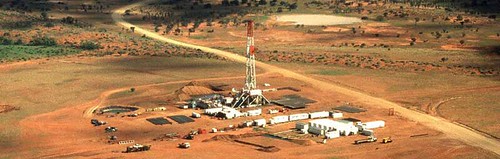
Australian geothermal energy company Geodynamics was an unusual subject of attention in the energy press last week, after cornerstone shareholder Origin Energy expanded their stake in their Cooper Basin hot rocks project, including Geodynamics' giant Lightning drilling rig, Australia's biggest onshore rig.

Origin is hoping to leverage its experience in gas exploration, production and power generation and exposure to geothermal power generation in New Zealand.

I've been following the (slow) progress of this endeavour for a number of years now, as the field has the potential to supply a large amount of clean energy over a considerable period of time.

Geodynamics was floated on the stock exchange back in 2002 and has been drilling in the Cooper Basin ever since. Origin believes the company had the best potential of the several Australian geothermal proposals and that "geothermal energy will play an increasing role in the security the world's future for clean energy".

The company has been working towards tapping heat from granites buried up to 5km underground between Innamincka and Moomba to generate electricity. Geodynamics aims to bring in a pilot one megawatt generator at the site within 12 months. Further drilling should enable a decision in 2009 to invest in a 50 megawatt demonstration plant. If successful, that would be followed by a 500-megawatt plant operating by 2016.

The project has been delayed by heat and pressure problems, which have caused drilling difficulties and led to the construction of the specialised drill rig - and to the departure of founding CEO Bertus de Graaf, who is now with uranium company Uranoz and looking to develop the Limestone Coast geothermal energy project elsewhere in South Australia and prospects in the India state of Maharashtra and in Kyrgyzstan.

The Kyrgyzstan development is reported to have very hot granites at relatively shallow depths - estimated to be between 2km and 3km compared to the 4km to 5km depth of the Geodynamics project.

Geothermal energy is unusual compared to other large renewable power sources, in that it provides "baseload" power (thus placating those suffering from the "baseload fallacy") unlike other more intermittent sources like solar, wind and ocean power.

Tim Flannery dubbed this region of South Australia "geothermia" last year, pondering a future where a large proportion of the nation's power supply comes from the region, with an industrial and mineral processing hub developing to exploit the large quantities of energy available.

Imagine an Australia that decides to build on this natural wealth, creating a centre for minerals processing and natural gas conversion by using emissions-free power. Imagine linking the north-south railway with Queensland and Western Australia in order to bring bauxite and other minerals to the processors, and then to market them through the Port of Darwin. Imagine the exports of gas and of processed minerals from the mammoth Olympic Dam mine, which is nearby. And finally, imagine Australia with a fully linked and freight rail and electricity grid, all powered from zero-emissions sources. If you can do this, then you can imagine a nation transformed from climate-change pariah to leader in the fight for the survival of our planet.

All of this would require a new city in the desert - let's call it Geothermia. What might it look like? I imagine a solar collector towering over a low-rise city, providing shade and conserving soil moisture. Perhaps the infrastructure would be underground. Geothermia would be a city not of thousands but of hundreds of thousands - a place with its own critical mass. And most importantly it would be a fully sustainable city - Australia's very first.


Flannery appeared on "Democracy Now" recently to talk about global warming, geothermal energy and the geothermia vision.
AMY GOODMAN: Talk about geothermia and the hot rocks.

TIM FLANNERY: Well, look, it is so important that we get this new industrial revolution happening and move from the dirty fossil fuels to clean sources of energy. One of the most promising is geothermal energy. You know, it’s an old source, really. We’ve had some geothermal plants around the world for a long time. But recently there’s been astonishing discoveries of massive reserves of heat energy in the earth's crust. One of the biggest is in Australia. And I’ve proposed to our government that we try to exploit this clean and sustainable energy resource to run a lot of our heavy industrial needs, such as mineral processing. We could have a new city in central Australia that I’ve sort of called Geothermia, you know, based around the use of this resource, and use our national rail system to bring in minerals to be cleanly processed and then shipped out.

AMY GOODMAN: Now, explain how this was discovered, where it is in the earth.

TIM FLANNERY: Look, it’s in the most dismal spot in Australia. It’s right in the dead center of our continent, near Lake Eyre, which is a huge salt pan, and it’s four kilometers down in the earth. And it was discovered by an oil and gas company, who had discovered a ring of oil-bearing rocks and then a ring of gas-bearing rocks and, in the middle of this, really hot rocks.

They spent hundreds of millions of dollars drilling. And being an oil and gas company, they thought, “We like the oil, we like the gas, but these hot rocks, we can just post that information publicly.” And, of course, someone else came up and said, well, the amount of energy in the hot rocks is actually probably a hundred times greater than the energy in the oil and gas they discovered, so this is the real gem. And so, they got a free ride. They got a couple hundred million dollars worth of free drilling, and now they're going out trying to exploit this resource.

And we’ll know by Christmas, I think, whether this can be successfully done. The second drill bit is now deep in the earth. It’s getting close to those hot rocks. And if we can get circulation happening of the hot fluids, as projected, then we will have unlocked an enormous energy resource at about the price of coal. And that will change everything for Australia.

AMY GOODMAN: And how long would it last?

TIM FLANNERY: If you run the whole Australian economy on it, it will last at least a century. And that’s the one deposit, you know. This is -- there’s ten companies looking for more of these hot rocks in Australia now. And in China there’s great prospects, as well. There’s prospects in Europe and, doubtless, in parts of the US. So as we shift away from coal and take a medium to long-term view, we can’t just imagine the choices between clean coal technologies and nuclear power. There are other very formidable sources of power that can deliver large volumes of what’s called baseload electricity, you know, the stuff you need twenty-four hours a day, at low cost.

AMY GOODMAN: Let's talk about your proposals around a green electrical grid, green transportation.

TIM FLANNERY: Yeah, look, we know that in order to beat this problem we have to reduce our emissions on the order of 80% in the next forty years. Now, forty years might sound like it’s a long way off, but it isn’t really, you know. I suppose just to drive home to people what that means, it means that in forty years from now we can’t be driving cars that are fueled with fossil fuels, with oil. We can’t be generating our electricity by burning coal and natural gas. We have to have shifted decisively from those polluting sources of power to clean sources of power. So that’s why the race is on now for new affordable takes to harness energy of the sun, which is massive, to harness wind energy, wave energy, geothermal energy, all of these sources that will drive this new clean and prosperous economy of ours, if we can reach out, make the investments and push forward to avoid dangerous climate change.


The idea of shifting energy intensive industries to areas where there is abundant renewable energy (which is a good way to hedge against rising fossil fuel prices) is one which has started being put into practice already, with aluminium (sometimes called "congealed electricity") producers looking to set up smelters close to hydro power stations in Canada, Iceland, Greenland, and the Congo.

If HFR geothermal turns out to be practical on a large scale, South Australia may be a big beneficiary of this trend, as it also has high potential for generating power from solar and ocean (wave) energy - not to mention the world's largest uranium mine and some residual (albeit declining) oil and gas production. Another region which may have large scale generation potential is the Hunter Valley region, conveniently located next to a lot of existing coal fired power stations.
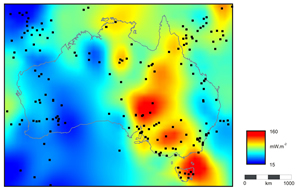
Other companies looking to development geothermal energy in Australia include:
  • Petratherm - looking to develop another HFR resource in northern South Australia, initially to power the Beverley uranium mine. Managing Director Terry Kallis expects the cost of power "to consumers would be somewhere between $50 to $60 a megawatt hour or five to six cents per kilowatt hour". The company is also looking to develop projects in China.
  • Green Rock Energy - operating in the area around the Olympic Dam mine and in Hungary
  • Scope Energy (now part of Uranoz) - looking to develop a 100MW plant near Millicent in the south-east of South Australia. Principal Roger Massey-Greene expects the cost of power to be "very competitive with combined-cycle gas power plants"
  • Torrens Energy
  • Pacific Hydro
  • Greenearth Energy
  • Osiris
  • Eden Energy
  • Geopower


The industry is already fighting against "clean coal" backers for government funding and has formed the Australian Geothermal Energy Association, representing at least 16 companies operating in the sector. The organisation will have its inaugural meeting on November 21.

More data about geothermal resources in Australia is being gathered by Geoscience Australia's Geothermal energy project and the Research Institute for Sustainable Energy (RISE).

Background

Geothermal energy has been used for centuries for heating, cooking, and medicinal bathing. The first geothermal power generation plant was constructed in 1904 in Larderello, Italy, followed by Wairakei, New Zealand in the 1950's then the Geysers in California in the 1960’s.

There is currently an estimated 12,000 MW of direct use and over 8,000 MW of power generation using geothermal resources around the world. This generation capacity represents about 0.4% of the world total. The US is the largest producer, followed by the Philippines, Mexico, Indonesia, Italy, Japan and New Zealand.

If heat recovered by ground heat pumps is included, the non-electric generating capacity of geothermal energy is estimated at more than 100 GW (gigawatts of thermal power) and is used commercially in over 70 countries.


Existing geothermal power generation is sometimes called "wet" geothermal power - using natural hot water sources close to the surface to generate power using energy conversion technologies like dry steam, flash steam and binary cycle systems.

Hot Dry Rock / Hot Fractured Rock (HFR) power is still at the experimental stage, with the Geodynamics project being the most advanced in terms of commercial development. Besides the various projects underway in Australia, Swiss company Geopower Basel has tried drilling under the city of Basel - however this has been halted due to concerns about the drilling causing earthquakes - and other experiments are being performed in Germany and the french village of Soultz-sous-Forêts.

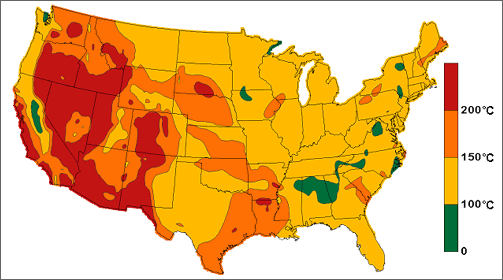
An MIT led study (funded by the US Department of Energy) last year said that if 40 percent of the heat under the United States could be tapped, it would meet demand 56,000 times over. The report estimated that an investment of $800 million to $1 billion could produce more than 100 gigawatts of electricity by 2050, equaling the combined output of all 104 nuclear power plants in the US.

The report noted that geothermal energy is important for several key reasons:

* fossil fuels (coal, oil and natural gas) are increasingly expensive and consumed in ever-increasing amounts
* oil and gas imports from foreign sources raise concerns over long-term energy security
* burning fossil fuels dumps carbon dioxide and other pollutants into the atmosphere

Herman Kahn was also very enthusiastic about the potential of geothermal energy, rating it as by far the largest available power source we have, dwarfing any demand for energy we are likely to have even with a massively increased population.

Technology Review had an interview with the MIT report author Jefferson Tester last year which noted that the amount of energy available is "thousands of times more than we now consume each year".
The figure for the whole world is on the order of 100 million exojoules or quads [a quad is one quadrillion BTUs]. This is the part that would be useable. We now use worldwide just over 400 exojoules per year. So you do the math, and you know you've got a very big source of energy.

How much of that massive resource base could we usefully extract? Imagine that only a fraction of a percent comes out. It's still big. A tenth of a percent is 100,000 quads. You have access to a tremendous amount of stored energy. And assessment studies have shown that this is thousands of times in excess of the amount of energy we consume per-year in the country. The trick is to get it out of the ground economically and efficiently and to do it in an environmentally sustainable manner.

A recent report from the Geothermal Energy Association (pdf) showed that the amount of geothermal power being generated is already increasing significantly.
"The number of countries producing geothermal power and total worldwide geothermal capacity under development appear to be increasing significantly in the first decade of the 21st century," according to the report. "The number of countries producing power from geothermal resources could increase 120 per cent, from 21 in 2000 to as many as 46 in 2010. Total geothermal capacity online could increase over 55 per cent, from 8,661 megawatts in 2000 to 13,500 megawatts or more."

New Zealand

New Zealand’s geothermal generating capacity (as of 2000) of over 400 MW (far exceeding that of Australia currently). The coutry has significant expansion plans for new geothermal power generation. New permits have been approved for a 60 MW power station in the Wairakei-Tauhara geothermal field and a 70 MW plant at the Kawerau field, with more permits expected to be issued in the future as part of the country's move to be the world’s first carbon neutral nation. Rod Oram reports the country could easily increase geothermal generation by a factor of 4.

Iceland

Byron King at The Rude Awakening recently had a look at the prime mover towards the use of "hot and steamy" geothermal energy - Iceland. Byron notes that the country is now energy self sufficient and is a good example of locations with large renewable energy supplies attracting energy intensive industries (one recent case in point is companies like Microsoft and Cisco considering using the country to host "green server farms").
When it comes to harnessing geothermal power, the go-to place on the planet right now is the Republic of Iceland. Yes, Iceland. It is a large island at high latitude, composed mostly of dense basalt lava flows. Iceland straddles the Mid-Atlantic Ridge, which provides that country with an almost direct link to the primordial heat energy within the mantle of our planet. And that is one all-but-immeasurable store of energy. Thus, Iceland is the world’s leading nation in terms of exploiting its local geothermal power resources. In Iceland, the insiders refer to the process of extracting geothermal energy as “heat-mining,” and they are getting rich from the effort.

Recently, the president of Iceland, Olafur Grimsson, visited the U.S. to speak at a number of events and testify before the U.S. Senate Committee on Energy and Natural Resources. In a speech delivered at Harvard on Sept. 26, President Grimsson emphasized the importance of geothermal energy to the economy and society of Iceland. He stated that Iceland has undergone a “radical transformation” from dependence on coal and oil in the past 30 years. As recently as the 1970s, Iceland was among the poorest countries within what was then known as the European Common Market (now called the European Union). That is, by most measures of gross domestic product and other economic output, Iceland was an economic laggard.

But then Iceland made a conscious, strategic commitment to develop its domestic geothermal energy resources. From large industrial projects down to the level of family housing, Iceland focused its public and private energy investment on making a geothermal energy vision into an energy reality. Now, according to what President Grimsson told his Harvard audience, Iceland is one of the most affluent nations in the world. Fully 100% of Iceland’s electricity now comes from renewable sources, geothermal and hydroelectric, and almost all buildings in Iceland are heated with geothermal energy. On the whole, about 72% of Iceland’s total energy usage is tied to geothermal sources, which eliminates essentially all carbon emissions and dramatically reduces reliance on imported fossil fuels of any type.

According to President Grimsson, Iceland has “turned this [geothermal power production] into an extremely profitable business.” For example, electricity is so inexpensive in Iceland that there is a booming business on the island that imports bauxite from the Caribbean area for the purposes of refining aluminum, a highly energy-intensive process.

In comments after his prepared speech at Harvard, President Grimsson expressed his “astonishment” at the utter paucity of geothermal power generation in the U.S., merely 0.3% of all electricity generated across 50 states. And much of that power comes from one location in California, called the Geysers. President Grimsson noted that the U.S. sits atop “the second largest geothermal resources in the world, following only Indonesia.”

President Grimsson concluded that by harnessing the “fireball on which we sit,” mankind could revolutionize energy production across the globe.


Iceland is not only making extensive use of its own geothermal resources but is looking to export technology and expertise to other promising regions, including Indonesia, the Philippines and the US - particularly a new company called Reykjavik Energy Invest.

Indonesia

With its hundreds of active and extinct volcanoes, Indonesia has the potential to produce an estimated 27,000 MW of electricity from geothermal sources. Reuters recently reported that Chevron is looking to expand its geothermal generation capacity in the country as part of the country's efforts to tap alternative energy sources to meet rising power demand and to cut consumption of crude oil as its own reserves dwindle.

Simon Sembiring, the Indonesia director general of geothermal and mineral resources, said earlier this year many foreign firms were interested in investing in geothermal energy projects in Indonesia, with the Icelandic invasion now underway - Reykjavik Energy Invest have already signed a preliminary deal to develop a geothermal power plant with Indonesian oil company Pertamina.

The Philippines

Another country astride the 'ring of fire" is The Philippines, where Chevron also run a number of geothermal power plants (including Tiwi, which is currently impacted by water shortages). The country currently generates around 8% of its electricity from geothermal energy - and another 15% from hydro power - making it the world's second largest producer of geothermal power.

The Icelanders are also looking to help expand the local industry here, with officials from Reykjavik Energy Invest visiting recently to discuss partnering in the development of other geothermal areas and bidding for a stake in power company PNOC-EDC (along with 23 other groups).

Papua New Guinea

Another country in the Asia-Pacific region looking to exploit geothermal energy is PNG, where gold miner Lihir Gold already has a geothermal plant powering mine operations. Bismarck Energy managing director Karl Yalo recently appealed to the PNG government to encourage geothermal power as high and rising fossil fuel prices hit the local economy hard.
“Several developing countries have well-entrenched geothermal plants complimenting traditional energy sources, thereby increasing energy output and enhancing economic growth. In PNG, we have seen the Lihir Gold Mine increase its base load capacity through geothermal energy, thereby reducing substantially use of fossil fuel and consequently converting the savings to sound profit,” Mr Yalo said.

Mr Yalo said numerous naturally occurring hot steams throughout New Britain and New Ireland showed the abundance of these opportunities and that serious consideration had to be given to examining the commercial development of geothermal as an alternative energy source particularly given the present high crude oil prices.

He appealed to the National Government to support the project as it will contribute meaningfully to the national economy through fiscal and other benefits. “With world crude oil price now trading at a record US$90 per barrel, there is no price relief in sight. “I believe fossil fuel prices will not come down to the late 90’s prices. The end result is that countries like PNG whose economies depend entirely on fossil fuel, will continue to face economic hardship, particularly people in the rural communities where bulk of them reside,” Mr Yalo said.

United States

While the US today makes only limited use of geothermal energy, it has a number of areas containing large energy resources, particularly Alaska and western states like California and Nevada. The Intermountain West Geothermal Consortium estimates geothermal resources of around 13,000 MW in the western states.

Producing geothermal power from oil and gas wells in the Gulf of Mexico is also being considered.


The largest geothermal plant in the US (and the world) at present is in Northern California, generating enough power for 800,000 homes, with the plant currently undergoing further expansion.

Iceland's Glitnir Bank plans to invest $1 billion in U.S. geothermal energy projects over the next five years in order to exploit some of the $40 billion market that they predict will develop over the next 25 years.

Another company from Iceland, Iceland America, plans to develop geothermal plants in the Salton Sea area in California.

While geothermal power generation is relatively limited in the US so far, passive use of geothermal energy in the form of ground heat pumps appears to be quite widespread, with estimates ranging between 500,000 and 1 million units already installed - Oklahoma is apparently leading the way in this regard.

Mexico

Mexico is currently producing around 950 MW - about 3% of the country's annual electricity consumption. By 2010 it is expected that an addition 220 MWe will be available - the total capacity of known resources is estimated at around 8,000 MW.

Germany

Hochtief and Exorka are looking at opportunities in the Molasse Basin of Bavaria.

Statistics

Locations of visitors to this page

blogspot visitor
Stat Counter

Total Pageviews

Ads

Books

Followers

Blog Archive

Labels

australia (619) global warming (423) solar power (397) peak oil (355) renewable energy (302) electric vehicles (250) wind power (194) ocean energy (165) csp (159) solar thermal power (145) geothermal energy (144) energy storage (142) smart grids (140) oil (139) solar pv (138) tidal power (137) coal seam gas (131) nuclear power (129) china (120) lng (117) iraq (113) geothermal power (112) green buildings (110) natural gas (110) agriculture (91) oil price (80) biofuel (78) wave power (73) smart meters (72) coal (70) uk (69) electricity grid (67) energy efficiency (64) google (58) internet (50) surveillance (50) bicycle (49) big brother (49) shale gas (49) food prices (48) tesla (46) thin film solar (42) biomimicry (40) canada (40) scotland (38) ocean power (37) politics (37) shale oil (37) new zealand (35) air transport (34) algae (34) water (34) arctic ice (33) concentrating solar power (33) saudi arabia (33) queensland (32) california (31) credit crunch (31) bioplastic (30) offshore wind power (30) population (30) cogeneration (28) geoengineering (28) batteries (26) drought (26) resource wars (26) woodside (26) censorship (25) cleantech (25) bruce sterling (24) ctl (23) limits to growth (23) carbon tax (22) economics (22) exxon (22) lithium (22) buckminster fuller (21) distributed manufacturing (21) iraq oil law (21) coal to liquids (20) indonesia (20) origin energy (20) brightsource (19) rail transport (19) ultracapacitor (19) santos (18) ausra (17) collapse (17) electric bikes (17) michael klare (17) atlantis (16) cellulosic ethanol (16) iceland (16) lithium ion batteries (16) mapping (16) ucg (16) bees (15) concentrating solar thermal power (15) ethanol (15) geodynamics (15) psychology (15) al gore (14) brazil (14) bucky fuller (14) carbon emissions (14) fertiliser (14) matthew simmons (14) ambient energy (13) biodiesel (13) investment (13) kenya (13) public transport (13) big oil (12) biochar (12) chile (12) cities (12) desertec (12) internet of things (12) otec (12) texas (12) victoria (12) antarctica (11) cradle to cradle (11) energy policy (11) hybrid car (11) terra preta (11) tinfoil (11) toyota (11) amory lovins (10) fabber (10) gazprom (10) goldman sachs (10) gtl (10) severn estuary (10) volt (10) afghanistan (9) alaska (9) biomass (9) carbon trading (9) distributed generation (9) esolar (9) four day week (9) fuel cells (9) jeremy leggett (9) methane hydrates (9) pge (9) sweden (9) arrow energy (8) bolivia (8) eroei (8) fish (8) floating offshore wind power (8) guerilla gardening (8) linc energy (8) methane (8) nanosolar (8) natural gas pipelines (8) pentland firth (8) saul griffith (8) stirling engine (8) us elections (8) western australia (8) airborne wind turbines (7) bloom energy (7) boeing (7) chp (7) climategate (7) copenhagen (7) scenario planning (7) vinod khosla (7) apocaphilia (6) ceramic fuel cells (6) cigs (6) futurism (6) jatropha (6) nigeria (6) ocean acidification (6) relocalisation (6) somalia (6) t boone pickens (6) local currencies (5) space based solar power (5) varanus island (5) garbage (4) global energy grid (4) kevin kelly (4) low temperature geothermal power (4) oled (4) tim flannery (4) v2g (4) club of rome (3) norman borlaug (2) peak oil portfolio (1)