Showing posts with label surveillance. Show all posts

Social Cooling  

Posted by Big Gav in

This site has a look at how too much transparency for individuals is leading to "social cooling" as people begin to avoid taking positions that impact their social ranking - LIKE OIL LEADS TO GLOBAL WARMING... DATA LEADS TO SOCIAL COOLING.

When algorithms judge everything we do, we need to protect the right to make mistakes.

When everything is remembered as big data, we need the right to have our mistakes forgotten.


CitizenFour: Documentary Film Claims That There Is Another NSA Leaker with Higher Rank Than Snowden  

Posted by Big Gav in , ,

The Hollywood Reporter has an article on a documentary about Edward Snowden - Documentary Film Claims That There Is Another NSA Leaker with Higher Rank Than Snowden.

A second National Security Agency whistleblower exists within the ranks of government intelligence.

That bombshell comes toward the end of Citizenfour, a new documentary from filmmaker Laura Poitras about NSA informant Edward Snowden that had its world premiere on Friday at the New York Film Festival.

In the key scene, journalist Glenn Greenwald visits Snowden at a hotel room in Moscow. Fearing they are being taped, Greenwald communicates with Snowden via pen and paper. While some of the exchanges are blurred for the camera, it becomes clear that Greenwald wants to convey that another government whistleblower — higher in rank than Snowden — has come forward.

The revelation clearly shocks Snowden, whose mouth drops open when he reads the details of the informant’s leak. Also revealed by Greenwald is the fact that 1.2 million Americans are currently on a government watch-list. Among them is Poitras herself.

N.S.A. Devises Radio Pathway Into Computers  

Posted by Big Gav in , ,

The NYT has a report based on some of Edward Snowden's trove of documents - N.S.A. Devises Radio Pathway Into Computers.

The National Security Agency has implanted software in nearly 100,000 computers around the world that allows the United States to conduct surveillance on those machines and can also create a digital highway for launching cyberattacks.

While most of the software is inserted by gaining access to computer networks, the N.S.A. has increasingly made use of a secret technology that enables it to enter and alter data in computers even if they are not connected to the Internet, according to N.S.A. documents, computer experts and American officials.

The technology, which the agency has used since at least 2008, relies on a covert channel of radio waves that can be transmitted from tiny circuit boards and USB cards inserted surreptitiously into the computers. In some cases, they are sent to a briefcase-size relay station that intelligence agencies can set up miles away from the target.

Salon has an interview with Glenn Greenwald about surveillance and the Snowden story - “Surveillance breeds conformity”: Salon’s Glenn Greenwald interview. As with everything involving Greenwald it is rather long...

As your recent interchange with Jeffrey Toobin on CNN highlighted, there are some chilling media tendencies to condemn whistle-blowers like Snowden in fealty to the established order. How do you account for the U.S. media’s defense of an administration that has consistently lied about the level of surveillance going on?

I think the path of least resistance and the greatest careerist benefits come from embracing orthodoxies and supporting those in power. That has been true forever. If you’re kind of an outsider, and you are looking for ways to up your status, you become a loyalist to the king, you go serve the royal court, this is, I think, common in all societies. There is a temptation among certain kinds of people to further themselves by turning themselves into servants of power, and a lot of people in journalism are very much like that.

I also think that because most of our well-known journalists work for large corporations there is an institutional ethos embedded into these institutions saying that those in authority are to be respected and admired and obeyed. That is the nature of what large institutions inculcate. People who thrive in those corporations tend to embrace that way of thinking. So unlike, say, 50 years ago when journalists were kind of these consummate paid outsiders, now the television stars, the Jefferey Toobins, tend to be authoritarian; they tend to be supportive of the status quo because it has rewarded them so much. And then, finally, there is the tendency in American journalism to be very closely identified with those in political power, and anyone who opposes political power in D.C. — Julian Assange or Chelsea Manning or Edward Snowden or any of those whistle-blowers — are going to to be hated by journalism because they are going to be viewed through the prism of those who wield political power. I think all those factors combine to bring hostility toward people who can bring about transparency. The ultimate irony is that journalists, if you can believe anything that they say about themselves, should be cheering for those who bring transparency.

Edward Snowden - Man Of the Year ?  

Posted by Big Gav in ,

Edward Snowden (who has an interview in The Washington Post that uses the alarming words "Mission Accomplished") should be a shoe in for "Man of the Year" for 2013 (however TIME magazine, now an anachronism, doesn't seem to agree, relegating him to runner up).

The UK's Channel 4 let him deliver their Christmas message - Edward Snowden's Christmas Message.

Whistleblower Edward Snowden, who revealed the mass surveillance programmes organised by the US and other governments, will give this year’s The Alternative Christmas Message on Channel 4.

Six months ago, Snowden, a computer analyst turned whistleblower, brought to global attention top-secret National Security Agency (NSA) documents leading to revelations about widespread United States surveillance on phone and internet communications.

In his first recorded TV video since arriving in Moscow, Snowden lays out his vision for why privacy matters and why he believes mass indiscriminate surveillance by governments of their people is wrong.

He says: “Great Britain’s George Orwell warned us of the danger of this kind of information. The types of collection in the book – microphones and video cameras, TVs that watch us are nothing compared to what we have available today. We have sensors in our pockets that track us everywhere we go. Think about what this means for the privacy of the average person.

“A child born today will grow up with no conception of privacy at all. They’ll never know what it means to have a private moment to themselves an unrecorded, unanalysed thought. And that’s a problem because privacy matters, privacy is what allows us to determine who we are and who we want to be.”

He acknowledges the growing pressure facing the White House over its bulk collection programmes from world leaders, the US courts and even its own advisors and ends his message on an optimistic note: “The conversation occurring today will determine the amount of trust we can place both in the technology that surrounds us and the government that regulates it. Together we can find a better balance, end mass surveillance and remind the government that if it really wants to know how we feel asking is always cheaper than spying.”

Snowden revelations continue to trickle out - some of the latest stories talk about tracking people's phone locations, putting backdoors into RSA security products (the sort of behaviour that will kill US tech firms eventually, prompting them to complain to the White House) along with some judicial to-ing and fro-ing about the legality of the NSA's surveillance programs.

Cisco Sales Start To Encounter NSA Fallout  

Posted by Big Gav in , ,

Cryptogon points to some interesting history about mobile phone operating systems - The Second Operating System Hiding in Every Mobile Phone.

The Find:

Back in July 2013, The Washington Post reported that nearly a decade ago, the National Security Agency developed a new technique that allowed spooks to “find cellphones even when they were turned off. JSOC troops called this ‘The Find,’ and it gave them thousands of new targets, including members of a burgeoning al-Qaeda-sponsored insurgency in Iraq, according to members of the unit.” Many security researchers scratched their heads trying to figure out how this could be so.

Maybe it’s malware.

Maybe it’s a feature.

One obvious outcome of the NSA and its friends backdooring all modern technology is that people are starting to avoid buying it - Cisco are starting to see the impact of this in their emerging markets sales - Cisco’s gloomy revenue forecast shows NSA effect starting to hit.

Cisco has shocked financial analysts — who were expecting healthy growth — by predicting a 10 percent sales slump during the current quarter. There are a variety of reasons for this, but the standout one is the backlash in emerging markets against the activities of the U.S. signals intelligence agency, the NSA.

This shouldn’t have come as a surprise. Communications infrastructure is absolutely central to the surveillance scandal, and that’s Cisco’s business. An American networking firm was never going to come out of this mess well – and the whole infrastructure business is in a state of upheaval anyway — but the figures are sobering nonetheless.

In the last quarter, on which Cisco was reporting on Wednesday, the company saw a sudden 21 percent revenue drop in its top 5 emerging markets: 25 percent down in Brazil, 18 percent down in India, Mexico and China, and 30 percent down in Russia.

Edward Snowden has done us all a favour – even Barack Obama  

Posted by Big Gav in ,

The FT has a great column by Edward Luce on the Snowden saga (subtitled "For a whole generation, the US is coming to stand for Big Brother"), suggesting it has done Obama and those who still believe in civil society a favour by enabling a debate about the role of the American "shadow state" - Edward Snowden has done us all a favour – even Barack Obama.

A decade ago you only saw this sort of topic (and recommendations) being discussed on very fringe conspiracy theory sites - and now every pillar of the establishment press is having to discuss it.

As Luce says - "We should be grateful that Mr Snowden came forward."

The Battle for Power on the Internet  

Posted by Big Gav in , ,

Bruce Schneier has an article in The Atlantic on the power struggle going on for control of the internet and it's increasingly feudal social structure - The Battle for Power on the Internet.

We’re in the middle of an epic battle for power in cyberspace. On one side are the traditional, organized, institutional powers such as governments and large multinational corporations. On the other are the distributed and nimble: grassroots movements, dissident groups, hackers, and criminals. Initially, the Internet empowered the second side. It gave them a place to coordinate and communicate efficiently, and made them seem unbeatable. But now, the more traditional institutional powers are winning, and winning big. How these two sides fare in the long term, and the fate of the rest of us who don’t fall into either group, is an open question—and one vitally important to the future of the Internet.

In the Internet’s early days, there was a lot of talk about its “natural laws”—how it would upend traditional power blocks, empower the masses, and spread freedom throughout the world. The international nature of the Internet circumvented national laws. Anonymity was easy. Censorship was impossible. Police were clueless about cybercrime. And bigger changes seemed inevitable. Digital cash would undermine national sovereignty. Citizen journalism would topple traditional media, corporate PR, and political parties. Easy digital copying would destroy the traditional movie and music industries. Web marketing would allow even the smallest companies to compete against corporate giants. It really would be a new world order.

This was a utopian vision, but some of it did come to pass. Internet marketing has transformed commerce. The entertainment industries have been transformed by things like MySpace and YouTube, and are now more open to outsiders. Mass media has changed dramatically, and some of the most influential people in the media have come from the blogging world. There are new ways to organize politically and run elections. Crowdfunding has made tens of thousands of projects possible to finance, and crowdsourcing made more types of projects possible. Facebook and Twitter really did help topple governments.

But that is just one side of the Internet’s disruptive character. The Internet has emboldened traditional power as well.

On the corporate side, power is consolidating, a result of two current trends in computing. First, the rise of cloud computing means that we no longer have control of our data. Our e-mail, photos, calendars, address books, messages, and documents are on servers belonging to Google, Apple, Microsoft, Facebook, and so on. And second, we are increasingly accessing our data using devices that we have much less control over: iPhones, iPads, Android phones, Kindles, ChromeBooks, and so on. Unlike traditional operating systems, those devices are controlled much more tightly by the vendors, who limit what software can run, what they can do, how they’re updated, and so on. Even Windows 8 and Apple’s Mountain Lion operating system are heading in the direction of more vendor control.

I have previously characterized this model of computing as “feudal.” Users pledge their allegiance to more powerful companies who, in turn, promise to protect them from both sysadmin duties and security threats. It’s a metaphor that’s rich in history and in fiction, and a model that’s increasingly permeating computing today.

The Washington post reports on the latest Snowden NSA revelations, this time about backdoors into big internet companies like Google and Yahoo not be considered sufficient so they've worked out the weak points in the company internal networks as well - SSL Added and Removed Here! :).

The National Security Agency has secretly broken into the main communications links that connect Yahoo and Google data centers around the world, according to documents obtained from former NSA contractor Edward Snowden and interviews with knowledgeable officials.

By tapping those links, the agency has positioned itself to collect at will from hundreds of millions of user accounts, many of them belonging to Americans. The NSA does not keep everything it collects, but it keeps a lot.

According to a top-secret accounting dated Jan. 9, 2013, the NSA’s acquisitions directorate sends millions of records every day from Yahoo and Google internal networks to data warehouses at the agency’s headquarters at Fort Meade, Md. In the preceding 30 days, the report said, field collectors had processed and sent back 181,280,466 new records — including “metadata,” which would indicate who sent or received e-mails and when, as well as content such as text, audio and video.

The NSA’s principal tool to exploit the data links is a project called MUSCULAR, operated jointly with the agency’s British counterpart, the Government Communications Headquarters . From undisclosed interception points, the NSA and the GCHQ are copying entire data flows across fiber-optic cables that carry information between the data centers of the Silicon Valley giants.

The infiltration is especially striking because the NSA, under a separate program known as PRISM, has front-door access to Google and Yahoo user accounts through a court-approved process.

The MUSCULAR project appears to be an unusually aggressive use of NSA tradecraft against flagship American companies. The agency is built for high-tech spying, with a wide range of digital tools, but it has not been known to use them routinely against U.S. companies.

Gen Y's Revenge - Opening The Back Door ?  

Posted by Big Gav in ,

My latest readings on the NSA scandal are 3 interesting pieces from Charlie Stross (Snowden leaks: the real take-home), Bruce Schneier (who is now writing for the FT and The Guardian) (The spooks need new ways to keep their secrets safe) and The Guardian's media blog, talking to Seymour Hersh about the woeful state of the American media (Seymour Hersh on Obama, NSA and the 'pathetic' American media) which included an interesting quip about the official story (one I've never believed for an instant) about the death of Osama Bin Laden "Nothing's been done about that story, it's one big lie, not one word of it is true".

Stross and Schneier argue that the NSA has a big problem emerging, with the revelations from Manning and Snowden being just a taste of things to come. They argue this is due to 2 factors - the first one being the total lack of job security that Gen Y has grown up with and the second being techno-libertarian culture which values openness and transparency above pretty much all else.

I'm a Gen Xer and thus entered the workforce in a world where a permanent job for life was still a relatively common occurrence. My political leanings were entirely neoliberal however (being based pretty much exclusively on what I read in The Economist and Murdoch's national paper here, "The Australian") and after watching the waves of restructuring in the late 1980's and early 1990's I quickly decided that only a fool would expect to stay in the same organisation for a long period of time and happily did (well paid) contract work for the next couple of decades, with my expectations of my employers being nothing more than being paid at the end of each week. This worked out well for me - however I was lucky to have in demand skills, worked in a growing industry and was happy to move to wherever the work was.

The members of Gen Y seem to have far less bargaining power (growing industries and skills shortages being much rarer in the post GFC world) and thus for them financial security is far more elusive.

As Stross puts it, the problem is this (he doesn't explore the techno-libertarian culture angle that Schneier mentions) :

The big government/civil service agencies are old. They're products of the 20th century, and they are used to running their human resources and internal security processes as if they're still living in the days of the "job for life" culture; potential spooks-to-be were tapped early (often while at school or university), vetted, then given a safe sinecure along with regular monitoring to ensure they stayed on the straight-and-narrow all the way to the gold watch and pension. Because that's how we all used to work, at least if we were civil servants or white collar paper pushers back in the 1950s.

But things don't work that way any more. A huge and unmentionable side-effect of the neoliberal backlash of the 1970s was the deregulation of labour markets and the deliberate destruction of the job for life culture, partly as a lever for dislodging unionism and the taproots of left-wing power in the west (yes, it was explicit class war by the rich against the workers), and partly because a liquid labour market made entrepreneurial innovation and corporate restructuring easier ...

Today, around 70% of the US intelligence budget is spent on outside contractors. And it's a big budget — well over $50Bn a year. Some chunks go on heavy metal (the National Reconnaissance Office is probably the biggest high-spending agency you've never heard of: they build spy satellites the size of double-decker buses and have so many Hubble-class space telescopes cluttering up their attic that they donated a couple to NASA in 2012), but a lot goes on people. People to oil the machines. People who work for large contracting organizations. Organizations who increasingly rely on contractors rather than permanent labour, because of buzz-words like "flexibility" and "labour market liquidity".

Here's the problem: they're now running into outside contractors who grew up in Generation X or Generation Y.

Let's leave aside the prognostications of sociologists about over-broad cultural traits of an entire generation. The key facts are: Generation X's parents expected a job for life, but with few exceptions Gen Xers never had that — they're used to nomadic employment, hire-and-fire, right-to-work laws, the whole nine yards of organized-labour deracination. Gen Y's parents are Gen X. Gen Y has never thought of jobs as permanent things. Gen Y will stare at you blankly if you talk about loyalty to their employer; the old feudal arrangement ("we'll give you a job for life and look after you as long as you look out for the Organization") is something their grandparents maybe ranted about, but it's about as real as the divine right of kings. Employers are alien hive-mind colony intelligences who will fuck you over for the bottom line on the quarterly balance sheet. They'll give you a laptop and tell you to hot-desk or work at home so that they can save money on office floorspace and furniture. They'll dangle the offer of a permanent job over your head but keep you on a zero-hours contract for as long as is convenient. This is the world they grew up in: this is the world that defines their expectations.

To Gen X, a job for life with the NSA was a probably-impossible dream — it's what their parents told them to expect, but few of their number achieved. To Gen Y the idea of a job for life is ludicrous and/or impossible.

This means the NSA and their fellow swimmers in the acronym soup of the intelligence-industrial complex are increasingly reliant on nomadic contractor employees, and increasingly subject to staff churn. There is an emerging need to security-clear vast numbers of temporary/transient workers ... and workers with no intrinsic sense of loyalty to the organization. For the time being, security clearance is carried out by other contractor organizations that specialize in human resource management, but even they are subject to the same problem: Quis custodiet ipsos custodes?

We human beings are primates. We have a deeply ingrained set of cultural and interpersonal behavioural rules which we violate only at social cost. One of these rules, essential for a tribal organism, is bilaterality: loyalty is a two-way street. (Another is hierarchicality: yield to the boss.) Such rules are not iron-bound or immutable — we're not robots — but our new hive superorganism employers don't obey them instinctively, and apes and monkeys and hominids tend to revert to tit for tat quite easily when unsure of their relative status. Perceived slights result in retaliation, and blundering, human-blind organizations can slight or bruise an employee's ego without even noticing. And slighted or bruised employees who lack instinctive loyalty because the culture they come from has spent generations systematically destroying social hierarchies and undermining their sense of belonging are much more likely to start thinking the unthinkable.

Edward Snowden is 30: he was born in 1983. Generation Y started in 1980-82. I think he's a sign of things to come.

PS: Bradley Chelsea Manning is 25.

After pondering this for a little while I wondered what the next Gen Y whistleblower to emerge could do that could top Snowden's revelations, given that almost every conceivable form of surveillance now seems to have been exposed as not only being possible but being done (and abused) routinely (OK - I haven't yet read any stories about the passive video and audio streams available through all phones and tablets being routinely tapped and recorded yet but I'm assuming it could and possibly does happen as well).

After thinking about this for a while I eventually concluded that the next big scandal could be one that could have far more real world impact than the current round of revelations (which are going to have a lasting effect on American technology providers over the next decade as foreign and multinational entities start trying to attain some level of information privacy that they don't enjoy today).

My thinking goes like this - if all our technology platforms now have backdoors built into them, what happens if some whistleblower decides to make public the mechanisms for accessing these backdoors ? Is there some procedure on the shelf that will allow a (relatively) rapid rollout of fixes to close the backdoors (and the cynic in me assumes, install new ones) ? Or is this just a hacker's wet dream waiting to come true...

Bruce Schneier: NSA Spying Is Making Us Less Safe  

Posted by Big Gav in ,

Technology review has an interview with security guru Bruce Schneier - Bruce Schneier: NSA Spying Is Making Us Less Safe.

The NSA mission is national security. How is the snooping really affecting the average person?

The NSA’s actions are making us all less safe. They’re not just spying on the bad guys, they’re deliberately weakening Internet security for everyone—including the good guys. It’s sheer folly to believe that only the NSA can exploit the vulnerabilities they create. Additionally, by eavesdropping on all Americans, they’re building the technical infrastructure for a police state.

We’re not there yet, but already we’ve learned that both the DEA and the IRS use NSA surveillance data in prosecutions and then lie about it in court. Power without accountability or oversight is dangerous to society at a very fundamental level. ...

So you’ve recently suggested five tips for how people can make it much harder, if not impossible, to get snooped on. These include using various encryption technologies and location-obscuring methods. Is that the solution?

My five tips suck. They are not things the average person can use. One of them is to use PGP [a data-encryption program]. But my mother can’t use PGP. Maybe some people who read your publication will use my tips, but most people won’t.

Basically, the average user is screwed. You can’t say “Don’t use Google”—that’s a useless piece of advice. Or “Don’t use Facebook,” because then you don’t talk to your friends, you don’t get invited to parties, you don’t get laid. It’s like libertarians saying “Don’t use credit cards”; it just doesn’t work in the real world.

The Internet has become essential to our lives, and it has been subverted into a gigantic surveillance platform. The solutions have to be political. The best advice for the average person is to agitate for political change.

Your tax dollars at work...  

Posted by Big Gav in ,

Glenn Greenwald's steady drip feed of reports (combined with Edward Snowden's disappearance into Putin's Russia) seems to be keeping the focus of attention on the NSA's capabilities.

Early Warning has a look at a new report about the deliberate insertion of security vulnerabilities into software - Your tax dollars at work....

Personally, I thought the Internet was already quite insecure without the US government spending large amounts of money to deliberately make it worse.

I'm not surprised by most of the revelations but I did find the notion of "LOVEINT" a little astonishing - it hadn't occurred to me that intelligence operatives would use their powers to stalk hot chicks, but I guess in retrospect that's a little naive. John Quiggin notes that polygraphs are used to prevent this sort of thing (presumably a phrenologist administers the backup test if the polygraph machine isn't working) - LOVEINT.

The drip feed of revelations about spying by NSA, related agencies and international subsidiaries like ASIO/ASIS, is taking on a familiar pattern. Take some long-held suspicion about what they might be up to, and go through the following steps

1. “You’re being paranoid. That can never happen, thanks to our marvellous checks and balances”
2. “Well, actually it does happen, but hardly ever, so there’s no need to worry about it”
3. “OK, it happens all the time, but you shouldn’t be worried unless you have something to hide”

An example which must have occurred to quite a few of us is whether NSA employees can spy on current or former partners, potential love interests and so on. Until a few days ago, this was at stage 1. Now, it’s been admitted that this not only happens, but it has a name “LOVEINT“. Still, we are told by the great defender of our liberties Dianne Feinstein, this has only happened on a handful of occasions (Stage 2).

All very reassuring, until you read the following

Most of the incidents, officials said, were self-reported. Such admissions can arise, for example, when an employee takes a polygraph tests as part of a renewal of a security clearance.

In other words, while NSA monitors everything you and I do all the time, it relies on witchcraft to detect wrongdoing by its own employees. I guess we’ll just have to hope that NSA staff are too busy snooping on our emails to read any of the 194 000 Google hits on “how to cheat a polygraph”.

George Washington at Zero hedge has a good summary of some of the latest news (lots of links at the original) - High-Level American Intelligence Source: “We Hack Everyone Everywhere".

Offensive cyber operations are not only occurring overseas …

The Department of Defense has long waged cyber-war against Americans by censoring and manipulating social media and other websites. More proof here and here.

This is not entirely surprising, given that:

  • Programs which the government claims are aimed at foreign entities have long been used against American citizens living in the United States
  • The “war on terror” has come home. If the government claims the power to assassinate and indefinitely detain American citizens living on U.S. soil … it’ s not going to hesitate in targeting them for propaganda and cyber-warfare
  • The government has long sought to spread propaganda through mainstream media, video games, movies, television, and every other popular medium. Famed Watergate reporter Carl Bernstein says the CIA bought and paid for many successful journalists. See also this New York Times piece, this essay by the Independent, this speech by one of the premier writers on journalism, and this and this roundup.
  • And the CIA is investing in technology which lets them cut out the middle man altogether … by having a computer write news stories
  • On the other hand, real reporters who criticize those in power are being harassed, targeted and smeared
  • Government agencies are scouring the Web for any critical comments about them, actively manipulating social media for propaganda purposes, and to help the too big to fail businesses compete against smaller businesses (and here), and to promote viewpoints which have nothing to do with keeping us safe

The Business Insider also has a good roundup of links - The Guardian's Bombshell Revelation About NSA Domestic Spying Is Only The Tip Of The Iceberg.

Binney — one of the best mathematicians and code breakers in NSA history — worked for the defence Department’s foreign signals intelligence agency for 32 years before resigning in late 2001 because he “could not stay after the NSA began purposefully violating the Constitution.”

He’s detailed how, ever since 9/11, the NSA has run a top-secret surveillance program that amasses electronic data — phone calls, emails, banking and travel records, social media, entire government databases — and analyses the information “to be able to monitor what people are doing” and who they are doing it with.

Binney would know — he built the original software (i.e. ThinThread) that identified, in real time, networks of connections between individuals based on their electronic communications. “I can pull your entire life together from all those domains and map it out and show your entire life over time,” Binney told documentarian Laura Poitras.”This is something the KGB, the Stasi or the Gestapo would have loved to have had.”

Time To Start Cleaning Up The Mess ?  

Posted by Big Gav in ,

There seems to be something of a groundswell emerging for reigning in the universal surveillance system that has been constructed in the US over the past couple of decades.

Mitch Kapor tweeted today that that Church Committee of the 1970's provided a good role model for what needs to be done.

For history lesson on reining in intelligence community, see Wikipedia on Church Committee. It's time again.

ProPublica / the New York Times and The Guardian have articles looking at the NSA's program (dubbed "Bullrun") that was built up following the failure of the Clinton administration's efforts to introduce the "Clipper" chip which would have provided a backdoor to enable universal decryption of encrypted communications (this and PGP encryption were two of the hot topics following by the cypherpunks back in the day).

Many users assume — or have been assured by Internet companies — that their data is safe from prying eyes, including those of the government, and the N.S.A. wants to keep it that way. The agency treats its recent successes in deciphering protected information as among its most closely guarded secrets, restricted to those cleared for a highly classified program code-named Bullrun, according to the documents, provided by Edward J. Snowden, the former N.S.A. contractor.

Beginning in 2000, as encryption tools were gradually blanketing the Web, the N.S.A. invested billions of dollars in a clandestine campaign to preserve its ability to eavesdrop. Having lost a public battle in the 1990s to insert its own “back door” in all encryption, it set out to accomplish the same goal by stealth.

The agency, according to the documents and interviews with industry officials, deployed custom-built, superfast computers to break codes, and began collaborating with technology companies in the United States and abroad to build entry points into their products. The documents do not identify which companies have participated.

Bruce Schneier has been one of the best analysts of this debate over the past couple of decades, and has one of his usual high quality pieces on the latest state of play - Conspiracy Theories and the NSA (he also features in The Economist's column on the situation). Ironically if you've been a regular reader of the better type of conspiracy theory site (Cryptogon being the best of the bunch by a long way) almost none of the Snowden derived revelations of recent months would be news - most of this has been floating around for years now with whistleblower after whistleblower coming forward, only getting reported on the margins and then being silenced. Cryptome (which I wouldn't categorise as conspiracy theory at all) has also been way ahead of the curve for more than a decade.
I've recently seen two articles speculating on the NSA's capability, and practice, of spying on members of Congress and other elected officials. The evidence is all circumstantial and smacks of conspiracy thinking -- and I have no idea whether any of it is true or not -- but it's a good illustration of what happens when trust in a public institution fails.

The NSA has repeatedly lied about the extent of its spying program. James R. Clapper, the director of national intelligence, has lied about it to Congress. Top-secret documents provided by Edward Snowden, and reported on by the Guardian and other newspapers, repeatedly show that the NSA's surveillance systems are monitoring the communications of American citizens. The DEA has used this information to apprehend drug smugglers, then lied about it in court. The IRS has used this information to find tax cheats, then lied about it. It's even been used to arrest a copyright violator. It seems that every time there is an allegation against the NSA, no matter how outlandish, it turns out to be true. Guardian reporter Glenn Greenwald has been playing this well, dribbling the information out one scandal at a time. It's looking more and more as if the NSA doesn't know what Snowden took. It's hard for someone to lie convincingly if he doesn't know what the opposition actually knows.

All of this denying and lying results in us not trusting anything the NSA says, anything the president says about the NSA, or anything companies say about their involvement with the NSA. We know secrecy corrupts, and we see that corruption. There's simply no credibility, and -- the real problem -- no way for us to verify anything these people might say.

It's a perfect environment for conspiracy theories to take root: no trust, assuming the worst, no way to verify the facts. Think JFK assassination theories. Think 9/11 conspiracies. Think UFOs. For all we know, the NSA might be spying on elected officials. Edward Snowden said that he had the ability to spy on anyone in the U.S., in real time, from his desk. His remarks were belittled, but it turns out he was right.

This is not going to improve anytime soon. Greenwald and other reporters are still poring over Snowden's documents, and will continue to report stories about NSA overreach, lawbreaking, abuses, and privacy violations well into next year. The "independent" review that Obama promised of these surveillance programs will not help, because it will lack both the power to discover everything the NSA is doing and the ability to relay that information to the public.

It's time to start cleaning up this mess. We need a special prosecutor, one not tied to the military, the corporations complicit in these programs, or the current political leadership, whether Democrat or Republican. This prosecutor needs free rein to go through the NSA's files and discover the full extent of what the agency is doing, as well as enough technical staff who have the capability to understand it. He needs the power to subpoena government officials and take their sworn testimony. He needs the ability to bring criminal indictments where appropriate. And, of course, he needs the requisite security clearance to see it all.

We also need something like South Africa's Truth and Reconciliation Commission, where both government and corporate employees can come forward and tell their stories about NSA eavesdropping without fear of reprisal.

Stuart Staniford at Early Warning has a look at another angle - the idea that backdoors have been built in (in a more covert version of the Clipper concept) to networking gear - NSA Malware. I've always assumed this was the case (in the same way the NSA built backdoors into Windows and other operating system years ago) - you only have to look at the fuss made when telcos consider buying large volumes of gear from Huawei, which would both block the NSA's ability to listen to (and possibly alter) communications and give the Chinese the ability to do it instead.
here's a fascinating report in the Washington Post about the dimensions of US offensive cyber-operations. Here are a few excerpts.
Additionally, under an extensive effort code-named GENIE, U.S. computer specialists break into foreign networks so that they can be put under surreptitious U.S. control. Budget documents say the $652 million project has placed “covert implants,” sophisticated malware transmitted from far away, in computers, routers and firewalls on tens of thousands of machines every year, with plans to expand those numbers into the millions.

The documents provided by Snowden and interviews with former U.S. officials describe a campaign of computer intrusions that is far broader and more aggressive than previously understood. The Obama administration treats all such cyber-operations as clandestine and declines to acknowledge them.

and
The administration’s cyber-operations sometimes involve what one budget document calls “field operations” abroad, commonly with the help of CIA operatives or clandestine military forces, “to physically place hardware implants or software modifications.”

Much more often, an implant is coded entirely in software by an NSA group called Tailored Access Operations (TAO). As its name suggests, TAO builds attack tools that are custom-fitted to their targets.

The NSA unit’s software engineers would rather tap into networks than individual computers because there are usually many devices on each network. Tailored Access Operations has software templates to break into common brands and models of “routers, switches and firewalls from multiple product vendor lines,” according to one document describing its work.

The implants that TAO creates are intended to persist through software and equipment upgrades, to copy stored data, “harvest” communications and tunnel into other connected networks. This year TAO is working on implants that “can identify select voice conversations of interest within a target network and exfiltrate select cuts,” or excerpts, according to one budget document. In some cases, a single compromised device opens the door to hundreds or thousands of others.

The focus on routers, switches, and firewalls is very interesting and news. To the best of my knowledge, nothing like this is known to the computer security industry. No doubt the NSA is careful to test its efforts first, to ensure they aren't detected.

Frank Church: The Abyss From Which There Is No Return  

Posted by Big Gav in , ,

Jesse's Cafe has a great quote from Senator Frank Church, who managed to put limits on the NSA back in the 1970's that lasted until the post 9/11 era (he also chaired the Senate hearings into the oil industry that were the basis of "The Control Of Oil") - Frank Church: The Abyss From Which There Is No Return.

[America’s intelligence gathering] capability at any time could be turned around on the American people and no American would have any privacy left. Such is the capability to monitor everything: telephone conversations, telegrams, it doesn’t matter. There would be no place to hide.

If this government ever became a tyrant, if a dictator ever took charge in this country, the technological capacity that the intelligence community has given the government could enable it to impose total tyranny, and there would be no way to fight back because the most careful effort to combine together in resistance to the government, no matter how privately it was done, is within the reach of the government to know. Such is the capability of this technology.

I don’t want to see this country ever go across the bridge. I know the capacity that is there to make tyranny total in America, and we must see to it that [the NSA] and all agencies that possess this technology operate within the law and under proper supervision so that we never cross over that abyss. That is the abyss from which there is no return.

Tim from ECHELON, glimpsed back in 2000  

Posted by Big Gav in

Bruce Sterling has a slightly self-congratulatory post quoting his book "Distraction" published back in 2000 - Tim from ECHELON, glimpsed back in 2000.

Nowadays Tim from ECHELON goes by the handle “Tim from PRISM and XKEYSCORE,” but one thing’s consistent: Tim’s always been really hard to write about.

From: ZEITGEIST, a novel, by Bruce Sterling (Bantam Books, 2000), pages 254-257.

“Tim,” Starlitz said into the phone, “my associate’s kind of upset that you’re going through his private business affairs there.”

“F@ck him,” Tim said cheerfully, in the same flat voice. “What’s he gonna do about it? This Russian punk’s got no fucking options.” Tim tossed the wallet aside. “He’s broke. And he’s small time. He’s not of major surveillant interest.”

A look of frantic desperation entered Viktor’s eyes. He wasn’t taking this at all well.

“Viktor, chill out,” Starlitz said. “Let me pass you the word, man. This is ECHELON.”

“Did you say ECHELON?” said Viktor.

“Ever heard of it? Shall I spell it for you?”

“Of course I’ve heard of ECHELON!” Viktor protested. “ECHELON is the legendary capitalist global surveillance system. It’s the worldwide signals intelligence directorate! ECHELON is the crown jewel of the antiprogressive Dark Forces!”

“Uh, yeah. That would be the alleged phenomenon.”

“ECHELON is run by the UK, USA, Australia and New Zealand. It uses undersea-cable taps, and surveillance satellites like ‘Aquacade,’ “Rhyolite,’ and ‘Magnum.’ It taps the Internet through its major routing centers and does comprehensive word searches on email traffic.”

“Hey, shut up,” Tim protested over the satellite phone. “That’s all totally classified.”

Starlitz put the phone on his shoulder and squinted in the sunlight. “Can you actually *see* Tim, Viktor? I can hear him over this satellite phone, but I can’t see a damn thing. It’s like the guy’s installed at hardware level and totally user transparent.”

“I can see a kind of black, hideous, paranoid shape,” Viktor reported. “It’s like some faceless, oozing nightmare that covers the whole earth.”

“What do *you* see, Zeta?”

“I can see him fine. I can hear him too. I can even smell him. He doesn’t change his clothes very much.”

“I’m a busy guy,” Tim complained.

“He looks just like my geeky math teacher. You know, the math guy who used to go out during recess and look up our skirts.” ...

‘Why did you bring a little girl to a Level Three national-security incident? That’s not professional. You clowns are lucky that I even showed up.”

“You’re not supposed to show up, Tim. I never called you. I don’t know why you’re here.” Starlitz shrugged.

“Well, then, let me get *you* up to speed, newbie,” said Tim briskly. “I mean, you can’t even *see* me, because I am, like, light-years beyond your shabby, street-level, hard-boiled little discourse. Because ECHELON is, like, the Olympus of networked globalization. We’re so far beyond your mental grasp that we’re literally unspeakable. Mere mundane user dorks like you can’t even *raise the topic* of ECHELON in any discussion of contemporary reality. Because at ECHELON we’re huge, omniscient, omnipresent, and totally technically capable. We’ve been secretly saving the bacon of the Anglo-American empire since Alan Turing was blowing guys in bus stations. We’re always taping everything, but we Never Say Anything. You get me so far?”

“Yeah, no, maybe.”

“So that means that a guy like me has no conventional path into the narrative. None at all. I’m *always* the deus ex machina. I mean, the twentieth-century master narrative just doesn’t work, unless I remain way behind the curtain, and always super-secret. If ECHELON’s abilities and activities become common knowledge and a public issue, the whole world is transformed. Outing ECHELON disrupts all the basic political and social assumptions. It throws the whole twentieth-century story straight off the rails. It’s like you’re filming some kind of BBC British teatime drama, and a giant writhing kraken comes up out of the Thames.”

“Cut to the chase, Tim. So, why do we have the honor?”

Britain Detains the Partner Reporter Of Snowden Leaks  

Posted by Big Gav in

Stuart at Early Warning points to a NYT article about Glenn Greenwald's partner being detained by the British on a flight from Germany to Brazil (where Greenwald lives nowadays) - apparently people are very grumpy about the Edward Snowden story making the press (though they also seized all electronic devices in his possession so perhaps they were more interested in the information Greenwald has yet to report on) - Britain Detains the Partner Reporter Of Snowden Leaks. When I was growing up in the 1970's the West used to tell itself that it was good because it didn't do the totalitarian nonsense the Nazis had done in the past and the Eastern Bloc was doing at that time. How times have changed.

This detention of Glenn Greenwald's partner under British anti-terrorism laws, while flying from Germany to Brazil, is absolutely and completely outrageous. This is clearly harassment of journalists for publishing stories that authorities don't like, and strikes at the heart of freedom of speech. If you weren't already convinced that the intelligence/anti-terrorism apparatus in Western countries is out of control, I imagine this will push you a bit further in that direction.

How The NSA Scours 75% Of The Nation's Internet Traffic - In One Chart  

Posted by Big Gav in ,

The Wall Street Journal has a nice graphic showing how the NSA's surveillance systems operate - How The NSA Scours 75% Of The Nation's Internet Traffic - In One Chart.

The NSA - which possesses only limited legal authority to spy on U.S. citizens - has, according to the Wall Street Journal, built a surveillance network that covers more Americans' Internet communications than officials have publicly disclosed, current and former officials say.

The system has the capacity to reach roughly 75% of all U.S. Internet traffic in the hunt for foreign intelligence, including a wide array of communications by foreigners and Americans. In some cases, it retains the written content of emails sent between citizens within the U.S. and also filters domestic phone calls made with Internet technology, these people say.

The Era of Ubiquitous Listening Dawns  

Posted by Big Gav in

Technology Review has an update on the ever advancing state of technology for personal surveillance devices - The Era of Ubiquitous Listening Dawns’. George Orwell would be so impressed at how far the telescreen has come.

The Moto X, the new smartphone from Google’s Motorola Mobility, might be remembered best someday for helping to usher in the era of ubiquitous listening. Unlike earlier phones, the Moto X includes two low-power chips whose only function is to process data from a microphone and other sensors—without tapping the main processor and draining the battery.

This is a big endorsement of the idea that phones could serve you better if they did more to figure out what is going on (see “Motorola Reveals First Google-Era Phone”). For instance, you might say “OK Google Now” to activate Google’s intelligent assistant software, rather than having to first tap the screen or press buttons to get an audio-processing function up and running.

This brings us closer to having phones that continually monitor their auditory environment to detect the phone owner’s voice, discern what room or other setting the phone is in, or pick up other clues from background noise. Such capacities make it possible for software to detect your moods, know when you are talking and not to disturb you, and perhaps someday keep a running record of everything you hear.

The Ecuadorian Library  

Posted by Big Gav in , , , ,

Bruce Sterling has popped up at Medium with a great essay (following up on an older one called "The Blast Shack") on Manning, Assange and Snowden - The Ecuadorian Library.

First let’s consider Bradley Manning, who is not at all close to the NSA. Bradley was a bored and upset minor military technician who burned a zillion US documents onto a DVD, and labeled that “Lady Gaga.”

The authorities finally got around to convicting Bradley this week, of some randomized set of largely irrelevant charges. But the damage there is already done; some to Bradley himself, but mostly grave, lasting damage to the authorities. By maltreating Bradley as their Guantanamo voodoo creature, their mystic hacker terror beast from AlQaedaville, Oklahoma, they made Bradley Manning fifty feet high.

At least they didn’t manage to kill him. Bradley’s visibly still on his feet, and was not so maddened by the torment of his solitary confinement that he’s reduced to paste. So he’s going to jail as an anti-war martyr, but time will pass. Someday, some new entity, someone in power who’s not directly embarrassed by Cablegate, can pardon him.

Some future Administration can amnesty him, once they get around to admitting that Bradley’s War on Terror is history. The War on Terror has failed as conclusively as Woodrow Wilson’s League of Nations failed. There’s terror all over the sands now, terror from Mali to Xinjiang, and a billion tender-hearted Bradleys couldn’t stop that bleeding, no matter how much they leak.

Thanks to the modern miracle of fracking, though, the mayhem in the oil patch means a lot less to K Street. Someday, Bradley Manning will be as forgotten to them as Monica Lewinsky is. Then they’ll yield to the hornet-like, persistent buzz of the leftie peaceniks, and let Bradley go. He’s not dangerous. Bradley Manning will never do anything of similar consequence again. He’s not a power player. He’s a prisoner of conscience.

However, unlike poor Monica Lewinsky, Bradley Manning will never lack for passionate adherents who admire him and love him. Before Bradley went into his ugly maelstrom, he didn’t have that. Nowadays, he does. Maybe it’s worth it.

Then there’s Julian Assange. Yeah, him, the silver-haired devil, the Mycroft Holmes of the Ecuadorian Embassy. Bradley Manning’s not at all NSA material, he’s just a leaky clerk with a thumb-drive. But Julian’s quite a lot closer to the NSA — because he’s a career cypherpunk.

If you’re a typical NSA geek, and you stare in all due horror at Julian, it’s impossible not to recognize him as one of your own breed. He’s got the math fixation, the stilted speech, the thousand-yard-stare, and even the private idiolect that somehow allows NSA guys to make up their own vocabulary whenever addressing Congress (who don’t matter) and haranguing black-hat hacker security conventions (who obviously do).

Julian has turned out to be a Tim Leary at the NSA’s psychiatric convention. He’s a lasting embarrassment who also spiked their Kool-Aid. Crushing Julian, cutting his funding, that stuff didn’t help one bit. He’s still got a roof and a keyboard. That’s all he ever seems to need.

There’s nothing quite like a besieged embassy from which to mock the empty machinations of the vengeful yet hapless State Department. House arrest has also helped Julian with this obscure struggle he has, not to fling himself headlong onto Swedish feminists. The ruthless confinement has calmed him; it’s helped him to focus. He’s grown and matured through ardent political struggle.

Julian Assange is still a cranky extremist with a wacky digital ideology, but he doesn’t have to talk raw craziness any more, because the authorities are busy doing that for him. They can’t begin to discuss PRISM and XKeyScore without admitting that their alleged democratic process is a neon façade from LaLaLand. Instead, they’re forced to wander into a dizzying area of discourse where Julian staked out all the high points ten years ago.

More astonishing yet: this guy Assange, and his tiny corps of hacker myrmidons, actually managed to keep Edward Snowden out of US custody. Not only did Assange find an effective bolthole for himself, he also faked one up on the fly for this younger guy.

Assange liberated Snowden, who really is NSA, or rather a civilian outsourced contractor for the NSA, like there’s any practical difference.

It’s incredible to me that, among the eight zillion civil society groups on the planet that hate and fear spooks and police spies, not one of them could offer Snowden one shred of practical help, except for Wikileaks. This valiant service came from Julian Assange, a dude who can’t even pack his own suitcase without having a fit. ...

While Julian Assange, to do him credit, has the street smarts to behave as if he’s in a situation of feral realpolitik. Because he is. And how.

However, Assange now knows that. He’s a hardened veteran of it. And he’s gonna stay imperiled for the immediate future, because the upshot of this is pretty easy to see.

The inconvenient truth about the NSA is lying there on a table in the Ecuadorian Embassy, as stark as a poisoned crow. But it’ll join our planet’s many other inconvenient truths.

Snowden told the truth to the public — but then again, so did Solzhenitsyn, and even Al Gore lets on sometimes. The truth doesn’t do the trick for anybody, the truth is just a complicating factor. The present geopolitical situation is absolutely cluttered with amazing lies that didn’t work out for their owners.

The Iraqi weapons of mass destruction never existed. Climate change does exist, and could drown Wall Street any day now. The abject state of global finance is obvious, yet it makes no difference to the ongoing depredations. Drones are stark assassination machines, and they don’t stay classified. Anyone could go on.

And, yeah, by the way, Microsoft, Apple, Cisco, Google et al, they are all the blood brothers of Huawei in China — because they are intelligence assets posing as commercial operations. They are surveillance marketers. They give you free stuff in order to spy on you and pass that info along the value chain. Personal computers can have users, but social media has livestock.

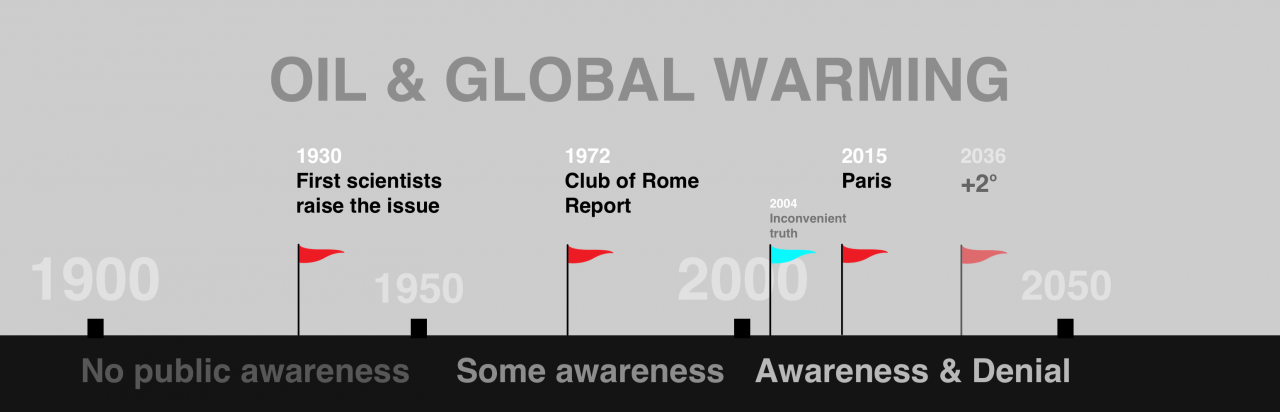
Irony  

Posted by Big Gav in ,

1984 Wasn't Meant To Be An Instruction Manual  

Posted by Big Gav in , , , ,

It was interesting that Glenn Greenwald's revelations in The Guardian about the NSA's "PRISM" total surveillance program popped up around the same time that the trial of Bradley Manning began (with the firestorm of coverage in the mainstream media prompting Cryptogon to wonder why they've piped up all of a sudden - by some random coincidence the Bilderberg conference is on at the moment - even "Enemy of the State" - one of my favourite movies - was on TV here this weekend).

The Atlantic has a good summary of the news - Birth of the Surveillance State.

On December 20, 2002, a Senate Intelligence Committee that included Sen. Ron Wyden, D-Ore., today one of the most vociferous critics of the so-called "surveillance state," came to the following conclusion in its official report on the mistakes that led to 9/11: The National Security Agency had harmed U.S. counterterrorism efforts that might have prevented that terrible day because of the agency's "failure to address modern communications technology aggressively."

The report, a joint effort of the Senate committee and the House Permanent Select Committee on Intelligence, blamed "NSA's cautious approach to any collection of intelligence relating to activities in the United States, and insufficient collaboration between NSA and the FBI regarding the potential for terrorist attacks within the United States."

The Senate-House report said the NSA simply could not keep up with the explosion of information technology. "Only a tiny fraction" of the NSA's 650 million daily intercepts worldwide "are actually ever reviewed by humans, and much of what is collected gets lost in the deluge of data," the report said. In interviews at the time, then-NSA Director Michael Hayden explained why: The NSA, originally authorized to conduct monitoring only overseas, was effectively a Cold War dinosaur that was going "deaf" since its main mission of tracking "signals intelligence," known as Sigint, from the Soviet Union had ended.

"We have gone from chasing the telecommunications structure of a slow-moving, technologically inferior, resource-poor nation-state--and we could do that pretty well - to chasing a communications structure in which an al-Qaida member can go into a storefront in Istanbul and buy for $100 a communications device that is absolutely cutting edge, and for which he has had to make no investment in its development. That's what we've got to deal with," Hayden told me in an interview in mid-2002.

In congressional testimony leading up to that critical Senate-House report, Hayden explained the NSA had gone from tracking a relatively small number of Soviet communications pipelines -- microwave transmissions, for example, from Moscow to various ICBM bases -- to trying to keep up with billions of conversations on phones and emails in a world in which technological borders had been erased, and much of this traffic was now being routed through the United States. This huge new challenge was coming at a time when the super-secret agency had "downsized about a third of its manpower and about the same proportion of its budget in the '90s," the era of the so-called post-Cold War peace dividend, Hayden said in his testimony. "That's the same decade when mobile cell phones increased from 16 million to 741 million--an increase of 50 times. That's the same decade when Internet users went from about four to 361 million."

These perceived deficiencies, and the NSA's aggressive efforts to redress them since then, make up the real backdrop to the latest scandal that has engulfed Washington, this time over what appears to be a massive infringement of American civil liberties. And despite the outrage voiced by senators such as Wyden and other critics, the truth about what the NSA and intelligence and investigative community is doing is far more complex than the rhetoric might lead you to believe.

Most important of all, almost the entire U.S. government has been on board in promoting it.

After many struggles and failures in the last decade, the NSA did finally come up with new approaches to keeping up with the traffic. One such approach was the NSA's "PRISM" program, disclosed Thursday by The Washington Post and the Guardian newspaper. The newspapers revealed that the NSA and FBI have set up a program to tap directly into the central servers of nine leading U.S. Internet companies, "extracting audio and video chats, photographs, e-mails, documents, and connection logs that enable analysts to track one target or trace a whole network of associates," as the Post wrote. The program was reportedly set up in cooperation with the major companies, including Microsoft, Yahoo, Google, Facebook, PalTalk, AOL, Skype, YouTube and Apple.

Crikey's Guy Rundle is sounding even more like a marxist academic then usual lately - here's his take on the story - All hail Snowden, the hero who exposed a government.

Like many people around the world, I’ve spent the last 48 hours tracking, reading, watching, refreshing and barely sleeping, as a torrent of stories of total surveillance run by the National Security Agency have come to light through the US journalist Glenn Greenwald, published in The Guardian.

The leaks revealed total blanket phone call metadata (origin, length of calls, networks and connections) by the NSA, followed by the voluntary turning-over of mass amounts of data by private internet service providers and social media corporations — including Microsoft, Google, Skype and Twitter. Then came news that UK’s Government Communications Headquarters may have been illegal cribbing such data for its own ends. Finally, on the weekend, the leaker revealed himself, 29-year-old Edward Snowden, a systems operations operator for Booz Allen Hamilton and Dell, to whom the NSA subcontracted various tasks.

Snowden bobbed up three weeks after leaving Booz Allen Hamilton with 41 carefully chosen pages of dynamite memos. He holed up in Hong Kong, while releasing the memos to people he trusted. He initially approached The Washington Post, but they appear to have been furiously hedging their bets, as have all mainstream US media. He made the decision to reveal his own identity, in order that people could understand that a very ordinary — in the best sense of the word — person was behind it, and to make the intolerable nature of what was revealed to him clear.

The facts are clear enough: while accessing the content of phone calls on old tech lines is protected by limiting laws, no such limit holds on the ISP/social media giants, if they choose to comply with the government. Clients of these services — i.e. everyone — have already signed away their rights, in those huge documents you click “accept” to without reading. The NSA’s mega-data collection centre in Bluffdale Utah has come on stream, and it can collect and store all communicated data for decades. The files are multi-dimensionally searchable by programmes that learn as they go. The idea that the process will be drowned in cat videos is consoling and fanciful.

The PRISM programme represents the most far-reaching extension of power into the very texture and fabric of everyday life in history. Those on the hacker/cypherpunk side of things have realised for some years, many years, that this process was under way. Some of us have been aware of it for a couple of years. Now it has become general knowledge.

The policy and the practice is an extension and expansion by the Obama administration of a process begun in the Bush years, and with various antecedents, from the days when the internet began to vastly expand, carried by the web, in the early 90s. Snowden, who has worked in the NSA purview since 2009, has said that his actions, and the delay in them, arose in part from waiting to see if Barack Obama would take some action on the matter — and then a decisive disappointment when he didn’t.

What appears to have been a passivity on the part of Obama with regard to a practice in place changes the meaning and character of his presidency substantially. In writing about him over the years, I’ve noted that any belief that he would substantially alter the projection of US power was an illusion; any candidate was applying for a dual position of President and emperor; supporting the former did not preclude attacking the latter’s policies.

But of course that has always been, to some degree, a false dichotomy. The empire reaches back into the Republic. With PRISM, that process is totalising; the space of the Republic has been squeezed to near-zero. To the surprise of many, that does not seem to have overly disconcerted the US public, with support for the NSA’s policies polling at 56% to 41%. Not too much should be made of that — the US has become such a news desert in many areas that many people are at this stage, simply not aware of the breadth of PRISM and other programmes.

But the revelation of these programmes has thrown the US state into disarray, and had the same effect on its institutional politics. The state elite’s determination to push into every area of life is driven not merely by a desire to avoid terror attacks of the latter type, but in response to challenges from states such as China, which highlight their vestigial constitutional limits, and the general expansion and extension of technical power and possibility, from standard high-tech to biological engineering.

What this historical process should prompt is a renegotiation of state and social power on a global scale. What it is prompting instead is a paradoxical attempt by states to extend their power further into everyday life than they hitherto been, just as that process becomes one that is unwinnable, save by explicit and visible tyranny. In the meantime, it is stretching state power to the point where its legitimacy cracks in the middle. Since that middle runs through the heart of decent people, loyal to their society and humanity, it produces whistleblowers willing to take the ultimate risk.

The ramifications of this are manifold, to be explored in these pages by many writers in the weeks to come. But for the moment one crucial point needs to be made: this process is ramrodding one of the most serious recombinations of politics in recent decades, or perhaps longer. This is happening most substantially in the imperial centre of the US — now little more than a contradiction with a flag — but it will spread elsewhere.

On the Left it is happening in reasonably orderly fashion, along old faultlines — between a core, statist Left which cleaves ever closer to an unlimited national security state, and a dissident Left which has always resisted it. Such centre-left support for the national security state draws, distortedly, on the communalist core of Leftism — the idea that standing for the nation is standing for the collective, no matter how distorted. Thus California leftists like Senator Dianne Feinstein have no problem finding themselves aligned with John McCain, Bill Kristol and a whole bunch of others, in what is basically a centrist, totalising, national security party. The dissident Left can detach from its partial attachment to that Left, without too much confusion.

Meanwhile on the Right, they’re going f-cking nuts. I say that with no more than a dash of schadenfreude  — you take your pleasures where you find them — but more as an analysis of what’s likely to happen. That the Republican Party would split on this issue is unsurprising; that it would split down the middle of its Tea Party/libertarian Right is an extraordinary thing to behold.

Thus Rand Paul is now promoting a Supreme Court challenge to the NSA in such a way that would gain the support of the American Civil Liberties Union, the CounterPunch left, and hundreds of other groupings. The national security Right is now arguing that they will have to marshal a figure like Ted Cruz to challenge Rand Paul in the nominations.

Finally, Greens Senator Scott Ludlam came up with the best quote I've seen on the topic - "George Orwell's 1984 "wasn't intended to be an instruction manual"" - 'We're waiting for an Aussie to blow the whistle on PRISM'.

Cybersecurity awareness week: be aware you’re being lied to  

Posted by Big Gav in

Bernard Keane at Crikey has an entertaining tribute to cyber-security week - Cybersecurity awareness week: be aware you’re being lied to.

Did you know it’s national cybersecurity awareness week?

Everyone I’ve told has replied “I wasn’t aware of that”, which suggests we need an awareness week for the awareness week. It’s an annual event in which governments and companies work together to, well, “raise awareness” of cybersecurity. Tips will be offered, threats will be warned about and products will be advertised. China will be mentioned a lot.

In the US, they have cybersecurity awareness month. Everything sure is bigger over there.

And, yes, we should take cybersecurity awareness seriously. Because most of the things you are told about cybersecurity are lies. As Crikey has demonstrated many times, the actual threat of cybercrime is grossly exaggerated by governments, the corporate media and cybersecurity companies. They exaggerate it with the goal of lifting sales of security products and justifying increases in state control of the internet.

The Australian Financial Review for some months has run a series of beat-ups on the issue, which all follow the same format: claiming routine common-or-garden efforts to access servers as “attacks”, portraying minor breaches as major hacking successes (one article claimed that an effort to access a publicly available stats database at the ABS website was a successful breach by hackers), invoking the threat of Chinese hackers, and quoting cybersecurity consultants and executives who are only too happy to agree that government agencies should spend more on security.

And, it seems, next week’s Four Corners will be running the same line, with its PR plug for Monday’s edition, titled Hacked! (behold the exclamation mark), claiming “a deafening silence surrounds this issue”. The sort of deafening silence in which governments and the media never shut up about it, presumably.

Anyone pointing out the self-interested nature of commentary from the cybersecurity industry, or the obvious flaws in the corporate media narrative of major security breaches, invariably elicits the reaction that they are pretending there is no cybercrime problem at all. In Crikey’s case, this is exactly the opposite of the truth. Crikey is the only media outlet or company in Australia that has undertaken substantive, independent research into the prevalence of cybercrime and established the scale of the problem, with a costing based on verifiable data.

But, in cybersecurity awareness week, this is not yet another article explaining how cybercrime has been exaggerated. This is an attempt to identify the real threat. While corporate media and governments like our own and that of the US repeatedly (and correctly) blame China for much cyberespionage and online crime, in fact the biggest source of cybercrime on the planet is the US government, aided and abetted by governments like our own.

Yes, we’re not the hapless victims of China in any “cyberwar”, we’re every bit as much the aggressors as any other participant.

The US government is the biggest purchaser and producer of “cyberweapons” on the planet. A recent Reuters report by Joseph Menn contained comprehensive detail about how government agencies like the National Security Agency and the Pentagon are pouring money into “zero-day exploits”, vulnerabilities in commonly used systems and software.

US government agencies aren’t devoting significant resources to purchasing these exploits so that they won’t fall into the hands of criminals — they are purchasing them to use.

Hackers, operating at the behest of, or employed by, the Chinese government, the Chinese security establishment and Chinese companies, are indeed a significant threat to Western companies and governments. But the focus on China obscures the extent to which the US remains the most potent, aggressive state cyberpower.

And there’s a lesson from China that the media might do well to learn. The reason China has such a flourishing culture of cybercrime and hacking is because its government devotes enormous resources to controlling the internet and monitoring citizens’ use of it. Chinese hacking is a direct outgrowth of the fact that it is a surveillance state.

And a surveillance state is exactly what governments and corporations, crying “cybersecurity”, want us to become.

Be aware of that.

Statistics

Locations of visitors to this page

blogspot visitor
Stat Counter

Total Pageviews

Ads

Books

Followers

Blog Archive

Labels

australia (619) global warming (423) solar power (397) peak oil (355) renewable energy (302) electric vehicles (250) wind power (194) ocean energy (165) csp (159) solar thermal power (145) geothermal energy (144) energy storage (142) smart grids (140) oil (139) solar pv (138) tidal power (137) coal seam gas (131) nuclear power (129) china (120) lng (117) iraq (113) geothermal power (112) green buildings (110) natural gas (110) agriculture (91) oil price (80) biofuel (78) wave power (73) smart meters (72) coal (70) uk (69) electricity grid (67) energy efficiency (64) google (58) internet (50) surveillance (50) bicycle (49) big brother (49) shale gas (49) food prices (48) tesla (46) thin film solar (42) biomimicry (40) canada (40) scotland (38) ocean power (37) politics (37) shale oil (37) new zealand (35) air transport (34) algae (34) water (34) arctic ice (33) concentrating solar power (33) saudi arabia (33) queensland (32) california (31) credit crunch (31) bioplastic (30) offshore wind power (30) population (30) cogeneration (28) geoengineering (28) batteries (26) drought (26) resource wars (26) woodside (26) censorship (25) cleantech (25) bruce sterling (24) ctl (23) limits to growth (23) carbon tax (22) economics (22) exxon (22) lithium (22) buckminster fuller (21) distributed manufacturing (21) iraq oil law (21) coal to liquids (20) indonesia (20) origin energy (20) brightsource (19) rail transport (19) ultracapacitor (19) santos (18) ausra (17) collapse (17) electric bikes (17) michael klare (17) atlantis (16) cellulosic ethanol (16) iceland (16) lithium ion batteries (16) mapping (16) ucg (16) bees (15) concentrating solar thermal power (15) ethanol (15) geodynamics (15) psychology (15) al gore (14) brazil (14) bucky fuller (14) carbon emissions (14) fertiliser (14) matthew simmons (14) ambient energy (13) biodiesel (13) investment (13) kenya (13) public transport (13) big oil (12) biochar (12) chile (12) cities (12) desertec (12) internet of things (12) otec (12) texas (12) victoria (12) antarctica (11) cradle to cradle (11) energy policy (11) hybrid car (11) terra preta (11) tinfoil (11) toyota (11) amory lovins (10) fabber (10) gazprom (10) goldman sachs (10) gtl (10) severn estuary (10) volt (10) afghanistan (9) alaska (9) biomass (9) carbon trading (9) distributed generation (9) esolar (9) four day week (9) fuel cells (9) jeremy leggett (9) methane hydrates (9) pge (9) sweden (9) arrow energy (8) bolivia (8) eroei (8) fish (8) floating offshore wind power (8) guerilla gardening (8) linc energy (8) methane (8) nanosolar (8) natural gas pipelines (8) pentland firth (8) saul griffith (8) stirling engine (8) us elections (8) western australia (8) airborne wind turbines (7) bloom energy (7) boeing (7) chp (7) climategate (7) copenhagen (7) scenario planning (7) vinod khosla (7) apocaphilia (6) ceramic fuel cells (6) cigs (6) futurism (6) jatropha (6) nigeria (6) ocean acidification (6) relocalisation (6) somalia (6) t boone pickens (6) local currencies (5) space based solar power (5) varanus island (5) garbage (4) global energy grid (4) kevin kelly (4) low temperature geothermal power (4) oled (4) tim flannery (4) v2g (4) club of rome (3) norman borlaug (2) peak oil portfolio (1)