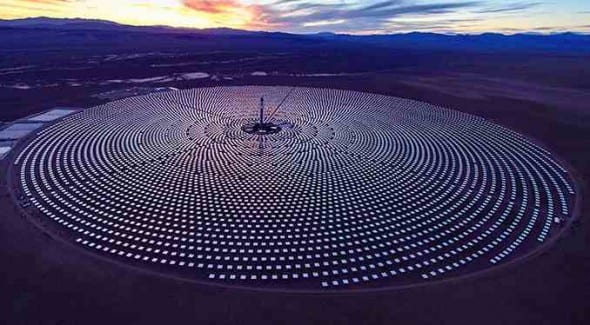
Following the success of the world’s largest battery, South Australia is aiming to build the world’s largest thermal solar plant. SolarReserve’s $650 million, 150 megawatt Aurora solar thermal plant has received state development approval. Construction of the facility will begin this year.
The V3 Spin Cell was developed through collaboration with industrial design team Nectar Design. The company believes that the Spin Cell could be a game-changer in its market. On their website V3 explains that if one places a 20x solar concentration on a flat, static solar panel then “the temperature quickly reaches 260 degrees F, the solder melts within ten seconds, and the PV fails. With the same concentration on the Spin Cell, the temperature never exceeds 95 degrees F.”
The one meter-diameter cones feature a layer of hundreds of triangular photovoltaic cells positioned at an angle of 56 degrees, encased in a “static hermetically-sealed outer lens concentrator.” The photovoltaic cone spins with the assistance of a “small amount” of its own solar-generated power which feeds a Maglev system, intended to reduce the noise generated by the cones as well as any required maintenance.
Australia’s top science and research organisation, the CSIRO, has inked a deal with Chinese company Thermal Focus to make, sell and install its patented concentrating solar thermal generation technology in China. The partnership is a major coup for the CSIRO, particularly considering the potential market for CST in China, which just last month was named by the IEA as one of the countries most likely to lead the world in a solar
China’s plans for CST – to build 1.4GW of capacity 2018, and 5GW by 2020 – will double the world’s installed CST plants, and the CSIRO deal puts its proven solar heliostat technology in a prime position to bid for a piece of this action.
During the mid-noughties I thought that solar thermal power was going to become in the dominant form of renewable energy in the medium term - failing to foresee just how dramatic the price and performance improvements for solar PV and energy storage would be over the following decade.
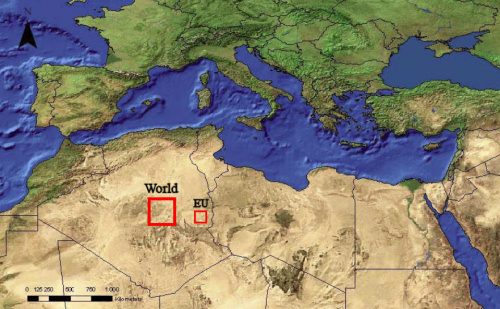
Back then a vision called Desertec promised cheap, clean north African solar power providing Europe with a healthy slice of its energy needs (and reducing dependence on Russian gas as a side benefit).
The vision slowly faded as it become clearer that Europe could be largely self-sufficient in renewable energy and that building the grid interconnects between Africa and Europe was going to take along time to eventuate. The organisation pivoting in 2013 to focus more on supplying local power demand, particularly in Morocco, Algeria and Tunisia.
There have been some concerns voiced about the 2.25 GW Tunisian project at Tunur in particular, which still aims to export power to Europe in spite of local power shortages by 2018, via a HVDC interconnect to Malta.
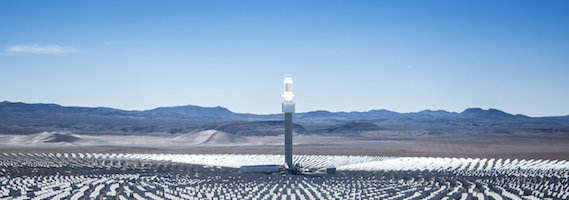
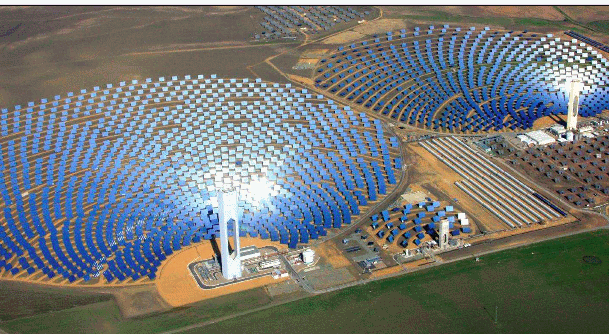
Noor 1, the first phase of the Moroccan plant, has already surpassed expectations in terms of the amount of energy it has produced. ... Noor 2 will be similar to the first phase, but Noor 3 will experiment with a different design. Instead of ranks of mirrors it will capture and store the Sun’s energy with a single large tower, which is thought to be more efficient. Seven thousand flat mirrors surrounding the tower will all track and reflect the sun’s rays towards a receiver at the top, requiring much less space than existing arrangement of mirrors. Molten salts filling the interior of the tower will capture and store heat directly, doing away with the need for hot oil.
Similar systems are already used in South Africa, Spain and a few sites in the US, such as California’s Mojave desert and Nevada. But at 86ft (26m) tall, Ouarzazate’s recently erected structure is the highest of its kind in the world. Other plants in Morocco are already underway. Next year construction will begin at two sites in the south-west, near Laayoune and Boujdour, with plants near Tata and Midelt to follow.
The success of these plants in Morocco – and those in South Africa - may encourage other African countries to turn to solar power. South Africa is already one of the world’s top 10 producers of solar power and Rwanda is home to east Africa’s first solar plant, which opened in 2014. Large plants are being planned for Ghana and Uganda.
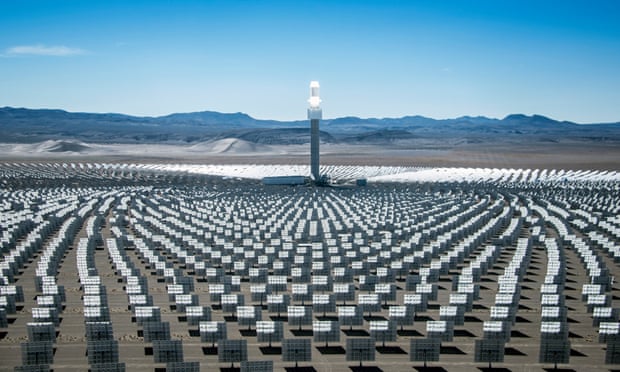
The company recently announced it’s hoping to build a 2,000 megawatt facility in Nevada called Sandstone. With a planned 10 towers and more than 100,000 concentrating mirrors, the plant would be the largest of its type anywhere in the world. It would overshadow SolarReserve’s Crescent Dunes plant, currently the largest in the US with 110 megawatts of capacity.
The latest mid-term renewable energy outlook document from the International Energy Agency says China, Chile, Morocco and South Africa are likely to take a lead in solar thermal developments in the next five years. There is no mention of Australia.
The IEA says there are currently about 4.6GW of large-scale solar thermal projects in the world, around half of them in Spain, which led early development. Over the next five years, it sees an additional 6.4GW of solar thermal – nearly all of it with storage – although this figure could nearly double in its “accelerated” deployment scenario.
The ANU team, whose CST technology harnesses the power of the sun using a 500 square meter solar concentrator dish, made the breakthrough by redesigning the system’s receiver in a way that halved its convection losses and boosted its conversion of sunlight into steam from 93 per cent to 97 per cent.
According to the ANU’s Dr John Pye, the new design could result in a 10 per cent reduction in the cost of solar thermal electricity. “Ultimately the work in this project is all about reducing the cost of concentrating solar thermal energy,” he said. “Our aim is to get costs down to 12 cents per kilowatt-hour of electricity, so that this technology will be competitive.
One time Liberal party leader John Hewson (now chairman of a company called SolarStor) made a splash in the media today with an announcement of solar thermal power plant in Port Augusta in South Australia.
Renew Economy has the details - Hewson’s Solastor promises world’s cheapest 24/7 solar power.
The 170MW, $1.2 billion project was officially launched in Adelaide on Tuesday by Hewson, who said he was confident the technology could produce the lowest-price 24/7 solar power in the world.
According to Solastor, this is “the ideal technology” to replace the almost 20,000 megawatts of coal-fired power plants “that will inevitably be phased out over the next 10 to 20 years,” as well as diesel generation systems such as those used in remote communities, islands and mine sites. In Australia alone, the company says, there could be a market for 400 Solastor plants.
The costs being quoted are so low that even RE's Giles Parkinson is being a little wary, sounding some notes of caution - Hewson’s enthusiasm for solar towers is welcome, but wild claims are not.
The proposed plant will use graphite rather than molten salt for heat storage - apparently they licenced the Lloyd Energy Systems / Larkden technology for this (according to a SolarStor web page now only available through Google cache).
Australia isn't the only country with new CSP plants being planned - RE also has an article about project announcement in Dubai - Dubai plans world’s biggest, and cheapest, solar tower + storage project.
Solar thermal power is struggling to compete with solar PV at this stage of its development cycle but projects still seem to be getting over the line regardless.
While Port Augusta waits to see if any solar thermal power plants will be constructed in the town, one project which has gone ahead is a smaller solar tower providing electricity, heat and desalinated water to a tomato farm.
The company behind the project is Aalborg CSP. The project consists of a tower with a 234-tonne central boiler and 23,000 mirrors.
The "Integrated Energy System" will be the first large-scale CSP-based technology in the world to provide multiple energy streams – heating, fresh water and electricity – for horticultural activities.
Port Augusta's ageing coal mines and coal fired power plants have been destined for closure for some time, with the clock finally winding down on them and the remaining Northern Power plant scheduled to close down in May.
There have been various proposals to build alternative solar power based generation facilities in the region as a replacement, leveraging some of the existing infrastructure, however most of these have been abandoned.
Now that new Prime Minister Malcolm Turnbull has decided to keep the Clean Energy Finance Corporation alive (dumping plans by his incompetent predecessor to shut it down), a new push has begun to build a solar thermal power plant in the Port Augusta area.
The latest plan is for US company SolarReserve to build a 110MW solar tower plant, similar to the Crescent Dunes facility in Nevada.
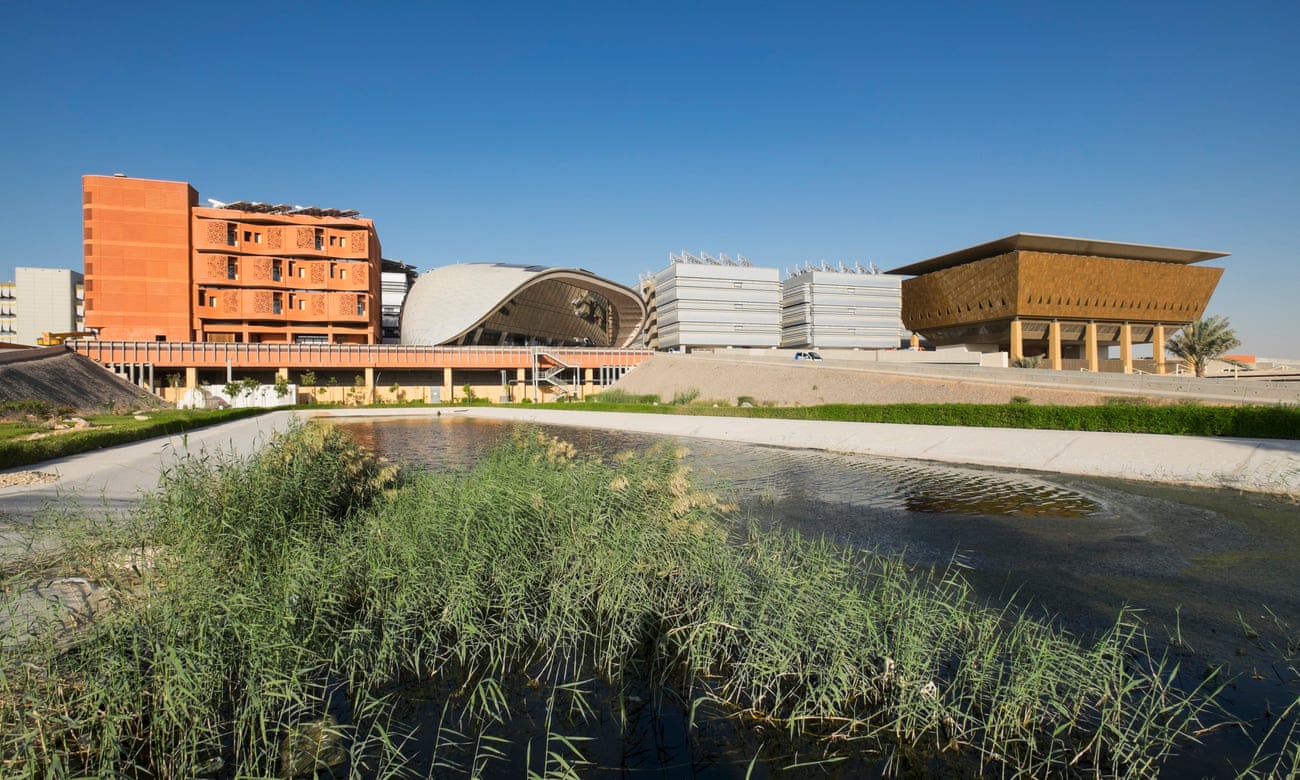
the rationale for Masdar City – demonstrating a model of green living – has been abandoned. “The original aim was to be net zero, yes, but that was when we were looking at the city in isolation,” Wan said. He maintained it was important to look at Masdar City within the context of the other renewable energy holdings of the parent company. Among Mubadala’s other holdings, Masdar Clean Energy is developing the Shams solar farm. “Masdar as a family company is supply[ing] much, much more clean energy than what is being consumed in the city, for sure,” Wan said. ...
With the downward pressure from oil prices, the UAE has stepped up its efforts to wean itself off oil, lifting fossil fuel subsidies and billing Emiratis – not just expatriates – for water and electricity.
But delivering on the original dream of Masdar has been elusive. Crews broke ground in 2008, but plans withered in the global economic recession which soon followed when investors put their green dreams on hold. “A lot of the people who were considering investing in Masdar City decided to take a breather,” Wan said.
Meanwhile, the jet-set transport system was overtaken by technological developments in the auto sector. The expensive purpose-built system no longer made sense in an era when zero-emission electric cars were widely available. “Five years ago it’s true that we did not perceive the speed with which the electric vehicle would be developed,” Wan said.
CSP was anticipated to take the region by storm when Shams 1 was being developed, with projects also cropping up in Morocco. As a result, Shams was expected to have two additional projects added. Mr Al Obaidli said the land was originally reserved for three CSP plants, but times have changed and more cost-competitive options are now availab .
Although he declined to give exact figures, Mr Al Obaidli said that the Shams 1 costs more than the average price of CSP. According to Abu Dhabi-based International Renewable Energy Agency (Irena), production costs for the technology range between 20 and 25 US cents per kilowatt-hour.
But Mr Al Obaidli pointed to the fact that Shams was one of the first CSP projects in the region. “It’s not at today’s electricity prices because when we built Shams, there was only one supplier in the world for mirrors. Now there are at least seven bankable mirror suppliers in the market." In comparison, Dubai’s Mohammed bin Rashid Al Maktoum Solar Park, which uses PV technology, was awarded at a tender of 5.84 cents per kilowatt-hour.
Shams 1 is a 100 megawatt facility with 258,048 mirrors arranged in parabolic troughs covering 2.5 square kilometers. It’s the only plant of its kind in the world completely surrounded by a solid wall - and that’s a critical difference between Shams 1 and other concentrating solar power (CSP) plants. As explained by Al Obaidli, the wall provides a significant measure of protection from desert wind and sandstorms. Storm-grade winds can take out large sections of equipment in a conventional CSP plant, but according to Al Obaidli, one of the strongest storms in recent memory passed through last year and it only damaged 20 out of the 258,048 mirrors.
The parabolic troughs themselves also include design features that prevent wind damage. On just a few minutes’ notice they can be rotated into a “safety” position, and then locked in place.
The Australian company has developed what it hopes will be a low-cost, high-efficiency Concentrated Solar Power (CSP) generation technology. The Jemalong pilot plant will be ready for commissioning in mid-January and is designed to prove the technology works.
Australian solar technology developer RayGen Resources says it will accelerate the time line for its first major commercial-scale project for its concentrated solar PV technology (CSPV), and intends to have a 10MW system built in China within two years.
The Melbourne-based RayGen, which has a small pilot facility in Victoria, says the deal with China Intense Solar will see a 200kW pilot plant completed by March, 2015, followed by a 1 MW demonstration soon after.
The plant will be a 110 MW tower type with molten salts as working fluid and energy storage medium, this will be the first commercial project for Abengoa with the molten salt technology for tower plants. With the design provided by the Spanish company, the plant will be able to generate electricity for up to 17.5 hours without solar radiation, only with the heat stored in the molten salt tanks.
The project will be located in the Atacama Desert, the region with the highest solar radiation concentrations in the world. It will be the first solar-thermal plant for direct electricity production in South America.
Solar-thermal tower technology uses a series of mirrors (heliostats) that track the sun on two axes, concentrating the solar radiation on a receiver on the upper part of the tower where the heat is transferred to the molten salts. The salts then transfer their heat in a heat exchanger to a water current to generate superheated and reheated steam, which feeds a turbine capable of generating around 110 MW of power.
The EIA projects that the solar thermal generating stations expected to come online this year, each funded by U.S. Department of Energy loans, will generate about 641 megawatts of electricity, which will add to the current 476 megawatts of solar-thermal capacity in the U.S. prior to the new plants starting operations. Later this year and in 2014, a total of six new solar thermal projects are expected to begin operating, generating a total of 1,257 megawatts of new power generating capacity. Those projects will represent 4 percent of all new additions to U.S. electric generating capacity for 2013 and 2014, according to EIA data.
The two largest solar thermal power plants beginning operation this year are Abengoa Solar’s 250-megawatt Solana power plant in Gila Bend, Ariz., and BrightSource Energy’s 392-megawatt Ivanpah Solar Electric Generating System in California’s Mojave Desert. Both plants are larger than any other solar thermal generating station ever built in the U.S. “They’re a new breed,” said EIA solar power analyst Gwen Bredehoeft. “There’s going to be a lot of interest in watching how they perform.”
Until the technology and economics of solar thermal are proven, little growth in capacity is exp
The ground-breaking Gemasolar Concentrated Solar Power (CSP) plant with storage near Seville, Spain, has marked its second anniversary with another breakthrough – producing round the clock power for a record breaking 36 consecutive days.
The power plant, owned by Torresol Energy, has been producing energy for two years since its official opening on October 4, 2011. It was the first large scale solar tower power plant to use molten salt, which captures heat during the day so that the plant can still produce energy at night.
Torresol said in a statement marking the anniversary that the plant has exceeded the expected results and has demonstrated the sturdiness of the design. Producing energy 24/7 for 36 consecutive days from solar energy “is something that no other plant has performed so far.”
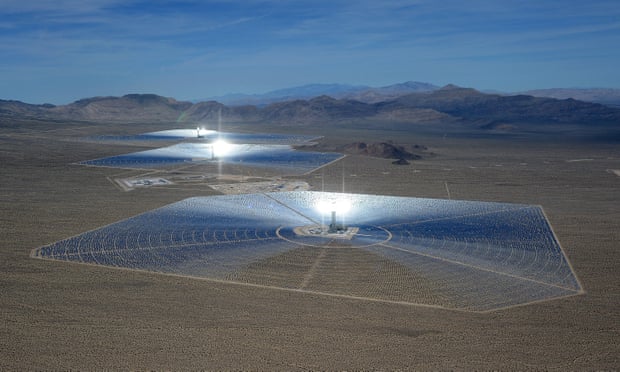
When I visited the Ivanpah Solar Electric Generating System, which sits in the Mojave Desert on the border between California and Nevada, I had to be careful where I looked. The engineers warned me not to look directly at the receivers arrayed on top of the centralized solar towers, which collected the desert sunlight concentrated by thousands of mirrors on the desert floor. The solar receiver was as bright as the heart of the sun, glowing with a retina-melting white. I had to force myself to look away.
Jamey Stillings, though, has far better eyes than I do. A photographer known for his work capturing mega-scale projects like the new bridge at the Hoover Dam, Stillings has been tracking the construction of Ivanpah since 2010, when he began an aerial survey of the site. His epic black-and-white images of Ivanpah reveal how different this solar plant is from other major infrastructure projects. Unlike solar photovoltaic plants, which generate electricity directly from sunlight, Ivanpah uses hundreds of thousands of curved mirrors to reflect and concentrate the desert sunshine. Three tall solar towers, each ringed by the mirrors, collect the heat and generate steam, which drives electric turbines. When it finally opens later this year, it will be the biggest solar thermal plant in the world.











.png)


 Posts
Posts