Showing posts with label australia. Show all posts

World's largest floating LNG factory remains in shutdown  

Posted by Big Gav in , , , ,

The ABC has an update on the Prelude floating LNG facility, the largest floating object ever built - World's largest floating LNG factory remains in shutdown — at just three years old.

Shell's massive floating LNG factory off the Kimberley coast has been in shutdown since February and industry analysts are divided on whether the $12-17 billion facility has a future. With five times the steel of the Sydney Harbour Bridge and half a kilometre long, it certainly is big. But as it sits idle 400 kilometres north of Broome, it risks becoming the world's biggest white elephant.

SolarReserve to build 150MW solar thermal project in South Australia  

Posted by Big Gav in , , , , ,

The SMH reports that SolarReserve will be building a 150MW solar thermal power plant in South Australia, following on the commissioning of the world's largest battery storage facility by Tesla in the state and in parallel with Zen Energy’s 1GW solar / storage project - South Australia planning to build the world’s largest thermal solar plant.

Following the success of the world’s largest battery, South Australia is aiming to build the world’s largest thermal solar plant. SolarReserve’s $650 million, 150 megawatt Aurora solar thermal plant has received state development approval. Construction of the facility will begin this year.
n

Tesla to supply world's biggest battery for South Australia  

Posted by Big Gav in , , , , ,

The South Australian government continues to lead Australian states on the way towards 100% renewable energy, announcing they will build the world's largest lithium ion battery storage facility using Tesla batteries (with Elon Musk promising the storage will be free if not delivered within 100 days) - Tesla to supply world's biggest battery for SA, but what is it and how will it work?.

An array of lithium ion batteries will be connected to the Hornsdale wind farm, which is currently under construction in SA. It will look like a field of boxes, each housing Tesla commercial-scale Powerpack batteries. The array will be capable of an output of 100 megawatts (MW) of power at a time and the huge battery will be able to store 129 megawatt hours (MWh) of energy so, if used at full capacity, it would be able to provide its maximum output for more than an hour.

Businesses abandoning gas in Australia  

Posted by Big Gav in , , , ,

RNE has the latest in a string of articles about Australian businesses adopting to build their own renewable energy and energy storage systems rather than pay extortionate gas prices - Victoria agribusiness turns to 196MW wind farm with 20MW storage.

Agri-business company Nectar Farms has announced a $565 million expansion of its new hydroponics business near Stawell in the Victoria’s western districts, that will include a 196MW wind farm and 20MW of battery storage and make it 100 per cent renewable-powered. ... It is possibly the first time that a major project has relied on the ability to source renewable energy, because without it the cost of fossil fuels would have been too prohibitive.

Nectar Farms had planned to use gas – as the hydroponic farms needs heat and Co2 – but the cost was overwhelming and the gas supply was not guaranteed – so instead of abandoning the project altogether, or moving it elsewhere, it has turned to renewables and decided to completely electrify the process.

Carnegie eyes 100MW wave farm in Western Australia  

Posted by Big Gav in , , , ,

Australian wave power company Carnegie Clean Energy is expressing interest in building the country's first commercial scale wave power plant on the south coast of Western Australia - Carnegie eyes 100MW wave farm in Albany if Labor wins W.A. poll.

Perth-based Carnegie Clean Energy says it will consider a 20MW wave farm off the cost of Albany in West Australia if Labor wins the state poll and delivers on a commitment to provide $19.5 million of funding. Carnegie, which is currently preparing its first full-size wave farm off the coast of Fremantle, helping to supply Garden Island naval base with a mixture of wave and solar energy and battery storage, says the Albany plant could be upgraded to 100MW. ...

Carnegie CEO Michael Ottaviano said the Albany wave farm would be an opportunity to tap into a highly consistent renewable resource; delivering “24/7 clean power” into the electrical grid at a time where recognition of the importance of reliable, clean energy in Australia has never been higher. “Albany has one the most consistent wave energy resources in the world, experiencing greater than 1m swell 99.7 per cent of the time,” he said in a statement.

Australia positioned to be a renewable energy superpower  

Posted by Big Gav in ,

Ross Gittins at the SMH is having a prolific week of high quality energy and global warming articles. His latest - Australia positioned to be renewable energy superpower.

It had been assumed that gas-fired power would bridge the gap because it was cheap, far less emissions-intensive than coal, and able to be turned on and off quickly and easily to counter the intermittency of renewables. Now, however, without successive federal governments quite realising what they'd done, gas has been largely priced out of the electricity market, with various not-very-old gas-fired power stations close to being stranded assets.

What now? We thank our lucky stars the cost of energy storage is coming down and we get serious about storage - both local and at grid level - using batteries and such things as "pumped hydro storage" (when electricity production exceeds immediate needs, you use it to pump water up to a dam then, when production is inadequate, you let the water flow down through a hydro turbine to a lower dam). In other words, the solution is to get innovative and agile. Who was it who said that?

Turnbull's party seem to be pro coal and anti renewables partly because they know we have a comparative advantage in coal. We can produce it cheaply and we've still got loads in the ground. The rest of the world is turning away from coal and the environmental damage it does, but let's keep opening big new mines and pumping it out, even though this pushes the prices our existing producers get even lower. If the banks are reluctant to finance new coal mines at this late stage, prop them up with government subsidies. Join the international moratorium on new mines? That would be unAustralian.

But get this: Garnaut says we also have a comparative advantage in the new world of renewables. "Nowhere in the developed world are solar and wind resources together so abundant as in the west-facing coasts and peninsulas of southern Australia. South Australian resources are particularly rich... Play our cards right, and Australia's exceptionally rich endowment per person in renewable energy resources makes us a low-cost location for energy supply in a low-carbon world economy. That would make us the economically rational location within the developed world of a high proportion of energy-intensive processing and manufacturing activity. Play our cards right, and Australia is a superpower of the low-carbon world economy."

The simple truth: Coal-fired generators have no future in Australia  

Posted by Big Gav in , , , ,

After last week's blackouts, record heat and bizarre coal worshipping rituals in parliament, Ross Gittins has sarcastically concluded it as just as well we don't need to worry about global warming - Don't worry, climate change is just imaginary.

Malcolm Turnbull, the man who lost his job as party leader because was so keen to see action he supported the Labor government's emissions trading scheme, is now keen to ensure it never happens again. The squeakiest wheels in the party want him to demonise renewable energy, blaming it for all the blackouts and price rises? Introduce new government subsidies for coal while making the future for power generation so uncertain no one's game to invest in anything?

Sure. Whatever it takes. (Don't worry, Malcolm, I'm sure all the people inside and outside the Liberal fold who were so pleased when you became Prime Minister – me included – will learn to accept your need to abandon everything we know you believe and start doing Tony Abbott impressions.)

It's the easiest thing in the world for people to imagine that whatever's been happening lately is much bigger and more terrible than ever before.

Trouble is, the scientists keep confirming our casual impressions. A report this month prepared by top climate scientists for the independent Climate Council, is all bad news. They say all extreme weather events in Australia are now occurring in an atmosphere that's warmer and wetter than it was in the 1950s. "Heatwaves are becoming hotter, lasting longer and occurring more often," they say. "Extreme fire weather and the length of the fire season is increasing, leading to an increase in bushfire risk." ...

Of course, none of this is having any effect on agriculture. It must be a great comfort to our farmers to know that, by order of Barnaby Joyce and the National Party, climate change is a figment of the climate scientists' imagination. This is good news, since I read that reliable rainfall and predictable temperature ranges are critical to agricultural production, and these are the very factors affected by a changing climate – if it was changing, which it isn't.

A new CSIRO study, led by Dr Zvi Hochman, has found that Australia's average yields from wheat-growing more than tripled between 1900 and 1990 thanks to advances in technology, but have stalled in the years since then. The study found that, since 1990, our wheat-growing zone had experienced an average rainfall decline of 2.8 millimetres, or 28 per cent per cropping season, and a maximum daily temperature increase of about 1 degree.

Australia's "yield potential" – determined by climate and soil type – which is always much higher than farmers' actual yields, has fallen by 27 per cent since 1990. So all the efforts farmers have made to improve their yields with better technology and methods have served only to offset the effects of climate change, leaving them no better off. "Assuming the climate trends we have observed over the past 26 years continue at the same rate, even if farmers continue to improve their practices, it is likely that the national wheat yield will fall," Hochman says.

It also emerged that Prime Minister Turnbull has his own solar power and energy storage setup at home, which might explain his lack of concern at our ageing energy infrastructure.

Meanwhile the local press is full of stories like "Prime Minister Malcolm Turnbull and ministers were told wind not to blame for South Australia blackout" (explaining the government deliberately lied when they tried to blame wind power for SA grid outages), EnergyAustralia boss says shift to renewables “a reality”, need for plan “urgent” and this excellent article from Ian Verrender, concluding "carbon pricing is inevitable" - The simple truth: Coal-fired generators have no future in Australia.

As the finger-pointing over higher prices nationally, blackouts in South Australia and threatened disruptions across the eastern states escalates, any notion over rational debate on how best to address the nation's long-term energy challenges has evaporated.

Put aside the irony that the recent run of misfortune on the national electricity grid is the direct result of a savage uptick in extreme weather conditions, a trend the vast bulk of climate scientists have been warning of for decades.

The simple truth is that, despite the entertaining theatre of insults in the national capital, Australia's future power needs overwhelmingly will be provided by renewables and gas. Coal-fired generators have no future in Australia. That is a trend driven by energy generators and consumers, both of which have abandoned hope of policy leadership from Parliament.

Generators jettisoned the idea of coal years ago, at least when it comes to building new power stations, because they carry too much risk. You're looking at upwards of $1 billion for a large-scale coal-fired generator that would be expected to last around 50 years.

No rational businessperson is willing to commit that kind of funding over that period, in an electoral cycle that lasts just three years. And that's just the equity side. An investment of that magnitude also requires huge amounts of project debt and, faced with the prospect of stranded assets and non-performing loans, financiers have wiped their hands of the idea of coal-fired electricity.

Consumers, meanwhile, have plunged into renewables, with Australians among the world's fastest adopters of rooftop solar.

Big business now seems to be abandoning the conservatives to their collective delusion, with the country's largest utility, Energy Australia, declaring we need a national plan for shifting to renewable energy - EnergyAustralia boss says shift to renewables “a reality”, need for plan “urgent”.

One of Australia’s largest operators of coal-fired power plants has weighed into the national energy debate, calling for a non-partisan push to clean energy and reminding policy makers that the shift to renewables is “a reality” that must be addressed.

In a full page advertisement published in major national newspapers on Tuesday, Energy Australia managing director Catherine Tanna (pictured below) said the way the country generated energy “had to change”, and that her company – owner of the Yallourn coal power plant, among others – was prepared to do its bit to make this happen.

“We believe all Australians should have reliable, affordable energy,” Tanna said in the letter, mirroring one of Malcolm Turnbull’s favourite energy sound-bites. “However, the way we generate, deliver and use energy has to change and I’m determined EnergyAustralia will live up to its responsibility.”

Send In The Coal Clowns  

Posted by Big Gav in , , ,

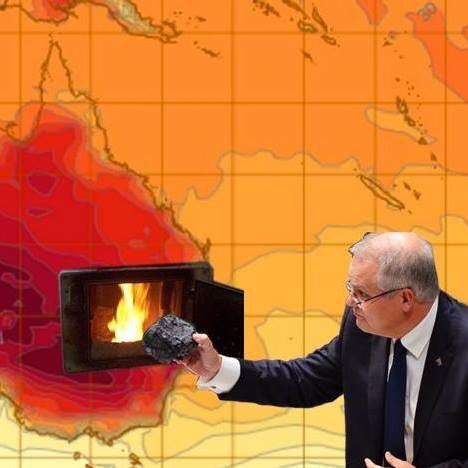
It's taken a long time but Australian climate politics are now as bizarre as the sad state of affairs in Washington, with the government's new infatuation with coal turning into some sort of pantomime for morons with Treasurer Scott Morrison waving a lump of coal around in parliament last week.

I'm staggered these fools could embark on this black comedy during Australia's hottest summer ever, in the midst of a huge heatwave and with fires burning across the most populous state and with blackouts happening or being threatened across half of the states in the country.

The Guardian has a good roundup of the latest state of play in Australian energy politics, noting renewables have now been clearly proven to be cheaper and no more prone to grid problems than coal - and have the added benefit that companies are actually willing to invest in them to provide new generation capacity - Hard facts unmask the fiction behind Coalition's 'coal comeback'.

Before we untether from reality entirely and drift off into a Trump-like universe where truth belongs to whoever delivers the best poll-driven lines or brings the dumbest prop to question time, let’s hammer down a few facts. Because we aren’t reviewing bad theatre here and when some commentators opine about whether Turnbull’s lines will “work”, or how funny the whole thing was, what they are really assessing is whether the prime minister can successfully, and in broad daylight, shift the blame for a monumental stuff-up, while apparently proposing solutions that will make it substantially worse in every regard.

Since it’s our job to point out things like that, here are a few facts that undermine the “coal comeback” PR strategy that started rolling out sometime last year:

* Renewable energy is not “causing” blackouts. They’re primarily due to the (incredibly complicated) energy market that wasn’t designed or isn’t being run to cope with a higher proportion of renewables, and is throwing up perverse incentives that mean South Australia can have a blackout while generators are sitting idle. It would seem obvious that the answer to this problem is not to abandon all incentives for renewable energy but rather to fix the market and the rules. Cars probably got bogged when they started driving on roads designed for horses and buggies too, but it wouldn’t have been wise to respond by trying to stop the roll-out of automobiles. And New South Wales – a state that gets a very small proportion of its energy from renewables, was also facing the prospect of blackouts on Friday, which sometimes happen during peak demand but also undermine the Coalition’s simplistic arguments.

* Renewables cannot take the blame for the recent rise in prices. Queensland, which also has a tiny proportion of renewable energy, has had price spikes that added an astounding $1bn to wholesale power prices just since the beginning of this year. South Australia, cited by the federal Coalition as the terrible case study of what Labor’s renewable energy policies might do, has had just a few. The

Queensland price spikes are also vastly higher than those felt in South Australia last July, which were described as an emergency, according to an analysis by Dylan McConnell from Melbourne University. Weirdly, no federal ministers have been berating the Queensland government over its (fossil fuel) choice of energy source.

* New coal-fired power stations are not going to be built. You don’t have to go to greenies for that assessment – it is also coming from the AI Group, which represents Australia’s manufacturers, and from the Australian Energy Council, which represents the big electricity and gas businesses that generate and supply most of our energy, as well as from the head of the Clean Energy Finance Corporation – who has expert knowledge of lending to the energy sector. Business knows climate change is a thing, and that locking in emissions from a new coal-fired power station for 50 years, no matter how efficient it is and how lovingly the current ministry can carry around lumps of coal, is incompatible with our long-term climate commitment and therefore an unacceptable investment risk. When really pressed, the only way experts can imagine the construction of a new coal-fired power station is if the government pays for it, or signs a contract indemnifying the company paying for it from the impact of future climate policy. And no sane government would do that. You’d only do that if you suspected the world was about to decide climate change was a hoax or at least not so much a problem, which might explain where some of the Coalition’s coal boosters are coming from.

* Even if they were built, power from new highly-efficient coal-fired power stations would not be cheaper. In fact, Bloomberg New Energy Finance has calculated that they would be the most expensive, and dirtiest, form of power available, costing more than solar, wind and gas-fired power.

* Governments could always reduce the strain on the system and help avoid blackouts by reducing energy demand but schemes to reduce demand at times of peak power usage (such as, say, heatwaves) were shelved after the Abbott government was elected, while programs for minimum energy performance standards seem to have been burned in Tony Abbott’s bonfire of red tape.

* And finally, as business and industry and environmentalists and pretty much everyone who looks at the evidence (including, a while back, Turnbull) have been saying for years, the very best thing governments could do to encourage investment and a sensible low-cost transition to cleaner generation is come up with a bipartisan policy, such as the energy-intensity carbon scheme that had bipartisan political support, the backing of industry and could have reduced power prices while also bringing emissions down. But the Turnbull government jettisoned any consideration of that in less than 24 hours, apparently fearing the response of right wingers such as Cory Bernardi. He’s now left the Coalition anyway, and it still has no climate policy.

We’ve been enduring this climate war nonsense for more than a decade and now we’re wearing the consequences – rising prices, unreliable power supply and increasing emissions. Responding with a parliamentary pantomime to try to shift the blame to a fictitious renewable industry bad guy is true ideological idiocy and also negligent, because it puts the shallowest, shortest-term and most opportunistic strategy for political survival ahead of households, investors and future generations.

Malcolm Turnbull - Energy Magician  

Posted by Big Gav in , , ,

Ross Gittins at the SMH has a look at the natural gas market and the bizarre spectacle of Prime Minister Malcolm Turnbull trying to promote coal fired power, backflipping from his earlier enthusiasm for 100% renewable energy - Malcolm Turnbull wants us to think he's an energy magician.

As the feds understood full well, once you can liquefy natural gas you can ship it overseas. And once you do that you've taken the relatively tiny, closed eastern Australian gas market and opened it up to the huge East Asian gas market, where prices are much higher. The inevitable consequence was a leap in the price of gas on the eastern seaboard – plus a huge windfall gain to our eastern gas producers.

Now do you see why the gas industry and federal politicians of both stripes keep repeating the economic lie that the problem has been caused by the states' bans on fracking, and could be solved by lifting them? No amount of increased gas supply on our part would be sufficient to lower the East Asian price of gas, which means no new producer of coal seam gas would be prepared to sell it to local consumers and manufacturers for anything less than they could get by selling it to Japan or China. Unless, of course, the federal government obliged them to.

I don't object to the policy of export-parity pricing but, like its predecessors, the Turnbull government wants to keep the policy a deep, dark secret because it's so much harder to defend a super-rational policy in these days of populist indulgence than it was when Malcolm Fraser did something similar to petrol prices. Turnbull wants to keep the super-rational policy, but shift the blame for its economic and political consequences to others. Had he the courage, he could oblige the gas industry to use its windfall profits to compensate the household and business losers for losses arising from an implicit government policy change.

Turnbull blames South Australia's blackouts on its excessive enthusiasm for renewable energy which, pending the development of storage arrangements, has a problem with intermittent production. He doesn't admit his parity-pricing policy is contributing. It was expected that gas-fired power generation would ease the transition from coal-fired to renewable generation. That's because gas-fired power stations emit far less carbon dioxide and can be turned on and off as required to counter renewable energy's intermittency.

Guess what? South Australia has a new and big gas-fired generator at Pelican Point, near Adelaide, but it's been mothballed. Why? Because the operator had a long-term contract for the supply of gas at a price set at the pre-export-parity level, and decided it was more lucrative to sell the gas into the East Asian market.

Last week Turnbull had the effrontery to argue that now gas-fired power had become uneconomic, we needed to fill the gap by subsidising new-generation "clean" coal-fired power stations. Small problem. They're hugely expensive, only a bit less emissions-intensive than existing coal-fired stations, can't easily be turned on and off, and would supposedly still be operating 60 years later.

If there's a case for subsidising any fossil fuel-powered generators the obvious candidate is the gas-fired plants the feds' export-parity pricing policy has rendered uneconomic. So great is the coal industry's hold over the Coalition that, not content with subsidising increased supply of coal from Adani and others at a time when coal is a sunset industry, Turnbull is now making up excuses to subsidise increased demand for coal by local electricity producers.

Economists are always telling politicians not to try picking industry winners. In reality, the politicians are far more inclined to back known losers.

Standing Up To The Bully  

Posted by Big Gav in , ,

Malcolm Turnbull really isn't having a good year. While he's been a great disappointment as PM (backsliding from promoting 100% renewable energy in his pre-Prime Minster days to now bowing down to the coal industry and promoting expensive and unscalable clean coal) I did feel some sympathy for him yesterday as he had to put Trump on the spot to honour an earlier deal for the US to take some refugees that had fallen afoul of Australia's harsh seaborne refugee blocking regime and ended up stranded in South Pacific holding camps.

The resulting Trump tantrum seemed to be the talk of the media yesterday (no doubt distracting everyone from the many other outrages being committed by the Trump team) with the local press quickly dubbing Trump a bully who doesn't like people standing up to him.

Trump already looks to be trying to back down and blame everything on Obama for making the original deal, so no doubt this will all have blown over tomorrow and everyone will be wailing about the latest offences Trump has committed (while still ignoring the endless stream of corrupt acts being performed as the Trump inner circle scoops up bribes and other favours - follow this guy on Twitter for a rolling list).

(Energy) Lab Accelerator Program  

Posted by Big Gav in , ,

Australian readers interested in starting up a clean tech business may be interested in this acceleration program from (Energy) Lab.

Are you setting up a business related to clean energy technologies such as renewable energy, batteries, electric vehicles and connected appliances? Then come along to the EnergyLab Acceleration Program Info Night and learn how we can help your business take off.

About EnergyLab

EnergyLab is Australia’s leading hub, connector and accelerator of new clean energy business and technological initiatives. Our integrated approach draws on the community of cleantech entrepreneurs and offers arrange of ways to engage and leverage their ideas, technologies and resources.

East Timor tears up oil and gas treaty with Australia after Hague dispute  

Posted by Big Gav in , , ,

Rather surprisingly, the most read post from this blog this week is an old one from 2013 - East Timor Complains About Australian Spying On Oil And Gas Negotiations / Australia Detains Whistleblower.

Presumably interest has been piqued by East Timor's recent decision to abandon an earlier agreement on oil and gas revenue sharing from Timor Sea fields - East Timor tears up oil and gas treaty with Australia after Hague dispute. The SMH has an article outlining the case for a better deal for the Timorese - Australia's unscrupulous pursuit of East Timor's oil needs to stop.

East Timor will tear up an oil and gas treaty with Australia that has been at the centre of espionage allegations, international arbitration and a bitter diplomatic dispute. The 2006 treaty relates to a temporary maritime border in the Timor Sea, and access to oil and gas deposits worth an estimated $40 billion. The agreement had outlined a 50-year freeze on negotiations for a permanent border.

But East Timor, also known as Timor-Leste, had claimed the treaty was invalid given Australian intelligence operations in 2004. Diplomatic relations have been tense since East Timorese officials accused Australia of spying on cabinet ministers amid negotiations on the treaty to divide the oil and gas fields.

LNG: Having spent $200bn to export gas, is Australia about to import it?  

Posted by Big Gav in , , ,

Now the Australian building boom for LNG plants (exporting natural gas from the north west and coal seam gas from the north east) is over, local utility AGL is wondering if the easiest source of gas in future may be LNG imports from elsewhere - LNG: Having spent $200bn to export gas, is Australia about to import it?.

In a 21st century variant of "selling coals to Newcastle", energy supplier AGL has flagged it may need to spend up to $300 million to build an LNG import depot to shield itself from soaring gas prices and increasing difficulty in finding reliable local supplies.

Tesla extends Australian supercharger network  

Posted by Big Gav in , ,

RNE has an article on Tesl'a upgrade to their Australian supercharger network - Tesla extends supercharger network to Brisbane, starts on Adelaide link.

Last week, Tesla Motors revealed it would begin charging new Tesla EV drivers a “small fee” to use its network of Superchargers, a change it said would be used to fund an expansion of that network. This week, the Californian EV maker is already making good on that promise in Australia, with the announcement of three new Supercharging stations along Australia’s south and east coasts; two between Sydney and Brisbane and one between Melbourne and Adelaide.

Australian Oil and gas tax may raise no extra revenue for decades  

Posted by Big Gav in , ,

The Age has an article comparing the income generated from natural gas exports by new global production leader Australia over the previous incumbent, Qatar - Turnbull government called on to explain where Australia's offshore gas wealth is going.

By 2021 Australia will eclipse the Persian Gulf state of Qatar to become the world's biggest exporter of liquefied natural gas. In that year, when both countries are forecast to pump and ship roughly 100 billion cubic metres of LNG each, Qatar's government will receive $26.6 billion in royalties from the multinational companies exploiting its offshore gasfields. According to Treasury estimates, Australia will receive just $800 million for the same volume of gas leaving its shores.

ANU team cracks solar thermal efficiency of 97% – a world record  

Posted by Big Gav in , , , , ,

ReNew Economy has an article on a new efficiency record for solar thermal power - ANU team cracks solar thermal efficiency of 97% – a world record

The ANU team, whose CST technology harnesses the power of the sun using a 500 square meter solar concentrator dish, made the breakthrough by redesigning the system’s receiver in a way that halved its convection losses and boosted its conversion of sunlight into steam from 93 per cent to 97 per cent.

According to the ANU’s Dr John Pye, the new design could result in a 10 per cent reduction in the cost of solar thermal electricity. “Ultimately the work in this project is all about reducing the cost of concentrating solar thermal energy,” he said. “Our aim is to get costs down to 12 cents per kilowatt-hour of electricity, so that this technology will be competitive.

Solastor promises world’s cheapest 24/7 solar power  

Posted by Big Gav in , , , , ,

One time Liberal party leader John Hewson (now chairman of a company called SolarStor) made a splash in the media today with an announcement of solar thermal power plant in Port Augusta in South Australia.

Renew Economy has the details - Hewson’s Solastor promises world’s cheapest 24/7 solar power.

The 170MW, $1.2 billion project was officially launched in Adelaide on Tuesday by Hewson, who said he was confident the technology could produce the lowest-price 24/7 solar power in the world.

According to Solastor, this is “the ideal technology” to replace the almost 20,000 megawatts of coal-fired power plants “that will inevitably be phased out over the next 10 to 20 years,” as well as diesel generation systems such as those used in remote communities, islands and mine sites. In Australia alone, the company says, there could be a market for 400 Solastor plants.

The costs being quoted are so low that even RE's Giles Parkinson is being a little wary, sounding some notes of caution - Hewson’s enthusiasm for solar towers is welcome, but wild claims are not.

The proposed plant will use graphite rather than molten salt for heat storage - apparently they licenced the Lloyd Energy Systems / Larkden technology for this (according to a SolarStor web page now only available through Google cache).

Australia isn't the only country with new CSP plants being planned - RE also has an article about project announcement in Dubai - Dubai plans world’s biggest, and cheapest, solar tower + storage project.

Cape Grim  

Posted by Big Gav in ,

The SMH has a report on the looming 400 ppm "milestone" for atmospheric CO2 levels. Levels are measured at Tasmania's "Cape Grim" - Global warming milestone about to be passed and there's no going back.

Australia to double ethanol production ?  

Posted by Big Gav in , , , ,

ReNew Economy reports that a ethanol and cogeneration plant is to be built in Queensland that will almost double biofuel production in Australia - Huge, $800m bio-energy project in Queensland gets boost from ARENA grant.

Global biofuel production is still increasing at a reasonable clip (in the the 5% to 10% per annum range - well under the growth rate for solar and wind power but respectable nevertheless).

Setting the Condamine River on fire  

Posted by Big Gav in , , , ,

One of the more striking videos I've seen on Facebook in recent weeks is this video of Greens MP Jeremy Buckingham setting the Condamine river in Queensland on fire by igniting leaking gas. He blames fracking in the area - the CSIRO aren't entirely convinced but it's a good way of bringing attention to coal seam gas extraction either way.

Alarmingly, with various forms of unconventional gas extraction on the rise, Harvard researchers published a paper in Geophysical Research Letters a few months ago where they concluded that between 2002 and 2014, US methane emissions increased by more than 30 percent - accounting for 30 to 60 percent of a spike in methane in the atmosphere.

Statistics

Locations of visitors to this page

blogspot visitor
Stat Counter

Total Pageviews

Ads

Books

Followers

Blog Archive

Labels

australia (619) global warming (423) solar power (397) peak oil (355) renewable energy (302) electric vehicles (250) wind power (194) ocean energy (165) csp (159) solar thermal power (145) geothermal energy (144) energy storage (142) smart grids (140) oil (139) solar pv (138) tidal power (137) coal seam gas (131) nuclear power (129) china (120) lng (117) iraq (113) geothermal power (112) green buildings (110) natural gas (110) agriculture (91) oil price (80) biofuel (78) wave power (73) smart meters (72) coal (70) uk (69) electricity grid (67) energy efficiency (64) google (58) internet (50) surveillance (50) bicycle (49) big brother (49) shale gas (49) food prices (48) tesla (46) thin film solar (42) biomimicry (40) canada (40) scotland (38) ocean power (37) politics (37) shale oil (37) new zealand (35) air transport (34) algae (34) water (34) arctic ice (33) concentrating solar power (33) saudi arabia (33) queensland (32) california (31) credit crunch (31) bioplastic (30) offshore wind power (30) population (30) cogeneration (28) geoengineering (28) batteries (26) drought (26) resource wars (26) woodside (26) censorship (25) cleantech (25) bruce sterling (24) ctl (23) limits to growth (23) carbon tax (22) economics (22) exxon (22) lithium (22) buckminster fuller (21) distributed manufacturing (21) iraq oil law (21) coal to liquids (20) indonesia (20) origin energy (20) brightsource (19) rail transport (19) ultracapacitor (19) santos (18) ausra (17) collapse (17) electric bikes (17) michael klare (17) atlantis (16) cellulosic ethanol (16) iceland (16) lithium ion batteries (16) mapping (16) ucg (16) bees (15) concentrating solar thermal power (15) ethanol (15) geodynamics (15) psychology (15) al gore (14) brazil (14) bucky fuller (14) carbon emissions (14) fertiliser (14) matthew simmons (14) ambient energy (13) biodiesel (13) investment (13) kenya (13) public transport (13) big oil (12) biochar (12) chile (12) cities (12) desertec (12) internet of things (12) otec (12) texas (12) victoria (12) antarctica (11) cradle to cradle (11) energy policy (11) hybrid car (11) terra preta (11) tinfoil (11) toyota (11) amory lovins (10) fabber (10) gazprom (10) goldman sachs (10) gtl (10) severn estuary (10) volt (10) afghanistan (9) alaska (9) biomass (9) carbon trading (9) distributed generation (9) esolar (9) four day week (9) fuel cells (9) jeremy leggett (9) methane hydrates (9) pge (9) sweden (9) arrow energy (8) bolivia (8) eroei (8) fish (8) floating offshore wind power (8) guerilla gardening (8) linc energy (8) methane (8) nanosolar (8) natural gas pipelines (8) pentland firth (8) saul griffith (8) stirling engine (8) us elections (8) western australia (8) airborne wind turbines (7) bloom energy (7) boeing (7) chp (7) climategate (7) copenhagen (7) scenario planning (7) vinod khosla (7) apocaphilia (6) ceramic fuel cells (6) cigs (6) futurism (6) jatropha (6) nigeria (6) ocean acidification (6) relocalisation (6) somalia (6) t boone pickens (6) local currencies (5) space based solar power (5) varanus island (5) garbage (4) global energy grid (4) kevin kelly (4) low temperature geothermal power (4) oled (4) tim flannery (4) v2g (4) club of rome (3) norman borlaug (2) peak oil portfolio (1)