Showing posts with label chernobyl. Show all posts

World’s largest solar power plant planned for Chernobyl nuclear wasteland  

Posted by Big Gav in , , , ,

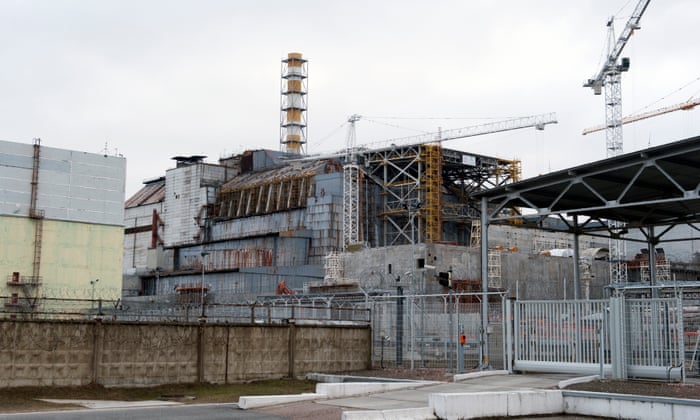
Electrek has a post on a plan to build a solar power plant at Chernobyl - World’s largest solar power plant planned for Chernobyl nuclear wasteland.

The proposed 1GW solar plant, if built today, would be the world’s largest. There are several plans for 1GW solar plants in development (Egypt, India, UAE, China, etc) – but none of them have been completed yet. One financial benefit of the site is that transmission lines for Chernobyl’s 4GW nuclear reactor are still in place.

Chernobyl, 30 years on  

Posted by Big Gav in , ,

To mark the 30th anniversary of the Chernobyl disaster, The Guardian has a photo journey through the ruined city of Pripyat, part of the involuntary park created by the reactor meltdown - Inside the abandoned city of Pripyat, 30 years after Chernobyl – in pictures.

Life after Chernobyl  

Posted by Big Gav in ,

The Independent has a look at what Bruce Sterling used to call Chernobyl's "Involuntary Park" - Life after Chernobyl: Sergei Gaschak’s photography from inside 'the zone'.

Sergei Gaschak’s photography offers an unparalleled glimpse at animal life inside “the zone”, the area of Ukraine and Belarus that has been officially closed off to human habitation since the Chernobyl nuclear catastrophe of 1986.

Using camera traps to take photographs mechanically, as well as taking photographs personally, Gaschak has captured what few have been able to see with their own eyes – the remarkable diversity of wildlife within the zone.

One of the first rescuers on the site of the nuclear disaster, Gaschak has devoted recent years to photographing lynxes, otters, owls and other wildlife, and has even discovered the footprints of brown bears. The exclusion zone stretches for miles around the site of the reactor, and includes Pripyat, which was once a thriving Soviet town of 50,000 inhabitants but has remained a ghost town since the disaster, a time warp of perestroika-era Soviet life.

More than 300,000 people evacuated the region in the aftermath of the explosion, and only a few hundred stubborn pensioners have returned, defying government bans on settlement inside the zone.

At the time of the disaster, there were few wild animals living in the region around the nuclear plant. But as the humans moved out in the wake of the catastrophe, large mammals appeared and thrived. While the animals showed incredibly high levels of radiation, they still looked normal. There were no giant wolves or three-headed deer.

According to a book on animal and plant life in the zone, A Natural History of Chernobyl, the only abnormalities found in animals has been albino spots and deformities in barn swallows.

Tokyo Electric admits fuel could be melting at Fukushima nuke plant  

Posted by Big Gav in , , ,

Kyodo News has a report on the ongoing mess at Fukushima - Tokyo Electric admits fuel could be melting at Fukushima nuke plant.

An official at Tokyo Electric Power Co., the operator of the crippled Fukushima Daiichi nuclear power plant, admitted Wednesday that fuel of the plant's No. 1 reactor could be melting.

Boing Boing has a roundup of other events at the plant - Japan: TEPCO floods containment vessels of 3 reactors at Fukushima No. 1.
In Japan, Tokyo Electric Power Co. workers have begun "the unprecedented and potentially risky measure" of flooding the containment vessels of three troubled Fukushima nuclear reactors with water. The Asahi Shimbun reports that this is the first known attempt ever in the world to saturate an entire containment vessel with water in order to cool the pressure vessels inside, and in turn, cool the reactor cores within.

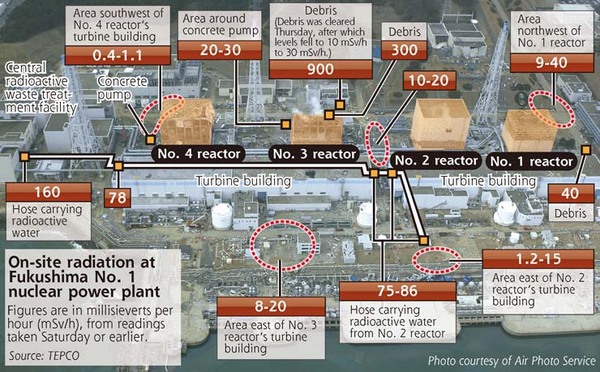
In related news, TEPCO has released to the public for the first time a map of the Fukushima No. 1 nuclear power plant detailing radiation levels throughout the site.


Boing Boing also has a post marking the 25th anniversary of the Chernobyl disaster - Chernobyl disaster, 25 year later: commemoration around the world.
It's early morning on April 26 in Kiev, Ukraine, where the Chernobyl nuclear disaster happened exactly a quarter century ago. On this day in 1986, reactor number four at the plant exploded, setting off a catastrophe that still reverberates far beyond the 30-kilometer exclusion zone.

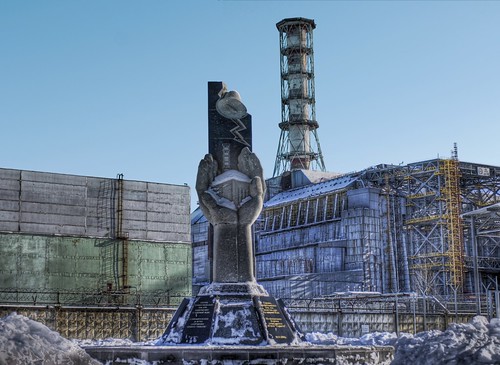
Demonstrations are taking place throughout Europe. In Tokyo, anti-TEPCO protests mark the occasion and its parallel to the still-unfolding disaster at Fukushima. The "liquidators" who were sent in to clean up the radioactive mess at Chernobyl back in 1986 received medals Monday from Russian president Dmitry Medvedev, but controversy still surrounds the health impact of the dangerous work they performed. The so-called "sarcophagus" surrounding the disaster site in Kiev is leaking, and world leaders have pledged "to provide $780 million for the construction of a shelter designed to house the toxic remains for another century." But even if and when that new container is finally in place, the radioactive mess will remain active—and hazardous—for many thousands of years more.


Magnum Photos has a disturbing photo collection lookingat the fallout in the years following Chernobyl in Belarus - Chernobyl's Legacy.

At Chernobyl, it was all under control  

Posted by Big Gav in ,

Grist has a look back at the Chernobyl meltdown - At Chernobyl, it was all under control.

Bliznyuk's personal knowledge of Chernobyl began in the most banal way. He first learned of the world's greatest nuclear power disaster from a routine news broadcast, not a breaking bulletin. As part of the same nightly newscast on April 26, 1986, two dispassionate sentences announced, "A fire has broken out at the Chernobyl Nuclear Power Station. The situation is under control."

More bits of information emerged slowly. Several days into the crisis, the Voice of America (VOA) -- this was during the era of the Soviet Union, and VOA offered an important outside source of news -- reported that radioactivity had escaped, but the winds blowing southeast to northwest had carried all the nuclear debris toward Scandinavia. Meanwhile, the Soviet media admitted that though fires continued to rage, "All measures to keep it under control are being taken."

Four days into the crisis, Bliznyuk and his colleagues showed up for their traditional May Day barbecue bash. At that point in the Soviet Union, most of the revolutionary stuff associated with the day had given way for an excuse to pig out and drink. And party Bliznyuk and his comrades did, they cooked shish-kebabs over an open fire, guzzled booze, and got wild as a rock 'n' roll band played. They were happy they hadn't heeded the warning of a grumpy geologist friend who had called each of them earlier that day.

"Don't go to the barbecue," he warned. "Stay indoors. I can't tell you what's wrong. But don't go outside." As Bliznyuk remarked to me a quarter century later, his uptight colleague had "some secret only known to the Geological Society. But I was young at the time. I had prepared for the [barbecue] over many months. So I went, and I had a great time."

The following day another ominous call came from an older friend and colleague. "I can't tell you what is happening, but I'm on a team deactivating an awful mess. Stay at home. Don't buy anything at the market. Close all your windows. And, by the way, your clothes reek with radiation."

Everyone who had gone to the picnic got a similar call, and everyone was scared witless.

Bliznyuk reacted as a physicist. He went straight to the lab, took off the clothes and shoes he had worn the day before and checked them out with a Geiger counter. "Damn!" He recalled. "I had never seen such high readings." He reconstructed what was going on from the calls and news reports and the mega dose of radioactivity he had just measured, coming to the conclusion something bad had happened at Chernobyl.

The masses -- those without knowledgeable colleagues or access to Geiger counters, those who were assured by their masters that "everything was under control" -- continued life as usual, having no way of knowing about the serious amount of nuclear poison they were ingesting in the foods they ate and the liquids they drank, or what was falling on their bodies every time they stepped outside and entering their lungs every time they breathed.

Slowly, word came through the public's grapevine that something was just not right. Because the radiation was so great at the melted reactor, the cleanup cycled through lots of workers who quickly received the maximum -- and beyond -- safe dose and had to move on. When these workers returned from the front lines of this battle of Chernobyl, tongues wagged. Soon, millions knew about the nuclear disaster even with the Soviet broadcasts droning on about the valiant measures that "kept things under control."

A great exodus began in early May from Kiev, although the radiation pattern -- and areas evacuated -- were concentrated north of the plant, in Belarus. Between that month and June, the women and children of Kiev left. The city transformed into a town of men careful to avoid vegetables and fruits picked after April 26 or meat from animals slaughtered during the same time frame. "You tried to eat only things produced before the catastrophe or if they passed muster under a Geiger counter," Bliznyuk explained.

A forest behind the plant was dubbed the Red Forest (perhaps with an additional touch intentional irony given the official stonewalling) after radiation cooked the trees and turned them a ginger color. The forest was bulldozed and buried in impermeable shrouds.

Bliznyuk said many more died than either the Soviets or the international community admitted (a point still the focus of a lively debate between those who say the count was lower than first estimated and those who insist it must be higher.

But the psychological toll overshadowed everything else. When might cancer strike? Pregnant women stressed over deformities their babies might develop. Everyone lost any lingering trust in the Soviet system, and respect for science and scientists was greatly diminished.

Only when they had buried the remains of the destroyed reactor under the sarcophagus of cement, Bliznyuk said, did the women and children return. The Chernobyl area and the town of Pripyat remain vacant except for those studying the devastation. Perhaps surprisingly, the undamaged portions of the plant remained active until 2000, shut down only after Ukraine convinced the rest of Europe and the U.S. into paying for a "New Safe Confinement and Spent Fuel Storage Facility" [PDF] for the destroyed reactor and its fuel rods.

For Bliznyuk, Chernobyl greatly changed his views on energy generation: "Solar power has a bright future. Not so for nuclear," he said, well before Japan's current nightmare.

'Radioactive boars' on loose in Germany  

Posted by Big Gav in , ,

AFP has an article on the continuing fallout from the Chernobyl disaster - 'Radioactive boars' on loose in Germany.

Radioactive fallout from the Chernobyl nuclear disaster is still poisoning Germany's boars nearly 25 years on, with authorities fighting to keep toxic meat off the market as the wild boar population rockets.

The boars feed off mushrooms, truffles and wild berries which still contain high levels of caesium-137, carried in the radioactive cloud that spread across Europe following the 1986 accident at the Ukrainian nuclear plant.

"In some regions, especially in the south, the radioactivity found in boars is 10 times higher than normal," Florian Emrich, spokesman for the Federal Agency for the Protection Against Radioactivity, said on Saturday.

A sharp increase in wild boar numbers has meant more boar meat -- prized as a delicacy in Germany on a par with venison -- is ending up on diners' plates, raising concerns for human health. ...

Wild mushrooms are especially prone to accumulating radioactivity because the toxic substances are recycled over and over in the forest humus, unlike on farmland where they are broken down by labouring and minerals in the soil.

Chernobyl - 24 years on  

Posted by Big Gav in ,

The Independent has a photo essay on the involuntary park around the Chernobyl nuclear reactor disaster site - Chernobyl - 24 years on.

Statistics

Locations of visitors to this page

blogspot visitor
Stat Counter

Total Pageviews

Ads

Books

Followers

Blog Archive

Labels

australia (619) global warming (423) solar power (397) peak oil (355) renewable energy (302) electric vehicles (250) wind power (194) ocean energy (165) csp (159) solar thermal power (145) geothermal energy (144) energy storage (142) smart grids (140) oil (139) solar pv (138) tidal power (137) coal seam gas (131) nuclear power (129) china (120) lng (117) iraq (113) geothermal power (112) green buildings (110) natural gas (110) agriculture (91) oil price (80) biofuel (78) wave power (73) smart meters (72) coal (70) uk (69) electricity grid (67) energy efficiency (64) google (58) internet (50) surveillance (50) bicycle (49) big brother (49) shale gas (49) food prices (48) tesla (46) thin film solar (42) biomimicry (40) canada (40) scotland (38) ocean power (37) politics (37) shale oil (37) new zealand (35) air transport (34) algae (34) water (34) arctic ice (33) concentrating solar power (33) saudi arabia (33) queensland (32) california (31) credit crunch (31) bioplastic (30) offshore wind power (30) population (30) cogeneration (28) geoengineering (28) batteries (26) drought (26) resource wars (26) woodside (26) censorship (25) cleantech (25) bruce sterling (24) ctl (23) limits to growth (23) carbon tax (22) economics (22) exxon (22) lithium (22) buckminster fuller (21) distributed manufacturing (21) iraq oil law (21) coal to liquids (20) indonesia (20) origin energy (20) brightsource (19) rail transport (19) ultracapacitor (19) santos (18) ausra (17) collapse (17) electric bikes (17) michael klare (17) atlantis (16) cellulosic ethanol (16) iceland (16) lithium ion batteries (16) mapping (16) ucg (16) bees (15) concentrating solar thermal power (15) ethanol (15) geodynamics (15) psychology (15) al gore (14) brazil (14) bucky fuller (14) carbon emissions (14) fertiliser (14) matthew simmons (14) ambient energy (13) biodiesel (13) investment (13) kenya (13) public transport (13) big oil (12) biochar (12) chile (12) cities (12) desertec (12) internet of things (12) otec (12) texas (12) victoria (12) antarctica (11) cradle to cradle (11) energy policy (11) hybrid car (11) terra preta (11) tinfoil (11) toyota (11) amory lovins (10) fabber (10) gazprom (10) goldman sachs (10) gtl (10) severn estuary (10) volt (10) afghanistan (9) alaska (9) biomass (9) carbon trading (9) distributed generation (9) esolar (9) four day week (9) fuel cells (9) jeremy leggett (9) methane hydrates (9) pge (9) sweden (9) arrow energy (8) bolivia (8) eroei (8) fish (8) floating offshore wind power (8) guerilla gardening (8) linc energy (8) methane (8) nanosolar (8) natural gas pipelines (8) pentland firth (8) saul griffith (8) stirling engine (8) us elections (8) western australia (8) airborne wind turbines (7) bloom energy (7) boeing (7) chp (7) climategate (7) copenhagen (7) scenario planning (7) vinod khosla (7) apocaphilia (6) ceramic fuel cells (6) cigs (6) futurism (6) jatropha (6) nigeria (6) ocean acidification (6) relocalisation (6) somalia (6) t boone pickens (6) local currencies (5) space based solar power (5) varanus island (5) garbage (4) global energy grid (4) kevin kelly (4) low temperature geothermal power (4) oled (4) tim flannery (4) v2g (4) club of rome (3) norman borlaug (2) peak oil portfolio (1)