Showing posts with label green revolution. Show all posts

Norman Borlaug: Saint Or Sinner ?  

Posted by Big Gav in , , ,

The father of the "green revolution" in agriculture, Norman Borlaug, recently passed away due to cancer, at the age of 95.

Borlaug didn't approve of the "green revolution" moniker, dubbing it "a miserable term" (what he would have made of "The Agrichemical Revolutionary" isn't clear) but his work has had a far-reaching impact on the course of human development.

Borlaug received both praise ("More than any other single person of this age, he has helped provide bread for a hungry world. We have made this choice in the hope that providing bread will also give the world peace", said the Nobel peace prize committee, while the UN's Food and Agriculture Organization declared him “A towering scientist” and a “great benefactor of humankind” ) from those impressed by the rise in agricultural productivity he engineered, and condemnation ("Aside from Kissinger, probably the biggest killer of all to have got the peace prize was Norman Borlaug, whose "green revolution" wheat strains led to the death of peasants by the million" is a typical example from Alexander Cockburn at Counterpunch) from those concerned by the impact of the introduction of industrial agriculture around the globe.

Borlaug's Life

Borlaug grew up on a farm in Iowa and then studied for a Ph.D. in plant pathology and genetics at the University of Minnesota. In 1944, Borlaug took up an agricultural research position in Mexico as part of the Rockefeller Foundation project to help farmers modernise crop production, where he developed semi-dwarf, high-yield, disease-resistant wheat varieties over a period of 16 years. The Foundation's interest may not have been entirely altruistic - the Mexican government had nationalised the country's oil supply in 1939, to the dismay of the family's "Standard Oil" company, and there were concerns that the country may align itself with Germany during the war.

Borlaug's wheat breeding program produced semi-dwarf strains as the shorter stems enabled the plant to grow larger heads of grain without collapsing - with the extra growth prompted by the application of nitrogen fertiliser. The strains developed by Borlaug were very successful - by 1963, 95% of Mexico's wheat crops were products of the program. That year, the country's wheat harvest was 6 times larger than in 1944, the year Borlaug arrived - Mexico had become self-sufficient in wheat production.

In the 1960's, Borlaug shifted to India, working on similar projects there to alleviate famine. While the situation in India and Pakistan at the time was bleak (Biologist and "Population Bomb" author Paul Ehrlich remarking "I have yet to meet anyone familiar with the situation who thinks India will be self-sufficient in food by 1971" and "India couldn't possibly feed two hundred million more people by 1980"), Borlaug's programs were successful - in Pakistan, wheat yields nearly doubled, from 4.6 million tons in 1965 to 7.3 million tons in 1970. In India, yields increased from 12.3 million tons in 1965 to 20.1 million tons in 1970 - by 1974, India was self-sufficient in cereal production.

Borlaug did not appear to be interested in politics - he believed that the problems of hunger and poverty could be solved by increasing crop yields, and set out to do so by applying technology to plant science. He often advocated increasing crop yields as a way of curbing deforestation - a methodology that came to be known as the "Borlaug hypothesis" (increasing the productivity of agriculture on existing farmland can help control deforestation by reducing the demand for new farmland).

Borlaug was worried about the limited availability of farmland to expand food production further to meet increasing global demand - "we will have to double the world food supply by 2050" he noted. With around 85% of future growth in food production having to come from land already in use, he recommended a multidisciplinary research approach - mainly through increasing crop immunity to large-scale diseases such as the rust fungus.

While Borlaug became ever more optimistic about further increasing crop yields, he did occasionally sound Malthusian style warnings about population growth, particularly in the 1970's - "future food-production increases will have to come from higher yields. And though I have no doubt yields will keep going up, whether they can go up enough to feed the population monster is another matter. Unless progress with agricultural yields remains very strong, the next century will experience sheer human misery that, on a numerical scale, will exceed the worst of everything that has come before".

Over time Borlaug became convinced that we could feed the world adequately (given projections that global population will eventually plateau at around 9.5 billion people), as long as the methods he recommended were adopted universally, stating in 2000 : "I now say that the world has the technology — either available or well advanced in the research pipeline — to feed on a sustainable basis a population of 10 billion people. The more pertinent question today is whether farmers and ranchers will be permitted to use this new technology ? While the affluent nations can certainly afford to adopt ultra low-risk positions, and pay more for food produced by the so-called 'organic' methods, the one billion chronically undernourished people of the low income, food-deficit nations cannot."

Borlaug's work earned him the Nobel Peace Prize in 1970 and (amongst numerous other awards) the 1977 US Presidential Medal of Freedom and the US Congressional Gold Medal in 2006.


Criticisms of the Green Revolution

Borlaug's "green revolution" has been criticised for decades by a wide variety of different groups for all sorts of reasons - ranging from making farmers dependent on a range of industrial products to soil and aquifer depletion to creating a food production system that is dependent on a finite supply of fossil fuel based inputs. One memorable description of this combined school of thought came from Zaid Hassan, who noted "there are so many criticisms around the current global food system that for a while I started wondering if in fact it had already collapsed and I was studying a post-apocalyptic food system".

Input-intensive monoculture farming - The primary criticism of "green revolution" style industrial agriculture is that it results in farmers becoming dependent on a range of industrial inputs - farming machinery, fertiliser, pesticides, irrigation equipment, seeds and even capital (debt) to purchase these inputs - often resulting in small scale farmers being pushed off the land (particularly if they are unable to repay their debts during a bad season) and resulting in large scale agribusinesses that produce monoculture crops that are prone to pests and diseases unless large amounts of pesicide are applied. Critics from the developing world often note that the profits from this transformation seem to be reaped by multinational corporations like Monsanto, Dupont, Cargill and Archers Daniels Midland rather than the farmers growing the crops (who often saw crop prices fall as yields increased) - and that their national food security was now dependent on foreign suppliers.

Side effects of fertilisers and pesticides - The side effects of large scale fertiliser and pesticide use are also pointed to by Borlaug's critics, noting increased rates of cancer and other health problems in rural areas and damage to the ecosystems that these inputs drain into (for example, the "dead zone" in the Gulf of Mexico).

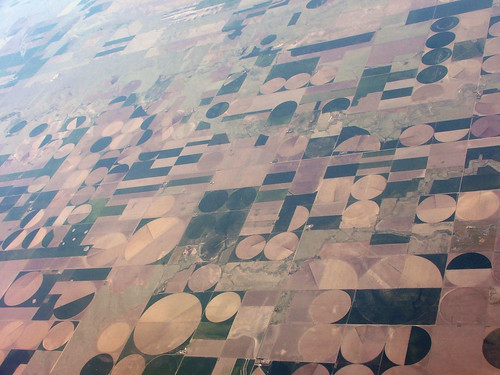
Water and soil depletion - As a result of modern irrigation practices, aquifers in places like India (once Borlaug's greatest triumph) and the US midwest have become depleted. Soil depletion is also a problem - since the 1880s almost half of the topsoil of the Great Plains of North America has disappeared.


Genetically modified crops - The risks associated with genetically modified crops - the next frontier for increasing crop yields in the wake of the first green revolution, which Borlaug dubbed "The Gene Revolution" - remain hotly debated, with critics raising objections based on food safety issues, ecological concerns and economic concerns (centering on the application of patents and intellectual property rights to engineered seeds).

Fossil fuel dependence - The inputs for green revolution style industrial agriculture are almost entirely derived from fossil fuels. Production of nitrogen fertiliser via the Haber process (mostly in the form of anhydrous ammonia, ammonium nitrate, and urea) consumes between 3 and 5% of world natural gas production. Farm machinery like tractors and irrigation pumps consume fuel, and tractor tyres and plastic irrigation pipes are made from petrochemicals, as are pesticides. Writers like Richard Manning (The Oil We Eat), Dale Allen Pfeiffer (Eating Fossil Fuels) and Glenn Morton (The Connection Between Food Supply and Energy: What Is the Role of Oil Price?) have argued that the green revolution will prove unsustainable once we have passed their peak production point for fossil fuels.

Borlaug dismissed the claims of most critics. Of environmental lobbyists he said, "some of the environmental lobbyists of the Western nations are the salt of the earth, but many of them are elitists. They've never experienced the physical sensation of hunger. They do their lobbying from comfortable office suites in Washington or Brussels. If they lived just one month amid the misery of the developing world, as I have for fifty years, they'd be crying out for tractors and fertilizer and irrigation canals and be outraged that fashionable elitists back home were trying to deny them these things".

Borlaug was also indignant about arguments in favour of natural fertilisers like cow manure rather than inorganic fertilisers. Using manure would require a massive expansion of the lands required for grazing the cattle, he said, and consume much of the extra grain that would be produced. He claimed that such techniques could support no more than 4 billion people worldwide, well under the current global population of almost 7 billion.

This point is still being debated, with researchers at the University of Michigan and University of California claiming that organic farming techniques can indeed feed the world. We can also increase food production by making better use of urban land (something "guerilla gardeners" are fond of - and similar ideas are being put into practice by large scale tree planting programs in India).

Even if we don't fully take the organic agriculture path, some of the objections based on fossil fuel depletion would seem to be solvable. If we shift completely to renewable energy sources for power production, we can eliminate a large proportion of our natural gas and coal usage, freeing the remaining reserves for agricultural applications and extending the lifespan of green revolution techniques far out into the future. Whether or not we choose to do so quickly enough remains to be seen.

Related Articles :

Peak Energy - The Fat Man, The Population Bomb And The Green Revolution

Grist - Thoughts on the legacy of Norman Borlaug

Wall Street Journal - Borlaug's Revolution

Reason - Billions Served

Worldchanging - Postcards from the Global Food System (Part 1, Part 2, Part 3)
Norman Borlaug Dies at 95  

Posted by Big Gav in , ,

Environemntal, Health and Safety News has a post on the passing of the father of the green revolution, Norman Borlaug - Father of Green Revolution, Norman Borlaug, Dies at 95.

While opinion continues to be divided on the ultimate benefit of the industrial agriculture paradigm he helped to pioneer, he did succeed in making food cheap and relatively abundant for many decades.

Energy Bulletin has a roundup of other commentary on Borlaug's life.

Norman Borlaug, a genuinely remarkable man and the father of the Green Revolution in agriculture, has died of cancer at his Dallas home aged 95. His life's work on developing high-yield, disease-resistant crops has been credited with having saved an estimated one billion people from famine, and one billion hectares of forest and rainforest from being cleared for agricultural production.

'Green Revolution' Trapping India's Farmers In Debt  

Posted by Big Gav in , ,

NPR has a look at the downside of the "green revolution" in India - 'Green Revolution' Trapping India's Farmers In Debt.

As the world's population surges, the international community faces a pressing problem: How will it feed everybody?

Until recently, people thought India had an answer. Farmers in the state of Punjab abandoned traditional farming methods in the 1960s and 1970s as part of the national program called the "Green Revolution," backed by advisers from the U.S. and other countries.

Indian farmers started growing crops the American way — with chemicals, high-yield seeds and irrigation. Since then, India has gone from importing grain like a beggar, to often exporting it. But studies show the Green Revolution is heading for collapse.

A Thirst For Water

On a recent morning, a drilling rig is pounding away in the middle of a wheat field near the village of Chotia Khurd. The sound, part jackhammer and part pile driver, is becoming increasingly common in the farm fields of northern India's Punjab region.

The farmer, Sandeep Singh, is supervising and looking unhappy as the rig hammers away, driving deeper and deeper under his field in search of water.

When India's government launched the Green Revolution more than 40 years ago, it pressured farmers to grow only high-yield wheat, rice and cotton instead of their traditional mix of crops.

The new miracle seeds could produce far bigger yields than farmers had ever seen, but they came with a catch: The thirsty crops needed much more water than natural rainfall could provide, so farmers had to dig wells and irrigate with groundwater.

The system worked well for years, but government studies show that farmers have pumped so much groundwater to irrigate their crops that the water table is dropping dramatically, as much as 3 feet every year. So farmers like Sandeep keep hiring the drilling company to come back to their fields, to bore the wells ever deeper — on this day, to more than 200 feet.

Farmers In Debt

The groundwater problem has touched off an economic chain reaction. As the farmers dig deeper to find groundwater, they have to install ever more powerful and more expensive pumps to send it gushing up to their fields.

Sandeep says his new pump costs more than $4,000. He and most other farmers have to borrow that kind of cash, but they are already so deep in debt that conventional banks often turn them away.

So Sandeep and his neighbors have turned to "unofficial" lenders — local businessmen who charge at least double the banks' interest rate. The district agriculture director, Palwinder Singh, says farmers can end up paying a whopping 24 percent.

Another side effect of the groundwater crisis is evident at the edge of the fields — thin straggly rows of wheat and a whitish powder scattered across the soil.

The white substance is salt residue. Drilling deep wells to find fresh water often taps brackish underground pools, and the salty water poisons the crops. "The salt causes root injuries," Palwinder says. "The root cannot take the nutrients from the soil."

Destroying The Soil

In the village of Chotia Khurd, farmers agree that the Green Revolution used to work miracles for many of them. But now, it's like financial quicksand.

Studies show that their intensive farming methods, which government policies subsidize, are destroying the soil. The high-yield crops gobble up nutrients like nitrogen, phosphorous, iron and manganese, making the soil anemic. The farmers say they must use three times as much fertilizer as they used to, to produce the same amount of crops — yet another drain on their finances.

A farmer named Suba Singh has seen the good and bad effects of the Green Revolution. Clad in a bright blue turban and his face furrowed like a field, he opens a squeaky wooden gate to his compound. He points to a small building made of mud and straw, with faded green doors.

"That's where my family used to live," he says.

During the profitable years of the Green Revolution, he saw that everyone else in the village was building brick houses. "So I took out a loan," he says, "and built a brick house for my family, too." He turned the old mud house into his cattle shed. But now he is in debt.

A study by the Punjab State Council for Science and Technology calls it a "vicious cycle of debt." Suba and the other farmers say they've had to borrow money to buy just about everything that makes them look prosperous — their brick homes, tractors, cattle, even their plastic chairs.

The farmers have also built their Green Revolution farms and lifestyle on another unstable source of money: Family members have moved overseas to find jobs, because they couldn't make a living farming, and now they send part of their income back to Chotia Khurd to support their relatives. "It's like a disease that is catching on in the world," says Suba, "building a life that is like a house of cards."

A System About To Collapse?

Some leading officials in the farming industry wonder when this house of cards might collapse. "The state and farmers are now faced with a crisis," warns a report by the Punjab State Farmers Commission.

India's population is growing faster than any country on Earth, and domestic food production is vital. But the commission's director, G.S. Kalkat, says Punjab's farmers are committing ecological and economic "suicide."

If he is correct, suicide is coming through national policies that reward farmers for the very practices that destroy the environment and trap them in debt. Kalkat says only one thing can save Punjab: India has to launch a brand new Green Revolution. But he says this one has to be sustainable.

Africa and the Green Revolution  

Posted by Big Gav in , ,

The Minneapolis Star Tribune has an interesting column on the futility of trying to make the "green revolution" work in Africa in an era of rising energy prices, saying traditional farming methods are more efficient - Forget Another ‘Green’ Revolution. Look to the Genius of Small Farmers.

Urban West Africa is Ground Zero in the global food crisis. From Dakar to Abidjan, the cities in this zone have experienced more protests against rising food prices than any other region in 2008.

The solution pushed by many global leaders is to increase crop yields in Africa via a new green revolution. They point to the apparent success of the last green revolution in the 1960s and ’70s, a concerted global effort in Asia and Latin America to disseminate a high-yield crop package of hybrid seeds, fertilizers and pesticides. The problem, they argue, is that these innovations never reached Africa. They are wrong.

The green revolution did touch Africa — in the form of cheap Asian rice, which began flooding African markets in the 1980s. I have been working or conducting research in West Africa on food and agriculture for more than 20 years. When I lived with a family on the outskirts of Bamako, Mali, in the 1980s, they still largely ate small grains (millet and sorghum) produced in the surrounding countryside. Today, they mostly purchase rice from Thailand, having developed a taste over several years for this (until recently) relatively cheap import.

Research shows that this pattern has been repeated in cities across West Africa, constricting markets for locally produced grains and forcing farmers to switch to other crops (such as cotton) as a source of cash or abandoning farming altogether for a life in the city.

The green revolution also was not of great benefit if you were a small, poor farmer in Asia. While the new package of hybrid seeds, fertilizers and pesticides did dramatically increase yields, the cost of such inputs was prohibitively expensive for the poorest farmers. The result was a silent reorganization of the Asian countryside: The poorest of the poor couldn’t compete, so they went to work for wealthier neighbors or moved to the city. Even wealthier farmers faced growing input costs as insects developed resistance to the most common pesticides, forcing the farmers to apply more and more chemicals or switch to expensive alternatives.

Global leaders are correct in asserting that the agricultural sector in Africa deserves more attention and support. The green-revolution approach, however, is flawed. For starters, many of the inputs required for higher-yielding crops, especially fertilizers, are petroleum-based. The cost of these inputs will only rise in step with the general upward trend in energy costs. Use of imported seeds (hybrid or GMO) and other inputs also concentrates power in the boardrooms of global agrochemical firms rather than in the hands of small farmers.

An approach emphasizing local or national food provision and appropriate technology is more sustainable and empowering for small West African farmers. Agricultural experiments comparing intensive African methods (involving the use of manure and compost as inputs and the intelligent mixing of multiple crops) to conventional Western cropping strategies have repeatedly shown the former to be more efficient in terms of energy consumed per unit of output. These methods have been inhibited by cheap imports and by agricultural agencies that emphasized industrial approaches to crop production.

While some emergency measures will be needed to address the food crisis in the short term, we can do better than another green revolution in the medium to long term. This will involve building on the knowledge of local farmers to develop agricultural approaches that are sustainable and accessible to the poor. It may also mean protecting national and regional food systems from unfair competition.

For years, global and national food policies have had an urban bias in that the provision of cheap food has almost always trumped environmental or social costs in the countryside. The results have been predictable: more underemployed urban residents hailing from rural areas and fewer small farmers. West Africa has some of the best small farmers in the world. We should support, not subvert, their genius.

Statistics

Locations of visitors to this page

blogspot visitor
Stat Counter

Total Pageviews

Ads

Books

Followers

Blog Archive

Labels

australia (619) global warming (423) solar power (397) peak oil (355) renewable energy (302) electric vehicles (250) wind power (194) ocean energy (165) csp (159) solar thermal power (145) geothermal energy (144) energy storage (142) smart grids (140) oil (139) solar pv (138) tidal power (137) coal seam gas (131) nuclear power (129) china (120) lng (117) iraq (113) geothermal power (112) green buildings (110) natural gas (110) agriculture (91) oil price (80) biofuel (78) wave power (73) smart meters (72) coal (70) uk (69) electricity grid (67) energy efficiency (64) google (58) internet (50) surveillance (50) bicycle (49) big brother (49) shale gas (49) food prices (48) tesla (46) thin film solar (42) biomimicry (40) canada (40) scotland (38) ocean power (37) politics (37) shale oil (37) new zealand (35) air transport (34) algae (34) water (34) arctic ice (33) concentrating solar power (33) saudi arabia (33) queensland (32) california (31) credit crunch (31) bioplastic (30) offshore wind power (30) population (30) cogeneration (28) geoengineering (28) batteries (26) drought (26) resource wars (26) woodside (26) censorship (25) cleantech (25) bruce sterling (24) ctl (23) limits to growth (23) carbon tax (22) economics (22) exxon (22) lithium (22) buckminster fuller (21) distributed manufacturing (21) iraq oil law (21) coal to liquids (20) indonesia (20) origin energy (20) brightsource (19) rail transport (19) ultracapacitor (19) santos (18) ausra (17) collapse (17) electric bikes (17) michael klare (17) atlantis (16) cellulosic ethanol (16) iceland (16) lithium ion batteries (16) mapping (16) ucg (16) bees (15) concentrating solar thermal power (15) ethanol (15) geodynamics (15) psychology (15) al gore (14) brazil (14) bucky fuller (14) carbon emissions (14) fertiliser (14) matthew simmons (14) ambient energy (13) biodiesel (13) investment (13) kenya (13) public transport (13) big oil (12) biochar (12) chile (12) cities (12) desertec (12) internet of things (12) otec (12) texas (12) victoria (12) antarctica (11) cradle to cradle (11) energy policy (11) hybrid car (11) terra preta (11) tinfoil (11) toyota (11) amory lovins (10) fabber (10) gazprom (10) goldman sachs (10) gtl (10) severn estuary (10) volt (10) afghanistan (9) alaska (9) biomass (9) carbon trading (9) distributed generation (9) esolar (9) four day week (9) fuel cells (9) jeremy leggett (9) methane hydrates (9) pge (9) sweden (9) arrow energy (8) bolivia (8) eroei (8) fish (8) floating offshore wind power (8) guerilla gardening (8) linc energy (8) methane (8) nanosolar (8) natural gas pipelines (8) pentland firth (8) saul griffith (8) stirling engine (8) us elections (8) western australia (8) airborne wind turbines (7) bloom energy (7) boeing (7) chp (7) climategate (7) copenhagen (7) scenario planning (7) vinod khosla (7) apocaphilia (6) ceramic fuel cells (6) cigs (6) futurism (6) jatropha (6) nigeria (6) ocean acidification (6) relocalisation (6) somalia (6) t boone pickens (6) local currencies (5) space based solar power (5) varanus island (5) garbage (4) global energy grid (4) kevin kelly (4) low temperature geothermal power (4) oled (4) tim flannery (4) v2g (4) club of rome (3) norman borlaug (2) peak oil portfolio (1)