Showing posts with label masdar. Show all posts

Masdar's zero-carbon dream could become world’s first green ghost town  

Posted by Big Gav in , , , , ,

The Guardian has an update on the Masdar experiment in the gulf state of Abu Dhabi - Masdar's zero-carbon dream could become world’s first green ghost town.

the rationale for Masdar City – demonstrating a model of green living – has been abandoned. “The original aim was to be net zero, yes, but that was when we were looking at the city in isolation,” Wan said. He maintained it was important to look at Masdar City within the context of the other renewable energy holdings of the parent company. Among Mubadala’s other holdings, Masdar Clean Energy is developing the Shams solar farm. “Masdar as a family company is supply[ing] much, much more clean energy than what is being consumed in the city, for sure,” Wan said. ...

With the downward pressure from oil prices, the UAE has stepped up its efforts to wean itself off oil, lifting fossil fuel subsidies and billing Emiratis – not just expatriates – for water and electricity.

But delivering on the original dream of Masdar has been elusive. Crews broke ground in 2008, but plans withered in the global economic recession which soon followed when investors put their green dreams on hold. “A lot of the people who were considering investing in Masdar City decided to take a breather,” Wan said.

Meanwhile, the jet-set transport system was overtaken by technological developments in the auto sector. The expensive purpose-built system no longer made sense in an era when zero-emission electric cars were widely available. “Five years ago it’s true that we did not perceive the speed with which the electric vehicle would be developed,” Wan said.

The National reports that the Shams 1 solar thermal power plant recently celebrated its third anniversary, however at this point CSP still isn't cost competitive with solar PV - Abu Dhabi weighs more cost-effective solar technologies.

CSP was anticipated to take the region by storm when Shams 1 was being developed, with projects also cropping up in Morocco. As a result, Shams was expected to have two additional projects added. Mr Al Obaidli said the land was originally reserved for three CSP plants, but times have changed and more cost-­competitive options are now availab .

Although he declined to give exact figures, Mr Al Obaidli said that the Shams 1 costs more than the average price of CSP. According to Abu Dhabi-based International Renewable Energy Agency (Irena), production costs for the technology range between 20 and 25 US cents per kilowatt-hour.

But Mr Al Obaidli pointed to the fact that Shams was one of the first CSP projects in the region. “It’s not at today’s electricity prices because when we built Shams, there was only one supplier in the world for mirrors. Now there are at least seven bankable mirror suppliers in the market." In comparison, Dubai’s Mohammed bin Rashid Al Maktoum Solar Park, which uses PV technology, was awarded at a tender of 5.84 cents per kilowatt-hour.

Cleantechnica reports that the Shams 1 plant has been generating more power than expected so far - Solar Power Plant In Oil-Rich Abu Dhabi Beats Expectations — Again.

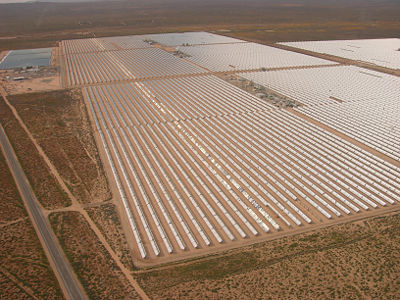
Shams 1 is a 100 megawatt facility with 258,048 mirrors arranged in parabolic troughs covering 2.5 square kilometers. It’s the only plant of its kind in the world completely surrounded by a solid wall - and that’s a critical difference between Shams 1 and other concentrating solar power (CSP) plants. As explained by Al Obaidli, the wall provides a significant measure of protection from desert wind and sandstorms. Storm-grade winds can take out large sections of equipment in a conventional CSP plant, but according to Al Obaidli, one of the strongest storms in recent memory passed through last year and it only damaged 20 out of the 258,048 mirrors.

The parabolic troughs themselves also include design features that prevent wind damage. On just a few minutes’ notice they can be rotated into a “safety” position, and then locked in place.

A First Look Inside Masdar: Foster + Partner’s Carbon-Neutral Eco City  

Posted by Big Gav in , ,

Inhabitat has some pictures from the slowly emerging city of Masdar - A First Look Inside Masdar: Foster + Partner’s Carbon-Neutral Eco City.

Foster and Partner's carbon-neutral Masdar City is springing to life in Abu Dhabi, and we recently had a chance to take a first-hand look inside this ambitious sustainable development! Just last Friday we checked out the city's first eco street fair and Organic Market -- a family affair complete with cotton candy, clowns, and princess fairies that also gave locals and visitors their first glimpse of some of the world’s most advanced architectural and cleantech developments.

Final Tests For Torresol’s CSP Plant With Molten Salt Storage Complete  

Posted by Big Gav in , , , , ,

The National reports that Torresol’s solar thermal power plant in Spain has completed testing - Spanish solar plant built by Masdar is well worth its salt. The plant includes 15 hours of storage, making it able to operate around the clock for much of the year.

A Spanish solar plant built by an Abu Dhabi company is set to power homes even during the night. Masdar, which is owned by Mubadala Development, and a Spanish joint venture partner have completed the final tests on a solar plant in Seville, in southern Spain. …

Thousands of mirrors at the plant concentrate the sun's energy on a single tower holding molten salt, which developers believe is so effective at retaining heat that it will be able to produce power 24 hours a day from March to October. "We're basically decoupling the solar [input] from the electricity generation," said Frank Wouters, the director of Masdar Power.

The tower is the first part of Masdar's €1 billion (Dh5.18bn) investment in Spanish power production. That includes two 50 megawatt solar parks being built by Torresol Energy, Masdar's 40-60 joint venture with the Spanish engineering company Sener.

Bloomberg has a look at Masdar’s overall plans for clean energy - Abu Dhabi’s Masdar Has $5 Billion in Solar, Wind Power Projects.
In Spain, the company has three solar projects worth about $1 billion, Wouters said at a media briefing in Abu Dhabi today. A 20-megawatt plant will start producing power this month and two 50-megawatt facilities will start this year, he said. Masdar also has stakes in the 1-gigawatt London Array offshore windfarm and a 6-megawatt offshore wind project in the Seychelles.

Abu Dhabi, which holds almost all the oil reserves in the United Arab Emirates, is investing in solar and wind power all over the world to pioneer the use of renewable energy. The emirate is building Masdar City, a business and residential complex designed to minimize carbon emissions, and serves as headquarters for the International Renewable Energy Agency.

Masdar is a key component of Abu Dhabi’s aim to generate at least 7 percent of the power it uses from renewable sources by 2020. Growth in power demand to more than 20,000 megawatts by the end of the decade would require about 1,500 megawatts from projects such as wind and solar plants, according to data from Abu Dhabi’s utility.

The company’s domestic projects include the Shams 1 project, the largest concentrated solar plant in the Middle East, which is 45 percent complete and will be ready next year, according to a statement received by e-mail today. Masdar expects to award a construction contract for the 100-megawatt Noor 1 photovoltaic plant by the end of 2011 and may start building a 30-megawatt wind farm on Sir Bani Yas island.


Renewable Energy World has a detailed look at the technology being used in the Spanish solar thermal plants - CSP: Targeting Grid-Parity in Spain
Concentrated solar power (CSP) uses mirrors to concentrate sunlight and generate heat and is typically used to generate electricity via a conventional steam cycle.
Unlike photovoltaic farms or wind energy — which has grown to become Spain's third largest power source — CSP plants can cost-effectively store energy that cannot immediately be used. In Spain, which has a second demand peak in the evening, this is important. Most new CSP projects incorporate storage so they can keep generating electricity several hours after the sun has gone down, or even right through the night.

But, while CSP is more dispatchable than other renewable energy sources, it also currently costs more. So Spain is the focus for efforts to drive down costs, both through economies of scale and improvements in technologies.

'All the CSP technologies are expensive so a lot of research seeks to reduce component costs and optimise production and installation,' says Eduardo Zarza, head of R&D for solar concentrating systems at the Plataforma Solar de Almería (PSA), Spain's leading solar energy research centre, which researches all four types of CSP technologies. The most mature CSP technology is the parabolic trough design, which accounts for 93% of the 2500 MW of new CSP capacity that Spain has authorised up to 2013. While the other three technologies — solar tower, Fresnel collector and Stirling dish — all have commercial potential, the financial backers of Spain's CSP projects have opted to reduce their risks through parabolic trough's longer track record. In the US, parabolic-trough plants date back to the 1980s.

'With a tower system, for example, it is difficult to get project finance because no one knows how long the receiver will last,' says Frank Dinter, head of solar at RWE, the German utility, which is investing in several Spanish renewable projects.

To benefit from Spain's generous feed-in CSP tariff — currently 28 euro cents/kWh for 25 years — CSP plants cannot exceed 50 MW. This size limit is seen as less than optimal, given the current maturity of parabolic-trough technology, and limits potential benefits from economies of scale. Several costs in a CSP project are not proportional to its size. For example, a 200 MW turbine costs less than four times as much as a 50 MW turbine. Dinter estimates that a 200 MW plant would be about 25% cheaper per megawatt than a 50 MW plant. ...

The best places to locate CSP plants tend to be arid regions with little cloud, but such environments are often subject to water restrictions. A plant such as Andasol 3 consumes 500,000 m² of water a year, mostly to condense steam, but also to clean mirrors.Investors in Novatec Solar's PE2 plant insisted on air cooling to avoid such controversy, even though reduces the economic return.

'Air cooling costs much more and it reduces the output by 5%-6%,' says Selig. Opinions are nevertheless divided on this issue. RWE's Dinter says water cooling is essential to boost the thermodynamic efficiency of the steam cycle of parabolic-trough plants like Andasol 3 with a relatively low inlet temperature. 'With dry cooling, you cannot reduce the outlet temperature as much as with water,' he says.

Burgaleta of Torresol Energy says that even though the Gemasolar central tower plant works at higher temperatures, water access was not a problem, and so the designers opted for water cooling. But one of Torresol's central tower projects planned for the future will have air cooling instead, he adds.

As Spain is now discovering, concentrating solar power is far from being a single technology, but rather embraces a wide range of designs and key technologies, each with different operating characteristics, risk profiles and trade-offs. 'There is no clear winner,' clarifies Siemens' Mürau.
Even without any radical technological breakthroughs, improvements in technologies and greater economies of scale are expected to drive a 30% reduction in the cost of CSP-generated electricity in Spain by 2015. And by 2025, costs may fall as much as 50%, at which point CSP plants will finally be in a position to substitute conventional sources in Spain's energy mix.

Masdar and Boeing’s Qatari catch-up  

Posted by Big Gav in , , ,

Cleantech.com has an article on Masdar's aim to get into the biofuel for air transport market using saliconia - Masdar and Boeing’s Qatari catch-up.

Not to be upstaged by a similar announcement last week, a Masdar-led consortium today reiterated its own jet fuel from saltwater plant project, with an airline partner.

Masdar, Boeing and Honeywell’s UOP today announced details of a jet fuel from saltwater plant research project first acknowledged four months ago.

And included today was a new partner: Etihad Airways, the national airline of the United Arab Emirates. ...

The Masdar Institute of Science and Technology is to lead the project, aimed at assessing the technical, commercial and environmental viability of producing large scale jet fuel and co-products from the saltwater herb salicornia.

Others are investigating salicornia for biofuel use, given the plant’s tolerance for seawater, including experimental fields in Ras al-Zawr in Saudi Arabia, Eritrea in Northeast Africa, and Sonora in Northwest Mexico aimed at the production of biodiesel.

Cleantech.com also has a set of pictures of the (slowly) emerging Masdar city - Pictures from a walking tour of Masdar City.

Why Dubai's Troubles Won't Hurt Masdar  

Posted by Big Gav in ,

Technology Review has a post outlining the case that Dubai's financial meltdown won't affect the Masdar project in the neighbouring emirate of Abu Dhabi - Why Dubai's Troubles Won't Hurt Masdar.

Dubai, one of the emirates in the United Arab Emirates, has been all over the news lately because it announced that its investment arm, Dubai World, won't be able to pay its massive debts in time. That might lead some to wonder whether a prominent UAE project, Masdar City--a city that will produce no carbon dioxide emissions if it works as planned--will be affected.

It probably won't. Masdar City is backed by not by Dubai, the most famous of the UAE emirates, but by the emirate of Abu Dhabi. Although less visible internationally, Abu Dhabi is actually far larger and richer than Dubai. Abu Dhabi also has most of the UAE's oil reserves, while Dubai has largely exhausted its oil and relies on real estate and other investments. So while Dubai is hurting, Abu Dhabi is doing okay.

A National 'Smart Grid' Remains a Vision With Many Gaps In The US  

Posted by Big Gav in , , , ,

Time for a smart grid news roundup - the one area of cleantech that seems to have stepped up to the next level this year .

First up, The New York Times has an article on the state of play with the US grid - A National 'Smart Grid' Remains a Vision With Many Gaps.

Like a complex jigsaw puzzle with lots of missing pieces, the picture of a smart electric power grid is slowly beginning to take shape in the United States, along with predictions of big energy savings and emission reductions that could come with it.

The scattered placement of the pieces is a work in progress, with much of the action controlled by states. Some have embraced a clear vision of this revolution in the way electric power can be delivered, used and priced. In many more states, the picture is cloudy or incomplete, restrained by the historic caution of state regulators and the self-interest of some utilities.

Power companies have begun installing millions of advanced electric meters -- the basic building block of the smart grid. Coupled with communications links between customers and control rooms, information management systems in utility offices, and flexible electricity rate programs, the systems will empower consumers and producers to conserve electricity use, particularly on summer days when temperatures and electricity prices are soaring.

These systems have the potential to affect nearly everyone's life. They could change energy-using habits that have become ingrained over generations. A few examples: They can make it possible for millions of plug-in hybrid vehicles' batteries to be recharged with cheaper, nighttime electricity. They can tie rooftop solar units on homes and businesses into the power grid, making owners energy sellers as well as buyers. And they can give consumers meaningful influence over their electric bills for the first time.

But so far, only a small fraction of these capabilities have been deployed. Less than 5 percent of the nation's 144 million electric meters were being used for smart grid functions in 2008, the Federal Energy Regulatory Commission (FERC) reported. Utilities are using them mainly to control costs by replacing meter readers, pinpointing damage from storm outages and removing or adding customers to the grid remotely.


Reuters has a report (well - press release perhaps) on a smart meter rollout in Victoria - SP AusNet Selects GE for World`s First 4G Communications Smart Grid Solution, Delivering Revolutionary Security and Reliability Benefits.
The Victoria state government has mandated its entire service area be upgraded to smart meters by 2013. In addition to meters, future functionality is an important benefit for Australian utilities. Australia`s Department of the Environment, Water, Heritage and the Arts expects the country to have 10 million households in 2020, resulting in a 56% increase in energy demand. At the same time, the Australia government aims to reduce carbon emissions by 10% and increase renewable generation to 20% by 2020. The GE smart grid infrastructure being installed today will help meet those goals while improving reliability in the face of increasing demand.

GE`s WiMAX smart grid solution will give SP AusNet the option to provide variable pricing throughout the day-enabling consumers to manage their energy usage and save money by moving energy-intensive activities to lower-cost, off-peak periods. With the right rate structure, SP AusNet could spread demand more evenly throughout the day and offset the need for new power generation.

This solution also will enable utilities to monitor the health and status of smart grid devices in real-time, helping ensure consistent reliability for customers. As one of the industry`s most secure, standards-based, scalable 4G technologies for smart grid, the GE solution will lay the foundation for a host of advanced smart grid applications-from plug-in vehicles, to advanced grid control, to alternative energy sources, such as solar on rooftops.

VentureBeat has an article on a smart meter rollout in Texas - Oncor, Landis+Gyr plunk down 300,000 smart meters in Dallas.
Landis+Gyr, one of the biggest smart meter makers in the business, partnered with Texan energy transmission provider Oncor to quickly deploy 300,000 new advanced meters in the Dallas Metro area — setting new standards for how big and fast other Smart Grid vendors should be thinking. Despite much hand wringing and heehawing in the sector about how long it takes to switch out traditional meters with their slick new cousins, Oncor says the team will have 700,000 meters in place by the end of 2009.

By 2012, the figure should jump to 3 million meters — Oncor’s full coverage area of residences and small businesses. As it stands, Landis+Gyr’s meters, will channel energy consumption data every 15 minutes to local utilities and to consumers via their home energy management dashboards. Ultimately, the hope is to equip utility customers with the usage and pricing information they need to adopt conservationist practices and save money on their energy bills.

The Dubai Chronicle has an article on a smart appliance program in the futuristic city of Masdar - Masdar City and GE partner on a first-of-its-kind smart appliance pilot program.
Masdar City and GE Consumer & Industrial announced today a landmark pilot program that will investigate the reduction of peak power demand through the use of smart home appliances. Involving some of the first residents of Masdar City – the world’s first carbon neutral, zero waste city being built in the UAE capital Abu Dhabi – the program will test how GE smart (or Demand Response enabled) appliances and Home Energy Manager (HEM) can lower power demand in the home and across the city.

GE specifically designed and manufactured the appliances and networks for this pilot, which leverages Masdar City’s status as a cleantech cluster and one-of-a-kind “living laboratory” for exciting new sustainability technologies. The equipment will be installed in early 2010 in the first building to be completed at Masdar City, the Masdar Institute of Science and Technology.

SmartMeters.com has an article on Google's efforts to market their powerMeter service directly to consumers in the UK - Google Steps in to give UK customers what they need.
Google announced that it is able to provide energy usage information without involving a customer’s utility company. The search giant has partnered with smart meter manufacturer Energy Inc to provide the new service.

Google’s PowerMeter energy monitoring software, coupled with The Energy Detective (TED) 5000 smart meter device, allows for anyone to reap the benefits of smart metering without any interference from the utility company. Consumers don’t have to wait for a major smart meter installation project to come their way to get a better handle on their energy consumption.

“Today, we’re very excited to announce we have secured our first official device partner,” Google announced in an October blog posting. “For the last several months, a few hundred Google employees have been testing a number of in-home electricity monitoring devices.”

Earth2tech has a screen shot of PowerMeter in action - SCREEN SHOT: Google’s PowerMeter Live in Germany.
This week Google announced its first device partner for its energy management tool PowerMeter, which will enable PowerMeter to bypass the smart meter and the utility. Part of the benefit of cutting out the utility is that the device can use an Internet connection to feed energy data directly to a user’s computer in practically real time, instead of getting delayed via the commonly slow utility network. But in some rare cases utilities aren’t getting in the way and embracing the consumer home broadband connection — such is the case with Germany’s Yello Strom, which this morning announced that its customers can now use the PowerMeter iGoogle gadget online to track their energy consumption.


And finally, TreeHugger has a look at concerns about a smart meter led invasion of privacy - From Smart Grid to Big Brother?. While I don't think models that provide all your smart appliance data to a utility company (or anyone else) are a good idea, in terms of the information being collected about you, what your power usage is - even at a fine grained level - is the least of your worries...
Smarts grids and smart appliances are gaining a lot of mindshare these days. The main stated benefits are: A more efficient use of energy, and a higher capacity to handle intermittent renewable power sources (such as wind and solar). But there is another important issue that gets shoved under the rug: Privacy. These smart meters and appliances will be sending lots of data to power companies. What will happen to it is an important question that needs to be answered.

Bob Sullivan has an interesting piece on it. He writes:
Utility companies, by gathering hundreds of billions of data points about us, could reconstruct much of our daily lives -- when we wake up, when we go home, when we go on vacation, perhaps even when we draw a hot bath. They might sell this information to marketing companies -- perhaps a travel agency will send brochures right when the family vacation is about to arrive. Law enforcement officials might use this information against us ("Where were you last night? Home watching TV? That's not what the power company says ... "). Divorce lawyers could subpoena the data ("You say you're a good parent, but your children are forced to sleep in 61-degree rooms. For shame ..."). A credit bureau or insurance company could penalize you because your energy use patterns are similar to those of other troublesome consumers. Or criminals could spy the data, then plan home burglaries with fine-tuned accuracy. [...]

Privacy expert Alessandro Acquisti, who studies the intersection of economics and privacy at Carnegie Mellon University, said privacy issues routinely arise even when companies that collect data do so with all good intention. Many times, data that collected is harmless in isolation, but becomes troublesome when combined with other data, or examined by a third party for patterns.

The privacy risks - and opportunities for abuse, both from governments and from malicious individuals - are not unique to smart grids of course. It's par for the course with highly networked technologies like the internet.

The difference is that you can still mostly decide what you put online or on your computer. But you have a higher expectation of privacy inside your home, and might not realize that the data gathered about your energy usage could be used to reconstruct part of your life (potentially in erroneous ways).

Masdar starts geothermal project  

Posted by Big Gav in ,

The Masdar initiative has started yet another type of renewable energy project, this time looking to harness geothermal energy in the Persian Gulf. "Utilities-me.com" reports - Masdar starts GCC's first geothermal project.

Masdar City has outlined plans to establish the Gulf’s first geothermal energy project to generate electricity and fuel the landmark project’s cooling system, according to a local newspaper.

The National daily says that Masdar-contracted engineers have set a start date of November 1 to begin drilling two four-kilometre wells. Water circulated through the wells will be heated into steam, which will turn generators and directly power air conditioning systems....

The total cost of the scheme has been estimated at US $11 billion, and Masdar has already handed out a $1.6 million drilling contract to Iceland’s Reykjavik Geothermal. Another five or six contractors are projected to be hired before the end of the year.

Masdar Connects 10-MW PV Plant To Grid  

Posted by Big Gav in ,

Renewable Energy World reports that Masdar has launched the largest solar PV plant in the middle east - Masdar Connects 10-MW PV Plant To Grid.

Masdar has officially connected a 10-megawatt (MW) solar photovoltaic (PV) power plant to Abu Dhabi's grid, marking the integration of the largest PV plant in the Middle East to the grid. The plant will provide clean energy to the temporary Masdar site administration facilities, and power the ongoing construction activities of Masdar City.

In addition, the plant will supply all the energy needs of The Masdar Institute of Science and Technology, a graduate-level scientific institution dedicated to renewable energy study, which opens in late 2009.

The 10 MW plant, consisting of 87,777 panels (50% thin film and 50% crystalline silicon) is projected to generate 17,500 MWh of clean energy each year. With the construction costing US $50 million the plant is also one of the most cost-efficient PV installations in the world in terms of its projected power output, Masdar said.

Continuing the PV theme, Inhabitat has a post on some new panels that generate heat and power - PVT Solar Panels Generate Heat and Electricity at the Same Time.
PVT Solar is pioneering an ultra-efficient breed of solar panels that focus not just on incorporating better photovoltaic components, but also take the heat generated by the solar panels and use it to power a solar thermal system. According to the company, these solar cogeneration panels are three times more efficient than anything else out there!

PVT Solar is funded by Vinod Koshla, the founder of Sun Microsystems. According to a profile on the New York Times, what drew Mr. Koshla to the company was the remarkable achievement in efficiency that the company was able to generate. Standard photovoltaic systems generate electrical energy from the sun, while solar thermal systems takes heat from the sun to heat something, like water, for consumption within a home. PVT Solar is aiming to marry both systems into one, since photovoltaic systems are known to release excess heat that isn’t used.

Aside from taking waste heat and giving it an actual use, this combination would also have the added benefit of making the solar panel cooler, which in turn would make it more efficient, thus generating more energy. PVT Solar is the latest company to commercialize solar cogeneration technology, and is the first to really consider deploying a system for residential use.

Sun Shining Brightly In Masdar And California  

Posted by Big Gav in , , ,

Technology Review has a long report on the Masdar sustainable city project (primarily using solar power) explaining why the rest of the world should care about this "green metropolis" and the inovations it will be acting as a testbed for - A Zero-Emissions City in the Desert.

The first hints of the project are visible. A white wall stretches through the desert, like a chalk line on a dusty playing field. A bus with darkened windows stirs a low cloud, ferrying workers past a cluster of steel cranes, two portable drilling rigs, and a stand of concrete columns sprouting rust-colored rebar. A tall wire fence guards rows of solar panels mounted on concrete pads.

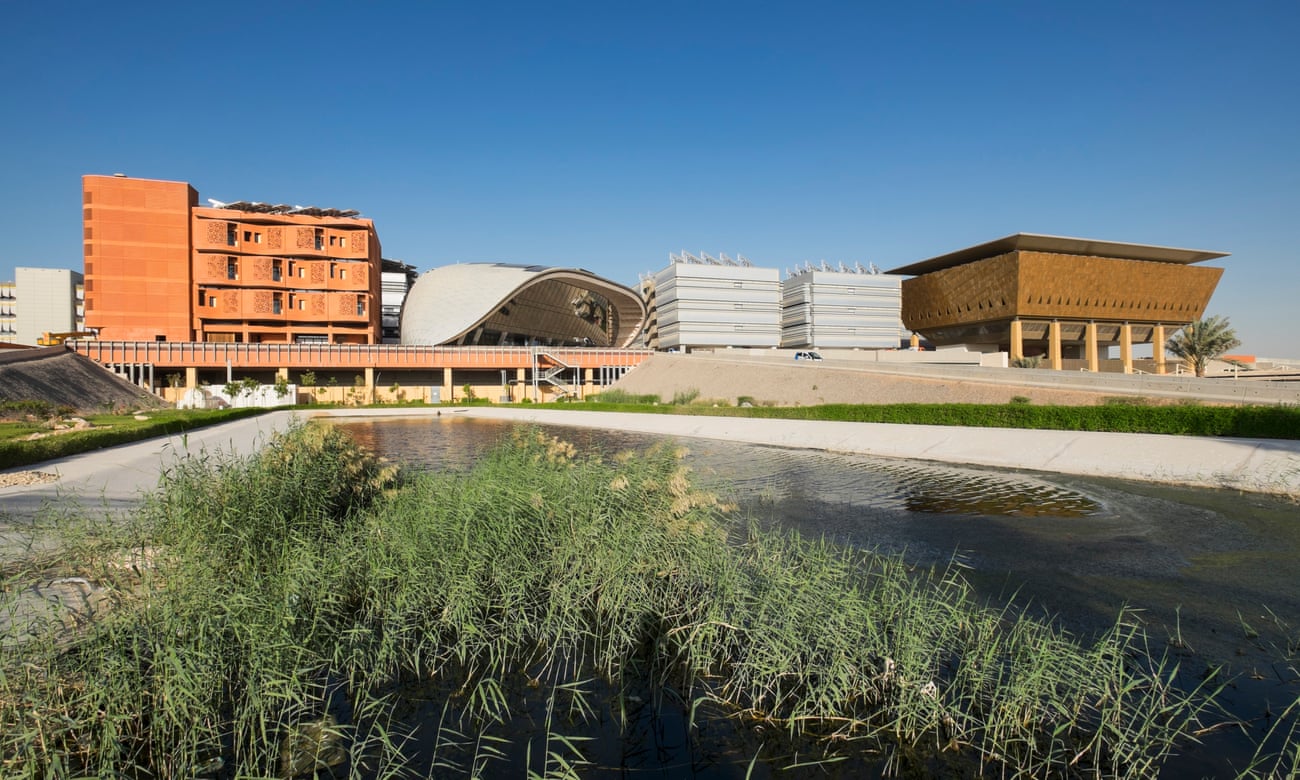
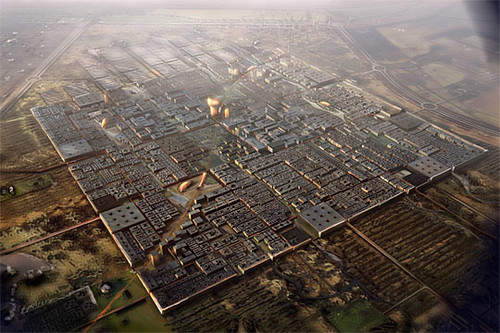
The construction is the start of a vast experiment, an attempt to create the world's first car-free, zero-carbon-dioxide-emissions, zero-waste city. Due to be completed in 2016, the city is the centerpiece of the Masdar Initiative, a $15 billion investment by the government of Abu Dhabi, which is part of the United Arab Emirates. The new development, being built on the outskirts of Abu Dhabi city, will run almost entirely on energy from the sun and will use just 20 percent as much power as a conventional city of similar size. Garbage will be sorted and recycled or used for compost; sewage will be processed into fuel. Concrete columns will lift the city seven meters off the ground, creating space underneath for a network of automated electric transports that will replace cars. Planners predict that the development will attract 1,500 clean-tech businesses, ranging from large international corporations to startups, and--eventually--some 50,000 residents.

The city will be an oasis of renewable energy in a country of five million, made rich by oil, that consumes the most natural resources per capita in the world. Seen one way, it's just the latest ostentatious project in a country that's been defined by them. Indeed, the UAE is already home to the world's tallest building and an enormous indoor ski facility that features a 200-meter-long black-diamond slope. Real-estate developers have dredged coral and sand from the sea floor, piling it up in the Persian Gulf to create islands in the shape of palm trees and a map of the world.

Yet many experts are optimistic that the city can become a test bed for new approaches to the engineering and architectural problems involved in creating environmentally sustainable cities. Although architects have already designed and builders constructed many small zero-emissions residences and commercial buildings, projects involving large, multi-use commercial buildings have fallen short of expectations, using too much energy or failing to generate enough. Part of the problem is the growing complexity that comes with scale, says J. Michael McQuade, senior vice president of science and technology at United Technologies in Hartford, CT; today's design software hasn't been able to handle it. But Masdar City, itself developed with the help of extensive modeling, will be wired from the beginning to collect data that could prove valuable for developing better models. That information could make future zero-emissions cities cheaper and easier to build.

And the development is meant to make money, not just introduce new technology. "We want Masdar City to be profitable, not just a sunk cost," said Khaled Awad, the project's director of property development, at a huge real-estate exhibition in Dubai last fall. "If it is not profitable as a real-estate development, it is not sustainable." Yet if it is, it may be replicable.

"If environmental engineers, by gaining experience from building this wild city, become much more productive at building the next city, this starts to move from being science fiction to something Houston would adopt," says Matthew Kahn, a professor of economics at the University of California, Los Angeles. Gil Friend, CEO of Natural Logic, a sustainable-design company based in Berkeley, CA, agrees. "I see Masdar on the one hand as a playground for the rich," he says, "and on the other hand as an R&D opportunity to deploy and test out technology that, if things go well, will show up in other cities."

Of course, much of what's learned from Masdar won't apply outside the incredibly hot and sunny coast of the Persian Gulf. A site in Germany, which wouldn't get as much sunlight, couldn't rely as heavily on solar energy. A site in San Francisco might not need air conditioning, making information about advanced cooling systems less relevant. But if the project reaches its environmental goals, it will at the very least show that such cities can be built. "People say, 'Gee, that would be great. That would be a good idea, but obviously it's not possible,'" Friend says. "Once you can point at something, it takes away a lot of those arguments."

The Masdar Initiative is part of an ambitious plan to transform a resource-based economy--the third-largest exporter of oil in the world--into one based on knowledge and expertise. The name Masdar comes from the Arabic word for "source," and the plan is to make Abu Dhabi the Silicon Valley of alternative energy: a source of talent, patents, and startups in the very industry that could one day challenge the supremacy of oil. It's a daunting challenge to say the least, especially for a region that, according to Awad, "hasn't been known for innovation for a thousand years."

Tech Review also reports that "after months of gloom, the U.S. stimulus package could kick-start some solar power projects" - Solar Firms Pray for a Stimulus Bump.
The solar industry, overcast in recent months by the credit crunch and the wider economic downturn, is hoping for a few rays of sunshine after the passage of the U.S. stimulus package last week.

The months since October have been challenging for the industry, and recent news has reinforced a sense of gloom.

Yesterday, First Solar, a leading maker of solar-power modules, reduced its revenue projections for 2009 to around $1.8 billion, a drop of about $300 million. It also said that it would start to invest in some of its customers' projects, perceived as a move to keep those projects going. In January, Ausra, a California company that had plans to build several large-scale solar-power plants, announced that it would scale back to become primarily a reseller of solar equipment, and that it would also lay off 11 percent of its staff. Earlier in the same month, OptiSolar, a startup that makes thin-film solar technology and had plans for a photovoltaic power plant, said that it would have to lay off half of its staff, citing difficulties getting funding for the project.

Even before the turn of the year, many projects had run into problems. Back in October 2008, BP Solar scrapped plans for a $97 million expansion of a major solar plant in Frederick, MD. Around the same time, Evergreen Solar, a company that manufactures photovoltaic modules and solar cells, delayed an $800 million plant in China.

"The market had pressed 'pause,'" says Ethan Zindler, head of North American Research at U.K.-based analyst firm New Energy Finance.

The market capitalization of the solar industry has dropped from $200 billion at the start of 2008 to just $60 billion now, says Michael Rogol, managing director of PHOTON Consulting, a solar-industry research firm based in Boston. Rogol estimates that, out of around 700 solar-power firms that his company monitors, 200 are facing serious cash-flow problems, while another 140 may run into problems. He believes that "a thinning of the herd" is already happening.

But the passage of the U.S. economic stimulus bill (the American Recovery and Reinvestment Act of 2009) has provided a ray of hope for a beleaguered industry.

One provision, in particular, gives solar companies cause for optimism. It changes the rules on how investment tax credits are awarded, allowing companies that are building power plants to take 30 percent of the cost as a tax break in a project's first year. This could prove vital because, in the last quarter of 2008, 10 out of 14 tax-equity providers stopped doing business in the solar market.

Earlier in February, Southern California Edison said that it will purchase 1.3 gigawatts of power from BrightSource. The company will not finish its permitting phase until later this year, and therefore will not need project financing for months to come. The company is also one of 16 that have been approved for loan guarantees from the Department of Energy--a process that has been accelerated by the stimulus plan. A BrightSource spokesman says that it is not yet clear what the terms of these loans will be, and thus whether the company will take the money, but such guarantees will clearly help make project financing available for renewable-energy firms. ...

Another factor that, ironically, could help kick-start some solar projects is the plummeting cost of solar equipment caused by the downturn. The Solar Energy Industries Association estimates that the price of solar panels has dropped 25 percent from last summer, and that it may fall another 10 percent by this summer. Some industry observers expect that prices could fall by as much as 50 percent from last year.

Alain Harrus, a partner at Crosslink Capital, a venture-capital firm that has funded First Solar, among other renewable-energy firms, argues that these price drops could have "a huge impact on total cost of capital to start a project."

Fortune's Green Wombat has more on Californian utilities and their efforts to restart solar power plant construction - PG&E chief: We’ll be solar’s ‘green knight’.
With the financial crisis dimming solar’s prospects to become a significant source of renewable energy, utility giant PG&E on Tuesday said it will spend $1.4 billion over five years to install 250 megawatts’ worth of photovoltaic panels in California while contracting with private developers for another 250 megawatts. PG&E chief executive Peter Darbee said the utility is also prepared to be a “green knight,” rescuing distressed big centralized solar power plant projects by providing financing so they can get built.

“We have contracted for 24% of our energy to be renewable and we’re concerned whether our [developers] will have access to capital,” Darbee said at PG&E’s San Francisco headquarters during a press conference. “We think financing for these projects may be in jeopardy. PG&E is well-positioned with its $35 billion balance sheet to step up and help.”

PG&E’s (PCG) move to take a direct role in obtaining the renewable energy it needs to comply with California’s global warming laws could be big business for solar module panel makers and installers like SunPower (SPWRA), Suntech (STP) and First Solar (FSLR). The action was prompted in part by a change in the tax laws that lets utilities claim a 30% investment tax credit for solar projects.

Fong Wan, PG&E’s vice president for energy procurement, said most of the 500 megawatts of solar panels will be installed on the ground in arrays of between one and 20 megawatts at utility substations or on other PG&E-owned property. (The utility is one of California’s largest landowners.) A small portion may be installed on rooftops, he said.

PG&E said the solar initiative will generate enough electricity to power 150,000 homes and will provide 1.3% of the utility’s electricity supply.

“There’s no or little need for new transmission and these projects can plug directly into the grid,” said Darbee. “Given our size and our credit ratings and our strength, we can move forward where smaller developers may not be able to do so.”

The California Public Utilities Commission must approve PG&E’s solar initiative, which Wan estimated would add about 32 cents to the average monthly utility bill. An $875 million program unveiled by Southern California Edison (EIX) last year to install 250 megawatts of utility-owned rooftop solar panels has run into opposition from solar companies that argue it is anti-competitive and from consumer advocates who contend the price is too high. The state’s third big utility, San Diego Gas & Electric (SRE), has also proposed a rooftop solar program.

Personal Rapid Transit On The Horizon  

Posted by Big Gav in , , ,

Technology Review reports on a couple of PRT (Personal Rapid Transit) systems under development for Masdar and Heathrow - Personal Rapid Transit Startup. TreeHugger also has an interview with one of the planners of the Masdar system - Abu Dhabi to Debut Personal Rapid Transit “Podcars” Later This Year.

A novel kind of transit system, in which cars are replaced by a network of automated electric vehicles, is about to get its first large-scale testing and deployment. Two of these Personal Rapid Transit (PRT) systems are being installed this year, one at Heathrow International Airport, near London, and one in the United Arab Emirates, where it will be the primary source of transportation in Masdar City, a development that will eventually accommodate 50,000 people and 1,500 businesses and is designed to emit no carbon dioxide.

PRT systems are supposed to combine the convenience and privacy of automobiles with the environmental benefits of mass transit. Automated electric vehicles, or pods, each designed to carry from four to six people, wait at stations throughout a city or development, like taxis waiting at taxi stands. A person or group gets in a pod and selects a destination and the vehicle drives there directly.

The concept isn't new--the basic idea goes back at least to the 1950s. But it hasn't caught on for a variety of reasons, including the cost of the initial systems and the difficulty of integrating them into existing cities. A number of small test systems have been installed, and one system that is similar to a PRT has been in operation in Morgantown, WV, since the 1970s. But the systems at Heathrow and in the UAE will be the first real-world demonstrations of a true PRT.

Although PRT systems vary, the basic design involves a network of stations connected by a track that loops past all of the stations in a system. Large networks can include many interconnected loops. When a vehicle leaves a station, it travels along an on-ramp until it merges with the main loop. When it reaches the destination station, it exits this central loop via an off-ramp. The ramps allow individual pods to stop at a station while others pods continue to travel at top speed along the main track. As a result, it can be faster than buses, which have to stop frequently. Simulations suggest that the systems could run with as little as half a second between each vehicle, but the initial systems, such as the one in Masdar City, will keep the vehicles three to four seconds apart--enough to stop a pod should the one in front of it suddenly break down. A central computer controls the traffic.

At both Heathrow and Masdar City, the vehicles will be battery-powered, driverless cars. The system at Heathrow--built by Advanced Transport Systems, based in Bristol, UK--uses cars powered by lead-acid batteries along a concrete track and guided by laser range finders, says Steve Raney, a consultant for the company. For Masdar City, a Dutch company called 2getthere has developed cars powered by more-advanced batteries made of lithium iron phosphate. The pods travel on pavement equipped with embedded magnets placed every five meters, which the vehicle uses, along with information about wheel angles and speed, to determine its location, says Robert Lohmann, the marketing manager at 2getthere. When a person selects a destination, a central computer designates a path for the vehicle, and an on-board computer makes sure the car sticks to the path. (The system is being used now to control vehicles that transport cargo in warehouses.)

The Solar Partnership Between Germany And Abu Dhabi  

Posted by Big Gav in , , ,

REW has a report on the emerging solar power partnership between Abu Dhabi and Germany - Abu Dhabi: The New Prince of Solar Technology?.

"The Sun," said Jalal al-Din Rumi, one of the world's greatest poets, "must come." And the Arab world, which was an engine for centuries of innovation in science, philosophy and the arts, is now poised to become a leader in solar technology.

Though reported to have 8.5% of the world's oil reserves and 3.3% of the world's gas reserves, Abu Dhabi has launched a fund worth more than US $10 billion to find advanced renewable energy technology solutions to climate change.

Solar energy is also set to power another major Abu Dhabi project — Masdar City. The ultra modern city, due to be completed by 2015, aims to be the first zero-carbon emission and car-free city in the world, housing 50,000 inhabitants and 1,500 companies.

Now Masdar PV, a company belonging to the Abu Dhabi Future Energy Company, a state-owned vehicle for renewable energy investment owned by the UAE, has announced plans to produce up to 280 MW of thin-film PV a year in Eastern Germany in partnership with Colexon Energy, a Hamburg-based company.

Under the deal, two facilities to manufacture large-scale PV modules, 5.7 square meters in size, are to be built between 2009 and 2013. One factory is to be located in Erfurt in Thuringia; the other in Abu Dhabi.

The facilty in Erfurt Kreuz covering 8 hectares is due to start production at the end of 2009. Production in Abu Dhabi is expected to start in 2010.

The PV production facilities at Erfurt will have an initial capacity of 50 MW. An estimated 180 new jobs will be created in the first phase, but this number is expected to grow to 600 jobs to meet the company's medium-term production capacity goals, said Sebastian Fasbender of the Bundesverbandes Solarwirtschaft, BSW, the German solar industry's umbrella organisation.

Masdar PV is expected to benefit from close cooperation between manufacturers, suppliers, universities and research institutes to be found in the strong PV cluster in Erfurt to develop new technologies and products rapidly.

Thuringia has some of the the strongest PV clusters in the world with 47 solar companies active in the region, employing 2,500 people.

Masdar Takes Stake In The London Array  

Posted by Big Gav in , ,

TreeHugger reports that Masdar has joined the London array project consortium - London Array, World’s Largest Offshore Wind Farm, Gets Another Backer.

One of the largest wind farms in development, onshore or offshore, the 1 gigawatt London Array just got one step closer to reality. Abu Dhabi’s Masdar— of self-proclaimed zero carbon city and alternative energy investment fund fame—just announced that it has acquired a 20% stake in the project.

The on-again, off-again, offshore wind farm has had a rocky road in the past few years, but hopefully with the participation of Masdar the £1.5 billion ($2.55 billion) facility's future is more assured. More on Masdar’s involvement:

After Shell pulled out of the project without much notice or explanation, leaving the remaining developers E.ON and DONG Energy holding the bag, the future of the London Array was put it doubt. After regrouping, E.ON and DONG bought up the Shell stake. Masdar has gotten in through a joint venture with E.ON. As it stands now the London Array is now divided up with DONG Energy having a 50% stake in the project, E.ON 30%, and Masdar 20%.

The London Array remains on track to come online in 2012 or 2013. When completed its 271 turbines, located in the outer Thames Estuary, are expected to generate enough electricity for 750,000 UK homes.

Masdar: A Glimpse Of The Future  

Posted by Big Gav in

Plenty has a look at the planned middle eastern ecopolis of Masdar (which just bought into a Finnish company making low speed wind turbines) - Über green Masdar City the United Arab Emirates, a glimpse of the future.

Imagine a city whose residents have kicked the fossil fuel habit and rely solely on sun and wind for electricity. Cars are banished; instead, people walk, bicycle, and zip across town in underground, electric-powered pods.

If that sounds like science fiction, think again. In February, builders broke ground on Masdar City, a planned $22 billion zero-waste, zero-carbon community in the United Arab Emirates (UAE). Located on the shores of the Persian Gulf, the project is set to be completed in 2016. Abu Dhabi, capital of the UAE, is behind what is the world’s most ambitious “eco-city” project to date. Masdar’s 50,000 residents will push the boundaries of green living, starting with its first inhabitants, 100 alternative energy postgrads at the Masdar Institute of Science and Technology who will arrive in September 2009. Powered by renewable energy, the city will recycle all of its garbage and much of its water, and grow organic produce. “We’re simply taking a very bold step,” says Masdar chief executive Sultan Ahmed Al Jaber.

Masdar is one of several efforts to create sustainable communities in response to the threats posed by climate change. A low-carbon city is being built on Dongtan, an island off Shanghai, and Iceland, Norway, Costa Rica, and New Zealand have pledged to rid their economies of carbon. Masdar, however, is the most far-ranging development planned yet. It’s also the first undertaken by a major oil producer.

Oil has made Abu Dhabi fabulously wealthy—it holds nine percent of the world’s proven reserves. But that resource will run out. So the emirate is looking to cleantech industries to help wean it off its fossil fuel dependency and create new jobs. “If it’s a business someone is developing for 2015, we don’t want to be in it,” says Homaid Al Shemmari, associate director at Mubadala, a government-owned development company that oversees the project. “We’re looking way, way into the future.”

Planners are already integrating that kind of foresight into the fabric of the city. A canopy of thin-film solar panels will provide shade and half the city’s electricity. Wind turbines and waste-to-power plants, which use garbage as fuel, will dot the landscape. In the nearby desert, a 500-megawatt power plant will capture solar energy. Instead of photovoltaic panels, mirrors and lenses will concentrate the sun’s rays, utilizing heat to power steam generators. Hot water may come from “evacuated thermal tubes,” pipes filled with fluid and heated by sunlight; or from drilling thousands of feet underground to use the earth’s warmth to heat water.

Most of that water will come from desalination, an energy-intensive process in which seawater is converted to fresh water. Desalination provides most of UAE’s water supply, which helps explain why the country has the highest per capita carbon footprint in the world. But in Masdar, solar energy will power desalination. Conservation efforts are also part of the program: Recycling 80 percent of water and employing technologies like a leak-detection system are important steps for meeting the goal of 21 gallons of water per person daily (the national average is currently 143).

Perhaps the biggest experiment of all is the plan to make Masdar car-free. Planners hope shaded alleyways will encourage city dwellers to travel on foot. Residents will also get around by electric-powered light rail, and “personal rapid transit systems”— six-passenger, electric-powered pods that will run underground and deliver riders to roughly 1,500 stations throughout the city.

Masdar breaks ground on photovoltaic factory in Germany  

Posted by Big Gav in , ,

Nanotechnology Now reports the Masdar initiative has started construction of its first thin film PV factory - Masdar breaks ground on photovoltaic factory in Germany.

The plant will use advanced production technologies to bring PV closer towards grid parity, and enhance a local economy with a rich history of manufacturing and technology.

The US$230 million German plant marks the first phase of Masdar's US$2 billion investment in thin-film PV manufacturing, one of the largest investments ever made in solar. To be opened in third quarter 2009, the plant has a targeted annual production capacity of 70MW, and will create more than 180 green jobs.

It will produce the world's largest (5.7 sqauare metres) and most powerful PV modules, on equipment from the world's leading supplier Applied Materials, to drive the cost reductions necessary to make solar energy an affordable reality.

As a leading global centre for PV technology, Germany was selected as Masdar's first PV plant location. The German plant will act as a blueprint for technology and knowledge transfer to a 140MW Abu Dhabi plant, which will begin initial production by third quarter 2010. Output from both facilities has already been committed to major PV system installers in Europe, and for Masdar's own energy generation needs.

Cleantech.com reports that thin film manufacturer Nanosolar is receiving more funding to expand production of panels - Thin-film gets fat on cash.
Investors pour big money into two thin-film solar companies, along with 14 other deals we spotted over the past week.

Funds flowed into solar this week, but not just any solar — the spotlight was on thin-film, with San Jose, Calif.-based Nanosolar and Fort Collins, Colo.'s AVA Solar both grabbing healthy amounts of cash.

The big winner was Nanosolar, which pulled in a whopping $300 million in equity. This brings the company to nearly half a billion dollars of capital raised. Nanosolar plans to use the funding to expand production of its thin-film solar panels

The Moscow Times reports that solar is hot in Russia too - Investors Bet Millions on the Sun.
The image of Russia as a dark northern country that lives off its fossil fuels might be well-founded. But companies that rely on global demand for solar energy and Russia's scientific base have investors convinced. The next step: convincing their own government.

Nitol Solar, a private company in the east Siberian town of Usolye-Sibirskoye, has raised $600 million in investment since opening five years ago, including $190 million from Alfa Bank on Aug. 12 and $75 million from the World Bank's International Finance Corporation in late July.

The latest investment agreements were signed after Nitol Solar produced its first batch of polysilicon, an energy-intensive raw material that is the main component of solar cells.

Nitol Solar's production of polysilicon was big news in the solar power market, which currently provides about 1 percent of global energy consumption and has been growing rapidly in the past couple of years, fueled by rising energy costs and environmental awareness. The main reason the market is not expanding more quickly is a shortage of polysilicon, which absorbs the sun's photons in order to generate an electric current.

Nitol Solar, based in a restructured Soviet chemical plant in the Irkutsk region, plans to produce 3,700 tons of polysilicon per year, or about 9 percent of last year's global supply, by the end of 2009.

These plans have attracted big players like Chinese solar power holding Suntech Power, the world's third-biggest producer of solar cells with a market capitalization of $6.3 billion. Suntech has signed a seven-year supply agreement with Nitol and has agreed to purchase $100 million worth of newly issued ordinary shares in the Russian company.

Cleantechnica reports an Israeli solar power plant has commenced operation - First Solar Power Station in Israel is Up and Running.
In the department of “How has this not already happened?”, Haaretz reports that Israel’s first solar power station is now functioning. The 50 kW solar array is on a farm in the Negev, and will be hooked up to the national power grid in two weeks.

The reason for the long wait? Israel’s state solar incentives just kicked in on July 1st. They allow home and industrial customers to receive NIS 2.01 per kWh for electricity produced. Household power plants are limited to 15 kW, and business plants are limited to 50 kW.

The new solar station, built by Moshe Tenne, consists of thin-film solar panels on a cowshed roof and an array of multicrystal silicon solar cells that are spread out over the farmland.

Tenne also plans to build small wind turbines on his property even though wind power incentives aren’t yet in effect.

Masdar Getting Into Thin Film Solar  

Posted by Big Gav in ,

Cleantech.com reports that Masdar is entering the thin film solar business (following an earlier initiative to get into solar thermal power).

If you can't buy it, build it, the reasoning seems to go at the large Abu Dhabi investment and development company. With an eye to becoming a global leader in thin-film PV, Abu Dhabi-based Masdar today announced it's entering the business of making and selling thin-film photovoltaic solar products.

A new $2 billion committment from Masdar—one of the largest single investments made in solar to date, and the second multi-billion committment made to thin film solar in two days—is expected to fund a three-phased manufacturing and expansion strategy to produce the latest generation of thin-film modules, the company said today.

The move would pit Masdar, the Abu Dhabi government's umbrella group for all its renewable projects, directly against an already established and ever-expanding industry of thin film solar companies, which include Nanosolar, Miasole, HelioVolt, Global Solar Energy, Sharp, Ascent Solar, XsunX, DayStar, ECD Ovonics and almost too many others to count. Previously, the company had appeared to be pursuing solar partnerships with established vendors.

According to Masdar, phase one of the new PV project is to involve an investment of $600 million to fund the development of two manufacturing facilities; the first, in Erfurt, Germany is to be operational by Q3 2009, and a second facility in Abu Dhabi, planned to begin initial production by Q2 2010.

The company says the combined annual production capacity of these two sites is expected be 210 megawatts, which is being committed to unnamed "major PV system installers" in Europe and for Masdar's own energy generation needs.

Concentrating On The Important Things - Solar Thermal Power  

Posted by Big Gav in , , , , ,

While we spend a lot of time talking about traditional energy sources based on depleting resources that are extracted from the ground, I think its important to remember that the fastest growing sources of energy are solar and wind, and that these will never run out. As M King Hubbert put it regarding solar power in particular:

The biggest source of energy on this earth, now or ever, is solar. I used to think it was so diffuse as to be impractical. But I’ve changed my mind. It’s not impractical…This technology exists right now. So if we just convert the technology and research and facilities of the oil and gas industries, the chemical industry and the electrical power industry—we could do it tomorrow. All we’ve got to do is throw our weight into it.

Both Stuart Staniford's recent "Powering Civilization to 2050" post and (to a lesser extent) Scientific American's "Solar Grand Plan" concentrated on using photovoltaic solar cells to provide the bulk of our energy needs. While both thin film and traditional silicon based PV cells seem to set new efficiency records every couple of months (a CIGS cell recently reached 19.9% efficiency in lab tests, and multi-crystalline silicon PV cells recently reached 19.5% efficiency), the most promising mechanism for large scale solar power generation seems to be solar thermal power (often referred to as concentrating solar power, or CSP).


While this subject has been covered previously at TOD (from a slightly UK-centric viewpoint), I thought it was worth revisiting as solar thermal power has received a lot of press attention lately, as experience with generating power in this way grows and the potential becomes clearer to a larger number of parties.

History

Concentrated sunlight has been used to perform useful tasks for many centuries. A legend claims Archimedes used polished shields to concentrate sunlight on a Roman fleet to repel them from Syracuse in 212 BC. Leonardo Da Vinci considered using large scale solar concentrators to weld copper in the 15th century. Auguste Mouchout successfully powered a steam engine with sunlight in 1866 - the first known example of a concentrating solar-powered mechanical device.

Concentrating Solar Power (CSP) systems use lenses or mirrors combined with tracking systems to focus sunlight which is then used to generate electricity. The primary mechanisms for concentrating sunlight are the parabolic trough, the solar power tower (not to be confused with solar updraft towers) and the parabolic dish. The high temperatures produced by CSP systems can also be used to provide heat and steam for a variety of applications (cogeneration). CSP technologies require direct sunlight (insolation) to function and are of limited use in locations with significant cloud cover.

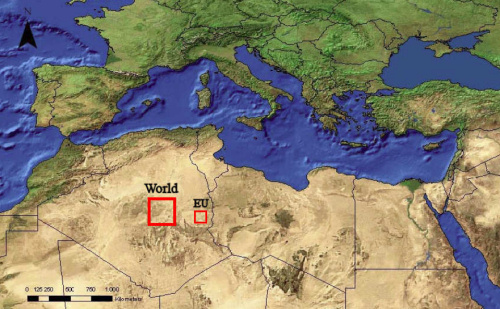
Solar thermal power plants have been in commercial use in southern California since 1985. An area of desert around 250 km by 250 km covered with CSP power generation could supply all the world's current electricity demand.


Solar thermal plants can be built in their entirety within a few years - much faster than many conventional power projects. Solar thermal plants are built almost entirely with modular, commodity materials (and thus have short development and construction times) and do not encounter the sort of opposition on environmental grounds that traditional forms of power generation like coal and nuclear face.

Operational plants include :

* US (California) - 354 MW FPL's Solar Energy Generating Systems (SEGS) plant, using parabolic troughs
* US (Arizona) - 1 MW Acciona Energy's Saguaro Solar Generating Station using parabolic troughs
* Spain (Seville) - 11 MW Abengoa's PS10 solar tower
* Australia (NSW) - 35 MW Liddell Power Station using fresnel reflectors
* US (Nevada) - 64 MW Acciona Energy's Nevada Solar One plant (not to be confused with the Solar One / Solar Two experimental plants) using parabolic troughs


Plants currently under construction :

* Spain (Seville) - 20 MW Abengoa's PS20 solar tower
* Spain (Seville) - 20 MW (each) Abengoa's PS20 and AZ20 solar towers
* Spain (Seville) - 50 MW (each) Abengoa's Solnova 1 and 3 using parabolic troughs (5 plants planned in all)
* Spain (Andalusia) - 17 MW Sener's Solar Tres solar tower (molten salt energy storage)
* Spain (Andalusia) - 50 MW (each) Sener's Andasol I, II and III plants (molten salt energy storage)


Solar Thermal Heating Up

There has been a spate of new announcements regarding solar thermal power over the past year - there are over 5,800 MW of solar thermal plants in the planning stages worldwide.

The company receiving the most attention seems to be Ausra, a company set up by Dr David Mills (who pioneered the CSP plant at the Liddell power plant in New South Wales using compact linear Fresnel-reflector technology) with backing from Vinod Khosla and Kleiner, Perkins, Caulfield & Byers (see here for a brief demo of how their technology works). Mills estimates that solar thermal plants could provide more than 90 percent of current U.S. power demand at prices competitive with coal and natural gas. "There's almost no limit to how much you can put into the grid," he says.

Mills presented a paper (pdf) at the IEA SolarPACES conference in Las Vegas recently which revealed some interesting statistics about the construction cost of solar-thermal technologies: US$3,000 per kW of capacity, estimating this will drop to US$1,500 per kW over the next "several" years. The New York Times last year quoted GE Energy executives estimating coal plant construction between US$2,000 and US$3,000 per kW. Ausra says it can generate electricity for 10 cents per kWh (close to the current cost using natural gas), and it expects the price to drop even further.

According to Technology Review:
What distinguishes Ausra's design is its relative simplicity. In conventional solar-thermal plants such as Solel's, a long trough of parabolic mirrors focuses sunlight on a tube filled with a heat-transfer fluid, often some sort of oil or brine. The fluid, in turn, produces steam to drive a turbine and produce electricity. Ausra's solar collectors employ mass-produced and thus cheaper flat mirrors, and they focus light onto tubes filled with water, thus directly producing steam. Ausra's collectors produce less power, but that power costs less to produce.

Ausra is initially planning a 177 MW plant in California, and has committed to supply 1,500 MW of power to Californian utilities PG&E and FPL. They are also rumoured to be moving in to Texas as well.

PG&E have also signed a 25-year deal with Ausra competitor Solel Solar Systems of Israel to buy power from a 553 MW solar thermal plant that Solel is developing in California's Mojave Desert. FPL has also hired Solel to upgrade the SEGS solar-thermal plants it operates in the Mojave.

Another PG&E contract is with BrightSource to supply between 500 MW and 900 MW of power per year from solar tower plants in California, beginning in 2011, with the first of a number of 100 MW facilities being built in Ivanpah.

Other companies active in the US include eSolar (linked to Google's energy initiatives), RocketDyne and SkyFuel.

Abu Dhabi's Masdar Initiative and Spain's Sener are have formed a joint venture to build and operate concentrating solar power plants across the world's sunbelt regions called Torresol Energy.


Independently of Torresol, Masdar is developing its 100 MW "Shams 1" CSP plant in Abu Dhabi.

Algeria and Germany have signed a a joint research agreement for the development of a new generation of large-scale, low-cost solar thermal power plants (which could contribute to the Desert-TREC vision of large scale CSP in North Africa powering Europe).

More new plants are being planned in :

* Algeria - 20 MW Abengoa's plant in Hassi-R'Mel
* Australia - 10 MW Queensland State Government facility in Cloncurry
* Australia - 154 MW Solar Systems and TRUEnergy's plant in Mildura
* Egypt - 70 MW plant in Kuraymat
* Iran - 17 MW plant in Yazd
* Israel - 250 MW plant in Ashalim
* Morocco - 20 MW Abengoa's plant in Ain-Ben-Mathar
* US (Arizona) - 280 MW Abengoa and Arizona Public Service's plant in Gila Bend
* US (California) - 50 MW Inland Energy's plant in Victorville
* US (California) - 250 MW FPL Energy's Beacon Solar Energy Project

Feasibility studies are also being done in Oman, China and Mexico.

Energy Storage

One of the key differentiating factors between solar thermal power and solar PV is that heat energy is more easily (and efficiently) stored than electricity, with solar thermal plants often combining energy storage into the design to enable around-the-clock, dispatchable electricity generation.

Most solar thermal plants are looking to use molten salt for storing energy - other alternatives being developed are graphite (in the Cloncurry development), heated water / steam (for the Ausra plants) and heat-transfer oil such as therminol (for the Abengoa plant in Arizona).

Cost

The existing plants prove that concentrated solar power is practical, but costs must decrease. Electricity from solar thermal plants currently costs between US$0.13 per kilowatt hour (kWh) and US$0.17 per kWh, depending on the location of the plant and the amount of sunshine it receives. Conventional power plants generate electricity for between US$0.05 and US$0.15 per kilowatt hour (not including any carbon taxes or cap and trade related costs) but in most places it's below US$0.10 (wind power generally costs around US$0.08 per kWh).

An economic analysis released last month by Severin Borenstein (pdf), director of the University of California's Energy Institute, notes that solar thermal power will become cost competitive with other forms of power generation decades before photovoltaics will, even if greenhouse-gas emissions are not taxed aggressively.

In 2006 a report by the Solar Task Force (pdf) of the Western Governors’ Association concluded that CSP could provide electricity at US$0.10 per kWh or less by 2015 if 4 GW of plants were constructed.

According to Bernhard Milow from the German Aerospace Center (DLR) electricity from solar thermal plants could cost as little as €0.04 per kWh [US $0.06/kWh] by 2020, with well sited plants potentially generating power at lower prices than coal.

The US DOE began supporting large scale CSP last year, aiming to reduce the cost of CSP power to 7-10¢/kWh by 2015 and 5-7¢/kWh by 2020. The DOE estimated that reaching these cost targets could lead to installation of up to 35,000 MW of new generating capacity by 2030 in the US. James Fraser at The Energy Blog commented at the time that it was 5 years too late (given recent commercial activity in the area) and that PV solar may beat these price goals before solar thermal does, but that more solar options are good in any case, as both PV and thin film solar manufacturing will be constrained by availability for materials for some time as production continues to accelerate.

Another estimate from Sandia labs showed solar thermal costs (for solar towers) could fall to around 4 cents per kWh by 2030.


Stirling Engines

Another variant on the solar thermal power theme are Stirling engine based power plants, which generate electricity directly rather than first storing the energy as heat.

Stirling Energy Systems seems to be the leader in this field, with some reports talking about agreements with Southern California Edison and San Diego Gas & Electric for up to 1.75 GW of power. The company recently set a new world record of 31.25% for Solar-to-Grid conversion efficiency.

Other companies pursuing stirling engine based solutions are Infinia and SunPower (not to be confused with its larger namesake in the PV industry).


Passive Solar Thermal - Solar Hot Water And Others

Generating power isn't the only way to utilise solar thermal energy of course - solar hot water is a very cheap and efficient way of replacing gas or electricity usage with solar energy. Solar hot water systems are in widespread use in Australia, with state and federal governments encouraging people to upgrade their home hot water systems to solar - almost cost free in some states. The New Zealand government is also encouraging the use of solar hot water systems.

Some larger scale uses of solar thermal hot water are being put in place by Abengoa in Texas and Colorado.

Solar hot water is in wide use in China as well, with the city of Rizhao becoming somewhat famous for achieving widespread takeup of the units.

An unusual variation of the direct capture of solar energy in the form of heat is from a Dutch company that has developed a "Road Energy System" that siphons heat from roads and parking lots to heat offices and homes.

And one final use of solar thermal power - it can keep your house warm, if your windows face the right way, and even better, have insulating glass that doesn't let the heat out again - which could help make your building energy positive.

Statistics

Locations of visitors to this page

blogspot visitor
Stat Counter

Total Pageviews

Ads

Books

Followers

Blog Archive

Labels

australia (619) global warming (423) solar power (397) peak oil (355) renewable energy (302) electric vehicles (250) wind power (194) ocean energy (165) csp (159) solar thermal power (145) geothermal energy (144) energy storage (142) smart grids (140) oil (139) solar pv (138) tidal power (137) coal seam gas (131) nuclear power (129) china (120) lng (117) iraq (113) geothermal power (112) green buildings (110) natural gas (110) agriculture (91) oil price (80) biofuel (78) wave power (73) smart meters (72) coal (70) uk (69) electricity grid (67) energy efficiency (64) google (58) internet (50) surveillance (50) bicycle (49) big brother (49) shale gas (49) food prices (48) tesla (46) thin film solar (42) biomimicry (40) canada (40) scotland (38) ocean power (37) politics (37) shale oil (37) new zealand (35) air transport (34) algae (34) water (34) arctic ice (33) concentrating solar power (33) saudi arabia (33) queensland (32) california (31) credit crunch (31) bioplastic (30) offshore wind power (30) population (30) cogeneration (28) geoengineering (28) batteries (26) drought (26) resource wars (26) woodside (26) censorship (25) cleantech (25) bruce sterling (24) ctl (23) limits to growth (23) carbon tax (22) economics (22) exxon (22) lithium (22) buckminster fuller (21) distributed manufacturing (21) iraq oil law (21) coal to liquids (20) indonesia (20) origin energy (20) brightsource (19) rail transport (19) ultracapacitor (19) santos (18) ausra (17) collapse (17) electric bikes (17) michael klare (17) atlantis (16) cellulosic ethanol (16) iceland (16) lithium ion batteries (16) mapping (16) ucg (16) bees (15) concentrating solar thermal power (15) ethanol (15) geodynamics (15) psychology (15) al gore (14) brazil (14) bucky fuller (14) carbon emissions (14) fertiliser (14) matthew simmons (14) ambient energy (13) biodiesel (13) investment (13) kenya (13) public transport (13) big oil (12) biochar (12) chile (12) cities (12) desertec (12) internet of things (12) otec (12) texas (12) victoria (12) antarctica (11) cradle to cradle (11) energy policy (11) hybrid car (11) terra preta (11) tinfoil (11) toyota (11) amory lovins (10) fabber (10) gazprom (10) goldman sachs (10) gtl (10) severn estuary (10) volt (10) afghanistan (9) alaska (9) biomass (9) carbon trading (9) distributed generation (9) esolar (9) four day week (9) fuel cells (9) jeremy leggett (9) methane hydrates (9) pge (9) sweden (9) arrow energy (8) bolivia (8) eroei (8) fish (8) floating offshore wind power (8) guerilla gardening (8) linc energy (8) methane (8) nanosolar (8) natural gas pipelines (8) pentland firth (8) saul griffith (8) stirling engine (8) us elections (8) western australia (8) airborne wind turbines (7) bloom energy (7) boeing (7) chp (7) climategate (7) copenhagen (7) scenario planning (7) vinod khosla (7) apocaphilia (6) ceramic fuel cells (6) cigs (6) futurism (6) jatropha (6) nigeria (6) ocean acidification (6) relocalisation (6) somalia (6) t boone pickens (6) local currencies (5) space based solar power (5) varanus island (5) garbage (4) global energy grid (4) kevin kelly (4) low temperature geothermal power (4) oled (4) tim flannery (4) v2g (4) club of rome (3) norman borlaug (2) peak oil portfolio (1)