Showing posts with label petratherm. Show all posts

Geodynamics seeking customers for geothermal power  

Posted by Big Gav in , , ,

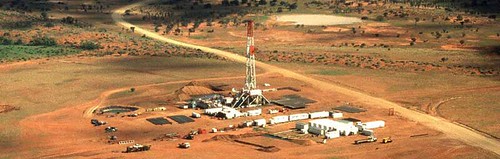
The SMH reports that geothermal power company GeoDynamics (which has greatly disappointed me over the years) is still working hard to progress their plant at Innamicka in South Australia - Hot rocks power company seeking customers.

Geodynamics, the developer of Australia’s first deep hot rocks energy project, aims to secure customers for its Cooper Basin site within six to 12 months, allowing it to proceed to a larger commercial plant, said chief executive Geoff Ward.

The company has spent more than $400 million since listing in 2002, including buying equipment and drilling. Its 1-megawatt Habanero pilot plant was commissioned on April 30 and has been operating in excess of expectations since, said chief executive Geoff Ward. "We're delighted by how stable and reliable" the operation has been, he said.

The geothermal plant at Innamincka in north-eastern SA taps salty water heated at 210 degrees more than 4.2 kilometres below the surface, extracting the heat to generate electricity. The cooled brine is then pumped back down a separate well where it is reheated by the hot rocks, creating an energy loop. Only two other sites now operate so-called enhanced geothermal systems, at Soulz in France and Landau in Germany.

Geodynamics will only proceed with a 5-10 megawatt commercial plant if it can secure customers. Potential clients include Santos, which operates its own gas and oil hub at Moomba, about 70 kilometres away. Beach Energy and Chevron, meanwhile, are exploring for unconventional shale gas within 5-15 kilometres of Geodynamics's wells.
GeoDynamics' competitor Petratherm seems to be losing confidence in their proposed alternative project, with the company looking to explore for shale oil in Tasmania.

After years of trying to commercialise geothermal energy in the South Australian outback, ASX listed Petratherm announced plans to diversify into shale oil and gas in Tasmania. ''This decision by Petratherm to extend into unconventional shale oil and gas exploration leverages our core areas of expertise that include basin geology and deep drilling,'' the company said.

Petratherm managing director Terry Kallis sought to reassure environmentally conscious investors that the company had not abandoned its geothermal project, which is planned to be about 75 per cent smaller than previous plans. But funding is hard to come by, and a $13 million government grant can be used only if Petratherm can raise millions of its own, a task that will be even more difficult under a lower carbon price.

Petratherm spells out green vision for South Australia  

Posted by Big Gav in , ,

Progress on goethermal power projects in South Australia has been disappointingly slow, however Petratherm continue to plug away trying to generate interest in a renewable energy precinct supplying power to Olympic Dam and adjoining mine sites. Recharge News reports - Geothermal group spells out green vision for South Australia.

Petratherm claims new tests reveal that wind and solar could play a big part in its vision of a 600MW Clean Energy Precinct in the north of the Australian state.

Assessments from consultancy Garrad Hassan Pacific reveal wind speeds of up to 8 metres per second at a height of 100 metres – offering the potential to host a 300MW wind farm – and a solar resource of 20 mega-joules per sq metre daily.

Adelaide-based Petratherm expects to complete the first 300MW stage of the project based on wind and gas generation. The second stage would see the deployment of large-scale geothermal energy from Petratherm’s ongoing South Australian Paralana project, supplemented by solar. The total cost of the project – located 300km northeast of Port Augusta – is estimated to be A$1.5bn ($1.57bn).

Petratherm says it is in discussions with key investors locally and overseas over potential technology and joint-venture partnerships. “It’s still early days for the precinct, but we remain firmly on track to combine new power generation facilities across gas, wind, solar and geothermal to eventually produce 600MW of reliable, competitively-priced electricity to meet anticipated demand from large mining developments in SA,” says Petratherm managing director Terry Kallis.

Petratherm sees robust demand growth from very large mines 270km east of the proposed site of the Clean Energy Precinct, including BHP Billiton’s Olympic Dam – eventually tipped to be the biggest in the world – and OZ Mineral’s Prominent Hill and Carapateena mines. Between them they are estimated to have a total potential demand in excess of 700MW.

Clean Energy for BHP’s Olympic Dam Expansion ?  

Posted by Big Gav in , , , , ,

Giles Parkinson at The Climate Spectator has a look at geothermal energy company Petratherm’s proposal for a renewable energy complex to power BHP’s Olympic Dam mine (the world’s largest if / when the expansion project is completed) - Cheap and green energy for miners.

It may seem somewhat audacious for a company with a market value of $16 million to propose a world-leading energy project nearly one hundred times its value. But, says Petratherm managing director Terry Kallis, if you don’t dream, you don’t get. And he just happens to think he’s sitting on a unique opportunity.

Kallis, on Wednesday, outlined his vision for a $1.5 billion clean energy precinct in the outback of South Australia that would take advantage of the unique combination of geothermal, solar and wind energy resources, the intersection of major gas pipelines, and the proximity of the world’s largest mine and other major developments.

The big opportunity is, of course, to service the massive energy demands of BHP Billiton’s proposed Olympic Dam expansion – which could be more than 700MW at that site alone – as well as other mine proposals or expansions such as Prominent Hill and Carrapateena. Mine managers do not normally think along the lines that Kallis has proposed – they will simply build a new transmission line if a connection is close enough, or build enough gas or diesel to ensure the operations keep going 24/7.

However, BHP Billiton have shown that they are willing to consider all options. As we reported in May, the world’s biggest mining company is effectively hedging its bets around the supply of energy and, after conducting a detailed analysis, is willing to concede that geothermal and solar power have the potential to offer the cheapest form of emissions reductions by the end of the decade, if not earlier, and the cheapest form of energy.

Kallis’ idea is to show BHP the path to get there, and to keep their options open as long as possible, so that they can take advantage of the opportunities when the new technologies are bankable, and can deliver at the costs anticipated. Kallis, of course, has great interest in this, because his company proposes to supply the geothermal energy – and Olympic Dam is too good an opportunity to let slide. "We want to make sure we don’t lose the opportunity to get geothermal into that market," he says.

Kallis proposes to create a clean energy precinct on the Moolawatana cattle station around 50km north of Petratherm’s Paralana geothermal prospect, and just over 200km from Olympic Dam. The plan calls for an initial 300MW of capacity – mostly gas sourcing fuel from the passing Moomba-Adelaide gas pipeline, and wind – and have that ready by 2016, around the time Olympic Dam would need it. The wind resource is not officially documented, but the cattle station’s name comes from the local indigenous word for “windy place", so Kallis expects that should not be a problem.

The idea is then to add another 300MW or so of geothermal and solar energy as those technologies mature by the end of the decade, and around the time Olympic Dam would be contemplating its next stage of expansion. The mixture of those four energy sources should provide the miner with the confidence of a secure supply. Kallis says they will be able to deliver attractive hybrid products that lower electricity costs and improve reliability, while also reducing carbon emissions.

Kallis has aligned himself with some unnamed parties – presumably gas, transmission and technology people – and plans to open formal talks with BHP with the view to obtaining a power purchase agreement. Failing that, they will talk to the local utility. Petratherm is, of course, in no position to fund this project, but as it has done by bringing in TruEnergy and Beach Petroleum to partner in its geothermal development, Kallis anticipates there will be no shortage of potential partners.

Of course, Kallis is not the only one to dream of creating a new energy precinct based around the needs of a large mining operation. The so-called “green grid" proposal to unlock huge wind resources in South Australia’s Eyre Peninsula is still awaiting the opportunity to proceed and will rely mostly on an upgraded connection to the eastern seaboard and the Copperstring project in Queensland, a project that was noisily supported by local member Bob Katter and hoped to link Townsville and Mt Isa and open up a string of renewable energy plays in wind, solar and biomass along the way.

However, such was the length of the transmission line that the fate of Cooperstring rested on the support of a single end user in Mt Isa, in this case Xstrata. Despite support from the Queensland state government, the Swiss-based Xstrata board plumped for the easy, not necessarily cheaper, option of a gas fired power station, and Copperstring is now dead. BHP, at least, is alert to the options, and as the country's biggest company with the world's biggest mine, would be aware of strong signal it would send to the broader economy.

Geothermal power heats up with newfound certainty  

Posted by Big Gav in , , ,

The Age reports the new carbon tax has increased interest in geothermal power companies - Geothermal power heats up with newfound certainty.

SCIENTISTS estimate there is enough energy stored in hot rocks beneath Australia's surface to meet its power demands millions of times over, but bold prognostications have not been enough for the geothermal industry.

Kevin Rudd's abandonment of Labor's first proposed emissions trading scheme hit the industry hard, with share prices plummeting and investors baulking. "That policy backflip has hurt the industry, no doubt," says Terry Kallis, managing director of South Australian company geothermal Petratherm. Hot rocks power remains a highly speculative industry, but things are slowly looking up for Petratherm.

Last month, it began fracturing rock four kilometres beneath the Earth's surface in the North Flinders Ranges using part of a $7 million federal government drilling grant — the key step in proving a geothermal reservoir can be created deep underground and the project has a future. Mr Kallis said he believes his is the only company with an active hot rocks project.
Advertisement: Story continues below

Yesterday Petrotherm's shares leapt 16 per cent, reaching a high of 23.5¢ before closing at 19¢. It is a far cry from its high of 92¢, but is an important reflection of the role the carbon price package — and a new $10 billion clean energy finance corporation, largely paid for with carbon tax revenue — could play in developing the industry.

"It has put us back on track, which is very important," Mr Kallis says.

"Every geothermal project will take a bit longer and cost a bit more because of the policy backflips that we have had, and we all rely on the equity market, which was hit with the financial crisis. [But] having a carbon price out there starts to create an investor framework and gives the industry some certainty — something we haven't had."

Changes in government policy is not the only thing that has held up geothermal investment. Projects take a long time to get off the ground and the costs are considerable with no guarantee of success.

Petratherm's project involves injecting water into rocks deep beneath the ground at high pressure in an attempt to create fractures. If successful, power will ultimately be generated by steam and hot water rising from a well and running a generator at the surface.

Petratherm has no short-term need for the new funding — it hopes to access an existing $63 million demonstration stage grant later this year. But Mr Kallis says the seed funding available from the corporation could prove valuable for the industry if well run.

Australia expects to have first delivery of commercial geothermal power in 2012  

Posted by Big Gav in , , ,

Xinhua (!) has a report on optimism that Petratherm will commence operating Australia's first commercial geothermal power plant next year - Australia expects to have first delivery of commercial geothermal power in 2012. There were some snippets about this in a couple of local media outlets, but nothing worth quoting.

Australia can expect its first delivery of commercial geothermal power by the end of 2012 from Petratherm's Paralana project in northern South Australia, local media reported on Wednesday.

In January, Petratherm successfully completed an initial test at its Paralana-2 well, where an injection of a small volume of water detected micro-seismic event as far as 300 metres out from the well hole.

A more major test is now scheduled for June, using higher volumes of water at higher pressure. The test will be critical, and by achieving it will help determine the company's ability to get a commercial flow rate going between the injector and the eventual Paralana-3 production well. ...

Petratherm plans to drill the deep Paralana-3 production well in the second half of 2011 and complete the final tests during the first half of 2012. It said this would allow the commercial commissioning of the power plant by the end of 2012. If so, the company will commission a 3.75 megawatt power plant.

Geothermal energy feels the heat  

Posted by Big Gav in , , , ,

The Business Spectator has an update on the geothermal energy sector in Australia - A clean energy source feels the heat.

Has a cloud of steam ever generated as much excitement as the vaporised water that emerged from the Panax Geothermal’s Salamander well in South Australia last Thursday?

“Those are beautiful pictures,” said one geothermal company executive as photos were distributed by Panax in its announcement to the ASX. “It will warm the cockles of the hearts of all the geothermal energy producers.”

The geothermal industry has been having a tough time of late. A technology with pretensions to displace the fossil-fuel energy industry finds itself at its lowest ebb: an unexplained end to government funding, a lack of interest from institutional and other investors, delays in drilling programs and technical problems at Geodynamic have combined to send the share prices of most listed geothermal companies to one or two year lows.

Worse than that, it has shaken the conviction of many that geothermal can deliver on its promise of relatively cheap, emissions free baseload energy that could power Australia’s energy many times over if just one per cent of its resources are tapped.

Which is why all eyes are focused on the results of drilling at the Salamander well. The significance of the steam, says Panax CEO Bertus de Graaf, is that it is proof that the company has found a reservoir of energy, the first in a hot sedimentary aquifer in Australia. “What we don’t know yet is the quality of the reservoir,” de Graaf says. ...

If Panax can prove it has an economically viable reserve of energy and can set in train plans to connect an initial 5.9MW plant to the grid by the end of 2011, then it may convince the government to inject more funds into the industry, which is currently slated to receive less than a tenth of that promised to carbon capture and storage projects, and less than one sixth promised to large scale solar – even though Energy Minister Martin Ferguson likes to talk up its potential.

This approach has flummoxed many observers, but there are signs that Ferguson may be considering supplementary funding. He was a recent visitor to the Penola project and admitted that Australia would be hard pushed to even meet its 20 per cent renewable target by 2020 without a major contribution from geothermal.

But right now, many geothermal companies cannot access funds to drill their first well, most are running short on cash, and some, such as Petratherm, which is benefiting from a $63 million grant for its Paralana project, is tapping shareholders for the second time in a year.

Geothermal industry plan launched in Australia  

Posted by Big Gav in , , , ,

The ABC reports that a geothermal energy plan has been launched in Australia to make it a baseload power source (this is different to schemes to make wider use of low temperature geothermal power) - Geothermal industry plan launched.

The development of geothermal energy in Australia is a step closer with the launch of an industry framework today. Geothermal energy is produced by harnessing the heat of so called 'hot rocks' buried kilometres underground.

The framework has brought together industry, researchers and governments to work out how to make geothermal a genuine baseload power alternative. Geoscience Australia estimates it will take five to 10 years before geothermal energy is commercially available.

PACE reports that geothermal power hopeful Hot Rock is trying to get a 50 MW plant up and running in Victoria - Geothermal energy planned for 2012.
Local company Hot Rock Limited is preparing developments for its first geothermal exploration power station next year, in a quest to provide a cleaner, greener energy source for Australia by 2012.

Hot Rock is the largest single holder of geothermal exploration permits in Australia, and its four permits in the area have a total area of 18,294 square kilometres and extend for approximately 270 kilometres along the South Australian coastline and inland.

Locations within Hot Rock’s reach include Portland, Hamilton, Warrnambool, Terang and Colac, some of which have hot springs related to the Otway Basin Geothermal Province.

Geothermal energy is a process of generating clean electricity from naturally-occuring hot water under the ground. The heated water is pumped from below the surface via a network of production wells, and its heat is extracted to produce electricity. Cool water is then pumped back into the hole for use next time.

An independent review by engineering consultants, SKM, showed that the area in which Hot Rock holds permits has the scope to generate up to 1,750MWe or approximately 35 per cent of Victoria’s electricity needs.

Fully developing this area could position Victoria as one of the cleanest states of Australia for electricity generation, says Hot Rock.

The four permit areas held by Hot Rock have already been explored for oil and gas, with over 180 wells drilled. Four of these wells have been shown to offer geothermal resources with water heated to 145 degrees C at depths of 2,400 to 3,600 metres below the ground, which is relatively shallow, according to the company.

Hot Rock is in discussions with electricity generation and retail companies on a joint venture power development in the Koroit Project, which is a 250 square kilometre area within the permitted locations, within the vicinity of two previous drill holes that encountered hot water.

“The [joint venture] comprises an initial proof on concept phase involving the drilling and testing of two wells followed by development of a 50MW power plant,” the company said in a recent quarterly report to the Australian Stock Exchange.

Adelaide Now reports that Geodynamics is looking to expand into the Hunter Valley, with the NSW government giving them some financial encouragement - Cooper Basin hot rocks explorer Geodynamics gets $10m grant. Geodynamics' first pilot plant is South Australia is due to be operational in March next year.
COOPER Basin hot rocks explorer Geodynamics has been given a $10 million grant by the NSW Government to develop a commercial geothermal project in the Hunter Valley, NSW. The NSW government will invest $27 million in seven renewable energy projects, with Geodynamics' the largest player.

Managing director Gerry Grove-White said the funding would be for commissioning of a small geothermal power plant in the Hunter Valley in 2012. "The first stage of this will be the drilling of a 2km exploration well in early 2009 to confirm temperature gradients,'' he said. Geodynamics Hunter Valley tenements at Bulga and Muswellbrook may also hold significant geothermal resources, he said.

Meanwhile the company was close to a major milestones at its key project in the Cooper Basin near Innamincka, South Australia. A 1 MW pilot plant to power the company's joint venture operations with Origin Energy in the outback town of Innamincka is planned to be commissioned from February 1 and the town powered by geothermal energy by March 31.

Mr Grove-White said the knowledge and expertise Geodynamics has achieved in the Cooper Basin over the past five years will be used in the development of the Hunter Valley project.

Adelaide Now also reports that Petratherm is looking to start drilling at Paralana in May next year - Hot rocks fire up investors.
INVESTORS have bought into South Australian geothermal energy explorers in response to renewed Federal Government support for the sector, says Petratherm managing director Terry Kallis.

Federal Resources and Energy Minister Martin Ferguson reinforced the Government's commitment to a $50 million geothermal drilling program at a CEDA speech in Adelaide on October 24. Shares in SA-focused geothermal energy stocks have since climbed a combined 34 per cent despite turbulent market trade.

"The Federal Government is reinforcing the fact that they're still committed to the renewable energy sector . . . I think people are starting to see what the quality stocks are in each sector,'' Mr Kallis said. ...

Drilling at Petratherm's Paralana project begins in May, 2009 under its $57 million TRUenergy farm-in agreement. Its shares have climbed 37 per cent since October 24, up 13c to 48c. ...

Mr Kallis said Petratherm had costed its Paralana Project at $6 million per megawatt (MW) for a 30MW base-load plant operating around the clock. A typical wind project would cost $2 million per MW of installed capacity, but would only operate for one third of the time, making geothermal as cost competitive as wind, Mr Kallis said.

He said Petratherm planned to generate revenues as early as May, 2010 when its Geo-Madrid District Heating Project is expected to be on stream.

Statistics

Locations of visitors to this page

blogspot visitor
Stat Counter

Total Pageviews

Ads

Books

Followers

Blog Archive

Labels

australia (619) global warming (423) solar power (397) peak oil (355) renewable energy (302) electric vehicles (250) wind power (194) ocean energy (165) csp (159) solar thermal power (145) geothermal energy (144) energy storage (142) smart grids (140) oil (139) solar pv (138) tidal power (137) coal seam gas (131) nuclear power (129) china (120) lng (117) iraq (113) geothermal power (112) green buildings (110) natural gas (110) agriculture (91) oil price (80) biofuel (78) wave power (73) smart meters (72) coal (70) uk (69) electricity grid (67) energy efficiency (64) google (58) internet (50) surveillance (50) bicycle (49) big brother (49) shale gas (49) food prices (48) tesla (46) thin film solar (42) biomimicry (40) canada (40) scotland (38) ocean power (37) politics (37) shale oil (37) new zealand (35) air transport (34) algae (34) water (34) arctic ice (33) concentrating solar power (33) saudi arabia (33) queensland (32) california (31) credit crunch (31) bioplastic (30) offshore wind power (30) population (30) cogeneration (28) geoengineering (28) batteries (26) drought (26) resource wars (26) woodside (26) censorship (25) cleantech (25) bruce sterling (24) ctl (23) limits to growth (23) carbon tax (22) economics (22) exxon (22) lithium (22) buckminster fuller (21) distributed manufacturing (21) iraq oil law (21) coal to liquids (20) indonesia (20) origin energy (20) brightsource (19) rail transport (19) ultracapacitor (19) santos (18) ausra (17) collapse (17) electric bikes (17) michael klare (17) atlantis (16) cellulosic ethanol (16) iceland (16) lithium ion batteries (16) mapping (16) ucg (16) bees (15) concentrating solar thermal power (15) ethanol (15) geodynamics (15) psychology (15) al gore (14) brazil (14) bucky fuller (14) carbon emissions (14) fertiliser (14) matthew simmons (14) ambient energy (13) biodiesel (13) investment (13) kenya (13) public transport (13) big oil (12) biochar (12) chile (12) cities (12) desertec (12) internet of things (12) otec (12) texas (12) victoria (12) antarctica (11) cradle to cradle (11) energy policy (11) hybrid car (11) terra preta (11) tinfoil (11) toyota (11) amory lovins (10) fabber (10) gazprom (10) goldman sachs (10) gtl (10) severn estuary (10) volt (10) afghanistan (9) alaska (9) biomass (9) carbon trading (9) distributed generation (9) esolar (9) four day week (9) fuel cells (9) jeremy leggett (9) methane hydrates (9) pge (9) sweden (9) arrow energy (8) bolivia (8) eroei (8) fish (8) floating offshore wind power (8) guerilla gardening (8) linc energy (8) methane (8) nanosolar (8) natural gas pipelines (8) pentland firth (8) saul griffith (8) stirling engine (8) us elections (8) western australia (8) airborne wind turbines (7) bloom energy (7) boeing (7) chp (7) climategate (7) copenhagen (7) scenario planning (7) vinod khosla (7) apocaphilia (6) ceramic fuel cells (6) cigs (6) futurism (6) jatropha (6) nigeria (6) ocean acidification (6) relocalisation (6) somalia (6) t boone pickens (6) local currencies (5) space based solar power (5) varanus island (5) garbage (4) global energy grid (4) kevin kelly (4) low temperature geothermal power (4) oled (4) tim flannery (4) v2g (4) club of rome (3) norman borlaug (2) peak oil portfolio (1)
