Showing posts with label r buckminster fuller. Show all posts

Is It Time For A Four Day Working Week ?  

Posted by Big Gav in , , , , , ,

The Sydney Morning Herald recently had an editorial calling for consideration of a 4 day working week as a response to economic contraction and alternative to making employees redundant.

DECIMATE. This word used to have a highly specific meaning: the killing of every 10th person, chosen by lot, as punishment by the Roman army for mutinous legions. The same concept comes to mind in the present economic contraction, as one in every 10 people employed by the private sector could lose their jobs as companies cut costs to survive in a credit freeze.

Private enterprises are the lifeblood of the Australian economy but are also the least insulated from the rolling shocks of the highest single-year decline ever recorded on the Australian sharemarket, and the sharpest downturn in Australian wealth ever recorded. The number of job ads is in free-fall. Anecdotal evidence is pouring in that job ads are generally being swamped by job applicants.

Each day brings new bad tidings on the employment front. Yesterday it was the International Monetary Fund announcing it may cut its growth forecast for Australia to zero for 2009. Mighty Microsoft announced it would cut 5000 jobs worldwide, although the cuts would not extend to Australia. The day before, the nation's largest private employer, Wesfarmers, which has a mostly casual workforce of 200,000, announced it expected to cut the hours worked by staff. BHP announced more than 3000 job cuts in Australia. David Jones said it would decimate its administrative staff, that is, cut one in 10 back-office jobs.

The spectre of unemployment is casting the longest and darkest shadow over the economy and consumer sentiment. To survive this downturn in confidence and investment, private companies, which do not have the luxury of being supported by the taxpayer, are having to cut costs.

So how to ease the pain and share the burden? In order to minimise the trauma of involuntary redundancies, we believe inadequate consideration is being given to the non-voluntary four-day week as an alternative to redundancy. This may be administratively difficult. We are under no illusions about the workplace legislation imposed on employers by federal and state governments, which is ridiculously complex and burdensome. This idea may also be opposed by unions paranoid about a Trojan horse of lower pay and more onerous conditions. But surely a four-day week, either voluntary or imposed, is preferable to involuntary redundancies.

The idea of a 4 day working week isn't an entirely abstract one for me, as my current employer has been significantly cutting back on staff levels over the past 6 months. The manager of my team took the approach of offering us all reduced work hours rather than having to let anyone go, which we've all accepted, so I'm now seeing what a 4 day week is like (and having just come back from a 4 day weekend hiking in the Snowy Mountains I can't say I have any complaints so far).

Australia isn't the only country considering reducing standard working hours - The Independent recently had an article titled "Britain is facing return of three-day week", quoting government sources as saying "Shorter hours would be preferable to mass unemployment". Car manufacturer Jaguar is currently considering a 4 day week to reduce costs.

Japan is also adopting the approach of reducing employee working hours in preference to firing people as they deal with their slump in exports and consumption, with the practice known locally as "work-sharing".

While the usual reason for adopting a shorter work week is economic, there is also an argument that working less hours reduces consumption and waste and can thus be justified on environmental and health grounds.

One country that shifted to a shorter work week some time ago was France, with their 35 hour week. In recent years this has been rolled back by President Sarkozy, sparking a lot of resentment by affected workers. The New York Times had an article on this, pointing out that relaxed working hours have long been part of French culture:
THE new French president, Nicolas Sarkozy, has made no secret of his antipathy to his country’s 35-hour workweek. This drastic solution to unemployment was mandated by the leftist government of Lionel Jospin in 2000. The intention was to share out the available work more evenly and to allow workers to spend more time with their families. Its long-term effects on the economy are still unclear.

In the autobiography-manifesto that he published during his presidential campaign, Mr. Sarkozy wrote of “the harm that the 35-hour week has done to our nation”: “What madness it is to think that the way to increase wealth and create jobs is to work less!” On Oct. 1, he effectively abolished the 35-hour week by removing fiscal penalties on overtime. The strikes and protests in France this month give a taste of the unions’ reaction to President Sarkozy’s measure.

President Sarkozy’s 19th-century predecessors would have been amazed that such comparatively small adjustments are treated as matters of economic life and death. They, too, were worried by the snail-like progress of the French economy, and wondered how to compete with the industrial powerhouse of Britain. But they were faced with something far more ruinous than unemployment.

Economists and bureaucrats who ventured out into the countryside after the Revolution were horrified to find that the work force disappeared between fall and spring. The fields were deserted from Flanders to Provence. Villages and even small towns were silent, with barely a column of smoke to reveal a human presence. As soon as the weather turned cold, people all over France shut themselves away and practiced the forgotten art of doing nothing at all for months on end.

In the mountains, the tradition of seasonal sloth was ancient and pervasive. “Seven months of winter, five months of hell,” they said in the Alps. When the “hell” of unremitting toil was over, the human beings settled in with their cows and pigs. They lowered their metabolic rate to prevent hunger from exhausting supplies. If someone died during the seven months of winter, the corpse was stored on the roof under a blanket of snow until spring thawed the ground, allowing a grave to be dug and a priest to reach the village.

The same mass dormancy was practiced in other chilly parts. In 1900, The British Medical Journal reported that peasants of the Pskov region in northwestern Russia “adopt the economical expedient” of spending one-half of the year in sleep: “At the first fall of snow the whole family gathers round the stove, lies down, ceases to wrestle with the problems of human existence, and quietly goes to sleep. Once a day every one wakes up to eat a piece of hard bread. ... The members of the family take it in turn to watch and keep the fire alight. After six months of this reposeful existence the family wakes up, shakes itself” and “goes out to see if the grass is growing.”

It is unlikely this was hibernation in the zoological sense. While extreme cold might have set off a biological response normally seen only in squirrels, bears and marmots, human hibernation probably reflects a sensible, communal decision to stay in bed for as long as possible.

But the French seem to have been particularly sleepy. They “hibernated” even in temperate zones. In Burgundy, after the wine harvest, the workers burned the vine stocks, repaired their tools and left the land to the wolves. A civil servant who investigated the region’s economic activity in 1844 found that he was almost the only living presence in the landscape: “These vigorous men will now spend their days in bed, packing their bodies tightly together in order to stay warm and to eat less food. They weaken themselves deliberately.”

President Sarkozy’s campaign slogan, “Work more to earn more,” would have meant nothing to most French peasants. After the Revolution, government officials complained that farmers were “abandoning themselves to dumb idleness,” instead of undertaking “some peaceful and sedentary industry.” Income acted only as a deterrent. The people of Beaucaire on the Rhône made enough money at their summer fair to spend the rest of the year “smoking, playing cards, hunting and sleeping.”

Until the 20th century, few people needed money. Apart from salt and iron, everything could be paid for in kind. Economic activity was more a means of making the time pass than of making money, which might explain why one of the few winter industries in the Alps was clock-making. Tinkering with tiny mechanisms made time pass less slowly, and the clocks themselves proved that it was indeed passing.

In modern France, where the overheated ski stations of the Alps and the Pyrenees are busier in winter than at any other time, no one is proposing a return to the five-month year. But perhaps there are lessons to be learned from those hibernating ancestors who shared their homes with heat-producing herbivores.

In September, at the General Assembly of the United Nations, President Sarkozy proposed “un New Deal écologique et économique,” but without explaining how economic growth can be reconciled with conservation. If he is serious about saving the planet, and if he wants to reassure the unions that workers will still have time with their families, he should consider introducing tax incentives for hibernation. The long-term benefits of reduced energy consumption would counterbalance the economic loss. There has never been a better time to stay in bed.

Reducing Energy Use Through A Shorter Working Week

One institution that has recently adopted the shorter for all workers is the Utah state government in the US, which switched to a four-day week last year primarily to save money on electricity, gasoline and other energy expenses.

Similar schemes seem to be under consideration throughout the US, with Google News throwing up examples in Florida, North Carolina and Minnesota.
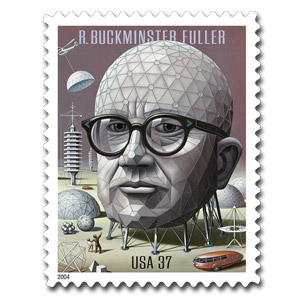
Reducing the working week is an approach for reducing energy consumption recommended by a number of peak oil observers - both recent ones like Aaron Newton and older ones like Bucky Fuller, who argued that many people worked in jobs that did not produce sufficient value to justify the expense of energy required to do them.
The computer will also have verified both of the important findings of the brilliant Denver, Colorado oil geologist, Francois de Chardenedes ... regarding the amount of energy employed as heat and pressure, for the length of time initially that it took nature to photosynthetically process Sun radiation into the myriad of hydrocarbon molecules that comprise all the vegetation and algae ... a large percentage of which Sun-energy-nurtured-and-multiplied molecules are ultimately processed into petroleum.

The script of de Chardenedes' "Scenario of petroleum Production" makes it clear that, with all the cosmic energy processing (as rain, wind and gravitational pressure) and processing time (paid for at the rates you and I pay for household electricity), it costs nature well over a million dollars to produce each gallon of petroleum. To say "I didn't know that" doesn't alter the inexorable energy accounting of eternally-regenerative, 100-per-cent efficient - ergo, 100-pr-cent concerned - physical energy Universe.

We find all the no-life-support-wealth-producing people going to their 1980 jobs in their cars or buses, spending trillions of dollars' worth of petroleum daily to get to their no-wealth producing jobs. It doesn't take a computer to tell you that it will save both Universe and humanity trillions of dollars a day to pay them handsomely to stay at home. - Buckminster Fuller - Critical Path

The Society Of Sloth

One figure who should be familiar to most peak observers that has considered working less as a solution of sorts to peak oil is Jay Hanson. One of Jay's "thought experiments" that is less Malthusian than usual for him (albeit quite coercive) is one he dubbed "The Society Of Sloth".

The society of sloth adopts a technocrat style energy based currency is is distributed equally amongst all by a global government with a mandate to protect the global commons. Jay (echoing Hubbert and Fuller) says that:
With modern technology, probably less than 5% of the population could produce all the goods we really “need”. A certain number of “producers” could be drafted and trained by society to produce for two years. The rest can stay home and sleep, sing, dance, paint, read, write, pray, play, do minor repairs, work in the garden, and practice birth control.

In Praise Of Idleness

There is a large body of work justifying working less not on energy or environmental grounds, but purely on the basis that long working hours are simply not necessary, and that idleness is a virtue in and of itself.

One classic example of this is Bertrand Ruseell's 1932 essay, "In Praise Of Idleness", in which he describes the work ethic (be it the feudal variety manifested in the Protestant work ethic or the modern - at the time of writing - worship of manual work by the Marxists) as a relic of a bygone age and shorter working hours as the natural way for dealing with increased industrial productivity.

This theme continues to appear with some regularity, with some examples that caught my eye in recent years including Jason Godesky's "In praise of laziness (looking at the issue from a primitivist point of view), Gene Longsdon's "The lovely, life-saving virtue of laziness" (small scale farming) and Mark Slouka's "Quitting the paint factory: On the virtues of idleness" (idleness as the foundation of democracy). One writer even went so far as to recommend "idle parenting", declaring it results in "happy children" who have learnt how to fend for themselves.

Sometimes the idolisation of idleness is more a product of cynicism and disengagement from seemingly meaningless work, as in this French example celebrating the "sloth ethic", as documented in Crinne Maier's book "Hello Laziness!: Why Hard Work Doesn't Pay".

The Onion once summed up this line of thinking (perhaps not entirely seriously) in "180 Trillion Leisure Hours Lost To Work Last Year":
According to a report released Monday by Boston University's School of Lifestyle Management, more than 180 trillion leisure hours were lost to work in 2004.

"The majority of American adults find work cutting into the middle of their days—exactly when leisure is most effective," said Adam Bernhardt, the Boston University sociology professor who headed the study. "The hours between 9 a.m. and 6 p.m. are ideally suited to browsing stores, dozing in front of the television, and finishing the morning paper. Daytime hours are also the warmest and sunniest of the day, making them perfect for outdoor activities. Unfortunately, most Americans can't enjoy leisure during this time, for the simple reason that they're 'at work.'"

There is a dormant site called "Why Work: Creating Livable Alternatives To Wage Slavery" which has collected essays, book excerpts and articles by Bob Black (such as The Abolition of Work), Robert Anton Wilson, Bertrand Russell, Buckminster Fuller, Jean Liedloff and others on the theme of virtuous laziness.

While most advocates of laziness seem to come from the left (Karl Marx's son-in-law Paul Lafarge, for example, wrote a tract called "The Right To Be Lazy" during a period of enforced semi-idleness at Saint Pélagie Prison, though apparently he couldn't help but put his time to a form of productive endeavour), the more anarchically inclined denizens tend to regard the socialists and communists as being just as work obsessed as the capitalists.

This essay on "Bob Black: Abolitionist and Archestrator of the Slack Revolution" sums up the view of the anti-marxists:
After all these years, and after reading Bob Black's The Abolition of Work, I have finally realized just what was wrong with Marxism. Oh, the Marxists talked a good game - working in the morning, fishing in the afternoon, lounging around to watch the sunset; 20-hour workweeks; month-long vacations; etc. But when you get down to it, they are still drawing from the same poisoned well that has parched Western civilization for the last 500 years: the Protestant Ethic, which freed Europe from Catholic voodoo only to feed its heads with doodoo, such as "work is the outward sign of moral perfection." While Luther was telling people that what counted was faith and the Holy Spirit, not work and deeds, Calvin helped spread silly ideas, like the one that people had to be at constant physical labor or idleness would tempt them to sin. Deep down, this is the root of the Puritan Ethic: why even today the neo-Puritans hate Hollywood with such passion: they feel that if we are not kept busy with mindless, rote work, then we will be seized by the carnal passions and led to sin.

Marxists claim that workers are overexploited. So what is their solution? Have the workers take over the factory to "restore the dignity of work." Make everybody do manual labor, like the Pol Pot regime did in Cambodia and the Incas did in Peru - as Mao said, "let there be no separation between the work of the hands and the work of the mind." Our goal should be to increase production. Deep down Marxists, while despising capitalism, only want to hijack what they see as its main notable achievement, accomplished through the Industrial Revolution: mass production. They do not want to abolish the assembly line, only bring more of us to its trough. Let the elite fat cats sweat with the so-called "working class." Rather than wanting us to all enjoy the life of leisure led by the fat cats, the Marxists' main goal is motivated by envy - they want to force the fat cats to suffer as the "working class" has suffered.

I finally saw through the Marxist illusion when I realized the deep-set opposition to automation of mass production. Marx could not have predicted the development of robots, and yet his so-called followers oppose them with tooth and nail. Why should we force people to do machine-like rote work? Why not have machines do the work of machines? Marxists fight automation because they claim it threatens jobs. You remember what "jobs" are, right? They are the things that society tells us we have to work 9 to 5 at and be "productive," right? Marxists deep down view people as units of production. They hate people who refuse to be productive, who will not work, the so-called "lumpenproletariat" who refuse to be a part of anybody's 'productive forces.' Marxists do not have a true liberatory vision. They want to "liberate" the working class from its exploitation by the finance class. But they do not want to liberate everyone. They want to turn us all into "workers."

Bakunin, Kropotkin, Proudhon, and other anarcho-syndicalists, libertarian-socialists, and anti-technocrats at the International realized that this was the fatal flaw of Marxism. "Work" as we know it should be abolished - that is, the requirement that all of us "mass produce" things that other people need - and taken over by robot labor. This is the promise of post-industrial society, and yet some Marxists greet it with horror. After all, even capitalist industrialism raised the standard of living of the working class to an incredible degree. Yet, things like nanotechnology and the miniaturization revolution have abolished the fundamental assumptions of Marxism and of economics in general. There will be no more scarcity. More and more can be produced with less and less - of energy, capital, resources, and, yes, human labor as well. People can and always will produce the things they or those they know want with their own hands, or, if they are skilled artisans, the things that others want, but with time, precision, and care. But there will be no more mass production.

If you understand Black, Bookchin, Fuller, Henderson, or others, then you know that the industrial revolution is at an end. The Modernist assumption, that the way our lives could improve was through industrialization and urbanization, is at an end. Industrialism is a massive roaring engine, to whom we have sacrificed so many human lives, and whose appetite threatens to consume and poison the world today. But if we "downsize" and "localize" what we make - Schumacher's "small is beautiful" - and do it with robots, we will not need industrialism anymore. There is nothing radical, revolutionary, or liberatory in the industrial vision. Putting more of us into the factories will not accomplish anything. No matter how "friendly" you make the factory - slow down the assembly line, improve worker safety, give hour-long coffee breaks, have ten people doing the job of two - the factory remains a factory. A place where workers' safety, health, and mental well-being is challenged each and every day.

Marxists are still hung up on this concept of "use value." Something is only worth as much as the amount of "work" - mindless routine labor - that went into its making. They react with horror to the way the economists have been 'brainwashing' us with the silly notion of "exchange value" - i.e. that something is worth as much as you or I are willing to pay for it - because it does not attach any value to the "work" of the robot-human who produced it. Marxists hate artists - at least, those who do not practice social realism - because they produce things that have no "use." You cannot "use" a painting or sculpture, any more than you can a smile or a rainbow. The value of art does not come from the hours of sweat the painter put into the canvas. No, it comes from how much someone enjoys the painting. Yes, you heard me right. Enjoyment. Pleasure. It doesn't fit into the dim, dingy workers' universe of the Marxists. That people might want things not so much that they can use them, but simply because they enjoy having them.

An artist is sharing his creative vision with you, and you pay him as thanks for that. Someday, there will be no workers, only artists. Like the artisans of old, the only things people will make will be the things they want to. Everything else, especially the thing that everybody needs - food, clothing, shelter, and so forth - will be made by robots, who can make them more efficiently. Robots do not complain, do not have "health" to be insured or threatened by industrial processes, do not make mistakes (if programmed correctly), and do not need to be paid. The "bosses" have known this for thirty years. Only the "workers," those neo-Luddites, seem to want to protect their neat unionized niche in the assembly plant from the new technology of automation. They do not realize that the boss is their liberator. He has liberated them from the factory. Marxists call this "unemployment," and treat it as a tragedy, because in our society someone must somehow be "employed" in order to have the things they need to feed themselves and their families.

The truly humane, post-Marxist society will be one in which no one needs to have a "job." The idea is an obsolete concept. For the so-called "middle class" the idea is an especial absurdity. These people get in their polluting cars, wait in traffic jams, and search frenetically for parking, all so they can go to an "office" where they do things that could just as easily be done at home with a computer and a modem. But we seem fixated on this idea, that we must go somewhere else, "work" for eight hours, and then come home again. The "work" of the middle class may not be as physically exhausting as that of the "working class," but it is as equally rote, boring, repetitive, and unoriginal, focusing on the copying and recopying of information. That is something that could be done much better by artificially intelligent computers. As one writer once put it, 95% of people move matter from one place on earth to another, and 5% keep track of where they put it. In our post-industrial society, there is no need for either "labor" or "management." Both have become equally obsolete.

The Economics Of Abundance

The idea of a post-scarcity society, where industrial processes are so well automated that little human labour is require to produce all our material needs, isn't a particularly well studied one, though obviously both Bucky Fuller and the technocracy people have promoted it versions of it in the past.

The primary exception is information production, where the rise of the internet and the ability to copy and distribute information at negligible cost has made it a topic of interest for thinkers like Chris Anderson and his theory of "The Long Tail", who suggest the "Tragically Neglected Economics of Abundance" are worthy of greater attention.

The economics of abundance do get quite a bit of attention amongst science fiction authors however (mainstream economists preferring to dwell in the present, and perhaps the past, as much as possible).

There are some signs that even in the world of material goods some parts of the world are approaching a post scarcity-economy with most people in the developed world have few material wants that they cannot satisfy (and you could make the case that the reason that this could be true for everyone, if not for the way society and the economy is currently structured) - countries like Japan have long needed to export unwanted second hand cars to places like New Zealand, for example.

One person who has made an attempt to try and describe what abundance looks like is Walt Frazier, in his essay "A World Based On Abundance", though this seems overly-utopian in many ways and I'm not sure human nature is such that all the characteristics specified could ever be met (conflict isn't always based on economics / survival and some things will always remain "scare" - large houses facing onto Palm Beach, for example).

Whether or not we ever reach a global, post scarcity economy is a matter for debate, though I'd like to think that it is possible or at the very least a useful "target" of sorts.

I'll close with a quote from Robert Anton Wilson's paper "The RICH economy":
If there is one proposition which currently wins the assent of nearly everybody, it is that we need more jobs. "A cure for unemployment" is promised, or earnestly sought, by every Heavy Thinker from Jimmy Carter to the Communist Party USA, from Ronald Reagan to the head of the economics department at the local university, from the Birchers to the New Left.

I would like to challenge that idea. I don't think there is, or ever again can be, a cure for unemployment. I propose that unemployment is not a disease, but the natural, healthy functioning of an advanced technological society.

The inevitable direction of any technology, and of any rational species such as Homo sap., is toward what Buckminster Fuller calls ephemeralization, or doing-more-with-less. For instance, a modern computer does more (handles more bits of information) with less hardware than the proto-computers of the late '40's and '50's. One worker with a modern teletype machine does more in an hour than a thousand medieval monks painstakingly copying scrolls for a century. ...

Unemployment is not a disease; so it has no "cure."

This tendency toward ephemeralization or doing more-with-less is based on two principal factors, viz:

1. The increment-of-association, a term coined by engineer C.H. Douglas, a meaning simply that when we combine our efforts we can do more than the sum of what each of us could do seperately. Five people acting synergetically together can lift a small modern car, but if each of the five tries separately, the car will not budge. As society evolved from tiny bands, to larger tribes, to federations of tribes, to city-states, to nations, to multinational alliances, the increment-of-association increased exponentially. A stone-age hunting band could not build the Parthenon; a Renaissance city-state could not put Neil Armstrong on the Moon. When the increment-of-association increases, through larger social units, doing-more-with-less becomes increasingly possible.

2. Knowledge itself is inherently self-augmenting. Every discovery "suggests" further discoveries; every innovation provokes further innovations. This can be seen concretely, in the records of the U.S. Patent Office, where you will find more patents granted every year than were granted the year before, in a rising curve that seems to be headed toward infinity. ...

Unemployment is directly caused by this technological capacity to do more-with-less. Thousands of monks were technologically unemployed by Gutenberg. Thousands of blacksmiths were technologically unemployed by Ford's Model T. Each device that does-more-with-less makes human labor that much less necessary.

Aristotle said that slavery could only be abolished when machines were built that could operate themselves. Working for wages, the modern equivalent of slavery -- very accurately called "wage slavery" by social critics -- is in the process of being abolished by just such self-programming machines. In fact, Norbert Wiener, one of the creators of cybernetics, foresaw this as early as 1947 and warned that we would have massive unemployment once the computer revolution really got moving.

It is arguable, and I for one would argue, that the only reason Wiener's prediction has not totally been realized yet -- although we do have ever-increasing unemployment -- is that big unions, the corporations, and government have all tacitly agreed to slow down the pace of cybernation, to drag their feet and run the economy with the brakes on. This is because they all, still, regard unemployment as a "disease" and cannot imagine a "cure" for the nearly total unemployment that full cybernation will create.

Suppose, for a moment, we challenge this Calvinistic mind-set. Let us regard wage-work -- as most people do, in fact, regard it -- as a curse, a drag, a nuisance, a barrier that stands between us and what we really want to do. In that case, your job is the disease, and unemployment is the cure.

"But without working for wages we'll all starve to death!?! Won't we?"

Not at all. Many farseeing social thinkers have suggested intelligent and plausible plans for adapting to a society of rising unemployment. Here are some examples.

1. The National Dividend. This was invented by engineer C. H. Douglas and has been revived with some modifications by poet Ezra Pound and designer Buckminster Fuller. The basic idea (although Douglas, Pound, and Fuller differ on the details) is that every citizen should be declared a shareholder in the nation, and should receive dividends on the Gross National Product for the year. Estimates differ as to how much this would be for each citizen, but at the current level of the GNP it is conservative to say that a share would be worth several times as much, per year, as a welfare recipient receives -- at least five times more.

Critics complain that this would be inflationary. Supporters of the National Dividend reply that it would only be inflationary if the dividends distributed were more than the GNP; and they are proposing only to issue dividends equal to the GNP.

2. The Guaranteed Annual Income. This has been urged by economist Robert Theobald and others. The government would simply establish an income level above the poverty line and guarantee that no citizen would receive less; if your wages fall below that level, or you have no wages, the government makes up the difference.

This plan would definitely cost the government less than the present welfare system, with all its bureaucratic red tape and redundancy: a point worth considering for those conservatives who are always complaining about the high cost of welfare. It would also spare the recipients the humiliation, degradation and dehumanization built into the present welfare system: a point for liberals to consider. A system that is less expensive than welfare and also less debasing to the poor, it seems to me, should not be objectionable to anybody but hardcore sadists.

3. The Negative Income Tax. This was first devised by Nobel economist Milton Friedman and is a less radical variation on the above ideas. The Negative Income Tax would establish a minimum income for every citizen; anyone whose income fell below that level would receive the amount necessary to bring them up to that standard. Friedman, who is sometimes called a conservative but prefers to title himself a libertarian, points out that this would cost "the government" (i.e. the taxpayers) less than the present welfare system, like Theobald's Guaranteed Annual Income. It would also dispense with the last tinge of humiliation associated with government "charity," since when you cashed a check from IRS nobody (not even your banker) would know if it was supplementary income due to poverty or a refund due to overpayment of last year's taxes. ...

What I am proposing, in brief, is that the Work Ethic (find a Master to employ you for wages, or live in squalid poverty) is obsolete.

Delivered from the role of things and robots, people will learn to become fully developed persons, in the sense of the Human Potential movement. They will not seek work out of economic necessity, but out of psychological necessity—as an outlet for their creative potential.

As Bucky Fuller says, the first thought of people, once they are delivered from wage slavery, will be, “What was it that I was so interested in as a youth, before I was told I had to earn a living?”

The answer to that question, coming from millions and then billions of persons liberated from mechanical toil, will make the Renaissance look like a high school science fair or a Greenwich Village art show.

Next

This post is the second in a 4 part series that began with my review of Bucky Fuller's book "Critical Path".

Next up I'll look at at how Bucky's ideas influenced modern day techie culture, via the cold war technocrats and the hippie "back to the landers" of the 60s and 70s, with a review of Fred Turner's book "From Counterculture To Cyberculture".

I'll conclude with an in-depth look at progress towards the global energy grid Bucky advocated, and why its become an increasingly good idea.

Buckminster Fuller's Critical Path  

Posted by Big Gav in , , , , , ,

Critical Path was the last of Buckminster Fuller's books, published shortly before his death in 1983 and summing up his lifetime of work.

Buckminster "Bucky" Fuller was an American architect, author, designer, futurist, inventor and visionary who devoted his life to answering the question "Does humanity have a chance to survive lastingly and successfully on planet Earth, and if so, how?". He is frequently referred to as a genius (albeit a slightly eccentric one).

During his lifelong experiment, Fuller wrote 29 books, coining terms such as "Spaceship Earth", "ephemeralization" and "synergetics". He also developed and contributed to a number of inventions inventions, the best known being the geodesic dome. Carbon molecules known as fullerenes (buckyballs) were so named due to their resemblance to geodesic spheres. Bucky was awarded the Presidential Medal of Freedom by Ronald Reagan in 1981.

There is no energy crisis, only a crisis of ignorance - Buckminster Fuller


Critical Path
Humanity is moving ever deeper into crisis - a crisis without precedent.

First, it is a crisis brought about by cosmic evolution irrevocably intent upon completely transforming omnidisintegrated humanity from a complex of around-the-world, remotely-deployed-from-one-another, differently colored, differently credoed, differently cultured, differently communicating, and differently competing entities into a completely integrated, comprehensively interconsiderate, harmonious whole.

Second, we are in an unprecedented crisis because cosmic evolution is also irrevocably intent upon making omni-integrated humanity omnisuccessful, able to live sustainingly at an unprecedentedly higher standard of living for all Earthians than has ever been experienced by any; able to live entirely within its cosmic-energy income instead of spending its cosmic energy savings account (i.e., the fossil fuels) or spending its cosmic-capital plant and equipment account (i.e., atomic energy)-the atoms with which our Spaceship Earth and its biosphere are structured and equipped-a spending folly no less illogical than burning your house-and-home to keep the family warm on an unprecedentedly cold midwinter night.

Humanity's cosmic-energy income account consists entirely of our gravity-and star (99 percent Sun)-distributed cosmic dividends of water power, tidal power, wave power, wind power, vegetation-produced alcohols, methane gas, vulcanism, and so on. Humanity's present rate of total energy consumption amounts to only one four-millionth of one percent of the rate of its energy income.

Tax-hungry government and profit-hungry business, for the moment, find it insurmountably difficult to arrange to put meters between humanity and its cosmic energy income, and thus they do nothing realistic to help humanity enjoy its fabulous energy-income wealth. Buckminster Fuller - Critical Path

Critical Path covers a wide range of topics, ranging from an unorthodox history of human development since the dawn of recorded history to his views on the purpose of humanity, a review of how Wall Street lawyers undid the New Deal, a history of his own personal development and 'self disciplines", discussions of some of his key ideas like the "geoscope" and the "world game", a chronology of scientific discoveries and artifacts and finally his recipe (critical path) for solving our key problems.

As one reviewer noted Bucky's writing style is pretty unusual and takes some getting used to - "Critical Path has many of the hallmarks of so-called "crackpot literature": unorthodox punctuation (massive, annoying hyphenation), strange language (overuse of the prefix "omni-"; humans referred to as "Earthians"), an impossibly broad scope, and noticeable hubris because the author is sure that he has all the answers".

Another reviewer at Amazon exhorts people to "Do yourself a favor and become familiar with this friendly genius".
Critical Path is a summation of a life devoted to the betterment of all humanity and based on the premise that one individual can make a difference if he or she takes care of the things that need to be done. Through our combined learnings and accumulated metaphysical know-how, humanity has reached a point where we can all do whatever it was we were doing before we had to earn a living.

Unless of course the "pirates" of capital, aka "The Grunch" cheat us of our rightful inheritance.

Critical Path is about the evolution of know-how from the beginning of humanity to the present. Fuller charts out where we came from, the accelerating advance of learning, the ephemeralization of tools and technology and where we go from here.

He also charts out where the "pirates" came from and how they maintain their grip on things. Indeed I was surprised at how candid Bucky's comments are in this regard. It's as if he somehow got inside the inner clique and is reporting its machinations to the rest of us. Read it and see!

Bucky was aware of the limitations and problems posed by our use of fossil fuels for energy, and (like M King Hubbert) believed that we could and should use technology to become vastly more efficient in our energy use and to harness other, renewable, forms of energy.

Bucky believed in a transformation of our economic and political systems, via what he called a "design science revolution", which will result in the "conversion of all humanity into an integrated, omniharmonious, economically successful, one-world family", rather than the confrontational political action favoured by other would be transformers of society of his era.

Ephemerialization And Acceleration
Weighing only fifty-five pounds, with a wingspan of ninety-six feet, the human-powered Gossamer Albatross was able to fly across the English Channel because the structural materials of which it was built were many times tensilely stronger than an equal weight of the highest-strength aircraft aluminum. The tensile strengths of the Albatross's structural materials were sixty times stronger per equivalent weight than the strongest structural materials available to Leonardo da Vinci for realizing the design of his proposed human-powered flying machine. The Albatross's high-strength carbon-fiber and Mylar materials were all developed only a short time ago since World War II.

A one-quarter-ton communication satellite is now outperforming the previously used 175,000 tons of transatlantic copper cables, with this 700,000-fold reduction in system-equipment weight providing greater message-carrying capacity and transmission fidelity, as well as using vastly fewer kilowatts of operational energy.

Continuing to attempt to fit our late-twentieth-century astronautical man-on-Moon-visiting capability into a nineteenth- century horse- and- buggy street pattern, house-to-house-yoo-hooing life-style (and a land baron racket) is so inefficient that the overall design of humanity's present social, economic, and political structuring and the physical technology it uses wastes ninety-five out of every 100 units of the energy it consumes. (Our automobiles' reciprocating engines are only 15-percent efficient, whereas turbines are 30 percent, jet engines 60 percent, and fuel cells used by astronauts 80 percent.) In the United States, throughout all twenty-four hours of every day of the year-year after year - we have an average of two million automobiles standing in front of red stoplights with their engines going, the energy for which amounts to that generated by the full efforts of 200 million horses being completely wasted as they jump up and down going nowhere.

Environment-controlling buildings gain or lose their energy as "heat or cool" only through their containing surfaces. Spheres contain the most volume with the least surface - i.e., have the least possible surface-to-volume ratio. Every time we double the diameter of a spherical structure, we increase its contained atmosphere eightfold and its enclosing surface only fourfold. When doubling the diameter of our sphere, we are not changing the size of the contained molecules of atmosphere.

Therefore, every time we double a spherical structure's diameter, we halve the amount of enclosing surface through which an interior molecule of atmosphere can gain or lose energy as "heat or cool." Flat slabs have a high surface-to-volume ratio, and so flat slab fins make good air-cooling motorcycle and light-airplane engines. Tubes have the highest surface-to-volume ratios. Triangular- or square-sectioned tubes have higher surface-to-volume ratios than have round-sectioned tubes. Tall slab buildings and vertical, square-sectioned, tubular-tower skyscrapers have the maximum possible energy (as heat or cool)- losing capability.

One two-mile-diameter dome enclosing all the mid-Manhattan buildings between Twenty-second and Sixty-second streets and between the Hudson and East rivers, having a surface that is only one eighty-fourth that of all the buildings now standing in that midtown area, would reduce the heating and cooling energy requirements of that area eighty-four-fold. The human pedal-powered airplane and the communication satellite are only two out of hundreds of thousands of instances that can now be cited of the accomplishment of much greater performance with much less material. The inefficiency of automobiles' reciprocating engines - and their traffic-system-wasted fuel - and the energy inefficiency of today's buildings, are only two of hundreds of thousands of instances that can be cited of the design-avoidable energy wastage. But the technical raison d'etre for either the energy-effectiveness gains or losses is all completely invisible to human eyes. Thus, the significance of their omni-integratable potentialities is uncomprehended by either the world's leaders or the led.

Neither the great political and financial power structures of the world, nor the specialization-blinded professionals, nor the population in general realise that sum-totally the omni-engineering-integratable, invisible revolution in the metallurgical, chemical, and electronic arts now makes it possible to do so much more with ever fewer pounds and volumes of material, ergs of energy, and seconds of time per given technological function that it is now highly feasible to take care of everybody on Earth at a "higher standard of living than any have ever known. - Buckminster Fuller - Critical Path

Bucky coined the term "ephemeralization" to describe the process of "progressively accomplishing more with less". He points out that over time, we get better at using materials in more sophisticated ways, and at discovering newer, better materials - and thus need smaller quantities of materials to achieve particular goals.

One example used by Bucky was the two years Magellan took to sail around the planet in a wooden sailing ship in 1520. 350 years later it took a steel steamship two months. 75 years later a metal plane took 2 weeks to fly around the planet. 35 years later a space capsule, made of exotic metals, takes 1 hour to circle the planet.

Bucky points out that not only can we do more with less, but the rate of "doing-more-with-less-ness" is increasing - there is an acceleration taking place.


One area of research that Bucky would have been involved in if he was still around was the field of nanotechnology - in particular carbon nanotubes, which some groups are trying to turn into "buckpaper", which is ten times lighter but potentially 500 times stronger than steel when sheets of it are stacked and pressed together to form a composite.

Geodesic Domes
I just invent, then wait until man comes around to needing what I’ve invented. - Buckminster Fuller

Bucky is probably best known for the development and popularisation of the geodesic dome –light-weight, strong and cost-effective structures.

Bucky was enthusiastic about domes because they enable habitats to be constructed which minimise the use of building materials and maximise the space enclosed. The geodesic dome is able to cover more space without internal supports than any other enclosure, and becomes proportionally lighter and stronger the larger it is. Domes can be erected very quickly from lightweight pieces by a small crew. Domes are also aerodynamic and can withstand considerable wind loads. Solar heating is possible by placing an arc of windows across the dome.

Fuller is most famous for his 20-story dome housing the U.S. Pavilion at Montreal’s Expo ’67. Later, he documented the feasibility of a dome two miles in diameter that would enclose mid-town Manhattan in a temperature-controlled environment, and pay for itself within ten years from the savings of snow-removal costs alone. A number of iconic buildings have been built using geodesic domes in recent times, including at the Eden Project in Britain and the Epcot Center in the US.


From a practical viewpoint, geodesic constructions have some drawbacks. They have a large number of edges in comparison with more conventional structures, each of which must be prevented from leaking. Spaces enclosed within curved boundaries also tend to be less usable than spaces enclosed within flat boundaries.


Geodesic Domes weren't the only effort Bucky made to try and improve the quality and availability of housing, with The Dymaxion House and the Ole Man River City proposal for St Louis being some other examples.

Bucky viewed Geodesic dome habitats as capable of becoming self-sustaining, with the dome capturing solar and wind energy both directly and via the production of biofuels from crops grown within, He also envisioned that water would be completely recycled, as would the wastes produced, by using them for fertiliser and to generate biogas.


Geoscopes

Bucky envisaged that a tool he called a "Geoscope" would enable people to both comprehend the state of the world and their position within it, and from there to assess both the problems facing the world and the solutions to them.

The Geoscope is an electronic environment that shows the whole world and enables all manner of data regarding the past, present and future state of the world to be displayed on it, ranging from the weather, to population, to resource consumption, to the position of actual items.

The giant globes Fuller imagined don't seem to have become a reality anywhere, but the combination of data on the internet and applications for making data available in a global context like NASA Worldwind and Google Earth (and its more recent Ocean and Sky companions) have brought the basic Geoscope vision tantalisingly close to reality.

As we add more and more data into the available data sets - particularly relatively realtime information about the current state of the world should make for better analysis of how we are doing at solving problems.

Energy data, for example, can be captured via smart meters and smart grids, with Google recently trying to prompt interest in a platform for making energy use data available online via their "PowerMeter" tool.

Another (largely theoretical) area that has a lot of potential is Bruce Sterling's "Internet of things", which would be a useful building block for a world where everything is fully recycled.
The most usefully informative model of the Geoscope now under consideration is a 200-foot-diameter, structurally gossamer, look-into-able and look-out-able, geodesic sphere to be suspended with its bottom 100 feet above ground by approximately invisible cables strung tautly from the tops of three remotely erected 200-foot-high masts.

The vast number of computer-selected, colored, miniature electric light bulbs displayed on the spherical frame's surface of the 200-foot-diameter Geoscope, with their intensity and diminutive size as well as their minimum distance of 100 feet from viewing eyes (as seen from either the center of the sphere or the ground outside and 100 feet below), will altogether produce a visually continuous surface-picture equal in detailed resolution to that of a fine-screen halftone print or that of an excellent, omnidirectionally-viewable, spherical television tube's picturing. It well may be that by the time the first 200-foot Geoscope is undertaken, we may be able to develop a spherical TV of that size or a complex of spherically coordinated TV tubes. This giant, 200-foot diameter sphere will be a miniature earth -- the most accurate global representation of our planet ever to be realized. ...

This 200-foot-size Geoscope would make it possible for humans to identify the true scale of themselves and their activities on this planet. Humans could thus comprehend much more readily that their personal survival problems related intimately to all humanity's survival. ...

The Geoscope's electronic computers will store all relevant inventories of world data arranged chronologically, in the order and spacing of discovery, as they have occurred throughout all known history. ...

Another change to be illustrated is resource transpositioning, such as the shift in geographical location of the world's iron metal from the mines of yesterday, much of which is now converted into world-around city buildings, railway tracks, and bridges, all of which later are scrapped when the buildings or railways become obsolete. ...

With the Geoscope humanity would be able to recognize formerly invisible patterns and thereby to forecast and plan in vastly greater magnitude than heretofore. "The consequences of various world plans could be computed and projected, using the accumulated history-long inventory of economic, demographic, and sociological data. All the world would be dynamically viewable and picturable and radioable to all the world, so that common consideration in a most educated manner of all world problems by all world people would become a practical everyday, -hour and -minute event." - Buckminster Fuller - Critical Path

The World Game

Bucky proposed a “great logistics game” and “world peace game” (later shortened to the “World Game”) that was intended to be a tool that would enable his "design revolution". Bucky viewed the "world" as the relevant unit of analysis when considering the solutions to our problems, and that "games" are something that are accessible to everyone, rather than just those interested in policy and/or power.

The idea of the World Game is to make all relevant information about the world available to players, and for players to be able to disseminate their findings widely. The goal is to enable everyone to contribute to solving problems, and for the solutions to be widely vetted and a consensus on their implementation reached (versus the usual top-down approach of an elite few deciding policy and then implementing it).

The World Game needs a comprehensive database that provides players with as good (or better) data than their government and business counterparts. This database needs to include an inventory of the world's resources (where everything is and in what quantities and qualities, from minerals to goods and services, to people and their needs and capabilities). Players also need an information source that monitors the current state of the world, bringing live news into the “game room” live.

Bucky envisioned the World Game to be a place where people aimed to "Make the world work, for 100% of humanity, in the shortest possible time, through spontaneous cooperation, without ecological offense or the disadvantage of anyone".

While none of this existed in any meaningful form in the 1960's when Bucky first proposed it, and initial implementations were clunky to say the least, over the last decade or so we've reached the point where most people (at least in the developed world) have good enough internet access that they could start to become "players" in the game (whether a formal online version of the game, or the rather more informal one the various arms of the blogosphere concerned with energy and sustainability have spontaneously created).
World Game finds that wealth measures the degree to which humans have used their minds to discover scientific principles and have used those principles to invent artifacts and environment-controlling and -implementing, complex- artifact systems which, as powered only by daily energy income, can be demonstrably shown to be able to take care of given numbers of people for given numbers of forward days. "Taking care" of humans means to provide them with "pleasingly," healthily, satisfactorily stabilized environmental conditions under all of nature's known potential variables while adequately feeding them, giving them medical care, increasing their degrees of freedom, and increasing their technological options (see Operating Manual for Spaceship Earth).

As already mentioned, World Game finds that the world's wealth and its medium of interchanges - ie. the world's monetary accounting systems - have been divorced from one another. Those bankers and insurance-company managements that have learned how they may legally employ to their own exclusive advantage the vast magnitudes of savings of real wealth deposited with them by those who have produced the wealth and who are quite unaware that those deposits are taken out of the bank and loaned out at swiftly increasing interest rates to others in such quantities as to underwrite the magnitude of purchasing, production, and sale of products that can be produced only by the involvements of such vast magnitudes of realwealth tokens, and may therefore overpower all wealth capabilities of any of the individual depositors of the savings-account deposits of the realwealth products.

World Gaming requires progressive inventorying of condensed recalls of already introduced major concepts and their integration with one another, plus additional new concepts to produce newer and greater synergetic realization. - Buckminster Fuller - Critical Path


The Dymaxion World Map

Bucky was the creator of the Dymaxion map and patented it in 1946. The Dymaxion Map is a projection of a world map onto the surface of a polyhedron, which can then be unfolded to a net in many different ways and flattened to form a two-dimensional map which retains most of the relative proportional integrity of the globe map.

Bucky claimed his map had several advantages over other projections for world maps - it has less distortion of relative size of areas (particularly when compared to the Mercator projection) and less distortion of shapes of areas.

The Dymaxion map has no "right way up". Bucky argues in "Critical Path" that in the universe there is no "up" and "down" or "north" and "south" - only "in" and "out", with "in" meaning 'towards the gravitational center' and "out", meaning "away from the gravitational center".

The Dymaxion map doesn't have a single "correct" view. The triangular faces of the icosahedron can be peeled apart in different ways. One way results in an icosahedral net that shows an almost contiguous land mass comprising all of earth's continents - not groups of continents divided by oceans (this is the view generally used). Peeling the icosahedron apart in a different way presents a view of the world dominated by connected oceans surrounded by land, with Antarctica in the centre.
It was to provide a satisfactory means for humanity to see correctly the entire surface of the globe all at the sae time that the Dymaxion Sky-Ocean projection was designed. With it, for the first time in history, humans can see their whole planet Earth's geography displayed on one flat surface without any visible distortion in shape or relative size of any of its data and without any breaks in its continental contour - that is, the whole world surface is viewable simultaneously as one world island of unbroken contour in one world ocean. Buckminster Fuller - Critical Path


Globalisation

Bucky was no fan of nationalism and viewed the nation state as a relic of the past ("operatively obsolete" as he put it), maintained to enable various elites to continue their privileged position via a strategy of divide-and-conquer, instead advocating a form of world government and an accounting system based on energy.
With legal planning of their lawyer-advised banking leaders, the "haves" have now succeeded in cornering all the world's monetary gold as well as the preponderance of the world's petroleum resources - along with their refineries and world-around petro-delivery systems together also with acquisitions of all the atomic power-generating plants, originally paid for by the US taxpayers - and thereafter in severing the monetary system from the wealth system while marking up the negotiable equity value of gold and petroleum tenfold.

They also have contrived their own game of international monetary banking of international balances of trade and credit accounting, greatly aided by the priorly established existence of 150 "sovereign" nations around planet Earth.

That division of world political power into 150 sovereign nations is a consequence of thousands of years of successive and individually independent contriving of history's most powerful leaders. The number-one strategy of the successful leaders of history's successively established supreme socioeconomic control systems has always been to induce the spontaneous self-divisioning of those designed to be conquered and to keep them spontaneously self-dividing and their divisions lethally interarrayed against one another in order to keep them conquered.

The longer the self-divisionings can be self-perpetuating, the more spontaneously are the divisions accepted institutionally by the successive generations as being "natural" divisions ... The prime vulnerabilities of humanity, which make it subject to spontaneous self-dividing, are those of different speech patterns, skin color, religions, social customs, class or caste systems, political preferences and all varieties of individually unique "troubles", suffering and discontent.

The historical consequence of this aeons-ago-commenced employment of this grand strategy of 'divide to conquer and keep divided to keep conquered" accounts for the "natural" acceptance today by world peoples of the seemingly "God-given" existance of 150 sovereign nations of the world and their respective geographical division of all the world's dry land. ...

The plotted curve of the rate of gain for increasing proportions of all humanity being thus swiftly advantaged by the doing more for more people with less and less matter and energy per function - all accomplished with computers, satellites, alloys, etc. - indicates that 100 percent of all humanity will be thus advantaged before 2000 A.D. In less than twenty years (less than one generation) all humanity is scheduled by evolution (not by any world planning body) to become physically more successful and,metaphysically more interestingly occupied than have any humans ever been in all known history-provided that humanity does not commit ignorance-, fear-, and -panic-induced total-species suicide.

Why might they panic? All the present bureaucracies of political governments, great religious organizations, and all big businesses find that physical success for all humanity would be devastating to the perpetuation of their ongoing activities. This is because all of them are founded on the premise of ameliorating individual cases while generally exploiting on behalf of their respective political, religious, or business organizations the condition of nowhere- nearly- enough-life-support-for-all and its resultant great human suffering and discontent.

Reason number two for fear-wrought panic is because all of the 150 nations of our planet are about to be desovereignized by evolution; that is, they are about to become operatively obsolete - about to be given up altogether. There are millions in the U.S.A., for instance, who on discovery that their government was about to become bankrupt and defunct would become activist "patriots," and might get out their guns and start a Nazi movement, seeking dictatorially to reinstate the "good old days." If people in many of the 150 nations succeeded in re-establishing their sovereignties and all the customs-barrier, balance-of-trade shacklings, it would soon be discovered that the 150 nations represent 150 "blood clots" imperiling the free interflowing of the evolution-producing metals and products recirculation as well as of the popular technical know-how disseminating.

We have today, in fact, 150 supreme admirals and only one ship - Spaceship Earth. We have the 150 admirals in their 150 staterooms each trying to run their respective stateroom as if it were a separate ship. We have the starboard side admirals' league trying to sink the port side admirals' league. If either is successful in careening the ship to drown the "enemy" side, the whole ship will be lost.

Long ago the world's great religions learned how to become transnational or more effectively supranational. Next the world's great ideologies learned how to become supranational. Most recently the world's largest financial- enterprise corporations have become completely supranational in their operation. Big religion, ideologies, and businesses alike found it intolerable to operate only within 150 walled-in pens. Freeing themselves by graduating into supranational status, they have left all the people in the 150 pens to struggle with all the disadvantages of 150 mutually opposed economic policies. The European Economic Community is a local attempt to cope with this world problem.

The United States of America is not a nation. Nations are large tribes of humans that have been geographically isolated for millennia and have progressively inbred the physical types surviving under those unique geographical conditions. As mentioned, the U.S.S.R. had 146 naturally evolved nations" to integrate, the physiognomies of each U.S.S.R. nation looking quite different from the others'. The United States of America is a crossbreeding integration of humans from all the nations of the planet Earth; though often speaking of itself as the United States of America, it is not America. Its population is only one-half that of North and South America. The North Americans, consisting of Canadians, the U.S. citizens, and Mexicans, are evolutionarily cross-breeding into a single hybrid family of world humans. ...

It is the invisibility of the alloys and chemistries and of the electronic circuitry of the design science revolution which finds that revolution to be as yet uncomprehended and ignorantly opposed by humanity's reliance only on yesterday's politically visible means of problem-solving. It is both the invisibility and misinformedness that occasions the lack of spontaneous popular support of the invisible design science revolution by the most powerful political and money-making systems. Big government can see no way to collect taxes to run its bureaucracy if people are served directly and individually by daily cosmic-energy-wealth income. Money-makers cannot find a way of putting meters between people and the wind, Sun, waves, etc. Neither big government nor big business pays any serious attention to the fact that we can live on our energy income, rather than on nature's energy savings account (fossil fuels), or by burning our Spaceship Earth's physical hull, which consists entirely of atomic energy in the form of matter. ...

World Game will become increasingly effective in its prognoses and programming when the world-around, satellite-interrelayed computer system and its omni-Universe-operative (time-energy) accounting system are established. This system will identify the kilowatt-hour-expressed world inventory of foods, raw and recirculating resources, and all the world's unique mechanical and structural capabilities and their operating capacities as well as the respective kilowatt-hours of available energy-income-derived operating power with which to put their facilities to work. All the foregoing information will become available in respect to all the world-around technology's environment-controlling, life-sustaining, travel- and communication-accommodating structures and machines. - Buckminster Fuller - Critical Path

The Global Energy Grid

Bucky recommended the creation of a "global energy grid" as a step towards ending both the era of the nation state and our dependency on fossil fuels, and as a way of distributing renewable energy around the planet, dealing with the intermittency and availability problems suffered by solar and wind power in particular.
It is engineeringly demonstrable that there is no known way to deliver energy safely from one part of the world to another in larger quantities and in swifter manner than by high-voltage-conducted `electricity.' For the first half of the twentieth century the limit-distance of technically practical deliverability of electricity was 350 miles. As a consequence of the post-World War II space program's employment and advancement of the invisible metallurgical, chemical, and electronics more-with-lessing technology, twenty-five years ago it became technically feasible and expedient to employ ultra-high-voltage and superconductivity, which can deliver electrical energy within a radial range of 1500 miles from the system's dynamo generators.

To the World Game seminar of 1969 I presented my integrated, world-around, high-voltage electrical energy network concept. Employing the new 1500-mile transmission reach, this network made it technically feasible to span the Bering Straits to integrate the Alaskan U.S.A. and Canadian networks with Russia's grid, which had recently been extended eastward into northern Siberia and Kamchatka to harness with hydroelectric dams the several powerful northwardly flowing rivers of northeasternmost U.S.S.R. This proposed network would interlink the daylight half of the world with the nighttime half.

Electrical-energy integration of the night and day regions of the Earth will bring all the capacity into use at all times, thus overnight doubling the generating capacity of humanity because it will integrate all the most extreme night and day peaks and valleys. From the Bering Straits, Europe and Africa will be integrated westwardly through the U.S.S.R., and China, Southeast Asia; India will become network integrated southwardly through the U.S.S.R. Central and South America will be integrated southwardly through Canada, the U.S.A., and Mexico.' ...

The world energy network grid will be responsible for the swift disappearance of planet Earth's 150 different nationalities. We now have 150 supreme admirals, all trying to command the same ship to go in different directions, with the result that the ship is going around in circles – getting nowhere. The 150 nations act as 150 blood clots in blocking the flow of recirculating metals and other traffic essential to realization of the design science revolution. - Buckminster Fuller - Critical Path

Bucky's research led him to conclude that humanity could satisfy 100% of its energy needs while phasing out fossil fuels and nuclear power. In one example, he calculated that a wind turbine fitted to every high-voltage transmission tower in the US could generate three-and-a-half times the country’s total power output at the time.

Bucky also noted that population growth and use of electricity are inversely correlated - the greater use a society makes of electrical power, the lower its birthrate becomes. This relationship is the basis of the theory that part of the solution to the problem of expanding populations exceeding the planet's carrying capacity is to make people richer - thereby lowering birthrates to the point where the global population will stabilise.
Graphs of each of the world's 150 nations showing their twentieth-century histories of inanimate energy production per capita of their respective populations together with graphs of those countries' birthrates show without exception that the birthrates decrease at exactly the same rate that the per capita consumption of inanimate electrical energy increases. The world's population will stop increasing when and if the integrated world electrical energy grid is realized. This grid is the World game's highest priority objective. - Buckminster Fuller - Critical Path

Money And Work

In Critical Path, Bucky cites Francois de Chardenedes' view that petroleum, from the standpoint of its replacement cost out of our current energy "budget" (essentially incoming solar radiation), had cost nature "over a million dollars" per U.S. gallon (US$300,000/L) to produce. From this point of view its use as a transportation fuel by people commuting to work represents a huge net loss compared to their earnings.

Instead, Bucky suggests people should be paid to stay at home in many cases, with jobs that produce useful goods and services being awarded to those talented and motivated enough to do them well and, more generally, people performing perhaps a decade of national service before retiring to a life of leisure to make sure all necessary work is done.
The computer will also have verified both of the important findings of the brilliant Denver, Colorado oil geologist, Francois de Chardenedes ... regarding the amount of energy employed as heat and pressure, for the length of time initially that it took nature to photosynthetically process Sun radiation into the myriad of hydrocarbon molecules that comprise all the vegetation and algae ... a large percentage of which Sun-energy-nurtured-and-multiplied molecules are ultimately processed into petroleum.

The script of de Chardenedes' "Scenario of petroleum Production" makes it clear that, with all the cosmic energy processing (as rain, wind and gravitational pressure) and processing time (paid for at the rates you and I pay for household electricity), it costs nature well over a million dollars to produce each gallon of petroleum. To say "I didn't know that" doesn't alter the inexorable energy accounting of eternally-regenerative, 100-per-cent efficient - ergo, 100-pr-cent concerned - physical energy Universe.

We find all the no-life-support-wealth-producing people going to their 1980 jobs in their cars or buses, spending trillions of dollars' worth of petroleum daily to get to their no-wealth producing jobs. It doesn't take a computer to tell you that it will save both Universe and humanity trillions of dollars a day to pay them handsomely to stay at home. - Buckminster Fuller - Critical Path

Pollution and Recycling

Bucky viewed pollution as an unnecessary evil, noting that nature doesn't produce any pollution and recycles all wastes - a theme that has continued to be developed in more recent years, via the "cradle to cradle" manufacturing and "biomimicry" movements.
It is a fact that we can now technologically recover and sort out the valuable chemistries in all the chimney-escaping or sluiceway-escaping 'wastes,' which, though unwanted by the local manufacturers, are necessary chemical-element components in the overall syntropic success of eternal regeneration of Universe. Nature has no pollutions--it has very valuable chemistries that function only under special conditions, so the critical path strategy is to get all the money-maker-unwanted chemistries shunted into all their syntropically functioning routes. Pollution is simply energy--in the form of unfamiliar matter--which the timing of omniregenerative cosmic system cannot immediately use but must use later.

World government will require all industries to install the already-successfully-proven technology and therewith precipitate and recover all their profitwise-unwanted chemical by-products. Underwriting all those costs of installation and operation, world government will give tax credits to all those industries complying with the order, so that those industries can compete with those in the industry who do not have such pollution problems. World government will then stockpile all the chemical substances recovered from all previous liquid, gaseous, or solid dumpings, fumings, or runnings- off-known ignorantly as "pollution." The value of the recovered resources will more than offset the tax rebates given by the government in order to enforce precipitation. All the chemical substances in all their states are essential to the maintenance of the integrity of eternally regenerative Universe. Nature has no "pollution." This is a word coined in human ignorance regarding the presence of the right chemicals being released in the wrong places by those who profit only through selfish preoccupation and nonconsideration of others. - Buckminster Fuller - Critical Path


Nuclear Power

Bucky viewed the nuclear power industry with a fair degree of loathing, viewing it as an industry that had been paid for with vast sums of taxpayer money that had then been handed over to private sector interests without any compensation to those who had funded it.

He viewed nuclear power advocates as being interested in maintaining a centralised, scarcity based model for energy generation compared to the model of abundant, distributed energy generation using renewable sources that he viewed as an integral part of his 'design revolution".
The big oil companies knew long ago that humanity would ultimately run out of an adequate supply of petroleum and other fossil fuels, though coal may last a thousand years. That's why [...] the oil companies acquired control of the know-how on atomic energy as well as all the atomic plants and equipment paid for originally by the U.S.A. government. The power structure's only interest is in selling energy--and only energy that they can run through a meter. They're not in the least interested in anyone getting windpower--except themselves. Very rich men love having their sailing yachts wind-driven to Europe or the South Seas, but this is not for the people. People's power must be piped or wired to them only through meters.

When in 1972 all the power-structure capital had converted its dollars into gold, oil, or other highly concentrated and mobile equities, then-President Richard Nixon severed the U.S.A. dollar from its government-guaranteed gold equity value of $35 per ounce, the U.S.A. people's dollar buying power plummeted--now, in 1980, being worth only 5 cents of the 1971 dollar. - Buckminster Fuller - Critical Path

Similarities To Technocracy

Parallels have occasionally been drawn between Bucky's vision and that of the Technocracy movement, with political activity considered largely unproductive and decision making left to scientists and engineers (in Technocracy's case) and "computer"s (in Bucky's case), and the knowledge of the finiteness of fossil fuels underpinning many of their recommendations.

Bucky's world accounting system based on energy also has parallels in Technocrat thinking.

Conclusion

Bucky predicted that the global energy grid would be operational by 1989. Like his prediction that we would see wide use of Geodesic dome cities and dwellings by 2000, this prediction has yet to materialise, but this hasn't stopped various groups of people continuing to promote his ideas and long term vision.
Cosmically acceptable and effective decisions of humanity regarding [how to keep all humans and their ecological support system operating successfully on our vastly adequate daily income of solar atomic energy] will not be made by leaders single or plural, political or religious, military or mystic, by coercion or mob psychology.

The effective decisions can only be made by the independently thinking and adequately informed human individuals and their telepathically inter-communicated wisdom--the wisdom of the majority of all such human individuals--qualifying for continuance in Universe as local cosmic problem-solvers--in love with the truth and in individually spontaneous self-commitment to absolute faith in the wisdom, integrity and love of God, who seems to wish Earthian humans to survive. - Buckminster Fuller - Critical Path

Further Reading

* Buckminster Fuller Institute

* Grunch Of Giants

* Stanford University - Buckminster Fuller Archive

* Buckminster Fuller Quotes

* Disinformation: Buckminster Fuller (many links)

* GENI: Global Energy Network Institute

Next

This post is the first in a 4 part series.

Next up I'll look movement toward a 3 or 4 day working week.

Following that I'll look at at how Bucky's ideas influenced modern day techie culture, via both the cold war technocrats and the hippie "back to the landers" of the 60s and 70s, with a review of Fred Turner's book "From Counterculture To Cyberculture".

I'll conclude with an in-depth look at progress towards the global energy grid Bucky advocated, and why its become an increasingly good idea.

Cross-posted from Big Gav's Book Reviews.

Statistics

Locations of visitors to this page

blogspot visitor
Stat Counter

Total Pageviews

Ads

Books

Followers

Blog Archive

Labels

australia (619) global warming (423) solar power (397) peak oil (355) renewable energy (302) electric vehicles (250) wind power (194) ocean energy (165) csp (159) solar thermal power (145) geothermal energy (144) energy storage (142) smart grids (140) oil (139) solar pv (138) tidal power (137) coal seam gas (131) nuclear power (129) china (120) lng (117) iraq (113) geothermal power (112) green buildings (110) natural gas (110) agriculture (91) oil price (80) biofuel (78) wave power (73) smart meters (72) coal (70) uk (69) electricity grid (67) energy efficiency (64) google (58) internet (50) surveillance (50) bicycle (49) big brother (49) shale gas (49) food prices (48) tesla (46) thin film solar (42) biomimicry (40) canada (40) scotland (38) ocean power (37) politics (37) shale oil (37) new zealand (35) air transport (34) algae (34) water (34) arctic ice (33) concentrating solar power (33) saudi arabia (33) queensland (32) california (31) credit crunch (31) bioplastic (30) offshore wind power (30) population (30) cogeneration (28) geoengineering (28) batteries (26) drought (26) resource wars (26) woodside (26) censorship (25) cleantech (25) bruce sterling (24) ctl (23) limits to growth (23) carbon tax (22) economics (22) exxon (22) lithium (22) buckminster fuller (21) distributed manufacturing (21) iraq oil law (21) coal to liquids (20) indonesia (20) origin energy (20) brightsource (19) rail transport (19) ultracapacitor (19) santos (18) ausra (17) collapse (17) electric bikes (17) michael klare (17) atlantis (16) cellulosic ethanol (16) iceland (16) lithium ion batteries (16) mapping (16) ucg (16) bees (15) concentrating solar thermal power (15) ethanol (15) geodynamics (15) psychology (15) al gore (14) brazil (14) bucky fuller (14) carbon emissions (14) fertiliser (14) matthew simmons (14) ambient energy (13) biodiesel (13) investment (13) kenya (13) public transport (13) big oil (12) biochar (12) chile (12) cities (12) desertec (12) internet of things (12) otec (12) texas (12) victoria (12) antarctica (11) cradle to cradle (11) energy policy (11) hybrid car (11) terra preta (11) tinfoil (11) toyota (11) amory lovins (10) fabber (10) gazprom (10) goldman sachs (10) gtl (10) severn estuary (10) volt (10) afghanistan (9) alaska (9) biomass (9) carbon trading (9) distributed generation (9) esolar (9) four day week (9) fuel cells (9) jeremy leggett (9) methane hydrates (9) pge (9) sweden (9) arrow energy (8) bolivia (8) eroei (8) fish (8) floating offshore wind power (8) guerilla gardening (8) linc energy (8) methane (8) nanosolar (8) natural gas pipelines (8) pentland firth (8) saul griffith (8) stirling engine (8) us elections (8) western australia (8) airborne wind turbines (7) bloom energy (7) boeing (7) chp (7) climategate (7) copenhagen (7) scenario planning (7) vinod khosla (7) apocaphilia (6) ceramic fuel cells (6) cigs (6) futurism (6) jatropha (6) nigeria (6) ocean acidification (6) relocalisation (6) somalia (6) t boone pickens (6) local currencies (5) space based solar power (5) varanus island (5) garbage (4) global energy grid (4) kevin kelly (4) low temperature geothermal power (4) oled (4) tim flannery (4) v2g (4) club of rome (3) norman borlaug (2) peak oil portfolio (1)
