Posted
by Big Gav
in
lithium,
salton sea,
simbol mining
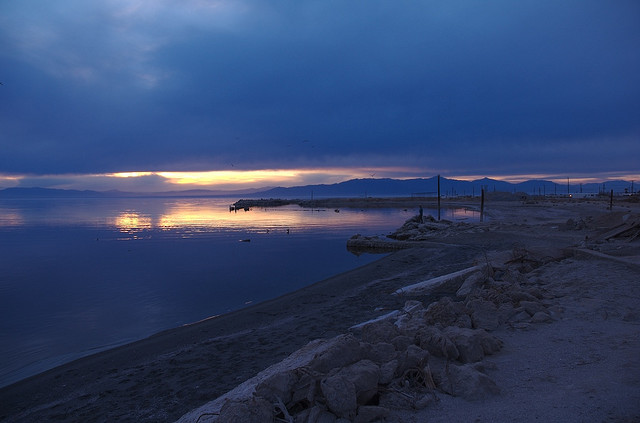
Fast Company has an article on Simbol Mining's plans to produce lithium from the Salton Sea in California - Salton Sea Could Be Source of Lithium Riches for the U.S..
In 18 months, Simbol Mining will attempt to make some serious cash from the Salton Sea's lithium-filled waters (the Sea has a lithium concentration of at least 200 parts per million) with its first commercial lithium extraction plant. The company, a spinoff from Lawrence Livermore National Laboratory, plans to swipe lithium from the geothermal brine of already-existing geothermal plants in the sea, according to Greentech Media.
The toxic brine--a byproduct of geothermal energy production--is usually treated as waste. But Simbol believes that the brine byproducts of just one of the five geothermal plants in the Salton Sea could produce millions of dollars worth of lithium each year. With four more 50 MW geothermal plants lined up for production in the sea, Simbol could be looking at a veritable cash cow.
The Salton Sea's lithium riches won't just benefit Simbol. As it stands, the U.S. relies on often-unstable countries (Bolivia, Afghanistan) for lithium supplies. And as electric cars become more popular, the demand for lithium batteries also continues to grow. If Simbol can remove international lithium producers from the equation, lithium prices could drop precipitously--and that might mean cheaper hybrid and electric vehicles for consumers.
Posted
by Big Gav
in
lithium,
simbol mining
AFP has a report on Japanese interest in US based lithium producer Simbol Mining - Japan trading house buys into US lithium producer.
Japanese trading house Itochu Corp said Monday it will buy a 20 percent stake in US lithium extraction startup Simbol Mining, winning exclusive rights to sell the precious metal in Asia.
The deal comes amid runaway demand from emerging markets for lightweight but costly lithium, a key energy storage medium used in rechargeable batteries powering portable consumer goods and electric vehicles.
Simbol Mining extracts lithium chemicals from geothermal brines in Southern California, a cheaper and cleaner alternative to the typical processing of the mineral, Itochu said in a statement.
While some lithium is mined, most is pumped up from brines in salt deserts in a lengthy and energy intensive process that sucks large amounts of local drinking water and damages the landscape.
Geothermal pumps do not endanger drinking water because brine comes from beneath the level of groundwater.
Most of the output comes from Argentina, Australia and Chile, which together accounted for 82 percent of total lithium production in 2008, according to Roskill Information Services, a metals and minerals research group.
Simbol Mining, founded in 2007, aims to produce 16,000 tonnes of lithium carbonates a year and increase production capacity in coming years.
Posted
by Big Gav
in
geothermal,
lithium,
simbol mining
Lithium is a subject I like to consider from time to time, particularly our ability to scale up lithium production for use in batteries. CNet's Green Tech Blog has an interesting post on Simbol Mining's plans to extract lithium from the water flowing through geothermal power plants, which is a pleasing synergy.
If Simbol Mining's plans work out, within a decade it will deliver one-fourth of the world's increasing demand for lithium, used in batteries of hybrid and electric cars without creating waste or pollution.
The start-up eventually aims to mine more than 100,000 tons of lithium carbonate each year from geothermal sources. That's more than the current annual market for the compound; the company expects demands for it to quintuple by 2013. Current mining methods won't provide enough for the future need for lithium-ion batteries, according to Meridian International Research.
Geothermal power plants bring silica, lithium, zinc, manganese, and other valuable materials in a hot stew of brine from 10,000 feet underground to the earth's surface, then inject them back down. "It's equivalent to a glass of lemonade," explained Simbol Mining's president and co-founder, Luka Erceg. He likened the valuable ingredients to lemonade powder mix that dissolves in water but can be recovered when dried out.
Simbol Mining would use off-the-shelf nanofilters, like those in water-treatment systems, to extract minerals and metals from the salty water. Attendees of the Cleantech Forum in San Francisco voted Simbol Mining's technology the most promising at the show on Tuesday. Erceg and the start-up's six geochemists and engineers seek $5 million to get off the ground.
Simbol Mining plans to pay energy companies royalties to access the brines. However, Erceg hopes eventually to extract materials without piggybacking on power providers.
The start-up says its zero waste process doesn't threaten drinking water because brine comes from beneath the level of groundwater.
Simbol Mining has licensed from Lawrence Livermore National Laboratory a silica-extraction process that could make it easier to recover other materials geothermally. Because silica clogs pipes and filters, removing it clears the way for getting lithium and other ingredients. Mining silica, abundant in the earth's crust, is a goal in its own right. The water-absorbent compound is used in toothpaste, dehumidifiers, and even high-end automotive tires.
Erceg believes his company's singular focus can help it succeed in geothermal mining where an energy company preoccupied with producing power could not. CalEnergy abandoned in 2002 its attempt to extract zinc from aquifers beneath the Salton Sea in Southern California. The power provider said it wasn't able to get zinc at the right "purity." Simbol Mining, based in Houston, Texas, aims to start working with plants in Nevada and southern California.
Most lithium comes from South America, where the cheapest extraction method evaporates salty brine in ponds lined with toxic PVC, Erceg said. And in lithium-rich regions of Chile, mining the material uses two-thirds of the area's drinking water. Erceg described another exploratory method--of piping in ocean water to mine minerals--as inefficient because it requires treating the saline water first.
Simbol Mining's technology, on the other hand, even could make use of the materials otherwise wasted by water filtration and purification systems, he said. And it could grab minerals and metals left behind in tapped-out wells of oil and natural gas, which are filled with water that is commonly trucked out and left to evaporate.


 Posts





