Showing posts with label flow battery. Show all posts

Grid-scale vanadium flow battery storage headed for Australia  

Posted by Big Gav in , , , ,

RNE has an article on moves to start using vanadium flow batteries in energy storage projects in Australia - Carnegie teams with Sumitomo for grid-scale vanadium flow battery storage.

Carnegie Wave Energy’s 100 per cent owned subsidiary, Energy Made Clean, is set to develop and demonstrate a commercial-scale solar and battery storage plant in Australia, after entering into a joint venture targeting Australia’s vanadium redox flow (VRF) battery market.

As we have noted on RE before, vanadium redox flow batteries are tipped to be one of the key players in the booming global energy storage market, as more and more renewable energy sources are brought onto grids around the world. The batteries are considered uniquely suited to on- and off-grid energy storage applications due to their scalability and long asset lives, with deep and very high cycling capability.

Australia, as well as being a key market for battery storage uptake, has been noted for its potential to become a top global producer of vanadium – a metal found in a range of mineral deposits.

New concept turns flow battery technology upside-down  

Posted by Big Gav in , ,

MIT News has a report on a new paper describing a pump free flow battery - New concept turns battery technology upside-down. The new design could offer improved cost and reliability.

Catalyst: Battery Powered Homes  

Posted by Big Gav in , , , ,

The ABC's Catalyst program has a good episode on battery technologies and how they are being used in Australia - Battery Powered Homes.

Redflow launches home solar storage battery to take on Tesla Powerwall  

Posted by Big Gav in , , ,

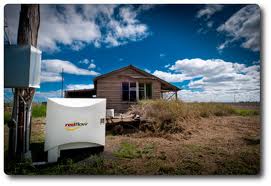
The ABC has a report on Australian flow battery company Redflow and their new ZCell home energy storage device.

The 10 kWh device is being touted as a competitor to the Tesla Powerwall, with one benefit highlighted being the ability to easily recycle the materials used, quoting company chairman Simon Hackett - "The active parts are plastic, aluminium and steel, the fluid electrolyte can be removed and cleaned and put in the next battery so the whole thing is very recyclable".

Redflow announced pricing details and specifications on Wednesday - the ZCell will be installed for between $A17,500 and $A19,500 a system.

Redflow targets 40% cut in battery storage costs by 2015  

Posted by Big Gav in , , ,

RNE has an update on Redflow's flow battery technology - Redflow targets 40% cut in battery storage costs by 2015.

Redflow, a Brisbane-based developer of unique zinc-bromine “flow” batteries, says it is targeting a 40 per cent cut in the capital cost of energy storage systems by the end of next year.

In a market presentation released on Thursday, Redflow says it estimates the capital cost of its technology – developed originally at the University of Queensland –a t $875/kWh. This,is says, is comparable with some lithium-ion batteries, half the price of vanadium, and while expensive than some lead acid batteries, it will have greater applications.

However, full-scale manufacturing will commence later this year in a previously announced deal with global group Flextronics, and Redflow says this will lead to a cost reduction of 40 per cent by 2015. ...

Redflow’s core product is a “flow battery” that avoids some of the charging issues and limitations that affect other battery technologies, such as lead acid and lithium-ion. The company says the daily deep charge and discharge capability makes it ideal for storage and shifting of intermittent renewable energy, and managing peak load or supporting off-grid systems.

Cheap, Efficient Organic Flow Battery Materials From Harvard  

Posted by Big Gav in ,

Ecogeek reports that a group from Harvard have developed an organic ("rhubarb based) flow battery that could help hasten to transition to renewable energy - Cheap, Efficient Organic Flow Battery Materials.

The science of power storage has a new variety of options and new materials to investigate thanks to some recent developments in the chemistry of materials used in flow batteries. Until now, flow batteries have largely relied on metallic compounds for the active chemicals they use. But new materials have been found that are cheaper and more effective than the chemicals which have been most used in flow batteries until now.

The research undertaken by scientists at Harvard University has identified a range of organic compounds known as quinones, which are have the potential to be especially useful for flow batteries. Initial research indicates they are inexpensive and efficient materials well suited for use in power storage. A recently published paper in the journal Nature discusses the use of 9,10-anthraquinone-2,7-disulphonic acid (AQDS), a compound found in rhubarb, in a flow battery.

Large-scale energy storage is an area where flow batteries can excel, because the equipment needed to build a large energy storage system is basic, industrial gear, rather than highly specialized equipment. To increase storage capacity, a flow battery just needs a couple of larger storage tanks.

The AQDS materials are naturally abundant and very stable. They are potentially safer than metal-based flow batteries because the materials are "less likely to react violently if they accidentally come in contact with each other." When used in a flow battery, they show very good cycle efficiency and "[represent] a new and promising direction for realizing massive electrical energy storage at greatly reduced cost." The chemicals needed to store a kilowatt-hour of energy would cost $27, which is roughly one-third the cost of other systems.

GE Flow Battery Aims For 240-Mile EV Range… And Beyond  

Posted by Big Gav in , ,

CleanTechnica has an article on new flow battery technology from GE - GE Flow Battery Aims For 240-Mile EV Range… And Beyond.

We were just fooling around with the notion that new fuel cell technology could shake up the electric vehicle market, when here comes GE with another alternative: a flow battery that combines with a fuel cell to push EV range up to the Department of Energy’s goal of 240 miles, and even farther. The official rated range of Tesla Motors’ highly regarded but highly costly Model S is already 265 miles on a lithium-ion battery pack, so the big factor here is going to be affordability. With that in mind let’s take a look at that GE flow battery and see what’s doing. Read more at http://cleantechnica.com/2013/08/29/new-ge-flow-battery-aims-for-240-mile-ev-range/#wQQwrHS1wJ9DHwP6.99

Fukushima Update  

Posted by Big Gav in , , , ,

It’s been over 2 years since the nuclear disaster at Fukushima and it still seems to be making headlines (I'm sure officials were assuring us a few weeks after the disaster occurred that all was well and it couldn't possibly melt down) so I thought I'd do a little survey of recent news.

A few weeks ago I started noticing reports that there was something of a push to restart the Japanese nuclear industry (against the wishes of Japanese voters), which had been shutdown in the wake of the reactor meltdowns. The reports soon prompted speculation of a jump in uranium prices as yet another mini-nuclear renaissance was forecast.

Since then TEPCO has admitted that the plant was leaking 300 tons of radioactive water per day into the Pacific Ocean after denying the leak for months (as per their standard approach of denying any problem exists until doing so was no longer tenable).

The Japanese authorities have now raised the threat level for the plant to a level three "serious incident". It was this leak that led the the widely pilloried "ice wall" approach to be proposed as a solution.

The precise location of the leak has not yet been determined and may not be repaired for years. Besides the "ice wall" idea construction of a concrete seawall around the whole site is also being mooted (another leak has since been reported within the site).

In the aftermath of the disaster, alternative energy solutions have been gaining in popularity. Japan and China have been recording record demand for solar PV (forecast to reach 9GW in the second half of 2013) with a 100% increase on the first half of the year, and a 70% jump over the previous year. Japan's growth alone has been 150 per cent compared to 2012 and is forecast to be over 5GW mid-2014.

The Japanese are also experimenting with energy storage to supplement the expansion of wind and solar on Japan's electric grid with two large-scale battery systems being constructed in the north. A 60 MWh redox-flow battery will be installed on the island of Hokkaido along with a 20 MWh lithium-ion battery in the Tōhoku region.

New rechargeable flow battery enables cheaper, large-scale energy storage  

Posted by Big Gav in ,

MIT News has a press release on research into cheaper flow batteries - New rechargeable flow battery enables cheaper, large-scale energy storage.

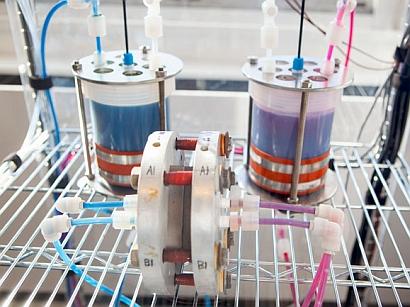
MIT researchers have engineered a new rechargeable flow battery that doesn’t rely on expensive membranes to generate and store electricity. The device, they say, may one day enable cheaper, large-scale energy storage.

The palm-sized prototype generates three times as much power per square centimeter as other membraneless systems — a power density that is an order of magnitude higher than that of many lithium-ion batteries and other commercial and experimental energy-storage systems.

The device stores and releases energy in a device that relies on a phenomenon called laminar flow: Two liquids are pumped through a channel, undergoing electrochemical reactions between two electrodes to store or release energy. Under the right conditions, the solutions stream through in parallel, with very little mixing. The flow naturally separates the liquids, without requiring a costly membrane.

The reactants in the battery consist of a liquid bromine solution and hydrogen fuel. The group chose to work with bromine because the chemical is relatively inexpensive and available in large quantities, with more than 243,000 tons produced each year in the United States.

In addition to bromine’s low cost and abundance, the chemical reaction between hydrogen and bromine holds great potential for energy storage. But fuel-cell designs based on hydrogen and bromine have largely had mixed results: Hydrobromic acid tends to eat away at a battery’s membrane, effectively slowing the energy-storing reaction and reducing the battery’s lifetime.

To circumvent these issues, the team landed on a simple solution: Take out the membrane.

“This technology has as much promise as anything else being explored for storage, if not more,” says Cullen Buie, an assistant professor of mechanical engineering at MIT. “Contrary to previous opinions that membraneless systems are purely academic, this system could potentially have a large practical impact.” ...

By designing a flow battery without a membrane, Buie says the group was able to remove two large barriers to energy storage: cost and performance. Membranes are often the most costly component of a battery, and the most unreliable, as they can corrode with repeated exposure to certain reactants.

Braff built a prototype of a flow battery with a small channel between two electrodes. Through the channel, the group pumped liquid bromine over a graphite cathode and hydrobromic acid under a porous anode. At the same time, the researchers flowed hydrogen gas across the anode. The resulting reactions between hydrogen and bromine produced energy in the form of free electrons that can be discharged or released.

The researchers were also able to reverse the chemical reaction within the channel to capture electrons and store energy — a first for any membraneless design.

New flow battery design could give electric vehicles a jolt  

Posted by Big Gav in ,

MIT News has an article on developments in flow battery technology - New battery design could give electric vehicles a jolt.

A radically new approach to the design of batteries, developed by researchers at MIT, could provide a lightweight and inexpensive alternative to existing batteries for electric vehicles and the power grid. The technology could even make “refueling” such batteries as quick and easy as pumping gas into a conventional car.

The new battery relies on an innovative architecture called a semi-solid flow cell, in which solid particles are suspended in a carrier liquid and pumped through the system. In this design, the battery’s active components — the positive and negative electrodes, or cathodes and anodes — are composed of particles suspended in a liquid electrolyte. These two different suspensions are pumped through systems separated by a filter, such as a thin porous membrane.

The work was carried out by Mihai Duduta ’10 and graduate student Bryan Ho, under the leadership of professors of materials science W. Craig Carter and Yet-Ming Chiang. It is described in a paper published May 20 in the journal Advanced Energy Materials. The paper was co-authored by visiting research scientist Pimpa Limthongkul ’02, postdoc Vanessa Wood ’10 and graduate student Victor Brunini ’08.

One important characteristic of the new design is that it separates the two functions of the battery — storing energy until it is needed, and discharging that energy when it needs to be used — into separate physical structures. (In conventional batteries, the storage and discharge both take place in the same structure.) Separating these functions means that batteries can be designed more efficiently, Chiang says.

The new design should make it possible to reduce the size and the cost of a complete battery system, including all of its structural support and connectors, to about half the current levels. That dramatic reduction could be the key to making electric vehicles fully competitive with conventional gas- or diesel-powered vehicles, the researchers say.

Another potential advantage is that in vehicle applications, such a system would permit the possibility of simply “refueling” the battery by pumping out the liquid slurry and pumping in a fresh, fully charged replacement, or by swapping out the tanks like tires at a pit stop, while still preserving the option of simply recharging the existing material when time permits.

Flow batteries have existed for some time, but have used liquids with very low energy density (the amount of energy that can be stored in a given volume). Because of this, existing flow batteries take up much more space than fuel cells and require rapid pumping of their fluid, further reducing their efficiency.

The new semi-solid flow batteries pioneered by Chiang and colleagues overcome this limitation, providing a 10-fold improvement in energy density over present liquid flow-batteries, and lower-cost manufacturing than conventional lithium-ion batteries. Because the material has such a high energy density, it does not need to be pumped rapidly to deliver its power. “It kind of oozes,” Chiang says. Because the suspensions look and flow like black goo and could end up used in place of petroleum for transportation, Carter says, “We call it ‘Cambridge crude.’”

Australian Cleantech: RedFlow  

Posted by Big Gav in , , ,

Giles Parkinson at the Climate Spectator has an article on Queensland based flow battery company RedFlow - Australian Cleantech: RedFlow.

Large-scale energy storage is one of those technologies that everyone reckons is a great idea, and almost essential for intermittent renewables, but then wonders if it will ever work. Or, more to the point, if it can work at a price that is readily affordable.

Over the next few weeks, Australian battery storage developer RedFlow will be out to demonstrate that its technology is both affordable and useful. It will be installing its large-scale zinc bromine flow batteries at the University of Queensland’s St Lucia campus in Brisbane, plugging into what will be the country’s largest (1.2MW) and most powerful solar photovoltaic generation system.

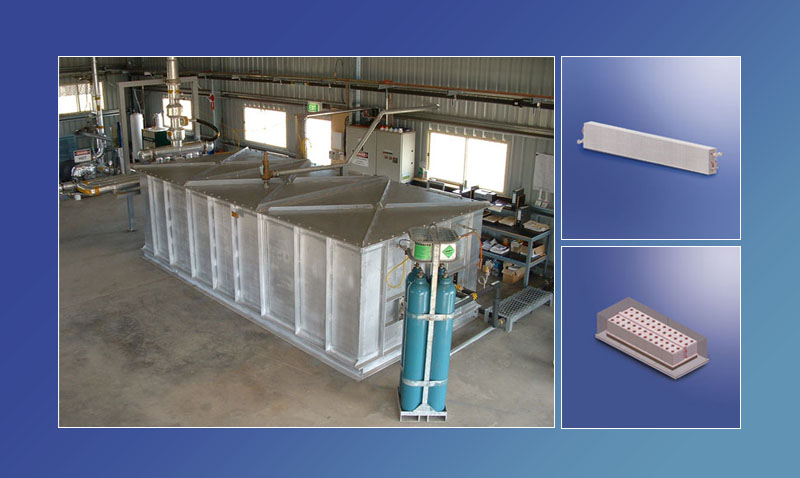
Its RedFlow 200 unit – using 48 zinc-bromine battery modules, which can deliver up to 400kwh of energy – will plug into a 390 kW section of the PV array during the daytime, and feed it back into the local network at the times when it is most needed. The PV array is situated atop car parking facilities, and will sit side-by-side with an identical array that will not have storage.

RedFlow CEO Phil Hutchings says it will be a world-first demonstration with solar PV at this scale, and will demonstrate how storage can guarantee supply during periodic power drops created by passing clouds, and then feed power back into the local network at evening peaks.

UQ researchers will also analyse the results to learn the impacts of large-scale energy storage on the local electricity network, its value in meeting peak demand and how to control power flow.

Hutchings says the RedFlow 200, which sells for around $600,000, is likely to have larger markets overseas, particularly in places like Hawaii which have to ship in fuel oil, have huge energy costs and are looking at different renewable and energy storage technologies.

But Hutchings says the units also offer a cost effective solution in Australia, particularly in rural areas where they offer cheaper solutions to local network upgrades needed by the surge in electronic gadgetry and appliances in homes.

“You can take smaller storage units (about the size of a large chest freezer) put them in locations at end of line so they feed back into network at peak times,” he says. “It means you can levellise the load without having to invest millions in network upgrades.”

But Hutchings says that while there is a clear economic case to avoid network upgrades, the company is hopeful that it can eventually bring down costs far enough to make it attractive to households. Those cost reductions, however, are only likely to emerge in large-scale production.

Hutchings says energy storage is a growth industry, driven by the increases in peak demand as retailers sell more and more energy hungry appliances, the introduction of smart grids, and the proliferation of solar panels. He sees it growing to a multi-billion dollar market over the next decade, although this will largely depend on costs.

Next Stop: Ultracapacitor Buses  

Posted by Big Gav in , , ,

Technology Review has an article on buses using fast (and frequent) recharging ultracapacitors for energy storage (using existing technology rather than heavily promoted but possibly mythical examples like EEstor's device) - Next Stop: Ultracapacitor Buses.

Municipal transit agencies have tried to reduce the carbon footprint of their bus fleets using a range of options over the years, from biofuels and hydrogen to batteries and hybrid-electric diesel. Now a Chinese company and its U.S. partner say that ultracapacitors could offer the greenest and most economical way of powering inner-city buses.

There's just one catch: the best ultracapacitors can only store about 5 percent of the energy that lithium-ion batteries hold, limiting them to a couple of miles per charge. This makes them ineffective as an energy storage medium for passenger vehicles. But what ultracapacitors lack in range they make up in their ability to rapidly charge and discharge. So in vehicles that have to stop frequently and predictably as part of normal operation, energy storage based exclusively on ultracapacitors begins to make sense.

Sinautec Automobile Technologies, based in Arlington, VA, and its Chinese partner, Shanghai Aowei Technology Development Company, have spent the past three years demonstrating the approach with 17 municipal buses on the outskirts of Shanghai. On October 21, the two companies will offer a one-day demonstration at American University in Washington, DC, where an 11-seat minibus running on ultracapacitors will spend the day shuttling people around campus.

Also at Technology Review, Kevin Bullis has a post on using flow batteries in electric vehicles - Flow Batteries For Fast Electric Car Charging
Electric vehicles can take hours to recharge, making cross-country road trips a challenge. But researchers at the Fraunhofer Institute for Chemical Technology in Germany say they've got a potential solution: flow batteries. ...

But here's the catch: one of the reasons hydrogen fuel cell vehicles have come under fire recently is that you need to install a large infrastructure for distributing and dispensing hydrogen. A flow battery system would have a similar problem. You'd need to install special refueling stations where the spend electrolytes can be recharged and dispensed.

Flow Batteries In Ireland  

Posted by Big Gav in , , ,

Renewable Energy Access has an article on Ireland's plans to use flow batteries to provide energy storage for wind farms on the west coast.

The gigantic wind turbines in Donegal on the west coast of Ireland are not only standing on the geographical limits of Europe -- they are also on the cutting edge of a revolutionary technology for storing large amounts of energy from wind power.

Battery storage could be especially useful when wind power feeds into a grid that belongs to a so-called "island" such as in the UK and Ireland, but also in Spain on the Iberian Peninsula— in effect an electrical island with limited interconnections with France in the north and Morocco in North Africa.

The 32-megawatt (MW) wind park in Sorne Hill will be the first in Europe to integrate a big back-up battery system that will ensure a reliable supply of electricity no matter how big the fluctuations in the wind might be.

"The battery enables large amounts of energy from wind or solar power to be stored, managed, controlled and sent into the electricity grid when it is needed. It doesn't matter whether the wind is blowing or not, the battery makes the electricity output predictable and reliable," said Tim Hennessy, CEO of VRB Power Systems, the Canadian manufacturers of the battery.

Analysts say the potential market for technology that can provide reliable storage for large amounts of energy from wind and solar power is huge.

Battery storage could be especially useful when wind power feeds into a grid that belongs to a so-called "island" such as in the UK and Ireland, but also in Spain on the Iberian Peninsula — in effect an electrical island with limited interconnections with France in the north and Morocco in North Africa.

By contrast, the electricity grids of the big European wind nations of Germany and Denmark are interconnected with their northern neighbors. Excess wind power from these countries goes all over Europe with the grid effectively acting as a huge storage system.

Also, Germany is harnessing the full spectrum of renewable sources such as hydropower with dams and biomass to provide a back up to wind. It also has lots of salt mines to store energy in the form of compressed air.

However, the "electrical islands" of Ireland and Great Britain with little hydropower and a scarcity of salt mines could need huge amounts of battery storage as they expand their use of wind power so that the ingress of wind power into the system doesn't lead to grid instability.

Wind parks on a colossal scale are being planned in the UK and Ireland. The UK is planning to install 33 GW of capacity of offshore wind power by 2020. Ireland has 1000 MW of wind power but is planning to install 2,400 MW of wind by 2016 and 4,300 MW by 2020 to reduce the country's reliance on imported fossil fuels and cut harmful greenhouse gas emissions.

That means the 2-MW battery in Sorne Hill, Buncara, due to be in operation in 2009, could be just the start. Hugh Sharman of Incoteco ApS, Denmark, a contractor with VRB, estimates that Ireland could need as much as 1000 MW of battery storage capacity by 2016.

As oil and gas prices continue to rise, the battery storage system will become more cost effective.

A Mwh of electricity generated by wind turbines in Ireland costs 70 euros [US $106], making it much cheaper than the equivalent electricity generated by natural gas, said Sharman. These prices offset the high initial investment costs of the battery.

The battery could also be used to capitalize on different tariffs for peak and off-peak electricity: electricity could be stored during off-peak hours when the cost is low and fed into the system in peak hours when the price is high.

The UK would need up to 12,000 MW of battery storage to balance out the system if the country goes ahead with its plan to install 33 GW of wind capacity by 2020 and decides to use batteries as a back up, Sharman said.

Soldium Sulphur Batteries: Energy Storage in Minnesota  

Posted by Big Gav in , , ,

Jim at The Energy Blog has a post on using sodium sulphur batteries to store energy from wind farms in Minnesota.

Xcel Energy, in partnership with the University of Minnesota, the National Renewable Energy Laboratory and the Great Plains Institute, will soon begin testing a one-megawatt sodium-sulfur battery storage system to demonstrate its ability to store wind energy and dispatch it to the electricity grid when needed.

Fully charged, the batteries could power 500 homes for six and one-half hours. Xcel Energy will purchase the batteries from NGK Insulators, Ltd. that will be an integral part of the project. The sodium-sulfur battery is commercially available and versions of this technology are already being used in Japan and in a few US applications, but this is the first U.S. application of the battery as a direct wind energy storage device.

The 50-kilowatt battery modules, 20 in total, will be roughly the size of two semi trailers and weigh approximately 60 tons. They will be able to store about 6.5 megawatt-hours of electricity, with a charge/discharge capacity of one megawatt. When the wind blows, the batteries are charged. When the wind calms down, the batteries can be used to supply energy to the grid as needed.
"Energy storage is key to expanding the use of renewable energy. This technology has the potential to reduce the impact caused by the variability and limited predictability of wind energy generation."

-- Dick Kelly, Xcel Energy chairman, president and CEO.

The project will take place in Luverne, Minn., with the battery installation beginning this spring adjacent to a nearby 11-megawatt wind farm owned by Minwind Energy, LLC. Testing will begin in October and is expected to last up to two years.

Commercial projects are now underway that use flow batteries, compressed air energy storage, thermal energy storage, pumped hydro, and sodium sulfur batteries for energy storage in connection with renewable energy projects. American Electric Power (AEP) is also using NaS batteries in a couple of their systems, but not in connection with wind power. While not enough experience has been gained with any of these technologies to make any decision as to which technology is best under what conditions, pumped hydro and sodium sulfur batteries are the most well proven and thus seem to be the first choice of electric utilities. Thermal storage is gaining acceptance for use with thermal solar systems, the only energy technology that it is suitable for use with. As Mr. Kelly stated, energy storage is essential to widespread use of renewable energy technologies.

Storing Energy Using Graphite  

Posted by Big Gav in , , , , , , ,

The Canberra Times recently published an article, rather misleadingly entitled "Generating solar energy in the dark", which looked at the use of purified graphite for thermal energy storage.

The company developing the technology is called Lloyd Energy Systems, which is prototyping solar energy storage, a wind-to-heat plant and a small-scale plant that combines water treatment, energy storage and steam turbine generation.

The company has received a $5 million Federal Government grant as part of its advanced energy storage technology program in the western NSW town of Lake Cargelligo, with Country Energy agreeing to purchase the power generated. Lloyd Energy also has an agreement with Ergon Energy in Queensland to build a $30million plant at Cloncurry in Queensland, partially funded by the Queensland state government, which the Sydney Morning Herald reported on last year.


[Lloyd Energy CEO] Mr Hollis said large amounts of coal-fired energy were lost during long transmission to remote areas. As power loads built up over time, mainly because of demand for air-conditioners, the grid could no longer cope in peak periods. Towns at the end of the line suffered the most from power shortages.

"We're putting environmentally friendly generation out at the end of the branches of the tree if you like, so it can pump energy back in when the branches are in trouble," he said. "It actually serves three purposes. Firstly, it is a renewable energy replacement for coal. Secondly, it avoids the country energy authorities having to upgrade their transmission lines so they can get more power out in the peak." The third benefit was having an energy source at the end of the line that could return power into the grid.

Sixteen full-scale models would go to Lake Cargelligo and 54 to Cloncurry. The system's mobility and flexibility had caught the attention of key Australian mining companies, which use diesel and gas generators.

Mr Hollis said making renewable energy available when it was required added to the system's value. ... "You can store thermal energy in a lot of things, but high-purity graphite is an extremely efficient way of storing it it doesn't have any losses. You can move the heat in and out very quickly."

Graphite based storage does not seem to have been used anywhere else in the world thus far. Storage for renewable energy has usually been limited to compressing air underground (Compress Air Energy Storage or CAES), where it can later be released under pressure, or pumped hydro, where the power is used to pump water back up into dams that can generate hydro-electricity. While both techniques are effective, they require suitable locations and complex infrastructure to be put in place.

The Queensland project will make Cloncurry the first town in Australia to rely exclusively on solar power, produced by a concentrated solar power (CSP) system. The system contains almost 7200 mirrors, which will guide the sun's rays into holes in the bottoms of 54 elevated graphite cubes, heating them to 1800 degrees (C). The stored heat is then used to generate steam for turbines on demand. The company claims the turbine will use less water than falls in an average year on the power station's roof.


Wind to Heat on King Island

A third system using the graphite system is being planned by CBD Energy, which has licensed the Lloyd technology and will build a wind-powered version of the system on King Island. The island, in the Bass Strait north-west of Tasmania, currently relies primarily on diesel to generate power for its 1800 residents.

The joint venture with Hydro Tasmania is not expected to make the island wholly powered by renewable energy, but it will eliminate the need for 1.25 megalitres of diesel fuel a year, says CBD's chief engineer, John Giannasca.

CBD plans to install two megawatts of wind turbines to supplement existing systems along with six graphite blocks. The blocks are each the size of a standard shipping container, and will be heated to 800 degrees (C).


Some solar panels will be also be installed for periods when the island is without wind, and there are ongoing investigations into harnessing ocean current and tidal energy in the region.

CBD Energy is run by ex-Impulse Airlines chief Gerry McGowan, with the company partly owned by German clean energy company Solon. CBD is also looking to develop solar energy projects in Australia, with plans for the first operation to be set up in the northern NSW town of Moree.

Graphite energy storage in context

King Island received a lot of press attention for an earlier project to store energy using Vanadium Redox flow batteries that began in 2003.


The company involved in that initiative, Pinnacle VRB, has since changed name to Cougar Energy and doesn't seem to have any active VRB projects going.

Another Australian company developing a slightly different form of Vanadium based batteries (Vanadium Bromide) is VFuel, though there hasn't been much news from them in some time either. Both VFuel and Pinnacle/Cougar are using technology pioneered at the University of NSW.


What will happen to the flow battery installation isn't clear, though a visiting parliamentarian (pdf) reported in 2004 that "The vanadium batteries would appear to best suit the ironing out of the wind fluctuations rather than holding larger quantities of power. The battery is expensive and takes up considerable space" and that graphite was being considered as an alternative.

TreeHugger noted last year that the advantage the Lloyd Energy graphite system has is that they have apparently managed to figure out how to refine low grade graphite into high quality crystalline graphite, and the storage capacity “ranges from around 300kWh (thermal) per tonne at a storage temperature of 750°C to around 1000kWh (thermal) per tonne at 1800°C.”.

The Australian Greenhouse Office has a review paper on Energy Storage Technologies (pdf), published in 2005, which includes a brief look at graphite in a section on thermal energy storage.
Thermal energy storage systems use material that can be kept at high temperatures in insulated containments. Heat recovered can then be applied for electricity generation using steam Rankine cycle or other heat engine cycles. Energy input can, in principle, be provided by electrical resistance heating but the overall round trip efficiency will be low. However, as with thermochemical energy storage, thermal systems have considerable advantages when integrated with Concentrating Solar Power (CSP) technologies (ie parabolic troughs or dishes, central receiver/heliostat systems and Linear Fresnel systems).

Integration of thermal storage for several full load hours, together with new storage materials and advanced charging/discharging concepts, would allow for increased solar thermal electricity production without changing the power block size (ECOSTAR, Nov 2004). Provided that the storage is sufficiently inexpensive, this would lower the levelised energy cost, and additionally increase the dispatchability of the electricity generation.

The kind of storage system used for solar energy storage depends on the Concentrating Solar Power (CSP) technology, the heat transfer medium used and the required temperature of operation. In general, high-temperature thermal storage development will need several scale-up steps over an extended development time before market acceptance will be achieved.

Storage systems for thermal energy storage need to:
• be efficient in terms of energy loss and temperature drops
• have low cost
• have a long service life
• have low parasitic power requirements.

The development of storage systems for high pressure steam and pressurized, high temperature air, is especially challenging. If or when developed, such storage systems would lead to a significant drop in CSP electricity costs. The high-temperature thermal storage technologies utilised or under development now are (ECOSTAR, Nov 2004):

Molten salt storage and Room Temperature Ionic Liquids (RTILs)

• State of the art is the 2-tank molten salt storage tested in the “Solar Two” Central Receiver Solar Power Plant demonstration project in California, combined with using molten salt as heat transfer fluid. The use of new, so called Room Temperature Ionic Liquids (RTILs) has recently been proposed. RTILs are organic salts with negligible vapour pressure in the relevant temperature range and a melting temperature below 25°C. Room temperature ionic liquids are new materials that have the potential to be stored at temperatures of many 100s of degrees without decomposing. It is not yet clear whether they are stable up to the temperature level required for CSP and also whether they may be produced at reasonable costs.

Concrete Storage

• The concept of using concrete or castable ceramics to store energy at high temperatures for parabolic trough power plants with synthetic oil as the heat transfer fluid (HTF) has been investigated in European projects. The implementation of a concrete storage system is claimed (ECOSTAR, Nov 2004) to be able to be realised within less than 5 years.

Phase Change Materials (PCM)

• Phase change materials are materials selected to have a phase change (usually solid to liquid) at a temperature matching the thermal input source. The high “latent heat” in a phase change offers the potential for higher energy storage densities than storage of non phase change high temperature materials. Because a solid/liquid phase change is involved, a heat transfer fluid is needed to move heat from source to PCM. At present, two principle approaches are being investigated:
- encapsulation of small amounts of PCM
- embedding of PCM in a matrix made of another solid material with high heat conduction.
• The first measure is based on the reduction of distances inside the PCM and the second one uses the enhancement of heat conduction by other materials (e.g. graphite). Storages based on PCM are in an early stage of development but the cost target is to stay below A$34/kWh based on the thermal capacity. Although the uncertainties and risks of the PCM storage technology are in a medium range, the technology time required for full development and commercial implementation is likely to be more than 10 years (ECOSTAR, Nov 2004).

Storage for air receivers using solid materials

• Storage types using solid material for sensible heat are normally used together with volumetric atmospheric or pressurized air systems. The heat has to be transferred to another medium, which may be any kind of solid with high density and heat capacity. Another innovation is to develop for pressurised closed-air receivers a storage container that has to be pressure resistant up to about 16-20 bar depending on the gas turbine pressure ratio.
• For both cases the time for development and implementation is considered to be between 5 to 10 years and the risks and uncertainties are in the medium range (ECOSTAR, Nov 2004).

Storage for saturated water/steam

• The steam drum, which is a common part in many steam generators, is often used to provide process heat storage in industry. The main problem is the size of the steam vessel for larger storage capacity and the degradation of steam quality during discharging. However, this storage type is ideal as buffer storage for short time periods of several minutes, to compensate shading of the solar field by fast moving small clouds. Using appropriate encapsulated PCM inside the storage could enhance the storage capacity because the latent heat content can be used to slow down the temperature and pressure decrease and enable smaller storage vessels for the same thermal capacity.
• Recently, underground thermal energy storage has been proposed again as a lowcost solution to high-temperature, low-loss thermal storage for CSP systems (Mills et al, Nov 2004). It involves storage of water under pressure in deep metal lined caverns where the pressure is contained by the surrounding rock and the overburden weight.

High-purity graphite.

• This readily available material has the attractive property of increasing its heat storage capacity as the temperature of storage rises. However, the relatively low temperatures of solar thermal systems are not optimal for this storage medium unless the graphite storage blocks could be positioned at the very high temperature focus of a concentrating solar collector.

For another good description of a range of energy storage technologies, try Richard Baxter's book "Energy Storage: A Nontechnical Guide".

One obvious advantage for graphite is that carbon is extremely common, unlike some of the minerals used in various battery technologies and so there will be no meaningful material "limits" to the creation of these. Perhaps one day we'll see CO2 being sequestered in the form of graphite blocks, ready to be installed into CSP power stations.

On semi-related news, energy storage has also been getting some attention in The Economist lately, courtesy of EEStor's ultracapacitor technology.

Statistics

Locations of visitors to this page

blogspot visitor
Stat Counter

Total Pageviews

Ads

Books

Followers

Blog Archive

Labels

australia (619) global warming (423) solar power (397) peak oil (355) renewable energy (302) electric vehicles (250) wind power (194) ocean energy (165) csp (159) solar thermal power (145) geothermal energy (144) energy storage (142) smart grids (140) oil (139) solar pv (138) tidal power (137) coal seam gas (131) nuclear power (129) china (120) lng (117) iraq (113) geothermal power (112) green buildings (110) natural gas (110) agriculture (91) oil price (80) biofuel (78) wave power (73) smart meters (72) coal (70) uk (69) electricity grid (67) energy efficiency (64) google (58) internet (50) surveillance (50) bicycle (49) big brother (49) shale gas (49) food prices (48) tesla (46) thin film solar (42) biomimicry (40) canada (40) scotland (38) ocean power (37) politics (37) shale oil (37) new zealand (35) air transport (34) algae (34) water (34) arctic ice (33) concentrating solar power (33) saudi arabia (33) queensland (32) california (31) credit crunch (31) bioplastic (30) offshore wind power (30) population (30) cogeneration (28) geoengineering (28) batteries (26) drought (26) resource wars (26) woodside (26) censorship (25) cleantech (25) bruce sterling (24) ctl (23) limits to growth (23) carbon tax (22) economics (22) exxon (22) lithium (22) buckminster fuller (21) distributed manufacturing (21) iraq oil law (21) coal to liquids (20) indonesia (20) origin energy (20) brightsource (19) rail transport (19) ultracapacitor (19) santos (18) ausra (17) collapse (17) electric bikes (17) michael klare (17) atlantis (16) cellulosic ethanol (16) iceland (16) lithium ion batteries (16) mapping (16) ucg (16) bees (15) concentrating solar thermal power (15) ethanol (15) geodynamics (15) psychology (15) al gore (14) brazil (14) bucky fuller (14) carbon emissions (14) fertiliser (14) matthew simmons (14) ambient energy (13) biodiesel (13) investment (13) kenya (13) public transport (13) big oil (12) biochar (12) chile (12) cities (12) desertec (12) internet of things (12) otec (12) texas (12) victoria (12) antarctica (11) cradle to cradle (11) energy policy (11) hybrid car (11) terra preta (11) tinfoil (11) toyota (11) amory lovins (10) fabber (10) gazprom (10) goldman sachs (10) gtl (10) severn estuary (10) volt (10) afghanistan (9) alaska (9) biomass (9) carbon trading (9) distributed generation (9) esolar (9) four day week (9) fuel cells (9) jeremy leggett (9) methane hydrates (9) pge (9) sweden (9) arrow energy (8) bolivia (8) eroei (8) fish (8) floating offshore wind power (8) guerilla gardening (8) linc energy (8) methane (8) nanosolar (8) natural gas pipelines (8) pentland firth (8) saul griffith (8) stirling engine (8) us elections (8) western australia (8) airborne wind turbines (7) bloom energy (7) boeing (7) chp (7) climategate (7) copenhagen (7) scenario planning (7) vinod khosla (7) apocaphilia (6) ceramic fuel cells (6) cigs (6) futurism (6) jatropha (6) nigeria (6) ocean acidification (6) relocalisation (6) somalia (6) t boone pickens (6) local currencies (5) space based solar power (5) varanus island (5) garbage (4) global energy grid (4) kevin kelly (4) low temperature geothermal power (4) oled (4) tim flannery (4) v2g (4) club of rome (3) norman borlaug (2) peak oil portfolio (1)