Showing posts with label clean coal. Show all posts

Carbonuncle  

Posted by Big Gav in , , , , , ,

SP at TOD ANZ has a summary of articles about the failure of the Zerogen clean coal project in Queensland - Carbonuncle.

"A carbuncle is an abscess larger than a boil, usually with one or more openings draining pus onto the skin."

A carbonuncle might be the future term used if injecting large quantities of CO2 into the ground has an unfortunate end result.

The Carbon Capture and Storage (CCS) project in Australia took a significant step backwards as Queensland Premier Anna Bligh announced that Queensland would not be providing further funding for ZeroGen to build what was supposed to be a landmark demonstration power station and that the state owned ZeroGen is to be sold.
Bligh denies clean coal 'bungle'
Brisbane Time, Dec 19th.
Queensland Premier Anna Bligh has denied walking away from the development of clean coal technology, after abandoning plans to build a central Queensland plant by 2015. The Queensland government had ploughed $102 million into the ZeroGen research project, which also attracted $92 million from the federal government and the coal industry. It had aimed to have a $4.3 billion coal-fired power station utilising carbon capture and storage technology – which would prevent greenhouse gas emissions from entering the atmosphere – built by 2015.

But the state government today confirmed it would not pursue a proposal to fund the proposed power station “at this time” because of concerns about its viability. It also plans to offload the state government-owned ZeroGen company, turning it into an independent entity owned and run by the coal industry.

"Reports this morning that the Queensland Government has scrapped our clean coal project ZeroGen or that it has been a waste of money are utterly wrong in every respect,” Ms Bligh told reporters in Brisbane.

“What we know now from the early research is that a fully functional power station by 2015 using this technology is technically possible but it is not economically viable.”

Ms Bligh said the technology “would drive up the cost of electricity beyond the reach of normal people” if proceeded with now.

The proposed plant had been expected to cost $4.3 billion.

“The Queensland Government cannot have its cake and eat it to, profiting from exports while being unwilling to invest in the [research and development] necessary to reduce emissions”, [said Federal Resources and Energy Minister Martin Ferguson].

Mr Bligh said she had spoken to Mr Ferguson this morning to explain what was happening with the ZeroGen project. “I think he understands like I do that the great discoveries of the world have had disappointments along the way,” she said.

Funding for this project came out of the CCS Flagship Program which had $5.1 billion to distribute. The stated objectives were ambitious;
The program supports the construction of 2 to 4 commercial scale CCS projects with an electricity generating capacity of 1000 mega watts or equivalent size for other industrial processes. This objective supports the G8’s call for the launch of 20 demonstration CCS projects worldwide by 2010, to be operational from 2015 and for commercial deployment by 2020.

The Minister for Resources and Energy called on the state and territory governments and the Australian Coal Association to nominate projects for consideration under CCS Flagships program in May 2009. Nominations closed on 14 August 2009.

ZeroGen was shortlisted for this money on December 8th 2009. Interestingly,this the last time the media centre at ZeroGen appears to have been updated. Mr Ferguson might be understandably disappointed that his energy partners appear to have let him down after just one year. Unlike that other "great" CCS demonstration project in Victoria which at least allowed the Emperor Minister to appear clothed in transparent greenish attire on national TV.

The research for the Ottway Basin Demonstration Project is being conducted by the CRC for Greenhouse Gas Technologies. Personally I am a bit skeptical of a CRC where the preponderance of the publications consists of brochures, grey literature, industry sponsored workshops and posters. I count only two refereed journal articles at the websites database. The website is beautiful though.

A commenter at the end of the Brisbane Times article provides a good link to The Economist. ...

The Lorax: "I speak for clean coal"  

Posted by Big Gav in ,

I've recommended Dr Seuss' excellent book "The Lorax" previously (and some of you actually bought it) and no doubt the good Doctor is turning in his grave as he watches his fable being butchered by a bunch of grimy coal merchants - Andrew Leonard has the story ("Unspeakable blasphemy: Dr. Seuss gets repurposed for a fossil fuel start-up company" - The Lorax: "I speak for clean coal".

In these days of relentless political absurdity and unending economic travesty, you may sometimes feel as if your disgust meter has completely maxxed out. There's nothing left that will shock you, you might imagine, as you take a jaded swig of your martini and shrug wearily at the world's gaunt tapestry of injustice.

And then you learn that a coal-gasification start-up has -- without authorization -- named itself after Dr. Seuss' environmental icon, the ("I speak for the trees") Lorax, in the deluded belief that if Dr. Seuss were alive today, he'd be a crusader for clean coal. And suddenly, your disgust meter goes to 11!

Wonk Room's Brad Johnson brings us the word, via MassHighTech.com:
The company, whose principals include Michael Sununu, the son of former New Hampshire governor John Sununu, has raised over $1 million in seed capital to build a high-sulfur coal factory. The name choice was a deliberate attempt to cloak their coal-and-chemical company as an eco-friendly venture:

And, yes, the name is inspired by the Dr. Seuss story, Farina said. "The Lorax is the protector of the truffula trees," he said. "We think this is the greenest use of coal."

War is peace. Freedom is slavery. Ignorance is strength. And the Lorax endorses clean coal.

Getting Power From Coal Without Digging It Up  

Posted by Big Gav in , , , ,

It looks like UCG schemes aren't just confined to Australia - Technology review has an article on a venture in Canada - Getting Power From Coal Without Digging It Up.

Converting coal in the ground directly into clean-burning gases could have huge environmental benefits--not the least of which would be the avoidance of destructive mining operations. The problem is, technology for underground coal gasification is still in its early stages.

Now the government of Alberta says it will give C$285 million ($271 million) to a coal gasification project by Calgary-based Swan Hills Synfuels that involves the deepest-ever operation to generate power from coal--without digging it up.

Previous demonstrations of the technology have turned coal seams as deep as 1,000 meters below the surface into clean-burning gas. In contrast, Swan Hills Synfuels' C$1.5 billion project proposes to reach down 1,400 meters. Working at that depth could lessen the threat of groundwater contamination from the smoldering decomposing coal. "We've got 800 meters of rock--a lot of it impermeable--between us and freshwater aquifers," says Swan Hills president Doug Shaigec.

What's more, if the technology can get at deeper layers of coal, it could allow access to much more of the fossil fuel, says Julio Friedmann, who is carbon management project leader for Lawrence Livermore National Laboratory in California.

When the project starts up in 2015, Swan Hills hopes to generate 300 megawatts of power from its coal gas while selling over 1.3 million tons of carbon dioxide per year. The CO2 could be used by oil producers and ultimately stored in oil wells. This could result in the storage of 10 to 20 million tons of carbon dioxide per year by 2020. That would help Alberta meet its 2020 goal for carbon capture of 25 to30 million tons per year, according to a report last month from an alliance of Canadian industrial firms.

The British are also looking to ramp up their carbon dioxide emissions, in their case looking to coal reserves under the North Sea - North Sea coal to be burnt underground.
Vast coal deposits lying deep beneath the North Sea will be burnt in situ to generate up to 5 per cent of Britain’s energy needs, under new plans approved by the Government last week.

The UK Coal Authority has awarded licences to Clean Coal, an Anglo-American company, to develop five offshore sites for a technology called Underground Coal Gasification (UGC).

The method, which has not been used on a commercial scale in the UK, although it is widely used in Australia [BG: this is a gross exaggeration], taps the high energy content of coal while doing away with the costly and labour-intensive need to mine it first.

Rohan Courtney, a former director of Tullow Oil who is chairman of Clean Coal, said that the potential for the technology was enormous. “There are enormous amounts of coal lying beneath the North Sea which have never been accessed,” he said. “This technology is going to open up the industry again in the UK.”

The sites approved for use stretch up to 10km offshore from Sunderland, Grimsby and Cromer on the shores of the North Sea, Canonbie, near Annan in Dumfries and Galloway on the other side of Scotland, and Swansea Bay, outside the entrance to the Bristol Channel. The combined coal reserves are estimated to be at least one billion tonnes, equivalent to more than one sixth of all the coal consumed in an average year around the world. Global consumption of coal is about 5.8 billion tonnes a year. Total consumption in the UK is about 80 million tonnes a year.

"Clean-coal" power part of Galilee coal mining plan  

Posted by Big Gav in , ,

The Australian has a report on a large scale plan for coal mining in Queensland's Galillee basin, with a "clean coal" power plant touted as part of the proposal (technology and dumping ground for the CO2 still to be determined of course) - Clean-coal power in giant Galilee plan.

THE giant Galilee coal project proposed by billionaire Clive Palmer for central Queensland has just got bigger with a power station utilising clean-coal technology proposed for the site.

Mr Palmer has proposed a $1.25 billion power station to be built adjacent to the site of the proposed new coalmine about 30km northwest of the tiny town of Alpha.

This puts the total cost of the entire Galilee project, which involves a new coalmine, a 490km railway line to a 40-million-tonnes-a-year two-berth export terminal at Abbot Point near Bowen, and now a power station, at $8.7bn.

The project still needs to get the environmental approval of the Queensland government, but if it does, it will be the first coalmine in the Galilee Basin.

The Galilee Basin is a different geological formation to the Bowen Basin, which is about 200km closer to the coast and where central Queensland's coalmining industry is located.

While Mr Palmer is Australia's fifth richest man and considerably cashed up, he has also secured the support of the government-owned Metallurgical Corporation of China as 10 per cent equity partner in the project.

But he is also seeking to raise about $2.5bn on the Hong Kong stock exchange within the next month to help finance the project.

The proposed clean-coal power station announced yesterday does not have a definite form of technology attached, and the company is still looking for a suitable location in the Galilee Basin to use as a dumping ground for the CO2 produced during the coal production process.

The Coal Nightmare  

Posted by Big Gav in , ,

The ABC's Four Corners program tonight had an interesting episode on clean coal and the coal industry - The Coal Nightmare.

Two months ago in Italy the leaders of the world's eight leading industrial nations agreed on the need to reduce greenhouse gas emissions by 80 per cent over the next 40 years. It's a noble objective but for many it is nothing but a pipe dream and the reason is simple.

Each of those leaders knows that a large proportion of those gases come from burning coal. They also know that coal production and its use is projected to rise by at least 40 per cent by 2030.

"There's going to be an increase in energy demand of 40 per cent by 2030. China alone is building the equivalent of Australia's coal fired power system three times over every year." Federal Resources Minister Martin Ferguson

It's a simple fact that if the world is to have any chance of meeting its greenhouse gas reduction targets and continue to burn coal it must find a technology to trap and store carbon dioxide and other noxious gases - technology known as carbon capture and storage (CCS).

As Four Corners shows, governments and scientists have known this for much of the past decade. In the United States a major project to create clean coal is called FutureGen. In China it's GreenGen. Australia also has equivalent programs. The question is, what progress have they made?

Travelling to China and the United States reporter Liz Jackson finds that after a decade of talking there is no large-scale project in existence.

In the United States she uncovers documents that show that while the government has given strong public support to clean coal, in private it has been a different story. Four Corners has documents that claim the time lost through the government's failure to properly back FutureGen could mean "clean coal" will not become a reality before 2040. Which is bad news for CO2 reduction.

Beyond the corridors of power there is also a growing community backlash to the idea that carbon dioxide should be pumped below ground creating the possibility of earth movements or serious carbon leakage.

In China, now the world's biggest polluter, the attempts to create clean coal technology are only just getting under way. China believes it will have a fully operating "clean coal" fired power plant in place by the middle of the next decade, but it just doesn't know quite where or how it will store the captured carbon dioxide.

There's another problem too. To make an impact on the current rate of atmospheric pollution, old power stations will have to be retro-fitted with the new technologies. For China and the United States that would mean a massive investment and a dramatic rise in the price of electricity.

As one advisor to the Chinese government told Four Corners, carbon capture and storage is not commercially viable and probably won't be for 20 years.
For a coal exporting country like Australia, this is grim news. For that reason the Labor government has given $2.4 billion dollars for research into clean coal. The fact remains there is still no project that is shovel-ready.

CCS: The planet-saver that's still just a pipe dream  

Posted by Big Gav in , ,

The Brisbane Times has a jaundiced look at the shimmering mirage of clean coal, quipping that comparing clean coal to large scale renewables "(is) not a reasonable comparison, though, because solar thermal and wind power actually exist" - The planet-saver that's still just a pipe dream.

THERE may be a few forced smiles when Martin Ferguson dishes out $2.4 billion in funding for a handful of "flagship" carbon capture and storage projects (CCS), intended to clean up carbon dioxide emissions from coal-fired power stations.

As the Energy and Resources Minister knows, these CCS projects have taken one helluva time to get up and running - and it will be a long while yet before they make any significant contribution to Australia's CO2 emission reductions.

For at least a decade, the coal industry has promoted a range of clean coal technologies, including CCS, as an alternative to renewable energy. But as necessary emission reduction trajectories get deeper and steeper, the industry has been tardy - stubborn, even - about paying for it.

Instead the public will foot most of the bill for CCS, and will wear the liability if it goes wrong.

CCS projects have a conspicuous history of failure - here and overseas. Put simply, nobody has yet integrated power generation with carbon capture and storage at scale to create clean electricity, anywhere in the world.

And many experts, including from within the energy industry, believe CCS will remain prohibitively expensive and risky compared with known baseload power sources such as nuclear, or renewable sources such as geothermal or concentrating solar thermal which do not leave vast underground stores of carbon dioxide for future generations to worry about.

In April the CSIRO's energy chief, David Brockway, told a federal parliamentary inquiry on climate change that while he did not have a crystal ball, over the next 15 years wholesale electricity costs would roughly triple from the present $40/MWh, as CCS is incorporated into coal-fired power generation. That would bring it, he said, roughly into line with solar thermal - about $160-$200/MWh but falling fast - and wind energy, likely to remain stable at $100-$110/Mwh (other estimates are lower) because it is a mature technology.

It's not a reasonable comparison, though, because solar thermal and wind power actually exist. Iain MacGill, the joint director of the Centre for Energy and Environmental Markets at the University of NSW, says "all prices for CCS are projections right now, because they haven't actually done it yet. Until they can make CCS work, they're on a different planet."

The executive director of the Australia Institute, Richard Denniss, says he would love to see CCS work. But if it doesn't, he asks, "what's plan B?"

Federal and state governments are keen to support the coal industry, which provides cheap power, claims to employ 30,000 Australians directly and was our biggest export earner in 2008-09, with about $50 billion in combined overseas sales of metallurgical and thermal coal.

Especially vulnerable are the coal-reliant communities of the Hunter Valley and Victoria's Latrobe Valley. In both regions, local councils, environment groups and sections of the union movement are working to develop ''just transition'' plans to create green collar jobs - and avoid job losses - as part of an orderly switch to gas-fired or renewable power.

Not even the Greens are proposing, in Kevin Rudd's parlance, to "shut down the coal industry by Thursday" and abandon these communities.

The Institute for Sustainable Futures estimated annual national financial assistance for coal was more than $1.2 billion in 2005-06, in terms of direct subsidies, cheap fuel and accelerated depreciation. The industry pays cheap royalties to the states under a regime which is the envy of the gas lobby.

There is also infrastructure funding designed to ease years of capacity constraints - for example, last year's $1 billion-plus in federal rail funding to help double export capacity from the Hunter Valley coal chain by 2014, and the NSW budget's $205 million to expand Eraring power station on the Central Coast.

The Federal Government is proposing to issue $3.9 billion worth of free permits to coal-fired power generators under its carbon pollution reduction scheme, and is being urged to compensate power station owners for the anticipated loss in the value of their assets if or when such a scheme is introduced.

On top of that, in May the Federal Government announced $2.8 billion would be set aside to fund clean coal initiatives, including $2.4 billion to fund between two and four ''flagship'' coal- or gas-fired power stations with CCS over the next nine years.

The CCS flagships funding was part of a broader clean energy initiative, including $1.5 billion to part-fund a number of flagship solar power stations under a separate process, and a $500 million fund to support emerging renewable technologies such as wave and geothermal.

Clean coal remains a faraway dream  

Posted by Big Gav in

The SMH has a column on the huge gap between the rhetoric about clean coal and the reality - Clean coal remains a faraway dream.

When the Academy Award-winning filmmakers Joel and Ethan Coen used their talents a few weeks ago to make an anti-ad ridiculing clean coal, industry lobbyists were not happy. When Robert Kennedy jnr branded clean coal in America "a dirty lie", and suggested some coal executives should face criminal charges, they got really upset. This state's most passionate coal advocate, the head of the NSW Minerals Council, Nikki Williams, reacts to Kennedy's name with a mix of outrage and sorrow.

But the coal industry and, more importantly, Australia's politicians, should come to grips with the reality that it is beginning to lose its social licence to operate in Western democracies. And the strategy of holding up clean coal as the Holy Grail for the industry's greenhouse problem is not working.

Australia is increasingly seen as the Saudi Arabia of coal - a leading exporter of a major greenhouse gas pollutant. Despite the present economic downturn, industry and government forecasts say our coal exports will keep rising in the next decades. The NSW Government is issuing new exploration licences like they were confetti, and the expansion of the Newcastle coal loader is a national and state priority.

All this flies in the face of the scientific forecasts delivered in Copenhagen last month. Unless there are rapid and sustained cuts in greenhouse emissions, the world will not avoid dangerous climate change.

High-profile figures such as the former US vice-president Al Gore, and a NASA climate scientist, James Hansen, advocate a moratorium on new coal plants in the US and Britain unless and until clean coal comes good. Similar public pressure is likely to come in Japan, our largest coal customer.

The irreconcilable gulf between our rising coal exports and the urgent need to cut emissions is answered too glibly with the assurance that clean coal will be up and running some time around 2020. From Barack Obama to Kevin Rudd, clean coal is pushed with unswerving conviction. The big Group of Eight leaders say they want 20 clean coal plants operating by 2020.

Yet at a NSW Minerals Council forum last week, CSIRO's chief of energy technology, David Brockway, explained bluntly that we are unlikely to see a commercial-scale clean coal plant operating within 15 years - or at least 2024.

Dr Brockway, like those close to this vexed problem in the industry, avoids the words "clean coal". The complex array of technologies to reduce carbon dioxide from coal generation plants, capture it, transport it and store it underground is known as "carbon capture and storage". Building a "demonstration" or "pilot" to capture and store a few thousand tonnes of carbon dioxide is being done. But getting rid of a million tonnes of carbon dioxide from electricity generators around the country every year, at an affordable cost, will be extremely difficult for us, let alone our export customers.

This month, the Rudd Government will, once again, ramp up its clean coal campaign when it announces the new head of the global carbon initiative in Canberra. But forgive a journalist a little cynicism. Last year, the media were lobbied heavily to promote a carbon storage project run by the gas company Santos that promised to bury 20 million tonnes of carbon dioxide a year from gas and coal operations around the country. Last month, without a whimper, Santos suspended the project, apparently because it wasn't considered economically viable.

A joint Rio Tinto-BP carbon capture project in Western Australia, also lauded in the media, fell over last year. Around the same time, the world's leading clean coal experiment, FutureGen in America, collapsed after the Bush administration slashed its commitment to the billion-dollar project. FutureGen was a favourite of the Howard government, which pledged $15 million from Australian taxpayers along with a slice of industry funds.

Who killed clean coal ?  

Posted by Big Gav in

Larvatus Prodeo has a post on the demise of the FutureGen clean coal initiative in the US - Who killed clean coal?. While the politics are interesting, the viability of clean coal itself is probably the key issue - and it doesn't seem to be viable on the required scale, regardless of who picks up the tab for it.

Joe Romm at Climate Progress has a fascinating story about a US Congressional inquiry into the cancellation of the FutureGen project, a massive demonstration of an integrated, commercial-scale clean coal plant (discussed earlier on LP).

Staffers of the majority (Democratic) members of Congress on the House Science and Technology committee put together a rather extensive report into the issue; the press release announcing the report gets to the crux of the matter:
The report was the result of staff review of thousands of DOE internal documents. That review found that former Energy Secretary Samuel Bodman strongly disliked the project, but to keep the President’s initiative alive, he reconfigured it into a competition under which private companies would be paid to add a CCS component to their IGCC plants. Bodman publicly claimed that the restructured FutureGen would cost less but would result in multiple clean coal demonstrations and expedite the development of clean coal technology. But he was warned numerous times by staff that industry would not respond favorably because participation was not financially advantageous – warnings that were borne out when the Department received only four applications for the new competition. None of them were for IGCC plants, and two of them were not even responsive to DOE’s solicitation.

While it’s important to keep in mind this was put together by Democrats looking for a political angle, their report paints a pretty convincing picture that the Energy Secretary (a member of the Bush Cabinet) was looking for an excuse - any excuse - to kill the project, despite being repeatedly told that FutureGen was essential if carbon capture technology was going to be commercially viable by 2020 or so. He then proposed a “plan B” that had no hope of getting up; the kind of bureaucratic maneuver typically used to disguise killing a policy. In the process, the FutureGen project’s international partners - including Australia - were left completely in the lurch (yet another example of the Howard government getting shafted by the Bush White House, incidentally).

But there’s a broader question here. While it’s beyond the scope of the report, there doesn’t seem to be any indication that industry was lobbying to save the project. That’s just bizarre. Whatever senior executives in the coal industry personally think about climate change, they’d have to be completely moronic to think that carbon regulation isn’t coming. Here was a chance to get the US government to fund a large chunk of the technology that holds out the only hope for the long-term future of their industry. But they were happy to let their lackeys in the Bush White House kill it.

The Clean Coal Debate  

Posted by Big Gav in ,

Dave Roberts at Grist has a post on the PR campaign to try and sell the "clean coal" mirage - 'Clean coal' non-debate produces fake rift among lefties!.

Wow, this is one craptastic piece of journalism. It's about "the clean coal debate," but you can get all the way through it without stumbling across a single fact about the purported subject. Al Gore and environmentalists "portray" "clean coal" as a mirage. Is it? Are there clean coal power plants somewhere? The reader never knows.

Dumber than that is the whole frame of the article, which pits Al Gore against Barack Obama, despite the fact that they recommend identical approaches to "clean coal" -- research it, but don't rely on it, and don't build dirty coal plants while waiting for it.

The fact is, the average citizen trying to find out more about "clean coal" by consuming U.S. media is likely to emerge from that effort knowing and understanding less. Nice job, media.

The Clean Coal Conundrum  

Posted by Big Gav in , ,

Tim Flannery has an interesting, but demoralising, look at the prospects for clean coal, now arguing that we'll need it (retrofitted to existing plants) regardless because of the huge size of the installed base - The coal conundrum. His closing comments - "Do not assume from any of this that I believe clean coal technologies to be safe or cost-effective. In some circumstances they may prove to be as dangerous as nuclear power and as expensive as solar panels" - hardly inspire confidence that this is anything other than a disaster waiting to happen.

The enormous growth in energy generation in China, most of which is coal-fired, adds to the urgency of the need for a clean coal solution. Power generation capacity is projected to rise from 442,000 megawatts in 2004 to 920,000 by 2010 - a doubling in just seven years. That equates to the installation of around 1300 megawatts of power capacity each week, about the equivalent of a new Yallourn-sized power station.

It is obvious that enormous investment in electricity generation infrastructure will dictate key elements of the world's climate response. China will not simply knock down its newly constructed power plants in response to the need for emission reductions. Instead, carbon capture will have to be retrofitted to these plants, and ways found to cover the costs. The bad news is that such retrofitting is even more economically and technologically challenging than building a FutureGen clean coal project from square one.

Just how the required technology will be developed, and such a huge retrofit financed, is far from clear. The challenge is all the more difficult because in China electricity prices are capped. Power companies cannot pass on rises in the cost of power generation to consumers; nor, given that recent increases in the price of coal are leading to financial losses, is it feasible for the companies to invest in the new technology themselves.

Despite the effect on future investment, the central government is reluctant to raise electricity prices because inflation, driven by rising food prices, is already straining social harmony. The only feasible solution in such a case is for the developed world to help shoulder the cost burden of reducing the pollution.

One way of achieving that is to allow transfer of funds through a Clean Development Mechanism, such as the one available in the European trading scheme, which allows polluters in Europe to pay for emissions abatement in places such as China if that is more cost-effective than reducing pollution themselves. Unfortunately, there are strong signs that in a future carbon-trading scheme the US will allow no such transfers, believing they are tantamount to helping the opposition. More fundamentally, while carbon capture remains an unproven technology, no funds transfer can occur under any scheme. Therefore, there's an urgent need for someone to invest in the development of carbon capture technology.

With the fate of their industry dependent on investments in new technology, why, you might ask, are the coal companies waiting for government agencies (such as the US Department of Energy) to foot the bill for clean coal? After all, the price of thermal coal - the kind used in power plants - is expected to double this year to about $US112 a tonne. Coking coal used in steelmaking is doing even better, bringing $US300 a tonne, up from $US97 a year before. With such windfall profits accruing to the industry, there's plenty of latitude for investment in technologies that promise to secure its future. Thus far investments by coal companies in clean coal technologies have been insufficient even to fund a single large-scale demonstration plant. It seems that leadership, vision and will are more sadly lacking in this industry than in government.

Of course there are reasons for this. Coalmines and coal-fired power plants often have different owners, so while the mines are making a profit, the power generators might be feeling the squeeze. Yet they are ultimately interdependent and you'd think that the coal industry's peak body would be busying itself to find a solution. In fact nothing effective is happening, and it's clear that government must take on the responsibility. In this year's budget the Rudd Government promised $500 million of taxpayers' money to develop clean coal technology.

This is not enough. Coal exports are said to be worth $23 billion annually to Australia's economy. If a surcharge of just 10 per cent was placed on such exports (and who would consider that unreasonable in light of the GST we all pay?), a war chest of $12 billion could be built up in only five years.

If clean coal is to become a reality, this is the sort of money required, and it's morally right that the coal companies, rather than the Australian public, should pay it. Following this, Australia could pool its funds with reliable partners such as the German utility RWE, whose 450-megawatt power plant is scheduled for commissioning in 2014, to really speed progress towards a clean coal solution.

One other aspect of clean coal technology is worth touching on: the reliance on appropriate geological structures to store CO2 underground. Where such structures exist near coal-fired power plants, the cost of clean coal will be much reduced. If, however, we envisage replacing every conventional coal-fired plant on earth with clean coal, things look very different, for the amount of pipeline infrastructure required to do this is staggeringly large.

Indeed, it probably rivals the entire existing pipeline infrastructure deployed by the oil and gas industries. The required pipelines cannot be in place by 2030. Of course, this kind of argument could be applied to any energy technology that requires rapid ramping up, as all face severe bottlenecks of one sort or another. I merely note it here to make the point that clean coal technologies can never be a complete, worldwide replacement for existing coal facilities. Globally, renewable energy will have to take a significant portion of conventional coal's market share.

Do not assume from any of this that I believe clean coal technologies to be safe or cost-effective. In some circumstances they may prove to be as dangerous as nuclear power and as expensive as solar panels. My point is that the world, and China in particular, has gone so far down the road of using coal as an energy source that we have little choice but to pursue a solution that involves it.

How Clean Coal Cooks Your Brain  

Posted by Big Gav in

Great post title from WorldChanging, taking a look at the marketing of "clean coal".

Several years ago, in Gillette, Wyoming, I fell into a long conversation with the vice-president of a large American coal company about coal's public image problem. Gillette is in the center of the Powder River Basin, the epicenter of the coal boom in America, where 60 foot seams of coal lay just below the surface.

This vice president, who did not want his name to appear in print, was deeply concerned about coal's future and expressed frustration with environmental attacks on coal, suggesting that it was all a problem of perception: "People don't like coal because it's black," he told me.

"If it were white, all our problems would be solved."

Whenever one of those slick ads for "clean coal" pops up on CNN, I think about that conversation in Gillette. The $35 million "clean coal" campaign, spearheaded by a coal industry front group called American Coalition for Clean Coal Electricity (formerly known as Americans for Balanced Energy Choices), is nothing less than a nationwide effort to paint coal white.

And to the coal industry's credit, they're doing a pretty good job."Clean coal" is touted by Republicans and Democrats alike as the solution to America's energy troubles.

The logic is simple: America has lots of coal. We are a technologically advanced society. Ergo, we can clean up coal. What's the problem?

Well, here's one: "clean coal" is not an actual invention, a physical thing – it is an advertising slogan. Like "fat-free donuts" or "interest-free loans," "clean coal" is a phrase that embodies the Bush-era faith that there is an easy answer for every hard question in America today. We can have a war in Iraq without sacrifice. We can borrow more than we can afford without worrying about how we'll pay it back. We can end our dependency on oil by powering our SUVs with ethanol made from corn. And we can keep the lights on without superheating the climate through the magic of "clean coal."

Here's another: mining and burning coal remains one of the most destructive things human beings do on this earth. It destroys mountains, poisons water, pollutes the air, and warms the atmosphere. True, if you look at it strictly from the point of view smog-producing chemicals like sulfur dioxide, new coal plants are cleaner than the old coal burners of yore. But going from four bottles of whiskey a week down to three does not make you clean and sober.

Of course, the "clean coal" campaign is not about reality – it's about perception. It's an exercise in re-branding. Madison Ave. did it for Harley Davidson motorcycles and Converse shoes. Why not Old King Coal?

It's not a difficult trick – just whip out some slick ads with upbeat music and lots of cool 21st century technology like fighter jets and computers. Run the ads long enough, and people will believe.

But the real goal of the campaign is not simply to re-brand coal as a clean and modern fuel – it's to convince energy-illiterate TV viewers that the American way of life depends on coal. The ads remind us (accurately) that half the electricity in America comes from coal, then shows images of little girls getting tucked into bed at night or Little Leaguers playing ball under the lights.

The subtext is not simply that, without the electricity from coal, the lights will go out and your family will be plunged into darkness. It's that, without coal, civilization as we know it will come to an end. As one utility industry executive asked me while I was reporting Big Coal, "Have you ever been in a blackout? Do you remember how scary it was?"

From the coal industry's point of view, this is a brilliant way to frame the argument. If the choice is, coal or chaos, they win. ...

That's a false choice, of course.

The coal industry may not want to acknowledge it, but we're living in the 21st century now. We have indeed figured out other ways to generate electricity besides burning out 30 million year old rocks. And with each passing year, those alternatives are getting cheaper and smarter.

Wind is already less expensive than coal in many parts of the country, and so is large-scale solar thermal. Google is exploring enhanced geothermal. The creaky old electricity grid will soon morph into a system that looks more like the internet, driving big gains in efficiency and allowing for real-time pricing of a kilowatt of power.

Another clean coal plan fails  

Posted by Big Gav in

The Australian reports that yet another clean coal plan has been shelved, as they realise that guaranteeing the CO2 will remain underground is too difficult - Chimneys sweep BP clean coal plan away

WHAT was touted as Australia's biggest contribution to developing clean coal technology for use around the world in reducing greenhouse gas emissions has been scrapped even before it got to first base. BP confirmed yesterday the $2 billion "hydrogen energy" coal-to-gas plant at Kwinana, south of Perth, would not proceed. ...

The proposed onshore site was close to BP Kwinana oil refinery and Rio's HISmelt direct iron ore smelting plant. But after more than two years of investigations and several million dollars of research, BP has now admitted that the geological formations off Perth contain gas "chimneys" that mean it is next to impossible to establish a seal in the strata that could contain the CO2.

What Was The WWF Thinking ?  

Posted by Big Gav in ,

I think I'd rather environmental groups asked the Government to stop subsidising coal companies instead of asking them to hand over my tax dollars in search of a magic hole in which to stuff all our carbon emissions - Green group defends clean coal push. Its not like our largest industry doesn't have plenty of cash of its own to spend...

Environment group WWF has called for urgent testing of carbon capture and storage (CCS) to determine whether or not the low-emissions technology for fossil fuels can work. The organisation has come under fire from rivals Greenpeace and the Australian Greens for cooperating with the coal industry in a call for the government to speed up CCS investigation. Greenpeace released research suggesting CCS is wasteful, expensive and environmentally risky, and could not effectively be deployed before 2030. ...

Greens climate change and energy spokeswoman Christine Milne said the technology was unproven. "So now we have an alliance designed to shepherd the Rudd government all the way to the budget," Senator Milne told ABC Radio. "It completely undermines the environment movement trying to move forward and getting to the low carbon future where we all want to be."

Greenpeace says its report, due out next month and based on independent scientific research, backs its stance that CCS is a false hope promoted by the coal industry. A summary of the report says CCS could not be deployed at a utility scale before 2030, when emissions needed to start falling after 2015 to avoid the worst impacts of climate change. It says the technology uses between 10 and 40 per cent of the energy produced by a power station, could lead to a doubling of plant costs and could not guarantee the safe and permanent storage of CO2. "The real solutions to stopping dangerous climate change lie in renewable energy and energy efficiency that can start protecting the climate today," the summary says.

Coal To Liquids In Australia  

Posted by Big Gav in , , , , ,

Energy Minister Martin Ferguson has been talking about gas to liquids (a subject covered here previously) as part of a strategy to address Australia's dependence on imported fuels. The minister has also previously expressed enthusiasm about coal to liquids projects (declaring at a recent CTL and GTL Conference "I regard this industry as the key to securing Australia's energy future"), so in this post I'll have a look at a few CTL projects currently at various stages of development around the country.

MARTIN FERGUSON: Just think about the competitive difficulties at the moment confronting Australian industry and the ordinary motorists given the price of oil. If we don't actually come to terms with investing in our future, then this is going to raise serious questions about our competitive position internationally in a tough global market in a very short period.

GREG HOY: According to the Minister, the best hope may lie in applying a new technology to Australia's vast reserves of natural gas and coal to create a new fuel for Australia's motorists and transport fleet.

GREG HOY: Crucial trials at Queensland's Linc Energy will begin before the end of the month, where a coal seem at Chinchilla, north-west of Brisbane, will be ignited underground like so, with compressed air forced through the seem to form a synthetic gas of steam and carbon, which as it exits will be converted from gas to a clear liquid diesel, with enormous production potential, the same technology we are told, can be applied to natural gas reserves.

MARTIN FERGUSON: So it's about exploration, plus encouraging investment in downstream processing in Australia on gas liquids and coal liquids and thereby creating synthetic alternative fuels.

GREG HOY: Once again, the sceptics do not share the Government's optimism that a solution to Australia's oil crisis is at hand.

JIM BUCKEE: The conversion of coal and gas, gas to liquids, for example, are quite energy expensive of themselves.
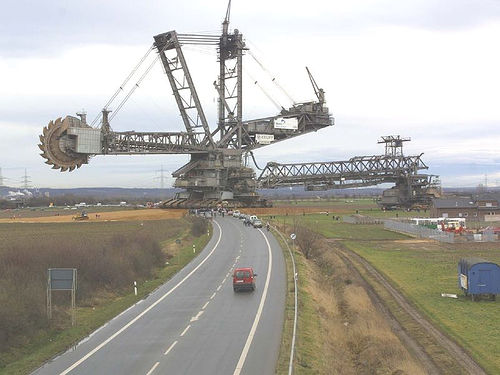


Monash Energy

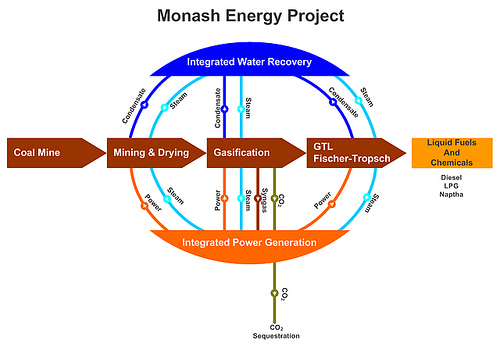
Monash Energy is a venture by Shell and Anglo American to jointly develop a "clean" coal to liquids project in the Latrobe Valley, "utilising the latest low-emissions technologies".

The Monash plant is to use local brown coal as a fuel source (gently lifted from the earth by the little machine shown above) which has a moisture content of more than 60%. Vaporising the moisture when the coal is used for power generation results in an energy loss that also results in higher CO2 emissions per unit of electricity generated (around 50% higher than using black coal), which presents a major problem for Victorian power generators with the commencement of carbon emissions trading looming in the not-too-distant future.


Monash promotes their CTL project by highlighting both energy security concerns and their plan to sequester the CO2 produced (approximately 13 million tonnes of CO2 per year) offshore beneath depleting oilfields in Bass Strait.

Roll-out of these technologies – particularly coal gasification and carbon capture and storage – is becoming critical at a time when official forecasts project a 60% increase in world primary energy demand over the next thirty years. These same forecasts also suggest fossils fuels remain one of the primary sources of energy, so the aggressive adoption of new and less carbon intensive technologies is vital. Critically, the technologies chosen by Monash Energy enable separation of a concentrated stream of CO2 that can be transported to injection wells in deep underground geological formations for secure storage.

The Monash Energy focus on the production of liquid fuels – such as an ultra-clean, virtually zero sulphur synthetic diesel – is also highly relevant to the emerging debate around energy security. The Project would be one of the largest single investments ever undertaken in Australia. Its size and complexity means that at least a decade from initiation to commercial production.


The first commercial plant is expected to produce about 60,000 barrels per day of synthetic fuel (80% of which is high-quality diesel). Commissioning of the plant is targeted for 2016. There has also been talk of the project producing hydrogen. According to the company (as of late 2006) the output of the plant has an indicative price of $US50/barrel - however I suspect this number has changed somewhat since then - and the Gippsland Basin brown coal resource is sufficient to support several such plants, each operating for 50 years.


The plan to sequester CO2 in Bass Strait has hit some snags, with Exxon announcing last year that the region still has more than 20 years left of oil production and more than 30 years of gas, prompting speculation that the carbon dioxide may need to find another home. Exxon continued to raise concerns about this plan at the APPEA conference this week.

A pilot onshore sequestration project recently started up which may provide an alternative option if it can be made to work.


Linc Energy

Linc Energy is a small player that is commissioning a demonstration plant to convert coal to liquids at Chinchilla, on Queensland's Darling Downs (and one which promotes its process as a solution to peak oil). The demonstration plant is due to prove at the end of the month that it can produce products such as diesel and aviation fuel.


The company is using underground coal gasification (UCG) to produce syngas, then converting the syngas into liquids using the Fischer Tropsch process.

UCG differs from conventional above-ground gasification in a number of ways:

* Coal is not mined.

* Chemical processes are arranged to occur in the coal seam in situ.

* The injection and production wells must be connected within the coal seam by the links of low hydraulic resistance to allow production of commercial quantities of gas.

* Process water for gasification usually comes from the coal itself and surrounding rocks, and its influx must be carefully regulated.

* No ash or slag removal and handling are necessary since they predominantly stay behind in the underground cavities.

* The process must be confined within a hydraulic system created in the coal seam so that no leakage of the product is possible and no contamination of the underground environment can occur. Such a hydraulic system is called an underground gasifier, and its design is the most crucial part of a UCG operation.

The company is claiming it can produce syngas for about 70c a gigajoule, which The Australian claims is "causing some discomfort for Queensland's coal seam methane producers" (although they don't appear to be direct competitors, in the absence of any gas-to-liquids projects in the coal seam methane industry at present). The company also claims UCG produces 20 times more gas for a given volume of coal than CSM can.


If the demonstration plant is successful, the company hopes to develop a 20,000 barrels-a-day commercial operation - expected to cost around $800 million. The output would be trucked to Brisbane for distribution by BP.

Linc has formed a joint venture with a small Queensland based biotechnology company called BioCleanCoal to develop a bioreactor which will "convert CO2 into oxygen and solid biomass through a photosynthesis process" in the hope of reducing or eliminating CO2 emissions.

Some of the early proposals from Linc talked about a syngas fuelled power station as well, though this now seems to be on the back burner. The company claims this would produce fewer greenhouse gas emissions than regular natural gas fired power plants, which might be another reason why it promotes itself as a "clean coal" company.

According to a lifecycle analysis of UCG electricity production by BHP's Newcastle Technology Center in Australia (note that BHP is a very large producer of coal):

* UCG-CCGT (Underground Coal Gasification-Combined Cycle Gas Turbine) has the potential to be one of the lowest greenhouse gas (GGE) coal-based technologies, and compares with the emerging IGCC (Integrated Gasification Combined Cycle) and more radical ultra-supercritical developments — it would generate around 25% less GGE than the most efficient of Australian coal-fired power stations.

* UCG-CCGT, however, emits more GGE than does a natural-gas-fired CCGT process due primarily to the higher carbon to hydrogen ratio of the gasified coal product.

* NOx values are equivalent to other combined cycle type power stations.

* UCG-CCGT requires smaller amounts of water compared to other combined cycle technologies, as gasification water requirement is provided by controlling ingress of water from aquifers surrounding the wells and gasification voids. Some of this water is extracted as condensate and reused for cooling purposes.

The company is also expanding into Vietnam, recently announcing plans to build a UCG power plant there.

In addition, there are reports that Linc may be involved in plans to evaluate "huge but little explored coal reserves" in the Arckaringa Basin in South Australia's far north, with the goal of producing electricity and fuel for major resources projects - in particular Olympic Dam and its large new requirements for power (in a state already short of power generation capacity). According to The Age, no serious exploration work has been carried out in the basin since the 1980s, although the SA Department of Primary Industries and Resources has data from previous drilling indicating that billions of tonnes of coal could be contained in the region.


GulfX / Syngas Energy

GulfX is another company talking about building a CTL plant, again via gasification of coal, at a site 300 kilometres north-west of Adelaide. Apparently they partnering with geothermal energy hopeful Torrens Energy. The company says "We will have an on-site facility which will consist of a 30,000 barrel a day refining plant and a 500 megawatt power plant, of which 50 per cent would go into the national grid".

Both companies are minnows, so this project appears highly speculative.

Coal to Liquids Elsewhere

Until recent years, the only countries that have pursued coal-to-liquids programs have been those that have had difficulty obtaining sufficient oil supplies - particularly Nazi Germany and in apartheid-era South Africa by SASOL. Both used the Fischer-Tropsch process - a number of other coal-to-liquids processes have been explored in the years since.

South Africa has been producing fuel from coal since 1955 and has the only commercial CTL industry currently in operation. Around 30% of the country’s liquid fuel needs are produced from coal, with total capacity above 160,000 barrels per day.

Rising oil and gas prices have caused Asian countries to start looking seriously at coal-to-liquids projects, with China expected to start its first large scale plant in the coal-rich region of Inner Mongolia, using the Bergius process. The plant will reportedly have a daily output of 20,000 barrels, rising to 100,000 barrels a day in future years.

A study last year by the Chinese Academy of Sciences said: "Production of liquid fuels from coal is practically the most feasible route to cope with the dilemma in oil supply." It concluded: "Establishing large-scale CTL plants on the pitheads of several main coalfields is feasible and competitive when oil price is well over US$25 per barrel." According to The Guardian, at least two more commercial scale coal-to-liquids plants are under construction in China, although the Chinese government has expressed concern about the possible environmental impact of uncontrolled expansion, and has taken steps to limit the number of smaller facilities.

The IEA is predicting that by 2030, China's non-conventional oil supply from CTL plants will reach 750,000 barrels a day. An IEA report on CTL, due to be published this spring, will highlight other projects planned or under way in Japan, the US, Australia, China, India, Botswana, Indonesia, the Phillippines and South Africa.

The Indian government recently approved a joint venture between Tata and Sasol.

There is an organisation pushing adoption of coal-to-liquids processes in the United States called the Coal To Liquids Coaltion (also known as FutureCoalFules.org".

The US Air Force seems to be showing a keen interest in synthetic fuels from CTL and is reportedly encouraging the creation of a CTL industry that could leverage local coal reserves based on energy security concerns. They apparently have plans to lease property at Malmstrom Air Force Base in Montana for the construction of a CTL plant.

The Governor of Pennsylvania is also pushing for federal funding to establish a CTL plant in his state - a plan not without critics.


Environmental Concerns

Coal mining has always attracted a large amount of criticism from environmental groups because of the devastation it causes to both mined and surrounding areas and as a result of the pollutants emitted when burning.

Carbon dioxide emissions have been the number one concern in recent years, with critics pointing out that even if "clean coal" power plants can be built and operated successfully, CTL plants will always be major sources of emissions because the fuel produced is burnt where it cannot be sequestered - in vehicles.

While some scenarios have been considered that combine peak oil models with deliberate efforts to reduce our use of coal in order to reduce our carbon emissions to levels that are considered safe, accelerating the use of coal via coal-to-liquids schemes (in a knee-jerk reaction to peak oil) will achieve the opposite effect - rapidly increasing emissions as we use coal to make up for shortfalls in oil supplies.

Known coal supplies have the potential to increase carbon dioxide levels to almost 1000 ppm, which is far in excess of levels considered safe by the IPCC, leading some global warming activists to declare "coal is the enemy of the human race".

Some observers are already predicting the "beginning of the end for coal" in the US as a result of government and finance industry obstacles to new coal based energy developments.


Peak Coal ?
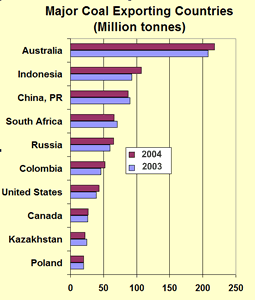
Australia's largest export is coal. The country is the world's fourth biggest coal producer, behind China, the United States and India, and largest coal exporter - with plans to dramatically increase supply by eliminating the infrastructure bottlenecks that exist in the major ports servicing the industry at Port Waratah in Newcastle (to 140 million tonnes per year) and Dalyrmple Bay in Queensland (to 85 million tonnes per year), weather permitting. A new port at Wiggins Island in Queensland capable of handling 85 million tonnes per year is also planned.

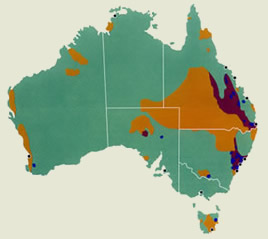
In 2006, Australia produced around 310 million tonnes (Mt) of coal, of which 230 Mt was exported. Australian coal reserves are estimated (by the EIA) to amount to 86,530 Mt, or just under 9% of world reserves, with deposits primarily located in Queensland and NSW.


There was a report in the SMH last year that NSW could run out of coal "within 35 years", based on a production growth rate of 3.2% per year - but this was using a resource estimate of 10,600 Mt, whereas the official estimate from Geoscience Australia is 34,100 Mt (of black coal). I'm not sure where the disconnect is here.

The Australian Coal Association, on the other hand, estimates Australia's identified black coal resources would last more than 200 years at current rates of production. Obviously current production rates are a foolish baseline to use, given the steady increase in domestic consumption and the expansion of export capacity, but even if we assume production rapidly increased to 1,000 Mt per year, this would still last for 70 years using the Geoscience Australia black coal figure (brown coal reserves are much larger) - and there does seem to be some scope for increases in resource estimates given that the huge known reserves haven't provide a lot of incentive for going out and scouring prospective areas that haven't been well explored so far.

Based on these numbers, it would seem that the only thing likely to constrain the growth of CTL plants in Australia as a response to rising oil prices is climate change policy limiting or heavily taxing carbon dioxide emissions.


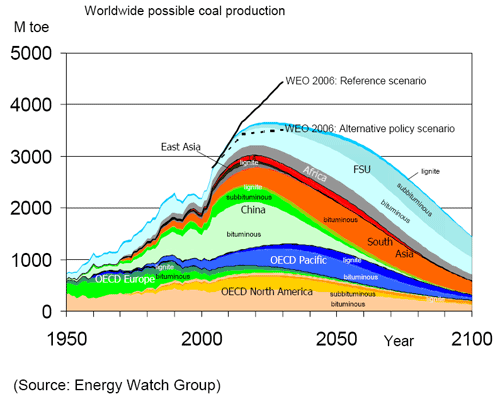
Australia, along with India, is apparently the exception in terms of managing to find new coal reserves. According to a report on "Coal: Resources and Future Production" (pdf) from the EWG (Energy Watch Group), since 1986 all other nations with significant coal resources that have made the effort to update their reserves estimates have reported substantial downward revisions. Some countries - including Botswana, Germany, and the UK - have downgraded their reserves by more than 90 per cent. Poland’s reserves are now 50 per cent smaller than was the case 20 years ago.

The EWG report resulted in a slew of articles on "peak coal" predicting that coal production will peak in the 2020 - 2025 timeframe.


The Australian Disease ?

Woodside CEO Don voelte recently said Australia had a "raw, fragile, non-manufacturing and extraction-based economy". By some estimates, the North West Shelf gas project now represents about 3% of Australia's gross national product. If the Gorgon, Browse, Ichthys, Wheatstone, Pilbara, Gladstone and Darwin Phase 2 LNG projects all came to fruition, this would likely rise to over 10% of GNP.


With coal exports worth 5 times those of LNG in 2006, the weight of coal in Australia's economy is even greater.

Soaring coal prices - BHP, Rio Tinto and other Australian miners expect prices for exports to Asia to triple this year, before falling back a little in subsequent years - will further increase the share of the economy devoted to fossil fuel extraction.

Mineral exports are also causing the Australian dollar to appreciate sharply, with US dollar parity expected in the near future. These factors are having a large impact on other sectors of the economy, with exporters that can't command these sorts of price rises being severely squeezed by the rising currency.

These issues raise the spectre of Australia suffering from what is known as "The Dutch Disease" - the theory that an increase in revenues from natural resources will deindustrialise a nation’s economy by raising the exchange rate, which makes the manufacturing sector less competitive. The term was coined in 1977 by The Economist to describe the decline of the manufacturing sector in the Netherlands after the discovery of natural gas in the 1960s.

This potential fate has already been raised in the Australian Financial Review, The Age and others, but it is hard to see any government action to try and prevent this.

I'm not sure if there is a term for the converse of the Dutch disease - what happens to economies that become dependent on consuming a cheap and plentiful resource - but I think that would be an interesting area of study on its own.

Statistics

Locations of visitors to this page

blogspot visitor
Stat Counter

Total Pageviews

Ads

Books

Followers

Blog Archive

Labels

australia (619) global warming (423) solar power (397) peak oil (355) renewable energy (302) electric vehicles (250) wind power (194) ocean energy (165) csp (159) solar thermal power (145) geothermal energy (144) energy storage (142) smart grids (140) oil (139) solar pv (138) tidal power (137) coal seam gas (131) nuclear power (129) china (120) lng (117) iraq (113) geothermal power (112) green buildings (110) natural gas (110) agriculture (91) oil price (80) biofuel (78) wave power (73) smart meters (72) coal (70) uk (69) electricity grid (67) energy efficiency (64) google (58) internet (50) surveillance (50) bicycle (49) big brother (49) shale gas (49) food prices (48) tesla (46) thin film solar (42) biomimicry (40) canada (40) scotland (38) ocean power (37) politics (37) shale oil (37) new zealand (35) air transport (34) algae (34) water (34) arctic ice (33) concentrating solar power (33) saudi arabia (33) queensland (32) california (31) credit crunch (31) bioplastic (30) offshore wind power (30) population (30) cogeneration (28) geoengineering (28) batteries (26) drought (26) resource wars (26) woodside (26) censorship (25) cleantech (25) bruce sterling (24) ctl (23) limits to growth (23) carbon tax (22) economics (22) exxon (22) lithium (22) buckminster fuller (21) distributed manufacturing (21) iraq oil law (21) coal to liquids (20) indonesia (20) origin energy (20) brightsource (19) rail transport (19) ultracapacitor (19) santos (18) ausra (17) collapse (17) electric bikes (17) michael klare (17) atlantis (16) cellulosic ethanol (16) iceland (16) lithium ion batteries (16) mapping (16) ucg (16) bees (15) concentrating solar thermal power (15) ethanol (15) geodynamics (15) psychology (15) al gore (14) brazil (14) bucky fuller (14) carbon emissions (14) fertiliser (14) matthew simmons (14) ambient energy (13) biodiesel (13) investment (13) kenya (13) public transport (13) big oil (12) biochar (12) chile (12) cities (12) desertec (12) internet of things (12) otec (12) texas (12) victoria (12) antarctica (11) cradle to cradle (11) energy policy (11) hybrid car (11) terra preta (11) tinfoil (11) toyota (11) amory lovins (10) fabber (10) gazprom (10) goldman sachs (10) gtl (10) severn estuary (10) volt (10) afghanistan (9) alaska (9) biomass (9) carbon trading (9) distributed generation (9) esolar (9) four day week (9) fuel cells (9) jeremy leggett (9) methane hydrates (9) pge (9) sweden (9) arrow energy (8) bolivia (8) eroei (8) fish (8) floating offshore wind power (8) guerilla gardening (8) linc energy (8) methane (8) nanosolar (8) natural gas pipelines (8) pentland firth (8) saul griffith (8) stirling engine (8) us elections (8) western australia (8) airborne wind turbines (7) bloom energy (7) boeing (7) chp (7) climategate (7) copenhagen (7) scenario planning (7) vinod khosla (7) apocaphilia (6) ceramic fuel cells (6) cigs (6) futurism (6) jatropha (6) nigeria (6) ocean acidification (6) relocalisation (6) somalia (6) t boone pickens (6) local currencies (5) space based solar power (5) varanus island (5) garbage (4) global energy grid (4) kevin kelly (4) low temperature geothermal power (4) oled (4) tim flannery (4) v2g (4) club of rome (3) norman borlaug (2) peak oil portfolio (1)