Showing posts with label microhydro. Show all posts

Back to Basics: Direct Hydropower  

Posted by Big Gav in

The Oil Drum has a post by Kris de Decker, founder and writer at Low-tech Magazine, on "direct use" of micro hydro power - Back to Basics: Direct Hydropower.

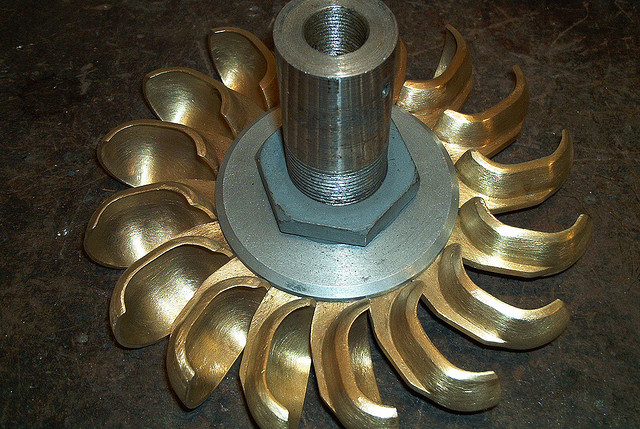
All hydropower plants today produce electricity. Transforming energy to electricity seems to be the only way to harness water power, but it is not. For almost two thousand years, water wheels powered machines directly via mechanical transmission.

Some small direct hydro powered systems in South America present a strong case for combining the use of modern materials with old fashioned methods of water power mechanization. The higher efficiency of this approach means that less water is needed to produce a given amount of energy. This lowers the cost of hydropower and enables power to be produced by the use of very small streams. ...

In spite of these significant improvements, hydropower installations today are actually less efficient than those from earlier centuries. The culprit is electricity. Not long after the introduction of the water turbine, another change occured: Instead of using water-powered prime movers to run machinery directly (as had been the case for centuries), water turbines were (and still are) used to generate electricity. This modern approach has introduced an energy deficit that has nullified any progress behind hydropower design efficiency.

In a modern hydropower installation, a water turbine converts the energy in the moving water into rotational energy at its shaft, which is then converted into electrical energy by the generator that is coupled to the turbine. Next, the electrical energy is converted back into rotational energy by the electric motor of the machine that is being powered. Every energy conversion introduces energy loss. This loss of energy occurs due to friction, which is observable as heat, vibration and noise. Friction occurs at all levels of electrical transmission: In the turbine, the generator, and the motor. Additional components such as batteries, drive systems and inverters can further increase efficiency losses. ...

This means that a small, modern hydropower plant has a similar efficiency rating to a centuries old configuration using a wooden vertical overshot water wheel (50-60%), and that this modern counterpart is considerably less efficient than the iron water wheels of the 18th century (65-85%). In an old fashioned hydropower installation, there was only one conversion of energy; A water wheel converted the energy inherent to the water source into rotational energy at its shaft. The same shaft also moved the machinery, so that the only source of significant energy loss occured in the water wheel itself.
Hydropower from Old Washing Machines  

Posted by Big Gav in , ,

AlwaysOn has a post by Lee Bruno on an innovative Kiwi idea for recycling old washing machines and turning them into micro-hydro generation devices - Hydropower from Old Washing Machines.

OK. It’s New Zealand, not Australia. But this company called EcoInnovation still reminds you a little bit of Road Warrior. Founder and chief engineer Michael Lawley has built his “renewable energy store” on the ingenious redeployment of everyday household appliances.

Among other things, the company recycles SmartDrive motors from salvaged washing machines to generate hydropower. Of course, you need to be near a river or stream.

Yes, micro-hydro turbines that can tap into the movement of medium flowing streams and turn a turbine that can deliver most of the electrical requirements of a small home.

Lawley says the company has been able to recycle the motors from salvaged domestic washing machines – aka Whirlpool. The company claims its already made 1,000 successful installations of its micro-hydro device as well as wind and solar power systems.

EcoInnovation also prides itself on using recycled materials and renewable energy to manufacture renewable energy products.

But if you are, Lawley promises great results. He says his own home and company have been “power-bill free” for 11 years. It’s about time to put Kiwi innovation to work for U.S. homes bordering streams and rivers.

Micro hydropower systems have also gained greater attention recently in other parts of the world like Canada, India and Norway. Researchers at Dalhousie University in Halifax, Nova Scotia, Canada. published a paper in the journal Energy Sources last year. The paper pointed out that 85 percent of Nepalese people live in remote areas with limited access to energy sources, such as wood and other biomass products. The researchers found that micro hydropower has great applicability as a sustainable energy technology, especially in consideration of the socioeconomic conditions of the country.

In fact, the paper outlined the benefits of micro hydro operations in remote areas offering one of the most feasible options for energy development. It is demonstrated that micro-hydropower can bring energy services to the rural areas of the country as well as social changes through decentralization and community participation. The researchers reported in their finding that micro-hydro projects fulfil the technological, environmental, economic, and social sustainability criteria.

And just last week, Norway’s minister of Petroleum and Energy Terje Riis-Johansen commented on micro hydropower stations as offering a way to boost the country’s electrical capacity to 18 TWh of new power. He said the country hopes that 100 applications can be processed each year. Last year, 42 power stations with a total production of 0.5 TWh received concessions.

A micro-hydropower revolution in the UK ?  

Posted by Big Gav in , , ,

The Guardian has an article on plans to expand micro-hydro generation in Britain - Canals and rivers to lead micro-hydropower revolution

Britain's canals and rivers have already been heralded as a low-carbon way to tranport Tesco groceries, a test-bed for hydrogen boats and a opportunity to build more wind turbines. Now they're being billed as a chance for micro hydropower to flourish under new plans unveiled today by British Waterways, which maintains 2,200 miles of the country's canals and rivers.

In partnership with The Small Hydro Company, British Waterways said it intended to build 25 small-scale hydro-electric schemes with a capacity of 40MW, enough to power 40,000 homes. While far smaller in capacity than offshore wind farms switched on in 2008, the hydro initiative hopes to raise £120m in private capital over the next three years, create 150 construction jobs and reduce CO2 emissions by 110,000 tonnes annually.

Underwater turbines will be installed next to existing weirs and will not affect the navigation of canals and rivers. Larger waterways such as the Trent and Severn rivers will be used for the first hydro power projects, with many of the installations likely to be located in the East Midlands and Yorkshire. It is hoped the first of the 25 hydro installations will be generating renewable electricity by 2010.

"Britain's waterways were the arteries of our economy, providing transport and power," said the environment secretary, Hilary Benn. "This scheme shows how with ingenuity and innovation they can once again deliver real economic, social, and environmental benefits, especially in tackling and adapting to climate change."

Last year British Waterways also announced plans to build wind turbines with 100MW of generating capacity, and more recently it said it wanted unused land by canals and rivers to be turned into allotments.

Statistics

Locations of visitors to this page

blogspot visitor
Stat Counter

Total Pageviews

Ads

Books

Followers

Blog Archive

Labels

australia (619) global warming (423) solar power (397) peak oil (355) renewable energy (302) electric vehicles (250) wind power (194) ocean energy (165) csp (159) solar thermal power (145) geothermal energy (144) energy storage (142) smart grids (140) oil (139) solar pv (138) tidal power (137) coal seam gas (131) nuclear power (129) china (120) lng (117) iraq (113) geothermal power (112) green buildings (110) natural gas (110) agriculture (91) oil price (80) biofuel (78) wave power (73) smart meters (72) coal (70) uk (69) electricity grid (67) energy efficiency (64) google (58) internet (50) surveillance (50) bicycle (49) big brother (49) shale gas (49) food prices (48) tesla (46) thin film solar (42) biomimicry (40) canada (40) scotland (38) ocean power (37) politics (37) shale oil (37) new zealand (35) air transport (34) algae (34) water (34) arctic ice (33) concentrating solar power (33) saudi arabia (33) queensland (32) california (31) credit crunch (31) bioplastic (30) offshore wind power (30) population (30) cogeneration (28) geoengineering (28) batteries (26) drought (26) resource wars (26) woodside (26) censorship (25) cleantech (25) bruce sterling (24) ctl (23) limits to growth (23) carbon tax (22) economics (22) exxon (22) lithium (22) buckminster fuller (21) distributed manufacturing (21) iraq oil law (21) coal to liquids (20) indonesia (20) origin energy (20) brightsource (19) rail transport (19) ultracapacitor (19) santos (18) ausra (17) collapse (17) electric bikes (17) michael klare (17) atlantis (16) cellulosic ethanol (16) iceland (16) lithium ion batteries (16) mapping (16) ucg (16) bees (15) concentrating solar thermal power (15) ethanol (15) geodynamics (15) psychology (15) al gore (14) brazil (14) bucky fuller (14) carbon emissions (14) fertiliser (14) matthew simmons (14) ambient energy (13) biodiesel (13) investment (13) kenya (13) public transport (13) big oil (12) biochar (12) chile (12) cities (12) desertec (12) internet of things (12) otec (12) texas (12) victoria (12) antarctica (11) cradle to cradle (11) energy policy (11) hybrid car (11) terra preta (11) tinfoil (11) toyota (11) amory lovins (10) fabber (10) gazprom (10) goldman sachs (10) gtl (10) severn estuary (10) volt (10) afghanistan (9) alaska (9) biomass (9) carbon trading (9) distributed generation (9) esolar (9) four day week (9) fuel cells (9) jeremy leggett (9) methane hydrates (9) pge (9) sweden (9) arrow energy (8) bolivia (8) eroei (8) fish (8) floating offshore wind power (8) guerilla gardening (8) linc energy (8) methane (8) nanosolar (8) natural gas pipelines (8) pentland firth (8) saul griffith (8) stirling engine (8) us elections (8) western australia (8) airborne wind turbines (7) bloom energy (7) boeing (7) chp (7) climategate (7) copenhagen (7) scenario planning (7) vinod khosla (7) apocaphilia (6) ceramic fuel cells (6) cigs (6) futurism (6) jatropha (6) nigeria (6) ocean acidification (6) relocalisation (6) somalia (6) t boone pickens (6) local currencies (5) space based solar power (5) varanus island (5) garbage (4) global energy grid (4) kevin kelly (4) low temperature geothermal power (4) oled (4) tim flannery (4) v2g (4) club of rome (3) norman borlaug (2) peak oil portfolio (1)