Showing posts with label germany. Show all posts

Tesla plans to choose location for ‘Gigafactory 2’ in Europe next year  

Posted by Big Gav in , , ,

Elektrek reports that Tesla are planning to set up Gigafactory 2 in Europe - Tesla plans to choose location for ‘Gigafactory 2’ in Europe next year, will produce both batteries and cars.

Tesla also announced that they will be creating Tesla Advanced Automation Germany after buying German engineering company Grohmann Engineering, a leader in highly automated methods of manufacturing.

Musk confirmed that Tesla plans to choose a location for ‘Gigafactory 2’ in Europe next year and he added that the factory will combine both the production of batteries and complete cars. It’s an interesting development considering the Gigafactory concept was originally only supposed to manufacture battery cells and packs, but we recently learned that Tesla is planning drive system production lines at the Gigafactory 1 in Nevada. Now it looks like Tesla will take it a step further and vertically integrate the entire production process in one plant – for the ‘Gigafactory 2’ at least.

The Myth Of Renewables Threatening Grid Stability  

Posted by Big Gav in , ,

RNE has a look at the increasing penetration of renewables for power generation, demonstrating they pose no issue for grid stability - The Myth Of Renewables Threatening Grid Stability.

Germany’s power grid outage averaged 12.7 minutes last year, 41% less than in 2006, even though renewables have grown to account for as much as a third of power generation in the country, according to data released by the federal regulator last week.

This put to rest concerns about intermittent sources of power threatening grid stability. The country is weaning itself away from nuclear power and embracing renewables generation, providing a working model of transformation of the energy sector for many other countries. ...

Meanwhile, there are countries that are still stretching their clean energy targets. Morocco wants to increase the proportion of energy consumption from renewables to 42% by 2020 and up to 52% by 2030, by when it aims to have 10.1GW of renewables – 4.6GW of solar, 4.2GW of wind and 1.3GW of hydro power.

Did Germany just surpass 100% renewable electricity?  

Posted by Big Gav in ,

ReNew Economy has an update on the increasing penetration of renewables into the German electricity market - Did Germany just surpass 100% renewable electricity?.

Germany Reaches 74% Renewable Energy During May Weekend  

Posted by Big Gav in ,

Inhabitat has a look at Germany's increasing takeup of renewable energy - Germany Was Powered by 74% Renewable Energy Last Weekend.

According to think tank Agora Energiewende, Germany’s renewable usage set a new record on Sunday when wind, solar, biomass, and hydro energy supplied a bulk of the country’s energy. Information supplied by the group shows that the combined contribution of renewables reached 43.54 gigawatts between noon and 1 p.m. That equates to almost three quarters of the country’s demand.

Agora Energiewende has noted, however, that the inability of some baseload generators to switch themselves off meant that a record level of more than 10 gigawatts of surplus capacity at its peak was exported to neighboring markets.

Germany has always been among Europe’s leaders when it comes to solar energy, and this weekend was no exception with its output at 15.2 gigawatts at its peak. That said, the output is just half its rated peak capacity—which is more than 33 gigawatts—but then most of the northern part of the country was covered in cloud.

Angst… that the Energiewende will work  

Posted by Big Gav in ,

Energy Transition has a look at the German "Energy Transition" to renewable energy and some of the misconceptions spread about it by its critics - Angst… that the Energiewende will work.

Unlike the Swedes and Italians, the Germans knew how to replace nuclear back in 2002 – and they have even replaced all of the lost nuclear power since 2011. The IER charges the opposite:

“Germans have turned to coal to back up their intermittent renewable technologies and to ensure that they have adequate power to satisfy electricity demand.”

This claim is based on a previous paper published by the IER itself (PDF). But as we demonstrate in our study German Coal Conundrum, the growth of renewables since 2011 has already outstripped the reduction in nuclear. And as regular readers of this blog know, demand from foreign countries for German power (the main two being the Netherlands and France in 2013) directly increases the residual load served by conventional plants; specifically, if we zero-out Germany’s record level of net exports in 2013, coal power and carbon emissions drop by around 2.5 percent. If anything, foreign countries have turned to German coal power at a record level; Germany does not need so much electricity from coal to meet its own demand.

We shouldn’t stop counting at the end of 2013, either. The roundup of changes by TWh in the first half of 2014 is in the chart below. Get ready for reports of Germany lowering its emissions this year.

German Government Targets 55% to 60% Renewables by 2035  

Posted by Big Gav in ,

The German Energy Blog reports the governing coalition of conservatives and social democrats has agreed on a target of 55% - 60% renewable energy over the next 2 decades - CDU/CSU and SPD Present Coalition Agreement – 55% to 60% Renewables by 2035 and More.

The conservative CDU/CSU, the winners of the Federal Election of 22 September 2013, and the Social Democrats (SPD), who emerged second in the election, have presented a coalition agreement for a grand coalition in Germany that provides inter alia for a binding expansion corridor of 55% to 60% renewable energy by 2035.

The battery storage system that could close down coal power  

Posted by Big Gav in , ,

ReNew Economy has an article on a German energy storage technology company - The battery storage system that could close down coal power.

You don’t have to go far inside the headquarters of German battery storage company Younicos, or even their website for that matter, to find out what they are about. “Let the fossils rest in peace,” the logo suggests. Another sign at their technology centre east of Berlin proclaims: “You are now leaving the CO2 producing sector of the world.”

This sign is designed to mimic those which adorned the checkpoints that separated the various sectors of east and west Berlin before the wall was torn down. Younicos believe they have a technology that is equally disruptive, and can break down one of the last barriers to 100 per cent renewable energy: the need to run fossil fuel generation to control the “frequency” of the grid, and the other system services such as voltage control.

The company, based in Berlin Adlershof, on the eastern outskirts of the capital, is developing 10MW-sized battery parks, using battery systems that it says can stabilise the grid faster, cheaper and with greater precision that conventional generation.

It says that these systems can substitute 10 times the capacity from conventional generation – coal, nuclear and gas – and at a fraction of the cost. According to Younicos spokesman Philip Hiersemenzel, each battery park can be installed at around € 15 million, which means that for an investment of €3 billion, conventional generation in Germany’s 80GW would no longer be needed – at least for frequency and stability purposes.

This is critical is Germany. The sheer scale of their solar PV installations – it has more than 35GW – means that on some days it already produces more than half the country’s electricity needs. But baseload generators have to keep running for the sake of frequency control and system stability, this has caused spot prices to plunge well below zero.

For an 80GW grid, it needs about 20GW and 25GW of “must run” balancing to maintain frequency and keep the grid stable. Younicos says 2GW of its battery parks would render this need redundant. Around 200 of it battery parks could be installed around the country at a total cost of around €3 billion.

(Of course, that is not the only impediment to 100 per cent renewables – enough solar and wind power needs to be built, and other storage is needed, battery storage to respond to variations in load on a minute by minute and hour by hour basis, and longer-term or “seasonal” storage, which can take excess production and store it – synthetic diesel, hydrogen etc.).

Germany finances major push into home battery storage for solar  

Posted by Big Gav in , ,

RNE has an article on Germany's efforts to encourage energy storage investment as part of their transition to renewable energy - Germany finances major push into home battery storage for solar.

The German government has responded to the next big challenge in its energy transition – storing the output from the solar boom it has created – by doing exactly what it has successfully done to date: greasing the wheels of finance to bring down the cost of new technology. Over the past five years, Germany has been largely responsible for priming an 80 per cent fall in the price of solar modules. Now it is looking at bringing down the cost of the next piece in the puzzle of its energy transition – battery storage. At its disposal is the giant state-owned but independently run development bank KfW. It performs in the clean energy space a similar function to Australia’s recently created and imminently doomed Clean Energy Finance Corp, but at such a scale that is not contemplated in most countries, possibly with the exception of China. It has assets of more than €500 billion, and lent €73 billion last year – with one-third of that targeted at renewables and climate investments. Over the past three years it provided €24 billion in loans for energy efficiency investment in homes, leveraging a total investment of €58 billion, helping insulate and seal more than 2 million homes, employing 200,000 people a year and saving more than 150 million tonnes of carbon. Six months ago, it began a new program to finance the introduction of battery storage into homes and small business, which it says is absolutely essential if the “energiewende”, the German expression for its energy transition – is to successfully move to the next phase and beyond 40 per cent renewable penetration.

Germany Reaches 59% Renewable Energy Peak, Power Grid Doesn’t Blow Up  

Posted by Big Gav in ,

"The 9 Billion" reports that German renewable energy penetration recently exceeded 59% - Germany Reaches 59% Renewable Energy Peak, Power Grid Doesn’t Blow Up.

Earlier this month on a very sunny and windy day, Germany managed to hit a peak of 59.1% renewable power generation, and what’s more, the heavily industrialized county’s power grid did not explode, Greentechmedia has pointed out.

It was around midday on October 3, which just happened to be Germany’s annual Reunification Day holiday, when the sun was at its fullest and the significant peak was reached. Over the entire day, 36.4% of total electricity generation was achieved with solar and wind power; solar panels contributed 11.2% on their own. At its peak, solar accounted for 20.5 gigawatts.

Although the electrical grid withstood the large amount of renewable energy flowing to it, you’ll be pleased to know that electricity prices also dived.

3 Reasons Germans are Going Renewable 'At All Costs'  

Posted by Big Gav in ,

REW has an article on Germany's (self) interest in renewable energy - 3 Reasons Germans are Going Renewable 'At All Costs'. It's something we all should be emulating.

Germany is racing past 20 percent renewable energy on its electricity grid, but news stories stridently warn that this new wind and solar power is costing "billions." But often left out (or buried far from the lede) is the overwhelming popularity of the country's relentless focus on energy change (energiewende).

How can a supposedly expensive effort to clean up the energy supply be so popular?

1. It's about the cost, not the price

Most news stories focus on the cost of electricity in Germany, which has some of the highest rates per kilowatt-hour in the world. But they don't note that the average German electricity bill – about $100 a month – is the same as for most Americans. Germans are much more efficient users of energy than most, so they can afford higher rates without having higher bills. ...

2. It's about vision

Germany doesn't just have an incremental approach to renewable energy, but a commitment supported by 84 percent of residents to get to 100% renewable energy "as quickly as possible." ...

3. It's about ownership

I lied in #1. Support for Germany's renewable energy quest isn't about cost of energy, but about the opportunity to own a slice of the energy system. Millions of Germans are building their retirement nest egg by individually or collectively owning a share of wind and solar power plants supplying clean energy to their communities. Nearly half of the country's 63,000 megawatts of wind and solar power is owned locally, and these energy owners care as much about the persistence of renewable energy they own as they do about the energy bill they pay. Not only do these German energy owners reduce their own net cost of energy, every dollar diverted from a distant multinational utility company multiplies throughout their local economy.

Not only does local ownership flip the notion of energy costs as consumers become producers, it also flips the notion of political ownership. Three-quarters of Germans want to maintain a focus on "citizen-managed, decentralized renewable energy."

The tunnel vision on cost so prevalent in the press reflects the perspective of incumbent utilities, whose market share declines as their former customers produce their own power. It's a story that plays out in the U.S., when debates over new power plants focus narrowly on the cost per kilowatt-hour rather than how an individual or community can retain more of their energy dollar.

It may seem that Germany is going renewable "at all costs," but only if we are resigned to being energy consumers. Because their and our energy transition is a once-in-a-lifetime opportunity to take charge of our energy future. That's priceless.

Wind Power Makes Hydrogen for German Gas Grid  

Posted by Big Gav in , , , ,

Proposals to generate hydrogen using excess wind power have been blowing around for quite a few years now, with the hydrogen being a form of "energy storage" that can be subsequently burnt for heat and/or power.

Some systems are now appearing in the wild in countries as diverse as Morocco, Turkey, Argentina and Norway.

Greentech media reports that the Germans are getting in on the act as well, converting excess wind power to hydrogen and feeding it into the natural gas grid (perhaps the combination of hydrogen derived gas and biogas will eventually eliminate European dependence on gas from Russia and the middle east) - Wind Power Makes Hydrogen for German Gas Grid

For the first time on an industrial scale, hydrogen produced using wind power is being injected into the natural gas grid in Germany. It’s a development that could enhance the value of wind power by making it useful no matter when it is produced.

E.ON said the P2G unit in Falkenhagen in eastern Germany, operated in a partnership with Swissgas AG, has a capacity of 2 megawatts and can pump out 360 cubic meters of hydrogen every hour. In a sign of the potential of the technology, its inauguration drew a crowd that included the German economics minister, members of the European parliament and high officials of Brandenburg state.

“One of the biggest challenges of transforming Germany’s energy system is finding ways to integrate the increasing share of intermittent, renewable-source energy,” Economics Minister Philipp Rösler said in the E.ON news release. “To ensure that Germany’s power system remains stable and that our economy continues to have the energy it needs, we not only have to rapidly expand energy networks. We also need innovative solutions like the P2G unit here in Falkenhagen.”

The Falkenhagen facility is essentially a way to store wind power. Instead of turning off the turbines at a nearby wind farm when demand is low (as it can be at night, when the wind tends to blow strongest), or using the power to move water up a hill (effective but site-specific and expensive pumped hydro) or charge a battery (expensive), or try to find a buyer for the power far away (requiring costly transmission), the power is used to turn water into hydrogen by electrolysis. The hydrogen is then shot straight into the area’s natural gas system, displacing a fossil fuel.

What’s especially interesting here is that last step: the use of the hydrogen in the natural gas pipeline. We recently reported on a study commissioned by the U.S. Department of Energy, “Blending Hydrogen Into Natural Gas Pipeline Networks: A Review of Key Issues,” in which the authors sound a fairly optimistic note about the possibility of putting the country’s extensive gas pipeline system to work for clean hydrogen’s benefit. They don’t give a 100 percent endorsement of the idea -- because of the nature of hydrogen, the natural gas system can only take small percentages without extensive reworking -- but their review of the issues says that the pluses appeared significant enough to warrant further study. So while the E.ON project in Germany is fairly small, it should provide valuable insight that will help guide subsequent approaches with the technology.

Other similar approaches include putting hydrogen produced from excess renewables to work in fuel cells, and reacting it with CO2 from bioenergy plants to produce a carbon neutral methane, sometimes known as “renewable methane” or synthetic methane. This synthetic methane could go directly into the natural gas pipeline without the limitations of hydrogen. A 25-kilowatt demonstration plant using just such a system is operating in Germany.

California Sets Terms of Massive Energy Storage Mandate  

Posted by Big Gav in ,

GreenTech Media has an article on California's efforts to encourage the development of 1.3 GW of energy storage - California Sets Terms of Massive Energy Storage Mandate.

On Tuesday, the California Public Utilities Commission released a long-awaited proposal for mandating an unprecedented 1.3 gigawatts of energy storage to support the state’s power grid by decade’s end. Consider it a bold first step into the untested waters of combining new energy storage technologies, regulatory structures and economic models into a working whole.

The 81-page proposed decision [PDF] from CPUC Commissioner Carla J. Peterman breaks new ground in seeking to establish a regulatory regime in which utilities, third-party storage providers, and even customer-owned storage assets can play an integrated role. Those include rules that would limit utilities from owning more than 50 percent of the total amount of energy storage to be procured across the three “grid domains” of transmission, distribution, and customer-located storage.

ReNew Economy reports that the other engine driving the transition to a renewable energy based economy, Germany, is also looking to encourage the development of energy storage technology - German energy storage plan could trigger new market boom

New research has predicted that the German government’s measures to support energy storage uptake – namely its relatively new solar storage subsidy program – could trigger a boom in the market similar to that once witnessed in the solar PV industry. The €25 million scheme, established in May this year, covers up to 30 per cent of the cost for residential storage equipment when added as apart of a new residential PV system.

Research analysts IHS say the subsidy could trigger the sort of rapid uptake of solar PV energy storage systems that the government’s feed-in tariff (FiT) system ignited in the PV industry eight years ago. “The adoption of residential PV energy storage in Germany will accelerate in 2014 as a result of this subsidy and falling prices of the storage system,” said IHS research manager, Sam Wilkinson – adding that energy storage systems allow households to increase their level of self-consumption from around 30 per cent to around 60 per cent. Already, 1,100 applications for the subsidy have been approved, according to the German solar association, with 4,800 more working their way through the system.

Wilkinson says IHS expects Germany’s energy storage market to be dominated by the residential sector, with 30MW of installations already supported by the subsidy in 2013. “Periodic decreases in FiT and continually increasing electricity prices, coupled with decreasing PV system prices, have now made it financially favourable for a home-owner to self-consume PV energy on-site rather than export it to the electricity grid and receive the FiT,” he added.

Meanwhile, to further capitalise on the solar storage market, the German government is co-funding the local development of a 5 megawatt-hour battery designed to store surplus renewable energy.

The Start Of The Solar Roadway ?  

Posted by Big Gav in , ,

Der Spiegel has an article on an idea that has been kicking around for a while now - the "solar road" - Electric Avenue: Solar Road Panels Offer Asphalt Alternative.

A lot of thought is put into how much energy we use to drive from point A to B. But what if the road itself could generate energy? Julie and Scott Brusaw, a married couple from Sandpoint, Idaho, have taken on just such a concept, which they hope will make the auto transport of the future cleaner and safer.

The idea is as simple as it is ingenious. Wherever roads are laid, solar panels could go instead. They would generate electricity, which would in turn be fed into the grid. Thus, oil is conserved twice: Electric cars could be charged with the energy produced by the panels, and the panels would replace the use of asphalt, the production of which requires petroleum. Moreover, Solar Roadways, as the Brusaws have dubbed their invention, are heated and equipped with integrated LED screens, which act not only as street markings, but can also show warnings directly on the road.

The Brusaws are aware that their vision cannot be realized in a day. They've decided to start small: with pedestrian and bicycle paths or large parking lots at supermarkets. As they see it, every square meter of asphalt that gets replaced with Solar Roadway is a small step on the path toward independence from fossil fuels. The giant leap would be to take on urban roads and highways on a global scale.

A HVDC Link For Germany's Offshore Wind Farms  

Posted by Big Gav in , , , , , ,

Windpower Engineering has an article on a small step towards building a north sea supergrid - ABB positioned highest voltage converter in North Sea.

ABB says it has installed the world’s highest-voltage offshore converter station in the North Sea. AC electricity generated in three wind farms off the coast of Germany will be converted on the platform into high-voltage direct current (HVDC) for transmission to the mainland. The 320 kV converter station has an 800 MW power transmission capacity making it the world’s most powerful installation of its kind.

German Biogas Monitoring Report 2013  

Posted by Big Gav in , ,

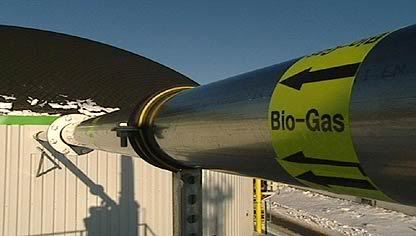
One of the pillars of the German renewable energy program is biogas. the German Energy blog has a post on a report looking at progress on this front - Biogas Monitoring Report 2013: Targets Difficult to Reach, Despite Strong Growth.

According to the 2013 Biogas Monitoring Report presented from the Federal Network Agency, 108 biogas power plants fed 413 million m³ of biogas into the German gas grids in 2012, a 50% increase compared with 2011 (77 plants; 275 million m³). However, this represents only 6.9% of the target of feeding 6 billion m3 into the German gas grids by 2020 pursuant to Section 31 Gas Access Ordinance (GasNVZ).

Compared with the target of feeding 10 billion m3 into the German natural gas grids by 2030, only 4.13% had been reached so far, the Federal Network Agency (BNetzA) said. Even if one assumed linear growth of biogas power plants, the targets would probably be missed, the agency added.

Separating fact from fiction in Germany’s renewables revolution  

Posted by Big Gav in ,

Amory Lovins has an article at Renew Economy on Germany's switch to - Separating fact from fiction in Germany’s renewables revolution.

I recently wrote about—and debunked—the renewables “disinformation campaign” that spreads misinformed and falsely negative stories about the growth of renewable energy. A special focus of such disinformation has been reportage on Germany’s efficiency-and-renewables revolution. The impressive success so far of the German Energiewende (energy turnaround) is an important existence proof for the world, because Germany is cloudy, high-latitude, heavily industrialized, highly competitive (it rivals America’s merchandise exports with one-fourth its population), and the world’s fourth-biggest economy.

Perhaps because German success would therefore belie the supposed necessity of fossil-fuel and nuclear energy, some media regularly report the Energiewende’s failure or supposed impossibility. As Ihighlighted, Germany’s renewables revolution is in fact highly successful and strong as ever, but that hasn’t stopped three myths from gaining traction in the media: 1) Germany’s supposed turn back to coal, 2) how renewables undermine grid reliability, and 3) how renewables subsidies are cratering the German economy. None of those are true, and here’s why.

The Great German Energy Experiment  

Posted by Big Gav in ,

Technology Review has a look at Germany's quest to move to 100% renewable energy - The Great German Energy Experiment.

Along a rural road in the western German state of North Rhine–Westphalia lives a farmer named Norbert Leurs. An affable 36-year-old with callused hands, he has two young children and until recently pursued an unremarkable line of work: raising potatoes and pigs. But his newest businesses point to an extraordinary shift in the energy policies of Europe's largest economy. In 2003, a small wind company erected a 70-meter turbine, one of some 22,000 in hundreds of wind farms dotting the German countryside, on a piece of Leurs's potato patch. Leurs gets a 6 percent cut of the electricity sales, which comes to about $9,500 a year. He's considering adding two or three more turbines, each twice as tall as the first.

The profits from those turbines are modest next to what he stands to make on solar panels. In 2005 Leurs learned that the government was requiring the local utility to pay high prices for rooftop solar power. He took out loans, and in stages over the next seven years, he covered his piggery, barn, and house with solar panels—never mind that the skies are often gray and his roofs aren't all optimally oriented. From the resulting 690-kilowatt installation he now collects $280,000 a year, and he expects over $2 million in profits after he pays off his loans.

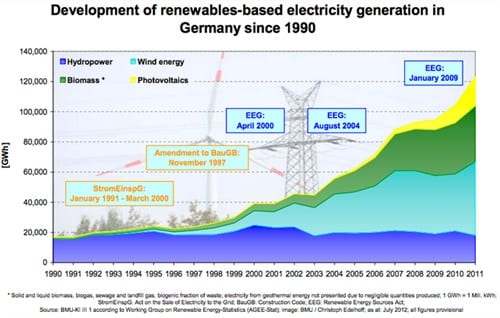
Stories like Leurs's help explain how Germany was able to produce 20 percent of its electricity from renewable sources in 2011, up from 6 percent in 2000. Germany has guaranteed high prices for wind, solar, biomass, and hydroelectric power, tacking the costs onto electric bills. And players like Leurs and the small power company that built his turbine have installed off-the-shelf technology and locked in profits. For them, it has been remarkably easy being green.

What's coming next won't be so easy. In 2010, the German government declared that it would undertake what has popularly come to be called an Energiewende—an energy turn, or energy revolution. This switch from fossil fuels to renewable energy is the most ambitious ever attempted by a heavily industrialized country: it aims to cut greenhouse-gas emissions 40 percent from 1990 levels by 2020, and 80 percent by midcentury. The goal was challenging, but it was made somewhat easier by the fact that Germany already generated more than 20 percent of its electricity from nuclear power, which produces almost no greenhouse gases. Then last year, responding to public concern over the post-tsunami nuclear disaster in Fukushima, Japan, Chancellor Angela Merkel ordered the eight oldest German nuclear plants shut down right away. A few months later, the government finalized a plan to shut the remaining nine by 2022. Now the Energiewende includes a turn away from Germany's biggest source of low-­carbon electricity.

Germany has set itself up for a grand experiment that could have repercussions for all of Europe, which depends heavily on German economic strength. The country must build and use renewable energy technologies at unprecedented scales, at enormous but uncertain cost, while reducing energy use. ...

Despite the costs, Germany could greatly benefit from its grand experiment. In the past decade, the country has nurtured not only wind and solar power but less-­heralded energy technologies such as management software and efficient industrial processes. Taken together, these "green" technologies have created an export industry that's worth $12 billion—and is poised for still more growth, according to Miranda Schreurs, director of the Environmental Policy Research Center at the Berlin Free University. Government policies could provide further incentives to develop and deploy new technologies. "That is know-how that you can sell," Schreurs says. "The way for Germany to compete in the long run is to become the most energy-efficient and resource-efficient market, and to expand on an export market in the process."

If Germany succeeds in making the transition, it could provide a workable blueprint for other industrial nations, many of which are also likely to face pressures to transform their energy consumption. "This Energiewende is being watched very closely. If it works in Germany, it will be a template for other countries," says Graham Weale, chief economist at RWE, which is grappling with how to shut its nuclear power plants while keeping the lights on.

Germany’s $263 Billion Renewables Shift Biggest Since War  

Posted by Big Gav in , ,

Bloomberg has a look at Germany's switch from nuclear power to renewable energy - Germany’s $263 Billion Renewables Shift Biggest Since War.

Not since the allies leveled Germany in World War II has Europe’s biggest economy undertaken a reconstruction of its energy market on this scale.

Chancellor Angela Merkel is planning to build offshore wind farms that will cover an area six times the size of New York City and erect power lines that could stretch from London to Baghdad. The program will cost 200 billion euros ($263 billion), about 8 percent of the country’s gross domestic product in 2011, according to the DIW economic institute in Berlin.

Germany aims to replace 17 nuclear reactors that supplied about a fifth of its electricity with renewables such as solar and wind. ...

Already, the program is expanding markets for Suntech Power Holdings Co. (STP), the world’s biggest solar panel maker, and Vestas Wind Systems A/S (VWS)., the largest maker of wind turbines. It’s hurting utilities from RWE AG (RWE) to EON AG (EOAN), which have stepped up cost-cutting to curb losses from closing nuclear stations early. ...

“The German energy transformation is as challenging as the first moon landing,” said Peter Terium, who in July takes over as chief executive officer of RWE, Germany’s second-largest utility. “It’s a huge challenge we’ll be able to master only if everyone works together.”

Germany is among the first nations to grapple with a global need to upgrade power stations. By 2035, at least $10 trillion of investment is needed to add 5,900 gigawatts of generation worldwide, more than five times the capacity of all U.S. utilities, the International Energy Agency estimates. Half of that will come from renewable. A gigawatt is about enough to supply 800,000 homes in the U.S. and a bit less than the capacity of a nuclear reactor.

“If Germany succeeds, it could be a role model for economies all over the world,” said Claudia Kemfert, DIW’s senior energy expert. “If it fails, it will be a disaster for Germany’s politicians, society and economy.”

Germany’s efforts in the industry are sending shocks through European power markets. When it’s windy and sunny, turbines and solar cells flood the grid with electricity, undermining the economics of natural-gas fired generators, since clean energy has supply priority over fossil fuels.

German Energy Consumption Drops 4.8% in 2011, With Renewables Providing 20% of Electricity  

Posted by Big Gav in ,

Climate Progress has a look at Germany's expanding renewable power base - German Energy Consumption Drops 4.8% in 2011, With Renewables Providing 20% of Electricity.

According to new figures released from Germany’s energy working group, AGEB, energy consumption in the country dropped 4.8% in 2011 from 2010.

German consumption of oil fell 3%, gas by 10.2%, lignite coal by 0.7% (although hard coal rose 3.7%), and nuclear by 22.9%. At the same time, use of renewable energy climbed by 4.1% and represented about 20% of the country’s electricity and 10.8% of total energy in 2011.

An increase in residential and industrial efficiency combined with milder temperatures in 2011 provided the conditions for the decrease in consumption.

So is that increase in renewable energy and efficiency killing the German economy? Analysts expect German GDP growth to be around 3% in 2011, about the same projected for the U.S.

German Village Produces 321% More Energy Than It Needs  

Posted by Big Gav in , ,

Inhabitat has a post on the success of distributed generation in Germany - German Village Produces 321% More Energy Than It Needs.

Ok, those Germans are just showing off now. Not only has the nation announced plans to shut down all of its nuclear power plants and started the construction of 2,800 miles of transmission lines for its new renewable energy initiative, but now the village of Wildpoldsried is producing 321% more energy than it needs! The small agricultural village in the state of Bavaria is generating an impressive $5.7 million in annual revenue from renewable energy.

It’s no surprise that the country that has kicked butt at the Solar Decathlon competition (to produce energy positive solar houses) year after year is the home to such a productive energy-efficient village. The village’s green initiative first started in 1997 when the village council decided that it should build new industries, keep initiatives local, bring in new revenue, and create no debt. Over the past 14 years, the community has equipped nine new community buildings with solar panels, built four biogas digesters (with a fifth in construction now) and installed seven windmills with two more on the way. In the village itself, 190 private households have solar panels while the district also benefits from three small hydro power plants, ecological flood control, and a natural waste water system.

All of these green systems means that despite only having a population of 2,600, Wildpoldsried produces 321 percent more energy than it needs – and it’s generating 4.0 million Euro (US $5.7 million) in annual revenue by selling it back to the national grid. It is no surprise to learn that small businesses have developed in the village specifically to provide services to the renewable energy installations.

Statistics

Locations of visitors to this page

blogspot visitor
Stat Counter

Total Pageviews

Ads

Books

Followers

Blog Archive

Labels

australia (619) global warming (423) solar power (397) peak oil (355) renewable energy (302) electric vehicles (250) wind power (194) ocean energy (165) csp (159) solar thermal power (145) geothermal energy (144) energy storage (142) smart grids (140) oil (139) solar pv (138) tidal power (137) coal seam gas (131) nuclear power (129) china (120) lng (117) iraq (113) geothermal power (112) green buildings (110) natural gas (110) agriculture (91) oil price (80) biofuel (78) wave power (73) smart meters (72) coal (70) uk (69) electricity grid (67) energy efficiency (64) google (58) internet (50) surveillance (50) bicycle (49) big brother (49) shale gas (49) food prices (48) tesla (46) thin film solar (42) biomimicry (40) canada (40) scotland (38) ocean power (37) politics (37) shale oil (37) new zealand (35) air transport (34) algae (34) water (34) arctic ice (33) concentrating solar power (33) saudi arabia (33) queensland (32) california (31) credit crunch (31) bioplastic (30) offshore wind power (30) population (30) cogeneration (28) geoengineering (28) batteries (26) drought (26) resource wars (26) woodside (26) censorship (25) cleantech (25) bruce sterling (24) ctl (23) limits to growth (23) carbon tax (22) economics (22) exxon (22) lithium (22) buckminster fuller (21) distributed manufacturing (21) iraq oil law (21) coal to liquids (20) indonesia (20) origin energy (20) brightsource (19) rail transport (19) ultracapacitor (19) santos (18) ausra (17) collapse (17) electric bikes (17) michael klare (17) atlantis (16) cellulosic ethanol (16) iceland (16) lithium ion batteries (16) mapping (16) ucg (16) bees (15) concentrating solar thermal power (15) ethanol (15) geodynamics (15) psychology (15) al gore (14) brazil (14) bucky fuller (14) carbon emissions (14) fertiliser (14) matthew simmons (14) ambient energy (13) biodiesel (13) investment (13) kenya (13) public transport (13) big oil (12) biochar (12) chile (12) cities (12) desertec (12) internet of things (12) otec (12) texas (12) victoria (12) antarctica (11) cradle to cradle (11) energy policy (11) hybrid car (11) terra preta (11) tinfoil (11) toyota (11) amory lovins (10) fabber (10) gazprom (10) goldman sachs (10) gtl (10) severn estuary (10) volt (10) afghanistan (9) alaska (9) biomass (9) carbon trading (9) distributed generation (9) esolar (9) four day week (9) fuel cells (9) jeremy leggett (9) methane hydrates (9) pge (9) sweden (9) arrow energy (8) bolivia (8) eroei (8) fish (8) floating offshore wind power (8) guerilla gardening (8) linc energy (8) methane (8) nanosolar (8) natural gas pipelines (8) pentland firth (8) saul griffith (8) stirling engine (8) us elections (8) western australia (8) airborne wind turbines (7) bloom energy (7) boeing (7) chp (7) climategate (7) copenhagen (7) scenario planning (7) vinod khosla (7) apocaphilia (6) ceramic fuel cells (6) cigs (6) futurism (6) jatropha (6) nigeria (6) ocean acidification (6) relocalisation (6) somalia (6) t boone pickens (6) local currencies (5) space based solar power (5) varanus island (5) garbage (4) global energy grid (4) kevin kelly (4) low temperature geothermal power (4) oled (4) tim flannery (4) v2g (4) club of rome (3) norman borlaug (2) peak oil portfolio (1)