Showing posts with label hydrogen. Show all posts

Wind Power Makes Hydrogen for German Gas Grid  

Posted by Big Gav in , , , ,

Proposals to generate hydrogen using excess wind power have been blowing around for quite a few years now, with the hydrogen being a form of "energy storage" that can be subsequently burnt for heat and/or power.

Some systems are now appearing in the wild in countries as diverse as Morocco, Turkey, Argentina and Norway.

Greentech media reports that the Germans are getting in on the act as well, converting excess wind power to hydrogen and feeding it into the natural gas grid (perhaps the combination of hydrogen derived gas and biogas will eventually eliminate European dependence on gas from Russia and the middle east) - Wind Power Makes Hydrogen for German Gas Grid

For the first time on an industrial scale, hydrogen produced using wind power is being injected into the natural gas grid in Germany. It’s a development that could enhance the value of wind power by making it useful no matter when it is produced.

E.ON said the P2G unit in Falkenhagen in eastern Germany, operated in a partnership with Swissgas AG, has a capacity of 2 megawatts and can pump out 360 cubic meters of hydrogen every hour. In a sign of the potential of the technology, its inauguration drew a crowd that included the German economics minister, members of the European parliament and high officials of Brandenburg state.

“One of the biggest challenges of transforming Germany’s energy system is finding ways to integrate the increasing share of intermittent, renewable-source energy,” Economics Minister Philipp Rösler said in the E.ON news release. “To ensure that Germany’s power system remains stable and that our economy continues to have the energy it needs, we not only have to rapidly expand energy networks. We also need innovative solutions like the P2G unit here in Falkenhagen.”

The Falkenhagen facility is essentially a way to store wind power. Instead of turning off the turbines at a nearby wind farm when demand is low (as it can be at night, when the wind tends to blow strongest), or using the power to move water up a hill (effective but site-specific and expensive pumped hydro) or charge a battery (expensive), or try to find a buyer for the power far away (requiring costly transmission), the power is used to turn water into hydrogen by electrolysis. The hydrogen is then shot straight into the area’s natural gas system, displacing a fossil fuel.

What’s especially interesting here is that last step: the use of the hydrogen in the natural gas pipeline. We recently reported on a study commissioned by the U.S. Department of Energy, “Blending Hydrogen Into Natural Gas Pipeline Networks: A Review of Key Issues,” in which the authors sound a fairly optimistic note about the possibility of putting the country’s extensive gas pipeline system to work for clean hydrogen’s benefit. They don’t give a 100 percent endorsement of the idea -- because of the nature of hydrogen, the natural gas system can only take small percentages without extensive reworking -- but their review of the issues says that the pluses appeared significant enough to warrant further study. So while the E.ON project in Germany is fairly small, it should provide valuable insight that will help guide subsequent approaches with the technology.

Other similar approaches include putting hydrogen produced from excess renewables to work in fuel cells, and reacting it with CO2 from bioenergy plants to produce a carbon neutral methane, sometimes known as “renewable methane” or synthetic methane. This synthetic methane could go directly into the natural gas pipeline without the limitations of hydrogen. A 25-kilowatt demonstration plant using just such a system is operating in Germany.

Hydrogen's extreme makeover  

Posted by Big Gav in

Giles Parkinson at The Climate Spectator has a look at the evolving hydrogen economy - Hydrogen's extreme makeover.

Hydrogen fuel is one of those technologies that has always seemed to be at least a decade away from realisation, ever since the term hydrogen economy was first coined in the early 1970s.

Last year, it seemed even further away, after US Energy Secretary Stephen Chu slashed funding for hydrogen fuel cell research, complaining that “we don’t know how to make it, we don’t know how to store it, and we don’t know how to use it.”

But then something happened. Within months, Chu had restored at least past of the slashed funding, and nine global car manufacturers signed an memorandum of understanding to develop hydrogen-powered passenger cars. Germany then committed to having at least 100 hydrogen refueling stations by 2015 and at least 1,000 by 2020, Japan also has announced an ambitious program, and California predicts there could be 50,000 hydrogen powered cars on the state’s roads by 2018.

The hydrogen economy is suddenly back on the agenda – although it does appear to have had something of a sex change. The HE (hydrogen economy) has become a SHE (sustainable hydrogen economy), and the devilish problem of creating hydrogen by reforming natural gas (and releasing huge amounts of CO2) or by the energy-intensive process of electrolysing water (and so creating oxygen and hydrogen), is being addressed by trying to make it an integral part of the roll-out of renewable energy.

“There is a great lack of understanding of where hydrogen energy can fit in to sustainable energy economy, both in Australia and globally,” says John Andrew, a senior lecturer from the school of aerospace, mechanical and manufacturing engineering at RMIT University. “It’s time to take a look at that vision again."

Andrews says one of the new approaches to hydrogen as a “renewable fuel” is based around a decentralised model, rather than centralised system of production and distribution. Production of hydrogen would come exclusively from renewable sources such as wave and tidal, as well as solar and wind. And, because it can be easily stored, it could be used to either “smooth” the output of wind turbines, used as a long-term back-up source of power, and as a compliment to battery storage.

He even sees the potential for using bulk hydrogen as a strategic energy reserve. “Instead of putting carbon dioxide underground, we’d much prefer to make hydrogen from renewables and store that underground.”

Hydrogen is also making progress as a transport fuel, but it is very much a question of cost – not so much in its making but in its distribution. It lends itself more easily to use in “heavy vehicles” such as medium to long distance bus travel, and WalMart has successfully trialled 150 forklifts that use hydrogen fuel cells and found it to be cheaper and more efficient than rival technologies.

Cheap Hydrogen from Scraps  

Posted by Big Gav in

Technology Review has an article on producing hydrogen without using platinum or other rare metals - Cheap Hydrogen from Scraps.

It sounds almost too good to be true: add a few bugs to food scraps and waste water to generate clean hydrogen fuel. But over the past few years, researchers have been gradually working toward this promising scheme for producing hydrogen.

Now, with the help of an unassuming stainless-steel brush, microbial electrolysis cells (MECs) have taken another step forward. The steel brush can be used to replace the expensive platinum normally employed in the electrolysis cell's cathode, slashing costs by more than 80 percent.

Hydrogen is an appealing, environmentally friendly fuel because burning it creates only water as a waste product. MECs harness the electrons produced by certain bacteria as those bacteria feed on biodegradable material. The bacteria sit on an electrode--the anode--as they metabolize organic matter in an oxygen-devoid chamber. Not being able to react with oxygen, the electrons travel from the anode to the counter-electrode--the cathode--where they combine with protons to form hydrogen.

In late 2007, a team led by Bruce Logan, Kappe professor of environmental engineering at Pennsylvania State University, showed that they could improve the efficiency of this process: by adding a small jolt of electricity (0.25 volts) at the cathode. Until now, however, the researchers have relied on a platinum catalyst on the cathode to make the process fast enough.

"The need to use a precious metal catalyst had been holding back further development of the technique, but now we have found a way to do it without platinum," says Logan.

The Hydrogen Economy and Peak Platinum  

Posted by Big Gav in , , , , , , , , , ,

One Bullroarer at TOD ANZ a week or two ago featured an article from the ABC on the possibility of mining low grade Australian platinum reserves to supply rising demand for catalytic converters and hydrogen fuel cells - World 'needs Australia's platinum to build cleaner cars'.

An Australian researcher has warned that the drive to put cleaner, hydrogen-fuelled cars on the road will stall unless new reserves of platinum are found. Platinum is one of the key components of catalytic converters, catalysing carbon monoxide from exhaust fumes. It is also a critical component of fuel cells for hydrogen-powered cars. However 80 per cent of the world's reserves come from just three mines.

John Mavrogenes says a team of geochemists from the Australian National University has identified new methods to detect platinum deposits. They are simulating the intense heat and pressure of the Earth's magma to discover whether platinum can be extracted from other minerals. "This work may help geologists find new reserves around the world in places that haven't been searched before," he said. Professor Mavrogenes says if the platinum price remains at its current high, Australia could mine lower-grade deposits. ...

The three major mines that produce platinum are in South Africa, Siberia and the United States. "If we go to more and more uses of platinum we're going to need more than they can produce," Professor Mavrogenes said. "Existing reserves would meet less than 20 per cent of the world's platinum demand if all cars went hydrogen."

The Hydrogen Economy

The dream of the hydrogen economy is one that has been around since the 1970's, and has been heavily hyped by sources ranging from Wired (as a key component to their long boom vision), the European Hydrogen Association and Jeremy Rifkin to George W Bush (who seemed primarily interested in supporting the gas and nuclear industries).

The term was originally coined by chemistry professor John Bockris (also an alchemist, cold fusion researcher and winner of the Ig Nobel prize).

The basic vision is that hydrogen is used to fuel vehicles containing hydrogen fuel cells, rather than internal combustion engines, creating no pollution other than water.


Global hydrogen production is currently derived from natural gas (48%), oil (30%), coal (18%) and electrolysis of water (4%). Given that hydrogen is currently largely derived from fossil fuels, the first obstacle facing the "hydrogen economy" dream is shifting away from these sources to extracting hydrogen from water.

Hydrogen is also used for producing ammonia and cracking heavier grades of oil, which means that peak oil and gas pose a number of problems to the hydrogen dream - the primary sources of present day hydrogen become less plentiful, and demand for hydrogen increases as we resort to heavier grades of oil (and coal to liquids) to keep the habit going.

Criticisms of the hydrogen economy

Critics of the hydrogen economy aren't hard to find, with frequently raised objections including:

* The use of natural gas (both from a global warming point of view and a depletion point of view)
* The inefficiency of electrolysis techniques in converting other forms of energy into hydrogen
* The difficulty of distributing and storing hydrogen
* The cost of setting up a hydrogen based infrastructure to replace the existing oil based infrastructure
* Safety concerns about storing hydrogen on board vehicles
* The cost and complexity of hydrogen fuel cells
* Availability of platinum for large scale use in fuel cells

Amory Lovins' Rocky Mountain Institute (pdf) argues that many of these objections are either myths or can be overcome.

Fuel cell expert Ulf Bossel and energy commentator Joe Romm (author of The Hype About Hydrogen) are probably the most frequently cited critics, arguing that the inefficiency of the hydrogen conversion process is wasteful and compares unfavourably to alternatives - specifically the "electron economy" where electricity is the energy carrier of choice.

Bossel says "In a sustainable energy future, electricity will become the prime energy carrier. We now have to focus our research on electricity storage, electric cars and the modernization of the existing electricity infrastructure".


The diagram above shows that both the efficiency of electrolysis and the efficiency of fuel cells are key factors in making hydrogen as a transport fuel less attractive than the electric transport option.

Peak Platinum

If we assumed that hydrogen fuel cells could be made significantly more efficient, and thus more competitive with the electric vehicle option, we still have the issue of the scarcity (and thus the cost) of platinum to deal with, as platinum is the material traditionally used as the catalyst in cells.


In 2005, South Africa was the top producer of platinum, accounting for around 80% of world production, followed by Russia and Canada. Significant deposits are also found in Zimbabwe, the United States and, as noted in the introduction, Australia. South Africa has been expanding production rapidly to take advantage of soaring prices - causing some controversy in affected townships.

When discussing rare metals, the subject of peak minerals is usually quick to arise. The idea has been covered at a number of venues in recent years - including The Oil Drum, New Scientist (with some good graphics here and here) and WorldChanging.

The New Scientist article estimated that there are 360 years of platinum reserves available if we continue to extract it at the current rate of production - however this drops to 15 years if predicted growth in demand is taken into account.

One analyst at Resource Investor has predicted that we may have already reached "peak platinum" production, though this seems to be predicated on the belief that production of hybrid and electric vehicles will remove the demand for both fuel cells and catalytic converters in future years, rather than a firm belief in supply constraints.

Another analyst at the UK Department For Transport, looked at the platinum supply situation for fuel cell vehicles and concluded:
The above projections, coupled with the statements from Cawthorn (1999) about accessible platinum reserves in South Africa, suggest that platinum availability should not be a constraint to the introduction of hydrogen fuel cell cars. If South Africa alone can deliver up to 5% per year additional platinum supply between 2000 and 2050, this equates to an additional 13.6 million oz in 2030, 24.8 million oz in 2040 and 42.9 million oz in 2050, which is sufficient to meet demand under any of the scenarios considered.

However there are many important assumptions and uncertainties built into this model. For example, this additional South African platinum supply would be insufficient to meet worldwide platinum demand by 2040 under Scenario 2 (realistic penetration) if any one of the following alternative assumptions is made:

* South African supply can only be increased by 4% per annum instead of 5%.
* Jewellery demand grows at more than 2% per annum - it is currently assumed to remain constant but grew by an average of 6% per annum between 1994 and 2001.
* Fuel cell stacks require more than 0.3 oz of platinum per car in 2040 - it is currently assumed that only 0.2 oz will be required but this is a factor of 10 less than current stack technology.
* The demand for cars grows by more than 55% per decade - it is currently assumed to increase by 45% per decade based on USDOE projections.

The platinum loading for fuel cell stacks is an important factor in determining the commercial viability of fuel cell cars as well as determining potential platinum demand constraints. The price of platinum is not likely to be a constraint to the introduction of fuel cell vehicles if the expected reductions in platinum loadings are achieved. At current platinum prices and the target platinum loading of 0.2 oz per car, the platinum required for a single car would cost about $90 or $1.5/kW, compared to a cost target of $50/kW for the whole fuel cell engine.

In the wake of the New Scientist article, the Wall Street Journal noted that if the most dire predictions are true, recycling of rare metals will be the only way to manufacture some types of machinery. Hazel Prichard, a geologist at the University of Cardiff in the UK, is developing ways to extract platinum from the dust and grime of city streets - apparently, urban grit contains 1.5 parts per million of platinum.

Its worth noting the contrarian view of metals depletion, expressed by Herman Kahn in his book "The Next 200 Years", which points out that reserves data for minerals is often very dubious when there is sufficient known supply available to meet hundreds of years of demand - and that recycling can change the picture dramatically in any case.

Either way, the platinum supply concern may not be an insoluble problem, as recent reports from Japan claim Nisshinbo Industries and the Tokyo Institute of Technology have developed a platinum-free, carbon-based catalyst for fuel cells which they hope to commercialise in 2009 (first for home use, later for use in vehicles). Their catalyst is made from nanospheres of carbon. While 10 times as much carbon is required compared to the platinum equivalent, the cost is one 10th of using platinum. Diahatsu also claims to have a platinum free catalyst, using cobalt or nickel.

Another platinum free alternative being pursued is being researched at Monash University, where chemist Bjorn Winther-Jensen is looking at layering an active conducting polymer onto Gore-tex to make a cheap catalyst.

Alternative Methods For Producing Hydrogen

The discussion following the Australian platinum supply article at TOD ANZ noted the recent, highly publicised, research into a new catalyst for electrolysis at room temperature using cobalt and phosphate which MIT modestly described as a
"'Major discovery' from MIT primed to unleash solar revolution". The process also requires platinum, which seems to limit the potential for cheap and universal application of the technique.

The news was covered extensively pretty much everywhere - see Technology Review, Green Car Congress, The Guardian, The Press Association, Wired, Renewable Energy World, EE Times and Scientific American, with much of the coverage being heavy on hype and short on facts and accuracy.

Joules Burn at The Oil Drum was less impressed, cynically commenting on the story in Local Scientist Splits Water, Saves World, Gets On TV. Bruce Sterling didn't see what the big deal was either, and nor did Joe Romm, who was positively scathing about the news.


There are other schemes for generating hydrogen that don't require electrolysis, at various stages of maturity.

A group at the University of Birmingham in England is looking at using microbes to produce "biohydrogen" from waste, and claim their technology has an added bonus - leftover enzymes can be used to scavenge precious metals from spent automotive catalysts that can then be used to make fuel cells.

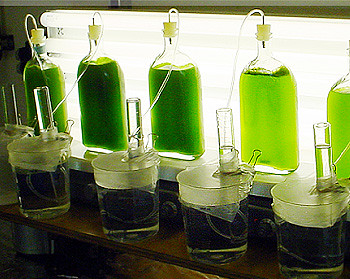
Another biotechnology based approach to hydrogen generation is being pursued at the University of Queensland and Berkeley University, in this case using algae.


So Is Hydrogen Worth Pursuing At All ?

Whether or not the MIT discovery, or any of the other alternatives, really does lead to cheap, abundant hydrogen seems open for debate for the time being.

If we assume for a moment that it is possible to generate hydrogen on a large scale in a reasonably cost effective manner, the issues around distribution, storage and fuel cells still remain - particularly when comparing a hydrogen fueled transport system to one using electric cars.

The car industry, apart from BMW and Honda, seems to have pretty much given up on using hydrogen for vehicles, but enthusiasm remains for using fuel cells in some niche applications where problems are minimised, such as buses, which are refueled at a central location and have fewer concerns about weight and storage size.

Another niche where distributed hydrogen generation may be applicable is cogeneration (CHP) at home, something Jamais Cascio noted in his comment on the MIT announcement. Japan would seem a likely candidate for proving this on a large scale given that they seem to be the most enthusiastic about using hydrogen at home.


The other likely candidate for using hydrogen is energy storage in renewable energy generation - though perhaps not for home scale PV the way Nocera has been suggesting. An Australian company called WHL (previously Wind Hydrogen) has been looking at building wind farms which store excess energy in the form of hydrogen and use it to generate power later, when the wind isn't blowing. The Lolland Hydrogen Community in Denmark has been experimenting with a similar concept, as has a ship called the Hydrogen Challenger.

Melbourne based company Solar Systems is also looking to combine hydrogen energy storage with a solar power plant, using excess heat to improve the efficiency of electrolysis.

Wind Hydrogen In The UK  

Posted by Big Gav in , ,

The Times has a report on WHL (previously known as Wind Hydrogen, and one of the under-performers in my peak oil portfolio) and their attempt to mix wind power with hydrogen based energy storage in the UK - New plan to get power from turbines even when the wind does not blow.

A planning application has been lodged for the UK's first commercial hydrogen balancing plant - the latest innovation in renewable energy, described as “a potential holy grail” when combined with wind energy.

The proposed £20million plant, near Kilbirnie in North Ayrshire, is seen as a radical solution to the intrinsic problem of wind farms - that they are intermittent, producing electricity only when the wind is blowing.

The plant will take excess electricity produced by a wind farm during times of low demand and use the power to separate the hydrogen out of water. The hydrogen is then stored in fuel cells. When wind speed drops, the hydrogen can be converted back into electricity and fed into the National Grid, thus allowing constant 24-hour energy supply. Alternatively, it can be used to fuel hydrogen vehicles. The London Olympics are exploring the use of hydrogen powered buses.

This is the first such venture in Britain, although the technology is being used successfully in the US. The Welsh Assembly is also looking at the concept and Scottish politicians are known to be keen on a project that could help the country to reach its target for 50 per cent of energy to be derived from renewables by 2020.

The planning application comes in the same week as the use of hydrogen as domestic fuel was unveiled by a Sheffield-based company, with the concept of a home hydrogen refuelling station, which electrolyses water and would allow a household to run a car and fuel central heating and cooking on a carbon-neutral basis.

The prototype wind-hydrogen plant, part of the Ladymoor Renewable Energy Project, is designed by WHL Energy Ltd, which holds the patent for its use. It promises 60 jobs during construction and up to ten full-time jobs.

Last year WHL lodged a planning application for 24 turbines at the £40million Wings Law wind farm, 5km north of Kilbirnie, which has run into opposition from campaigners. WHL says it is vital to the financial viability of the scheme.

Steven Radford, WHL's managing director of UK operations, said: “This is a huge push forward on the argument about the intermittency of wind. “The potential of wind-hydrogen balancing is enormous. It is a double win - you create a system which can react to demand, which wind alone can't, and you create vehicular fuel.”

WHL's hydrogen balancing facility won the UK Institute of Electrical Engineers' inaugural “New Spirit Challenge” sustainability award in 2002, for sustainable technology development in energy.

Jason Ormiston, chief executive of Scottish Renewables, the green energy trade body, said: “Combining energy storage technologies with renewable energy technologies will play an important part in helping to deliver energy security and significant cuts in carbon emissions in the decades to come.”

Statistics

Locations of visitors to this page

blogspot visitor
Stat Counter

Total Pageviews

Ads

Books

Followers

Blog Archive

Labels

australia (619) global warming (423) solar power (397) peak oil (355) renewable energy (302) electric vehicles (250) wind power (194) ocean energy (165) csp (159) solar thermal power (145) geothermal energy (144) energy storage (142) smart grids (140) oil (139) solar pv (138) tidal power (137) coal seam gas (131) nuclear power (129) china (120) lng (117) iraq (113) geothermal power (112) green buildings (110) natural gas (110) agriculture (91) oil price (80) biofuel (78) wave power (73) smart meters (72) coal (70) uk (69) electricity grid (67) energy efficiency (64) google (58) internet (50) surveillance (50) bicycle (49) big brother (49) shale gas (49) food prices (48) tesla (46) thin film solar (42) biomimicry (40) canada (40) scotland (38) ocean power (37) politics (37) shale oil (37) new zealand (35) air transport (34) algae (34) water (34) arctic ice (33) concentrating solar power (33) saudi arabia (33) queensland (32) california (31) credit crunch (31) bioplastic (30) offshore wind power (30) population (30) cogeneration (28) geoengineering (28) batteries (26) drought (26) resource wars (26) woodside (26) censorship (25) cleantech (25) bruce sterling (24) ctl (23) limits to growth (23) carbon tax (22) economics (22) exxon (22) lithium (22) buckminster fuller (21) distributed manufacturing (21) iraq oil law (21) coal to liquids (20) indonesia (20) origin energy (20) brightsource (19) rail transport (19) ultracapacitor (19) santos (18) ausra (17) collapse (17) electric bikes (17) michael klare (17) atlantis (16) cellulosic ethanol (16) iceland (16) lithium ion batteries (16) mapping (16) ucg (16) bees (15) concentrating solar thermal power (15) ethanol (15) geodynamics (15) psychology (15) al gore (14) brazil (14) bucky fuller (14) carbon emissions (14) fertiliser (14) matthew simmons (14) ambient energy (13) biodiesel (13) investment (13) kenya (13) public transport (13) big oil (12) biochar (12) chile (12) cities (12) desertec (12) internet of things (12) otec (12) texas (12) victoria (12) antarctica (11) cradle to cradle (11) energy policy (11) hybrid car (11) terra preta (11) tinfoil (11) toyota (11) amory lovins (10) fabber (10) gazprom (10) goldman sachs (10) gtl (10) severn estuary (10) volt (10) afghanistan (9) alaska (9) biomass (9) carbon trading (9) distributed generation (9) esolar (9) four day week (9) fuel cells (9) jeremy leggett (9) methane hydrates (9) pge (9) sweden (9) arrow energy (8) bolivia (8) eroei (8) fish (8) floating offshore wind power (8) guerilla gardening (8) linc energy (8) methane (8) nanosolar (8) natural gas pipelines (8) pentland firth (8) saul griffith (8) stirling engine (8) us elections (8) western australia (8) airborne wind turbines (7) bloom energy (7) boeing (7) chp (7) climategate (7) copenhagen (7) scenario planning (7) vinod khosla (7) apocaphilia (6) ceramic fuel cells (6) cigs (6) futurism (6) jatropha (6) nigeria (6) ocean acidification (6) relocalisation (6) somalia (6) t boone pickens (6) local currencies (5) space based solar power (5) varanus island (5) garbage (4) global energy grid (4) kevin kelly (4) low temperature geothermal power (4) oled (4) tim flannery (4) v2g (4) club of rome (3) norman borlaug (2) peak oil portfolio (1)