Posted
by Big Gav
in
natural gas,
pipelineistan,
south yolotan,
turkmenistan
The UK Daily Telegraph has a report on a huge gas field in Turkmenistan - Second largest gas field found in Turkmenistan.
A new report from Gaffney Cline, the British oil field auditing company, to be released officially next month, has confirmed claims from the former Soviet Republic that many had dismissed as overly optimistic.
"It appears that the South Yolotan field is now easily the world's second largest gas field in terms of gas in place – second only to the North Field and South Pars," Peter Holding, Gaffney Cline's director for Central Asia, said at a conference in the Caspian resort of Awaza.
The report is expected to say that the field could hold 20 trillion cubic metres, enough to supply the UK for more than 350 years, and Europe for more than 50. The compares with the top-level estimate of 14 trillion cubic metres it gave in its 2008 audit, which ranked the field only sixth worldwide.
The development of the giant North Field has made Qatar the world's richest country in terms of per capita income. The field, which is shared with Iran, holds more than 50 trillion cubic metres.
Mr Holding pointed out that the South Yolotan field could now easily support gas deliveries to Europe, as well as to Russia and China.
Posted
by Big Gav
in
china,
iraq,
natural gas,
natural gas pipelines,
pepe escobar,
pipelineistan
TomDispatch has a new column from Pepe Escobar (the fourth in an ongoing series) on the evolving great game over Central Asian natural gas - China’s Pipelineistan “War”.
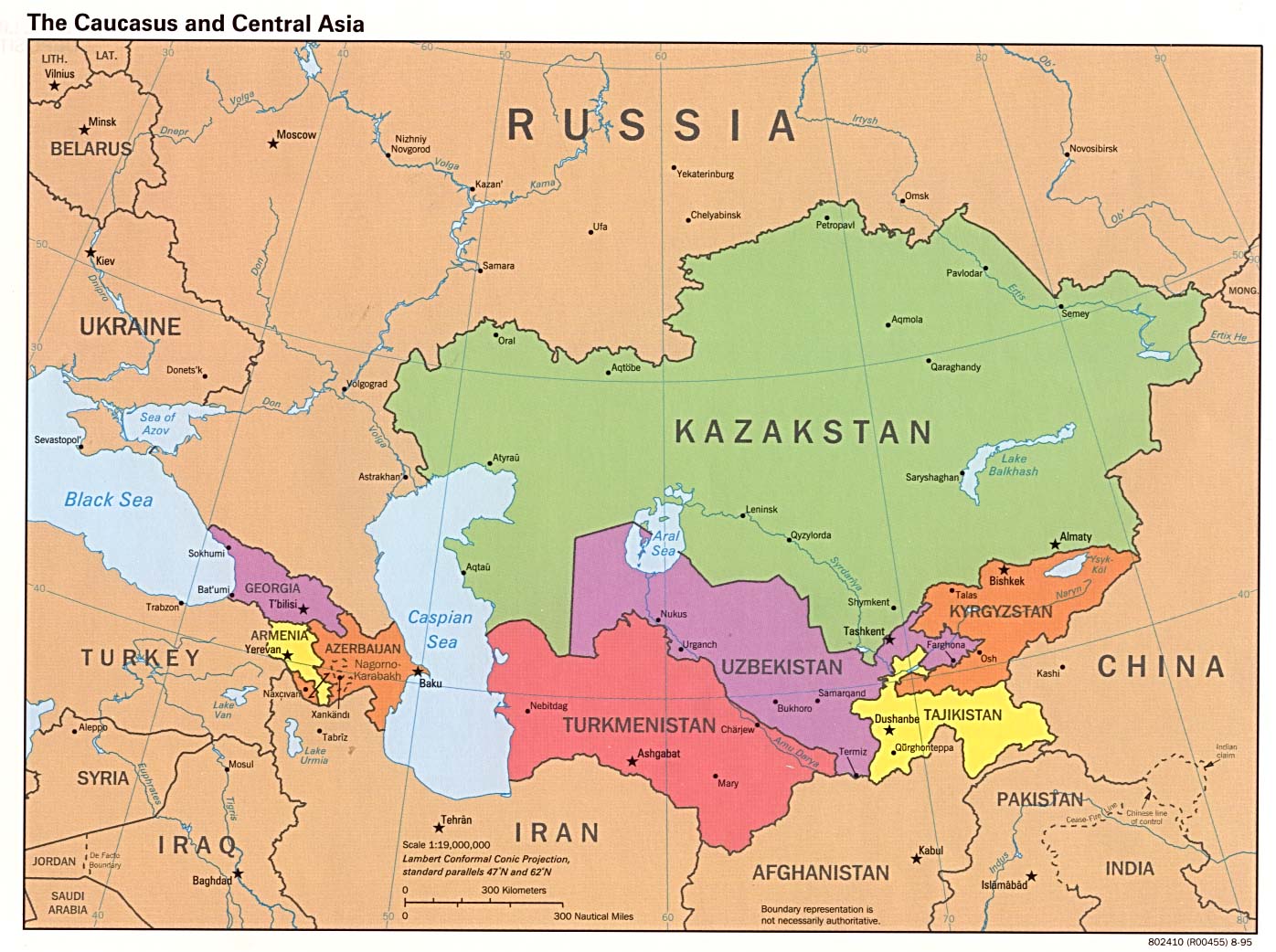
Future historians may well agree that the twenty-first century Silk Road first opened for business on December 14, 2009. That was the day a crucial stretch of pipeline officially went into operation linking the fabulously energy-rich state of Turkmenistan (via Kazakhstan and Uzbekistan) to Xinjiang Province in China’s far west. Hyperbole did not deter the spectacularly named Gurbanguly Berdymukhamedov, Turkmenistan’s president, from bragging, “This project has not only commercial or economic value. It is also political. China, through its wise and farsighted policy, has become one of the key guarantors of global security.”
The bottom line is that, by 2013, Shanghai, Guangzhou, and Hong Kong will be cruising to ever more dizzying economic heights courtesy of natural gas supplied by the 1,833-kilometer-long Central Asia Pipeline, then projected to be operating at full capacity. And to think that, in a few more years, China’s big cities will undoubtedly also be getting a taste of Iraq’s fabulous, barely tapped oil reserves, conservatively estimated at 115 billion barrels, but possibly closer to 143 billion barrels, which would put it ahead of Iran. When the Bush administration’s armchair generals launched their Global War on Terror, this was not exactly what they had in mind.
China’s economy is thirsty, and so it’s drinking deeper and planning deeper yet. It craves Iraq’s oil and Turkmenistan’s natural gas, as well as oil from Kazakhstan. Yet instead of spending more than a trillion dollars on an illegal war in Iraq or setting up military bases all over the Greater Middle East and Central Asia, China used its state oil companies to get some of the energy it needed simply by bidding for it in a perfectly legal Iraqi oil auction.
Meanwhile, in the New Great Game in Eurasia, China had the good sense not to send a soldier anywhere or get bogged down in an infinite quagmire in Afghanistan. Instead, the Chinese simply made a direct commercial deal with Turkmenistan and, profiting from that country’s disagreements with Moscow, built itself a pipeline which will provide much of the natural gas it needs.
No wonder the Obama administration’s Eurasian energy czar Richard Morningstar was forced to admit at a congressional hearing that the U.S. simply cannot compete with China when it comes to Central Asia’s energy wealth. If only he had delivered the same message to the Pentagon.
That Iranian Equation
In Beijing, they take the matter of diversifying oil supplies very, very seriously. When oil reached $150 a barrel in 2008 -- before the U.S.-unleashed global financial meltdown hit -- Chinese state media had taken to calling foreign Big Oil “international petroleum crocodiles,” with the implication that the West’s hidden agenda was ultimately to stop China’s relentless development dead in its tracks.
Twenty-eight percent of what’s left of the world’s proven oil reserves are in the Arab world. China could easily gobble it all up. Few may know that China itself is actually the world’s fifth largest oil producer, at 3.7 million barrels per day (bpd), just below Iran and slightly above Mexico. In 1980, China consumed only 3% of the world’s oil. Now, its take is around 10%, making it the planet’s second largest consumer. It has already surpassed Japan in that category, even if it’s still way behind the U.S., which eats up 27% of global oil each year. According to the International Energy Agency (IEA), China will account for over 40% of the increase in global oil demand until 2030. And that’s assuming China will grow at “only” a 6% annual rate which, based on present growth, seems unlikely.
Saudi Arabia controls 13% of world oil production. At the moment, it is the only swing producer -- one, that is, that can move the amount of oil being pumped up or down at will -- capable of substantially increasing output. It’s no accident, then, that, pumping 500,000 bpd, it has become one of Beijing’s major oil suppliers. The top three, according to China’s Ministry of Commerce, are Saudi Arabia, Iran, and Angola. By 2013-2014, if all goes well, the Chinese expect to add Iraq to that list in a big way, but first that troubled country’s oil production needs to start cranking up. In the meantime, it’s the Iranian part of the Eurasian energy equation that’s really nerve-racking for China’s leaders.
Chinese companies have invested a staggering $120 billion in Iran's energy sector over the past five years. Already Iran is China’s number two oil supplier, accounting for up to 14% of its imports; and the Chinese energy giant Sinopec has committed an additional $6.5 billion to building oil refineries there. Due to harsh U.N.-imposed and American sanctions and years of economic mismanagement, however, the country lacks the high-tech know-how to provide for itself, and its industrial structure is in a shambles. The head of the National Iranian Oil Company, Ahmad Ghalebani, has publicly admitted that machinery and parts used in Iran’s oil production still have to be imported from China. ...
Much more is to come, and Chinese leaders expect energy-rich Russia to play a significant part in China’s escape-hatch planning as well. Strategically, this represents a crucial step in regional energy integration, tightening the Russia/China partnership inside the SCO as well as at the U.N. Security Council.
When it comes to oil, the name of the game is the immense Eastern Siberia-Pacific Ocean (ESPO) pipeline. Last August, a 4,000-kilometer-long Russian section from Taishet in eastern Siberia to Nakhodka, still inside Russian territory, was begun. Russian Premier Vladimir Putin hailed ESPO as “a really comprehensive project that has strengthened our energy cooperation.” And in late September, the Russians and the Chinese inaugurated a 999-kilometer-long pipeline from Skovorodino in Russia’s Amur region to the petrochemical hub Daqing in northeast China.
Russia is currently delivering up to 130 million tons of Russian oil a year to Europe. Soon, no less than 50 million tons may be heading to China and the Pacific region as well.
There are, however, hidden tensions between the Russians and the Chinese when it comes to energy matters. The Russian leadership is understandably wary of China’s startling strides in Central Asia, the former Soviet Union’s former “near abroad.” After all, as the Chinese have been doing in Africa in their search for energy, in Central Asia, too, the Chinese are building railways and introducing high-tech trains, among other modern wonders, in exchange for oil and gas concessions.
Despite the simmering tensions between China, Russia, and the U.S., it’s too early to be sure just who is likely to emerge as the victor in the new Great Game in Central Asia, but one thing is clear enough. The Central Asian “stans” are becoming ever more powerful poker players in their own right as Russia tries not to lose its hegemony there, Washington places all its chips on pipelines meant to bypass Russia (including the Baku-Tbilisi-Ceyhan (BTC) pipeline that pumps oil from Azerbaijan to Turkey via Georgia) and China antes up big time for its Central Asian future. Whoever loses, this is a game that the “stans” cannot but profit from.
Posted
by Big Gav
in
gas,
iran,
natural gas pipelines,
pipelineistan
TomDispatch has a new article from Pepe Escobar on continued manoeuvrings around central asian gas supplies - Iran and the Pipelineistan Opera.
Oil and natural gas prices may be relatively low right now, but don't be fooled. The New Great Game of the twenty-first century is always over energy and it's taking place on an immense chessboard called Eurasia. Its squares are defined by the networks of pipelines being laid across the oil heartlands of the planet. Call it Pipelineistan. If, in Asia, the stakes in this game are already impossibly high, the same applies to the "Euro" part of the great Eurasian landmass -- the richest industrial area on the planet. Think of this as the real political thriller of our time.
The movie of the week in Brussels is: When NATO Meets Pipelineistan. Though you won't find it in any headlines, at virtually every recent NATO summit Washington has been maneuvering to involve reluctant Europeans ever more deeply in the business of protecting Pipelineistan. This is already happening, of course, in Afghanistan, where a promised pipeline from Turkmenistan to Pakistan and India, the TAPI pipeline, has not even been built. And it's about to happen at the borders of Europe, again around pipelines that have not yet been built.
If you had to put that Euro part of Pipelineistan into a formula, you might do so this way: Nabucco (pushed by the U.S.) versus South Stream (pushed by Russia). Be patient. You'll understand in a moment.
At the most basic level, it's a matter of the West yet again trying, in the energy sphere, to bypass Russia. For this to happen, however -- and it wouldn't hurt if you opened the nearest atlas for a moment -- Europe desperately needs to get a handle on Central Asian energy resources, which is easy to say but has proven surprisingly hard to do. No wonder the NATO Secretary General's special representative, Robert Simmons, has been logging massive frequent-flyer miles to Central Asia over these last few years
Posted
by Big Gav
in
gas,
pipelineistan,
turkmenistan
Heading out has a post at TOD on gas supply from Turkmenistan - Turkmenistan Natural Gas.
Turkmenistan holds significantly large quantities of natural gas (they hold the world’s fourth largest reserves) and these have, over the years, proved attractive to Russia, China and the West. Until fairly recently, despite some bad relationships from time to time, the natural gas that the country produced made its way towards the West through Russia. With only Russian pipes as the conduit, Turkmen gas was under the real control of those who chose whether to pump the gas, or not.
However, when times were flush for the industry (can this be just over a year ago) and in order to ensure supplies for its customers in the West, Russia agreed to a much more beneficial pricing for the Turkmen gas, and was buying some 50 bcm a year. This was all arranged after the Russian Presidency changed hands, and was one of the first items on the new President’s agenda.
Since then things have not really gone well for the relationship as a whole. Turkmenistan has agreed to send natural gas to China, providing it with a second customer, while the price of natural gas has fallen with the recession in demand, around the world. That pipeline is now expected to be in place by the end of next year, and I saw pipelines being laid in China on my recent visit, as they extend the network. The pipeline is expected to carry some 40 bcm (more than Russia will buy this year).
Turkmenistan has also agreed to supply Iran with 14 bcm of natural gas with a new pipeline to carry gas down into Iran being planned for the near future.
Gazprom profits, meanwhile have dropped 62%, as the demand from Europe has dropped dramatically – with Gazprom market share falling to 16%. There was an “accident” to a pipeline between Russia and Turkmenistan, and since then no gas has flowed through the pipelines. ...
Posted
by Big Gav
in
iraq,
nabucco,
natural gas pipelines,
pipelineistan
The Economist has an article on another stumble forward for the Nabucco gas pipleine, which I've long believed will end up transporting Iraqi gas (as opposed to Iraqi oil) to Europe - He who pays for the pipelines calls the tune.
TRAGEDY and farce have too often been the hallmarks of European efforts to improve energy security. Dependence on Russia, which supplied a third of its gas imports through Kremlin-controlled east-west pipelines, seemed to be rising inexorably and worryingly. Squabbling between Russia and Ukraine led to repeated supply cuts. The Russians exploited energy to divide and rule their Western neighbours. Big energy companies in countries such as Germany and Austria sought cosy relations with Russia’s state-controlled gas giant, Gazprom.
The overlap between politics and profit was epitomised by Gerhard Schröder, a former German chancellor. Since 2005 he has been the front man for Nord Stream, the pipeline that is planned to run under the Baltic. Along with South Stream, a sister project across the Black Sea, Nord Stream would let Russia bypass troublesome transit countries, chiefly Ukraine. West European customers could benefit, but the plans alarm countries in the east that are at greater risk of Russian bullying.
Now this gloomy picture is brightening. For a start, Europe has diversified its sources of supply: cost and unreliability have led Gazprom to lose a third of its European market to imports from Norway, Qatar and Trinidad, says Mikhail Korchemkin of East European Gas Analysis, a consultancy. Second, one of the European Union’s efforts to curb Russia’s transit monopoly is gaining traction. In a signing ceremony in Ankara on July 13th, the Nabucco pipeline, which will connect Europe to gas-rich Central Asia via the Balkans, Turkey and the Caucasus, won formal backing from the main transit countries: Austria, Hungary, Romania, Bulgaria and Turkey, as well as from Germany.
This step reflects a €200m ($283m) dollop of EU money, plus some political shifts. Turkey had earlier bargained toughly (some said destructively). The EU’s quiet expression of interest earlier this year in White Stream, a rival project across the Black Sea, may have changed Turkish minds. And Nabucco has hired Joschka Fischer, a former German foreign minister, as a consultant (see article).
Nabucco could carry some 30 billion cubic metres of gas a year. But that is only a fifth of what Russia exports to Europe; and it will not be finished until at least 2015. Moreover, the sources of that gas remain unclear. Azerbaijan has enough only for the project’s early stages, though it is exploiting new offshore gasfields. Iran would be a logical supplier, but is out of the question on political grounds. A promising newcomer is Iraq’s Kurdish region. In May a Western-backed consortium unveiled an $8 billion plan to extract gas there and sell it to Nabucco. This week Nouri al-Maliki, Iraq’s prime minister, said he could supply half the gas the pipeline needed.
But the biggest prize would be gas from Turkmenistan, a Central Asian dictatorship that claims to sit atop one of the world’s largest gas reserves. The Turkmen leadership is hesitant about annoying the Kremlin, which now buys all of the country’s exports to make up for Russia’s own flagging gas production. But an EU-backed negotiating consortium has made some progress in talks with Turkmenistan. President Gurbanguly Berdymukhammedov recently announced that his country had a surplus of natural gas “available to foreign customers, including Nabucco”.
That would, however, require a new pipeline under the Caspian Sea, which would not only be costly and slow but also subject to objections from Russia and Iran (which would like to offer a land-based route instead). Russia is the only serious naval power in the Caspian. It showed in last August’s war with Georgia that it is prepared to use military force to protect its interests in the neighbourhood.
An American delegation, including Barack Obama’s national security adviser on the region, Michael McFaul, has just been to Turkmenistan to stress the importance the West puts on making Nabucco a success. American lobbying proved crucial to the success of the Baku-Tbilisi-Ceyhan oil pipeline that runs from Azerbaijan to Turkey’s Mediterranean coast, which opened in 2005. Many thought that was a pipe dream in the beginning, but with strong political backing it came to acquire an aura of inevitability. Nabucco’s backers hope to repeat the BTC pipeline’s trick.
Other less ambitious pipelines are also moving ahead. ITGI, which aims to bring Azeri gas to Italy via Turkey and Greece, has just announced a deal to extend a spur north to Bulgaria, ending that country’s near-total reliance on Russian gas. Another EU-backed scheme, the Trans-Adriatic Pipeline, has signed up gas from Iran and expects to draw on Azerbaijan too.

Posted
by Big Gav
in
btc,
pipelineistan,
sco
TomDispatch has an update from Pepe Escobar on the goings on in "Pipelineistan", as he terms the central asian regions across which oil and gas transit - Liquid War: Postcard from Pipelineistan. Its worth reading the whole article, not just the snippet.
n his 1997 magnum opus The Grand Chessboard, Zbigniew Brzezinski -- realpolitik practitioner extraordinaire and former national security advisor to Jimmy Carter, the president who launched the U.S. on its modern energy wars -- laid out in some detail just how to hang on to American "global primacy." Later, his master plan would be duly copied by that lethal bunch of Dr. No's congregated at Bill Kristol's Project for a New American Century (PNAC, in case you'd forgotten the acronym since its website and its followers went down).
For Dr. Zbig, who, like me, gets his fix from Eurasia -- from, that is, thinking big -- it all boils down to fostering the emergence of just the right set of "strategically compatible partners" for Washington in places where energy flows are strongest. This, as he so politely put it back then, should be done to shape "a more cooperative trans-Eurasian security system."
By now, Dr. Zbig -- among whose fans is evidently President Barack Obama -- must have noticed that the Eurasian train which was to deliver the energy goods has been slightly derailed. The Asian part of Eurasia, it seems, begs to differ.
Global financial crisis or not, oil and natural gas are the long-term keys to an inexorable transfer of economic power from the West to Asia. Those who control Pipelineistan -- and despite all the dreaming and planning that's gone on there, it's unlikely to be Washington -- will have the upper hand in whatever's to come, and there's not a terrorist in the world, or even a long war, that can change that.
Energy expert Michael Klare has been instrumental in identifying the key vectors in the wild, ongoing global scramble for power over Pipelineistan. These range from the increasing scarcity (and difficulty of reaching) primary energy supplies to "the painfully slow development of energy alternatives." Though you may not have noticed, the first skirmishes in Pipelineistan's Liquid War are already on, and even in the worst of economic times, the risk mounts constantly, given the relentless competition between the West and Asia, be it in the Middle East, in the Caspian theater, or in African oil-rich states like Angola, Nigeria and Sudan.
In these early skirmishes of the twenty-first century, China reacted swiftly indeed. Even before the attacks of 9/11, its leaders were formulating a response to what they saw as the reptilian encroachment of the West on the oil and gas lands of Central Asia, especially in the Caspian Sea region. To be specific, in June 2001, its leaders joined with Russia's to form the Shanghai Cooperation Organization. It's known as the SCO and that's an acronym you should memorize. It's going to be around for a while.
Back then, the SCO's junior members were, tellingly enough, the Stans, the energy-rich former SSRs of the Soviet Union -- Kyrgyzstan, Uzbekistan, Kazakhstan, and Tajikistan -- which the Clinton administration and then the new Bush administration, run by those former energy men, had been eyeing covetously. The organization was to be a multi-layered economic and military regional cooperation society that, as both the Chinese and the Russians saw it, would function as a kind of security blanket around the upper rim of Afghanistan.
Iran is, of course, a crucial energy node of West Asia and that country's leaders, too, would prove no slouches when it came to the New Great Game. It needs at least $200 billion in foreign investment to truly modernize its fabulous oil and gas reserves -- and thus sell much more to the West than U.S.-imposed sanctions now allow. No wonder Iran soon became a target in Washington. No wonder an air assault on that country remains the ultimate wet dream of assorted Likudniks as well as Dick ("Angler") Cheney and his neocon chamberlains and comrades-in-arms. As seen by the elite from Tehran and Delhi to Beijing and Moscow, such a U.S. attack, now likely off the radar screen until at least 2012, would be a war not only against Russia and China, but against the whole project of Asian integration that the SCO is coming to represent.
Meanwhile, as the Obama administration tries to sort out its Iranian, Afghan, and Central Asian policies, Beijing continues to dream of a secure, fast-flowing, energy version of the old Silk Road, extending from the Caspian Basin (the energy-rich Stans plus Iran and Russia) to Xinjiang Province, its Far West.
The SCO has expanded its aims and scope since 2001. Today, Iran, India, and Pakistan enjoy "observer status" in an organization that increasingly aims to control and protect not just regional energy supplies, but Pipelineistan in every direction. This is, of course, the role the Washington ruling elite would like NATO to play across Eurasia. Given that Russia and China expect the SCO to play a similar role across Asia, clashes of various sorts are inevitable.
Ask any relevant expert at the Chinese Academy of Social Sciences in Beijing and he will tell you that the SCO should be understood as a historically unique alliance of five non-Western civilizations -- Russian, Chinese, Muslim, Hindu, and Buddhist -- and, because of that, capable of evolving into the basis for a collective security system in Eurasia. That's a thought sure to discomfort classic inside-the-Beltway global strategists like Dr. Zbig and President George H. W. Bush's national security advisor Brent Scowcroft.


 Posts
Posts