Posted
by Big Gav
in
gas,
smart meters,
water
Greentech Media has a report on the expansion of smart metering to water and gas - Move Over, Electricity: Gas and Water Meters Are Getting Smart.
For all of the chatter about smart meters, the conversation rarely wanders far from the realm of electricity. But action is starting to heat up in the smart gas meter market, and water isn’t far behind.
Last week, consulting group Capgemini announced it was chosen by Southern California Gas Company (owned by Sempra) to install more than six million smart meters in the next five years, the largest gas-only utility smart meter project in the U.S. SoCalGas’s project is part of a nearly three-fold increase in the penetration of smart gas meters worldwide estimated by Pike Research between 2010 and 2016.
“The gas grid is certainly a different animal,” said David DuCharme, vice president of Utility and Smart Energy Services at Capgemini. “The largest issue is safety and management.”
In Europe, there is already more activity in the gas market; the U.K. government has mandated dual gas and electric smart meters for every home and business by 2020. Italy will install smart meters for all of its commercial gas customers and most residents by 2016.
Yet in the U.S., gas metering has not received as much attention -- or as many federal dollars -- as electric smart metering. However, the challenge of managing gas smart grid data can be less complex than electric meter data management, according to DuCharme. As prices continue to drop for the smart meter market, this will benefit the gas market, as well.
Like their electric brethren, gas utilities have struggled with integrating IT and OT when implementing the new metering systems. Capgemini, which has doubled its accounts in the smart energy space to 40, is finding increasing success with gas utilities. In the case of SoCalGas, about 30 different vendors will provide the meters; Aclara is providing the MDM system.
Water is also on the horizon. “The cost of efficiently managing infrastructure in the gas and water industry is extremely important,” said DuCharme. For those who think the electric grid in the U.S. is aging, the water infrastructure in much of the world is downright elderly. One study from Frost & Sullivan estimates the European smart water meter market will be worth $20 billion by 2020 and will see double-digit growth in the next decade.
Posted
by Big Gav
in
gas,
sydney
The SMH reports that we may soon see drilling for gas off the coast of greater Sydney - First gas rig headed for NSW coast.
A PERTH company has announced it is set to become the first to do an underwater exploratory drill for gas in the Sydney basin off the NSW coast. Advent Energy plans to start drilling into the seabed in federal government-controlled waters 55 kilometres east of Newcastle in mid-October, according to its executive director, David Breeze. ...
However, Mr Breeze said that the site off Forresters Beach was one of four which it was considering in the area and it has now moved its focus over the horizon to the New Seaclem-1 site, which is not visible from the shore.
The company intends to tow the Ocean Patriot rig from Victoria so it can test the New Seaclem-1 site for the presence of gas 826 metres below the sea floor, Mr Breeze said. This would take about 20 days, during which sensors on the drill would send information to a computer aboard the rig and then the hole would be plugged, he said. ''You put cement casing into it and you seal it off and have a three foot [0.9 metre] cement plug just under the sea floor,'' he said.
If the exploratory drill is successful, extracting the gas would entail putting a platform out of sight on the sea floor and burying a pipe which would convey it into the existing Newcastle-Sydney gas pipeline ashore, he said.
The offshore Sydney basin covering 8200 square kilometres could possibly contain almost as much gas as the massive Bass Strait fields, but it has not been explored more extensively because it was so close to a plentiful supply of coal, he said.

Posted
by Big Gav
in
australia,
east timor,
gas,
lng,
woodside
The SMH has an interesting headline for their article on the impasse between the East Timorese government and Woodside (and partners) over the location of the LNG plant to process gas from the Sunrise field in the Timor Sea - Impasse on deal to plunder Timor's gas riches. Unfortunately for the Timorese, there is still plenty of Australian security in the country and, if what happened to Mari Alkatiri is any guide, regime change is always an option.
A serious dispute has broken out between Australian oil company Woodside and the East Timorese government over the processing of gas from the Greater Sunrise field in the Timor Sea. The dispute looks set to lock up one of the richest gas fields in the region and cost Woodside hundreds of millions of dollars already spent on research and development.
At the heart of the dispute is East Timor's claim for natural gas taken from the joint Australian-East Timorese field to be processed into LNG in East Timor. Woodside has rejected that option, saying it wants to process the gas on a floating platform in the Timor Sea. The East Timorese government has said, however, that its position is not negotiable and that without an agreement on refining in East Timor there will be no deal to proceed with drilling.
Both the floating platform and on-shore processing is likely to cost about $5 billion to develop, which is the equivalent of East Timor's current financial reserves from which it derives interest to, in effect, run the country. The profit from the project, however, is expected to run into tens of billions of dollars.
East Timor's claim to have processing undertaken on-shore is similar, in essence, to the Australian government's extended tax on mining companies. It wants its people to receive greater benefit from national resources that will otherwise enrich a foreign-owned company. It also says that Australia already benefits from an earlier processing agreement and that it is now East Timor's turn to benefit.
East Timor sees its economic future built upon the oil and gas reserves in the Timor Sea. An on-shore processing plant would mean not just the initial massive investment, but will further require establishing related infrastructure, meaning significant secondary economic benefits, as well as technology transfers and the training of local workers.
This, the East Timorese government believes, would herald the start of East Timor's own petrochemical industry and its chance to leap-frog the development cycle from little more than subsistence to industrialised status.

Posted
by Big Gav
in
australia,
boc,
gas,
lng,
transport
The Australian reports that there are efforts to build out infrastructure for gas powered transport along the main Australian east coast trucking route - Germany's BOC plans gas route for trucks (which is a medium term solution for reducing Australia's oil dependency, but is really just a distraction from the central task of electrifying the transport system and powering it with renewable energy sources).
GERMAN gas company BOC has unveiled a $465 million plan for a series of fuel stops for LNG -powered trucks up the east coast from Melbourne to Brisbane.
The company yesterday said it would spend $265m on expanding its small liquefied natural gas plant at Dandenong, southeast of Melbourne, and installing eight LNG refuelling stations up the east coast. It also struck a deal with APA Group for the sale of gas over 17 years to supply the scheme.
Industry sources estimated the deal was worth about $200m. Missing from the equation, however, is a transport company willing to trial LNG-powered trucks.
BOC South Pacific managing director Colin Isaac said the response from transport companies had been warm, but they were keen to see infrastructure developed before they would commit to using the new LNG highway. He said LNG would produce up to 20 per cent less greenhouse gas emissions than diesel and would be more cost efficient.
Prices of domestic natural gas, from which the LNG would be made, are also more stable than the international oil prices that serve as a benchmark for diesel fuel prices.
The LNG highway will be sourced with LNG from the Dandenong plant and another in Chinchilla, Queensland, that was flagged last month. The Chinchilla plant is to be supplied by coal-seam gas from BG Group.
Federal Resources Minister Martin Ferguson, who attended the launch of the project, said LNG was a logical and clean alternative for the heavy transport industry. "LNG is really the first alternative to diesel for the heavy transport sector," Mr Ferguson said.
He also said it was one way Australia could improve its energy security, with the nation's crude oil and petrol deficit expected to grow from about $16 billion now to $30bn in 2015.
>
Posted
by Big Gav
in
bg,
gas,
gaza,
israel
TomDispatch has an article by Noam Chomsky which makes an interesting link between the Israeli naval blockade of Gaza and the extraction of gas offshore (and also gives one time Australian foreign minister Gareth "Biggles" Evans a serve while he is at it) - Eyeless in Gaza.
It cannot be too often stressed that Israel had no credible pretext for its 2008–9 attack on Gaza, with full U.S. support and illegally using U.S. weapons. Near-universal opinion asserts the contrary, claiming that Israel was acting in self-defense. That is utterly unsustainable, in light of Israel’s flat rejection of peaceful means that were readily available, as Israel and its U.S. partner in crime knew very well. That aside, Israel’s siege of Gaza is itself an act of war, as Israel of all countries certainly recognizes, having repeatedly justified launching major wars on grounds of partial restrictions on its access to the outside world, though nothing remotely like what it has long imposed on Gaza.
One crucial element of Israel’s criminal siege, little reported, is the naval blockade. Peter Beaumont reports from Gaza that, “on its coastal littoral, Gaza’s limitations are marked by a different fence where the bars are Israeli gunboats with their huge wakes, scurrying beyond the Palestinian fishing boats and preventing them from going outside a zone imposed by the warships.” According to reports from the scene, the naval siege has been tightened steadily since 2000. Fishing boats have been driven steadily out of Gaza’s territorial waters and toward the shore by Israeli gunboats, often violently without warning and with many casualties. As a result of these naval actions, Gaza’s fishing industry has virtually collapsed; fishing is impossible near shore because of the contamination caused by Israel’s regular attacks, including the destruction of power plants and sewage facilities.
These Israeli naval attacks began shortly after the discovery by the BG (British Gas) Group of what appear to be quite sizeable natural gas fields in Gaza’s territorial waters. Industry journals report that Israel is already appropriating these Gazan resources for its own use, part of its commitment to shift its economy to natural gas. The standard industry source reports:
“Israel’s finance ministry has given the Israel Electric Corp. (IEC) approval to purchase larger quantities of natural gas from BG than originally agreed upon, according to Israeli government sources [which] said the state-owned utility would be able to negotiate for as much as 1.5 billion cubic meters of natural gas from the Marine field located off the Mediterranean coast of the Palestinian controlled Gaza Strip.
“Last year the Israeli government approved the purchase of 800 million cubic meters of gas from the field by the IEC…. Recently the Israeli government changed its policy and decided the state-owned utility could buy the entire quantity of gas from the Gaza Marine field. Previously the government had said the IEC could buy half the total amount and the remainder would be bought by private power producers.”
The pillage of what could become a major source of income for Gaza is surely known to U.S. authorities. It is only reasonable to suppose that the intention to appropriate these limited resources, either by Israel alone or together with the collaborationist Palestinian Authority, is the motive for preventing Gazan fishing boats from entering Gaza’s territorial waters.
There are some instructive precedents. In 1989, Australian foreign minister Gareth Evans signed a treaty with his Indonesian counterpart Ali Alatas granting Australia rights to the substantial oil reserves in “the Indonesian Province of East Timor.” The Indonesia-Australia Timor Gap Treaty, which offered not a crumb to the people whose oil was being stolen, “is the only legal agreement anywhere in the world that effectively recognises Indonesia’s right to rule East Timor,” the Australian press reported.
Asked about his willingness to recognize the Indonesian conquest and to rob the sole resource of the conquered territory, which had been subjected to near-genocidal slaughter by the Indonesian invader with the strong support of Australia (along with the U.S., the U.K., and some others), Evans explained that “there is no binding legal obligation not to recognise the acquisition of territory that was acquired by force,” adding that “the world is a pretty unfair place, littered with examples of acquisition by force.”
It should, then, be unproblematic for Israel to follow suit in Gaza.
A few years later, Evans became the leading figure in the campaign to introduce the concept “responsibility to protect” -- known as R2P -- into international law. R2P is intended to establish an international obligation to protect populations from grave crimes. Evans is the author of a major book on the subject and was co-chair of the International Commission on Intervention and State Sovereignty, which issued what is considered the basic document on R2P.
In an article devoted to this “idealistic effort to establish a new humanitarian principle,” the London Economist featured Evans and his “bold but passionate claim on behalf of a three-word expression which (in quite large part thanks to his efforts) now belongs to the language of diplomacy: the ‘responsibility to protect.’” The article is accompanied by a picture of Evans with the caption “Evans: a lifelong passion to protect.” His hand is pressed to his forehead in despair over the difficulties faced by his idealistic effort. The journal chose not to run a different photo that circulates in Australia, depicting Evans and Alatas exuberantly clasping their hands together as they toast the Timor Gap Treaty that they had just signed.
Posted
by Big Gav
in
australia,
coal seam gas,
gas,
santos,
shale gas,
unconventional gas
Santos recently raised their gas reserves (largely due to new coal seam gas exploration) by 42 per cent, saying "the reserves upgrade brings its total reserves to 1.44 billion barrels of oil equivalent at the end of 2009".
They now say they have enough gas to proceed with the first phase of their Gladstone based LNG project (partnering with Petronas), noting that total 2P reserves for the project were 4,003 petajoules as of December 31.
Santos CEO David Knox recently made an address to the Melbourne Mining Club, spruiking the proposal that brown coal fired power stations in Victoria be replaced with gas fired power, and pointing out that the Cooper Basin may have more life in it than many think, courtesy of shale gas - the Business Spectator has a report - Gas game changer.
In the address Knox forecast that, in time, the share market would come to understand the enormity of the Santos gas reserves and how they can supply both the export LNG markets at export prices and the local markets at prices that are based on current low levels, plus an inflation adjustment.
In particular, he said, over time there would sufficient gas to replace the four Victorian brown coal power stations, which are one of Australia’s biggest sources of carbon emissions.
The eastern Australian export gas would come from Gladstone, while Gunnedah gas in NSW could be used for both export and local. But then he added a third source – the Cooper basin. Until relatively recently, the Cooper basin has been seen as a dying field but Knox said that the new technology to extract gas from tight shale rocks opens up a new opportunity for the basin to supply NSW, Victoria and South Australia. ...
Knox pointed out that Exxon has paid $US40 billion for a shale gas deposit in the US. No one is suggesting that the Cooper basin is worth anything like that, but its significance to Santos and to Australia was dramatically underestimated until today’s Knox address.
Knox has warned that the natural gas market in the Asian region is becoming very competitive as the US becomes self-sufficient in gas. Nevertheless he believes that the potential in the international market has been underestimated because of the carbon reductions it offers.
Beach Energy has also been showing interest in Cooper Basin shale gas, with chief Reg Nelson
claiming unconventional gas had the potential for “a very large gas resource in the order of many tens of trillions of cubic feet that could begin to approach the CSG reserves of Queensland".
Oil and Gas Journal says that
Drillsearch Energy are the other company active in the unconventional gas sector in the Cooper Basin.
If Nelson is correct, this would further expand
Australian gas reserves, extending their lifespan even under a scenario of greatly increased consumption to around a century (and thus further undermining any arguments to restrict exports based on resource nationalism - though obviously environmental issues remain, particularly given the
experience in the US with unconventional gas extraction).
Environmental concerns are also dogging the coal seam gas industry, with farmers starting to resist developments in rural Queensland. The Brisbane Times has a report -
Farmers wonder if LNG is worth its salt.
The Darling Downs area in Queensland is not exactly a hot-bed of anti-business radicalism. The prime agricultural region - which has also found itself in the midst of the energy boom - held the seat of the former premier Joh Bjelke-Petersen, while the office of the Nationals senator Barnaby Joyce is in nearby St George.
But in response to energy companies' plans to extract billions of dollars worth of gas from the area's underground coal, normally conservative farmers are shaping up for a fight with big business.
A clutch of energy giants are planning to use the area - part of the Surat Basin in the state's south - as a source of gas to four separate liquefied natural gas (LNG) export plants in Gladstone. All want to make final investment decisions this year, in time to catch a predicted upswing in Asian energy demand and ship their first gas from about 2015.
Mirroring a bitter stoush between farmers and miners in NSW, farmers north of the border are questioning if cashing in on the energy boom might threaten the environment they depend on.
But this is not just a debate over environmental impacts and regional development. The battle highlights an emerging tension between resources development and the rural economy, which could provide another hurdle to the LNG industry's ambitious expansion plans.
One of the most problematic byproducts from coal-seam gas extraction - which requires drilling thousands of holes for each LNG plant - is salt. ''It's toxic to the plants, it's toxic to the soil, it's toxic to the animals,'' said Ian Hayllor, a grain, oilseed and cotton farmer based 250 kilometres west of Brisbane.
AgForce, a peak organisation representing rural producers, says the coal-seam gas projects proposed in Queensland could produce up to 50 million tonnes of salt over the projects' lifetime, suggesting it should be renamed the ''salt-mining industry''.
Salt cannot be burnt or sent into the ocean. It needs a commercial use, but the LNG companies have not yet found one. Santos, one of the LNG proponents, has said trucking the salt to other parts of the country is not economically viable; others are still looking for alternatives.
Mr Hayllor's other concern involves the most valuable commodity of all in these parts: water. It is produced in abundance by the drilling process. Up to 36,000 wells may be drilled in Queensland over the next three to five years.
While the "waste water" could be treated and put to use, Mr Hayllor said the intensive drilling also threatened a shallow aquifer in the Darling Downs that supplied towns, businesses and farmers.
Posted
by Big Gav
in
australia,
csp,
gas,
siemens,
solar thermal power
The Business Spectator has an article on combined solar thermal and gas fired power stations (the technically unambitious option those who don't want to pay for in-built energy storage go for - however its still streets ahead of more coal fired power or regular gas) - Solar and gas are the perfect fit.
Some of the sector may be wondering at the timing of the comments by Australian Solar Energy Society John Grimes – who buckets federal Energy Minister Martin Ferguson in the article as “clearly no fan of solar” and dismisses the Rudd government as not likely to get its solar policy settings right even in its next term – at a point when the government is formally taking in applications for grants from its $1.5 billion “solar flagships” program.
Next Monday is the deadline for applications to be handed in and the government intends to announce the first tranche of awards in July (in time to boast about them at the federal election thereafter, one assumes).
One of the ironies of the situation is that a favourite to win a sizeable chunk of the government’s millions – to be handed over by Martin “No Fan” Ferguson – will be one of the fossil-fuelled companies with a proposal to link solar thermal and peaking power gas, claimed as a world first development in industrial-sized generation.
Brisbane-based ERM Power, Australia’s largest private electricity generator, is making no secret of its desire to be the first in this race. It is interested in building a solar/gas hybrid plant at its planned Wellington power station in New South Wales or at its third Braemar station in central Queensland, preferably both, working with giant global engineering business Siemens as the technology provider.
The concept is simple: use the solar generation when the sun’s available and switch to gas as back-up when it isn’t.
New South Wales director Andy Pittlik says the Wellington project, which ERM Power sees as the next cab off the rank in its building program after constructing four other gas plants in the past 18 months with 1,740 MW capacity, will also use new open-cycle technology that produces more power while burning less fuel.
Managing director Phillip St Baker, son of founder and chairman Trevor, claims the company is on track to build about a third of Australia’s new generating capacity in the next five years after contributing half of new construction in the past five.
He says the biggest drawback to solar thermal power production is the “very, very expensive” cost of storing electricity for the 12 hours a day the sun doesn’t shine. “That’s why we want to integrate the technologies to deliver affordable, reliable power 24 hours a day – and, when you integrate solar and gas, you can make use of common infrastructure such as the boiler and the steam turbine, too.”
St Baker says the company is also looking at building a 900 kilometre gas pipeline to link its now-commissioned Braemar 2 peaking plant on Queensland’s Darling Downs with the proposed Wellington development, near Dubbo. This $500 million link would interconnect coal seam gas resources with conventional gas supply from Victoria.

Posted
by Big Gav
in
aemo,
australia,
gas,
natural gas,
nemmco
This link is a little old (from back in December) but its worth noting what the Australian Energy Market Operator (combining Nemmco's old electricity market operator role with that of the gas market as well) views as the outlook for the eastern states natural gas supply - Rise and fall of the gas provinces.
THE gas market will see a fundamental shift over the next two decades as gas-fired electricity generation expands under the Federal Government's carbon reduction scheme. Victoria's gas reserves will plunge and Queensland will become the dominant gas supplier on the east coast.
The forecast is contained in the first so-called ''Statement of Opportunities'' for gas released today by the Australian Energy Market Operator, which took over the running of the electricity market from the National Electricity Market Management Company earlier this year, and also took responsibility for the gas market.
By the end of the two decades Victoria could be down to 10 years of gas reserves - or less - forcing it to consider sourcing gas from other states for the first time, which will boost its gas price significantly.
NSW is likely to be forced to turn increasingly to Queensland for gas, although the wild card is locally sourced gas, as the exploration push for coal-seam methane gas gets under way in earnest in this state.
According to the AEMO, NSW will experience a doubling in gas reserves from 2025, largely thanks to an anticipated rise in gas reserves around Camden, to Sydney's south-west, as less gas is available from Victoria. Reserves from other regions such as Narrabri and Casino, in the state's north, are not yet significant.
The forecast suggests Queensland's domestic annual gas demand will treble to 458 petajoules by 2029 from 166PJ, and export demand for liquefied natural gas will reach 1302PJ by 2029. Victoria's annual demand will almost double to 403PJ by 2024.
But the big change will come from an expected 55 per cent drop in Victoria's gas reserves to 4344PJ by 2029, equal to just 10 years of production. But strong economic growth between now and then could reduce it to just seven years of reserves by then.
This anticipated decline will result from a rise in demand in Victoria, and elsewhere, coupled with falling reserves as Bass Strait's large oil and gasfields near the end of their life.
At the same time, South Australia's reserves are expected to fall by a quarter to 1075PJ, equal to 14 years of production.
Under these forecasts, NSW will need extra pipeline capacity from 2012, as well as Victoria, marginally at first but more significantly from 2017.
''All of the pipelines in Queensland … will be exceeded from between 2010 and 2013,'' the AEMO said.
NSW will need additional gas pipelines linking to Queensland, which may result in the long-mooted Hunter to Queensland pipeline proceeding.
In total, domestic gas demand in the eastern states will double to 1205PJ a year by 2029 from 626PJ now.
Over this period the NSW annual gas demand will reach 199PJ, up from 130PJ now, but well below Queensland and Victoria, largely due to the lack of sizeable gas reserves in NSW, coupled with its higher price relative to other states.
Posted
by Big Gav
in
exxon,
gas,
lng,
oil search,
png,
santos
Gas deals in Australia and PNG seem to be the hot topic of the week - the latest one is Wheatstone customer TEP signing up another supplier in Papua New Guinea. The SMH reports - Tokyo latest to sign for PNG gas.
THE $US15 billion ($A16.2 billion) Papua New Guinea liquefied natural gas project has signed another off-take agreement, this time with Japan, as the joint-venture partners prepare to give the development the go-ahead today.
Joint-venture partners ExxonMobil (which owns 41.5 per cent), Oil Search (34 per cent) and Santos (17.7 per cent) told the market late yesterday that Tokyo Electric Power Company had signed on to receive 1.8 million tonnes of LNG annually over 20 years.
This was two days after TEPCO signed Australia's largest trade deal to receive 4.1 million tonnes of LNG from Chevron's Wheatstone project in Western Australia in an agreement worth a reported $90 billion.
The TEPCO/ExxonMobil deal provided further evidence that the PNG project would get the green light today and came after China's Sinopec said last week it would take 2 million tonnes a year from the 6.3 million tonnes-a-year project, which would deliver first gas by late 2013 or early 2014.
Posted
by Big Gav
in
australia,
chevron,
gas,
lng,
wheatstone
Chevron's Wheatstone gas field has long been the subject of a tug of war between Chevron (who want to develop it themselves - at one point talking up the possibility of building a GTL plant) and Woodside, who want to use the gas as feedstock for their second Pluto LNG train, which will shortly begin construction at the Burrup Penninsula.
It appears that Chevron have found a customer for the gas at last, with weekend press reports trumpeting a "$90 billion" gas sale to Japanese power company Tokyo Electric. The development is expected to produce 4.1 million tonnes of LNG exported each year. A final decision on the project is expected in 2011.
With Pluto, Gorgon and Wheatstone all looking to move forward after long delays, and the federal government's "use it or lose it" push to get holders of gas reserves to develop them quickly, we may see the Browse and Sunrise fields developed in the coming decade as well.
Posted
by Big Gav
in
australia,
browse,
gas
The SMH reports the government is pressuring oil and gas companies to develop long held gas reserves - Warning on gas leases.
THE Federal Government has thrown down the gauntlet to a group of multinational oil companies to approve the development of the $30 billion Browse liquefied natural gas project off Western Australia soon or risk losing their leases.
Woodside Petroleum, backed by the West Australian Government, has been attempting to commercialise the Browse field as quickly as possible but had faced an uphill battle against the other joint venture partners.
But the case for a new LNG hub in the Kimberley region was bolstered significantly yesterday when the federal and state governments issued a ''use it or lose it'' notice over nine leases held by the Browse joint venture partners, including Woodside (48 per cent), Chevron (16.7 per cent), BP (16.7 per cent), BHP Billiton (9 per cent) and Shell (9 per cent).
They have until April to decide on the preferred option for commercialising the huge gas resource, which has not yet been developed despite having been discovered by Woodside more than 40 years ago.
The joint venture parties have been squabbling over whether to progress a greenfields development at James Price Point in the Kimberley - the preferred option of Woodside and the WA Government - or a brownfields tie-back to the North-West Shelf plant at Karratha that would better protect against gas production decline expected by about 2020.
In granting the renewal of Browse leases for a further 120 days, the federal Resources Minister, Martin Ferguson, said the governments had ''an obligation to unlock the wealth of Australia's vast petroleum resources for the benefit of all Australians''.
Posted
by Big Gav
in
gas,
lng,
png
The Herald Sun reports that the PNG LNG project has signed a major customer - Chinese commit to PNG gas deal.
THE Papua New Guinea liquefied natural gas project, in which Santos and Oil Search are involved, has settled a deal with a Chinese company to take two million tonnes of LNG for 20 years.
The deal with China Petroleum & Chemical Corporation (Sinopec), follows Oil Search's recent $895 million placement and a $40 million share purchase plan and sets the scene for a final investment decision on the huge project. Oil Search expects the partners, led by ExxonMobil, to make a decision next week.
It should also set the scene for final sales and purchase agreements with other Asian LNG buyers who have indicated their willingness to take 4.3 million tonnes of LNG, the balance of the project's planned output.
The PNG project will supply Sinopec through an LNG terminal it is building in China's Shandong province. The project is scheduled to start production in 2013 or early 2014 and the formal sales and purchase agreement maintains its apparent lead on Queensland's major proposed coal seam gas to LNG projects, which are also aiming to be in production in 2014.
Posted
by Big Gav
in
gas,
png
The WSJ's Environmental Capital blog has a post on gas discoveries in PNG - Ample Archipelago: Papua New Guinea’s Gas Groove.
Papua New Guinea is shaping up to be one of the world’s hottest natural-gas plays.
That may seem like a pretty bold statement considering that the South Pacific nation produced a measly 5 billion cubic feet of natural-gas in 2006, and didn’t export any of it. (Texas consumes that much every 12 hours.)
But that’s all about to change. Earlier this year, Exxon Mobil announced it was pushing ahead with plans to build a huge liquefied natural gas export facilty in Papua New Guinea.
And on Tuesday, Australian-based InterOil Corp. announced it had drilled a massive gas well in its Antelope field. How massive? The well flowed at a rate of 705 million cubic feet of gas a day, which nearly doubled an earlier well in field that InterOil was so proud of they got Guiness to certify as a record setter. To help put in perspective just how big these wells are, Devon Energy recently bragged about a well in Louisiana that flowed at 30.7 million cubic feet a day.
Of course, Devon can just hook its well into a pipeline. The road for InterOil is a good deal bumpier. The company wants to build its own LNG export terminal, but it will need a partner to help cover the project’s $6 billion cost. Wayne Andrews, InterOil’s vice president of capital markets, told Environmental Capital that the company hopes to have a partner on board in “a few months,” but even assuming that happens, the project won’t be complete until 2014 or 2015.
It could be worth the wait. Papua New Guinea’s location positions it well to export gas to Japan, Korea and, eventually, India and China. That’s the same market being targeted by big Australian LNG projects like Chevron’s massive Gorgon project. Unlike most of those efforts, the Papua New Guinea fields are on shore and in relatively shallow, conventional basins, meaning they could have a cost advantage over the Australian projects.
And gas isn’t the only game in Papua New Guinea. InterOil’s well also produced 11,200 barrels a day of natural-gas condensate—essentially a very light crude oil.

Posted
by Big Gav
in
australia,
gas,
gorgon,
lng
The SMH has an article pondering how much of the investment being made into the Gorgon gas project will be spent in Australia - Gor-gone?.
It has been dubbed Western Australia's own stimulus package. However, the value of most contracts awarded so far in the $43 billion Gorgon liquefied natural gas juggernaut will either head overseas or cannot be guaranteed to include Australian content and local jobs.
A BusinessDay analysis of the $10 billion or so in contracts awarded to date shows more than a quarter will definitely head overseas, prompting calls by unions to maximise the value of the gas project to benefit its owners, the Australian public.
The Australian Workers Union says it will monitor the flow of contracts. Another $2 billion worth are expected to be announced before Christmas. ''We think projects like Gorgon should not just be beneficial for resources workers in the north-west but for manufacturing workers on the east coast as well,'' said Paul Howes, national secretary of the Australian Workers Union.
''No one is disputing that Gorgon is big, and there will always be things that we don't make here. But, where possible, Australian processes operated by Australian workers should take precedence in delivering this major Australian project.''
The large numbers attached to Australia's largest resource development can make you giddy. The operator, Chevron, and the joint venture partners ExxonMobil and Shell will tap into the 40 trillion cubic feet of gas in the greater Gorgon field off the north-western coast. About 120 million tonnes of greenhouse gas will be pumped into aquifers under Barrow Island, resulting in a saving of 40 per cent in emissions.
A total of 15 million tonnes of LNG will be produced each year at Barrow Island from 2014 for the 30-year life of the project. About 83 per cent of that has already been sold through sales and purchase agreements. Chevron says it will spend $33 billion on local goods and services.
A report by ACIL Tasman on the economic benefits of Gorgon puts its contribution to Australia's gross domestic product at $64 billion and revenue to the state and federal governments at about $40 billion.
At its peak Gorgon is expected to generate 10,000 direct and indirect jobs - figures Chevron says are conservative. It seems unnecessary to pump up the already colossal figures but the Gorgon spin machine, and that of the Federal Government, has been in overdrive.
Take, for instance, the hundreds of billions of dollars attached to the off-take agreements. If those are to believed, then it assumes that LNG prices will rise from current levels of about $400 a tonne to somewhere north of $1100. Analysts forecast the long-term price of LNG to reach about $600 a tonne.
A $50 billion price tag was attached to ExxonMobil's 2.25 million tonnes a year deal with PetroChina, announced in August. But even PetroChina scoffed at whether it would amount to that much over the 20 years of the deal.
''There is no such conception [$50 billion] in the total trade value of the agreement as some media reported'' PetroChina's parent, China National Petroleum, said at the time.
But the question does arise if gas prices were to almost triple. And that price is usually one-sixth of the oil price, so does that mean petrol prices are also set to zoom? Perhaps that is why the Government is reluctant to break down these numbers.
Details of the carbon capture and storage part of the project, set to be a ''world demonstration of CCS technology'' are also sketchy.
Posted
by Big Gav
in
australia,
gas
The SMH has an article arguing the gas lobby's case for gas as a "transition fuel" to a clean energy future (part of the ongoing fight between the gas and nuclear power industries as they try to retain dominance while holding off the renewable energy industry for as long as possible) - Coal and nuclear just hot air, the immediate answer is gas.
Western Australia at least has avoided this path. On Thursday the state's energy retailer Synergy, after tendering for 638 megawatts of generation capacity from 2011, rejected proposals to build new coal-fired power stations including listed the Aviva Corporation's Coolimba coal-fired plant with CCS at Eneabba, between Perth and Geraldton, and Griffin Energy's Bluewaters projects at Collie.
State-owned Verve Energy, which is building two high-efficiency 100MW gas turbines at its Kwinana power station, won the tender instead. Synergy said it was considering wind farm proposals to meet the state's 20 per cent renewable energy target. It has signed agreements with geothermal and wave developers including Carnegie Wave Energy, which will build its first commercial 5MW wave power station at Garden Island, south of Fremantle.
But new coal-fired power stations are still proposed elsewhere. The Queensland Government has backed the Wandoan Power Project to build a new, 400MW integrated gasification combined cycle coal-fired power station, which it is hoped will capture and store 90 per cent of its CO2 emissions - somewhere, at some stage. Wandoan is one of the projects likely to receive funding under the Federal Government's $2.4 billion CCS Flagships program, and if it goes ahead construction will be completed in 2015-16.
More substantially the NSW Government, as part of its electricity privatisation, plans two major new baseload power stations to be built at Mount Piper near Lithgow and Bayswater near Muswellbrook. It's still not decided whether these new stations, each of about 2000MW capacity, will be fuelled by gas or coal - if the later, again, supposedly ''CCS-ready''.
The Business Spectator blogger Keith Orchison called this the largest electricity generation development in the state for almost 20 years and, quoting an unnamed industry source, observed drily a decision to build a new coal-fired power station in NSW would be a "a dog fight with a large audience".
Let us pray for sanity and assume these new stations are built with gas turbines, following the pattern of recent years in which ever-larger projects have been commissioned, such as Origin Energy's 630MW gas-fired power station at Queensland's Darling Downs or its 1100MW power plant at Mortlake, south-western Victoria.
The second challenge is to retire the worst polluting coal-fired power stations, principally the old brown-coal fired power stations in Latrobe Valley, Victoria, such as Hazelwood and Yallourn. In an outrageous request on the public purse, the owners of these power stations, including the foreign giants International Power and China Light and Power, want a ''bail-out''. They argue that if they get an additional $6.5 billion or so of taxpayers' money, on top of the $3.5 billion in free permits they are getting under the proposed emissions trading scheme, they may reinvest some of it in new gas turbines. They should get short shrift; better off building the new plant ourselves and floating it, just like the new broadband network. But given our debased emissions trading negotiations, they will probably get everything they want and repatriate the money quick smart.
There is no doubting the benefits of a switch to gas, as part of a transition to renewables. Mark Wakeham of Environment Victoria says converting Hazelwood to gas could be done in two years and would reduce plant emissions by 75 per cent, from 17 million tonnes to just 4 million tonnes of CO2 a year, and greatly reducing water use.
It would cut Victoria's emissions by more than 10 per cent in one fell swoop. The problem is, converting to gas-fired power stations in the Latrobe Valley will employ fewer people because there will be no need to mine brown coal. Hence the State Government's urgent need to pretend something better can be done with the stuff. Turn it to fertiliser? Dry it out and ship it to India? Never mind the environment, hard heads doubt these proposals can ever stack up commercially.
Posted
by Big Gav
in
australia,
coal seam gas,
gas,
lng
The FT has an article on Australia's fledgling coal seam gas export industry - Coal-bed methane: Industry whose time has come?.
The Australian has an article on efforts by the Queensland government to reserve 20% of gas production for domestic use (with plenty of their usual political spin in evidence) - Liquefied natural gas a tinder box for Labor.
A ROW has broken out between the federal and Queensland governments over restrictions on liquefied natural gas projects that threaten $40 billion in foreign investment and form a key plank of the Rudd government's emissions trading scheme.
The Queensland government, like the governments of Western and South Australia, is demanding a set percentage of natural gas production be kept aside for households and state industry, despite the federal government's preference for an export-friendly "scratch price" for natural gas.
The Queensland government is looking at a maximum of 20per cent of Queensland's new LNG production, estimated to be worth $40bn, be reserved for domestic use instead of allowing foreign investors free rein on how Queensland's LNG is sold.
Posted
by Big Gav
in
australia,
browse,
coal seam gas,
gas,
lng,
shell
The ABC reports that Shell is looking to process gas from the Browse Basin offshore - Shell to build floating LNG plant. Reuters has a more detailed story - Shell to deploy floating LNG plant off Australia, as does Bloomberg - Shell to Use World’s Biggest Ship at Australian Field .
The company plans to process gas from its Prelude and Concerto fields in the Browse Basin off the Kimberley coast using floating LNG technology.
Federal Resources Minister Martin Ferguson says the technology will allow remote gas fields, which may otherwise have been not viable, to be unlocked. "Obviously historically we have had LNG hubs on the mainland. On this occasion it's a choice between having gas reserves stranded or looking at a new technology," he said.
Floating LNG may be a way of avoiding some of the competition for skilled labour onshore - Bloomberg has a report on constraints facing
coal seam gas companies on the east coast -
Queensland Gas Projects Face Labor Risks, Fitch Says.
A labor shortage is set to push up costs and drive consolidation among proposed coal-seam gas ventures in Australia’s Queensland state, a Fitch Ratings analyst said. ...
Projects that have secured large gas resources, such as the one proposed by ConocoPhillips and Origin Energy Ltd., are in the best position to fulfill their plans to convert gas from coal seams into liquefied natural gas, Madson said after his presentation. Confirmed resources are more significant than signing supply contracts, he said.
At least five proposed Queensland ventures, concentrated around the city of Gladstone, are intending to turn coal-seam gas into LNG for export to Asia, targeting increased demand for cleaner-burning alternatives to coal.
Of the approximately 17 liquefied natural gas projects he counts across Australia and Papua New Guinea, only six may ultimately survive and follow through on their plans. “There will be losers” among the companies intending natural-gas developments in Queensland and throughout Australia, he said.
The Australian reports that Conoco is looking to offload a lot of assets, thou it is unclear if Queensland LNG projects will be part of the sale -
Conoco in $11bn asset sell-off in Qld and NT.
US OIL giant ConocoPhillips, which has liquefied natural gas export assets and prospects in Queensland, the Northern Territory and off the coast of Western Australia, plans to sell $US10 billion ($11bn) worth of assets and slash spending in the next two years in an effort to pay down a heavy debt burden.
The move marks a reversal in strategy for the Houston-based major, which has spent a lot on acquisitions in recent years, including the $7bn purchase of half of Origin Energy's Queensland coal-seam gas reserves and associated Gladstone LNG ambitions.
Conoco would not say if Australian assets would be put up for sale, but it remained committed to its Queensland LNG plans.
The Business Spectator has more -
The Origin of Conoco's stress.
ConocoPhillips’ announcement that it plans to sell $US10 billion of assets over the next two years has sparked immediate speculation over the future of its share of the Australian Pacific LNG joint venture with Origin Energy.
It is unclear at this point which assets ConocoPhillips is contemplating selling as part of a program to reduce its $US30.4 billion of borrowings, a plan that also includes cuts to capital spending. However, the fact that it has announced itself as a seller of assets could have implications of the shape of the emerging Queensland coal seam gas-fed export LNG sector. ...
The need to sell assets flows from the late 2005 acquisition of gas producer Burlington Resources for $US35.6 billion even as gas price were hitting record levels, which loaded ConocoPhillips up with debt. While its earnings tumble, its cash reserves are also dwindling – it has less than $US1 billion of cash in a sector where the big oil companies traditionally have hoards of cash.
Posted
by Big Gav
in
gas,
iran,
natural gas pipelines,
pipelineistan
TomDispatch has a new article from Pepe Escobar on continued manoeuvrings around central asian gas supplies - Iran and the Pipelineistan Opera.
Oil and natural gas prices may be relatively low right now, but don't be fooled. The New Great Game of the twenty-first century is always over energy and it's taking place on an immense chessboard called Eurasia. Its squares are defined by the networks of pipelines being laid across the oil heartlands of the planet. Call it Pipelineistan. If, in Asia, the stakes in this game are already impossibly high, the same applies to the "Euro" part of the great Eurasian landmass -- the richest industrial area on the planet. Think of this as the real political thriller of our time.
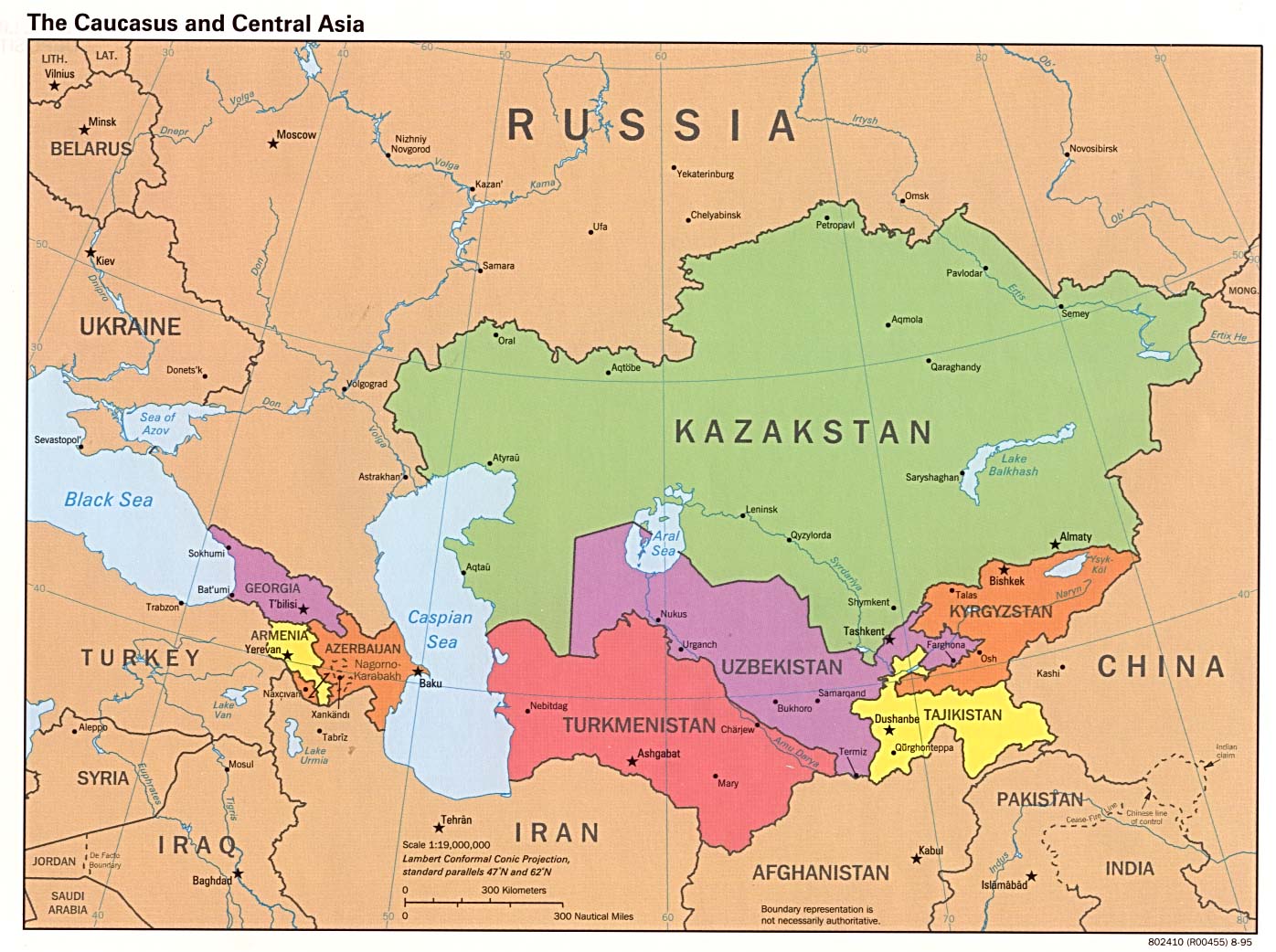
The movie of the week in Brussels is: When NATO Meets Pipelineistan. Though you won't find it in any headlines, at virtually every recent NATO summit Washington has been maneuvering to involve reluctant Europeans ever more deeply in the business of protecting Pipelineistan. This is already happening, of course, in Afghanistan, where a promised pipeline from Turkmenistan to Pakistan and India, the TAPI pipeline, has not even been built. And it's about to happen at the borders of Europe, again around pipelines that have not yet been built.
If you had to put that Euro part of Pipelineistan into a formula, you might do so this way: Nabucco (pushed by the U.S.) versus South Stream (pushed by Russia). Be patient. You'll understand in a moment.
At the most basic level, it's a matter of the West yet again trying, in the energy sphere, to bypass Russia. For this to happen, however -- and it wouldn't hurt if you opened the nearest atlas for a moment -- Europe desperately needs to get a handle on Central Asian energy resources, which is easy to say but has proven surprisingly hard to do. No wonder the NATO Secretary General's special representative, Robert Simmons, has been logging massive frequent-flyer miles to Central Asia over these last few years
Posted
by Big Gav
in
gas,
pipelineistan,
turkmenistan
Heading out has a post at TOD on gas supply from Turkmenistan - Turkmenistan Natural Gas.
Turkmenistan holds significantly large quantities of natural gas (they hold the world’s fourth largest reserves) and these have, over the years, proved attractive to Russia, China and the West. Until fairly recently, despite some bad relationships from time to time, the natural gas that the country produced made its way towards the West through Russia. With only Russian pipes as the conduit, Turkmen gas was under the real control of those who chose whether to pump the gas, or not.
However, when times were flush for the industry (can this be just over a year ago) and in order to ensure supplies for its customers in the West, Russia agreed to a much more beneficial pricing for the Turkmen gas, and was buying some 50 bcm a year. This was all arranged after the Russian Presidency changed hands, and was one of the first items on the new President’s agenda.
Since then things have not really gone well for the relationship as a whole. Turkmenistan has agreed to send natural gas to China, providing it with a second customer, while the price of natural gas has fallen with the recession in demand, around the world. That pipeline is now expected to be in place by the end of next year, and I saw pipelines being laid in China on my recent visit, as they extend the network. The pipeline is expected to carry some 40 bcm (more than Russia will buy this year).
Turkmenistan has also agreed to supply Iran with 14 bcm of natural gas with a new pipeline to carry gas down into Iran being planned for the near future.
Gazprom profits, meanwhile have dropped 62%, as the demand from Europe has dropped dramatically – with Gazprom market share falling to 16%. There was an “accident” to a pipeline between Russia and Turkmenistan, and since then no gas has flowed through the pipelines. ...
Posted
by Big Gav
in
gas,
varanus island,
western australia
Energy Business Review has a report on WA diversifying its gas supply (in the wake of last year's Varanus Island gas explosion) via the construction of the Devil's Creek gas plant - Apache Energy Starts Construction Of Its Devil Creek Gas Plant Near Karratha, Australia.
Apache Energy Limited (Apache Energy) has started construction of its Devil Creek domestic gas plant near Karratha. Australia Energy Minister, Peter Collier helped mark the start of construction of the gas plant during a groundbreaking ceremony. The plant is expected to be commissioned at the end of 2011, initially delivering an additional 10% into Western Australia’s (WA) domestic gas market.
It has been designed to process 220 terajoules per day, or 20% of current supply, to the domestic gas market. In addition, the plant will supply up to 500 barrels of condensate per day. Gas extracted from the Reindeer field would be processed at the plant and supplied into the Dampier to Bunbury natural gas pipeline.


 Posts
Posts