Showing posts with label rwanda. Show all posts

Rwanda seeks more energy as economy idles  

Posted by Big Gav in , , ,

The East African has a report on the development of a range of renewable energy projects in Rwanda, including hydro, geothermal power and gas from the great lakes - Rwanda seeks more energy as economy idles.

Rwanda is set to double its energy production in the next one year by tapping into geothermal, solar and methane gas to bridge the existing power deficit that is increasingly piling pressure on the economy.

The Ministry of Energy plans to increase the number of connections to the national grid from the current 120,000 to 300,000 households by next year and increase the total installed power generation capacity to 130MW.

Rwanda’s installed capacity is 64.55MW (local) and imported is 14.5MW which makes a total available capacity of 79MW with only 15 per cent of Rwanda’s population of 10 million has access to electricity.

Expensive and limited energy — electricity costs $0.22 per kWh compared with $0.08-$0.10 in the rest of the region — is raising the cost of doing business in Rwanda, according to the World Bank.

However, the government targets to have at least 1,000MW onstream by 2017, with 50 per cent of its population having access to electricity, up from the current 15 per cent.

“We have decided to have our own small ‘quick win’ projects — such as peat energy, which should generate 15MW. We will start drilling for geothermal, which should give us about 10MW, and the methane gas project will give 25MW next year,” State Minister for Energy and Water Coletha Ruhamya said last week.

Recently, the Kivuwatts project, which will allow extraction of methane gas from Lake Kivu in Western Rwanda, received a World Bank guarantee against political risks of $140million.

The $325 million gas-to-power project owned by ContourGlobal, a US based oil and gas firm, is expected to generate 100MW if completed as scheduled in 2012.

Ms Ruhamya said the ongoing projects are expected to generate an additional 60MW in the next year, helping the country bridge its energy deficit in the short term as regional projects kick off.

A round table meeting was held last week between Rwanda, Burundi and the Democratic Republic of Congo to formally approve the creation of a water management agency for the Lake Kivu basin and the new international treaty setting up the institutional framework to develop the Ruzizi III power project.

Ms Ruhamya noted that the ongoing projects would reduce the high energy costs in the long term as the country reduces dependency on petroleum products such as diesel for energy.

Currently, Rwanda imports approximately 17 million litres of oil monthly, including for industrial consumption.
Michel Arrion, head of EU delegation in Rwanda said the Ruzizi project is expected to not only boost power supply to the three countries but also reduce the cost of energy.

“The Ruzizi project is going to provide about 150MW; two times the annual consumption of Rwanda, currently estimated at 82MW,” he said.

Rwanda to spend $935 mln on geothermal power  

Posted by Big Gav in , ,

Reuters has a report on plans to develop geothermal power in Rwanda - Rwanda to spend $935 mln on geothermal power.

Rwanda plans to spend $935 million on the development of 310 megawatts of electricity from geothermal sources in the next seven years to tackle severe electricity shortages, a government statement said on Tuesday.

Rwanda is one of East Africa's fastest growing economies, with an expansion rate of 7.5 percent in 2010, but faster growth is hampered by major energy challenges.

"Rwanda is targeting 310 MW in the next seven years and the estimated cost is $935 million," the energy ministry said in a statement.

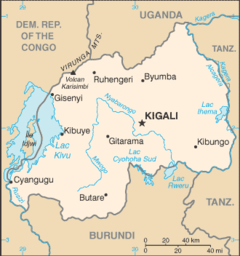
"The geothermal sources have been identified between Gisenyi and Karisimbi Volcano and Bugarama. It will cost in total $30.2 million for drilling three exploration wells and doing the site preparation, which will include availing infrastructure on site."

Geothermal power is produced by tapping the steam created by water trapped near hot rocks in the earth.

Only 14 percent of the Rwandan population has access to electricity, the ministry said.

The country had an installed capacity of only 69 MW in 2009, but plans to increase this to 130 MW by the end of 2012 through investments in small hydropower and methane gas plants.

Rwanda is in a prime area of the East African Rift Valley, one of the world's hottest spots for geothermal activity.

The area with the most geothermal activity has been identified as the Virunga volcanic zones in the north and the area around hot springs in the west.

"Rwanda is also looking at developing hydropower, methane gas, solar, biogas, peat, with an ultimate goal to reach 1,000 MW of production capacity by 2017," the statement said.

Experts estimate the geothermal potential along the East African Rift Valley in excess of 15,000 MW, but the huge potential has remained largely untapped except in Kenya and Ethiopia.

Rwanda targeting 300 MW of geothermal power in next six years  

Posted by Big Gav in , , ,

Engineering News has an article on interest in geothermal power in Rwanda (the country also has some interesting power generation potential using gas from the great lakes) - Rwanda targeting 300 MW of geothermal power in next six years .

Rwanda plans to include geothermal power in its energy mix in a bid to tackle severe electricity challenges and power its fast-expanding economy. The East African nation says it has set itself a target of generating 300 MW from geothermal sources in the next six years.

Stephen Onacha, an energy expert at Rwanda’s Ministry of Infrastructure, says that the drilling of three geothermal exploration wells, at a cost of $20-million, will start this year.

The decision to invest in geothermal energy is part of a comprehensive energy diversification programme aimed at expanding Rwanda’s installed capacity to 1 000 MW in seven years, connecting more people to the grid and driving economic growth.

The programme is expected to cost a staggering $900-million, and various financers, such as the African Development Bank, the World Bank and the European Union, have already committed to assisting Rwanda in the implementation of key projects, including the upgrading of the country’s dilapidated transmission and distribution infrastructure and the construction of new generation plants.

Although Rwanda is East Africa’s fastest-growing economy, with the World Bank forecasting gross domestic product growth of 7% in 2010, the country has been facing major energy challenges.

The Rwanda Electricity Corporation says the country’s installed capacity stood at a mere 69 MW in 2009, but plans are under way to increase this capacity to 130 MW by the end of next year through investments in small hydropower plants and methane gas plants. Only 6% of the population is connected to the electricity grid.

Rwanda harnesses volcanic gases from depths of Lake Kivu  

Posted by Big Gav in , ,

The Guardian has an article on extracting methane from central africa's great lakes to use in power generation - Rwanda harnesses volcanic gases from depths of Lake Kivu.

It's dusk on Lake Kivu and the fishermen sing while paddling out in their catamarans, three canoes secured together with long wooden poles. As the twin volcanoes on the far shore disappear into the darkness the men spark kerosene lamps to attract the sambaza sardines into their nets. Across the vast lake their lanterns offer the only tiny sequins of light.

At least that is how it used to be. Now, near the northern shore, the bright fluorescent bulbs illuminating a tall barge can be seen from miles away. It is the start of a project that could light up the whole of Rwanda for decades, while also reducing the risk of disaster for the two million people living alongside this rare "exploding lake".

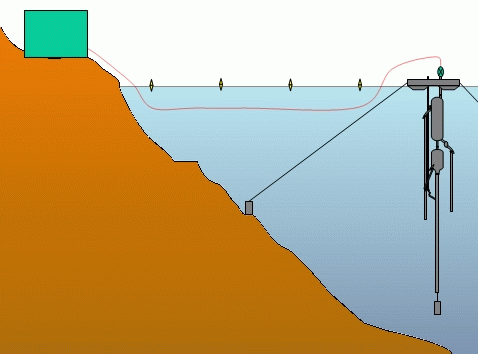
In a world first, the barge is extracting gases that are trapped deep in Lake Kivu's waters like the fizz in a champagne bottle. Methane, the main constituent of natural gas used for household cooking and heating, is then separated out and piped back to the rugged shore where it fires three large generators.

The state-owned Kibuye Power plant is already producing 3.6MW of electricity, more than 4% of the country's entire supply. But the success of the pilot project, and the huge unmet demand for power in Rwanda — only one in 14 homes have access to electricity — has encouraged local and foreign investors to commit hundreds of millions of dollars to new methane plants along the lakeshore.

Within two years, the government hopes to be getting a third of its power from Lake Kivu, and eventually aims to produce so much energy from methane to be able to export it to neighbouring countries.

Turning Danger Into Power  

Posted by Big Gav in , ,

"Engineer Live" has an interesting article on avoiding a Lake Nyos style tragedy in the regions bordering Lake Kivu, between Rwanda and the Congo, and generating a large amount of power while doing so - by extracting methane from the lake water and using it for power generation.

The waters of Lake Kivu have absorbed enormous amounts of gas over the years, estimated to be around 250 billion m3 of carbon dioxide and 55 billion m3 of methane, with the total amount rising 20% since the 1970's. The lake sits at an altitude of almost 1500 metres above sea level and covers an area of about 2400 km2, with a maximum depth of 600 metres. Only two other lakes are known to harbour similar quantities of gases – Lakes Monoun and Nyos in Cameroon. In both of these cases, however, carbon dioxide predominates - the quantities of methane are too small for exploitation to be worthwhile.

The carbon dioxide in the deep waters of the lake mainly derive from volcanic activity, while the methane is produced by bacteria decomposing dead organic matter in the anoxic bottom waters. According to Swiss researcher Martin Schmid from Eawag, the rise in methane concentrations observed over the past 20–30 years is likely attributable to two factors: a huge increase in nutrient inputs, associated with the growing population around the lake, and the introduction of a sardine species that has had a major impact on nutrient cycles.

The gas poses a threat to both the 2 million local inhabitants (in the event of a gas eruption from the lake) and the planet as a whole (methane being a potent greenhouse gas). Analysis of the lake's geological history indicates a periodic biological extinction around the lake around every 1,000 years. The trigger for lake overturns is unknown but scientists hypothesize that sufficient volcanic interaction with the lake's bottom water that has high gas concentrations would heat the water, force the methane out of it, spark a methane explosion, and trigger a nearly simultaneous release of carbon dioxide. The carbon dioxide would then suffocate large numbers of people in the lake basin as the gases roll off the lake surface. It is also possible that the lake could spawn lake tsunamis as gas explodes out of it.

The dissolved methane also provides an opportunity, as the gas can be extracted from the lake and used for power generation and other applications. The value of Lake Kivu’s gas reserves is estimated by experts at around CHF 16 billion (US$14.3 billion).

Extraction of gas has already been done on a small scale, with the extracted gas being used to run boilers at a brewery up until 2004.

The Rwandan government is in negotiations with a number of parties to produce methane from the lake on a larger scale. It recently awarded the South African engineering company Murray & Roberts a contract to construct a power station, with a pilot project to be initiated early this year. Efforts to establish a power station seem to have been underway for a few years now, with various delays being experienced. The BBC has also reported on a company called EcoEnergy looking to build a plant.


Extraction is said to be cost effective and simple because once the gas rich water is pumped up from the depths the dissolved gases bubble out as the pressure falls. The methane in the lake is estimated to be sufficient to meet Rwanda's needs for 200 years and 400 years. Using the gas may mean far less logging in the area since Rwanda currently gets 90 per cent of its energy from wood burning, with forests disappearing at a rate of 4% per year.

Like many other examples of renewable energy sources, this, by itself, is not a solution to the energy problem posed by peak oil - however, it is one more example of the dozens of local alternatives that can be exploited to meet our energy needs - and in an area cursed with trouble that, as Thomas Homer-Dixon pointed out, at least partially stems from competition over resources. This could be considered the aquatic equivalent of generating energy using biogas from landfills or farm waste.

Statistics

Locations of visitors to this page

blogspot visitor
Stat Counter

Total Pageviews

Ads

Books

Followers

Blog Archive

Labels

australia (619) global warming (423) solar power (397) peak oil (355) renewable energy (302) electric vehicles (250) wind power (194) ocean energy (165) csp (159) solar thermal power (145) geothermal energy (144) energy storage (142) smart grids (140) oil (139) solar pv (138) tidal power (137) coal seam gas (131) nuclear power (129) china (120) lng (117) iraq (113) geothermal power (112) green buildings (110) natural gas (110) agriculture (91) oil price (80) biofuel (78) wave power (73) smart meters (72) coal (70) uk (69) electricity grid (67) energy efficiency (64) google (58) internet (50) surveillance (50) bicycle (49) big brother (49) shale gas (49) food prices (48) tesla (46) thin film solar (42) biomimicry (40) canada (40) scotland (38) ocean power (37) politics (37) shale oil (37) new zealand (35) air transport (34) algae (34) water (34) arctic ice (33) concentrating solar power (33) saudi arabia (33) queensland (32) california (31) credit crunch (31) bioplastic (30) offshore wind power (30) population (30) cogeneration (28) geoengineering (28) batteries (26) drought (26) resource wars (26) woodside (26) censorship (25) cleantech (25) bruce sterling (24) ctl (23) limits to growth (23) carbon tax (22) economics (22) exxon (22) lithium (22) buckminster fuller (21) distributed manufacturing (21) iraq oil law (21) coal to liquids (20) indonesia (20) origin energy (20) brightsource (19) rail transport (19) ultracapacitor (19) santos (18) ausra (17) collapse (17) electric bikes (17) michael klare (17) atlantis (16) cellulosic ethanol (16) iceland (16) lithium ion batteries (16) mapping (16) ucg (16) bees (15) concentrating solar thermal power (15) ethanol (15) geodynamics (15) psychology (15) al gore (14) brazil (14) bucky fuller (14) carbon emissions (14) fertiliser (14) matthew simmons (14) ambient energy (13) biodiesel (13) investment (13) kenya (13) public transport (13) big oil (12) biochar (12) chile (12) cities (12) desertec (12) internet of things (12) otec (12) texas (12) victoria (12) antarctica (11) cradle to cradle (11) energy policy (11) hybrid car (11) terra preta (11) tinfoil (11) toyota (11) amory lovins (10) fabber (10) gazprom (10) goldman sachs (10) gtl (10) severn estuary (10) volt (10) afghanistan (9) alaska (9) biomass (9) carbon trading (9) distributed generation (9) esolar (9) four day week (9) fuel cells (9) jeremy leggett (9) methane hydrates (9) pge (9) sweden (9) arrow energy (8) bolivia (8) eroei (8) fish (8) floating offshore wind power (8) guerilla gardening (8) linc energy (8) methane (8) nanosolar (8) natural gas pipelines (8) pentland firth (8) saul griffith (8) stirling engine (8) us elections (8) western australia (8) airborne wind turbines (7) bloom energy (7) boeing (7) chp (7) climategate (7) copenhagen (7) scenario planning (7) vinod khosla (7) apocaphilia (6) ceramic fuel cells (6) cigs (6) futurism (6) jatropha (6) nigeria (6) ocean acidification (6) relocalisation (6) somalia (6) t boone pickens (6) local currencies (5) space based solar power (5) varanus island (5) garbage (4) global energy grid (4) kevin kelly (4) low temperature geothermal power (4) oled (4) tim flannery (4) v2g (4) club of rome (3) norman borlaug (2) peak oil portfolio (1)