Showing posts with label africa. Show all posts

Will Huge New Hydro Projects Bring Power to Africa’s People ?  

Posted by Big Gav in ,

Yale Environment 360 has an interesting look at hydro power plans for Africa - Will Huge New Hydro Projects Bring Power to Africa’s People?.

Sub-Saharan Africa, where more than three-quarters of the population is without electricity, will soon be lit up — or that’s the promise of governments building a host of new hydroelectric schemes across the continent. These projects are an attempt to keep up with the rising power demand from Africa’s economic boom. But the trouble is that, like the boom, the power seems destined to benefit only small industrial and urban elites. For the rest of Africa’s billion inhabitants, this investment looks unlikely to further UN secretary general Ban Ki-moon’s goal of “sustainable energy for all.”

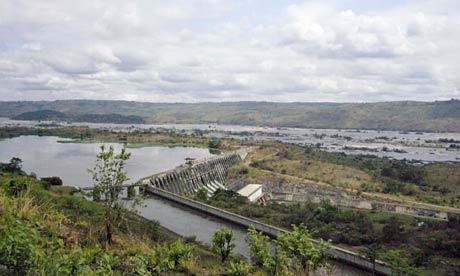
The Congo River in central Africa — the world’s second-largest river after the Amazon — is the latest focus of the rush to harness the continent’s rivers for generating electricity. On May 18, the government of the Democratic Republic of the Congo (DRC) announced in Paris that it was initiating the first phase of the world’s largest hydro scheme on the river’s majestic Inga Falls. At these falls, downstream from the capital Kinshasa, the massive Congo’s entire flow of 42,000 cubic meters a second cascades down a series of rapids, falling 100 meters within a 15-kilometer stretch.

South African hydro-engineer Henry Oliver has called Inga Falls “one of the greatest single natural sources of hydroelectric power in the world,” and his fellow engineers have long dreamed of tapping these waters to power an Africa-wide electricity grid. Two small schemes built in the 1970s The completed project on the Congo would be twice the size of China’s Three Gorges dam. and 1980s, known as Inga I and Inga II, are largely moribund, victims of the DRC’s wrecked economy and long-running civil war.

But the idea was revived a decade ago, when world leaders pledged a New Partnership for Africa’s Development (NEPAD). Now it is Chinese construction companies — including Sinohydro, the world’s largest dam builder — who are in line for the contracts.

The first phase, dubbed Inga III, will on its own generate more power than Africa’s current largest hydroelectric-dam, the High Aswan on the Nile in Egypt. Construction should begin in 2015 and will cost at least $8.5 billion. The energy is mostly destined for South Africa, 3,000 kilometers away, where energy utility Eskom has promised to take more than half the capacity of 4,800 megawatts (MW).

But the project’s eventual aim, the DRC’s water and electricity minister Bruno Kapandji Kalala told the Paris meeting, is even grander. The completed project would be almost ten times larger than the initial phase, making it twice the size of China’s Three Gorges hydro-scheme, currently the world’s biggest. It will tap the Congo with 50 separate riverside electricity generating units, each the size of a large conventional power station.

The treaty signed between DRC and South Africa pledges both countries to the $50-billion development, along with extensive transmission lines to a planned southern African supergrid. The project’s promoters say it could one day supply power to half a billion people across the whole of Africa. But the logistics of constructing a distribution to more than a handful of urban centers would take many decades and dwarf the cost of building the hydroelectric works, and nobody has suggested where that money would come from.

There is, it has to be said, an environmental case for the Inga Falls scheme. The Congo River’s flow is so strong and so constant that its enormous power can be extracted without a large dam to store water. With no large reservoir, the “run-of-river” scheme will flood little land, thus saving rainforests, reducing the need to move people, and limiting greenhouse gas emissions from rotting vegetation. Unlike many dam projects in rainforests, it will be a genuinely low-carbon source of energy.

The Inga Falls project is only the latest of a rush of giant hydroelectric dams across Africa. They include the recent completion of the 250-MW Ethiopia’s Grand Renaissance Dam on the Blue Nile will shortly supplant the High Aswan as Africa’s biggest. Bujagali dam on the Nile in Uganda, which has flooded a much-loved local falls; a 300-MW Chinese dam completed in 2009 in Tekeze canyon at the headwaters of the Nile in Ethiopia, which at 185 meters is one of Africa’s highest; and the 120-MW Djibloho dam completed last year on the Wele River, which now supplies 90 percent of the electricity in tiny Equatorial Guinea.

But these are small fry. This week, Ethiopia diverted the flow of the Blue Nile while it constructs the 6,000-MW Grand Renaissance dam on the river near the border with Sudan, which will shortly supplant the High Aswan as Africa’s biggest. And Ethiopia is just completing the 1,800-MW Gibe III dam on the River Omo. The latter was a favorite of the former prime minister, Meles Zenawi, who defended the project against Western criticism in 2011 by saying: “We want our people to have a modern life and won’t allow [them] to be a case study of ancient living for scientists and researchers.”
Global mining boom is leading to landgrab, says report  

Posted by Big Gav in

The Guardian has a report on the growing demand for minerals (clearly we aren't going to achieve a cradle-to-cradle industrial ecosystem any time soon) - Global mining boom is leading to landgrab, says report.

The global mining, oil and gas industries have expanded so fast in the last decade they are now leading to large-scale "landgrabbing" and threatening farming and water supplies, according to a report by environment and development groups in Europe, Africa and India.

"The catalogue of devastation is growing. We are no longer talking about isolated pockets of destruction and pollution. In just 10 years, iron ore production has more than doubled, coal has risen 45% and metals like lithium by 125%. Across Africa, Latin America and Asia, more and more lands, rivers and aquifers are being devoured by mining activities.

"Industrial wastelands are being formed by vast open-pit mines and mountain top removal, and the poisoning of water systems, deforestation, and the contamination of topsoil," says the report by the Gaia foundation and groups including Friends of the Earth International, Grain, Oilwatch and Navdanya in India.

The dramatic increase in large-scale mining, clearly seen in places such as the Amazon for gold and oil, India's tribal forest lands for bauxite, South Africa for coal and Ghana for gold, is being fuelled by the rising price of metals and oil. These have acted as an incentive to exploit new areas and less pure deposits, says the report.

"Technologies are becoming more sophisticated to extract materials from areas which were previously inaccessible, uneconomic or designated of 'lower' quality," it says. "That means more removal of soil, sand and rock and the gouging out of much larger areas of land, as seen with the Alberta tar sands in Canada."

Economies are getting better at reducing the intensity of the use of raw materials but the sheer increase in their absolute consumption is now staggering, say the authors. According to the US Mineral Information Institute, the average American will use close to 1,300 tonnes of minerals in a lifetime. Global energy demand, which is based largely on fossil fuels, is expected to increase 35% by 2030, according to oil firm Exxon.

Rwanda seeks more energy as economy idles  

Posted by Big Gav in , , ,

The East African has a report on the development of a range of renewable energy projects in Rwanda, including hydro, geothermal power and gas from the great lakes - Rwanda seeks more energy as economy idles.

Rwanda is set to double its energy production in the next one year by tapping into geothermal, solar and methane gas to bridge the existing power deficit that is increasingly piling pressure on the economy.

The Ministry of Energy plans to increase the number of connections to the national grid from the current 120,000 to 300,000 households by next year and increase the total installed power generation capacity to 130MW.

Rwanda’s installed capacity is 64.55MW (local) and imported is 14.5MW which makes a total available capacity of 79MW with only 15 per cent of Rwanda’s population of 10 million has access to electricity.

Expensive and limited energy — electricity costs $0.22 per kWh compared with $0.08-$0.10 in the rest of the region — is raising the cost of doing business in Rwanda, according to the World Bank.

However, the government targets to have at least 1,000MW onstream by 2017, with 50 per cent of its population having access to electricity, up from the current 15 per cent.

“We have decided to have our own small ‘quick win’ projects — such as peat energy, which should generate 15MW. We will start drilling for geothermal, which should give us about 10MW, and the methane gas project will give 25MW next year,” State Minister for Energy and Water Coletha Ruhamya said last week.

Recently, the Kivuwatts project, which will allow extraction of methane gas from Lake Kivu in Western Rwanda, received a World Bank guarantee against political risks of $140million.

The $325 million gas-to-power project owned by ContourGlobal, a US based oil and gas firm, is expected to generate 100MW if completed as scheduled in 2012.

Ms Ruhamya said the ongoing projects are expected to generate an additional 60MW in the next year, helping the country bridge its energy deficit in the short term as regional projects kick off.

A round table meeting was held last week between Rwanda, Burundi and the Democratic Republic of Congo to formally approve the creation of a water management agency for the Lake Kivu basin and the new international treaty setting up the institutional framework to develop the Ruzizi III power project.

Ms Ruhamya noted that the ongoing projects would reduce the high energy costs in the long term as the country reduces dependency on petroleum products such as diesel for energy.

Currently, Rwanda imports approximately 17 million litres of oil monthly, including for industrial consumption.
Michel Arrion, head of EU delegation in Rwanda said the Ruzizi project is expected to not only boost power supply to the three countries but also reduce the cost of energy.

“The Ruzizi project is going to provide about 150MW; two times the annual consumption of Rwanda, currently estimated at 82MW,” he said.

Source of Sanitation Crisis Becomes Sustainable Power Solution in Africa's Largest Slum  

Posted by Big Gav in , ,

Treehugger has a post on the use of biogas in Kenya - Source of Sanitation Crisis Becomes Sustainable Power Solution in Africa's Largest Slum. After Gutenberg has more.

In the impoverished Nairobi neighborhood of Kibera, often called "Africa's biggest slum," the lack of toilets and sewer systems leaves hundreds of thousands of people vulnerable to the diseases that thrive amid poor sanitation. But an innovative program is helping turn one of the area's biggest health problems into a solution to one of the community's most crucial economic -- and environmental -- concerns.

Poor households in Kibera are struggling to meet rising costs for kerosene, paraffin, charcoal, firewood, and other fuel sources, many of which also contribute to indoor air pollution and the myriad ailments that go along with it, IPS News reports.

At the Katwekera Tosha Bio Centre set up with the help of the Umande Trust, however, Kibera residents can safely and cheaply cook food using biogas generated from the center's toilets:
The centre has toilets and bathrooms on the ground floor -- the toilets are connected to a bio-digester, with a dome-shaped holding tank in which biogas is produced. Raw human waste from the toilets flows in, and bacteria break it down, releasing methane gas which collects at the top of the domed tank.

"A pipe is then plumbed into these toilets and connected to the first floor, which is where the cooking area is located," says [center manager David] Kihara. The gas is piped to collective stoves one floor up -- and is usually sufficient for community members to cook on throughout the day.

The idea may sound a bit icky, but it's perfectly safe, helping solve sanitation problems while providing green energy at the same time. Though residents only pay a small fee to use the cooking facilities, the center has become so popular it's even turning a profit -- money that benefits locals who have registered with the community-based organization, IPS writes.

Kenya Aims to Make Geothermal Energy Main Power Source By 2014  

Posted by Big Gav in , , ,

BusinessWeek has a report on Kenya's plans for exploiting geothermal power - Kenya Aims to Make Geothermal Energy Main Power Source By 2014.

Kenya, Africa’s largest producer of geothermal power, is aiming for the energy supply to surpass hydro as the top contributor to the country’s electricity grid by 2014, said Silas Simiyu, chief executive officer of the state-owned Geothermal Development Co.

A 10-year, $2.6 billion exploration plan will involve sinking 566 wells in the Great Rift Valley, where shifting tectonic plates provide a key source of the energy, the company said in a statement yesterday. GDC is expected to begin drilling in Menengai in central Kenya this week, with an initial aim to find sufficient reserves to feed a 400-megawatt facility by 2014, Simiyu told reporters yesterday.

Over the next decade, the company aims to discover 2,336 megawatts of steam produced by hot underground rocks that boil water. The vapors are used to power turbines. Geothermal energy currently accounts for 12 percent of Kenya’s 1,405 megawatts of generation, including an installed capacity of 212 megawatts at a plant at Olkaria, about 120 kilometers (75 miles) outside of Nairobi, the capital.

“We should not see a situation of power shortages like we had before,” Simiyu said.

Drought in Kenya two years ago depleted water levels at hydropower dams, which supplies 55 percent of the country’s electricity. The resulting power rationing between August and October 2009 hindered growth in East Africa’s largest economy.

Kenya estimates the extent of its unexploited resources ranges between 7,000 megawatts and 10,000 megawatts at 14 “high- potential” locations valued at $30 billion, according to the statement.

Rwanda targeting 300 MW of geothermal power in next six years  

Posted by Big Gav in , , ,

Engineering News has an article on interest in geothermal power in Rwanda (the country also has some interesting power generation potential using gas from the great lakes) - Rwanda targeting 300 MW of geothermal power in next six years .

Rwanda plans to include geothermal power in its energy mix in a bid to tackle severe electricity challenges and power its fast-expanding economy. The East African nation says it has set itself a target of generating 300 MW from geothermal sources in the next six years.

Stephen Onacha, an energy expert at Rwanda’s Ministry of Infrastructure, says that the drilling of three geothermal exploration wells, at a cost of $20-million, will start this year.

The decision to invest in geothermal energy is part of a comprehensive energy diversification programme aimed at expanding Rwanda’s installed capacity to 1 000 MW in seven years, connecting more people to the grid and driving economic growth.

The programme is expected to cost a staggering $900-million, and various financers, such as the African Development Bank, the World Bank and the European Union, have already committed to assisting Rwanda in the implementation of key projects, including the upgrading of the country’s dilapidated transmission and distribution infrastructure and the construction of new generation plants.

Although Rwanda is East Africa’s fastest-growing economy, with the World Bank forecasting gross domestic product growth of 7% in 2010, the country has been facing major energy challenges.

The Rwanda Electricity Corporation says the country’s installed capacity stood at a mere 69 MW in 2009, but plans are under way to increase this capacity to 130 MW by the end of next year through investments in small hydropower plants and methane gas plants. Only 6% of the population is connected to the electricity grid.

Wikileaks: State Dept. wants intel on African acceptance of GMOs  

Posted by Big Gav in , , ,

Grist has a look at one minor Wikileaks revelation about US efforts to promote GMO crops in Africa - Wikileaks: State Dept. wants intel on African acceptance of GMOs.

The Wikileaks release of U.S. State Department classified diplomatic cables may be problematic, but it has been quite a trove of information on the workings of our diplomatic corps. For the most part, the dump has confirmed things that we already knew about U.S. policy -- and that seems to be the case regarding the one mention of agricultural policy in these thousands of emails and documents (no doubt there are more) to which I was alerted.

Buried deep in a document that outlines priorities for intelligence gathering in the African "Great Lakes" countries of Burundi, the Republic of Congo, and Rwanda is a list (for the most part, very reasonable) of what the State Department would like to know about the region's agricultural policy. Things like government policies on food security and food safety top the list, for example, along with information on the impact of rising food prices in these countries. Agricultural yield statistics, infrastructure improvements, data on deforestation and desertification, water issues, and invasive species are included as priorities for "reporting" as well.

But also getting its own line item on the intel priority list is this:
Government acceptance of genetically modified food and propagation of genetically modified crops.

Sigh.

Tom Philpott has reported on the State Department's biotech-loving science adviser Nina Federoff and her industry ties -- and certainly USDA Chief Tom Vilsack believes that genetically modified foods are an answer to world hunger. So this revelation hardly counts as a surprise. But it's still a shame to see that our spymasters are actively engaged in efforts to make the world safe for Monsanto. Aren't there better things for them to do?

The True Size Of Africa  

Posted by Big Gav in ,

Biofuel demand driving "land grab" in Africa  

Posted by Big Gav in , ,

Reuters has an article on a report that "Biofuel demand is driving a new "land grab" in Africa, with at least 5 million hectares acquired by foreign firms to grow crops in 11 countries" - Biofuel demand driving "land grab" in Africa: report.

The contracts by European and Asian companies for land to grow sugar cane, jatropha and palm oil to be turned into fuel will involve clearing forests and vegetation, taking land that could be used for food and creating conflicts with local communities, Friends of the Earth said in the study. ...

Critics say there is a risk of the crops infringing on land that could be used for growing food and that destruction of rainforests to make way for palm oil and sugar outweighs any carbon benefits gained from the use of such fuels. "The expansion of biofuels ... is transforming forests and natural vegetation into fuel crops, taking away food-growing farmland from communities, and creating conflicts with local people over land ownership," Mariann Bassey, a Friends of the Earth Nigeria activist, said in a statement.

NGOs slam EU-Brazil plans to develop biofuels in Africa  

Posted by Big Gav in ,

EUObserver has an article on debate about European biofuel policy in Africa - NGOs slam EU-Brazil plans to develop biofuels in Africa.

EU and Brazilian leaders are set to announce a new "triangular co-operation" initiative, under which they will aim to work together in some of the world's poorest countries, but NGOs say the duo's scheme is self-centred and will simply make conditions worse.

At a bilateral summit in Brasilia on Wednesday (14 July), European Council President Herman Van Rompuy, European Commission chief Jose Manuel Barroso and Brazilian President Luiz Inácio Lula da Silva are to agree to co-operate on a range of different projects in Portuguese speaking parts of Africa, Haiti and East Timor in the coming years.

The development of renewable energy is likely to be a central theme, and a first step will see the EU and Brazil sign an agreement with Mozambique this week to develop bioelectricity and biofuels projects, EU sources have indicated.

Brazilian companies are world leaders in the production of biofuels and are looking to expand their operations both internally and abroad, while the EU is looking to increase its biofuel use at home in order to meet its target of sourcing 20 percent of its energy needs from renewable sources by 2020.

But as EU and Brazilian officials prepare to start studies on how best to develop bioethanol, biodiesel and bioelectricity projects in Mozambique - already a leading African producer of biofuels - environmental groups say the initiative will simply serve to displace people from their land and exacerbate food shortages.

"In a country that suffers persistent hunger, using millions of hectares of agricultural land to grow crops to power European cars is immoral and perverse," Adrian Bebb, a biofuels expert with Friends of the Earth, told this website.

"European biofuels targets are what is driving this global expansion," he added. "Instead of doing deals to grab more land in the South, the EU should be scrapping its biofuel policy."

The Next Empire  

Posted by Big Gav in ,

The Atlantic has a look at Africa and China's interest in the continent's resources, asking "Do China’s grand designs promise the transformation,at last, of a star-crossed continent? Or merely its exploitation?" - The Next Empire.

I was about to embark on one of the world’s great train rides, a journey from this muggy Indian Ocean port city, the commercial capital of Tanzania, to the edge of the Zambian Copper Belt, deep in the heart of southern Africa. The official who’d sold me my ticket had seemed puzzled when I asked when the train would arrive at its final destination, and he refused to guess; in recent years, the 1,156-mile trip has been known to take anywhere from its originally scheduled two days to an entire week.

The railroad—known as the Tazara line—was built by China in the early 1970s, at a cost of nearly $500 million, an extraordinary expenditure in the thick of the Cultural Revolution, and a symbol of Beijing’s determination to hold its own with Washington and Moscow in an era when Cold War competition over Africa raged fierce. At the time of its construction, it was the third-largest infrastructure project ever undertaken in Africa, after the Aswan Dam in Egypt and the Volta Dam in Ghana.

Today the Tazara is a talisman of faded hopes and failed economic schemes, an old and unreliable railway with too few working locomotives. Only briefly a thriving commercial artery, it has been diminished by its own decay and by the roads and air routes that have sprung up around it. Maintenance costs have saddled Tanzania and Zambia with debts reportedly as high as $700 million in total, and the line now has only about 300 of the 2,000 wagons it needs to function normally, according to Zambian news reports.

Yet the railway traces a path through a region where hopes have risen again, rekindled by a new sort of development also driven by China—and on an unprecedented scale. All across the continent, Chinese companies are signing deals that dwarf the old railroad project. The most heavily reported involve oil production; since the turn of the millennium, Chinese companies have muscled in on lucrative oil markets in places like Angola, Nigeria, Algeria, and Sudan. But oil is neither the largest nor the fastest-growing part of the story. Chinese firms are striking giant mining deals in places like Zambia and the Democratic Republic of the Congo, and building what is being touted as the world’s largest iron mine in Gabon. They are prospecting for land on which to build huge agribusinesses. And to get these minerals and crops to market, they are building major new ports and thousands of miles of highway.

In most of Africa’s capital cities and commercial centers, it’s hard to miss China’s new presence and influence. In Dar, one morning before my train trip, I made my way to the roof of my hotel for a bird’s-eye view of the city below. A British construction foreman, there to oversee the hotel’s expansion, pointed out the V-shaped port that the British navy had seized after a brief battle with the Germans early in the First World War. From there, the British-built portion of the city extended primly inland, along a handful of long avenues. For the most part, downtown Dar was built long ago, and its low-slung concrete buildings, long exposed to the moisture of the tropics, have taken on a musty shade of gray.

“Do you see all the tall buildings coming up over there?” the foreman asked, a hint of envy in his voice as his arm described an arc along the waterfront that shimmered in the distance. “That’s the new Dar es Salaam, and most of it is Chinese-built.”

In the Mountains of the Moon, A Trek to Africa’s Last Glaciers  

Posted by Big Gav in , , ,

Yale Environment 360 has a look at Africa's disappearing glaciers - In the Mountains of the Moon, A Trek to Africa’s Last Glaciers.

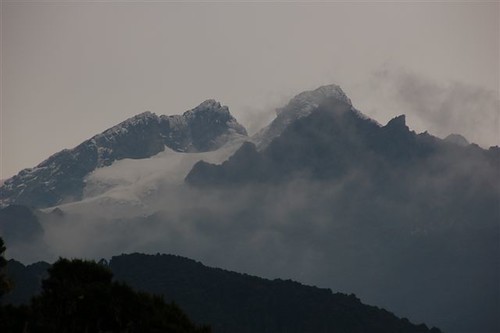
I am hiking through a moss-draped forest more than 10,000 feet above sea level in the Rwenzori Mountains in western Uganda, not far from the border of the Democratic Republic of the Congo. The trail ahead is steep as a ladder and slippery with mud, and every few minutes my guide and I stop to rest.

Most people who come to this part of Africa do so for its wildlife, especially the endangered mountain gorilla. I have made the journey for another reason. I am looking for a glacier.

In the popular imagination, glaciers and Africa intersect at one location: Mt. Kilimanjaro, the iconic dormant volcano that rises from the grasslands of Tanzania and whose shrinking snowcap has become a symbol of climate change.

But there are glaciers in steamy Uganda, too, hidden in the eaves of jagged 16,000-foot peaks that are lost in the clouds most of the year. And these glaciers have a climate change story to tell, too — one that scientific research suggests better reflects the impact of global warming than the fading snows of Kilimanjaro.

But their story is also nearing its close. In just two decades, scientists expect the Rwenzori glaciers — as well as Africa’s few other remaining ice fields — to be gone. Kilimanjaro has already lost 84 percent of its ice since 1912, and what’s left is not expected to last more than a couple of decades. The Lewis glacier on Mount Kenya is also expected to wink out soon.

That prognosis comes as no surprise to my guide, a local Bakonjo tribesman named Baluku Josephat, who has guided climbers through the Rwenzori range since 1982 and has seen the consequences of global warming firsthand.

“If you go to Mount Baker,” he says, referring to a massive, ship-like peak in the center of the range where glaciers have already melted, “you can now go without crampons. It was not that way in the past. Now people just walk over rocks.”

The great global land grab  

Posted by Big Gav in ,

Energy Bulletin has an article on foreign efforts to acquire chunks of Africa for food production - The great global land grab.

News of another big land deal between a rich nation and a poor developing country is becoming a common occurrence. In August a group of Saudi investors said that they would be investing $1 billion in land in Africa for rice cultivation. They are calling it their ‘7x7x7 project’, since they are aiming to plant 700,000 hectares of land to produce seven million tonnes of rice in seven years. The land will be distributed over several countries: Mali, Senegal and maybe Sudan and Uganda.

A few weeks earlier South Korea acquired 700,000 hectares of land in Sudan, also for rice cultivation. India is funding a large group of private companies to buy 350,000 hectares in as-yet unspecified countries in Africa. A group of South African businessmen is negotiating an 8 million hectare deal in the Democratic Republic of Congo. And so it goes on. The United Nations believes that at least 30 million hectares (about 74 million acres, well over the size of the UK) were acquired by outside investors in the developing world during the first half of this year alone.

The land grab was indirectly spawned by the international financial crisis. It’s interesting to trace the investors’ train of thought because it says a lot about the kind of world we’re heading towards. Some two years ago many financial players – the investment houses that manage workers’ pensions, private equity funds, hedge funds, big grain traders and so on – saw that the sub-prime mortgage bubble was about to burst and moved money into the safer commodities market. Although there was no real shortage of food, food prices (especially of cereals, but also of dairy and meat) rose dramatically.

Countries dependent on food imports were badly hit, with a big increase in the domestic price of some food staples, particularly rice. People coped by changing their eating habits, in many cases cutting back on meals, but they also took to the streets to demand government action. By early 2008 riots had broken out in nearly 40 countries, instilling fear among the world’s political elite. Panic-stricken governments rushed to increase their food imports, leading several food-producing nations to restrict exports, fearful that they too could be hit by shortages.

The big winners from the crisis were not the farmers, as one might have expected. They enjoyed a big increase in the prices they were paid at the farm gate, but all their potential income gains were gobbled up by higher production costs. The people who made a real killing were the suppliers of agricultural inputs. With their quasi-monopoly control over seeds, pesticides, fertilisers and machinery, these giant companies made obscene profits out of the higher prices squeezed out of largely poor populations.

Close on their heels in the ranking of the profiteers came the world’s largest grain traders. These companies played a role in artificially creating the food scare in the first place, so they made sure they were well placed to profit from it. Cargill, the world’s largest grain trader, reported an increase in profits in 2008 of nearly 70 per cent over 2007, a 157 per cent rise in profits since 2006. Profits for ADM, the world’s second largest grain trader, showed a lower rate of increase in 2008, partly because of its heavy investments in the sinking ethanol market, but the company’s profits were still more than 200 per cent higher than they were in 2006.

eSolar takes solar thermal to Sub-Saharan Africa  

Posted by Big Gav in , , ,

Cleantech.com has a post on efforts to bring solar thermal power technology to Africa - eSolar takes solar thermal to Sub-Saharan Africa.

Pasadena, Calif.-based eSolar said today its signed a deal with Johannesburg-based Clean Energy Solutions to sell and market the startup's solar thermal power plants in Sub-Saharan Africa.

The deal gives eSolar a presence on three continents. The company is operating a 5-megawatt demonstration facility in California, and has signed deals with developers in the U.S. and India (see eSolar completes 5-MW power-tower solar plant as NRG waits in wings).

Cleantech.com also has a new report on the state of the solar thermal market - Cleantech Group picks winners and losers in concentrated solar thermal.
Sub-sectors of the concentrated solar thermal (CST) market still offer ample opportunities for venture-stage capital investment, according to a report released today by the Cleantech Group.

In addition to high-profile emerging CST technologies, many of the high-growth areas lie outside traditional solar investing, including innovations to components such as steel, coating material and heat-transfer fluid, the report says.

The Cleantech Group’s Concentrated Solar Thermal report predicts trough-based CST systems will be most prevalent until 2012 or 2013 but then could be displaced by power towers, compact linear Fresnel reflectors (CLFR) and dish-engine developers if the technology advances more quickly. Still, the report says, additional investment opportunities exist in follow-on rounds for all the technologies.

"Troughs will dominate the first generation of CST. It's project financeable today because we know the costs, we know the technologies, and there are no technology risks. Developers have a roadmap to bring down the cost," said Brian Fan, senior director of research for the Cleantech Group.

"But if the power-tower concept is proven in the field in test operations, because of higher thermodynamic efficiency and higher scalability, I believe power tower will be the next generation of CST plants past 2012," he said.

Turning to the Wind  

Posted by Big Gav in , , ,

Lester Brown's Plan B 4.0 is out, with his latest prescription for transforming the global economy in order to protect the environment. Africa Focus has an excerpt of the section on wind power - Turning to the Wind (via The Boy Who Harnessed The Wind, who has made quite an impression in the media lately - see this BBC article and this TED Talk for examples).

Wind is the centerpiece of the Plan B energy economy. It is abundant, low cost, and widely distributed; it scales up easily and can be developed quickly. Oil wells go dry and coal seams run out, but the earth's wind resources cannot be depleted. A worldwide survey of wind energy by the Stanford University team of Cristina Archer and Mark Jacobson concluded that harnessing one fifth of the earth's available wind energy would provide seven times as much electricity as the world currently uses. For example, China with vast wind-swept plains in the north and west, countless mountain ridges, and a long coastline, all rich with wind has enough readily harnessable wind energy to easily double its current electrical generating capacity.

The United States is also richly endowed. In addition to having enough land-based wind energy to satisfy national electricity needs several times over, the National Renewable Energy Lab has identified 1,000 gigawatts (1 gigawatt equals 1,000 megawatts) of wind energy waiting to be tapped off the East Coast and 900 gigawatts off the West Coast. This offshore capacity alone is sufficient to power the U.S. economy. Europe is already tapping its off-shore wind. An assessment by the Garrad Hassan wind energy consulting group concluded that if governments aggressively develop their vast off-shore resources, wind could supply all of Europe's residential electricity by 2020.

For many years, a small handful of countries dominated growth in the industry, but this is changing as the industry goes global, with some 70 countries now harnessing wind resources. World wind electric generation is growing at a frenetic pace. From 2000 to 2008, generating capacity increased from 17,000 megawatts to an estimated 121,000 megawatts. The world leader in total capacity is now the United States, followed by Germany (until recently the leader), Spain, China, and India. But with China's wind generation doubling each year, the U.S. lead may be short-lived.

Africa alone could feed the world  

Posted by Big Gav in ,

New Scientist has an article on an FAO report on the potential for agriculture in Africa - Africa alone could feed the world.

DOOM-MONGERS have got it wrong - there is enough space in the world to produce the extra food needed to feed a growing population. And contrary to expectation, most of it can be grown in Africa, say two international reports published this week.

The first, projecting 10 years into the future from last year's food crisis, which saw the price of food soar, says that there is plenty of unused, fertile land available to grow more crops.

"Some 1.6 billion hectares could be added to the current 1.4 billion hectares of crop land [in the world], and over half of the additionally available land is found in Africa and Latin America," concludes the report, compiled by the Organization for Economic Cooperation and Development and the UN Food and Agriculture Organization (FAO).

If further evidence were needed, it comes in a second report, launched jointly by the FAO and the World Bank. It concludes that 400 million hectares, straddling 25 African countries, are suitable for farming.

Models for producing new crop land already exist in Thailand, where land originally deemed agriculturally unpromising, due to irrigation problems and infertile soil, has been transformed into a cornucopia by smallholder farmers.

As in Thailand, future success will come by using agriculture to lift Africa's smallholder farmers out of poverty, aided by strong government measures to guarantee their rights to land, say both reports.

Orphan Natural Gas In Africa  

Posted by Big Gav in ,

The New York Times has a post by Andy Revkin on natural gas in Africa - On CH4, Poverty and CO2.

At a meeting on population and resources early this year at the University of California in Berkeley, one session focused on global energy trends. Richard Nehring, a consultant tracking fossil fuels, noted that Africa (below and above the Sahara) has vast deposits of natural gas (CH4), many of which are suitable for extracting butane and propane, valuable household fuels. This leads to a glaring question.

We know there are orphan drugs — potential treatments for diseases in poor places that don’t get pursued because there’s scant profit. But is natural gas in Africa essentially an “orphan fuel”?

I’m going to send the following questions to a variety of energy experts and economists for their answers. What’s your view?

Sub-Saharan Africa has huge untapped reserves of natural gas. It also has a huge potential market, given that charcoal in African cities — the fuel of choice for hundreds of millions of people there — is often more expensive than gas. But the production of charcoal is destroying forests, and its use for cooking can destroy lungs in households choking on smoke. For the time being, promoting ways to use charcoal more cleanly and efficiently is a goal of many development specialists in Africa. But when will the jump to gas take place?

Q. Why isn’t development of this African gas resource, for both local and global markets, a priority for rich countries that claim they are committed to helping Africa break the bonds of persistent poverty? (Dysfunctional governments are surely an issue in some places, but not all.)

Q. Should projects that develop natural gas and related propane supplies in regions with few fuel choices get credit under proposed climate-treaty provisions?

On the climate front, discussions of ways to limit global warming seem more focused on capturing stray emissions of methane (more on that anon) than on pressing for ways to promote it as an alternative to coal, at least as a bridge to even less-polluting energy sources. For several decades, a cluster of scientists — in particular Jesse H. Ausubel, Arnulf Grübler, and Nebojsa “Naki” Nakicenovic — have pressed the case that methane is a vital ingredient for navigating toward a prosperous planet with a stable climate. It releases half the carbon dioxide per unit of energy that coal does. And if burned in certain ways, the resulting stream of CO2 is pure and easily captured for storage, Dr. Ausubel says.

It is also becoming ever clearer that the world has vast untapped stores of natural gas, everywhere from the seabed of the Gulf of Mexico to a wide swath of the Arctic.

The volatility of prices is clearly a problem, with low prices now likely to slow exploration and development of new sources, experts say. Another sign of the world’s enduring “ shock and trance” approach to energy policy, perhaps.

Organic farming 'could feed Africa'  

Posted by Big Gav in ,

The Independent has an article on a UN report that says organic farming practices could "increase yield by 128 per cent in east Africa" - Organic farming 'could feed Africa'.

Organic farming offers Africa the best chance of breaking the cycle of poverty and malnutrition it has been locked in for decades, according to a major study from the United Nations to be presented today.

New evidence suggests that organic practices – derided by some as a Western lifestyle fad – are delivering sharp increases in yields, improvements in the soil and a boost in the income of Africa's small farmers who remain among the poorest people on earth. The head of the UN's Environment Programme, Achim Steiner, said the report "indicates that the potential contribution of organic farming to feeding the world maybe far higher than many had supposed".

The "green revolution" in agriculture in the 1960s – when the production of food caught and surpassed the needs of the global population for the first time – largely bypassed Africa. Whereas each person today has 25 per cent more food on average than they did in 1960, in Africa they have 10 per cent less.

A combination of increasing population, decreasing rainfall and soil fertility and a surge in food prices has left Africa uniquely vulnerable to famine. Climate change is expected to make a bad situation worse by increasing the frequency of droughts and floods.

It has been conventional wisdom among African governments that modern, mechanised agriculture was needed to close the gap but efforts in this direction have had little impact on food poverty and done nothing to create a sustainable approach. Now, the global food crisis has led to renewed calls for a massive modernisation of agriculture on the hungriest continent on the planet, with calls to push ahead with genetically modified crops and large industrial farms to avoid potentially disastrous starvation.

Last month the UK's former chief scientist Sir David King said anti-scientific attitudes among Western NGOs and the UN were responsible for holding back a much-needed green revolution in Africa. "The problem is that the Western world's move toward organic farming – a lifestyle choice for a community with surplus food – and against agricultural technology in general and GM in particular, has been adopted across the whole of Africa, with the exception of South Africa, with devastating consequences," he said.

The research conducted by the UN Environment Programme suggests that organic, small-scale farming can deliver the increased yields which were thought to be the preserve of industrial farming, without the environmental and social damage which that form of agriculture brings with it.

An analysis of 114 projects in 24 African countries found that yields had more than doubled where organic, or near-organic practices had been used. That increase in yield jumped to 128 per cent in east Africa.

Ethiopia To Build Largest Wind Farm in Africa  

Posted by Big Gav in , ,

Inhabitat has a report on a sizeable wind power project in Ethiopia - Ethiopia Announces Largest Wind Farm in Africa.

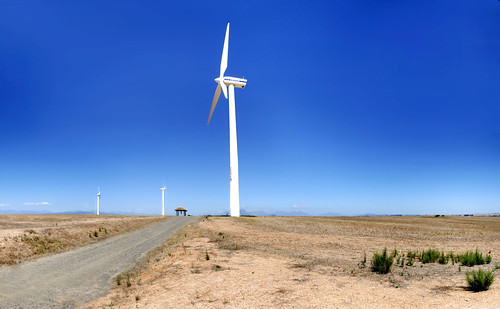
When faced with the need to develop additional sources of energy, the Ethiopian Electric Power Corporation recently decided that its best option was not to build conventional power plants. Instead, the electricity provider opted to fulfill its energy needs by building Africa’s largest wind farm! The 120 megawatt Ashegoba plant in north Ethiopea will provide for 15 percent of the nation’s present energy capacity.

Up until now Ethiopia has relied upon hydroelectric dams as an important energy source, although recently this strategy has been crippled by severe droughts that strain the country’s energy grid to the point of collapse. EEPC chairman Meheret Debebe has stated that the new wind power project “will help us to fill the gap of hydrological risks we are facing in Ethiopia with the droughts”.

The cost for the project will be 220 million euros, and it is expected to hit a peak production of over 120 megawatts when it is finished in about two and a half years. Africa’s investment in the green revolution will ensure that the continent stands well poised to tackle future challenges, and this is a great first step.

Renewable Energy In Africa  

Posted by Big Gav in ,

WorldWatch has a report from Africa, the "clean energy frontier" - African Renewable Energy Gains Attention.

The potential for renewable energy development in Africa is experiencing an increase in attention lately as investors and world leaders seek a new clean energy frontier.

The continent could become a gold mine for renewable energy due to abundant solar and wind resources. But roadblocks to clean energy worldwide are amplified throughout the troubled regions of Africa - financial resources are thin and infrastructure is often unreliable.

Meeting at the Africa Carbon Forum in Senegal's capital Dakar last week, United Nations officials, World Bank specialists, and business leaders exchanged strategies for "Clean Development Mechanism" (CDM) projects on the continent - greenhouse gas-reducing initiatives that industrialized countries can support as a way to compensate for their excess emissions. A theme throughout the meetings was the possibility of future CDM projects under a successor agreement to the Kyoto Protocol, especially if the United States joins the market.

Yet so far, Africa has benefited the least among all continents from the $7 billion annual CDM market. Since the European Union began trading "carbon credits" through its Emissions Trading Scheme in 2005, only 27 of the 1,156 CDM projects included under the scheme have been registered in Africa, Yvo de Boer, executive secretary of the U.N. Framework Convention on Climate Change (UNFCCC), told the carbon forum.

But a World Bank report [PDF] released on Monday provides further evidence of the continent's potential. Sub-Saharan Africa could provide more than 170 gigawatts of additional power-generation capacity - more than double the region's current installations - through 3,200 "low-carbon" energy projects, such as combined heat-and-power, biofuels production, mass transportation, and energy efficiency, according to the report. ...

A researcher from the European Commission's Institute for Energy reported earlier this year that 0.3 percent of the sunlight that shines on the Sahara and Middle East deserts could supply all of Europe's energy needs. British Prime Minister Gordon Brown and French President Nicolas Sarkozy have supported plans to build a 45 billion Euro ($64 billion) "super grid" that would connect renewable energy resources across Europe and Africa.

Along the Great Rift Valley - a 6,000 kilometer terrain stretching from Syria to Mozambique - a huge amount of untapped geothermal energy may soon be developed. In June, Kenya announced that it would install some 1,700 megawatts of geothermal capacity within the next 10 years - 150 percent of the country's total electricity generating capacity. Djibouti plans to supply nearly all of its electricity needs through geothermal energy, with the help of Reykjavik Energy Invest and the World Bank.

Statistics

Locations of visitors to this page

blogspot visitor
Stat Counter

Total Pageviews

Ads

Books

Followers

Blog Archive

Labels

australia (619) global warming (423) solar power (397) peak oil (355) renewable energy (302) electric vehicles (250) wind power (194) ocean energy (165) csp (159) solar thermal power (145) geothermal energy (144) energy storage (142) smart grids (140) oil (139) solar pv (138) tidal power (137) coal seam gas (131) nuclear power (129) china (120) lng (117) iraq (113) geothermal power (112) green buildings (110) natural gas (110) agriculture (91) oil price (80) biofuel (78) wave power (73) smart meters (72) coal (70) uk (69) electricity grid (67) energy efficiency (64) google (58) internet (50) surveillance (50) bicycle (49) big brother (49) shale gas (49) food prices (48) tesla (46) thin film solar (42) biomimicry (40) canada (40) scotland (38) ocean power (37) politics (37) shale oil (37) new zealand (35) air transport (34) algae (34) water (34) arctic ice (33) concentrating solar power (33) saudi arabia (33) queensland (32) california (31) credit crunch (31) bioplastic (30) offshore wind power (30) population (30) cogeneration (28) geoengineering (28) batteries (26) drought (26) resource wars (26) woodside (26) censorship (25) cleantech (25) bruce sterling (24) ctl (23) limits to growth (23) carbon tax (22) economics (22) exxon (22) lithium (22) buckminster fuller (21) distributed manufacturing (21) iraq oil law (21) coal to liquids (20) indonesia (20) origin energy (20) brightsource (19) rail transport (19) ultracapacitor (19) santos (18) ausra (17) collapse (17) electric bikes (17) michael klare (17) atlantis (16) cellulosic ethanol (16) iceland (16) lithium ion batteries (16) mapping (16) ucg (16) bees (15) concentrating solar thermal power (15) ethanol (15) geodynamics (15) psychology (15) al gore (14) brazil (14) bucky fuller (14) carbon emissions (14) fertiliser (14) matthew simmons (14) ambient energy (13) biodiesel (13) investment (13) kenya (13) public transport (13) big oil (12) biochar (12) chile (12) cities (12) desertec (12) internet of things (12) otec (12) texas (12) victoria (12) antarctica (11) cradle to cradle (11) energy policy (11) hybrid car (11) terra preta (11) tinfoil (11) toyota (11) amory lovins (10) fabber (10) gazprom (10) goldman sachs (10) gtl (10) severn estuary (10) volt (10) afghanistan (9) alaska (9) biomass (9) carbon trading (9) distributed generation (9) esolar (9) four day week (9) fuel cells (9) jeremy leggett (9) methane hydrates (9) pge (9) sweden (9) arrow energy (8) bolivia (8) eroei (8) fish (8) floating offshore wind power (8) guerilla gardening (8) linc energy (8) methane (8) nanosolar (8) natural gas pipelines (8) pentland firth (8) saul griffith (8) stirling engine (8) us elections (8) western australia (8) airborne wind turbines (7) bloom energy (7) boeing (7) chp (7) climategate (7) copenhagen (7) scenario planning (7) vinod khosla (7) apocaphilia (6) ceramic fuel cells (6) cigs (6) futurism (6) jatropha (6) nigeria (6) ocean acidification (6) relocalisation (6) somalia (6) t boone pickens (6) local currencies (5) space based solar power (5) varanus island (5) garbage (4) global energy grid (4) kevin kelly (4) low temperature geothermal power (4) oled (4) tim flannery (4) v2g (4) club of rome (3) norman borlaug (2) peak oil portfolio (1)