Want To See More About Peak Oil On The BBC ?
Posted by Big Gav
0
comments »

Posted by Big Gav
 I'm gratified to see Energy Bulletin have linked to this blog again recently - and while they didn't call me long winded this time (which I guess was fairly mild criticism for that particular post), and they got the blog name right, I'm not sure I really want to be renamed "Big Gar".
Still, its better than "Big Gay" which is what another misspeller once labelled me (not that there's anything wrong with that).
I posted about producing biodiesel from algae a while back. Unlike destroying the rainforest to grow soy, this seems to be a relatively benign way of producing biofuels.

Using technology licensed from a NASA project, GreenFuel builds bioreactors--in the shape of 3-meter-high glass tubes fashioned as a triangle--to grow algae. The algae are fed with sunlight, water and carbon-carrying emissions from power plants. The algae are then harvested and turned into biodiesel fuel.
GreenFuel is one of many companies developing businesses based on alternative energies such as biodiesel and so-called clean technologies. These companies are targeting business customers that might benefit from innovative approaches to reducing pollution or lowering their fuel spending.
"Businesses look at productivity and how to eliminate cost--one way is to eliminate waste or to use what you have more efficiently," said Nicholas Parker, executive director of investment group Cleantech Venture Network. "In many ways, clean tech is the enabling tech of 21st-century industrial society."
GreenFuel is initially focusing on energy utilities, which generate greenhouse gases that are seen as contributors to global warming and climate change. But its bioreactor technology can be used in many types of industrial installations or refineries, Berzin said.
Posted by Big Gav
 WorldChanging has a brief note up about the risks of forgetting how the fundamental underpinnings of industrial society work. This is something touched on occasionally by peak oil writers - the need for people to gain skills that would be useful in a lower energy world. If there is a breakdown of globalisation when oil depletion starts to bite, it would be handy to actually have the skills required to relocalise our economies.
I occasionally wonder how many people in the western world these days still have useful skills ? Maybe Douglas Adams' vision of Earth being settled by hairdressers and telephone cleaners wasn't all that far off the mark in Hitchhikers Guide To The Galaxy...
I'm at an IEEE motor engineering conference right now, and have noticed something interesting: even though it's held in the US, and has been since it started five years ago, 90% of the participants are European or Asian. Even half the professors here from US universities are foreign-born, and one US navy speaker bemoaned how the US is simply not graduating enough engineers to keep the industry going here. American motor engineering is on its way out.
I mention this because the electric motor industry today is where the computer chip industry will be in twenty (maybe ten) years--ubiquitous but mysterious, a technology that is embedded everywhere (from your cell phone to your refrigerator, not to mention the dozen or so motors in your car), and a technology that performs well enough that only a miniscule percentage of the industry still bothers to push the envelope. It's not new and shiny anymore, it's all commodity--a motor designed eighty years ago can be better than one designed today. Computer chips already hit ubiquity, and the banality (or, to be nicer, timelessness) is somewhere on the horizon.
It is important not to forget technologies at that point. Abandoning basic-but-ubiquitous technologies is like abandoning agriculture.
Posted by Big Gav
 The Herald has an article today about the accelerating destruction of the Brazilian rainforest, which is apparently being turned into soy bean farms. This soy is then being used to create biodiesel. So that means we're chopping down one of the last remaining buffers against runaway global warming to create biofuels. While I like biofuels in theory, in this case I have to ask if biofuels are really renewable if the end result of clearing all the forests is drought and desertification ?
I posted recently about creating ethanol from waste biomass in paper mills. In the comments, Kurt Cobb reminded me that the end result of massive adoption of biofuels is Easter Island syndrome. While I still think some use of biofuels is a good thing (with the reuse of waste products being a good example), cutting down the remaining rainforests to do so is insane and proves Kurt's point.
First and foremost, Brazil has always been an alternative fuel leader. It's a national security issue in a developing country that, according to one estimate, imports 100,000 barrels of diesel fuel daily at a cost of $2 billion annually.
Brazil is so eager to avoid petroleum dependence that the country aggressively encouraged development of a program to switch many cars to using 100% alcohol in reaction to the energy crisis of the 1970s. Interestingly, many of the experiments in this country, which produces more sugarcane than any other, involve a dash of alcohol in the vegetable oil and diesel mix.
A big test in the southern Brazilian city of Curitiba, where urban buses logged 400,000 kilometers since 1997, and where a liquid biofuels conference was held a year later, helped spur interest in the product. However, it was an interest that was already there. Sixteen years ago, the heavy earth-moving equipment used in the construction of South America's largest airport, Guarulhos, in São Paulo, used vegetable oil fuel.
Recently, a number of factors have made biodiesel an interesting proposition. For one, soy complex prices have dropped, making soy-based biodiesel a relatively less-expensive alternative. Meanwhile, the Brazilians aren't limited to just soy when considering what crops they can stuff into a fuel tank. Palm oil, babassu and castor beans all can make biodiesel — not to mention used fast-food oil.
Posted by Big Gav
While I did a brief post recently about saving energy by making server rooms more efficient, WorldChanging has now put together a more detailed description of what is going on in this area.
If you've ever worked in a data center or server room, you know that those places get hot. Many current microprocessors consume enormous amounts of power, and put out correspondingly enormous amounts of heat; as a result, most computer rooms require constant air conditioning. Furthermore, the back-up power supplies required to keep the servers from crashing during a brown-out or black-out are often power hogs themselves, sometimes consuming a third again as much power as they supplied to the computers. System administrators, focused appropriately on making certain that the computers functioned as needed, often only paid attention to power and heat issues when the infrastructure failed.
One of the results of the green building trend has been a re-examination of the heat output and power demands of information technology offices. For desktop systems, this means simple recommendations to turn computers off at night or shutting off monitors, as well as increased reliance on "green computers." But server functions generally don't allow for the machines to be unavailable, and servers are often operated "headless" (without a monitor) anyway. Solutions need to be a bit more sophisticated than that -- but such solutions are, increasingly, available.
Posted by Big Gav
Matt Savinar has been copping a bit of an undeserved beating on ROE3 lately, with some people complaining he doesn't offer any sort of plan for overcoming the problems posed by peak oil. With people discussing plans and predicted timelines a bit lately, I thought it was relevant to quote Matt's view (which he was kind enough to produce after a lot of provocation and some references to 1920's Germany).
Dealing with peak oil boils down to this:
1. Get your financial situation in check
2. Take care of any health problems while you still can
3. Ride your bike
4 Grow a garden
5. Accept the fact you're probably totally screwed, but do the best you can to unscrew yourself
Sometimes in life, there are no solutions. Case in point: I worked at a public defender's office all through law school. 99/100 times, you get to tell the client something along the following lines:
"The prosecutor is charging you with possession of $20 of narcotics. The bad news is if you go to trial, there is an almost 100% chance you will be convicted and go to jail for 10 years.The good news is if you plea out, you'll go to jail for 5 years."
In other words, the individual is screwed either way. If the client was a paying client they would no doubt respond, "there is no way life could be this unfair. You must not know what you are talking about. I will go find an attorney who gives me some hope. 5 years in prison for $20 of drugs is too much to comprehend."
In that case, the client is welcome to go waste their money on some slick-sounding attorney who will take their money while making the situation worse by giving them false hope that if they go to trial they might be acquitted. Ultimately, this serves to make the situation worse as the client will go to trial, thinking they have a chance at acquittal, only to be convicted and sent to prison for longer then they would have been had they accepted the hopelessness of their situation. (Note: this is exactly why criminal defense attorneys are prohibited from working on an hourly basis, but that is another story.)
Back to peak oil:
You are asking somebody to provide you with hope/solutions to the following, all of which are converging at the same time:
1. oil depletion
2. national financial insolvency
3. global enviromental catastrophe
Only a huckster would claim to have comprehensive solutions to these problems. IMHO, anybody taking an honest and unabashed look at the situation would come to the conclusion that we are totally screwed. Even though I realize I'm as screwed as the next person, I'm still doing my best to prepare simply because the alternative (rolling over and dying) is a bit unappealing.
Posted by Big Gav
Some of the more obscure corners of the peak oil world (and even liberal blogs like Seeing The Forest) occasionally ponder the idea that if things do begin to fall apart and our governments go fully totalitarian, then one step they would possibly take is shutting down the internet (as it undermines the effectiveness of the mass media / propaganda system).
So Bruce Schneier's recent post on a bout of fear mongering about bot networks made me wonder - what better reason that the threat of "terrorism"...
Bot networks are a serious security problem, but this is ridiculous. From the Independent:The PC in your home could be part of a complex international terrorist network. Without you realising it, your computer could be helping to launder millions of pounds, attacking companies' websites or cracking confidential government codes.
This is not the stuff of science fiction or a conspiracy theory from a paranoid mind, but a warning from one of the world's most-respected experts on computer crime. Dr Peter Tippett is chief technology officer at Cybertrust, a US computer security company, and a senior adviser on the issue to President George Bush. His warning is stark: criminals and terrorists are hijacking home PCs over the internet, creating "bot" computers to carry out illegal activities.
Yes, bot networks are bad. They're used to send spam (both commercial and phishing), launch denial-of-service attacks (sometimes involving extortion), and stage attacks on other systems. Most bot networks are controlled by kids, but more and more criminals are getting into the act.
But your computer a part of an international terrorist network? Get real.Once a criminal has gathered together what is known as a "herd" of bots, the combined computing power can be dangerous. "If you want to break the nuclear launch code then set a million computers to work on it. There is now a danger of nation state attacks," says Dr Tippett. "The vast majority of terrorist organisations will use bots."
I keep reading that last sentence, and wonder if "bots" is just a typo for "bombs." And the line about bot networks being used to crack nuclear launch codes is nothing more than fearmongering.
Posted by Big Gav
Some random notes on the economy (in homage to Peak Energy North's Market Appreciation Week). The first link is volatile - after a few days you'll have to dig into the archives to find it.
Through the paper Mr. Casey details the three phases of a secular bull market: the Stealth Phase, the Wall of Worry, and finally the Mania Phase. The easy money was already made in the Stealth Phase and we are now in the Wall of Worry. Just listen to the popular media talk down the commodity markets…today will be easy with the decline of $1.77 a barrel for crude today with the close at $47.20. Two things have happened to get oil down in price: first they ramp the “petro-dollar” higher and voila…lower crude price. Second, oil inventories have been growing for 13 out of the last 14 weeks. If they thought crude would be moving so much lower in price (some say going to $35), why have they been building so much inventory with the price was above $50 a barrel? I have heard some analysts suggest they have to top off the tanks if we are going to war with Iran in a month or two…or possibly Syria. They have been pumping oil and importing at breakneck speed to get these inventories higher. High energy prices are taxing the global economy. They needed to get oil lower to avoid choking off more discretionary spending. As we get closer to the driving season we’ll see how much of a choke point there is on global refining capacity.
Posted by Big Gav
TreeHugger always does a great job of collecting news on alternative energy and energy efficient ways to do things - and they've been particularly busy this week. First off is Bouncing Buoys, which is another scheme for generating energy from wave power.
[This is] a permanent magnet linear generator buoy. An electric coil surrounds a magnetic shaft inside the buoy, and while coil is secured directly to the buoy, the magnetic shaft is anchored to the sea floor. When waves cause the coil to move up and down relative to the fixed magnetic shaft, voltage is induced and electricity is generated." 200 of them could power downtown Portland.
[Spelt] actually has a superior flavor to common bread wheats, and it was the most popular grain in the U.S. until early last century. It fell out of flavor due mass agricultural practices because it needs to be dehulled and has a lower grain yield. Yet spelt (Triticum spelta) actually hardier than wheat and does not require fertilizers, so it is more amenable to organic farming.
 There is also have a brief note on a seminar discussing where to next after the Kyoto treaty expires in 2012.
Posted by Big Gav
 George Galloway has mounted a spirited attack on the US Senate over the UN Oil For Food program (see the full transcript or video). Its refreshing to see someone telling the truth about this for a change (and it actually getting reported). I doubt the real scandal is going to get investigated any time soon though - but if somone uses the Al Capone tactic of following the money rather than focussing on the bigger crimes, it could have interesting results.
The US Senate committee said it had "detailed evidence" Mr Galloway received about 20 million barrels of oil in allocations from the Saddam regime. Mr Galloway, who was drummed out of Britain's ruling Labour Party because of his opposition to the Iraq war, swept aside those charges.
"Who paid me hundreds of thousand of dollars? The answer is nobody," he said.
And far from being an avid supporter of Saddam, as congressional accusers have alleged, Mr Galloway said he had been an active opponent of the regime.
"I have a rather better record of opposition to Saddam Hussein than you do, and than any member of the British or American governments do. I was an opponent of Saddam Hussein at a time when British and American governments and businessmen were selling him guns and gas."
Mr Galloway proudly waved his anti-war credentials at the hearing. His scathing denunciation of the Iraq venture left some US politicians squirming in their seats, particularly when he urged them to refocus their UN investigations from the world body and onto the role played by Washington.
"Have a look at the real oil for food scandal. Have a look at the 14 months you were in charge of Baghdad when $US8.8 billion [$11.6 billion] of Iraq's wealth went missing on your watch," he said. "Have a look at the other American corporations that stole not only Iraq's money, but the money of the American taxpayer. Have a look at the oil that you didn't even meter, that you were shipping out of the country selling, the proceeds of which went who knows where."
Posted by Big Gav
Energy Bulletin has an excellent article up on the international oil market, carbon emissions trading and an energy based monetary unit.
Is oil priced in dollars or are dollars priced in oil?
There has been a growing realisation on the part of major oil producers such as Iran and Saudi Arabia that oil is not priced in dollars but rather that dollars are priced in oil. The reality underpinning this epiphany is the fact that oil has “Value” ie “money’s worth” - in exchange for commodities, goods and services – whereas the financial object we are accustomed to think of as the “dollar” is merely a “claim over value” or IOU issued by the US Federal Reserve Bank.
If we look at the current structure of the global energy market, we are accustomed to think that the “big bad wolf” is a “cartel” of OPEC members. However, the fact of the matter is that while there has been a cartel extracting extraordinary profits from energy markets in recent years this has consisted of intermediary investment banks and energy traders who control the global market platform on which oil is traded and benchmark prices set. In other words, the derivative tail has been wagging the oil market dog.
This is set to get worse, to the extent that a major trading disaster is only a matter of time – possibly as soon as this winter if the prognosis of Goldman Sachs of “super-spikes” to $100/ barrel oil is realised. The reason for this is the fact that the investment banks and oil companies have themselves now lost control of the price-setting process to a wall of hedge fund money under the control of star traders attracted by rewards beyond the dreams of avarice – as opposed to the pittance they were receiving with their former employers.
Hedge funds – as the Long Term Capital Management meltdown showed us in 1998 - are almost entirely unregulated since there is no regulatory body either with access to data in relation to their transactions (particularly “off-exchange”) or with the capability to take enforcement action over off-shore entities typically used by hedge funds.
Due to the lack of transparency in "off-exchange" trading, oil producers and consumers do not even know that they are losing - a phenomenon which J K Galbraith memorably described as the “bezzle”. However, while oil producers and consumers have now woken up to the bezzle, the problem they have is what they can do about it.
...
A Money based upon Value?
While an Energy Clearing Union provides the means for a rational energy policy it does not remove the driver for economic growth at all costs at the heart of our malaise: in other words, it would treat the symptom rather than the disease.
In order to do that we need to re-examine the monetary unit itself. It is possible to conceive of a global “petro-dollar” - based upon a set amount of energy - which would be capable of fulfilling a role as a genuine alternative to the dollar as a global means of exchange.
J M Keynes put forward at Bretton Woods 60 years ago an "International Clearing Union" coupled to a new monetary unit he called the "Bancor". Unfortunately, what we got is a "Central Bank - centric" monetary system configured around the World Bank/IMF and the Bank of International Settlements where the monetary units we use are essentially debts created by Central Banks and issued into circulation by banks as loans.
We take for granted that we need Banks to create credit but perhaps do not realise that this bank-created credit constitutes the bulk of our money supply. The effect of a monetary unit created as a debt is that - to take the UK as an example – more than 97% of all money in circulation has come into existence through the creation of loans (two-thirds of them in respect of mortgage loans secured against property) by "credit institutions" such as banks and building societies.
However, when credit institutions create money through a loan they do not create the money necessary to repay the interest on that loan. So the simple and inexorable mathematics of compound interest on the loans backing our money drives the unsustainable imperative for economic growth at the heart of our malaise.
We also take for granted that banks are entitled to charge interest on the credit they create.
The new site www.zopa.com which links would be borrowers together with would-be lenders essentially on a peer-to peer basis does for Banks what Napster did for the music industry – ie it dis-intermediates them.
...
An International Energy Clearing Union could provide a platform both for a new and rational energy policy and -in conjunction with new energy investment institutions -for a global monetary system based upon Value rather than its antithesis - the US dollar.
This would literally "reverse the polarity" of Money to base it upon Value, rather than upon a claim over Value created by a Bank out of thin air.
How then might this come to pass? The fact of the matter is that the existing system is approaching a crisis point, and that a new alternative is emerging. A revolution is approaching – albeit a silent one – and when it is over we will wonder how it could ever have been otherwise.
Posted by Big Gav
There has been a lot of chatter lately about the leaked British memo outlining the creation of a pretext for invasion in 2002 before the attack on Iraq - Axis of Logic has a good summary of the situation.
We now have definitive, verified and undenied evidence documenting a panoply of lies told to the American and world publics about the invasion of Iraq, a bloody war which was neither legally nor morally justified, despite overt attempts to make it so by those who wished to launch it.
On top of that crime, we can now also add that of America's fourth estate, which has completely abdicated its role and responsibility to present this crucial bombshell of information to the public.
It gets worse, however. Eighty-nine members of Congress have taken note of the items described above, as well as a separate secret briefing for Blair's meeting, in which it was agreed that "Britain and America had to 'create' conditions to justify a war", and have sent a letter to the president (http://www.house.gov/judiciary_democrats/letters/bushsecretmemoltr5505.pdf), demanding a response.
And, yet, still there is no coverage from our press. It appears that demanding that the government respect the will of the people is no longer enough in American democracy. We must now also carry the burden of demanding that the media do its job and cover developments which are unfavorable to the national kleptocracy of which these giant media corporations have become a part.
That noise you hear? It's the sound of America's Founders spinning in their graves. And well they should, for this scenario is precisely the massive concentration of power they most feared. All branches of the government are now in the hands of the same party (meaning, effectively, there virtually are no branches any longer).
The so-called opposition party facilitates Republican rule through the flattery of imitation, when it hasn't gone into hiding instead. The public is frightened and ill-informed. And now this. To this hall of shame list must be added a mainstream press which a week ago seemed only biased and intimidated, but now appears entirely complicit. We are now living precisely the nightmare of Washington, Jefferson, Madison and the rest. It must stop.
Posted by Big Gav
 The Saudis have been reported today saying that they have extra capacity they will be bringing on stream and that prices will be kept under control. But there seems to be a bit more to the Saudi Energy minister's remarks than just "everything is fine".
Al-Naimi said the challenge for the global energy market is greater than just increasing crude oil capacity. He said the industry must remove refining bottlenecks, improve efficiency and conservation, and provide better data on supply and demand, among other things, until the world no longer relies on hydrocarbons to meet its energy needs.
Posted by Big Gav
Andrew McKillop has an interesting analysis of BP's oil demand predictions.
In its ceaseless quest to present world supply-demand trends and factors as favouring Cheap Oil, BP Amoco and other consumer nation ‘players’ in the world oil market, formerly nicknamed the ‘Seven Sisters’ but now shrunk to 5 Anxious Dwarfs, necessarily has to provide apparent logic for this quest.
On the supply side, oil consumer nation agencies such as the OECD’s IEA and the US EIA, latterly joined by OPEC and Russian oil sector forecasting institutions, present ‘potential major increase’ in world oil supply as being feasible and likely, at least through 2005-06.
This has enabled some analysts to claim there can be a return to ‘structural oversupply’ as in the 1986-99 ‘cheap oil interval’, with recurring, if weakly credible supporting claims of ‘OPEC overproduction’.
The underlying rationale is that world oil supply will always tend to increase faster than world oil demand, and that the OPEC group will always have unused production capacity.
On the demand side, to lend credibility to this fundamentally impossible situation (see below), BP Amoco has created what can be called its ‘Magic Curve’. This purports to show that world oil demand growth is always trending downwards. Over the 10 years 1994-2004, for example, the curve produced by researchers inside BP Amoco shows that world oil demand growth would shrink by about 65%. Complete zero growth of world oil demand would be attained in about the year 2007.
This can be called an absurd and preposterous fantasy.
It could also be called a belief in magic -- or a way to admit the certainty of Peak Oil without saying it out loud !
Posted by Big Gav
Another set of random links observing the "Bony Hand of the Empire" clutching for as many oil barrels as it can.
The head of ASIO has been appointed our new ambassador to the US. Diplomatic postings aren't normally something I keep track of but I'm curious to know if the traditional career progression for spies is top level ambassadorships (I guess a lot of them do have plenty of experience working in embassies).
Bruce Schneier has considered the question "should terrorism be reported in the news ?". (Obviously yes - but I liked his closing comment - "if anyone thinks they can get an accurate picture of anyplace on the planet by reading news reports, they're sadly mistaken.".)
Elswhere the questions being asked is "what does the decline of the SUV mean for retired auto workers ?".
Almost everyone has noted T Boone Picken's statement that we're likely to hit the peak in Q4.
Seymour Hersch was interviewed recently and talks about the implementation of "The Salvador Option" in Iraq and a slide into civil war. In Iraq, Muqtada Al Sadr is accusing the US of fomenting this sectarian conflict.
The Iran situation increasingly looks like predictions of a June showdown could turn out to be right. The "Caspian Guard" is now being set up in Azerbaijan, which would seem to complete the encirclement of Iran with US bases. On the other hand, Iran and Azerbaijan have apparently just signed a memorandum of defence cooperation, the situation in Uzbekistan seems to be getting increasingly unstable, and the Pakistanis and Afghans are very disgruntled about reports about bad treatment of captive Korans in Gitmo.
Counterpunch has some speculation by Mike Whitney that we're about to be hit by an "economic tsunami" (he also thinks free speech is on the way out). Counterpunch also has an article about a "declaration of independence" - which is a rare example of someone viewing peak oil as a positive thing.
One internet forum has a note that China and Japan stopped buying US Treasuries in March - so who is buying them (as there is a rather large deficit that needs to be funded to keep the war going) ? It certainly isn't Norway.
Finally, WorldNutDaily is speculating Al Qaeda has nuclear weapons, which should have anyone who is into conspiracy theories quaking in their boots as they consider which unfortunate city may be on the receiving end of a demonstration of this, errr, unlikely claim.
"Should any political party attempt to abolish social security, unemployment insurance, and eliminate labor laws and farm programs, you would not hear of that party again in our political history. There is a tiny splinter group, of course, that believes you can do these things. Among them are [a] few other Texas oil millionaires, and an occasional politician or business man from other areas. Their number is negligible and they are stupid."
- President Dwight D. Eisenhower, 11/8/54
Technorati tags: peak oil
Posted by Big Gav
 Bolivians are demonstrating to nationalise their energy industry (natural gas in this case). This is probably going to be a growing trend once we pass the peak.
Trade unions, landless peasant farmers and neighbourhood groups are demanding the nationalisation of Bolivia's energy industry. Thousands headed to La Paz from the sprawling satellite city of El Alto. Some waved the rainbow-coloured flag of Aymara nationalism and others carried effigies of Mr Mesa.
Our correspondent says they see him as a stooge of the foreign energy companies working in Bolivia. They say that nationalisation of the gas industry is the only way they will benefit from Bolivia's greatest natural resource.
Posted by Big Gav
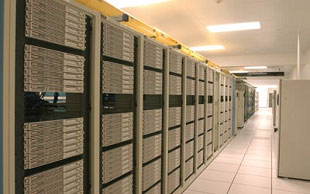 This article discusses how to make data centres more energy efficient. I'm seeing some server consolidation projects here, but they seem to be rare and driven more by space constraints and administration and licencing costs than a need to be more energy efficient. No doubt that will change over time as energy costs rise. Obviously data centers aren't the only IT area where energy is wasted - turn your machine off when you go home and/or go to bed tonight...
(via PeakOil.com)
Q: How much of an impact does the green buildings movement have on energy efficiency in the data center?
Sawyer: Data centers tend to be the place of the highest power density in a building. It's only a matter of time before it gets on people's radar. We're pushing now to make people aware that energy efficiency in the data center has a much bigger impact on the building's overall efficiency than efficiency in the lighting system or the cooling system.
Posted by Big Gav
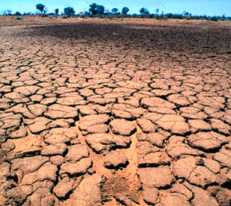 The Herald comments today that the government may, if it doesn't wish to go down in history as the most stupid in the history of the nation, want to begin thinking about where our water is going to come from in future. And even though the bits of Perth that haven't blown away are under water, thats may only be a brief wet blip in an otherwise seemingly inexorable slide into desertification on the west coast.
90 per cent of the largest state is drought-declared, yet again thousands of farmers are in financial distress, the river system is falling apart, the landscape has been cleared, scoured and eroded, leading to desertification, leading to a hotter landscape, leading to less rain, a water shortage for Sydney and catastrophic water levels in some country towns. People are obsessed with water and survival.
Peter Costello had nothing new or consequential to say about this in the 2005 budget and its aftermath, instead talking about "the drought" as if it were some speed bump on the economic highway. It's time he got new advice. On March 1, the Bureau of Agriculture and Resource Economics released a paper confirming the obvious: "Australia's water shortages may get worse." A Roy Morgan International poll released on April 29 found 88 per cent of Australians agreed with the statement: "If we don't act now we'll never control our environmental problems."
Someone tell Howard and Costello. They may form one of the most successful leadership teams this country has ever had. Yet because they can't read the weather they may end up with a legacy they never envisaged: they could go down as one of the most reckless leadership teams Australia has ever had. It's too early to tell. The long lens of history cannot yet come into focus.
It would be useful if, in two weeks, the Prime Minister attended a keynote address on May 29 at the Sydney Writers' Festival. It will be delivered by the American geographer Professor Jared Diamond, a Pulitzer Prize-winning author whose new book, Collapse, charts the history of civilisation collapse caused by environmental failure. Diamond sees history repeating itself. Australia gets an entire chapter because of its growing and unsustainable divide between consumer wealth and environmental poverty.
His warning connects to another element in the Howard legacy, the strong relationship with President George Bush. Whatever one may think of the Bush imperium, the most disturbing aspect of his Administration is its attitude to global climate change. Against an overwhelming scientific consensus, the Bush Administration clings to the argument that the massive chain reactions in the global climate system may not have been triggered by human intervention. So it's business as usual.
For the past three weeks, The New Yorker, one of the best and most carefully checked magazines in the world, has run a series of articles by Elizabeth Kolbert about the chain reactions now under way in the global climate system. Rather than try to summarise the series I quote its final paragraph, and ultimate conclusion: "It may seem impossible to imagine that a technologically advanced society could choose, in essence, to destroy itself, but that is what we are now in the process of doing."
Posted by Big Gav
Kurt Cobb at Resource Insights has a good post up on the recent oil find in Utah that may be a billion barrels in size, making it the largest find in a few years. The head of the company that found the field sounds like he is a pretty well grounded sort of individual. He also discusses the resource constraints (in terms of people and equipment) that oil and gas companies are dealing with lately, which echoes what I've heard here and has also been discussed recently at The Oil Drum and Mobjectivist (and if it is your birthday today WHT, then many happy returns).
Mike Miller, president of Michigan-based Miller Energy Inc., whose company is part of a joint venture in Utah that made what could turn out to be the largest onshore find of oil in the United States in 30 years, instead expresses his concerns about the eventual depletion of oil and gas. If the Utah discovery turns out to be a billion barrels as touted--Miller isn't putting any number on it yet--it would provide only enough oil to supply the world for 12 days at the current rate of consumption.
"I totally accept the fact that oil and natural gas are finite resources," Miller said in an interview at his office last week. "I know we have to develop alternative sources." He added that he follows the debate over when world oil production will peak, but he has no firm opinion on the issue himself.
Posted by Big Gav
Al Jazeerah has a column asking if there is any way back from the predicament the people of the US are now in.
The Republicans don’t need this victory. They’ve already succeeded in getting approval for the vast number of Bush’s judicial appointments. They could probably even pass legislation right now that would abolish abortion, if that’s what they really wanted. (but, then how would they get their fundamentalist base to the polls?) Who could stop them; protestors in the street? During the lead up to the war in Iraq, Bush casually dismissed them as a “focus group”.
The point of the nuclear option is to demonstrate the unrestrained power of the one-party system. As the German philosopher Fredrick Nietzsche said, “Only excess of power, is proof of power.” Crushing the filibuster is just a muscle-flexing exercise intended to remind the American people that there’s no going back.
And, there is no going back. Americans will soon face the same terrible effects of financial stagnation that have swept through the undeveloped world. The trap has already been set by G.W. Bush and his cadres at the Federal Reserve who have dug the nation into an $8 trillion hole from which there is no conceivable escape. Americans are confronted with a grim future of mountainous debt, diminishing job prospects, rising energy costs, a falling dollar, and endless war.
The effects of the Iraq war will haunt the American people for decades as will the suffocating consequences of the enormous deficits. In just five years of the Bush presidency, Americans are less prosperous, less free, less respected, and less secure than they were before he took office. His tenure has been the most ruinous, disgraceful period in the nation’s 200 year history. It’s impossible to cite even one example when Bush acted in the greater interests of the American people rather than for the small clique of corporate parasites who’ve enhanced their fortunes at the public trough.

 Posts
Posts