Buffett and Munger On Peak Oil  

Posted by Big Gav

Morningstar has a review of he latest Berkshire Hathaway festival, with Warren Buffett and Charlie Munger offering some opinions on peak oil.

Buffett and Munger also commented on the topic of peak oil. This is the argument over whether the world is soon going to reach a peak in oil production before production flattens and eventually falls. They both seemed to agree that we were indeed close approaching a time of peak oil production, though Munger was the more vocal of the two. He noted that all energy resources on the globe--oil, natural gas, coal, uranium--are finite resources and will eventually run out. Therefore, the sun and the wind are essentially the only truly renewable alternative energy resources, and they will eventually have to be tapped in a large way.

Putting Munger on the spot concerning peak oil, Buffett asked him to give an "over/under" on what he thought oil production would be in 25 years. In typical Munger fashion, he gave a terse response that perfectly explained his opinion: "down."

Dragon Quest  

Posted by Big Gav in

Every now and then I feel the urge to go snorkelling and see if I can find some seadragons, but so far I've always failed.

Hence this off-topic post about someone who has more luck than me - "No furry-tail ending to this dragon quest".

IT IS a cold grey morning in Twofold Bay, where Professor David Booth and his doctoral student Jaime Sanchez-Camara are hunting for dragons. Not the mythical, fire-breathing kind but creatures almost as marvellous - the spectacular weedy seadragon.

Their boat comes to anchor a couple of hundred metres off the South Coast, near Eden, where mountains of woodchips, harvested from the state's south-east forests, are loaded onto ships bound for overseas paper mills.

Visibility is not great and the water is bracing, but soon Booth, who is a professor of marine ecology at the University of Technology, Sydney and chief scientist of the Sydney Institute of Marine Science, and his student begin their search.

To the average snorkeller, weedy seadragons are invisible. But within an hour Mr Sanchez-Camara has found 15. "These ones all seem much smaller than the ones in Botany Bay," he says.

Sunrgi: Solar Power As Cheap As Coal ?  

Posted by Big Gav in , ,

Ecogeek has a post on a startup emerging from stealth mode called Sunrgi, which is selling Spectrolab's concentrating solar PV technology in units that may be able to generate power as cheap as coal. The units actually dump waste heat, so presumably they could be coupled with stirling engines or some sort of cogeneration style setup to generate more power (or at least some hot water or air).

Grid parity...it's what we're all hoping for. That magical moment when solar power (or other renewables for that matter) become available at the cost of current power sources. And, if Sunrgi's claims are to be believed, it could be only 15 months away.

Sunrgi's technology is fairly simple. Basically they use a magnifying glass to concentrate the power of the sun 1600 times onto a tiny square of the most efficient photovoltaic material on the planet. While others are concentrating on bringing the price of the panels down (along with efficiency), Sunrgi actually uses panels from Spectrolab, which are three times more efficient than the cheap panels being produced by NanoSolar.

The photovoltaic cells remain efficient even when collecting these huge amounts of light per square centemeter. However, they don't remain efficient at 3000 degrees F. In fact, if this much light were concentrated on the cells, and the cells were not cooled, they would melt. Sunrgi has developed a proprietary cooling system to keep the ultra-expensive cells at nominal temperatures even at the hottest part of the hottest day. You can see, in the render, that the bottom of the panels actually look like huge CPU heat sinks.

By using such a small amount of photovoltaic material, and such a large amount of cheap magnifying glasses, Sunrgi says that their system should be extremely inexpensive. In fact, they're saying that, in sunny climates, it will be sold for around $0.05 per kilowatt, about the cost of coal. They already have demonstration units running and hope to be selling their first units (to utilities and large businesses) in twelve to fifteen months.

A Big Idea for Offshore Wind - Concrete  

Posted by Big Gav in ,

Keith Johnson at the WSJ's Environmental Capital blog has a look at proposals to reduce the price (and time taken to construct) of offshore wind farms by using concrete instead of steel in the supporting structures.

Sometimes the race toward clean energy is tripped up by politics. Other times, by nuts and bolts. Or steel.

Offshore wind power is supposed to be the great white hope of renewable energy. Out of sight, offshore wind farms could theoretically supply as much electricity as the U.S. currently produces with coal, gas, and nuclear plants. Britain fancies itself the “Saudi Arabia” of wind power, given its abundant offshore wind resources. So far, though, that’s translated into just under one-half of a regular coal-fired plant. (And things aren’t getting any better this week.)

What’s the holdup? Lots of things. Offshore wind costs more than regular, onshore wind—which already costs more than traditional power sources. Getting transmission lines from offshore platforms to the electricity grid has scuppered loads of offshore wind projects. There’s another holdup—building offshore wind platforms means bidding for the same construction materials that are needed for a lot of other things, raising costs and delaying projects.

But what if offshore wind developers were to end-run the obstacles? Britain’s New Civil Engineer reports this month that wind-power development companies, including Germany’s E.On and Denmark’s Dong Energy, might have a solution: concrete instead of steel. At a swoop, that would eliminate the need for pricey steel and all the supporting cast needed to plant it in the seabed. Says New Civil Engineer:
The project has the dual purpose of reducing industry reliance on steel monopiles for foundations and eliminating the need for the heavy lift ships and jack-up barges typically used during turbine foundation installation. In addition the large hydraulic hammers usually needed for piling are no longer required, further reducing equipment and support vessel hire costs.

Granted, developers have been trying to get around regular offshore bottlenecks for years. Floating offshore wind platforms, borrowing from oil-rig technology, are the current flavor of the day.

The End Of The Silicon Shortage  

Posted by Big Gav in , ,

Technology Review reports that the end of the silicon shortage is in sight, with capacity (and solar panel output) expected to increase sharply and prices expected to drop.

Solar electricity is about to get much cheaper, industry analysts predict, because a shortage of the silicon used in solar panels is almost over. That could lead to a sharp drop in prices over the next couple of years, making solar electricity comparable to power from the grid.

High demand generated by government subsidies worldwide and a shortage of processed silicon have kept prices for solar-generated power much higher than average electricity prices over the past few years. Solar power is more than three times the cost of electricity from conventional sources, according to figures from the industry tracking firm Solarbuzz and the United States' Energy Information Administration. Solar power cost about $4 a watt in the early 2000s, but silicon shortages, which began in 2005, have pushed up prices to more than $4.80 per watt, according to Solarbuzz.

Crystalline silicon has long been the staple of the semiconductor industry. But it's also the active material in the most common type of solar panel, and the increased use of solar power has led to the shortage of the material. Indeed, the growth in silicon production hasn't kept pace with the rise in solar power. "It takes about two or three years to add capacity," says Travis Bradford, an industry analyst for the Prometheus Institute. The shortage has been severe enough to drive up silicon prices to more than 10 times normal levels, to $450 a kilogram, adds Ted Sullivan, an analyst at Lux Research.

The added silicon production capacity is now starting to begin operations. While only 15,000 tons of silicon were available for use in solar cells in 2005, by 2010, this number could grow to 123,000 tons, Sullivan says. And that will allow existing and planned production of solar panels to ramp up, increasing supply. "What that means, practically, is that [solar] module prices are going to come down pretty dramatically in the next two or three years," Bradford says.

A report from Michael Rogol, an analyst at Photon Consulting, says that demand for solar panels will quickly rise in response to even slightly cheaper prices, holding the price drop between 2007 and 2010 to a mere 20 percent. But others think that the demand will have trouble responding quickly to lower prices. That's in part because the market for solar has been generated by government subsidies, especially in countries such as Germany and Spain, and there are limits to how fast these subsidized markets can grow.

Regardless of the growth in demand, Bradford predicts that over the next couple of years, production of solar panels will double each year.

In a recent presentation, Bradford said that prices for solar panels could drop by as much as 50 percent from 2006 to 2010. In areas that get a lot of sun, that will translate to solar electricity costs of about 10 cents per kilowatt hour, matching the average price of electricity in the United States. That will make solar affordable and, eventually, will vastly increase the market, Bradford says. "You can't even begin to imagine the transformation that that's going to create."

The Path To Better Soil  

Posted by Big Gav in , ,

The IHT has an article on soil depletion and how to mitigate it, mentioning biochar / terra preta as an option - Scientists focus on making better soil to help with food concerns.

The earth's uncertain oil reserves and dwindling freshwater supply may get all the attention, but modern society is also overtaxing the ground itself. At the same time that a growing population and the newfound appetites of the global middle class are straining our food supply, governments all over the world are also pushing for more ethanol-generating energy crops.

To support all that production on a limited amount of arable land, scientists and farmers have long focused on technical improvements like plant breeding, bioengineering and creating new fertilizers and pesticides. But some are now asking a different question: What if we could create better dirt?

An increasing number of scientists are starting to emphasize the extent to which soil - even more than petroleum or water or air - is a limited and fragile resource. Managing it better, and even improving it, will be vital to any equation that allows the earth to support the more than nine billion people the United Nations estimates will live on the planet by mid-century.

The most dramatic research is still in the early stages, but soil specialists already have developed farming techniques that maintain and temporarily enhance the nutrient content of soil. Scientists in Australia and the United States have started making rich new earth from industrial waste, and research into the astonishing fertility of a mysterious Amazonian soil may lead to an additive that can boost the power of soil for thousands of years.

"A few decades ago, the philosophy was, 'Well, if your soil's degraded, just put some more fertilizer on, or till it another time and you can get the same crop yield,' " says David Laird, a soil scientist at the National Soil Tilth Laboratory, part of the U.S. Department of Agriculture. "Now there is growing interest in putting together systems that enhance the actual quality of the soil itself."

Dirt remains, in certain ways, a puzzle: Despite its seeming simplicity, it is a complex system whose fertility arises from the interaction of myriad physical, biological, and chemical properties. Even the most advanced current research does not claim to be able to synthesize enough of it for use on a global scale.

Nevertheless, progress in the science of soil has the potential to be truly transformative and to help solve some of the biggest problems the planet faces. By 2050, according to Rattan Lal, a professor of soil science at Ohio State University, "All the necessities of food, feed, fiber, and fuel are going to be met by less than one-tenth of an acre per person, on average. And we already have seriously degraded a lot of the available land. So unless you can restore some of it you will just run out."

Soil does not arise quickly. In nature it starts with a layer of glacial grit, or windblown sand, or cooled lava, or alluvial silt, or some other crumbled mineral matter. A few pioneer plants put down shallow roots, and living things begin to make their homes in and on the surface, enriching it with their excrement, and enriching it further when they die and rot.

The resulting organic matter feeds a whole underground ecology that aerates the soil, fixes nutrients, and makes it more hospitable for plant life, and over time the process feeds back on itself. If the soil does not wash away or get parched by drought, it very gradually thickens. It takes tens of thousands of years to make 15 centimeters of topsoil, about 6 inches' worth.

Because of all the things human beings do to it, a University of Washington geologist, David Montgomery, has calculated, the world today is losing soil 10 to 20 times faster than it is replenishing it. In some places it is happening much faster: northern China, sub-Saharan Africa, parts of the American West and Australia are already seeing large tracts of arable land disappear.

In his book, "Dirt: The Erosion of Civilizations," Montgomery traces the decline of numerous early societies - including ancient Greece, imperial Rome, various Pacific Island cultures and the Mayans - to poor management of their soil.

However, it has also happened that some civilizations have improved their dirt. Among the world's richer soils is terra preta, the "black earth" found in certain swaths of the Amazon basin. It is dark, loose and loamy, and unlike the pallid earth that characterizes most of the Amazon, it is strikingly fertile.

In the last few years, archaeologists have established something else intriguing about terra preta: it is man-made. It contains high concentrations of charcoal, along with organic matter such as manure and fish bones - essentially the household trash of a pre-Columbian society practicing a distinctive brand of slash-and-burn agriculture.

Researchers trying to replicate the fertility of terra preta have concluded that its secret is in the charcoal. Work by soil scientists like Laird, Johannes Lehmann of Cornell University, and Mingxin Guo of Delaware State University suggests that the benefits of supplementing soil with charcoal, which they call "biochar" to distinguish it from the fuel of backyard barbecues, could be dramatic, widespread, and durable. Biochar, they have found, enhances the retention of water and nutrients, decreases the need for fertilizer, encourages microbial growth, and allows more air to reach crop roots. It also breaks down at a far slower rate than traditional fertilizers and soil additives. Depending on how the charcoal is made and applied, estimates of its life span range from decades to millennia. Scientists believe that some Amazonian terra preta soils are at least 2,000 years old.

Better Bioplastics  

Posted by Big Gav in

I remain fairly enthusiastic about bioplastic as a long term substitute for petrochemical based plastics - TransMaterial has a post about a recyclable bioplastic which remembers its shape.

Unlike conventional petroleum-based plastics, polylactic acid (PLA) plastic is mass produced by chemical synthesis using raw materials derived from corn. The production of PLA contributes less CO2 to the atmosphere than that of conventional plastics and offers superior biodegradability after disposal. Because PLA plastics are often more expensive than conventional ones, researchers are developing ways to add value to PLA plastics.

NEC Corporation’s Dr. Masatoshi Iji has developed a PLA-based bioplastic with shape memory and recyclability. The polymer deforms with heat and external pressure and remains in that altered shape when cooled. Once reheated, the plastic returns to its original shape. Shape memory conventionally requires plastics with a cross-linked structure, which prohibits melting and thus recycling. However, NEC’s shape-memory polymer utilizes a characteristic called thermo-reversible cross-linking. The material can be deformed and restored to its original shape by heating at the temperature of a hairdryer (approx. 140°F [60°C]), but if heated to a typical molding temperature 320°F (160°C) the cross-linked structure dissociates, causing the material to melt and enabling easy recyclability.


Ninemsn has some comments on bioplastic - There's More to Bio than Biofuel.
For regions like the European Union, whose consumers are adverse to anything genetically modified even if it's their plastic cutlery, US maize-based bioplastics aren't very tempting.

But a ready market of more than 2 million metric tonnes of bioplastic in Europe is waiting for the alternative.

This week, an Italian joint venture between sugarbeet growers in Bologna and bioplastics manufacturers Bio On have had their new PHA product certified as entirely biodegradable in water.

The PHA made from beet replaces many hard plastics like PVC and polypropylene for use in everything from bottles and packaging to furniture and electronics.

PLA also replaces polypropylene and polyethylene for foils, plastic bags, and other kinds of packaging. Bio-based ethylene that is used to create PP and PE replacements is becoming big business now in Brazil thanks to the joint venture between Dow Chemical and CrystalSev last year.

By using ethanol as a base, they will produce 350,000 tonnes of PE every year from 2011. DuPont, along with Genencor, have come up with technology to produce a new polymer from maize sugar - that could easily be done with cane or beet sugar - that can substitute petroleum products used in things like auto paints.

PE from cane has its green credentials too. Brazilian chemicals group Braskem claims that using its technology to create PE from sugarcane ethanol to produce one tonne of polyethylene actually removes from the environment 2.5 tonnes of carbon dioxide while the traditional petrochemical route results in emissions of close to 3.5 tonnes.

Braksem announced its new technology around the same time Dow married CrystalSev on the bioplastic deal. Braskem's polymer-high-density polyethylene, one of the most widely used resins in flexible packaging, is the result of a research and development project in which only USD$5 million was invested.

It expects to produce 200,000 tonnes per year from the end of 2009.

But these new technologies go even further. Researchers at New York's Polytechnic University have discovered a plant-based bioplastic that degrades directly into biodiesel after it is used.

No need for recycling, or messy technical and expensive processes, and the fuel doesn't even need to be purified before it can go straight into the tank.

Supposedly the US government is looking into the new product as a way to reduce the massive amounts of waste left behind when the military is in the field while securing additional sources of fuel for their vehicles at the same time.

Shell Pulls Out Of London Array  

Posted by Big Gav in , ,

The Guardian reports that Shell has pulled out of the huge London Array offshore windfarm project.

Shell was accused last night of being greedy and irresponsible as it came under ferocious attack from politicians and environmentalists for its decision to drop a commitment to the biggest offshore wind farm in the world.

Although the environment minister Hilary Benn called the decision to withdraw from the London Array scheme off the Kent coast "very disappointing", the government was also under attack from opponents who saw the move as a body-blow to UK renewable energy policies. They called for more incentives to encourage wind developments.

Caroline Lucas, Green MEP for the south-east of England, said ministers should urgently reform their approach to clean power schemes and add so-called feed-in tariffs to its energy bill to encourage homeowners to join the fight against climate change. Under the tariffs, those generating electricity from renewable sources would be paid generously for any surplus power they feed to the grid. She said Shell was a company motivated "purely by greed".

"I cannot condemn Shell strongly enough for this shameful retreat from the London Array wind farm project. It appears that as the last key negotiations over equipment contracts took place, the company lost its nerve and decided to shun its responsibilities in the generation of green energy," Lucas said. "The loss of one of the three investors in the London Array wind farm is a serious setback for the future of renewable energy in this country, at a time when the UK is already struggling to meet its EU targets for renewables. "Mere days after reporting first-quarter profits of £4bn, Shell has shown its true colours in what can only be described as a PR disaster for the company, and further proof that its media-friendly 'greenspeak' is both dishonest and irresponsible."

Steve Webb, Liberal Democrat environment spokesman, believed Shell's decision "blows a huge hole" in the government's rhetoric about renewable energy.

Britain was already near the bottom of the European league table on green energy, and now a major investor had decided that other countries offered a better environment for wind power, he said. "If we are to meet our internationally agreed goals on renewable energy, the government needs a radical rethink ... Only yesterday the Brown government faced its biggest ever rebellion over its refusal to back new incentives for small-scale renewable generators. Now a flagship wind farm has been undermined by the withdrawal of a major international investor."

Water And Life  

Posted by Big Gav in ,

This week's green building highlight from Inhabitat is a Californian museum with an LEED platinum rating.

The Water + Life Museums complex in Hemet, California, has just become the first museum to break the LEED Platinum barrier, beating out the California Academy of Sciences and scores of other hopeful projects. The stunning $40 million campus runs 72,000 square feet and was constructed by LA based Michael Lehrer Architects. The iconic cultural complex has done an incredible job of keeping a light footprint while adapting to a challenging desert climate that runs from freezing in the winter to more than 100 degrees in the summer.

The impetus for the museum’s construction stems from the creation of the Diamond Valley Lake Reservoir in 1999. Considered the largest earthworks project on US soil, the massive dig produced an incredible array of fossils and artifacts. The Center for Water Education and Western Center Communication Foundation decided to create a museum fitting in form and function to display the finds. Michael Lehrer stated that “the museum’s exhibits are about local resources, so the building itself is a ‘living’ example of sustainability and conservation”.

The roof is topped with one of the largest solar installations of its kind, a 540 watt, 3000 panel solar array that produces nearly half of the complex’s power needs while shading the interior from the scorching desert sun. Additional shading is provided via translucent panels that hang over 8,000 square feet of the structure’s heat blocking glass. The interior makes use of abundant day-lighting and features radiant flooring backed by a sophisticated HVAC system. The terraced gardens are fed through a drip irrigation system that uses reclaimed water.

Ducks On A Pond  

Posted by Big Gav in ,

The IHT reports that toxic pools of tar sands waste are killing ducks that are unlucky enough to mistake them for lakes.

lberta's environment minister said the provincial government's efforts to allay environmental concerns about its booming oil sands industry will be hurt by the deaths of hundreds of ducks that landed on a pond filled with toxic waste.

Environment Minister Rob Renner concedes the deaths have put a dent in Alberta's efforts to counter the message being spread by environmental groups that Canada's oil sands projects are taking a toll on the environment. "It's a real blow to our messaging that we are working very, very hard ensure that we do have sustainable development," Renner said.

The government is investigating the incident in which about 500 birds landed and died in the oil sands pond. The pond full of toxic sludge sits along a major flight path for migrating waterfowl.

Imaginary Friends vs Communing With The Dead  

Posted by Big Gav

Stewart Brand has a write up of a recent "Long Now" talk by historian Niall Ferguson and futurist / scenario planner Peter Schwartz.

Ferguson's mindset should be familiar to most peak oil doomers (summed up in Jay Hanson's tagline "If a path to the better there be, it begins with a full look at the worst" - though he never seemed to get past the "looking at the worst" part). I think Schwartz's is the more practical - it doesn't hurt to evaluate the full range of scenarios, but you want to focus on the positive outcomes and how to achieve them, not the most negative one. Otherwise you risk creating a self-fulfilling prophecy.

In what turned out to be a riveting evening, historian Niall Ferguson and futurist Peter Schwartz fire-hosed each other with enough ideas, frames of reference, ripostes, and eloquences to lead to a clear conceptual divergence. At the same time, the two were discovering, live in front of an audience, new ways they might work together on future projects.

Ferguson began by pointing out that while we face many futures, there is only one past, and its residents outnumber us— only 6 percent of all humans are now alive. Historians, he said, “commune with the dead. We re-enact their thoughts, in their context and ours.”

Historians look for rough regularities, such as he found in his analysis of the wars and hatred played out in the 20th Century. In his book, WAR OF THE WORLD, he describes how the combination of economic volatility, ethnic conflict, and failing empire always led to spirals of lethal violence. The advance of science and technology has not eliminated the possibility of violence but may have made it more powerful than ever. The three causes are still in play. “Our job is to keep them from coinciding again.”

Ferguson ended with a critique of Schwartz’s book on scenario planning, THE ART OF THE LONG VIEW, which he thought showed signs of “heuristic bias.” When Schwartz asked Ferguson to expand on that idea, Ferguson pointed out there was a whole chapter in the book about “The Global Teenager,” which seemed spurious. It merely reflected Schwartz’s personal experience: “You were a teenager when teenagers mattered. ”

Historians also have heuristic biases, Ferguson added, such as their expectation that “great events should have great causes.” Historians have much to learn from complexity theory and evolution, he said. His own work with “counter-factual history” helps expose critical moments in history and provides a way to “think about what didn’t happen.” The counter-factual technique is an application of scenario thinking to the past.

In Schwartz’s opening remarks, he said that his plans to write a book titled THE CASE FOR OPTIMISM were derailed by reading Ferguson’s WAR OF THE WORLD. He’s been grappling with the issues Ferguson raised for 18 months. “You do alternative pasts, I do alternative futures. Where historians commune with the dead, futurists have imaginary friends.”

Schwartz characterized Ferguson’s view of history as basically down, with an upside possibility, whereas his own view was of history as basically up, with always the possibility of getting things wrong. For Schwartz, the second half of the 20th Century showed an upside momentum, with a fraction of the violent deaths—5% of humans killed violently in the first half, 0.2 % in the second half. The Cold War ended quietly. Women were liberated. China took off. Prosperity accelerated. Everything from Wikipedia to cellphones empowered the grassroots.

In response, Ferguson noted Schwartz’s “faith in technology” and proposed it reflected his training as an engineer. “Aren’t you like the pre-1914 people who said that war was impossible because of all the new technology and commerce?” Schwartz agreed that the parallel is worrying.

Ferguson said, “I think our difference is that I’m a pessimist and you’re an optimist. You’re Pangloss and I’m Cassandra.” Schwartz noted that since his parents were in slave-labor camps in World War II, and he was born in a displaced-person camp after the war, “It would be churlish not to be an optimist.” Ferguson said, “That would make me skeptical about technology. The world leader in science and technology in 1940 was Nazi Germany.”

Questions from the audience ended with one asking whether optimism or pessimism was a more useful way to think about the future. Schwartz said, “Optimism lets you imagine how you can overcome problems, and those possibilities motivate change.” Ferguson said, “You must always focus on worst-case scenarios, and history will teach them to you.”

Fertiliser Shortages Hitting Home  

Posted by Big Gav in , ,

The New York Times has an article on the difficulties US farmers are having obtaining fertiliser (via Cryptogon).

The squeeze on the supply of fertilizer has been building for roughly five years. Rising demand for food and biofuels prompted farmers everywhere to plant more crops. As demand grew, the fertilizer mines and factories of the world proved unable to keep up.

Some dealers in the Midwest ran out of fertilizer last fall, and they continue to restrict sales this spring because of a limited supply. “If you want 10,000 tons, they’ll sell you 5,000 today, maybe 3,000,” said W. Scott Tinsman Jr., a fertilizer dealer in Davenport, Iowa. “The rubber band is stretched really far.”


The ABC reports that a Chinese export tax on fertiliser is set to send prices soaring.
The latest National Australia Bank agribusiness survey shows a skewed picture in rural Australia, with farmers feeling better about the future, but agribusiness not so sure. A facade of confidence is emerging as world commodity prices stay high, masking the pain being felt from rising input costs, such as fertiliser, fuel and chemicals.

The situation hasn't been helped by a decision from China to impose a 100 per cent tariff on exports of fertiliser. Former head of the Australian Fertiliser Services Association, Shane Dellavedova, says while Australia has some carry-over stocks following several poor seasons, farmers need to get ready for a big price rise.

RIP D.C. Madam  

Posted by Big Gav

Top of the pops on the tinfoil parade this week is the reported suicide of the infamous D.C. Madam who supplied hookers to Republican Senator David Vitter - and apparently a host of other powerful figures in the US government. An unseemly trial where all these folks are publicly humiliated has now been averted.

The folks at reddit seem very cynical about this lady's untimely demise.

According to Prison Planet (not the most reliable of sources, admittedly), Palfrey predicted she would be disposed of well before the event in an interview on Alex Jones' radio show.

DU has a never ending list of mysterious deaths of whistle-blowers and others who knew too much - all coincidences of course.

Solving Our Water Problems - Desalination Using Solar Thermal Power  

Posted by Big Gav in , , , , , ,

There were a couple of small Australian solar power projects that I left out of my look at solar thermal power a little while ago, as I thought they were worthy of separate consideration.

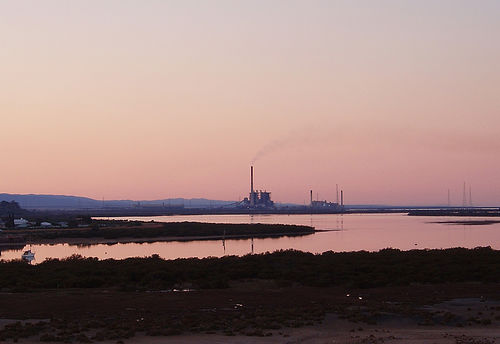
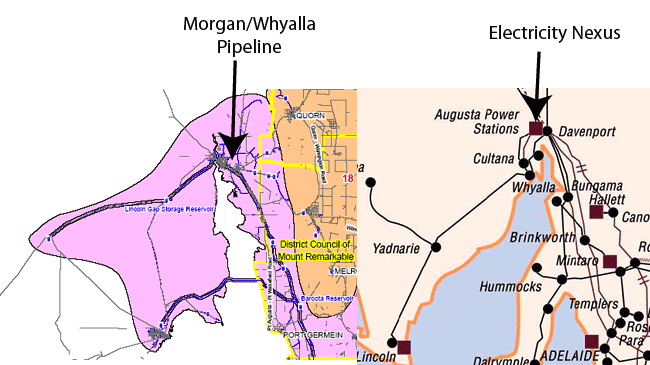
I talked about one of these - Wizard Power's technique for storing energy using ammonia - last week. The other project is by a company called Acquasol which is building a plant to desalinate water using solar thermal energy at Point Paterson, near Port Augusta in South Australia.

Like Wizard Power and Lloyd Energy's graphite based energy storage technique, Acquasol received an initial round of funding from the (now defunct) Australian Greenhouse Office's Advanced Energy Storage Technology program.

In this post I'll look at the Acquasol project and then more generally at water scarcity worldwide and some of the approaches being taken to tackle it.


Acquasol

Port Augusta is a particularly suitable location for producing water via desalination, given its increasingly arid climate and remoteness from fresh water sources. Using solar energy to drive the desalination process is efficient for a number of reasons.

Firstly, South Australia is an importer of electricity and suffers occasional supply shortages in summer when the interconnectors to the national grid reach their limits. Secondly, producing water locally saves the energy currently used to pump water several hundred kilometres from the east of South Australia, where the increasingly scarce water is located.

South Australia also has excellent solar insolation, and the location chosen is close to existing power lines (for the Northern and Playford brown coal-fired power stations nearby), water pipelines and salt pans for solar brine harvesting.

This minimises a lot of the infrastructure costs and also enables a drawback of desalination plants (the environmental impact of discharging briny water back into the sea) into a potential positive, as it can be used to feed a salt production process instead.


The Acquasol plant will be producing water using a desalination process known as "multi effects", driven by 1.75-kilometer square concentrating parabolic trough mirror field. The desalination plant, solar thermal storage (apparently using molten salt, but this isn't clear) and other operating equipment will be sited in a small area adjacent to the solar field.

Multi-effects evaporates salt water using a vacuum and recondenses the vapor into drinking water. Both require energy, usually between 2.7-4.5 kilowatthours per kilolitre (though improvements to the technology are expected to lower this figure - hopefully to around .7 kilowatthours per kilolitre). At present, pumping Murray River water to the Upper Spencer Gulf consumes up to five kilowatthours per kilolitre. Multi-effects deslination can also use heat as an energy input, skipping the initial conversion into electricity and increasing efficiency.

The company expects that by having reverse osmosis desalination and multi-effects desalination operate side-by-side in future, powered by solar energy and incorporating thermal energy storage and a backup gas turbine backup, further operational efficiencies can be reaped that lower costs.

The water produced could also be in demand from large water users inland, like BHP's Olympic Dam mine, which currently draws around 30 megalitres of water per day from the Great Artesian Basin, and will need another 120 megalitres per day to service the expansion of the mine. BHP are currently proposing to build another desalination plant at Port Bonython near Whyalla, though this is being resisted for a number of reasons, one being a vulnerable local population of giant cuttlefish.

Another Australian experiment with desalination using solar thermal power is being performed by RMIT at Pyramid Hill in Victoria - this seems to be completely independent of the Acquasol project.

The Trouble With Water

Australia's troubles with water are well known by now, thanks to our recent bout of intense drought and the impact this has had on agricultural production and subsequently on a number of global commodity prices - rice being the most recent example.

The United States has also started to experience issues with water supplies in both the south east and south western states.

Access to fresh, clean water has increasingly become an issue worldwide in recent years, as a number of factors come into play affecting both supply and demand:

* Population is increasing - and most rapidly in drier regions
* People have become wealthier and accustomed to using more water
* Polluted water has become more common, as large swathes of the developing world industrialise
* Ever increasing demand for power (and newer forms of energy like biofuels or coal to liquids plants)
* Groundwater aquifers have been depleted by irrigation for agriculture
* The water industry is mostly made up of public utilities that have often been starved of new investment funds
* Climate change has impacted rain patterns, reducing rainfall levels and increasing the frequency and intensity of droughts
* Melting glaciers have reduced water flows
* Water has been cheap, so there is little incentive to conserve it

These issues have combined to make water a sensitive security issue in some regions, with some experts predicting resource wars over water, with obvious parallels to conflict over dwindling fossil fuel supplies (though thankfully water isn't actually depleting - it is more of a quality and availability issue).

Desalination Plants In Australia and Worldwide

In recent years a rash of desalination plants have been proposed for Australian capital cities to meet increasing demand for water and to insure against drought induced supply constraints.

* Perth led the way, with one plant already completed at Kwinana and another under construction at Binningup.
* Brisbane has built one plant at Tugun and is consider more at sites including Marcoola, Kawana and Bribie Island.
* Adelaide is building a plant at Port Stanvac
* Melbourne is building a plant at Wonthaggi, which is receiving a lot of criticism
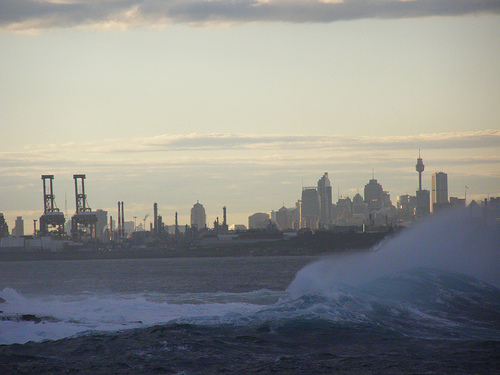
* Sydney has commenced construction of a desalination plant at Kurnell, which has also been the subject of a lot of controversy.


Much of the criticism of desalination plants centres around their key drawbacks - they use large amounts of power (ex-NSW Premier Bob Carr used to refer to water from desalination plants as "bottled electricity") and they can have a large impact on the local environment, with danger to wildlife from the inlet valves and from the brine that is pumped back out.

The Acquasol venture stacks up quite against other plants well based on these concerns, as it uses locally produced renewable energy, doesn't emit brine and apparently has little local wildlife to contend with.

Another criticism of desalination plants is the high cost of building them, with water recycling, fixing leaking pipes in the water system and encouraging local rainwater capture (via rainwater tanks) often being deemed more cost effective and lower impact ways of providing more fresh water.

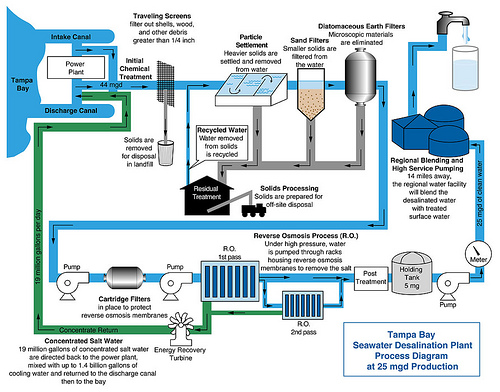
Nevertheless, construction of desalination plants has accelerated elsewhere around the globe as well, with prominent examples in Tampa Bay, Saudi Arabia, Abu Dhabi, Israel and Spain.


Desalination Techniques

The multi-effects desalination technique used by Acquasol is just one of a number being put into practice.

The other major mechanism is known as reverse osmosis, which is used for around 47% of installed capacity worldwide (vs 36% for multi effects).


A promising new technology that is being researched is the use of carbon nanotube based membranes developed by researchers at Lawrence Livermore National Laboratory, which they claim could reduce the cost of desalination by 75 percent compared to reverse osmosis methods.

Last year's "AlwaysOn Going Green 100" listed 19 companies concentrating on water, which demonstrates the level of interest in this area in the cleantech industry - though Neal Dikeman has cautioned investors that water is always the problem of the future.

Inventor Dean Kamen is another entrant in this area, promoting a relatively inexpensive small scale water purification unit which looks promising. A similar, but much more expensive, device is the solar cube.


Another interesting technique for desalination is the OTEC power generation process, which was discussed previously in my post on ocean energy.

Salt Power - The Power Of Osmosis

On a tangential note, there is an obscure alternative energy generation process known as "pressure retarded osmosis", which captures the energy that is released when salt and fresh water mix.

While this seems a far-fetched way of generating power (and I'm not trying to encourage any perpetual motion schemes involving desalination plants coupled with osmosis based power generation), there are efforts underway to explore the possibility of generating power in regions where large volumes of fresh water meet the sea.

The science behind these projects is based on the phenomenon that when salt and fresh water mix, they are typically warmed by 0.1 degree Celsius. Some Dutch scientists claim the total amount of energy generated at all the world's estuaries is equivalent to 20 percent of world electricity demand.

One trial is being undertaken at a fjord south of Oslo by Statkraft, the other at a seaside lake in Holland by the Dutch Centre for Sustainable Water Technology. Both schemes depend on membranes placed between the salt and fresh water - however the membranes are both expensive and energy intensive to produce, which means that power generation is not even close to being economical.

The membranes are, however, similar to those used in desalination plants that use the reverse osmosis effect - the market for which is growing at around 15% per year. General Electric is one of the major manufacturers and has an "aspirational goal" of producing fresh water from salt through membranes at a cost of 10 cents per cubic metre, with the hope of a new market emerging for power generating membranes a decade from now.


Modelling The Future

Returning to the original subject of Acquasol, one of the (non executive) directors of the company is Stephen Schneider from Stanford University - one of the contributors to the climate science blog Real Climate.

Schneider has an interesting column up at Edge magazine, which considers (amongst other things) the difficulties in modelling complex systems and overcoming political obstacles when dealing with environmental issues. While many of the remarks are aimed at climate science, I think a lot of them also apply to the issue of modelling and dealing with peak oil. The quote below is just a selection - I recommend reading all of it
I divide my life pretty much in thirds. One third is education, outreach, teaching, media, talking to Congress, parliaments, premiers, etc. and trying to get people—governments especially—to see this problem as it is and not as it's typically portrayed in the media, which tends to focus on the two extreme, lowest probability outcomes: 1. global warming is the end of the world or 2. global warming is good for you.

The second third of my time is spent trying to understand the science. When I talk about the science, I don't just mean answering questions like "how many degrees does the earth warm if you double CO2?" That's a very strict bio-geophysical question. I also want to know what happens to the water supply systems of the world if the planet warms by X amount? What would it mean to agricultural productivity, or to sea level, to the intensity of storms and how they impact people? I consider the study of the impacts of climate change just as much a science as predicting how much it will change.

The final third of my professional life—which involves value judgments as much as scientific and technological assessments—is spent asking the question: "What do we do about it?" That is, of course, a very difficult question because it involves inventing our way out of the problem on the one hand, but not waiting 20 to 50 years to do that on the other.

What is the sequencing of the so-called low-hanging fruit? The first step is performance standards for refrigerators, air conditioners, automobiles, machines and housing efficiency. That gives you a very fast payback.

Second step: public-private partnerships where we try to get the private sector to invest in the development and deployment of renewable and other low-carbon-emitting alternatives. They have return on investment criteria that are often too stringent to get a lot of the billions of dollars that need to flow into development, so we will need some federal, or state, and city financial pump priming, along with the bigger private foundations.

Third step: you can't keep dumping your tail-pipe waste and your smokestack waste and changing the land surface—all modifying the atmosphere—for free, as if it's an unpriced sewer. Sooner or later there has to be a shadow price on carbon. Whether it's a tax, a cap and trade system—somehow you have to make the polluter pay, and we have to take a look at the efficiency and effectiveness of those techniques.

But there's a component in this evaluation that I pay particular attention to that most of the economists do not. That is, if we increase the price of doing business by including a tail-pipe charge for our messing up the climate (and there should be one, because we are messing up the climate), the fact that it might cost me a thousand dollars a year in extra expenses might affect the quality of what restaurants I patronize and which grape I drink.

But, what will it do to a poor person? It might affect the quality of protein on their family's table. It's a dilemma. On the one hand you have a moral principle: the polluter pays. On the other hand, the relative fraction of my disposable income that that would represent is much less than that of a poor person in a hot country, or even a poor person in the United States. Energy costs are in that sense a regressive tax.

You cannot hold the sustainability agenda of the planet hostage to artificially low prices of commodities like food or energy, any more than you can allow what the first President Bush said at the 1992 Rio Environment Conference: i.e. "the American standard of living is not up for negotiation." In fact, if we're talking about poor people demanding equity, and therefore having per capita equality with us as polluters, we're talking about quintupling CO2 in the next century. That's unacceptable from the sustainability point of view. On the other hand, when we're saying that we will make the world safe for Hummers and SUVs at any and all costs, that's not morally acceptable either.

So the question is, how do you make deals where the over-consumers (us) work out a deal with the over-populated and the not yet fully consuming group (developing countries), so that they don't just repeat the Victorian Industrial Revolution with the sweatshops, dirty coal burning, internal combustion engine, etc.? The answer is that these economies in transition need to leapfrog right over it to high technology. Exhibit C: cell-phone. If you go into Central China, they talk to each other on cell-phones—well, so do we (we being the Europeans, Australians, Americans—the OECD type countries).

But how did we learn to communicate? We used mega tons of materials: copper wires, and we used energy to do it. China has not done that to our scale. Their cities are wired, but not the countryside. They literally leapfrogged over the Victorian Industrial Revolution to high-tech with regards to communication via cell phone technology.

We have to get them to do the same with primary energy and transportation, so that they can produce the kind of economy that gives them a decent standard of living without polluting the planet to a point where they and much of the rest of the world suffer a standard of living decrease. It can be done. It can't be done by China alone, or India alone, or us alone. But it can be done by good faith bargains—and that brings us back to that sine qua non—cooperation and skills-transfer. ...

I am not motivated in any of this by knowing the truth. I don't know the truth—nor does anyone else—about the future. What I teach, when I teach my Environmental Literacy course at Stanford, is to help confused students sort out how to tell this guy's claim from that guy's contradictory claim? I say, well, if a new dentist moves into town and hangs up a shingle that says, Painless Dentistry, what are you going to think? What about a new shop claiming to sell only Bargain Antiques? Or what do you think about a country that calls itself the Democratic People's Republic of Such-and-Such?

When the claim is in the title it's usually because the opposite is the truth. Check it out before buying it. You have to watch out for the myth-busters and the truth-tellers or the deniers of any risk or the ones who have absolute thresholds below which we're fine and above which everything ends—none of that is a very good description of our more probabilistic knowledge of future events and concerns.

What we know is that the warmer we get the more we add systems at risk and the more intense the impacts. We know that we need to slow down the rate at which we increase that risk without having to know precisely where these many impacts thresholds are, because they are not precisely knowable in advance. They are experiments we're performing on Laboratory Earth and—as I said in my book of that title from 1997—it is a "gamble we can't afford to lose".That's how I try to frame the problem.

I was told by an environmentalist the other day that using the language of tipping point phenomena (i.e. we must move now or we'll be irreversibly lost) is a good way to get people's attention. I said, well, that may be true for some phenomena but we don't know where the points are. We can guess, but what if we're wrong? What if we say that we have ten years and we don't do much? If nothing much has happened in 10 years, what then? Another tipping point 10 years later? People are going to remember what you said 10 years ago and your warnings are going to carry less and less weight and your predictions less credibility.

We live long enough that you have to be able to answer for your predictions. I much prefer to say that it just gets increasingly difficult to deal with the more and more warming we keep adding to the system. As with environmental literacy, watch out for the myth-busters, the truth-tellers, the ones with the simple answers from either side. You can almost always believe more somebody who's talking in ranges or subjective probabilities or bell curves, but at the same time isn't shy about saying that there's some real risks out there we need to mitigate.

Another reason I have opposed the "ten year framing" is the possibility that society will go on with business as usual and do nothing much. Then what? Do we say in ten years all is lost?? That is very counterproductive—what I call the On the Beach mentality after the Nevil Shute novel that was made into a movie. In it, the radioactive cloud from the nuclear war in the north is moving to Australia and they have months to live. Given that final inevitability, why not go out and race your car and go for derring-do of all kinds and get killed having fun? You're going to be dead anyway soon enough, and radiation sickness is a horrible death.

But that's not the right metaphor for climatic thresholds. Every single thing we do that slows warming down is better than doing nothing. But even if you fail to get adequate measures implemented soon, you don't give up, you keep trying to prevent it from getting higher and worse. That's my style, and not easy to sell in a sound bite, but I think you have to tell the truth. To me we don't really know what the absolute thresholds are, so let's not gamble that we might get the most dangerous ones, not because we're sure, but because we're prudent.

As for the climate denialists, we've seen their kind before—and gladly they are a vanishing breed in both smoking and global warming, though a few prominent ones are still out there spouting. Just remember, watch out for the myth-busters and the truth tellers and listen to the careful ones talking in ranges and bell curves.

Tapping The Gulf Stream  

Posted by Big Gav in ,

Renewable Energy World has a post on ocean energy researchers in Florida and their plans to tap into the Gulf Stream current - US Researchers Hope to Tap Ocean Flows for Electricity.

The same energy that drives ocean waves and currents may be a rich source of electrical power. Researchers in Florida say even gentle flows of two or three knots are enough to drive a propeller attached to an underwater turbine. Advocates say ocean power could be cheap and help replace oil or coal-based systems that are blamed for global warming.

Douglas Bedgood is president of Keys Hydro Power and says he wants to build a turbine farm in the Florida Keys, "We could upscale this to 10 feet [three meters] across and it would be perfect."

The goal is to harness the energy produced by the rise and fall of waters during the tidal cycle. His group is working on a test turbine that it plans to submerge in a site about nine meters under water between two islands. "By the end of 2008 or early 2009, we will have several [turbines] just to see how we can manage them as a group. Then another year after, it will be several hundred," Bedgood said. ...

Similar projects are planned in Europe and other U.S. cities. Just 300 kilometers from Key West, researchers at Florida Atlantic University want to tap the powerful Gulf Stream current that brings warm water north into the Atlantic Ocean.

"So it is a significant velocity with the equivalent energy of some of the world's richest energy sites," says Rick Driscoll, who is head of the university's Center for Ocean Energy Technology.

The Origin Of The BG Takeover  

Posted by Big Gav in , , , ,

The big business story of the day has been British company BG's takeover offer for Australian gas company Origin Energy - which will be the second largest takeover in Australian history if successful.

The SMH noted that "Australian energy is in hot demand at the moment. Our resources are near the growth economies of Asia and we have the infrastructure to process and transport them cheaply".

BG has only been in the Australian market for a couple of months, initially buying 10 per cent of Queensland Gas and a 20 per cent stake in the Surat Basin coal seam gas fields - then announcing plans to build a 3 to 4 million tonne per year LNG plant at Gladstone in Queensland to export this gas to Singapore and possibly other parts of Asia.

While exporting LNG from Western Australia and the Northern Territory hasn't caused a great deal of concern (bar the WA state government's attempts to reserve 15% of production for the local market), the BG plan is causing more concern as gas supplies in the eastern side of the country are more limited, with coal seam methane being the major source for the future. Diverting gas offshore pushes up the domestic price and makes the longer term supply situation more clouded.

The SMH pointed out that at the moment BG doesn't have enough gas reserves to meet its supply obligations to Singapore even if it acquires Origin, let alone expand to other Asian markets. BG's need to source more gas to meet the Singapore contract (3 million tonnes per year of LNG for up to 20 years) will mean more local producers will come under the spotlight - creating further price tension for the domestic market.


Bloomberg reported that Merrill Lynch is speculating that the ACCC may ask BG to sell the QGC and Surat stakes, which would further complicate the Gladstone LNG plant supply situation.

Total coal seam methane reserves in Australia are hard to get a handle on - The Australian claims that "as a guide, Queensland now has bigger estimated reserves of gas than offshore Western Australia", though they fail to quantify this or point to a source for the data.

Using coal seam methane for LNG is a new development - until now this hasn't occurred as the gas does not contain the higher value liquids (LPG and condensates) that can offset the high capital cost of an LNG development. Rising LNG prices seem to have changed this equation now.

John Durie at the Australian says the deal "means higher prices" for the domestic market almost immediately, and speculates on the possible impact on the privatisation of NSW electricity generators.
the deal will almost single-handedly triple the price of east coast gas because it will now be priced on an export parity basis. In rough terms, east coast gas wholesales at $3 a gigajoule and, in the west, where Woodside pumps it into Asia, gas costs closer to $9 a gigajoule. If you are BG and able to get $9 a gigajoule from China, that is going to be a lot more promising than $3 to fire some brick plant in Brisbane.

Note also that the bid comes on the eve of the NSW ALP conference in Sydney to debate the state Government’s planned energy privatisation plans. The Luddites in sections of the ALP hate nothing more than foreigners owning their assets and Origin was always going to be a key bidder for them. One assumes this will still be the case should BG’s takeover proceed.

Coal seam gas is called such because it comes from coal seams too deep to mine profitably, just as so-called natural gas comes, as often as not, from sandstone deep under the sea.

Governments with some foresight, such as Queensland’s Beattie government, encouraged the coal seam industry with its state gas scheme, hoping to ensure the PNG pipeline would result in an LNG plant at Gladstone. Now it will come from BG and local coal and in part thanks to carbon pricing.

In round terms, gas-fired electricity plants cost around $3 a gigajoule against $1.50 for black coal and 40c for brown coal.

Brown coal creates 1.2 tonnes of carbon dioxide for every megawatt of power, black coal creates 0.8 tonnes and gas some 0.4 tonnes. So at one third the carbon intensity and a carbon price of $20 a tonne, gas looks a winner.

On a related note, according to Woodside, LNG buyers are now paying more (close to the oil-price equivalent) than they ever have before as they search for cleaner sources of energy (with coal being the baseline).
LNG - gas that has been cooled to liquid for transport in ships - has previously been supplied at a cheaper rate than oil, but demand is surging as energy use grows and countries seek cleaner forms of energy than oil and coal. Woodside Petroleum chief executive Don Voelte said he had signalled a portfolio review in light of the growing global demand for LNG. ...

Woodside operates more than $22 billion worth of projects, and today said the challenges of bringing on more projects are growing. "Developing major resource projects is becoming an increasingly expensive proposition," Mr Chaney said in a statement to the company's annual general meeting in Perth. "Scarcity of labour and the increasing cost of materials are now the greatest challenges to your company's growth and profitability," he said.

Rockefellers vs Tillerson  

Posted by Big Gav in ,

The Times reports that the Rockefeller family is complaining about Exxon's never ending assault on the environment and its refusal to face up to the changing energy landscape - ExxonMobil row masks true green dilemma. Mind you, I'm not sure how seriously to take any article that calls Chevron a "green agony aunt" - they never seemed too concerned about the Ecuadorian Amazon, and I can't recall them calling for the introduction of carbon taxes either.

Members of the Rockefeller family are jousting with Rex Tillerson, the boss of ExxonMobil, calling for an independent chairman and a corporate governance upheaval at the oil company, which was once part of Standard Oil, founded by John D. Rockefeller in the 19th century.

Some Rockefellers don't like Exxon's lofty disdain for the environmental lobby and its refusal to consider anything other than a simple diet of more hydrocarbons.

They are pushing for a vote on the issue at the annual meeting.

It is less exciting than it sounds. The Rockefellers are not controlling shareholders and investors do not like change for its own sake - Exxon's profitability and valuation is leagues ahead of rivals, such as BP, Shell and Chevron, the industry's green agony aunts.
'
While the Rockefellers beat their breasts, most shareholders will continue to love the fat Exxon dividend.

Yet underlying the protest from the trust fund Rockers is a big problem for oil companies - their ever-increasing reliance on the support of governments and regulators.

Exxon's riposte to the climate change and peak oil lobbies is that technology rather than regulation will provide answers to our energy problems.

It is a disingenuous argument because the energy industry is at the governments' knees begging for help - big dollops of taxpayer cash to build experimental power stations.

It is not merely subsidies that the energy industry demands, it is guidance, direction and regulation.

The continuous clamour from big oil to civil servants in Brussels, Washington and Whitehall is: “Tell us what you want us to do. What kind of energy, what kind of biofuel, which renewables, where to invest and to what specification.”

Never before in the history of capitalism has such a powerful industry swallowed so much humble pie.

There is a strategic vacuum at the heart of the energy industry. In such an environment, leaders can emerge and at the turn of the 20th century Standard Oil was such a company, hell-bent on developing a standard petroleum product that would achieve universal acceptance.

John D. Rockefeller bullied and bulldozed his way to the top of the pile and the market was awash with his kerosene.

No Standard Oil has emerged to tell us which product will keep the lights on in 2030 without frying the planet.

Is it nuclear power, hydrogen, biofuels or old king coal with new and improved carbon capture? Weeping hysterically, the energy barons cling to the skirts of the civil servants and ask for guidance.

Well - hopefully no one is recommending any of that miserable selection as the solution to our energy problems.

My advice - look up at the sun (briefly), feel the wind on your face, walk along the beach and watch the waves or go and relax in a geothermal spring. Then you might get some clues...

LED Lights  

Posted by Big Gav in

TreeHugger has a post on the latest LED lighting for the home - 13W LED Bulb Replaces 100W Incandescent.

Back in 2007, our post on a 9W LED replacement for a 70W incandescent generated a huge amount of interest and debate. While some were excited to see the dawn of a new lighting technology, others felt it was overpriced and under-powered, in terms of lumen output. We wonder, then, what our readership will make of the new EvoLux 13W LED bulb, which the manufacturers claim will replace a 100W incandescent, or a 13W CFL, and can apparently last as long as 50,000 hours (for comparison purposes, this CFL manufacturer claims that an incandescent will last 750 hours, and a CFL will last 10,000). The price point is still high, coming out at a whopping US$109 (though it is currently on sale for $95), but for those early adopters who just hate changing light bulbs, this might be worth a try.

Pine Beetles And Biochar  

Posted by Big Gav in , , ,

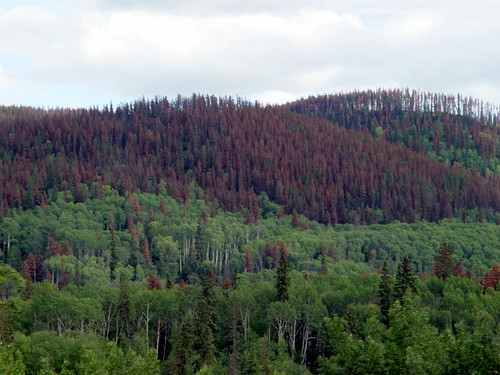
Tyler Hamilton has an interesting article in the Toronto Star about the damage pine beetles are doing to Canadian forests and the impact this will have in terms of increased carbon emissions unless something is done.

One company is suggesting harvesting the dead wood and using it for power generation, thus making use of the material and emitting CO2 instead of more potent methane - another idea being floated is to convert the wood to biochar (see Black Earth for more on biochar).

According to a report last week in the scientific journal Nature, the mountain pine beetle that has killed 130,000 square kilometres of coniferous forest on the west coast has also turned those trees into net emitters of greenhouse gases.

When healthy, the trees act as a carbon sink, absorbing carbon dioxide from the atmosphere and storing it in biomass. When dead, however, the trees no longer absorb CO2. In fact, the opposite happens. As the trees rot and decompose, they release methane and other carbon-equivalent gases.

The B.C. researchers who wrote the report found that the greenhouse gas emissions from these dead trees over a 20-year period would roughly equal all CO2 emissions from Canada's entire transportation sector over five years. "So these are very large numbers in terms of impacts to the atmosphere," said report co-author Werner Kurz, a research scientist with Natural Resources Canada.

No kidding.

But the situation isn't hopeless. When British Columbia released its provincial energy plan last February, it announced that B.C. Hydro would consider proposals for harvesting trees infested with pine beetles for energy generation.

Vancouver-based Nexterra Energy, for example, has teamed up Pristine Power of Calgary to establish a network of small gasification power plants in B.C. that could turn infested wood into 200 megawatts of electricity. Rather than let the trees rot and release methane, which is 21 times more potent than CO2, the idea is to extract usable energy out of them that would displace dirtier electricity and clear the forest for new growth.

The key is to move fast, leaving less time for the dead trees to decay. Another, and arguably more effective, approach is to harvest the trees and convert them to char, or "biochar." Using a process called pyrolysis, the wood is essentially baked in the absence of oxygen and converted into a carbon-rich char.

This char contains about 60 per cent of the carbon in the original wood and, unlike wood, the char won't decay – it remains chemically stable for hundreds of years, trapping the carbon permanently.

Another bonus is that char can be ground up and spread over topsoil to improve crop fertility and enhance nutrients and water retention in soil. Since the carbon is bound in the char, it is effectively sequestered in the soil.

Cornell University's Johannes Lehmann, a leading expert on biochar studies, said it's something the B.C. government might want to look at. "It could be that a good portion of the emissions (from the dead trees) can be avoided by conversion of the damaged biomass into biochar," he wrote in an email.

The beauty with char is that you can pack it and weigh it. You know how much carbon is locked into a kilogram of char, so calculating carbon credits is easy compared to alternatives, such as guessing how much CO2 a new forest will absorb.

Perhaps some clever entrepreneur will see the potential of selling bags of pine-beetle wood char as a way of boosting the performance of residential gardens.


An Electrifying Startup  

Posted by Big Gav in , , ,

Technology Review has a look at A123 Systems' new lithium ion battery which they think could "help electric cars and hybrids come to dominate the roads".

It is the quickest electric motorcycle in the world. On a popular YouTube video, the black dragster cycle nearly disappears in a cloud of smoke as the driver does a "burn-out," spinning the back wheel to heat it up. As the smoke drifts away, the driver settles into position and hits a switch, and the bike surges forward, accelerating to 60 miles per hour in less than a second. Seven seconds later it crosses the quarter-mile mark at 168 miles per hour--quick enough to compete with gas-powered dragsters.

What powers the "Killacycle" is a novel lithium-ion battery developed by A123 Systems, a startup in Watertown, MA--one of a handful of companies working on similar technology. The company's batteries store more than twice as much energy as nickel-metal hydride batteries, the type used in today's hybrid cars, while delivering the bursts of power necessary for high performance. A radically modified version of the lithium-ion batteries used in portable electronics, the technology could jump-start the long-sputtering electric-vehicle market, which today represents a tiny fraction of 1 percent of vehicle sales in the United States. A123's batteries in particular have attracted the interest of General Motors, which is testing them as a way to power the Volt, an electric car with a gasoline generator; the vehicle is expected to go into mass production as early as 2010.

In the past, automakers have blamed electric vehicles' poor sales on their lead-acid or nickel-metal hydride batteries, which were so heavy that they limited the vehicles' range and so bulky that they took up trunk space. While conventional lithium-ion batteries are much lighter and more compact, they're not cost effective for electric vehicles. That's partly because they use lithium cobalt oxide electrodes, which can be unstable: batteries based on them wear out after a couple of years and can burst into flame if punctured, crushed, overcharged, or overheated. Some auto­makers have tried to engineer their way around these problems, but the results have been expensive.

A123's batteries could finally make lithium-ion technology practical for the auto industry. Instead of cobalt oxide, they use an electrode material made from nanoparticles of lithium iron phosphate modified with trace metals. The resulting batteries are unlikely to catch fire, even if crushed in an accident. They are also much hardier than conventional lithium-ion batteries: A123 predicts that they will last longer than the typical lifetime of a car.

Statistics

Locations of visitors to this page

blogspot visitor
Stat Counter

Total Pageviews

Ads

Books

Followers

Blog Archive

Labels

australia (619) global warming (423) solar power (397) peak oil (355) renewable energy (302) electric vehicles (250) wind power (194) ocean energy (165) csp (159) solar thermal power (145) geothermal energy (144) energy storage (142) smart grids (140) oil (139) solar pv (138) tidal power (137) coal seam gas (131) nuclear power (129) china (120) lng (117) iraq (113) geothermal power (112) green buildings (110) natural gas (110) agriculture (91) oil price (80) biofuel (78) wave power (73) smart meters (72) coal (70) uk (69) electricity grid (67) energy efficiency (64) google (58) internet (50) surveillance (50) bicycle (49) big brother (49) shale gas (49) food prices (48) tesla (46) thin film solar (42) biomimicry (40) canada (40) scotland (38) ocean power (37) politics (37) shale oil (37) new zealand (35) air transport (34) algae (34) water (34) arctic ice (33) concentrating solar power (33) saudi arabia (33) queensland (32) california (31) credit crunch (31) bioplastic (30) offshore wind power (30) population (30) cogeneration (28) geoengineering (28) batteries (26) drought (26) resource wars (26) woodside (26) censorship (25) cleantech (25) bruce sterling (24) ctl (23) limits to growth (23) carbon tax (22) economics (22) exxon (22) lithium (22) buckminster fuller (21) distributed manufacturing (21) iraq oil law (21) coal to liquids (20) indonesia (20) origin energy (20) brightsource (19) rail transport (19) ultracapacitor (19) santos (18) ausra (17) collapse (17) electric bikes (17) michael klare (17) atlantis (16) cellulosic ethanol (16) iceland (16) lithium ion batteries (16) mapping (16) ucg (16) bees (15) concentrating solar thermal power (15) ethanol (15) geodynamics (15) psychology (15) al gore (14) brazil (14) bucky fuller (14) carbon emissions (14) fertiliser (14) matthew simmons (14) ambient energy (13) biodiesel (13) investment (13) kenya (13) public transport (13) big oil (12) biochar (12) chile (12) cities (12) desertec (12) internet of things (12) otec (12) texas (12) victoria (12) antarctica (11) cradle to cradle (11) energy policy (11) hybrid car (11) terra preta (11) tinfoil (11) toyota (11) amory lovins (10) fabber (10) gazprom (10) goldman sachs (10) gtl (10) severn estuary (10) volt (10) afghanistan (9) alaska (9) biomass (9) carbon trading (9) distributed generation (9) esolar (9) four day week (9) fuel cells (9) jeremy leggett (9) methane hydrates (9) pge (9) sweden (9) arrow energy (8) bolivia (8) eroei (8) fish (8) floating offshore wind power (8) guerilla gardening (8) linc energy (8) methane (8) nanosolar (8) natural gas pipelines (8) pentland firth (8) saul griffith (8) stirling engine (8) us elections (8) western australia (8) airborne wind turbines (7) bloom energy (7) boeing (7) chp (7) climategate (7) copenhagen (7) scenario planning (7) vinod khosla (7) apocaphilia (6) ceramic fuel cells (6) cigs (6) futurism (6) jatropha (6) nigeria (6) ocean acidification (6) relocalisation (6) somalia (6) t boone pickens (6) local currencies (5) space based solar power (5) varanus island (5) garbage (4) global energy grid (4) kevin kelly (4) low temperature geothermal power (4) oled (4) tim flannery (4) v2g (4) club of rome (3) norman borlaug (2) peak oil portfolio (1)